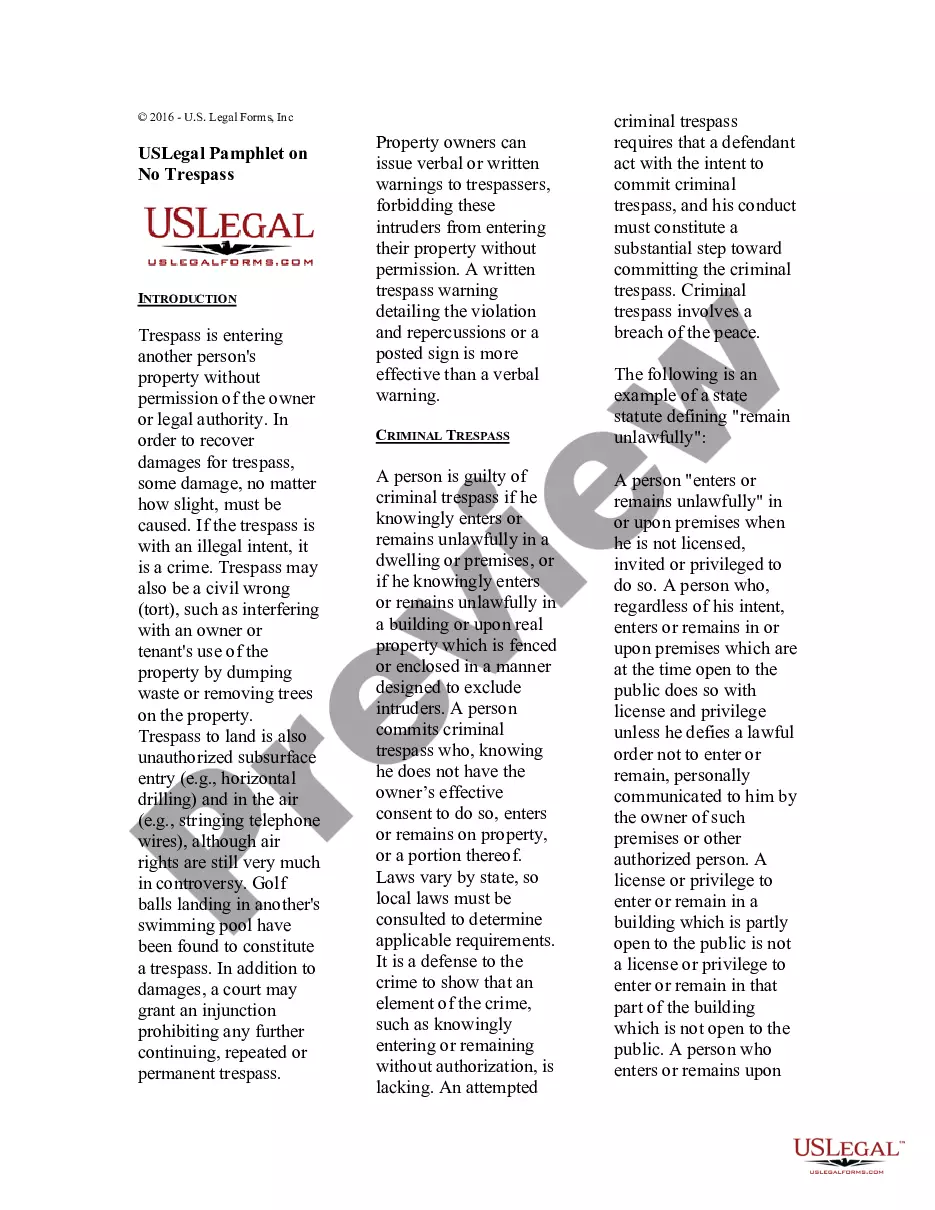
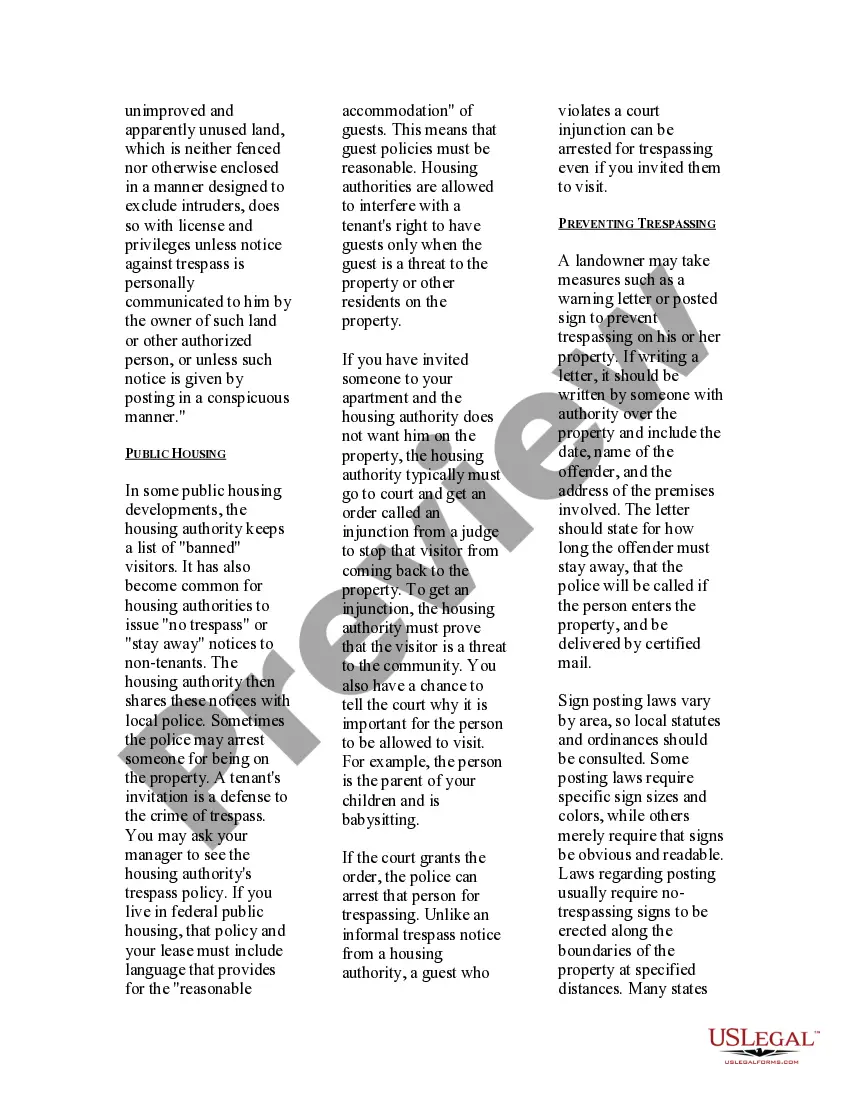
This pamphlet provides an overview of no trespass law. Topics covered include civil and criminal trespass, trespass in public housing, and how to prevent trespassing.
Connecticut USLegal Pamphlet on No Trespass
State:
Multi-State
Control #:
US-PMPH-23
Format:
Word;
Rich Text
50 downloads
Description
Free preview
Get your form ready online
Our built-in tools help you complete, sign, share, and store your documents in one place.
Built-in online Word editor
Make edits, fill in missing information, and update formatting in US Legal Forms—just like you would in MS Word.
Export easily
Download a copy, print it, send it by email, or mail it via USPS—whatever works best for your next step.
E-sign your document
Sign and collect signatures with our SignNow integration. Send to multiple recipients, set reminders, and more. Go Premium to unlock E-Sign.
Notarize online 24/7
If this form requires notarization, complete it online through a secure video call—no need to meet a notary in person or wait for an appointment.
Store your document securely
We protect your documents and personal data by following strict security and privacy standards.

Make edits, fill in missing information, and update formatting in US Legal Forms—just like you would in MS Word.

Download a copy, print it, send it by email, or mail it via USPS—whatever works best for your next step.

Sign and collect signatures with our SignNow integration. Send to multiple recipients, set reminders, and more. Go Premium to unlock E-Sign.

If this form requires notarization, complete it online through a secure video call—no need to meet a notary in person or wait for an appointment.

We protect your documents and personal data by following strict security and privacy standards.
Looking for another form?
How to fill out USLegal Pamphlet On No Trespass?
US Legal Forms - one of the largest collections of legal documents in the country - offers a diverse selection of legal form templates you can obtain or create. By using the website, you can access thousands of forms for business and personal purposes, organized by categories, states, or keywords. You can find the latest versions of forms such as the Connecticut USLegal Pamphlet on No Trespass within moments.
If you already have an account, Log In and obtain the Connecticut USLegal Pamphlet on No Trespass from the US Legal Forms library. The Download button will appear on every form you view. You can access all previously downloaded forms from the My documents section of your account.
To utilize US Legal Forms for the first time, here are simple steps to get you started: Ensure you have selected the correct form for your city/region. Click the Preview button to review the form’s content. Read the form description to ensure you have chosen the right form. If the form doesn’t meet your requirements, use the Search field at the top of the screen to find one that does. If you are satisfied with the form, confirm your choice by clicking the Acquire now button. Then, select the pricing plan you prefer and provide your credentials to sign up for an account. Complete the transaction. Use your credit card or PayPal account to finalize the purchase. Choose the format and acquire the form to your device. Make edits. Fill out, modify, and print and sign the downloaded Connecticut USLegal Pamphlet on No Trespass. Each template you added to your account has no expiration date and is yours forever. Therefore, if you wish to acquire or create another version, simply go to the My documents section and click on the form you need.
- Access the Connecticut USLegal Pamphlet on No Trespass with US Legal Forms, one of the most comprehensive libraries of legal document templates.
- Utilize a multitude of professional and state-specific templates that meet your business or personal requirements.
- Obtain forms for various legal needs quickly and efficiently.
- Enjoy the convenience of having a vast selection of forms at your fingertips.
- Ensure compliance with legal standards by using professionally crafted templates.
- Save time and effort in document preparation with ready-to-use forms.
Form popularity
FAQ
Statute 53a 108 in Connecticut pertains to the crime of trespass. It outlines the definitions and penalties associated with entering a property without permission. This statute plays a crucial role in protecting property rights in the state. For a more in-depth look at this statute and its applications, the Connecticut USLegal Pamphlet on No Trespass is an excellent resource.
In Connecticut, the trespassing law addresses unauthorized entry onto someone else's property. The law defines trespassing as entering or remaining on a property without permission. It can lead to legal consequences, including fines or arrest. To better understand your rights and the implications of trespassing, refer to the Connecticut USLegal Pamphlet on No Trespass for clear explanations and guidance.
To obtain a no trespass order in Connecticut, you should first identify the specific property where the trespassing occurs. Then, you can consult local law enforcement or an attorney to understand the legal requirements. It often involves filing a formal request or petition with the appropriate court. For a comprehensive guide, check out the Connecticut USLegal Pamphlet on No Trespass, which provides detailed steps and resources.
On the CT judicial website, you can access a wealth of information related to legal processes in Connecticut. This includes court forms, case law, and procedural guidelines, all of which are essential for understanding legal matters. Specifically, you can find the Connecticut USLegal Pamphlet on No Trespass, which outlines the laws and procedures regarding trespassing in the state. This resource helps you navigate the legal landscape effectively, ensuring you are well-informed about your rights and responsibilities.
The Sunshine Law in Connecticut promotes transparency in government by ensuring that meetings and records of public agencies are accessible to the public. This law encourages open government and public participation in decision-making processes. While it may not directly relate to trespassing, understanding the Sunshine Law can enhance your awareness of your rights as a citizen. The Connecticut USLegal Pamphlet on No Trespass can complement this knowledge by addressing property rights and trespassing regulations.
Trespassing can include various actions, such as entering private property, climbing over fences, or ignoring posted 'No Trespassing' signs. Additionally, remaining on the property after being asked to leave constitutes trespassing. The Connecticut USLegal Pamphlet on No Trespass provides clarity on these actions and their legal implications. By familiarizing yourself with this pamphlet, you can better protect your rights and understand the limits of property access.
The Connecticut Judicial Branch handles a variety of cases, including civil, criminal, family, and probate matters. Each type of case has its own legal processes and requirements. For issues related to trespassing or property disputes, the Connecticut USLegal Pamphlet on No Trespass can serve as a valuable resource. This pamphlet helps you navigate the legal landscape and understand the relevant case types that may affect your situation.
In Connecticut, trespassing is defined as entering or remaining on property owned by another person without authorization. This definition applies to residential areas, commercial properties, and private land. The Connecticut USLegal Pamphlet on No Trespass explains the implications of such actions in detail. By consulting this pamphlet, you can better understand how the law protects property rights and what to do if you encounter trespassing issues.
Filing for adverse possession in Connecticut requires a specific legal process. You must demonstrate that you have occupied the property openly and continuously for a certain period, usually 15 years, without the owner's permission. The Connecticut USLegal Pamphlet on No Trespass can guide you through these requirements and help you gather the necessary documentation. Utilizing this resource can clarify the steps you need to take to assert your claim.
Trespassing in someone's yard involves entering a private residential area without the owner's consent. This action can lead to legal consequences, especially if the property owner has posted 'No Trespassing' signs. The Connecticut USLegal Pamphlet on No Trespass outlines important information about such situations. By reviewing this pamphlet, you can learn how to protect your property rights and understand the laws governing trespassing.