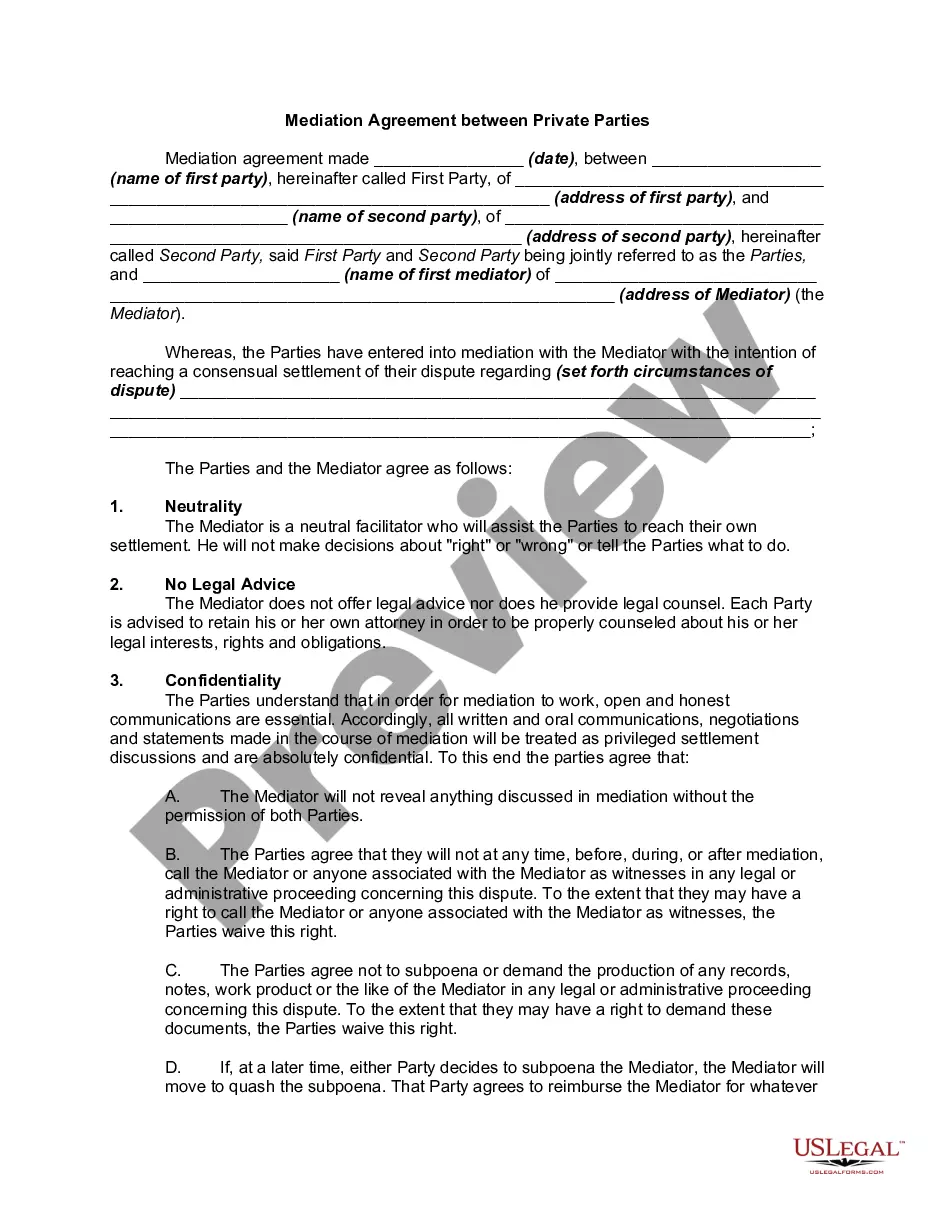
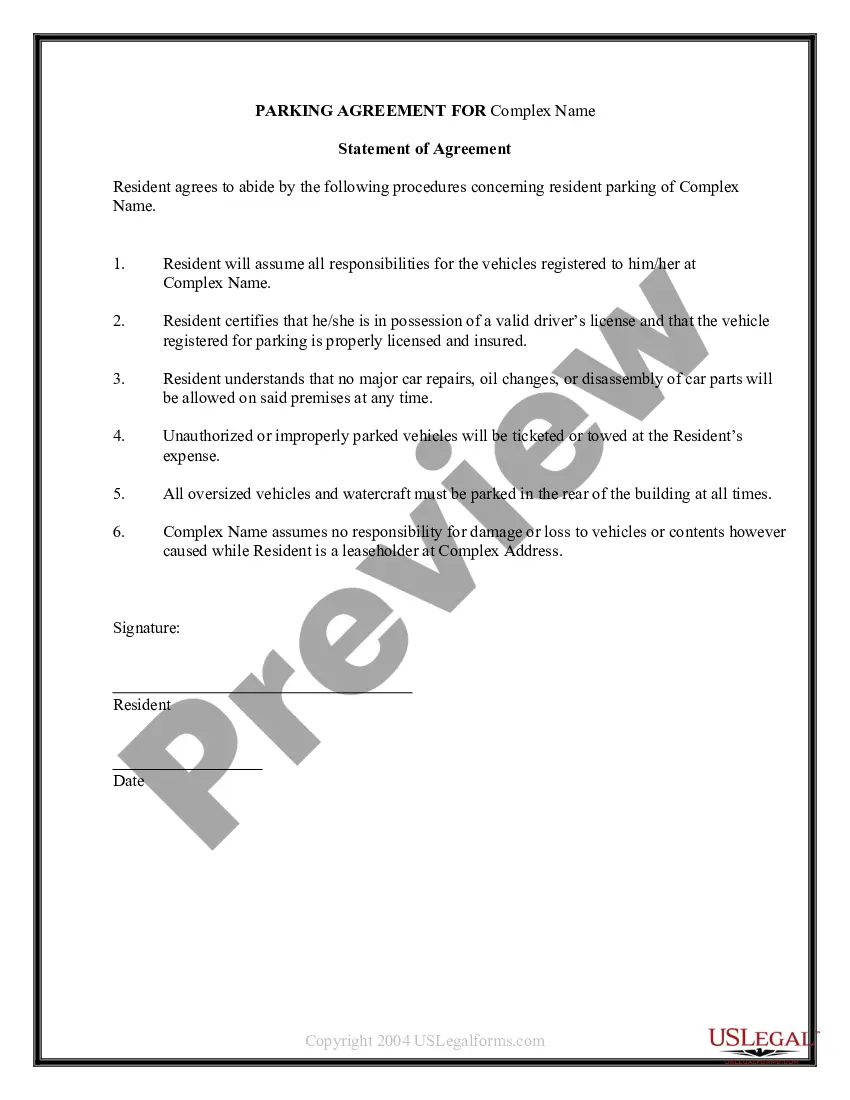
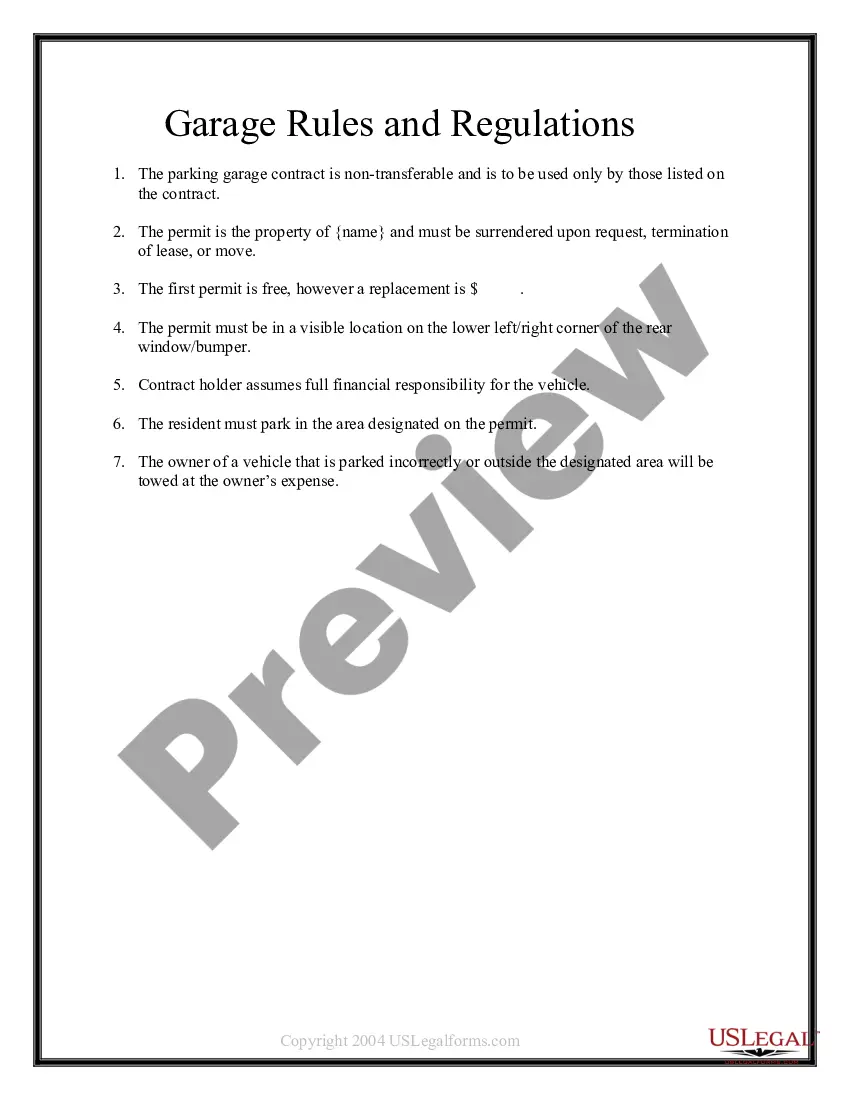
Apartment policy concerning the use of the complex parking lot.
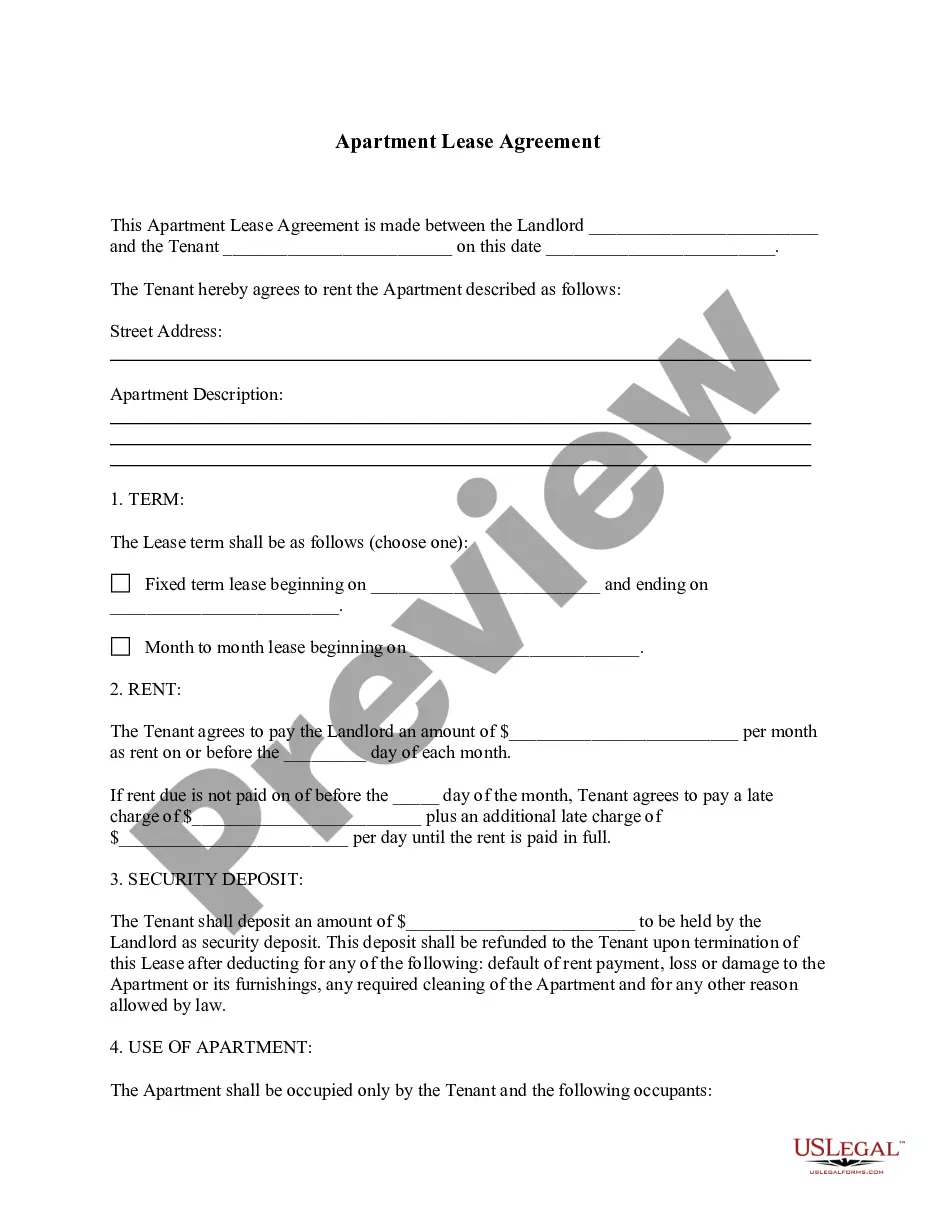
Connecticut Apartment Complex Parking Agreement
Category:
State:
Multi-State
Control #:
US-900LT
Format:
Word;
Rich Text
Instant download
Description

Get your form ready online
Our built-in tools help you complete, sign, share, and store your documents in one place.
Built-in online Word editor
Make edits, fill in missing information, and update formatting in US Legal Forms—just like you would in MS Word.
Export easily
Download a copy, print it, send it by email, or mail it via USPS—whatever works best for your next step.
E-sign your document
Sign and collect signatures with our SignNow integration. Send to multiple recipients, set reminders, and more. Go Premium to unlock E-Sign.
Notarize online 24/7
If this form requires notarization, complete it online through a secure video call—no need to meet a notary in person or wait for an appointment.
Store your document securely
We protect your documents and personal data by following strict security and privacy standards.

Make edits, fill in missing information, and update formatting in US Legal Forms—just like you would in MS Word.

Download a copy, print it, send it by email, or mail it via USPS—whatever works best for your next step.

Sign and collect signatures with our SignNow integration. Send to multiple recipients, set reminders, and more. Go Premium to unlock E-Sign.

If this form requires notarization, complete it online through a secure video call—no need to meet a notary in person or wait for an appointment.

We protect your documents and personal data by following strict security and privacy standards.
Looking for another form?




How to fill out Apartment Complex Parking Agreement?
If you need to total, retrieve, or create legal document templates, utilize US Legal Forms, the largest collection of legal documents available online.
Take advantage of the site’s straightforward and user-friendly search to find the documents you require.
Different templates for corporate and personal purposes are organized by categories and regions, or keywords.
Step 3. If you are not satisfied with the form, use the Search field at the top of the screen to find other versions of the legal document template.
Step 4. After you have identified the form you want, click the Get now button. Choose the pricing plan you prefer and input your information to register for an account.
- Use US Legal Forms to find the Connecticut Apartment Complex Parking Agreement with just a few clicks.
- If you are already a US Legal Forms user, Log In to your account and click the Download button to obtain the Connecticut Apartment Complex Parking Agreement.
- You can also access forms you have previously saved in the My documents section of your account.
- If you are using US Legal Forms for the first time, follow the instructions below.
- Step 1. Ensure you have selected the form for the correct city/state.
- Step 2. Use the Preview option to review the form’s content. Don’t forget to read the description.
Form popularity
FAQ
Shared parking refers to a system where multiple users share a single parking facility, maximizing its usage. In the context of a Connecticut Apartment Complex Parking Agreement, this can allow residents and guests to efficiently use available spaces during different times. It fosters a collaborative approach to managing parking resources among tenants.
To prevent unauthorized parking, we recommend implementing a Connecticut Apartment Complex Parking Agreement that clearly outlines parking rules and penalties for violations. Use signage to notify residents and visitors about the regulations. Regularly patrol the parking area to discourage non-residents from using your space without permission.
A landlord cannot evict a tenant for no reason. He must base his decision on one of five legally sufficient grounds for eviction: lapse of time, nonpayment of rent, material noncompliance with the lease, breach of statutory duties, and illegal conduct or serious nuisance.
If you're renting the property itself, you need to make sure you're actually allowed to rent out the parking space. This is technically subletting (which could be a breach of your tenancy agreement), so get some written consent from your landlord or agent.
Things the landlord must do:Make all repairs needed to keep your apartment safe and livable. Keep all electrical, plumbing, heating, ventilation, appliances, and elevators working and safe. Provide containers for trash and arrange for its removal. Supply heat, running water, and hot water.
A landlord is responsible for: repairs to the structure and exterior of the property, heating and hot water systems, basins, sinks, baths and other sanitaryware. the safety of gas and electrical appliances. the fire safety of furniture and furnishings provided under the tenancy.
If a landlord wants to evict a tenant for nonpayment of rent, then he or she must give the tenant a 3-day Notice to Vacate. For any other reason, the landlord must give the tenant at least a 15-day Notice to Vacate. If the tenant can repair the issue within 15 days, the landlord cannot evict the tenant.
You can start your lawsuit if your landlord doesn't fix the problems within 21 days after you filed the official complaint. The court can order the landlord to make the repairs. You might also get some of your rent money back. 1.
Your landlord is responsible for maintaining the structure of the property, but you will have to make sure that the apartment remains in good condition. This means that you obligated to do basic maintenance, such as the replacement of bulbs and tap washers, and cleaning of drains.
Landlords cannot enter tenanted properties without giving proper notice. Landlords cannot arbitrarily end someone's tenancy before the lease expires. Arbitrary, mid-lease rent increases are not permitted unless specified in certain circumstances in the lease or by the municipality.