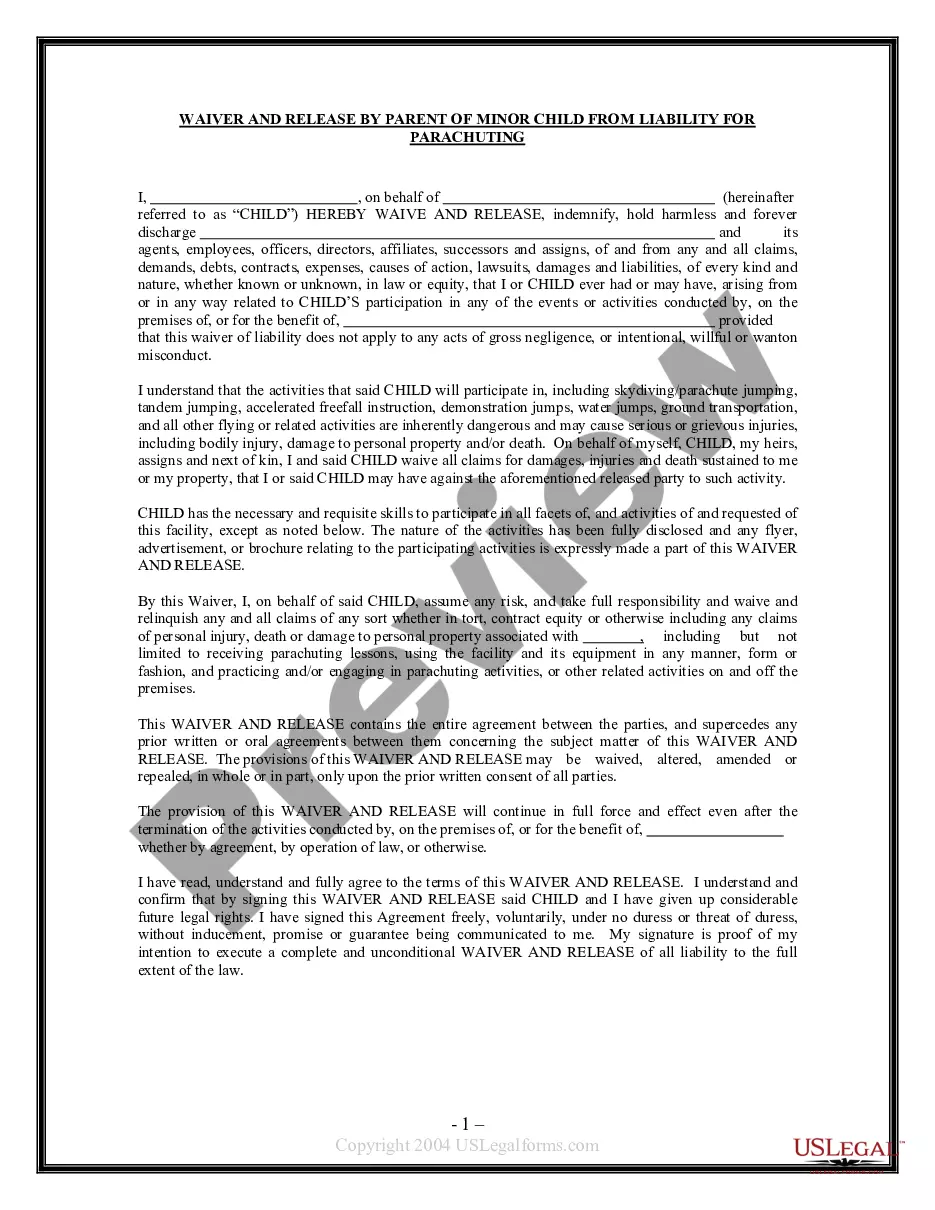
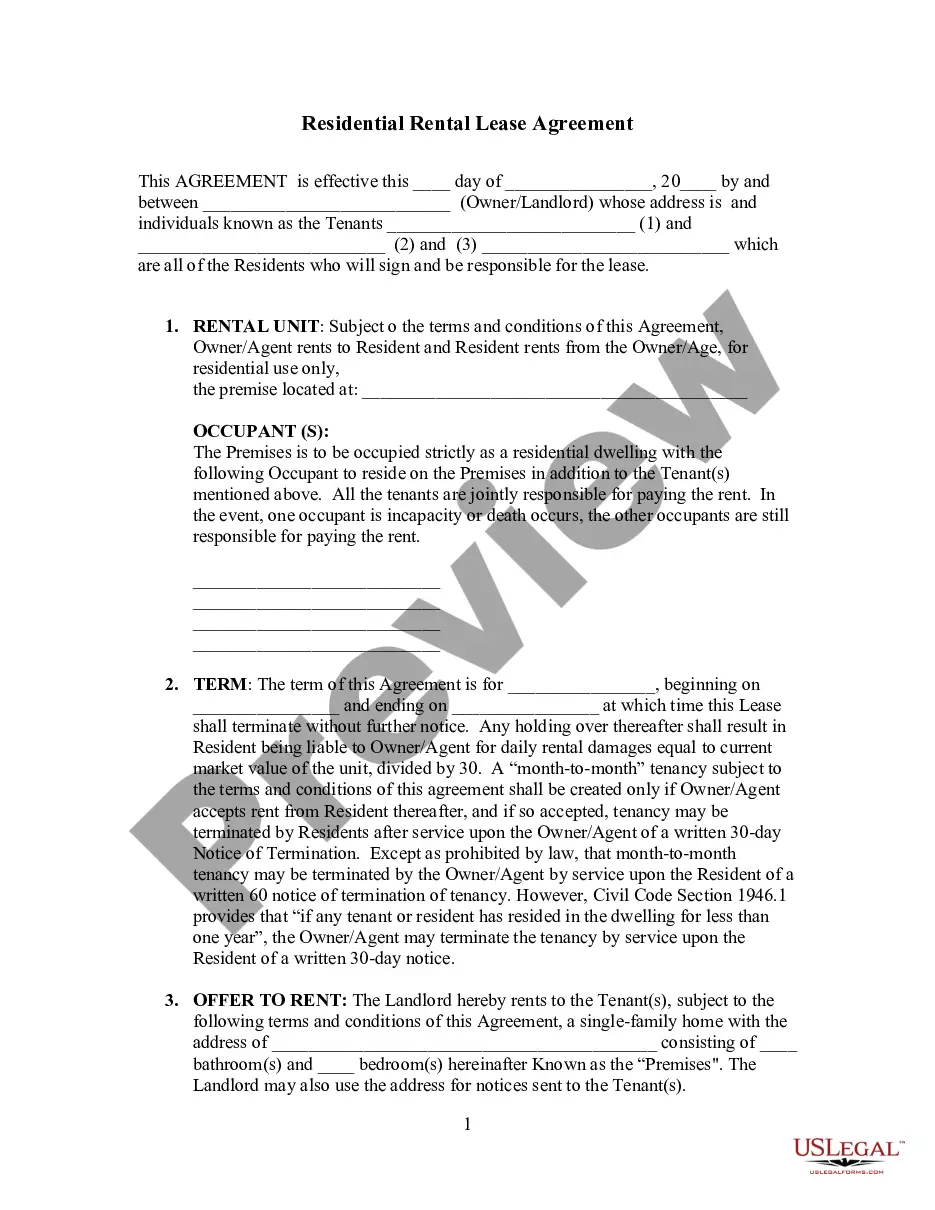
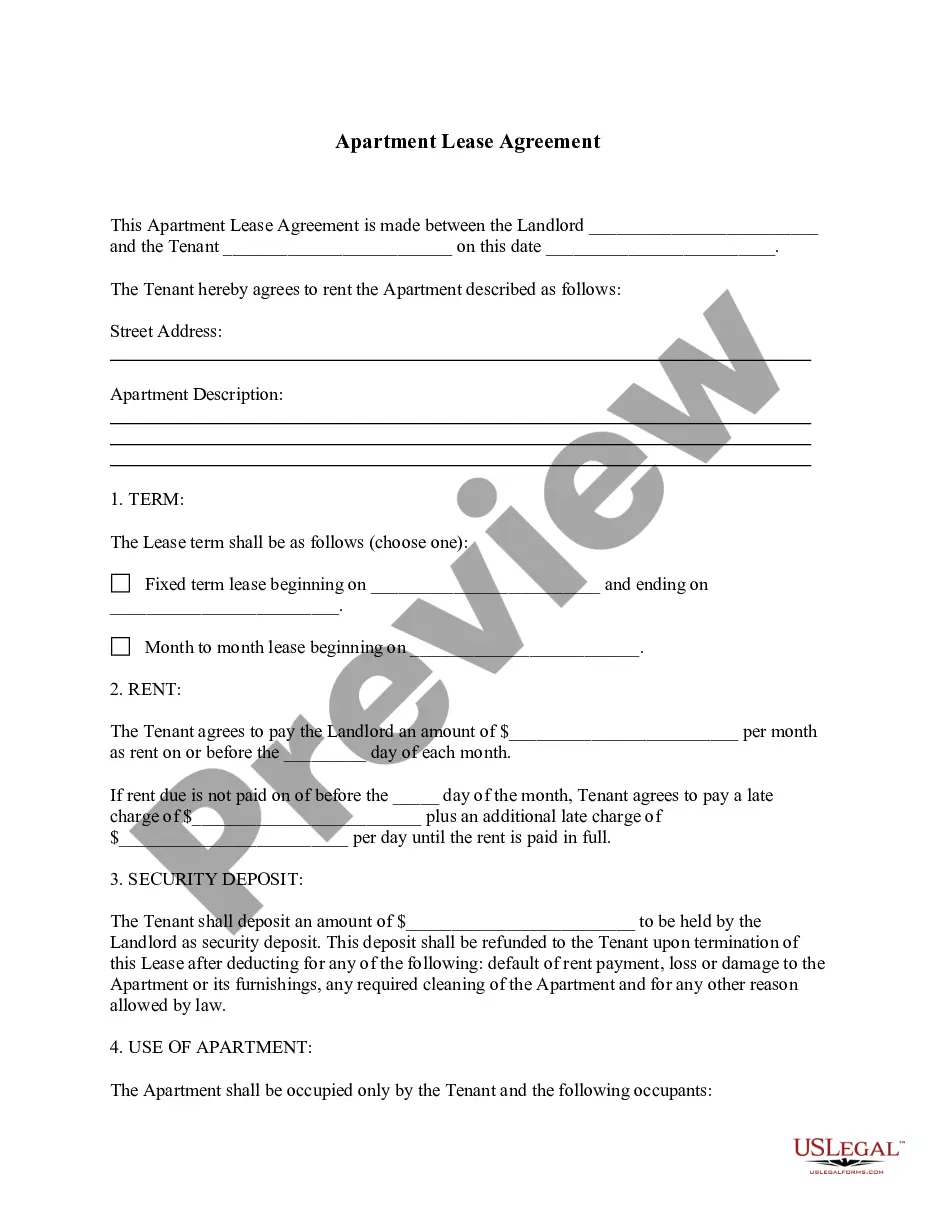
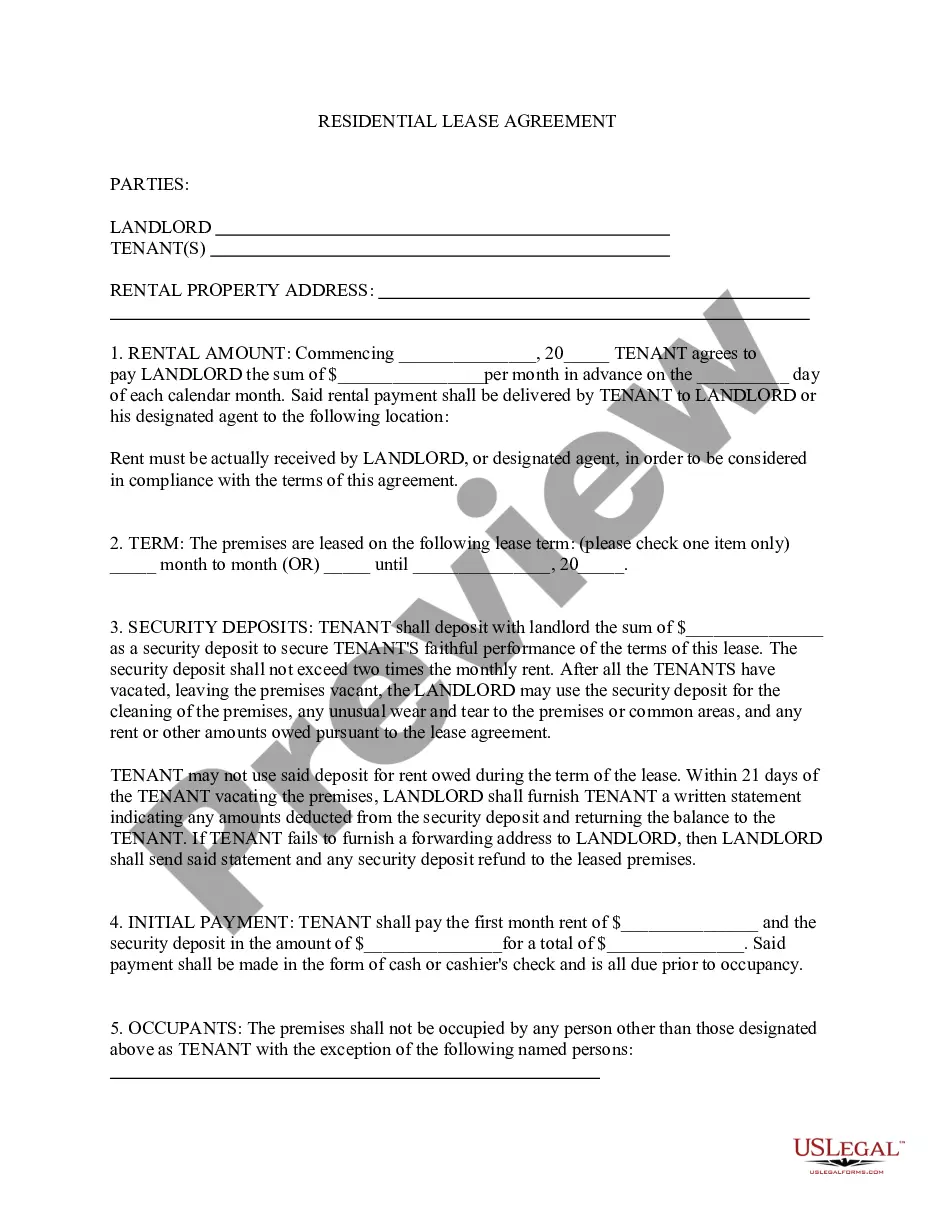
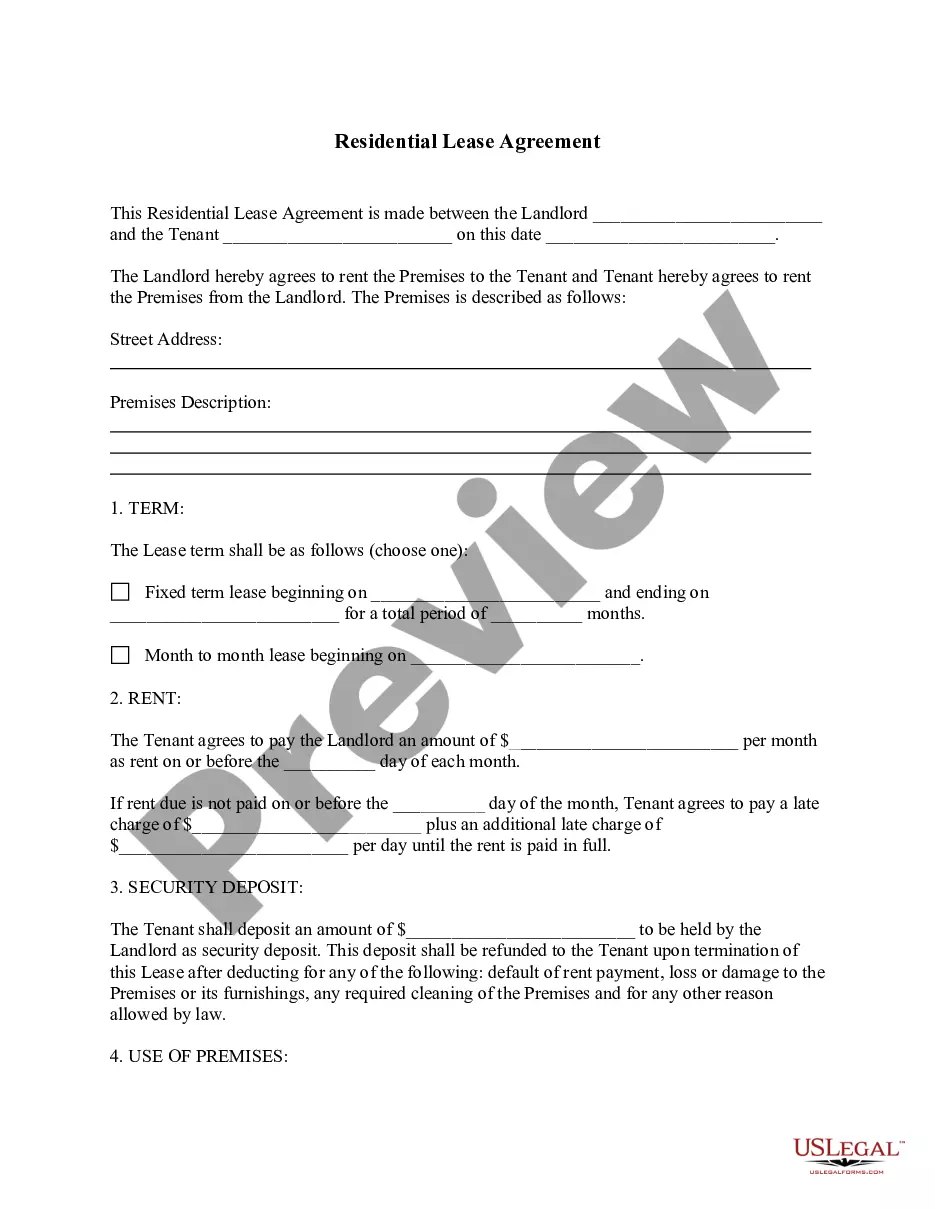
This is a sample apartment lease form. You may use it as a guide for creating an appartment lease form for your state. You must ensure that you comply with all applicable laws in your state.
Connecticut Apartment Lease Agreement
State:
Multi-State
Control #:
US-846LT
Format:
Word;
Rich Text
Instant download
Description
Free preview
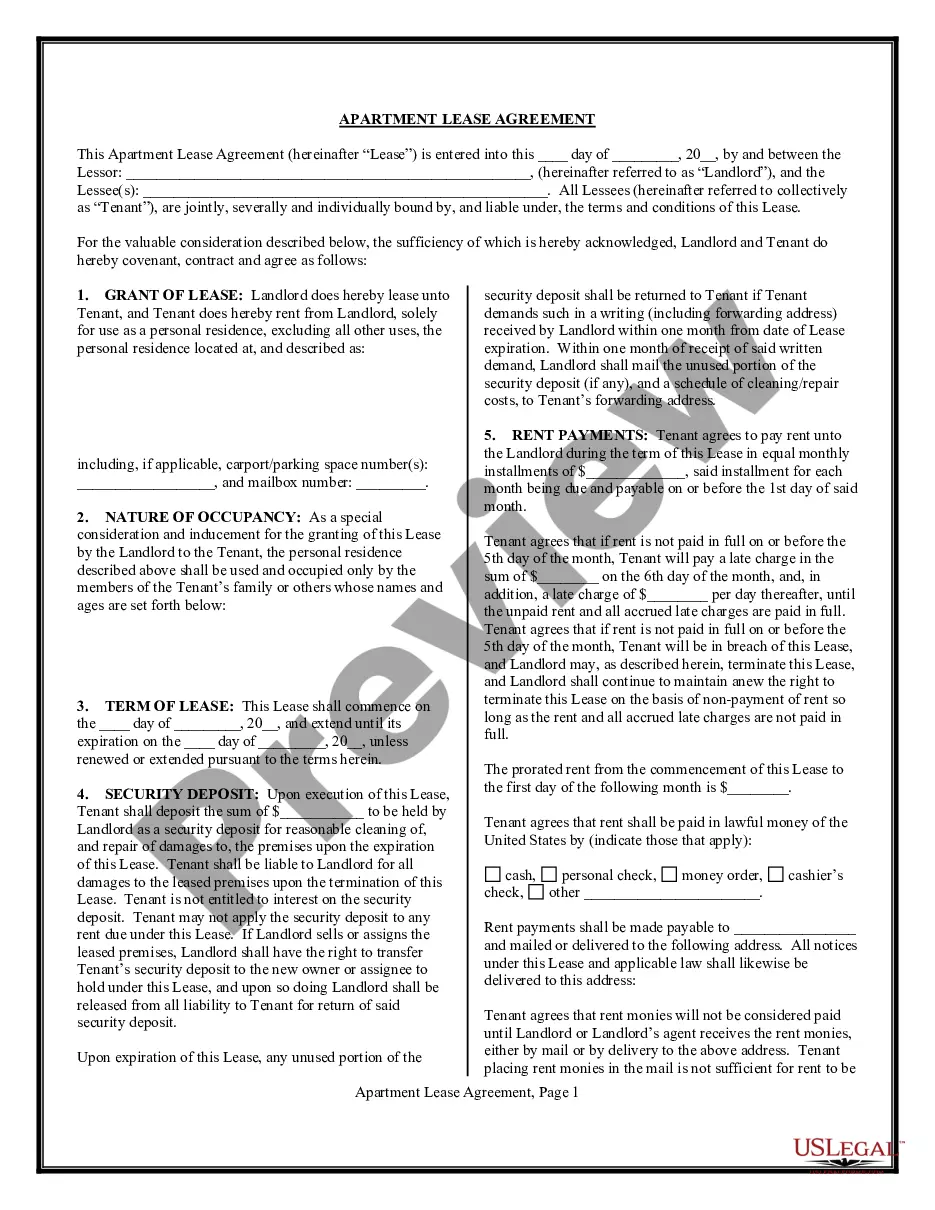
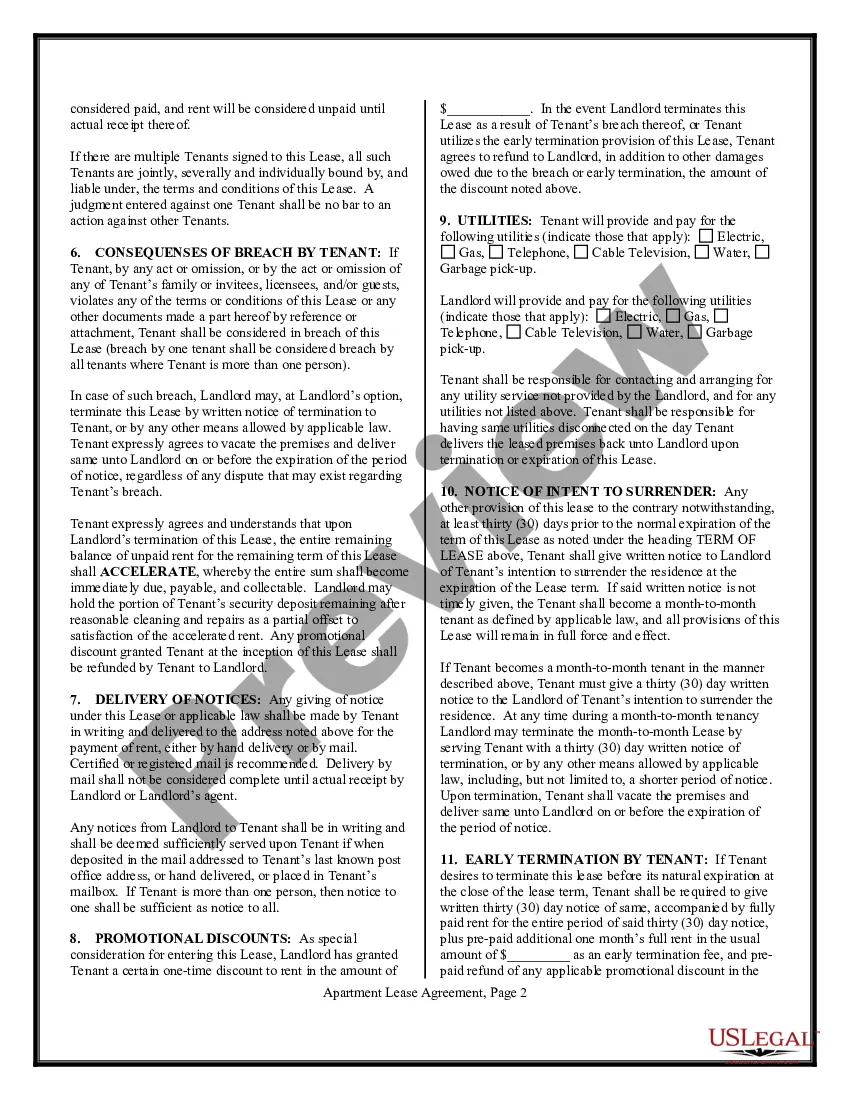
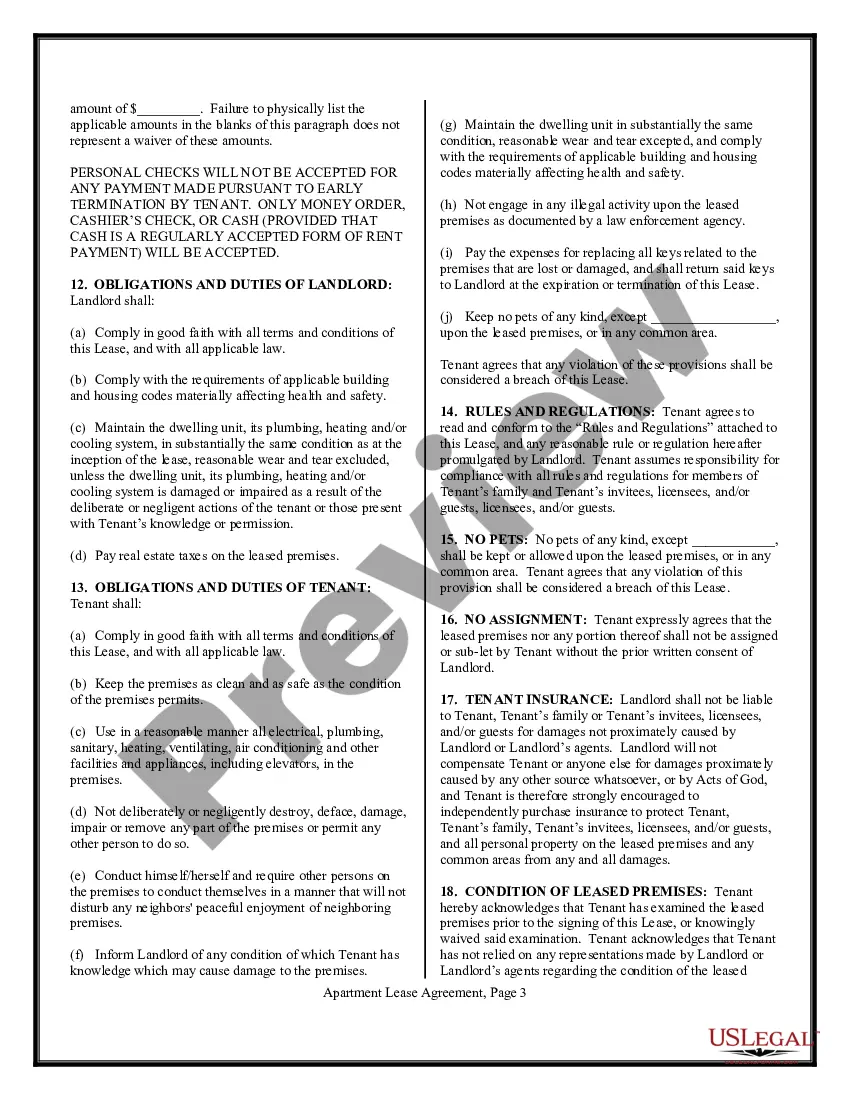
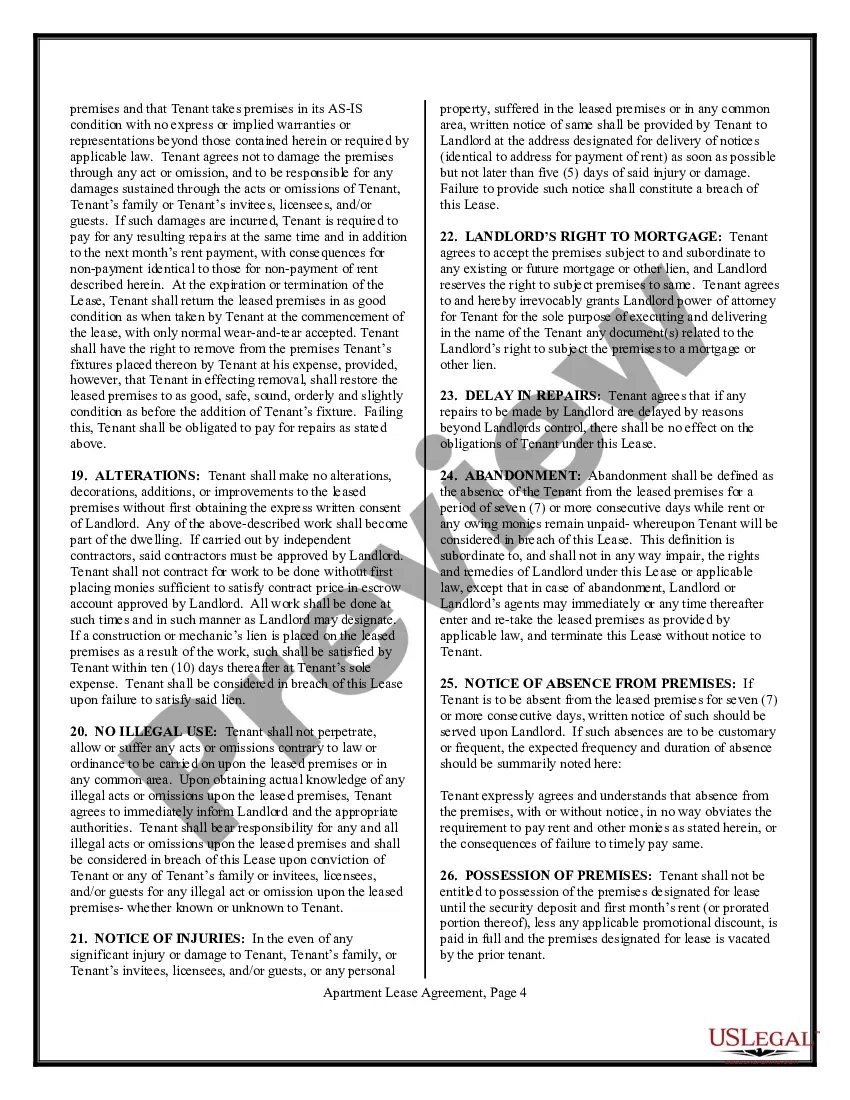
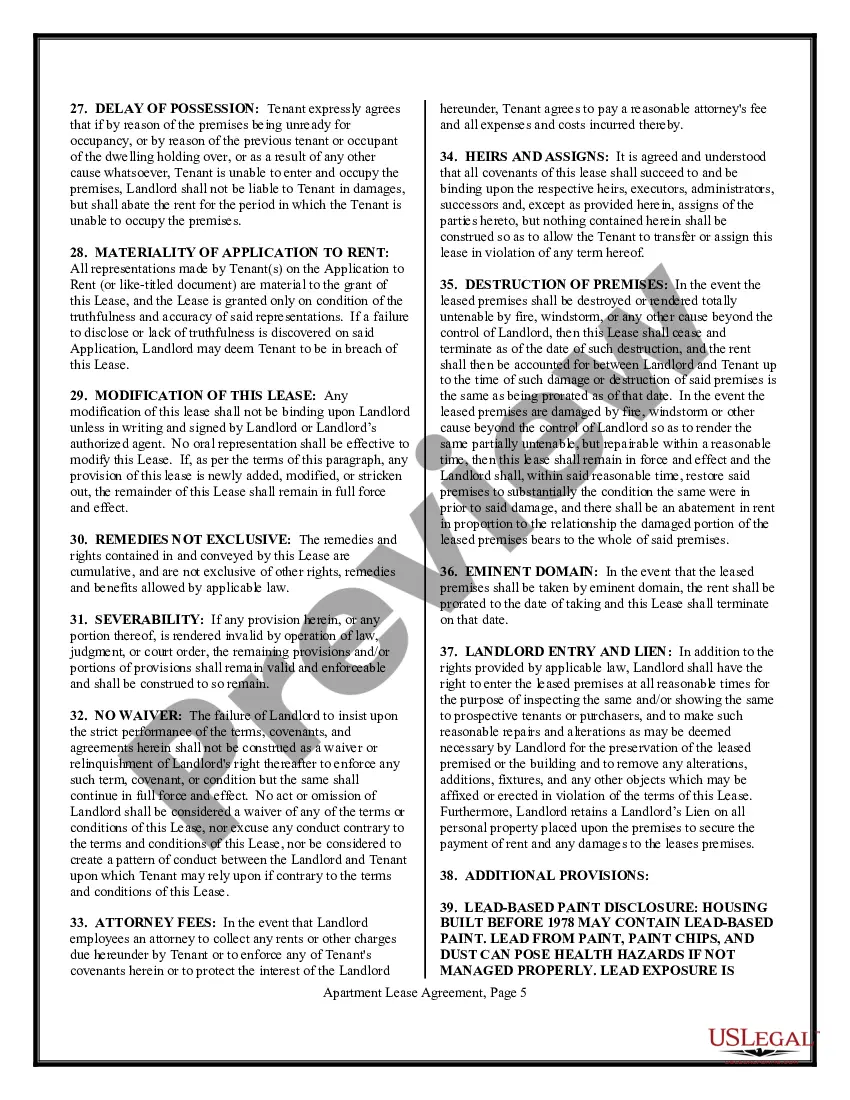
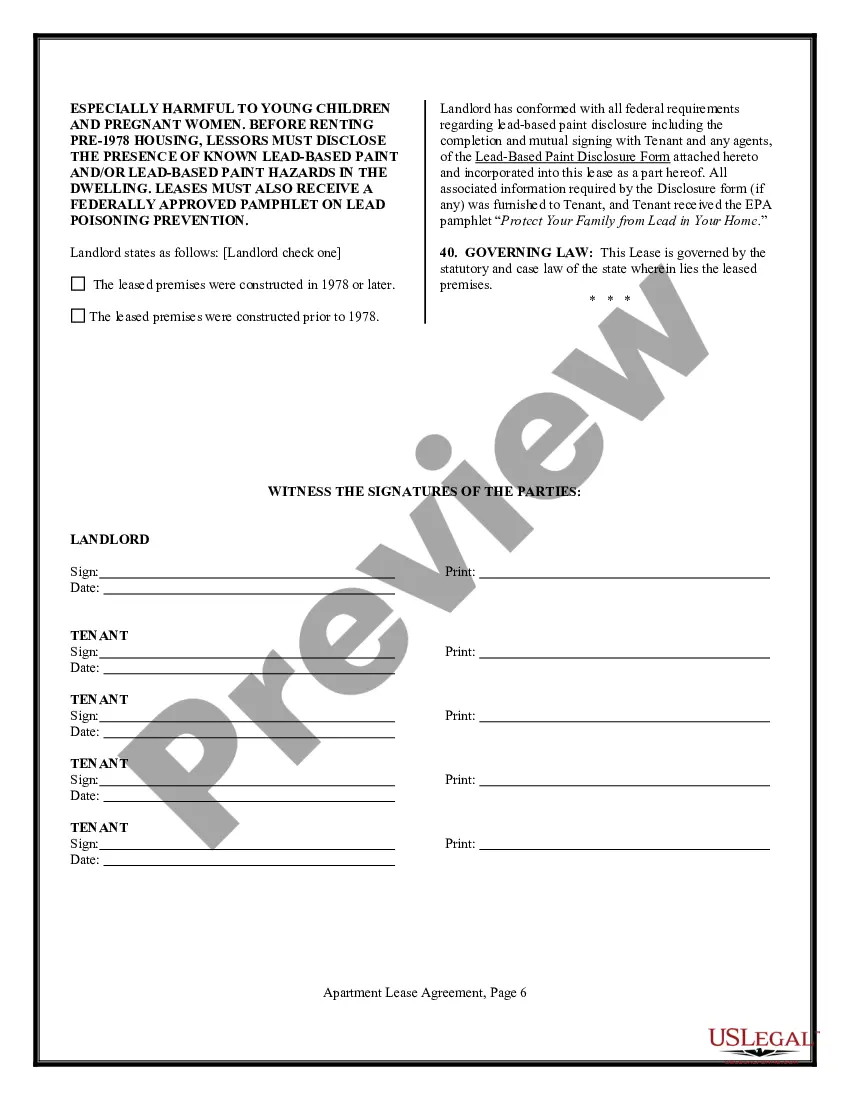
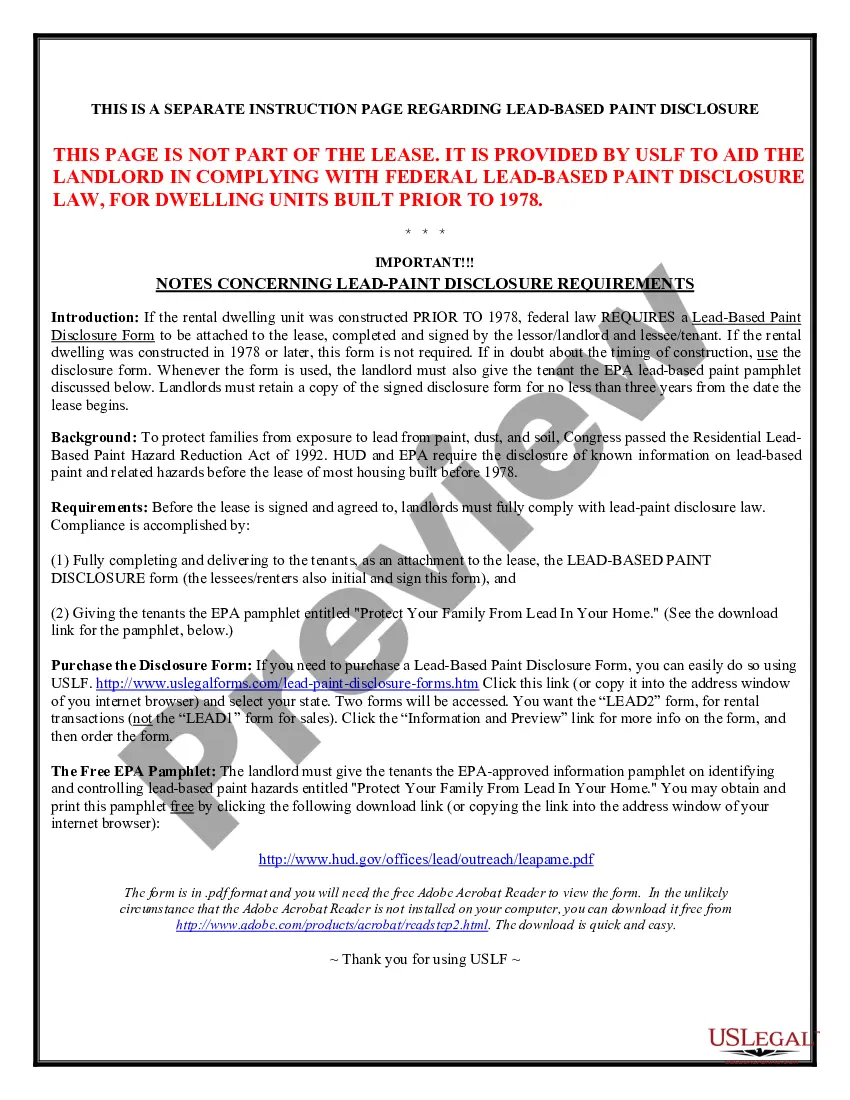
Get your form ready online
Our built-in tools help you complete, sign, share, and store your documents in one place.
Built-in online Word editor
Make edits, fill in missing information, and update formatting in US Legal Forms—just like you would in MS Word.
Export easily
Download a copy, print it, send it by email, or mail it via USPS—whatever works best for your next step.
E-sign your document
Sign and collect signatures with our SignNow integration. Send to multiple recipients, set reminders, and more. Go Premium to unlock E-Sign.
Notarize online 24/7
If this form requires notarization, complete it online through a secure video call—no need to meet a notary in person or wait for an appointment.
Store your document securely
We protect your documents and personal data by following strict security and privacy standards.

Make edits, fill in missing information, and update formatting in US Legal Forms—just like you would in MS Word.

Download a copy, print it, send it by email, or mail it via USPS—whatever works best for your next step.

Sign and collect signatures with our SignNow integration. Send to multiple recipients, set reminders, and more. Go Premium to unlock E-Sign.

If this form requires notarization, complete it online through a secure video call—no need to meet a notary in person or wait for an appointment.

We protect your documents and personal data by following strict security and privacy standards.
Looking for another form?


How to fill out Apartment Lease Agreement?
You can spend hours online searching for the valid document template that meets your federal and state regulations.
US Legal Forms offers a wide variety of valid documents that can be reviewed by experts.
You can download or print the Connecticut Apartment Lease Agreement from the service.
If available, use the Preview button to view the document template simultaneously.
- If you possess a US Legal Forms account, you can Log In and click the Obtain button.
- Then, you can complete, modify, print, or sign the Connecticut Apartment Lease Agreement.
- Every legal document template you purchase belongs to you indefinitely.
- To obtain another copy of any purchased form, go to the My documents tab and click the appropriate button.
- If you are using the US Legal Forms website for the first time, follow the simple steps below.
- Firstly, confirm that you have selected the correct document template for your region/city of choice.
- Review the form details to ensure you have picked the correct form.
Form popularity
FAQ
Landlords have the right to sell their property, even if it is currently rented out. However, it is best to try to help any tenants with the transition, especially if they'll need to relocate. One option for landlords is to wait for the lease to expire.
The minimum notice requirement is 28 days. If you have a monthly tenancy, you will have to give one month's notice. If you pay your rent at longer intervals you have to give notice equivalent to that rental period. For example, if you pay rent every three months, you would have to give three months' notice.
No, your Connecticut lease agreement does not need to be notarized. Here, leases are binding without requiring a notary seal. The tenant and landlord can choose to have the lease agreement notarized if they wish, but it is not required by law in order for the lease to be enforceable.
This question is about Connecticut Residential Lease Agreement. Yes, leases can automatically renew in Connecticut. Fixed-term leases are expected to end on the specified date without any required notice, but most leases can renew if the tenant decides to stay on the rental property.
Retaliation: A landlord cannot give you a non-renewal, and cannot choose to not renew your lease, for reasons that are retaliatory.
In Connecticut, if a landlord violates a lease agreement or fails to supply essential willfully, the tenant may terminate the rental agreement and recover an amount not more than two months' periodic rent or double the actual damages sustained by him, whichever is greater.
Connecticut is generally not considered a very landlord-friendly state because tenants have a number of rights and leverage against landlords. However rental prices are high in Connecticut meaning it is often a lucrative investment.
If a landlord wants to evict a tenant for nonpayment of rent, then he or she must give the tenant a 3-day Notice to Vacate. For any other reason, the landlord must give the tenant at least a 15-day Notice to Vacate. If the tenant can repair the issue within 15 days, the landlord cannot evict the tenant.
In Connecticut, if a landlord violates a lease agreement or fails to supply essential willfully, the tenant may terminate the rental agreement and recover an amount not more than two months' periodic rent or double the actual damages sustained by him, whichever is greater.