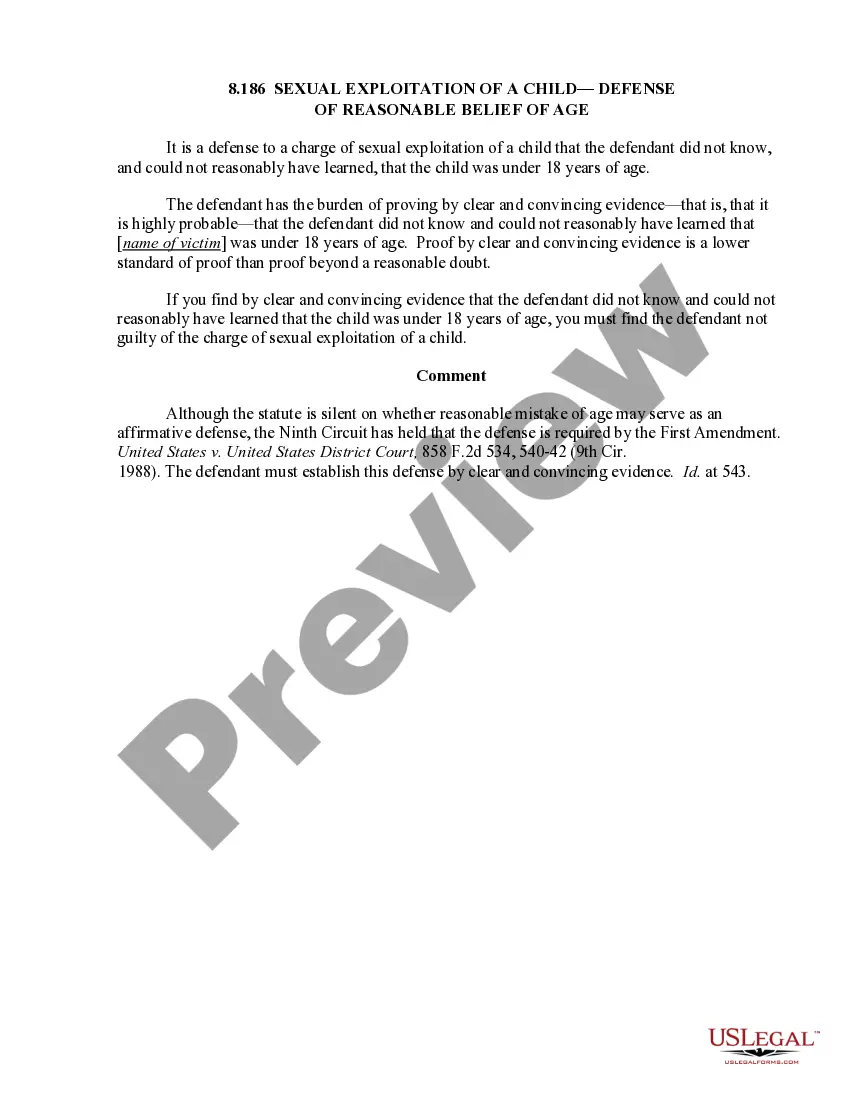
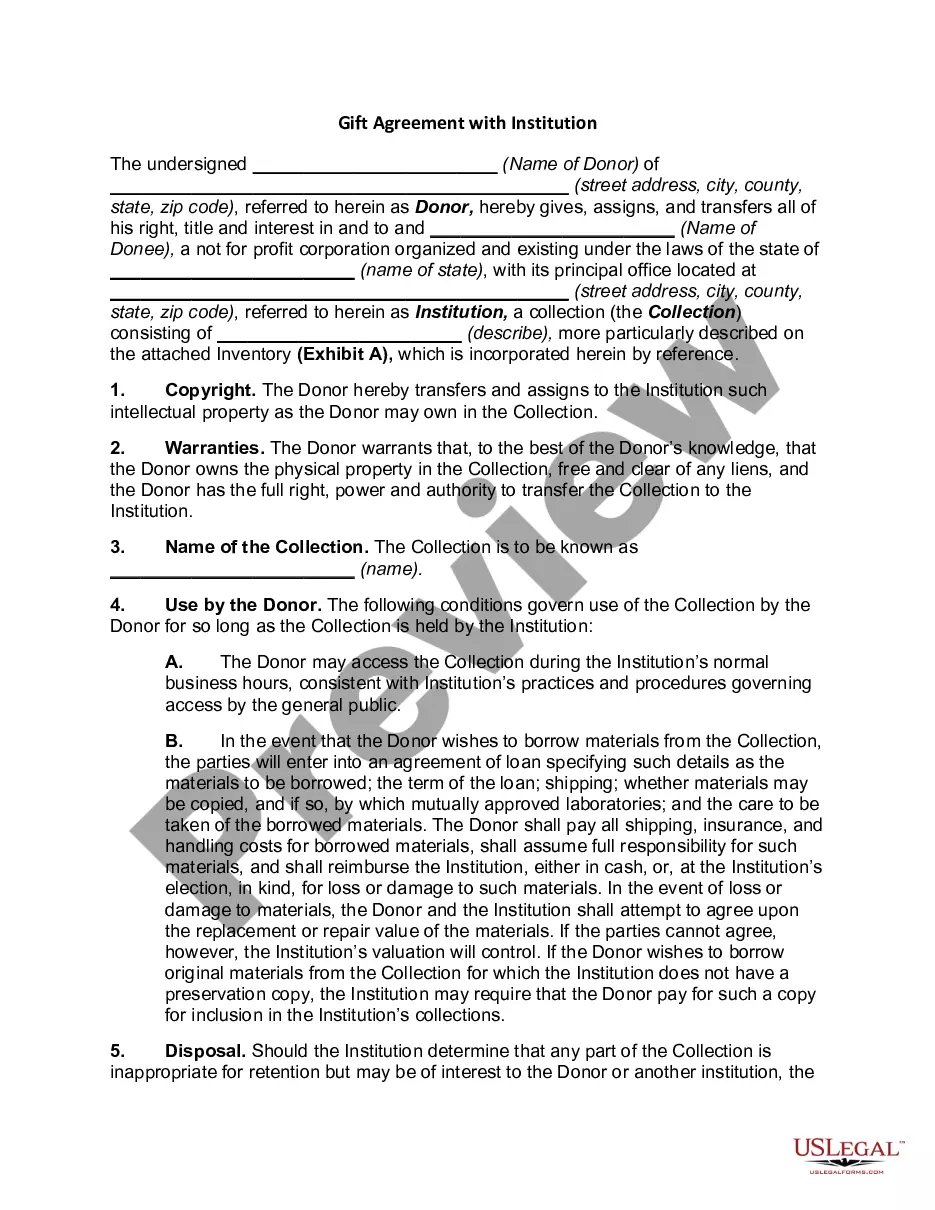
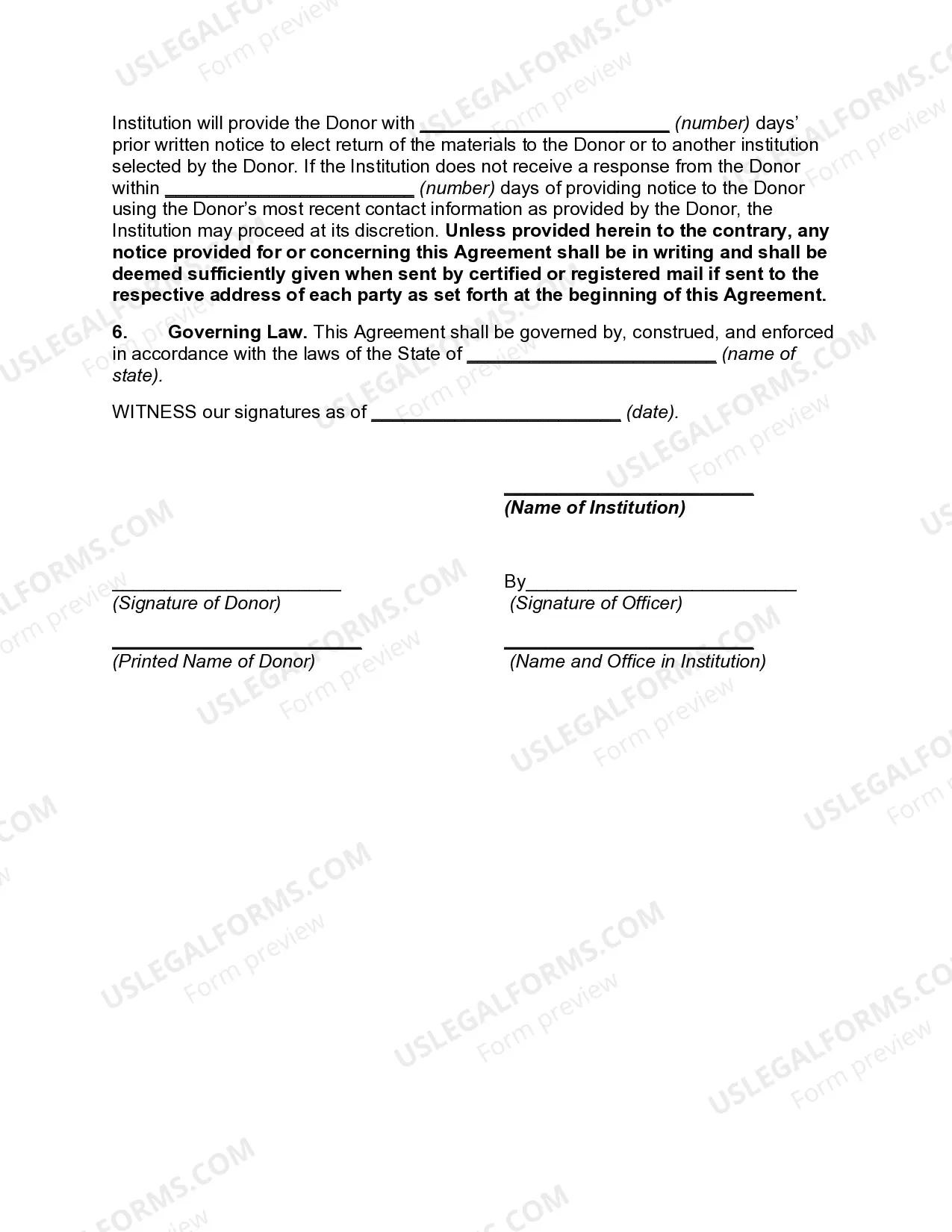
Connecticut Gift Agreement with Institution
Description
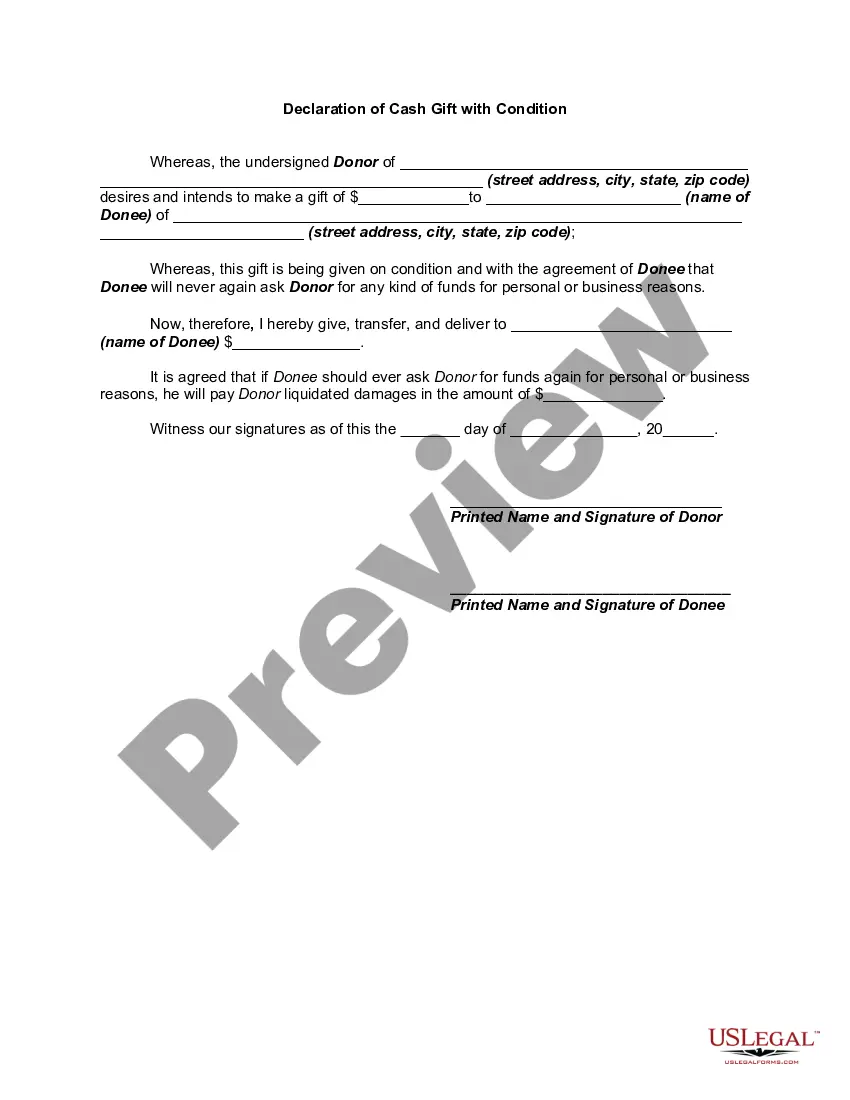
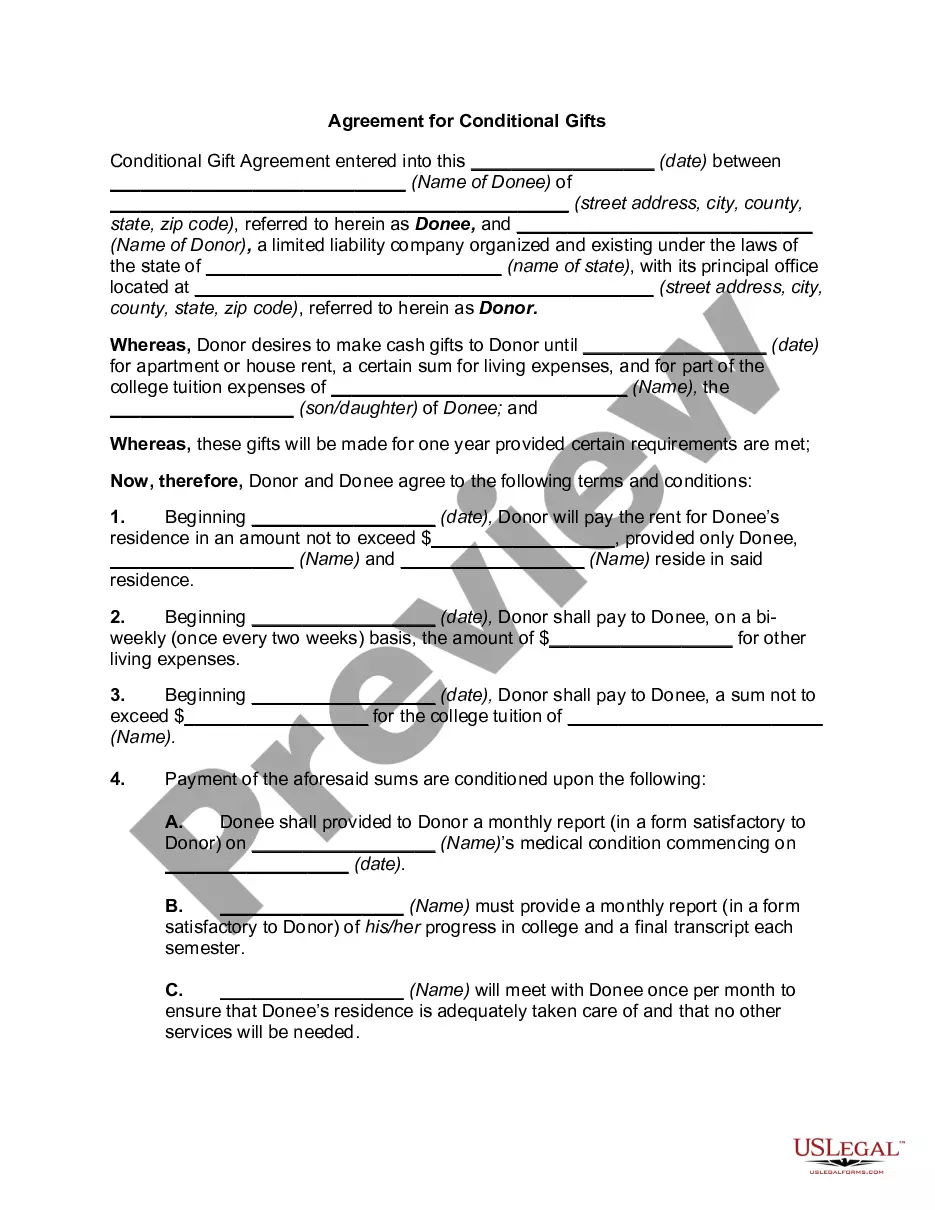
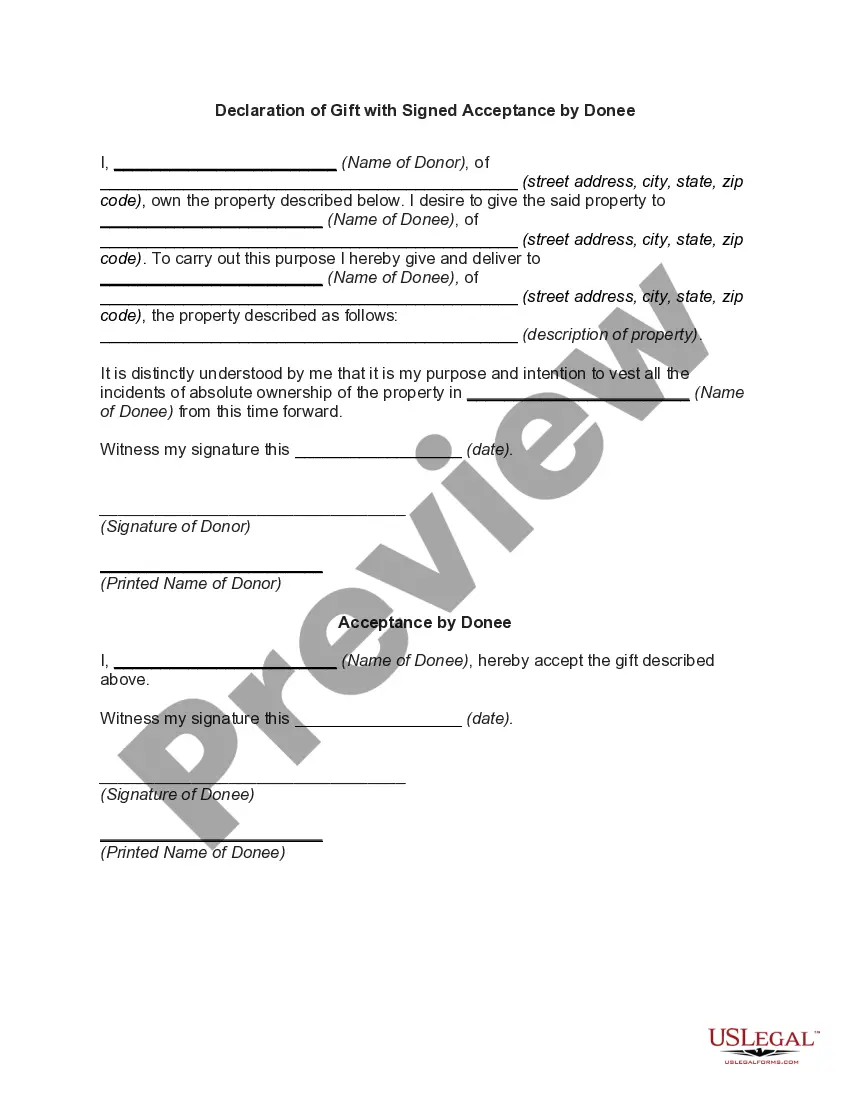
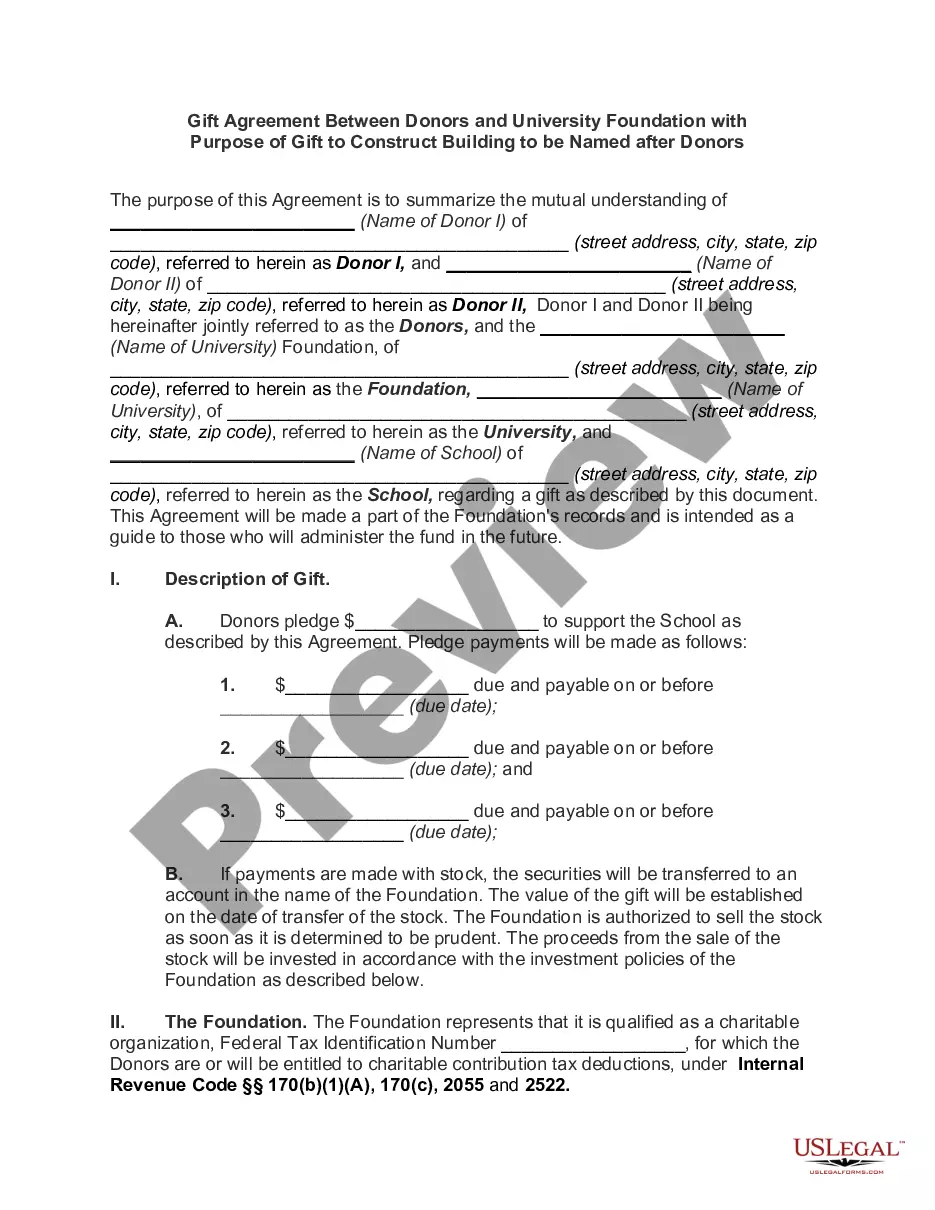
Get your form ready online
Our built-in tools help you complete, sign, share, and store your documents in one place.
Make edits, fill in missing information, and update formatting in US Legal Forms—just like you would in MS Word.
Download a copy, print it, send it by email, or mail it via USPS—whatever works best for your next step.
Sign and collect signatures with our SignNow integration. Send to multiple recipients, set reminders, and more. Go Premium to unlock E-Sign.
If this form requires notarization, complete it online through a secure video call—no need to meet a notary in person or wait for an appointment.
We protect your documents and personal data by following strict security and privacy standards.

Make edits, fill in missing information, and update formatting in US Legal Forms—just like you would in MS Word.

Download a copy, print it, send it by email, or mail it via USPS—whatever works best for your next step.

Sign and collect signatures with our SignNow integration. Send to multiple recipients, set reminders, and more. Go Premium to unlock E-Sign.

If this form requires notarization, complete it online through a secure video call—no need to meet a notary in person or wait for an appointment.

We protect your documents and personal data by following strict security and privacy standards.
Looking for another form?




How to fill out Gift Agreement With Institution?
If you need to gather, retrieve, or create legal document templates, utilize US Legal Forms, the largest collection of legal documents available online.
Take advantage of the site’s straightforward and user-friendly search function to find the forms you require.
Various templates for business and personal purposes are organized by categories and states, or keywords.
Step 4. Once you have located the form you want, click the Buy Now button. Select your preferred pricing plan and enter your information to create an account.
Step 5. Complete the purchase. You can use your Visa or Mastercard or PayPal account to finalize the transaction.
- Utilize US Legal Forms to access the Connecticut Gift Agreement with Institution in just a few clicks.
- If you are already a US Legal Forms user, Log In to your account and click on the Download button to obtain the Connecticut Gift Agreement with Institution.
- You can also view documents you have previously acquired in the My documents section of your account.
- If this is your first time using US Legal Forms, follow the steps below.
- Step 1. Ensure you have chosen the form for the correct city/state.
- Step 2. Use the Review feature to examine the details of the form. Remember to read the description.
- Step 3. If you are not satisfied with the form, use the Search box at the top of the screen to find alternative versions of the legal form template.
Form popularity
FAQ
Gift agreements are completed and signed to prevent misunderstandings, and show your donor that you care and that they are valued and important. As a nonprofit organization must keep accurate records on donations received, so must a donor keep records of donations they've made especially when it comes to tax time.
A gift agreement documents a gift has been made by the donor to a charitable organization and is legally enforceable. A pledge agreement records a commitment by a donor to make a gift at a future time.
What do you need to include in your donation acknowledgment letter?The name of your donor.The full legal name of your organization.A declaration of your organization's tax-exempt status.Your organization's employer identification number.The date the gift was received.A description of the gift and the amount received.More items...?
If approved by board members, the gift acceptance policy can then be implemented. Not only is this helpful in their role as board members, but can also serve as a guide for any board members who may wish to donate a gift or gifts in the future.
Incorporate guidelines for all types, forms, and purposes of gifts. As pertinent, include language about charitable bequests, specific endowments, naming opportunities, and any dollar limits and pledge restrictions. If you'll accept trusts, indicate whether your organization is willing to serve as a trustee.
A charitable pledge is enforceable if it is a legally binding contract. A legally binding contract exists when there is agreement between the parties and there has been consideration given in exchange for the pledge.
Gift agreements are completed and signed to prevent misunderstandings, and show your donor that you care and that they are valued and important. As a nonprofit organization must keep accurate records on donations received, so must a donor keep records of donations they've made especially when it comes to tax time.
A written gift acceptance policy can help manage the expectations of donors, (while treating them with respect) and also serve as guidance for board and staff members who are either on the asking, or receiving, end of contributions.
Giving programs allow employees to make financial donations to eligible nonprofits, sometimes through payroll deductions. Companies will also often match employee donations as an additional benefit. Key questions to cover in your giving policy are: How will you account for employee donations?