Connecticut Independent Contractor Agreement Between Licensed Counselor and Therapist and Licensed Counselor and Therapist Practicing as a Solo Practitioner

State:
Multi-State
Control #:
US-02565BG
Format:
Word; 
Rich Text
Instant download

Description

An independent contractor is a person or business who performs services for another person pursuant to an agreement and who is not subject to the other's control, or right to control, the manner and means of performing the services. The exact nature of the independent contractor's relationship with the hiring party is important since an independent contractor pays his/her own Social Security, income taxes without payroll deduction, has no retirement or health plan rights, and often is not entitled to worker's compensation coverage. The traditional tests to determine whether a worker is an employee or independent contractor involve the concept of control. The Internal Revenue Service (IRS) developed 20 factors used to determine whether a worker is an independent contractor under the common law. A "yes" answer to any of these questions would be evidence of an employer-employee relationship.

" Does the principal provide instructions to the worker about when, where, and how he or she is to perform the work?


" Does the principal provide training to the worker?

" Are the services provided by the worker integrated into the principal's business operations?

" Must the services be rendered personally by the worker?

" Does the principal hire, supervise and pay assistants to the worker?

" Is there a continuing relationship between the principal and the worker?

" Does the principal set the work hours and schedule?

" Does the worker devote substantially full time to the business of the principal?

" Is the work performed on the principal's premises?

" Is the worker required to perform the services in an order or sequence set by the principal?

" Is the worker required to submit oral or written reports to the principal?

" Is the worker paid by the hour, week, or month?

" Does the principal have the right to discharge the worker at will?

" Can the worker terminate his or her relationship with the principal any time he or she wishes without incurring liability to the principal?

" Does the principal pay the business or traveling expenses of the worker?

A "yes" answer to any of these questions would be evidence of an independent contractor relationship.


" Does the worker furnish significant tools, materials and equipment?

" Does the worker have a significant investment in facilities?

" Can the worker realize a profit or loss as a result of his or her services?

" Does the worker provide services for more than one firm at a time?

" Does the worker make his or her services available to the general public?
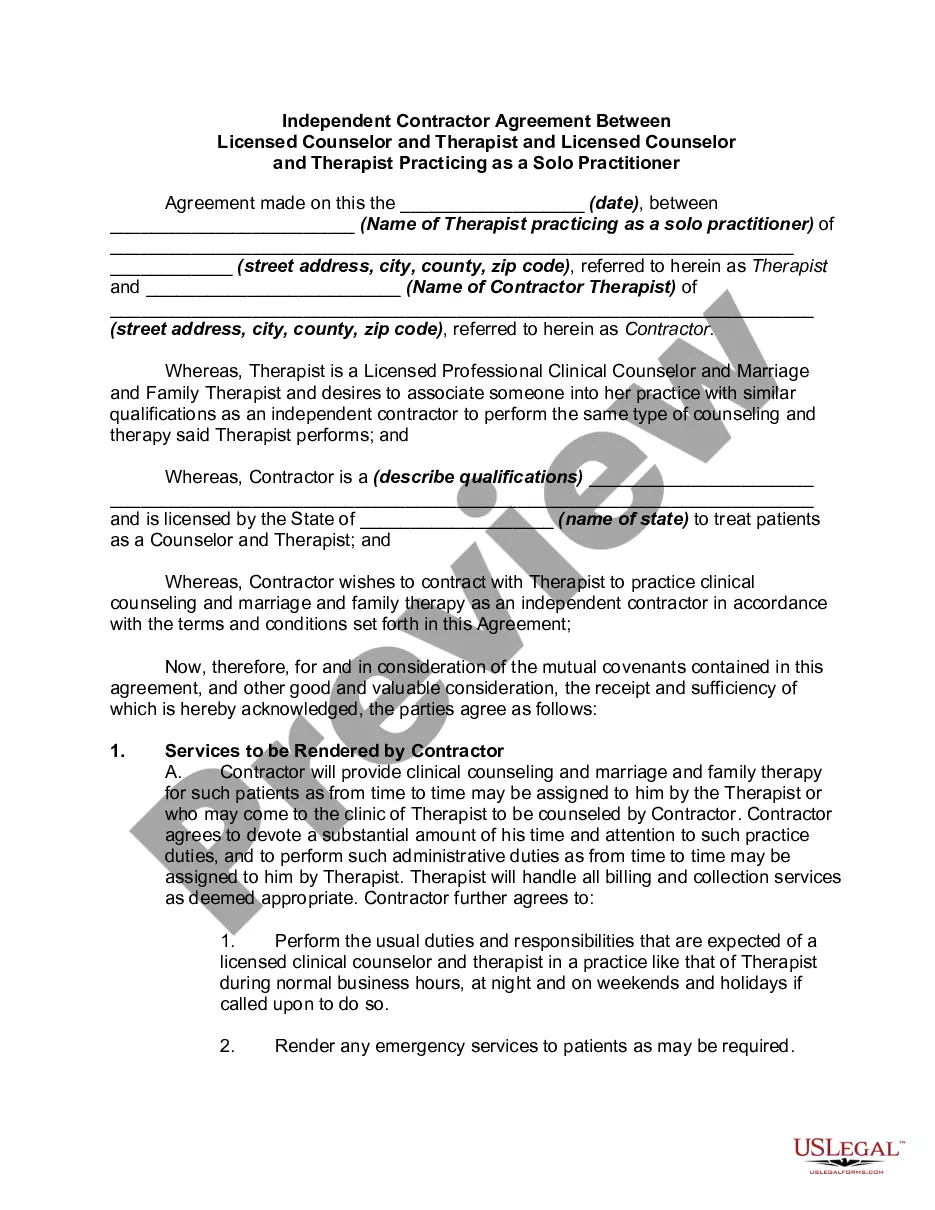
Free preview
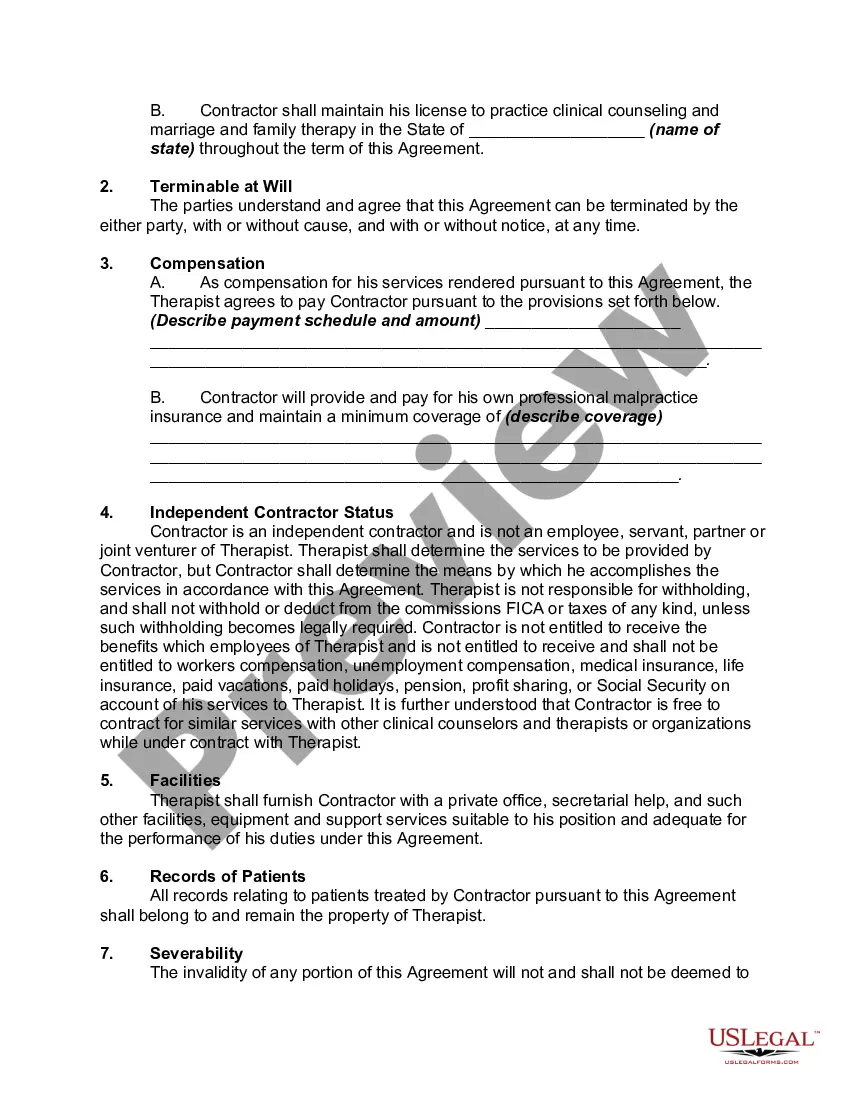
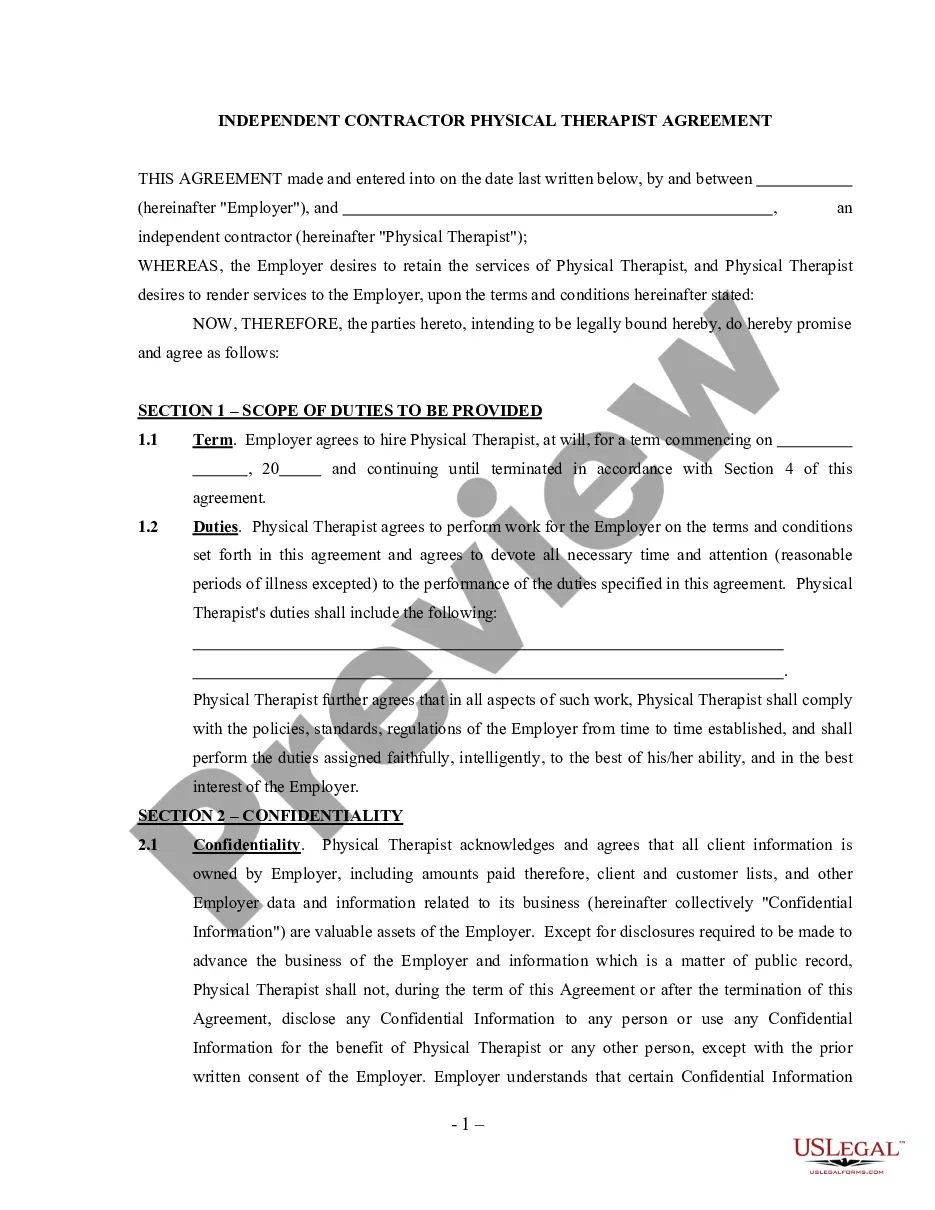
  • Preview Independent Contractor Agreement Between Licensed Counselor and Therapist and Licensed Counselor and Therapist Practicing as a Solo Practitioner
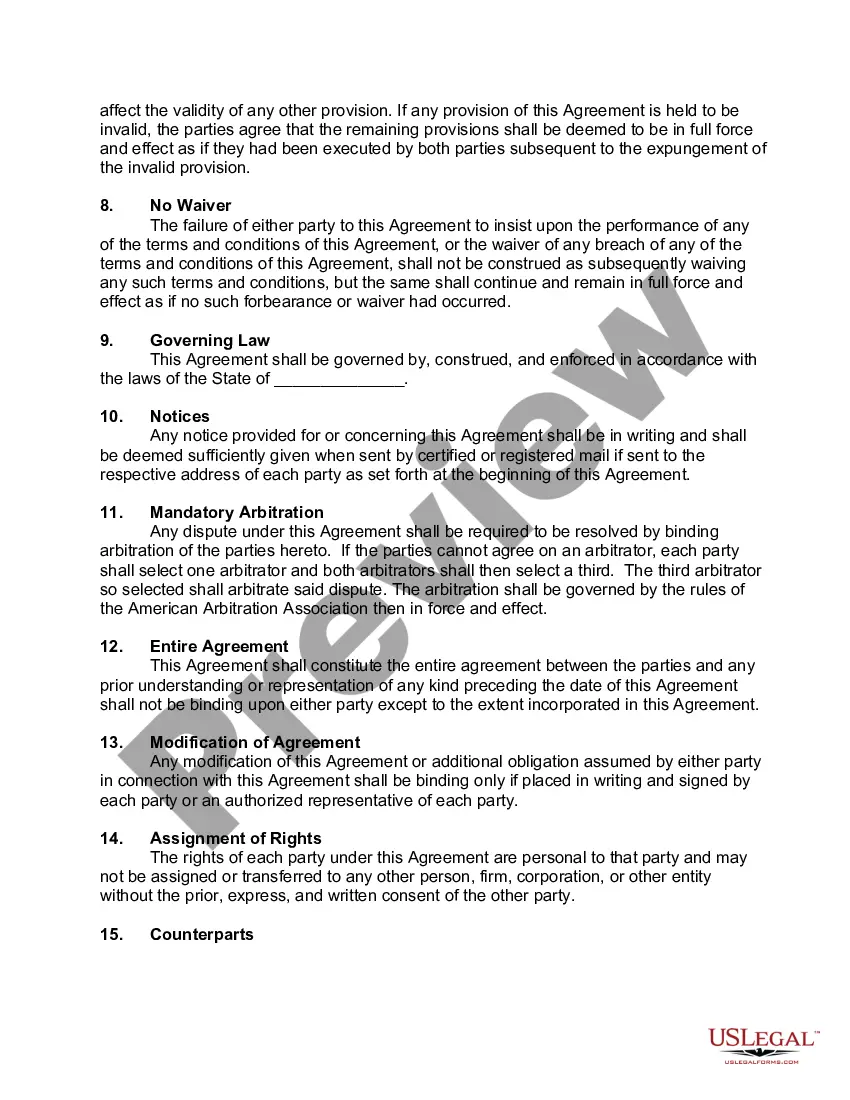
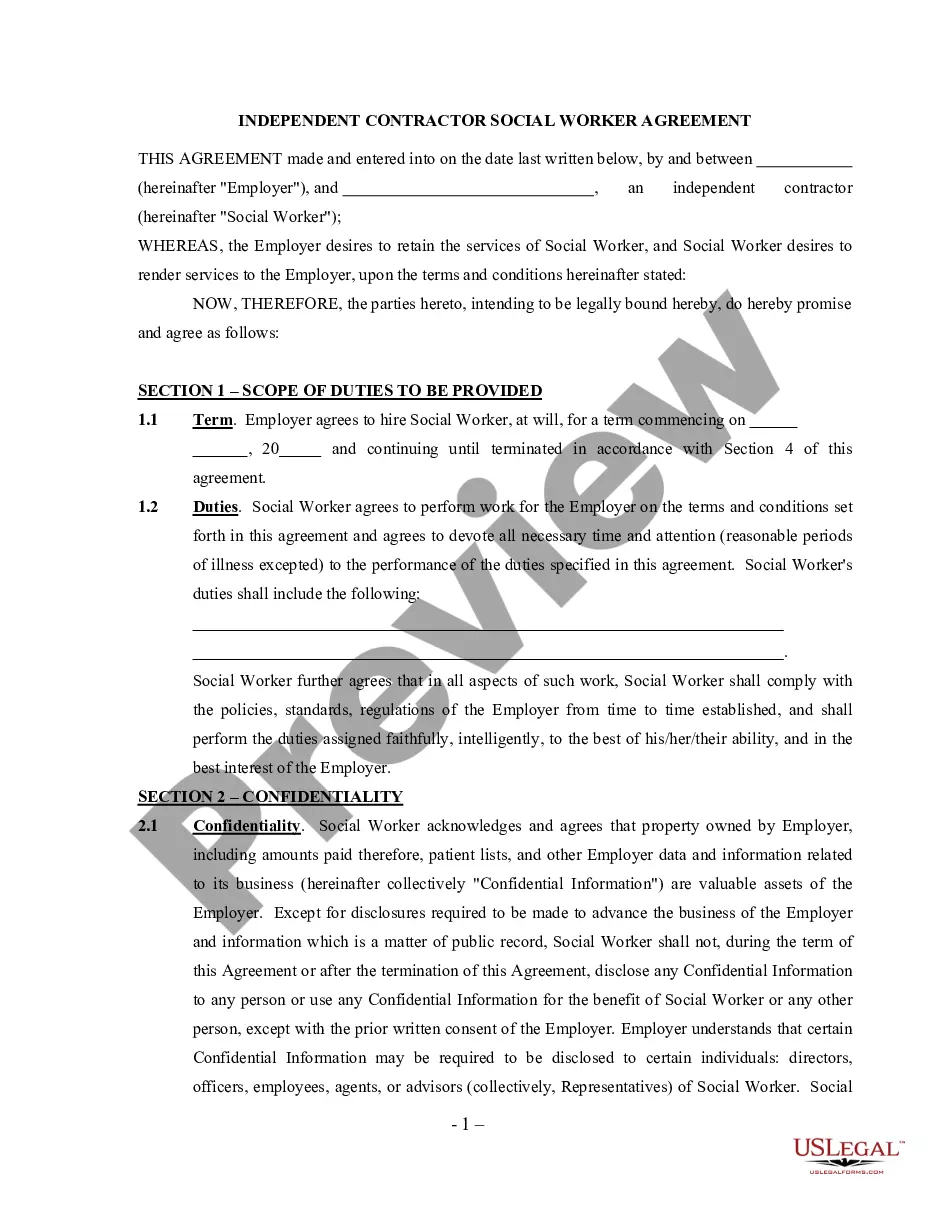
  • Preview Independent Contractor Agreement Between Licensed Counselor and Therapist and Licensed Counselor and Therapist Practicing as a Solo Practitioner
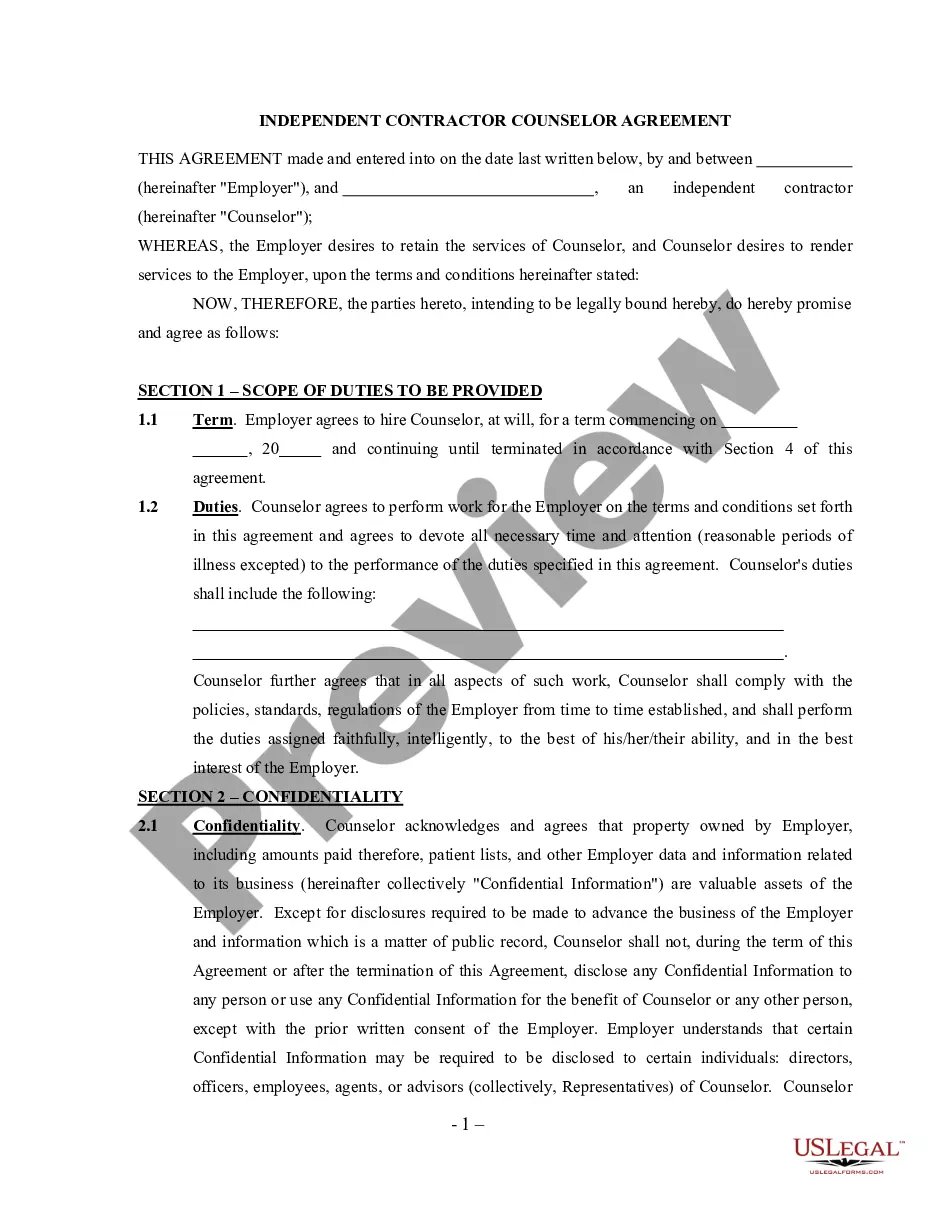
  • Preview Independent Contractor Agreement Between Licensed Counselor and Therapist and Licensed Counselor and Therapist Practicing as a Solo Practitioner
  • Preview Independent Contractor Agreement Between Licensed Counselor and Therapist and Licensed Counselor and Therapist Practicing as a Solo Practitioner

How to fill out Independent Contractor Agreement Between Licensed Counselor And Therapist And Licensed Counselor And Therapist Practicing As A Solo Practitioner?

US Legal Forms - one of the leading collections of legal documents in the United States - provides a selection of legal document templates you can download or print.

By using the website, you can access thousands of forms for business and personal purposes, organized by categories, states, or keywords.

You can obtain the latest versions of forms like the Connecticut Independent Contractor Agreement Between Licensed Counselor and Therapist and Licensed Counselor and Therapist Practicing as a Solo Practitioner in just minutes.

If the form does not meet your needs, use the Search area at the top of the screen to find one that does.

Once you are satisfied with the form, confirm your selection by clicking the Purchase now button. Then, choose the payment method you prefer and provide your information to register for an account.

  1. If you already hold a membership, Log In and download the Connecticut Independent Contractor Agreement Between Licensed Counselor and Therapist and Licensed Counselor and Therapist Practicing as a Solo Practitioner from the US Legal Forms catalog.
  2. The Download button will appear on each form you view.
  3. You can access all previously saved forms from the My documents tab in your account.
  4. If you wish to use US Legal Forms for the first time, here are simple steps to get started.
  5. Make sure you have selected the correct form for your city/region.
  6. Click the Preview button to check the content of the form.

Form popularity

FAQ

Independent contractors must adhere to various rules set by both state and federal laws, which primarily focus on tax obligations and worker classification. Contractors are responsible for tracking their earnings and paying self-employment taxes, while clients should avoid treating them as regular employees. Utilizing a Connecticut Independent Contractor Agreement can help outline these responsibilities clearly, allowing licensed counselors and therapists to maintain compliance while practicing as solo practitioners.

In general, a licensed mental health counselor (LMHC) and a licensed professional counselor (LPC) provide similar services but may differ based on state licensing requirements. Both professionals focus on helping individuals with mental health challenges and emotional issues. When entering into a Connecticut Independent Contractor Agreement, it's crucial to verify the specific titles and qualifications to ensure that the parties involved are legally recognized practitioners.

The primary purpose of an independent contractor agreement is to clarify the terms of the working relationship between the contractor and the client. This agreement helps to prevent misunderstandings by detailing project scope, payment terms, timelines, and confidentiality obligations. For licensed counselors and therapists practicing as solo practitioners, a Connecticut Independent Contractor Agreement can safeguard both parties and support a professional framework for their services.

In Connecticut, an independent contractor agreement serves as a formal document outlining the terms between the contractor and the client. This agreement specifies expectations, deliverables, payment terms, and rights of both parties. For licensed counselors and therapists, a Connecticut Independent Contractor Agreement can help protect client confidentiality and establish professional boundaries, facilitating a smoother working relationship.

Being self-employed means you run your own business and are responsible for all aspects of it. An independent contractor, on the other hand, may work for a client under a contract while maintaining independence in how they complete their tasks. In a Connecticut Independent Contractor Agreement Between Licensed Counselor and Therapist and Licensed Counselor and Therapist Practicing as a Solo Practitioner, you define the scope of work and the nature of your relationship with clients, ensuring clarity on roles and responsibilities.

The 70 30 salary split indicates how a provider’s earnings are shared in a partnership or contractual relationship. Essentially, it means that the therapist or counselor receives 70% of the total earnings, while 30% covers operational costs or pays for additional services offered by the practice. Grasping this concept is important when crafting a Connecticut Independent Contractor Agreement Between Licensed Counselor and Therapist and Licensed Counselor and Therapist Practicing as a Solo Practitioner, as it sets clear financial expectations for both parties involved.

A licensed counselor and a licensed therapist are not the same, although their roles can overlap. Both are trained to provide mental health support, yet they may hold different licenses and educational backgrounds. In navigating this landscape, a Connecticut Independent Contractor Agreement Between Licensed Counselor and Therapist and Licensed Counselor and Therapist Practicing as a Solo Practitioner clarifies roles and responsibilities, ensuring effective collaboration for better client outcomes.

Choosing between a counselor and a therapist depends on your specific circumstances. If you are facing a short-term challenge, a counselor may be the right choice. However, if you want to address deeper emotional issues or patterns, a therapist might be more suitable. Whichever path you choose, having a clear Connecticut Independent Contractor Agreement Between Licensed Counselor and Therapist and Licensed Counselor and Therapist Practicing as a Solo Practitioner can guide your treatment and ensure a smooth professional relationship.

Counsellors and therapists offer valuable mental health support, yet they differ in their approaches. Counsellors generally focus on specific issues and help clients navigate immediate challenges, while therapists often engage in deeper exploration of thoughts and emotions to foster long-term healing. Understanding these distinctions can help you decide which professional fits your needs better, especially when considering a Connecticut Independent Contractor Agreement Between Licensed Counselor and Therapist and Licensed Counselor and Therapist Practicing as a Solo Practitioner.

While both licensed therapists and licensed counselors provide mental health care, they often have different educational requirements and professional designations. A licensed therapist typically holds a higher-level degree and may offer a broader range of services than a licensed counselor. When entering a Connecticut Independent Contractor Agreement Between Licensed Counselor and Therapist and Licensed Counselor and Therapist Practicing as a Solo Practitioner, it is essential to understand these distinctions.

Trusted and secure by over 3 million people of the world’s leading companies

Connecticut Independent Contractor Agreement Between Licensed Counselor and Therapist and Licensed Counselor and Therapist Practicing as a Solo Practitioner