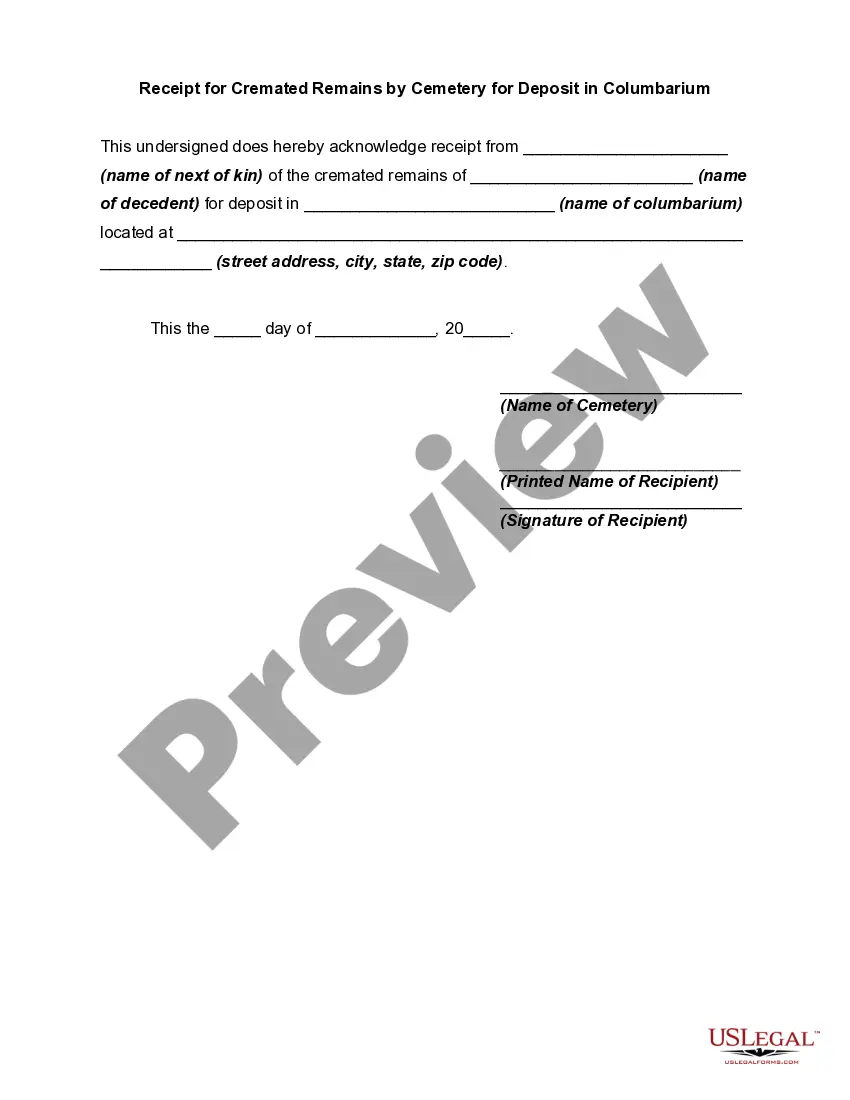
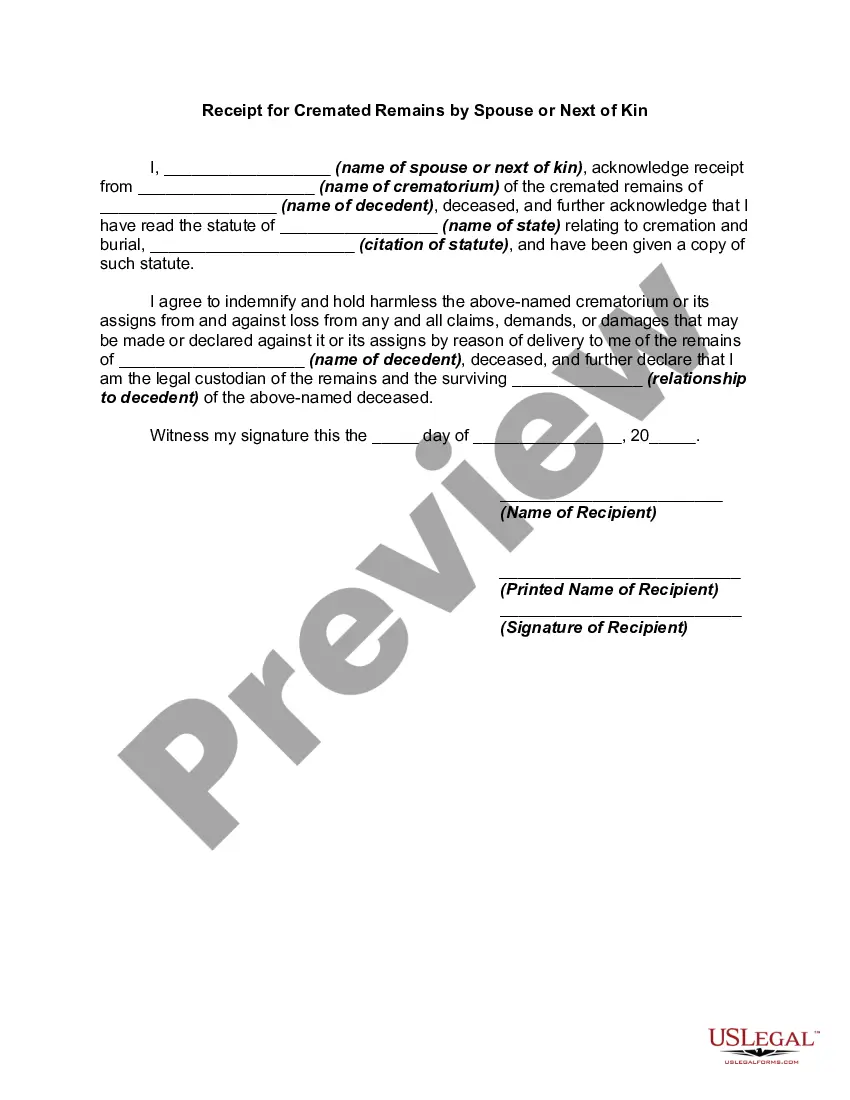
Connecticut Receipt for Cremated Remains by Spouse or Next of Kin

State:
Multi-State
Control #:
US-02556BG
Format:
Word; 
Rich Text
Instant download

Description

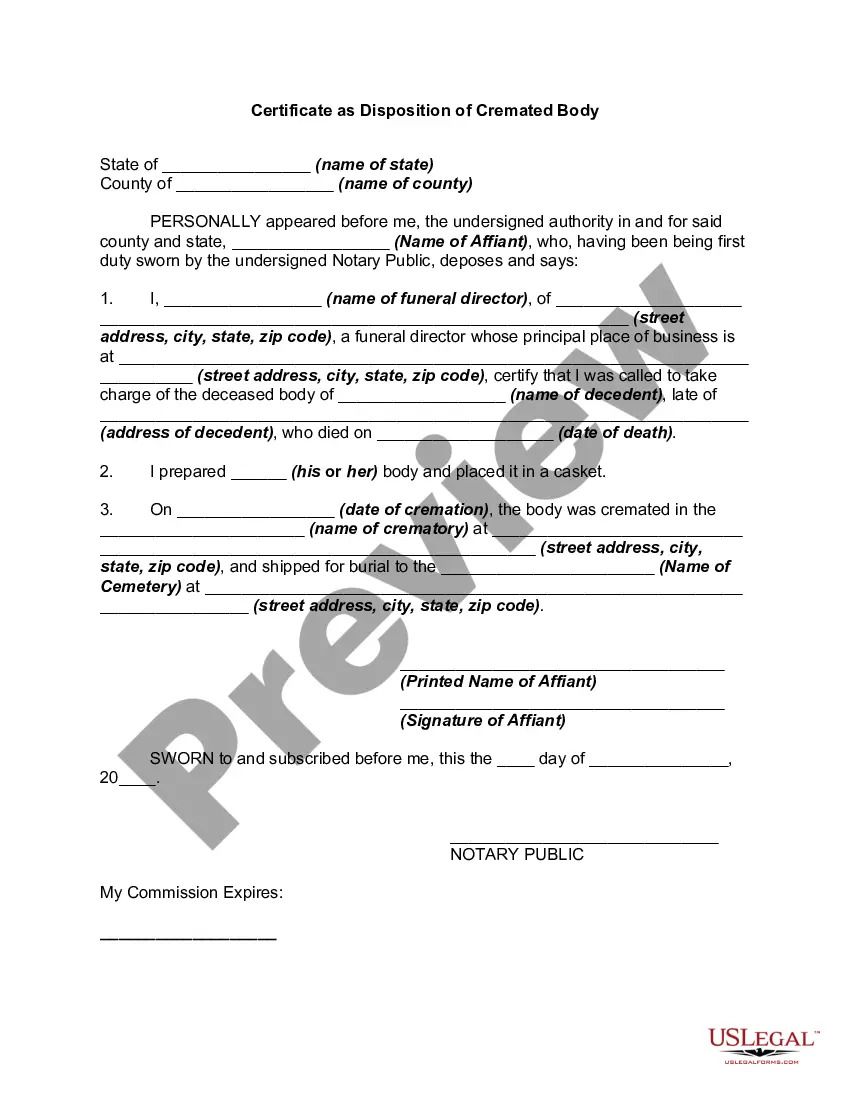
Cremation may serve as a funeral or post funeral rite that is an alternative to the interment of an intact body in a casket. Cremation is the process of reducing dead human bodies to basic chemical compounds in the form of gases and bone fragments. This is accomplished through high temperatures and vaporization. Cremated remains, which are not a health risk, may be buried or immured in memorial sites or cemeteries, or they may be legally retained by relatives or dispersed in a variety of ways and locations.

This form is a generic example that may be referred to when preparing such a form for your particular state. It is for illustrative purposes only. Local laws should be consulted to determine any specific requirements for such a form in a particular jurisdiction.
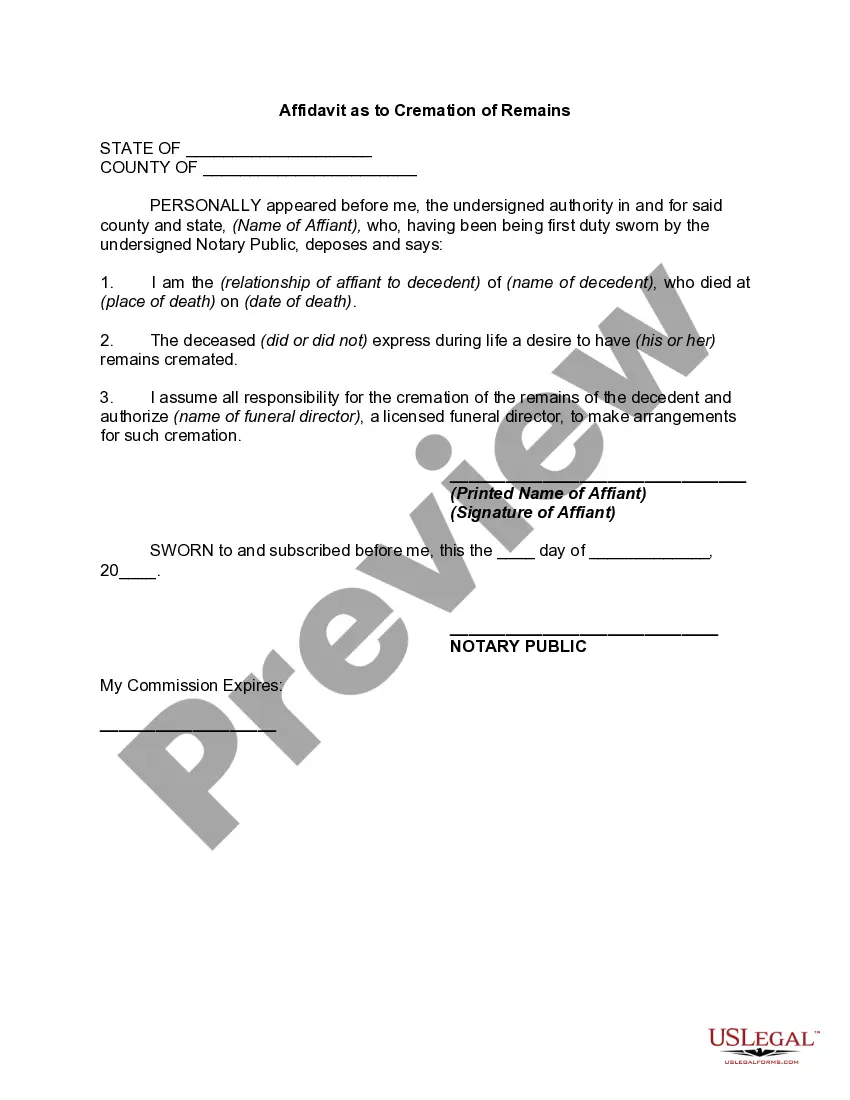
How to fill out Receipt For Cremated Remains By Spouse Or Next Of Kin?

It is feasible to invest hours on the internet looking for the legal document template that fulfills the federal and state requirements you will require.

US Legal Forms provides thousands of legal templates that are reviewed by experts.

You can conveniently obtain or generate the Connecticut Receipt for Cremated Remains by Spouse or Next of Kin from our services.

If available, use the Review button to browse through the document template as well.

  1. If you possess a US Legal Forms account, you can Log In and click on the Acquire button.
  2. Subsequently, you can complete, modify, generate, or sign the Connecticut Receipt for Cremated Remains by Spouse or Next of Kin.
  3. Every legal document template you purchase is yours forever.
  4. To obtain another copy of any purchased form, visit the My documents section and click on the relevant button.
  5. If you are using the US Legal Forms website for the first time, follow the simple instructions below.
  6. First, ensure that you have selected the correct document template for the region/state you choose.
  7. Review the form description to confirm you have selected the correct template.

Form popularity

FAQ

Before cremation, certain items must be removed from the body to ensure safety and compliance with regulations. Medical devices, such as pacemakers, should be taken out as they can create hazards during the cremation process. Additionally, personal belongings, such as jewelry, must also be removed and properly accounted for, often documented through the Connecticut Receipt for Cremated Remains by Spouse or Next of Kin. Understanding these requirements is vital for a respectful and safe cremation experience.

The waiting period of three days before cremation in Connecticut allows for essential legal and emotional considerations. This time frame ensures that all necessary paperwork, including the Connecticut Receipt for Cremated Remains by Spouse or Next of Kin, is properly completed. It also provides family and loved ones with an opportunity to mourn and prepare. Respecting this period can foster a sense of closure during a difficult time.

In Connecticut, the laws surrounding cremation require specific documentation, including the Connecticut Receipt for Cremated Remains by Spouse or Next of Kin. This receipt serves as legal proof that the designated individual has received the cremated remains. Before cremation can occur, the funeral home must also obtain necessary permits and ensures compliance with state regulations. Understanding these laws can help you navigate the cremation process more smoothly.

An authorization form for cremation is a legal document needed before proceeding with the cremation of a deceased individual. This form typically requires the signature of the next of kin or spouse, affirming their consent to the process. Having a clear Connecticut Receipt for Cremated Remains by Spouse or Next of Kin included helps streamline this process, ensuring families can handle their loved one's remains with care and dignity.

In New York, cremation must follow specific regulations to ensure respect and legality. The deceased must have a proper death certificate, and the cremation process requires consent from the next of kin, such as the spouse or legal representative. Additionally, a Connecticut Receipt for Cremated Remains by Spouse or Next of Kin is often needed to manage the transfer of ashes, ensuring families have clear documentation.

In Connecticut, cremation can only occur after obtaining a Connecticut Receipt for Cremated Remains by Spouse or Next of Kin. The law mandates that you must have the consent of the deceased's legal next of kin, such as a spouse or adult child. Additionally, a death certificate must be filed, and certain paperwork must be completed before cremation. Understanding these rules can help ensure a respectful and compliant process.

Yes, you can have your husband's ashes buried with you, creating a meaningful tribute to your shared life. Many people find comfort in this choice, as it reflects love and togetherness. Ensure you communicate this request with your funeral director and understand any legal requirements, including securing a Connecticut Receipt for Cremated Remains by Spouse or Next of Kin.

Yes, spouses' ashes can certainly be buried together if that is the preference of the family. This arrangement symbolizes the enduring bond shared in life and in death. However, it's crucial to check local regulations or cemetery policies regarding burial practices. Understanding the process of obtaining a Connecticut Receipt for Cremated Remains by Spouse or Next of Kin can further guide you in planning this meaningful decision.

Cremated remains are often referred to as ashes, cremains, or simply remains. Using clear and respectful terminology helps convey the significance of the remains respectfully. This terminology is key when discussing the Connecticut Receipt for Cremated Remains by Spouse or Next of Kin, as it signifies a sensitive and important topic for many families.

Yes, you can place your husband's ashes in your coffin if that is your wish. Many couples choose to share their final resting places, which can create a comforting connection even after death. It’s essential to check with your cemetery or funeral provider to ensure this arrangement is permitted. You can refer to the Connecticut Receipt for Cremated Remains by Spouse or Next of Kin for proper documentation regarding this choice.

Trusted and secure by over 3 million people of the world’s leading companies

Connecticut Receipt for Cremated Remains by Spouse or Next of Kin