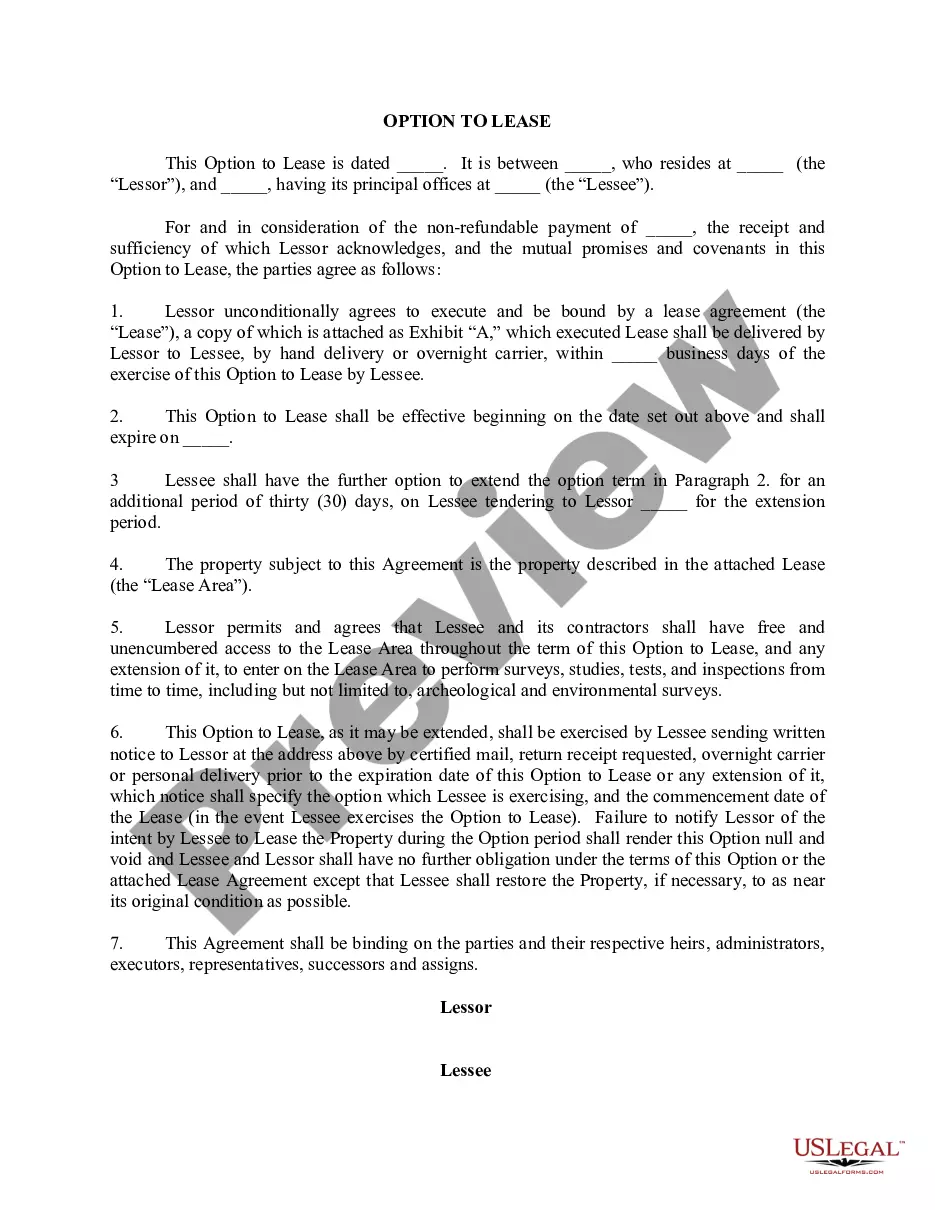
Connecticut Subcontractor Agreement for Construction
Description
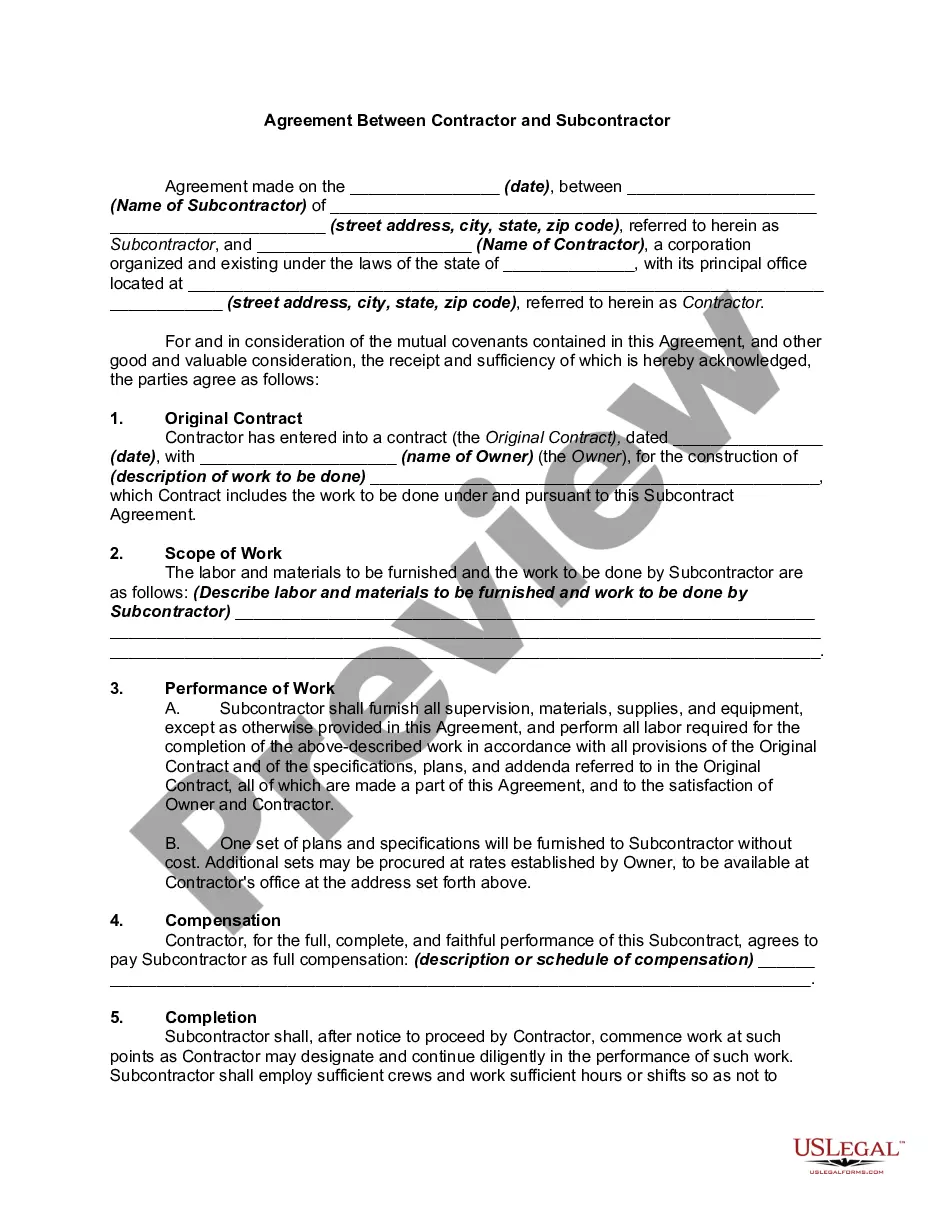
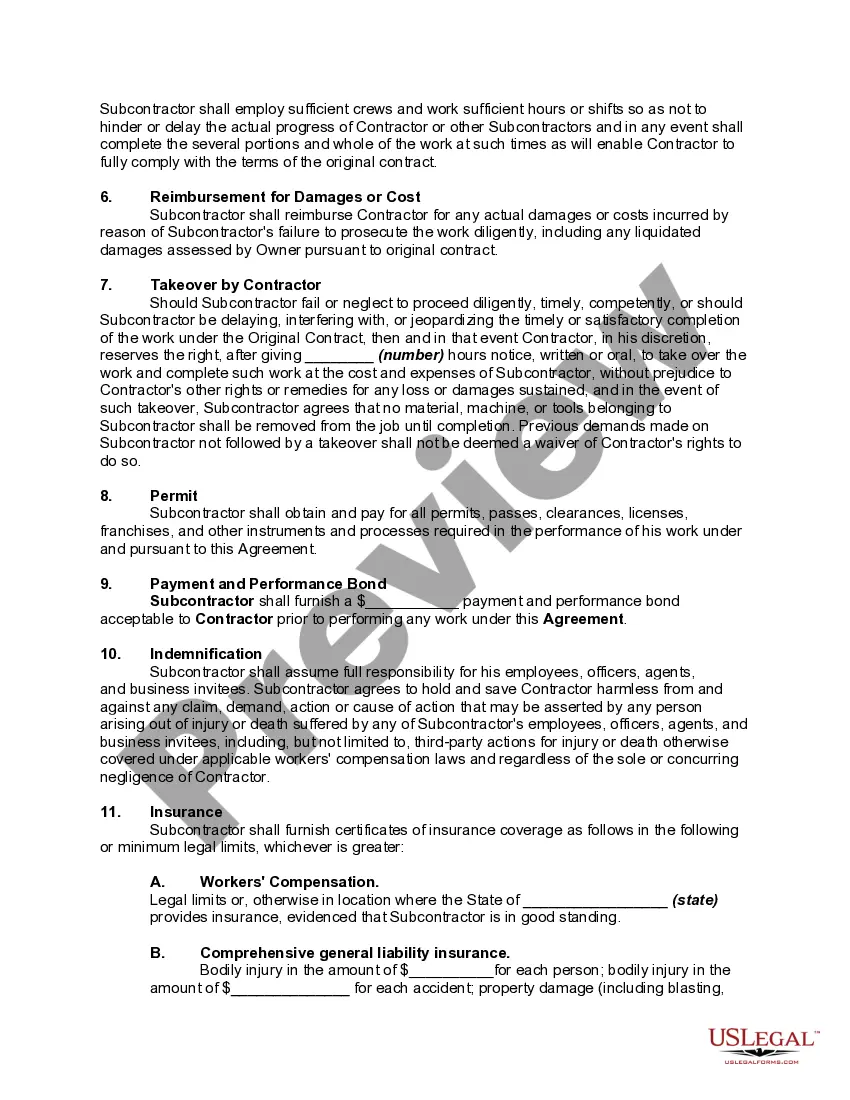
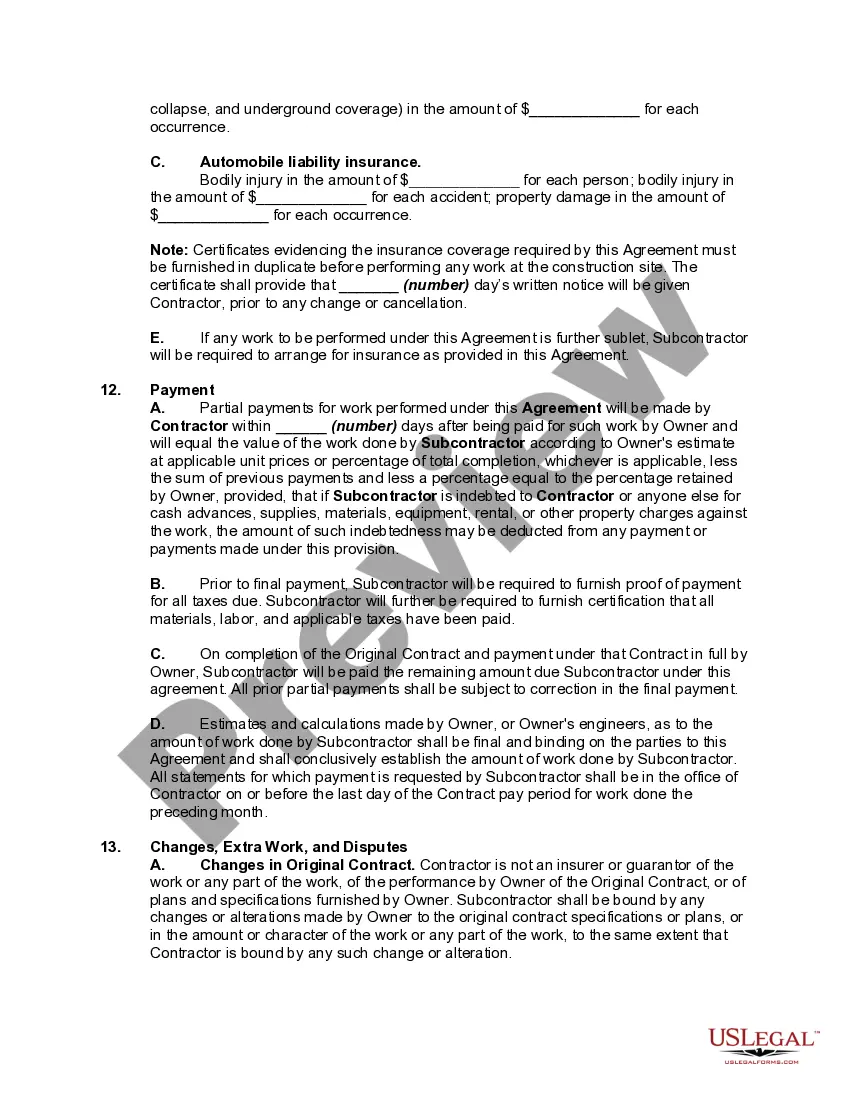
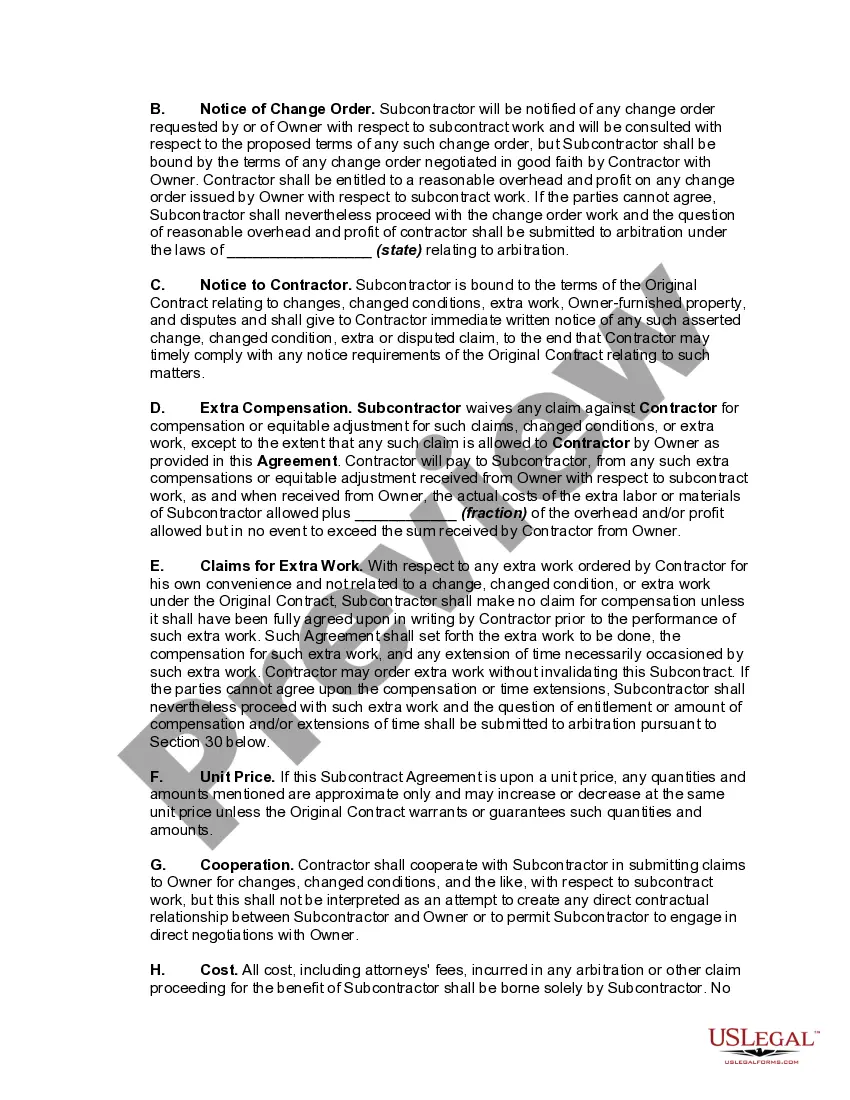
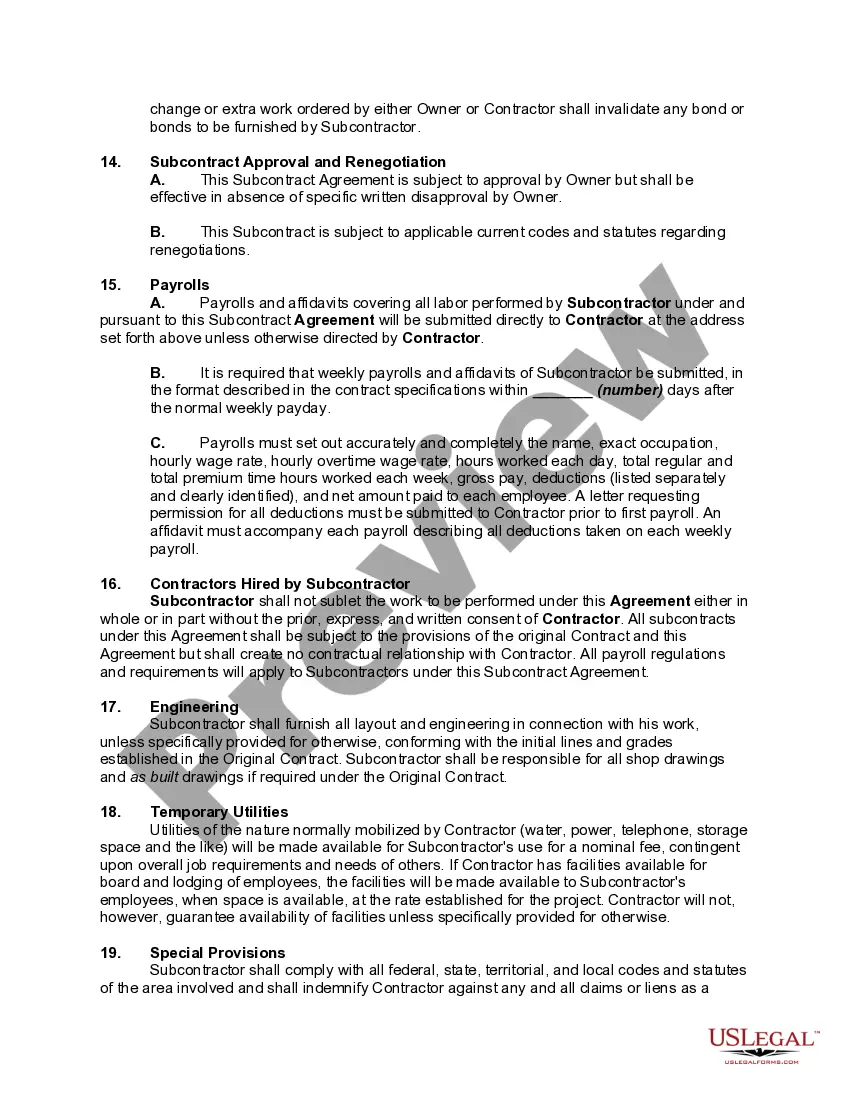
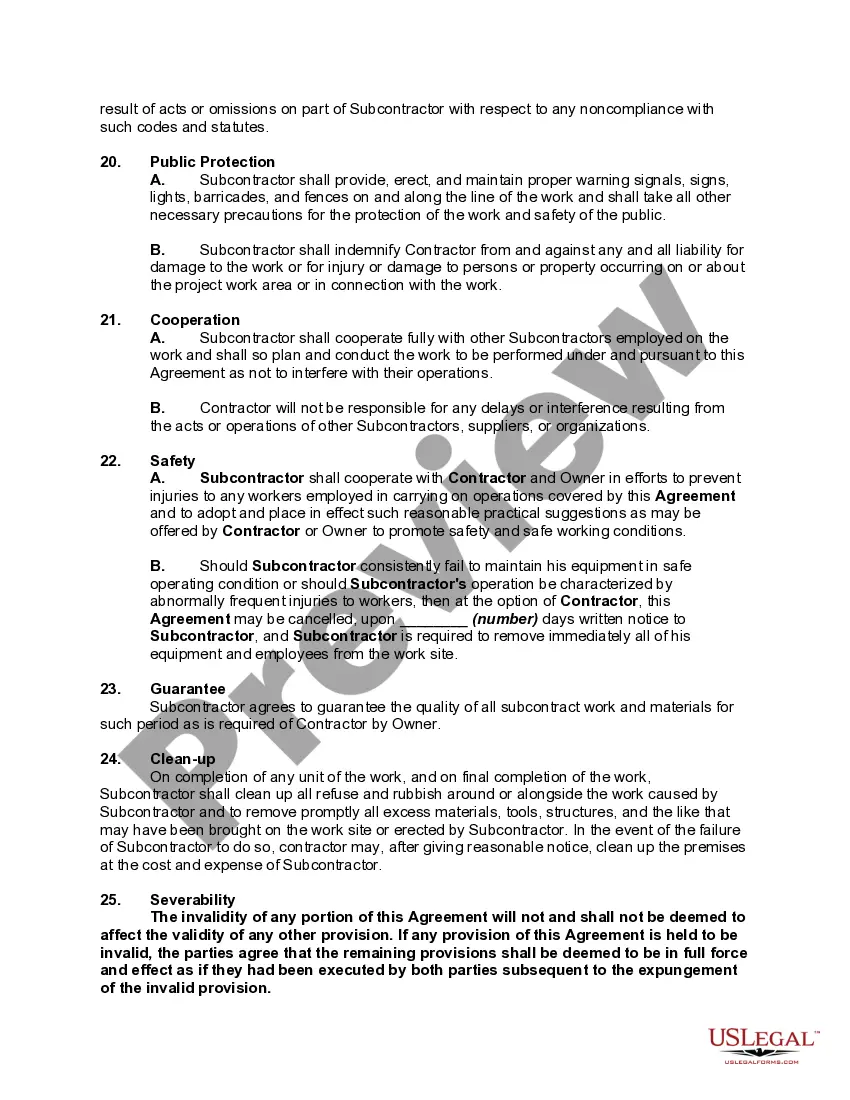
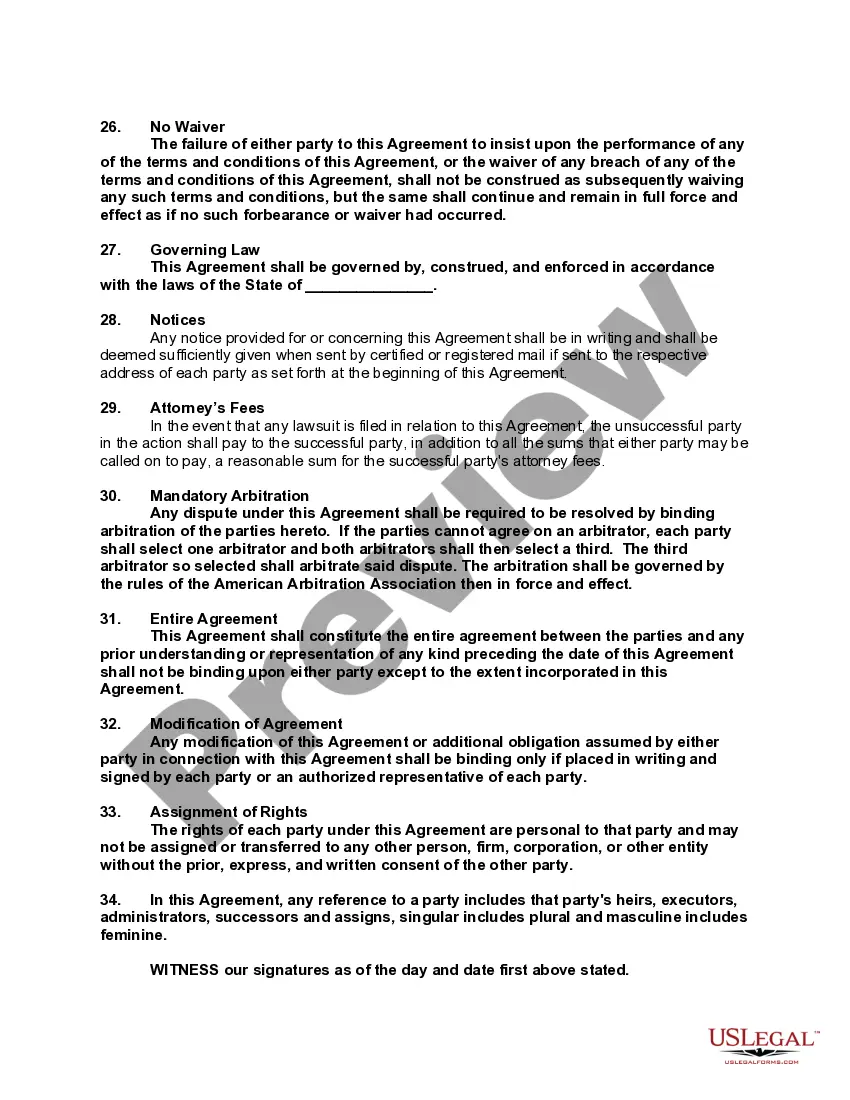



How to fill out Subcontractor Agreement For Construction?
If you require thorough, download, or generate authorized document formats, utilize US Legal Forms, the largest selection of authorized forms available online.
Take advantage of the site’s user-friendly and convenient search feature to obtain the documents you need.
Various formats for business and personal purposes are organized by categories and states, or keywords. Use US Legal Forms to acquire the Connecticut Subcontractor Agreement for Construction with just a few clicks.
Every authorized document template you purchase is yours indefinitely. You have access to all forms you downloaded within your account. Navigate to the My documents section and select a form to print or download again.
Stay competitive and download, and print the Connecticut Subcontractor Agreement for Construction with US Legal Forms. There are countless professional and state-specific forms available for your business or personal requirements.
- If you are currently a US Legal Forms member, Log In to your account and click the Get option to locate the Connecticut Subcontractor Agreement for Construction.
- You can also access forms you previously downloaded in the My documents section of your account.
- If you are using US Legal Forms for the first time, follow the instructions below.
- Step 1. Ensure you have selected the form for the correct city/state.
- Step 2. Use the Review feature to examine the form’s details. Make sure to read the explanation.
- Step 3. If you are not satisfied with the form, use the Search area at the top of the screen to find other versions of the authorized form template.
- Step 4. Once you have found the form you need, click the Get now option. Choose the pricing plan you prefer and input your information to register for an account.
- Step 5. Process the payment. You can utilize your credit card or PayPal account to complete the transaction.
- Step 6. Choose the format of your authorized form and download it onto your device.
- Step 7. Complete, modify, and print or sign the Connecticut Subcontractor Agreement for Construction.
Form popularity
FAQ
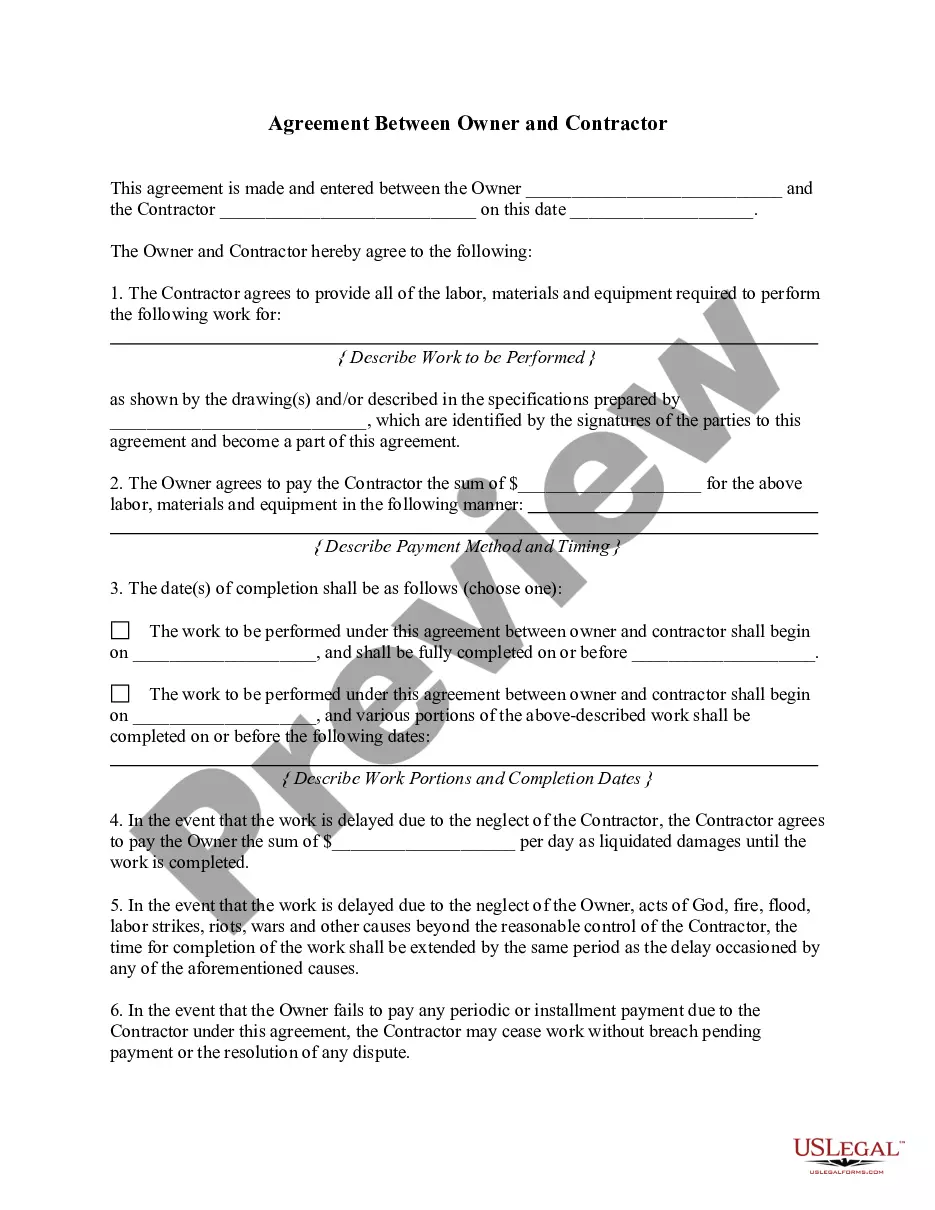
The agreement between a company and a contractor is typically a primary contract that outlines the expectations and deliverables for a construction project. This contract usually serves as the foundation for any subcontractor agreements, like the Connecticut Subcontractor Agreement for Construction. It specifies the obligations of the contractor, timelines, and payment requirements, ensuring that both parties are on the same page. A clear, well-structured agreement helps avoid conflicts and promotes project success.
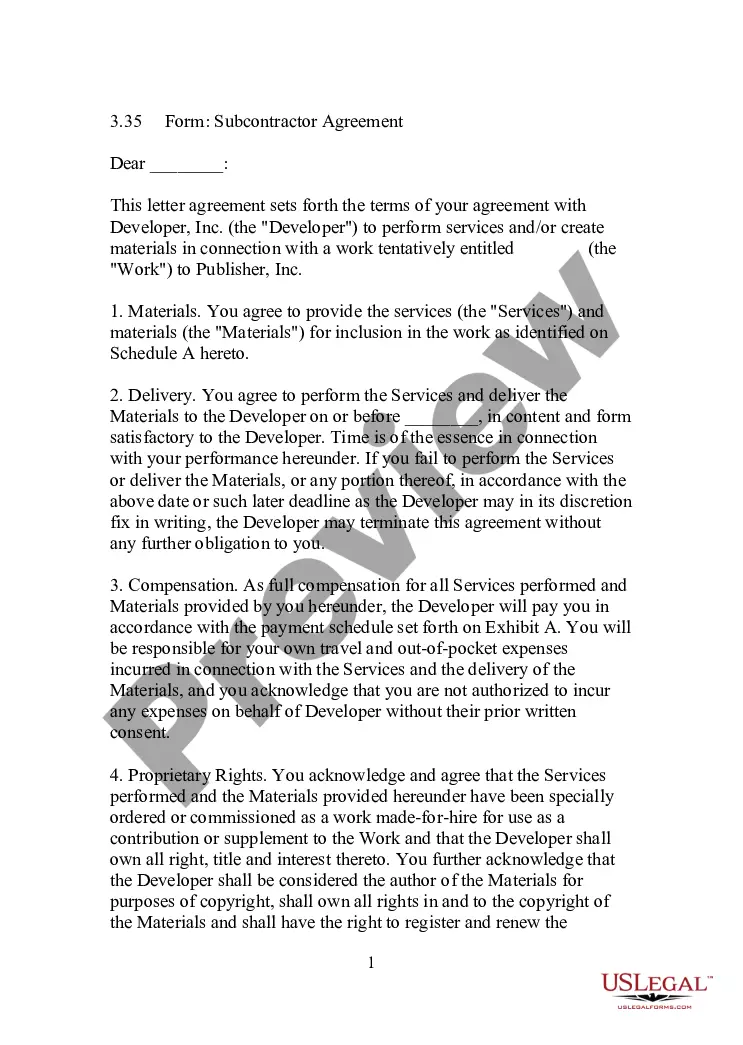
Creating a subcontractor agreement involves several important steps. First, clearly define the scope of work, payment terms, and deadlines within the Connecticut Subcontractor Agreement for Construction framework. It's essential to include clauses that address termination, indemnification, and dispute resolution. To streamline the process, you can utilize platforms like US Legal Forms, which offer templates and guidance tailored to your needs.
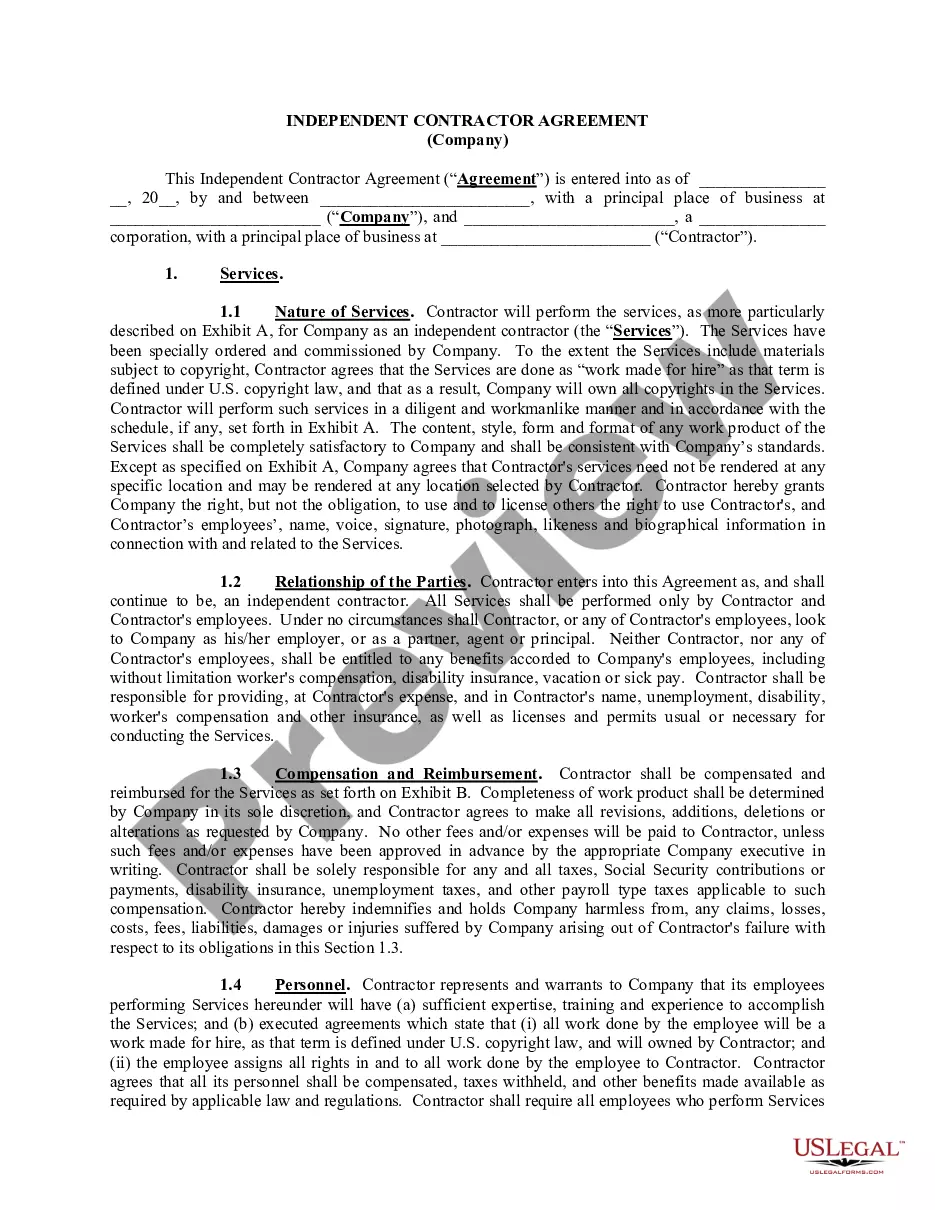
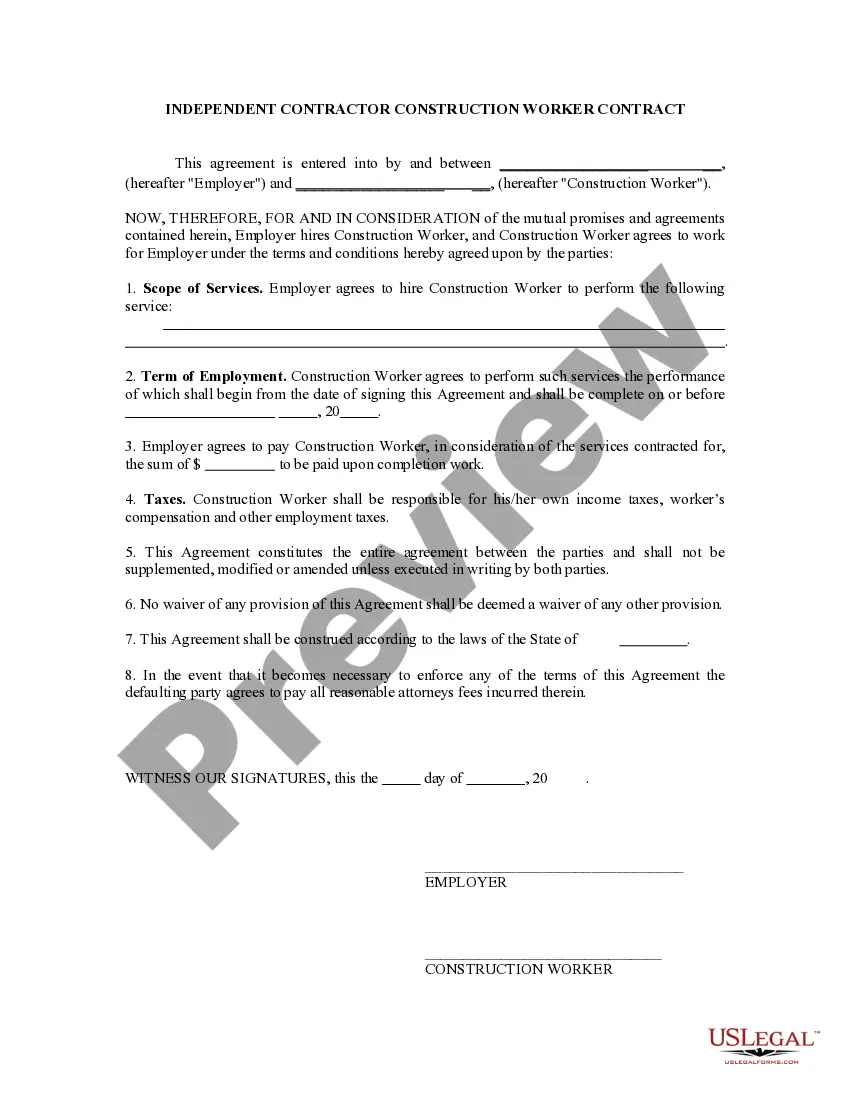
An independent contractor agreement in Connecticut is a contract that outlines the working relationship between a business and an independent contractor. Unlike employees, independent contractors operate under a different set of guidelines, which should be delineated in their agreements. The Connecticut Subcontractor Agreement for Construction can serve as a model for independent contractor agreements, ensuring that all necessary terms are covered. Having a solid agreement in place helps clarify tax obligations and liability issues.
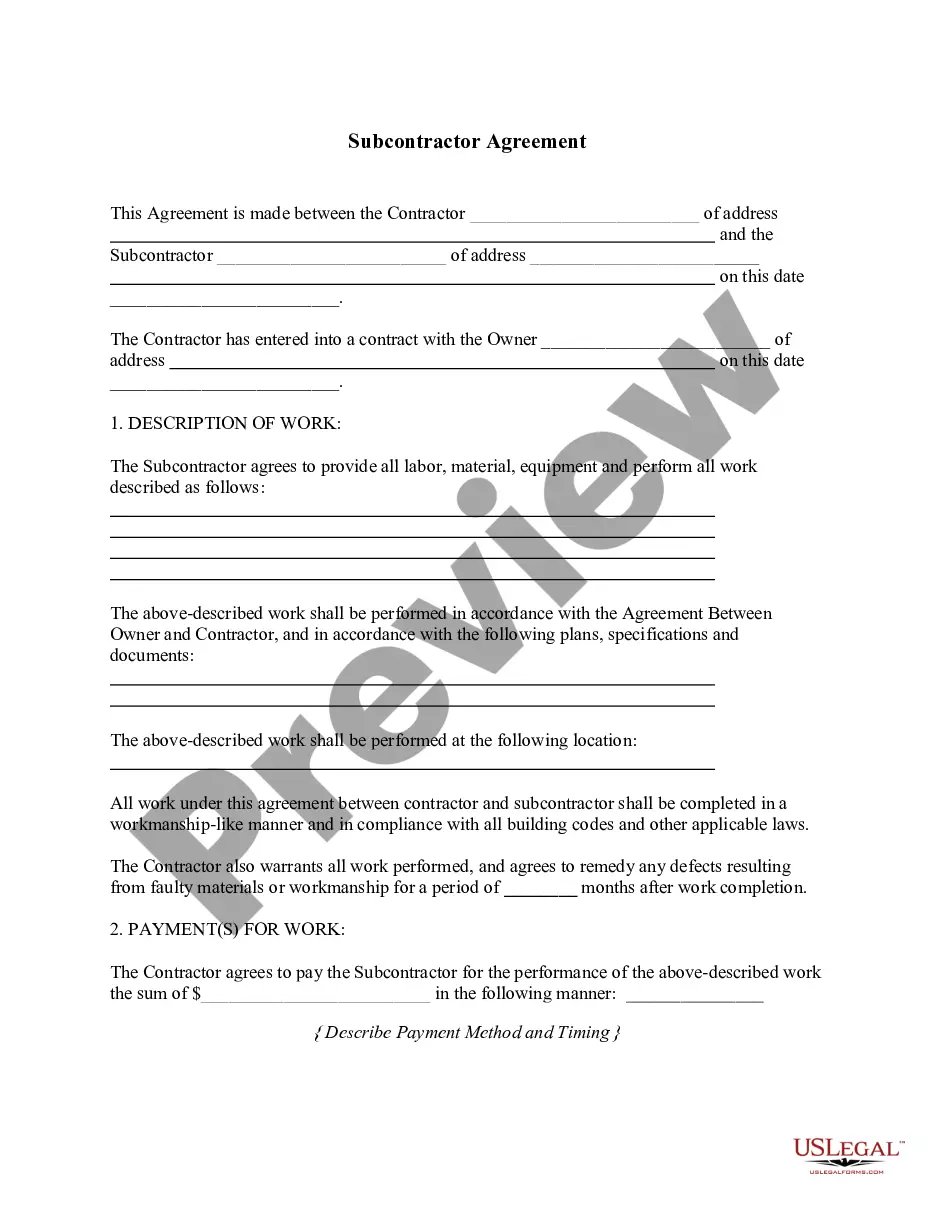
A subcontracting agreement is a formal contract between a contractor and a subcontractor, detailing the work to be performed. In Connecticut, such agreements should adhere to specific guidelines set forth in the Connecticut Subcontractor Agreement for Construction. This document helps to establish clear boundaries and expectations for the subcontractor's responsibilities. By making these terms explicit, both parties can avoid misunderstandings and potential conflicts.
The agreement between a company and a subcontractor is typically known as a subcontractor agreement. This Connecticut Subcontractor Agreement for Construction defines the scope of work, payment terms, and timelines for project completion. It helps protect the interests of both parties by specifying the responsibilities and expectations. Properly drafted agreements minimize risks and disputes, ensuring smoother project execution.
An MoU, or Memorandum of Understanding, serves as a preliminary document outlining the intentions of both the contractor and subcontractor. It generally lays the framework for the terms that will later be detailed in the Connecticut Subcontractor Agreement for Construction. While not legally binding, an MoU can guide the parties in negotiations and future interactions, fostering a clearer understanding of expectations. This step sets the tone for successful collaboration.
Yes, there is usually a contractual relationship between the owner and the subcontractor. This relationship is established through the main contract between the owner and the general contractor, which often allows for subcontracting certain work. The Connecticut Subcontractor Agreement for Construction outlines these roles and responsibilities clearly, ensuring that everyone understands their obligations. Engaging a subcontractor requires careful consideration of these terms to protect all parties involved.
To subcontract work in construction, first establish the scope of work required and select a qualified subcontractor. Next, create a Connecticut Subcontractor Agreement for Construction that clearly outlines the roles, responsibilities, and payment terms. By using a formal contract, you protect both parties and ensure the project stays on track.
The relationship between a contractor and subcontractor is primarily based on collaboration and specialization. In a Connecticut Subcontractor Agreement for Construction, the contractor relies on the subcontractor's expertise to complete specific tasks within a project. This partnership helps ensure quality work while allowing the contractor to focus on overall project management.
The Connecticut Subcontractor Agreement for Construction defines the relationship between a general contractor and subcontractor. This agreement includes essential details about the work to be performed, timelines, and payment schedules. By formalizing these terms, the general contractor can effectively manage the project and subcontractor expectations.