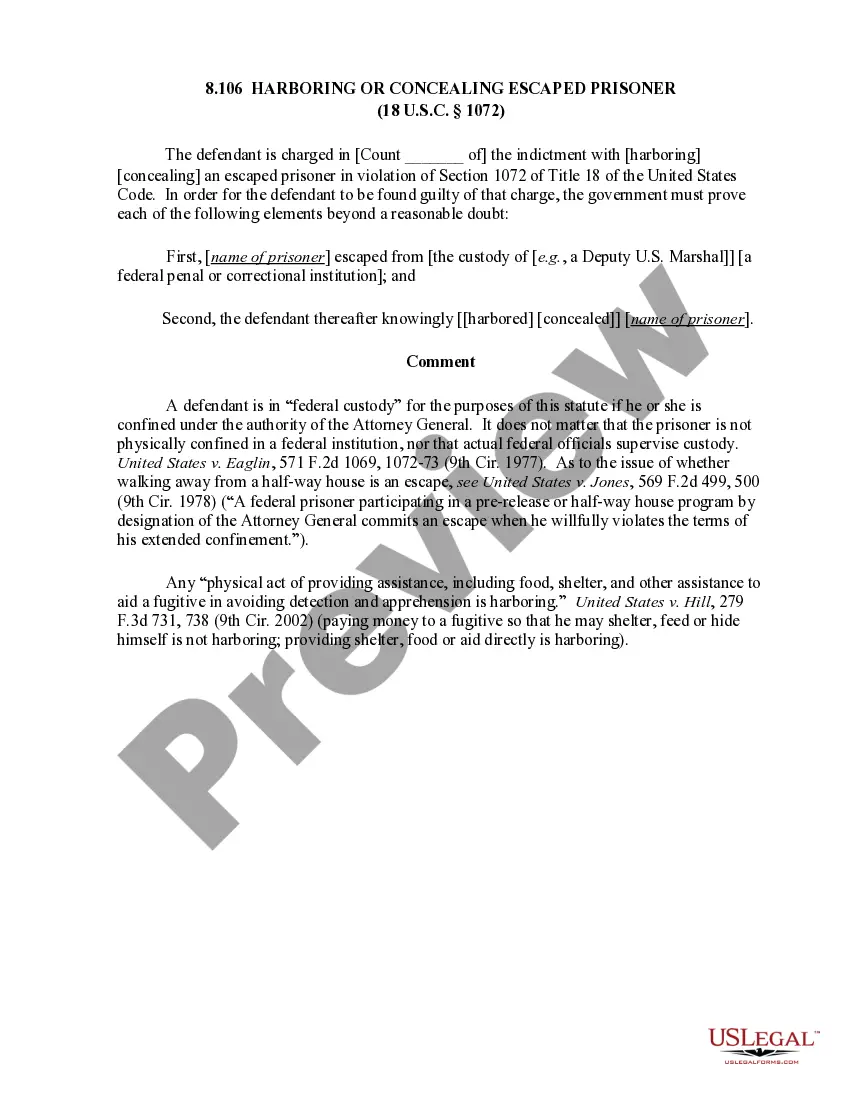
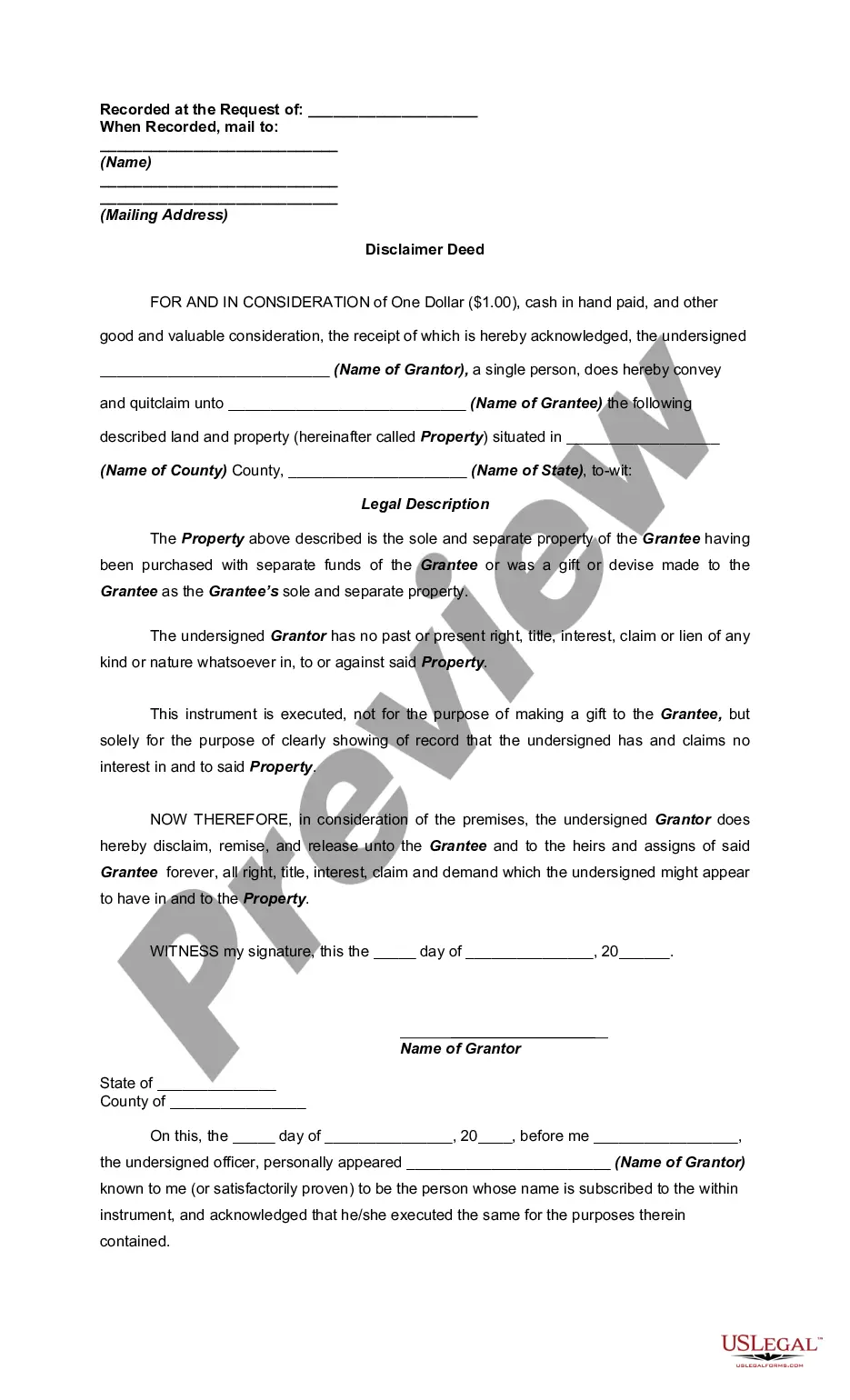
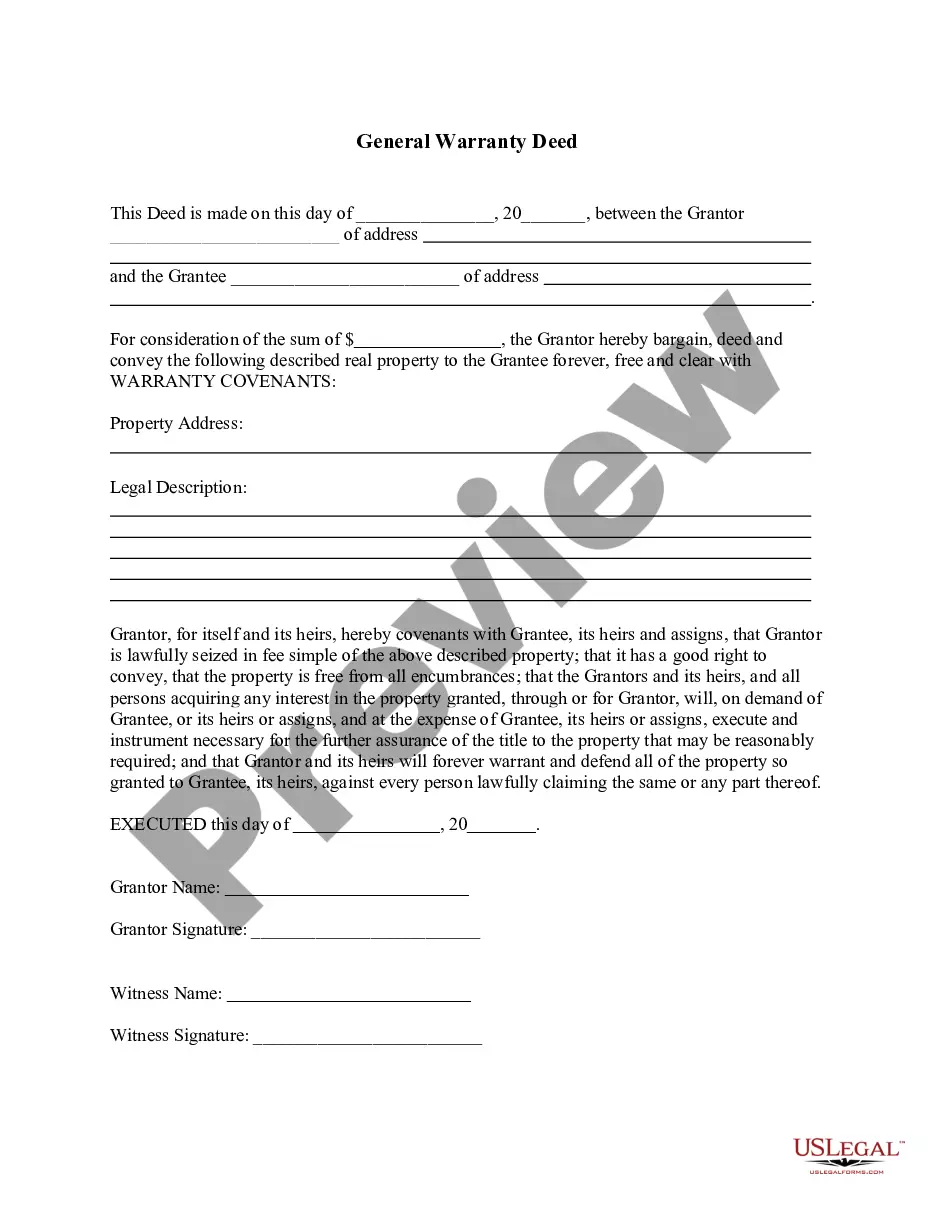
A disclaimer deed is a deed in which a spouse disclaims any interest in the real property acquired by the other spouse. A mortgage company often asks a borrower to sign a disclaimer deed so that his spouse not having her name on the loan, cannot claim any interest in the property.
Connecticut Disclaimer Deed
Category:
State:
Multi-State
Control #:
US-01994BG
Format:
Word;
Rich Text
Instant download
Description
Free preview


Get your form ready online
Our built-in tools help you complete, sign, share, and store your documents in one place.
Built-in online Word editor
Make edits, fill in missing information, and update formatting in US Legal Forms—just like you would in MS Word.
Export easily
Download a copy, print it, send it by email, or mail it via USPS—whatever works best for your next step.
E-sign your document
Sign and collect signatures with our SignNow integration. Send to multiple recipients, set reminders, and more. Go Premium to unlock E-Sign.
Notarize online 24/7
If this form requires notarization, complete it online through a secure video call—no need to meet a notary in person or wait for an appointment.
Store your document securely
We protect your documents and personal data by following strict security and privacy standards.

Make edits, fill in missing information, and update formatting in US Legal Forms—just like you would in MS Word.

Download a copy, print it, send it by email, or mail it via USPS—whatever works best for your next step.

Sign and collect signatures with our SignNow integration. Send to multiple recipients, set reminders, and more. Go Premium to unlock E-Sign.

If this form requires notarization, complete it online through a secure video call—no need to meet a notary in person or wait for an appointment.

We protect your documents and personal data by following strict security and privacy standards.
Looking for another form?



How to fill out Disclaimer Deed?
Selecting the optimal legal document template can be a challenge. Of course, there are numerous formats accessible online, but how do you locate the legal form you require? Utilize the US Legal Forms website. The service provides thousands of templates, including the Connecticut Disclaimer Deed, which can be used for both business and personal purposes. All forms are reviewed by experts and comply with state and federal regulations.
If you are already registered, Log In to your account and click the Download button to obtain the Connecticut Disclaimer Deed. Use your account to browse through the legal documents you have previously purchased. Navigate to the My documents section of your account and download another copy of the document you need.
If you are a new user of US Legal Forms, here are simple instructions that you can follow: First, ensure you have selected the correct form for your city/region. You can review the form using the Preview option and read the form description to confirm it is the right one for you. If the form does not meet your requirements, utilize the Search field to find the correct form. Once you are confident that the form is appropriate, click the Buy now button to acquire the form. Select the pricing plan you want and enter the necessary information. Create your account and process the order using your PayPal account or credit card. Choose the file format and download the legal document template to your device. Finally, complete, edit, print, and sign the obtained Connecticut Disclaimer Deed.
Make the most of this service to streamline your legal documentation process.
- US Legal Forms is the largest collection of legal forms available.
- You can find a variety of document templates.
- Utilize the service to obtain properly crafted documents.
- Ensure compliance with state requirements.
- Access thousands of templates for personal and business use.
- All forms are vetted by professionals.
Form popularity
FAQ
To do a qualified disclaimer, start by understanding the requirements set by Connecticut law. Complete the disclaimer form accurately, making sure to include all required details about the property and your intent. Once you have signed the form in front of a notary, file it with the local land records office to finalize your disclaimer.
An example of a qualified disclaimer is when an heir refuses an inherited property to avoid tax liabilities. This allows the asset to pass directly to the next beneficiary without incurring additional taxes for the disclaiming party. In such cases, utilizing a Connecticut Disclaimer Deed can help ensure compliance with state laws.
To file a qualified disclaimer, first complete the necessary disclaimer form, ensuring it meets Connecticut requirements. After signing the document, you should submit it to the appropriate local land records office. Remember to keep copies for your records, as this serves as proof of your disclaimer.
A qualified disclaimer must be filed within nine months of the date you inherit the property or receive it through a trust. This timeline is crucial, as failing to file within this period can result in the loss of your right to disclaim. Be sure to follow this timeframe to effectively execute a Connecticut Disclaimer Deed.
Creating a legal disclaimer involves drafting a document that clearly states your intention to refuse any rights or claims to a property. You should include specific details like the property description and your intent to disclaim ownership. Utilizing a template like the ones available on US Legal Forms can simplify this process, ensuring your disclaimer meets Connecticut legal standards.
To disclaim a property, you must complete a Connecticut Disclaimer Deed form. This form allows you to formally refuse ownership of the property. After filling out the form, you need to sign it in the presence of a notary public. Finally, file the completed deed with the local land records office to make it official.
A disclaimer deed is a legal document that allows a person to refuse their interest in a property. In Connecticut, this deed can help streamline the estate process by transferring property rights to another individual without going through probate. It is an important tool for managing inheritance effectively and according to your wishes.
Individuals may choose to disclaim property for various reasons, including tax considerations or personal preference. By using a Connecticut Disclaimer Deed, they can avoid the responsibilities of property ownership, such as maintenance costs or liabilities. This decision can facilitate a smoother transfer of assets to other heirs.
A disclaimer deed allows an individual to legally refuse any interest in a property. This is particularly useful in Connecticut, where such a deed can simplify estate matters by directing property to the next eligible heir without the complexities of probate. It helps ensure that your property is handled according to your wishes.
No, a quitclaim deed and a disclaimer deed serve different purposes. A quitclaim deed transfers any interest a person may have in a property, whereas a Connecticut Disclaimer Deed allows an individual to refuse ownership of property. Understanding the distinction is crucial for effective estate planning.