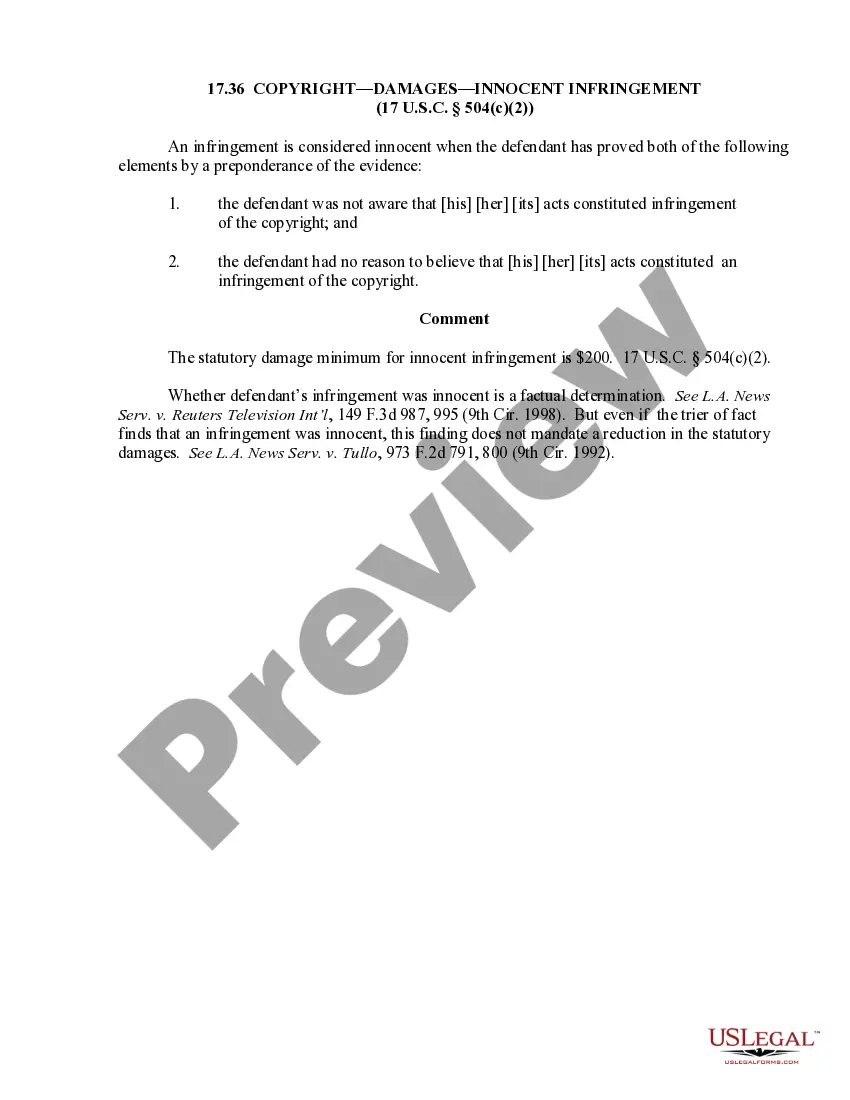
This is a multi-state form covering the subject matter of the title.
Connecticut Complaint to Contest Will
Instant download
Description
Free preview
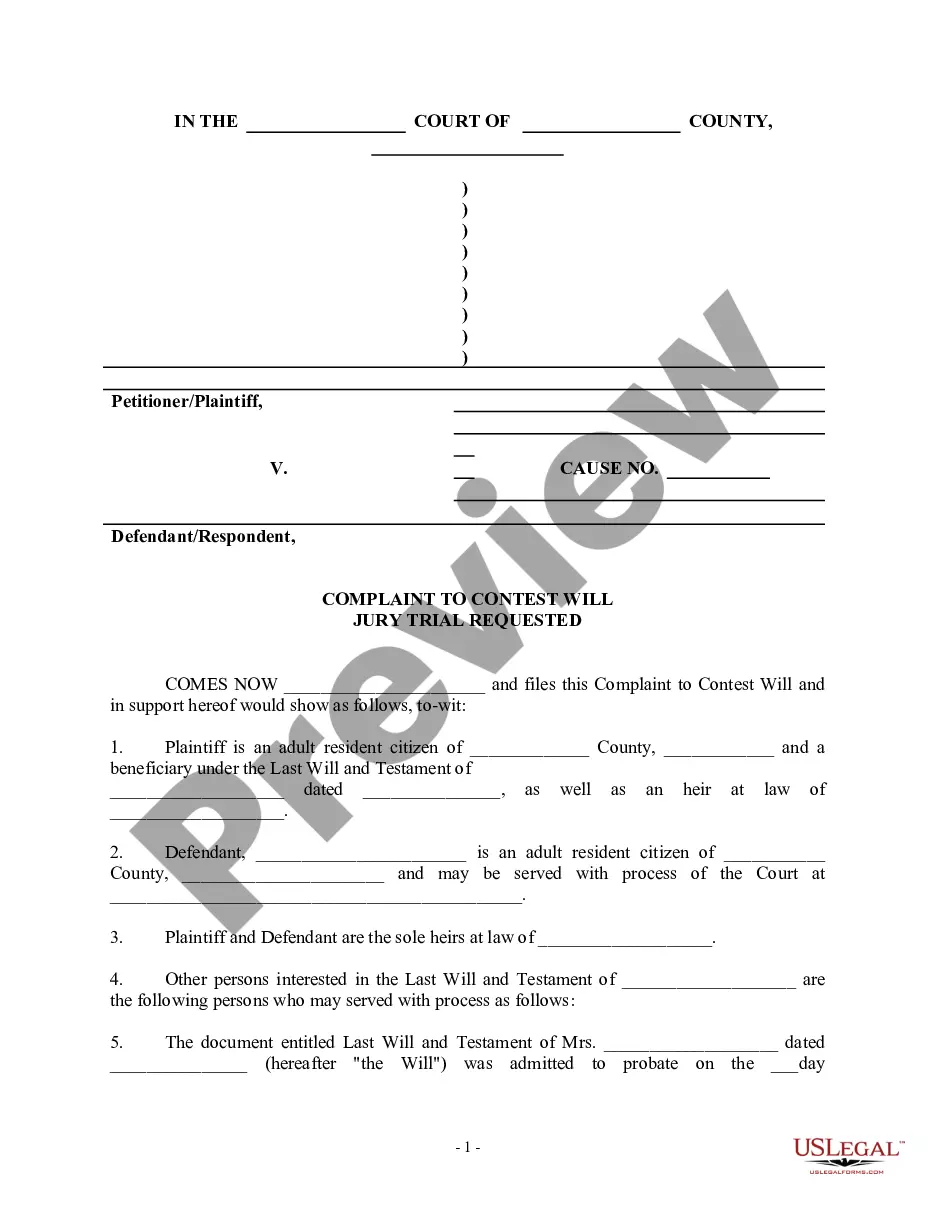
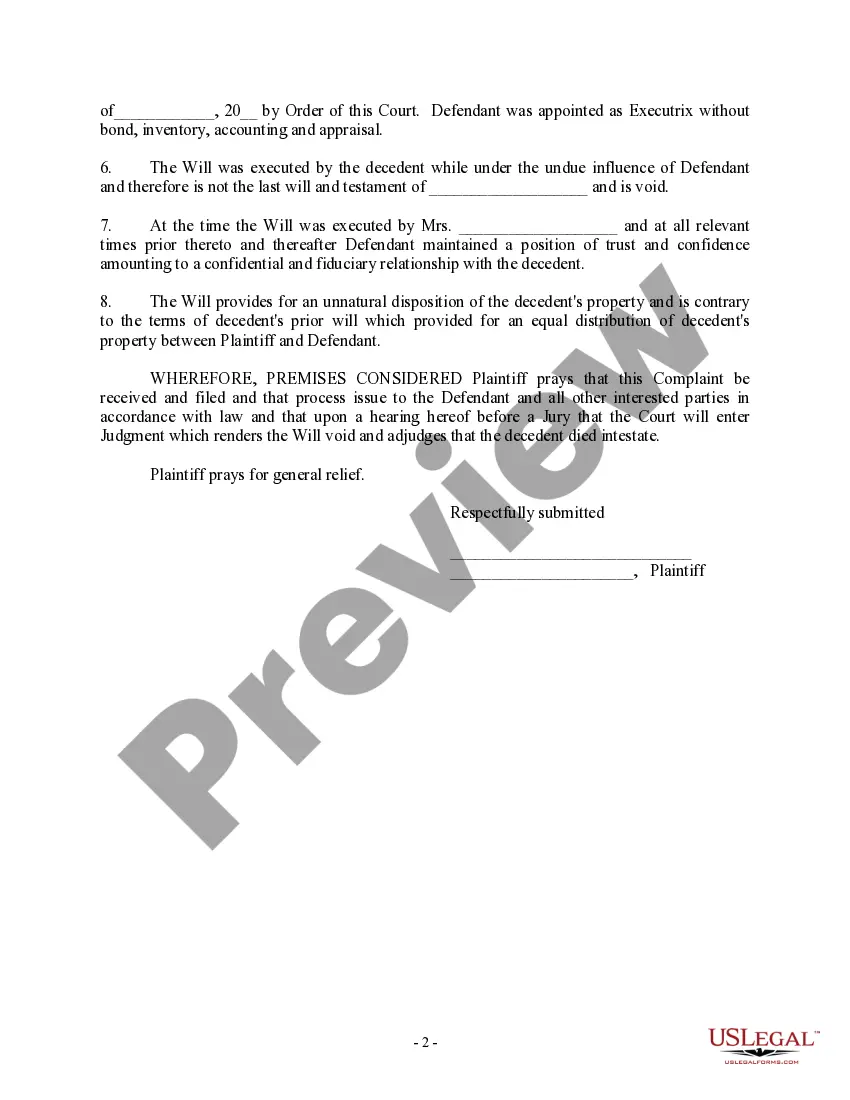
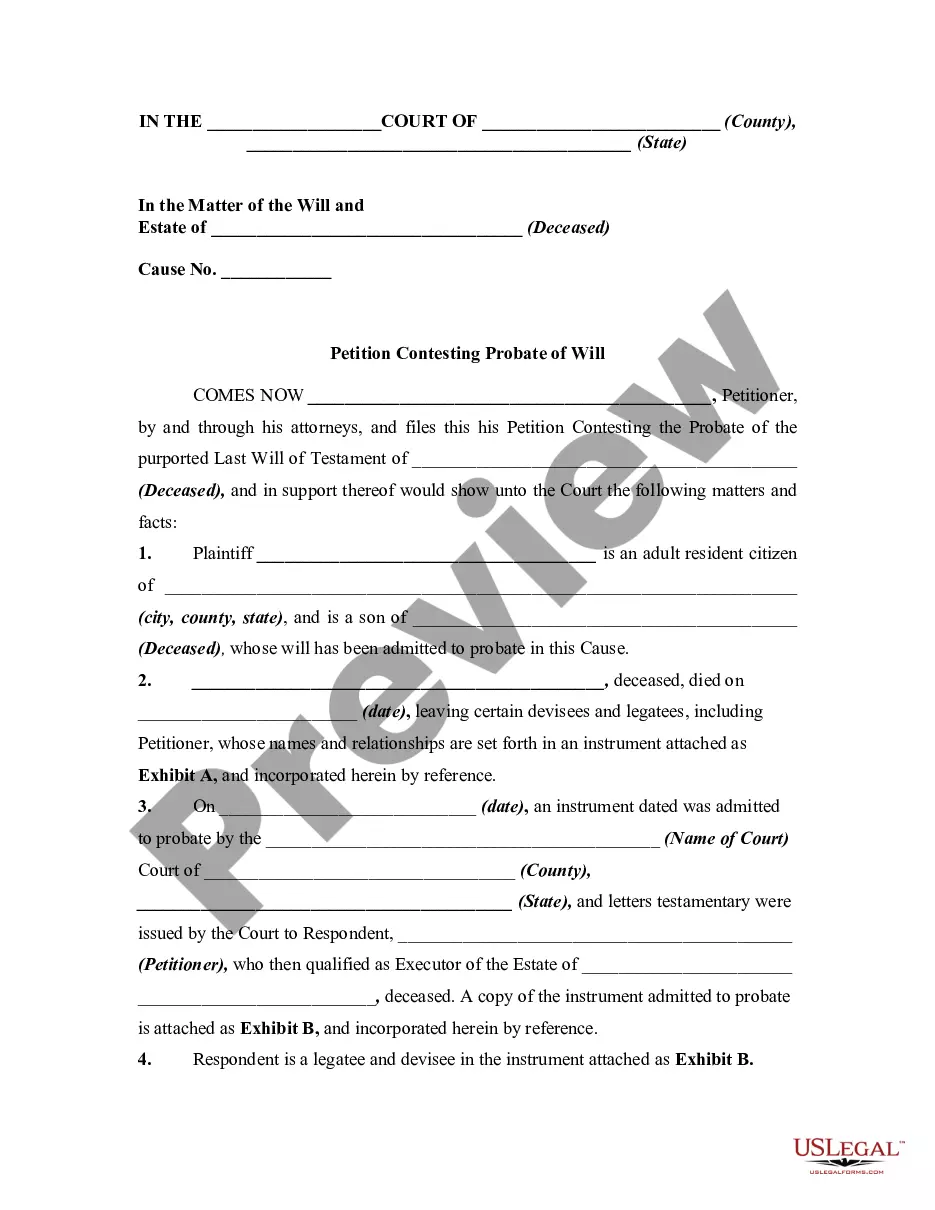
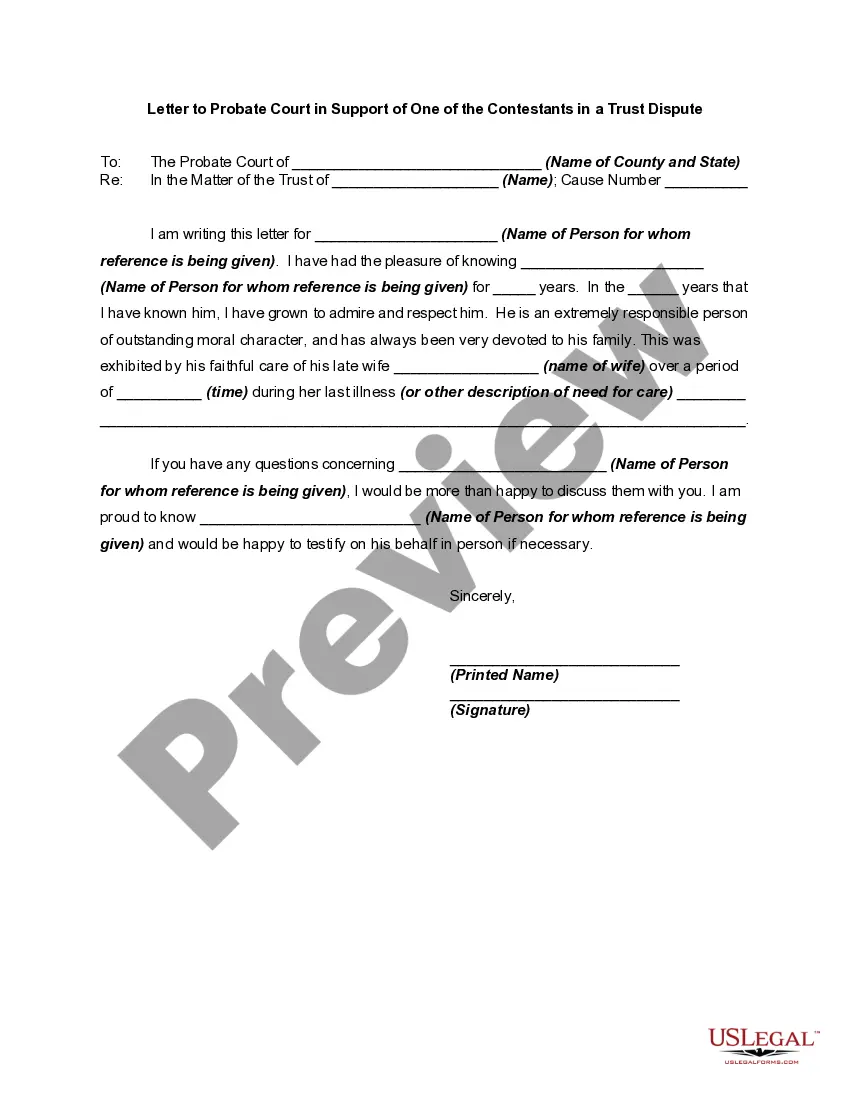
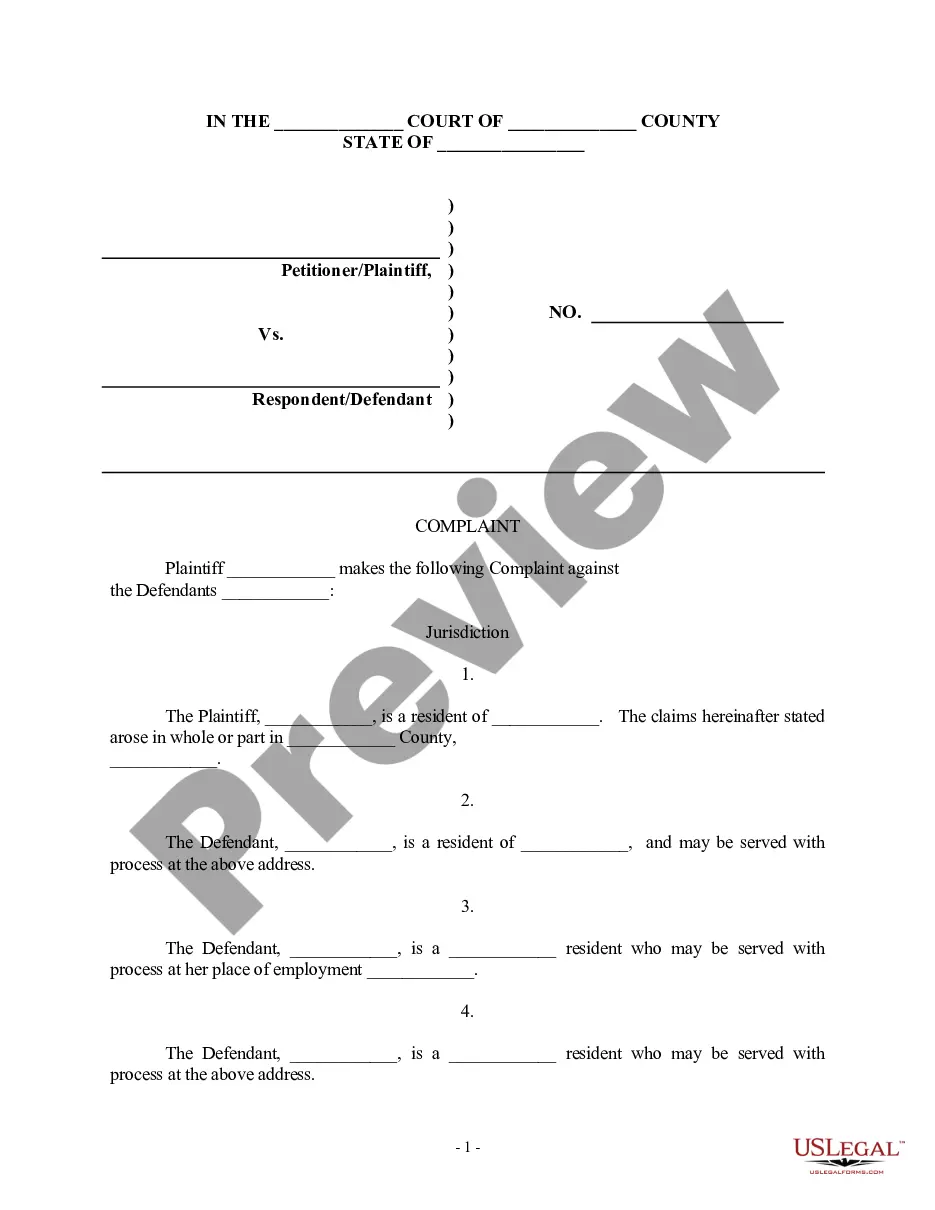



How to fill out Complaint To Contest Will?
Are you currently in a situation where you require documents for either business or personal purposes almost every day.
There are numerous legitimate document templates available online, but finding ones you can trust is not straightforward.
US Legal Forms offers a vast array of form templates, such as the Connecticut Complaint to Contest Will, designed to comply with federal and state regulations.
Once you find the correct form, click Purchase now.
Select the pricing plan you prefer, fill in the required information to create your account, and complete the transaction using your PayPal or credit card.
- If you are already familiar with the US Legal Forms website and have an account, simply Log In.
- After that, you can download the Connecticut Complaint to Contest Will template.
- If you do not have an account and wish to start using US Legal Forms, follow these steps.
- Find the form you need and ensure it is for the correct city/area.
- Use the Preview button to review the document.
- Read the description to confirm you have selected the right form.
- If the form isn't what you are looking for, use the Search section to locate the form that meets your needs.
Form popularity
FAQ
If you disagree with a probate judge's decision, you have the right to appeal that decision to the Superior Court. In most cases, the appeal must be taken within 30 days of the date of the probate decree, but there are important exceptions to this rule.
Include a No Contest Clause in the Will Another strategy to avoid a Will contest includes a ?no-contest? or ?in terrorem? clause in your Will. A typical ?no-contest? clause states that if an heir challenges your Will and loses, then he or she gets nothing.
contest clause ? also called a ?penalty clause,? or in legal circles, an ?in terrorem? clause ? is meant to prevent beneficiaries from challenging the will after the individual dies.
To successfully contest the will, the petitioner must provide facts that the will is invalid. This may include showing a will was not signed, witnessed or notarized ing to Connecticut law, or was forged.
Valid legal reasons to contest a will include: Lack of testamentary capacity when the decedent wrote the last will and testament. Fraud or someone exerting undue influence over the testator. Insufficient or inappropriate witnesses.
"If any beneficiary under this will seeks to obtain in any proceeding in any court an adjudication that this will or any of its provisions is void, or seeks otherwise to void, nullify, or set aside this will or any of its provisions, then the right of that person to take any interest given to him or her by this will ...
Spouse and children -- spouse takes 1/2 the estate. If the children are also the spouse's, the spouse also takes $100,000. If they are not, spouse only takes 1/2. Whatever remains is divided equally among the children in the same generation.
The Thinking Behind Leaving One Dollar By leaving money, the goal is to dissuade someone from contesting because they would lose out on any money; however, by leaving a dollar the person isn't really losing anything. Anyone can contest your Will, regardless of whether you disinherit that person or leave them something.