At one time all ?ˆ?clergy?ˆ were considered self-employed; however, in the mid 1980?ˆ™s the IRS decided to declare such ministers ?ˆ?employees?ˆ of the church . Most pastors should be considered employees. They typically have a governing council they work with or for to determine to work to be performed (which is one of the criteria the IRS uses to determine the status of a person). Exceptions to this would be supply pastors or missionaries who travel from church to church filling in or working for short periods
Misclassification of workers is a big issue with churches and the IRS, so be very certain you have properly classified your clergy and other workers such as musicians, nursery workers, and, custodians. A member of the clergy is considered an employee for federal income tax purposes and self-employed for Social Security and Medicare purposes.
See Topic 417 - Earnings for Clergy at https://www.irs.gov/taxtopics/tc417.html
Connecticut Rabbi Engagement Agreement
Description
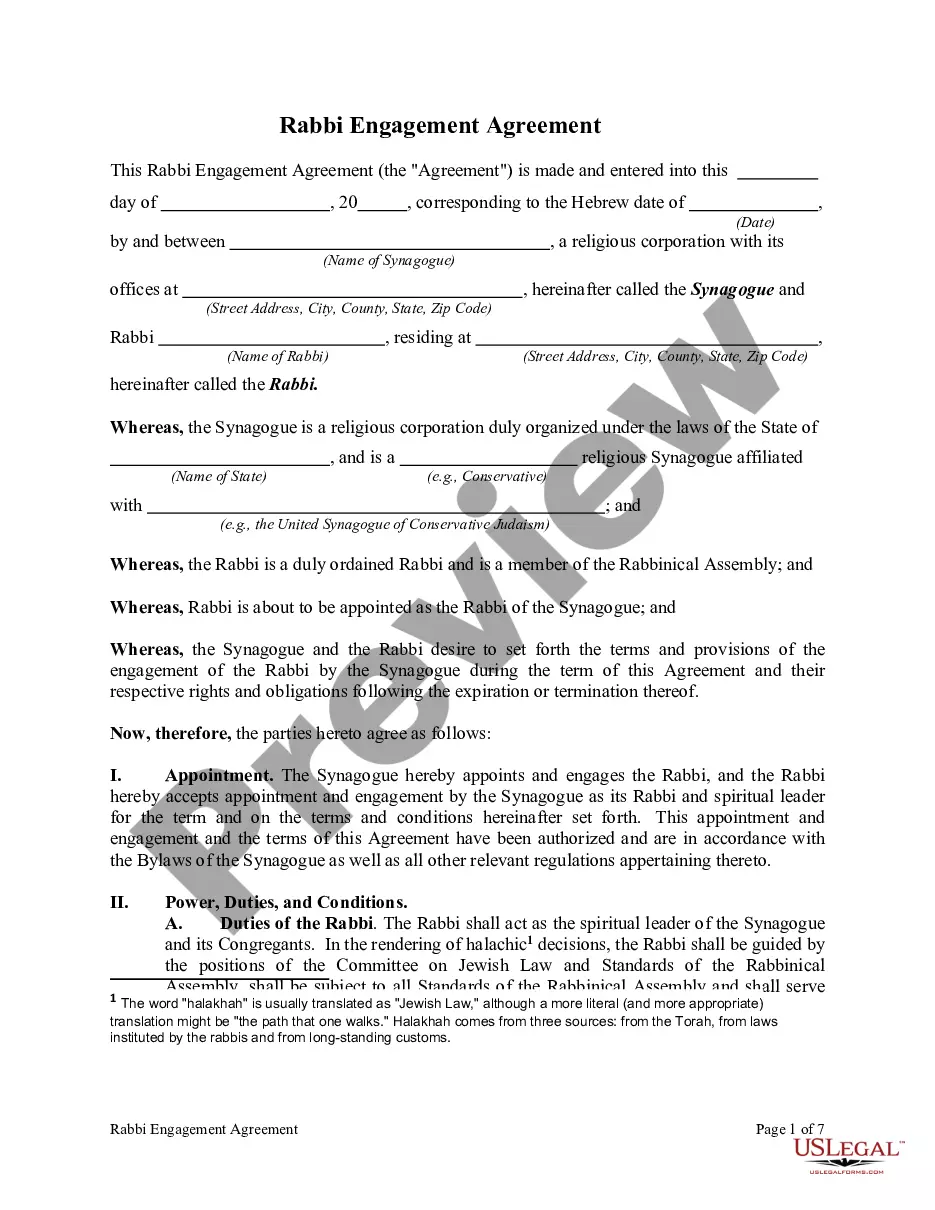
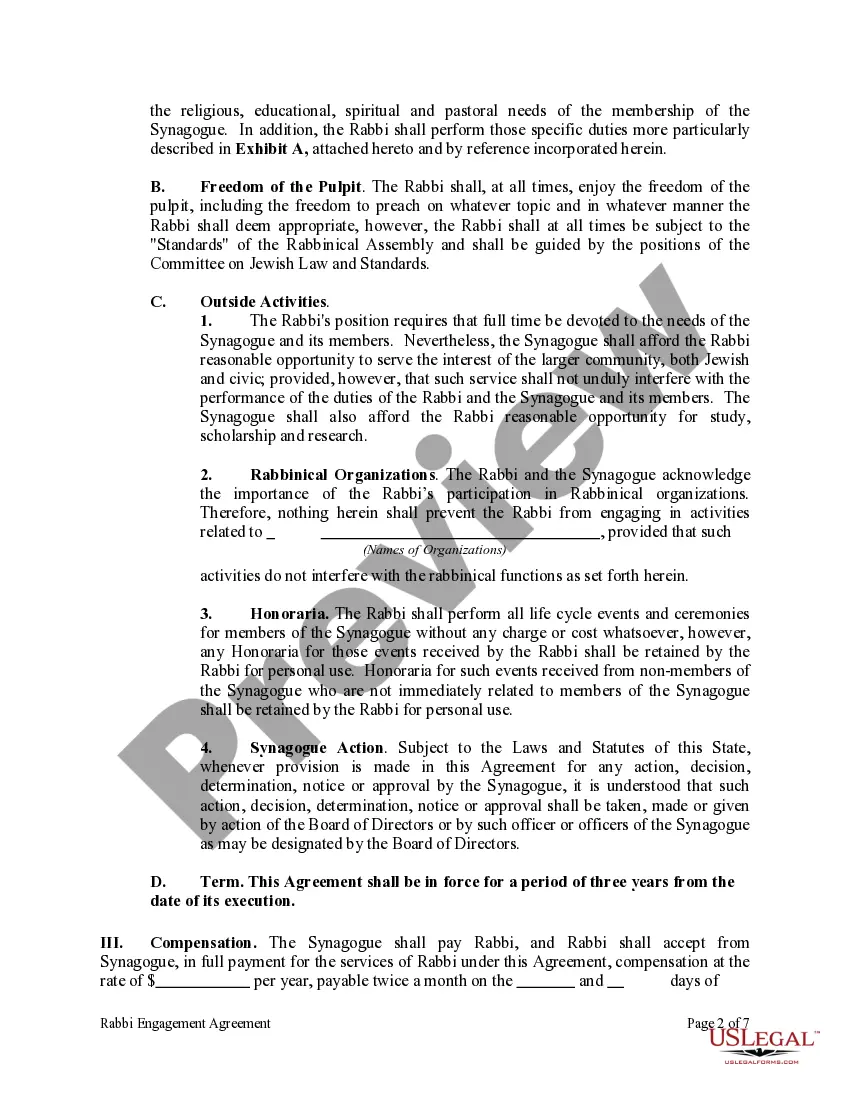
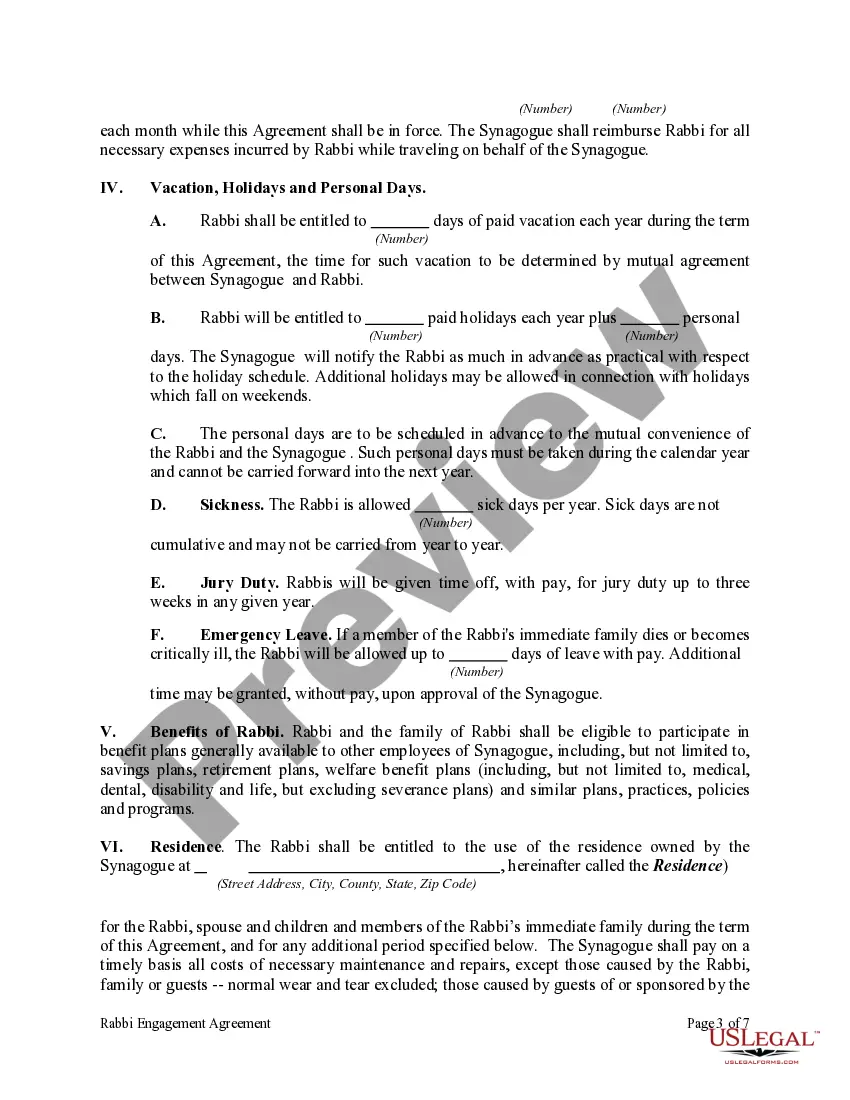
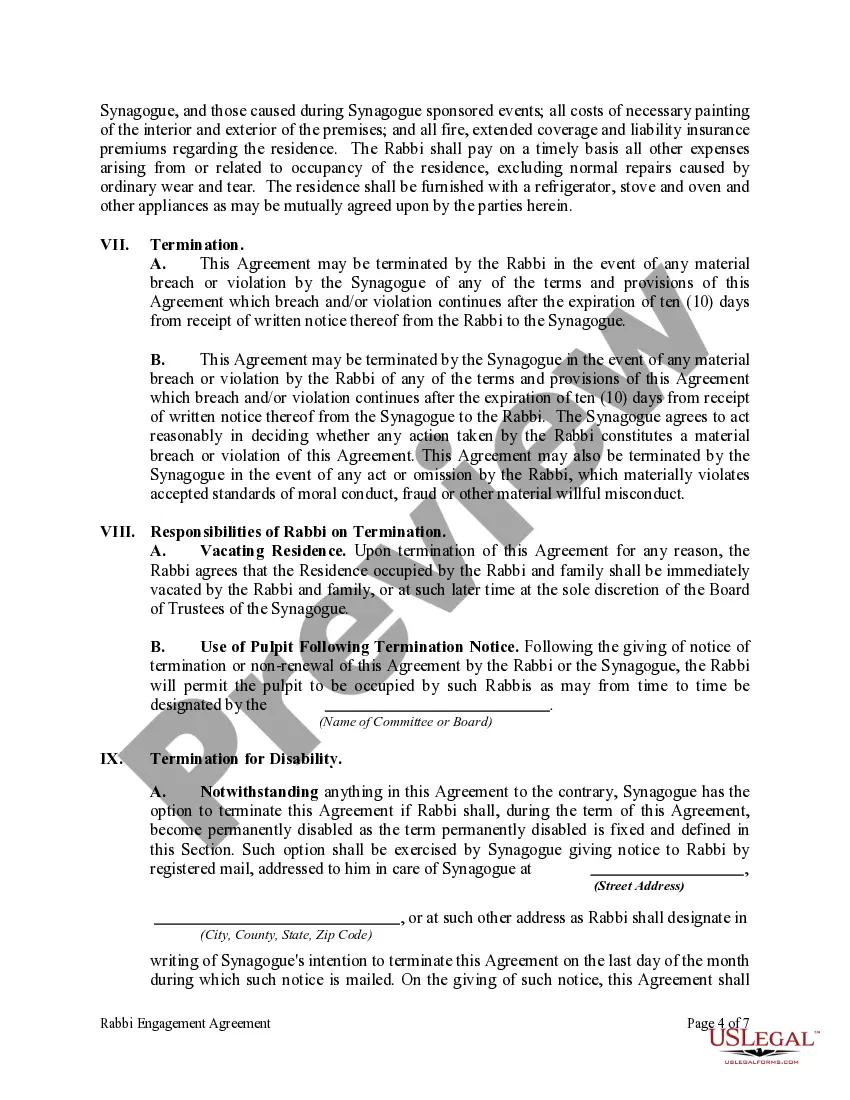
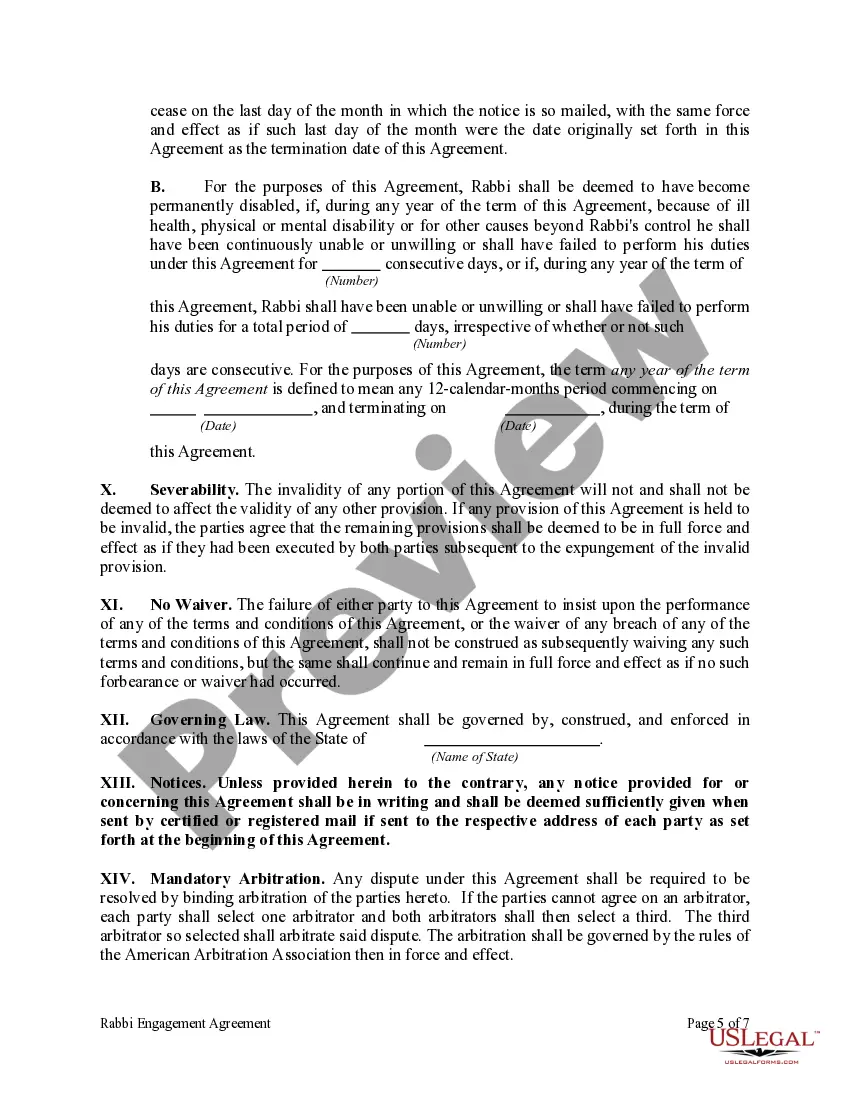
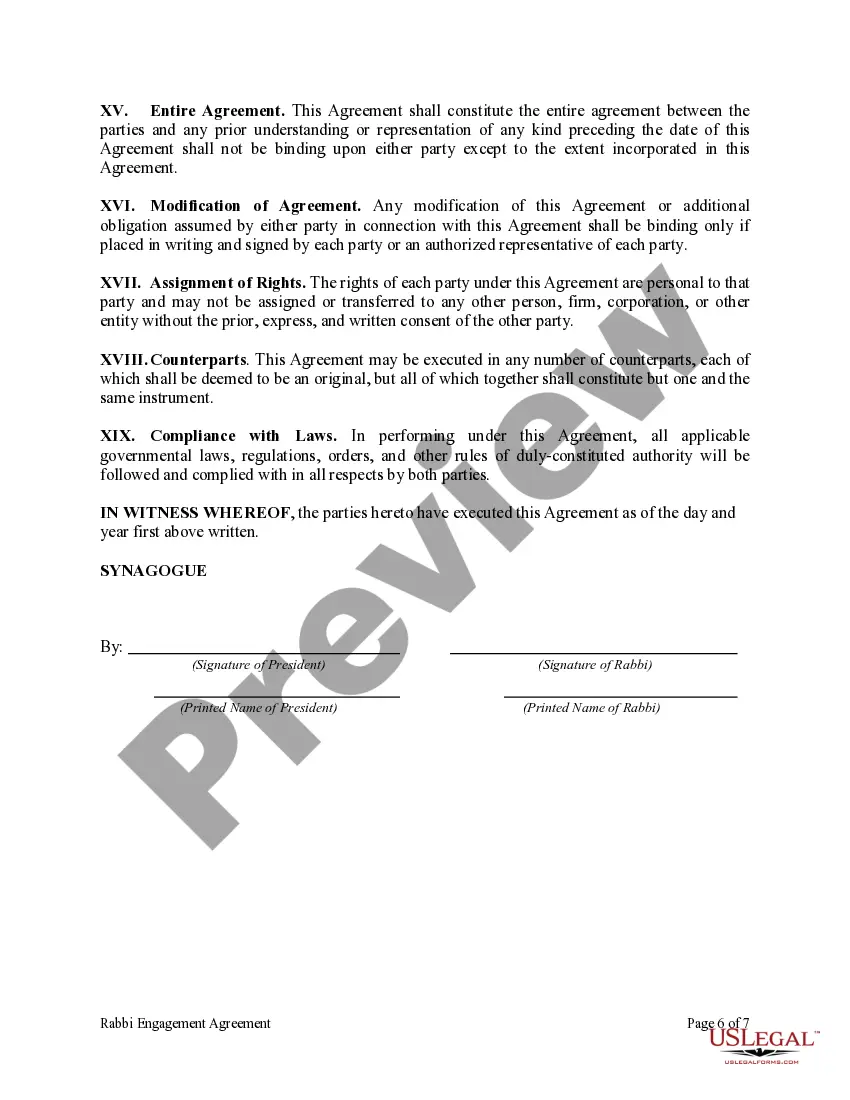
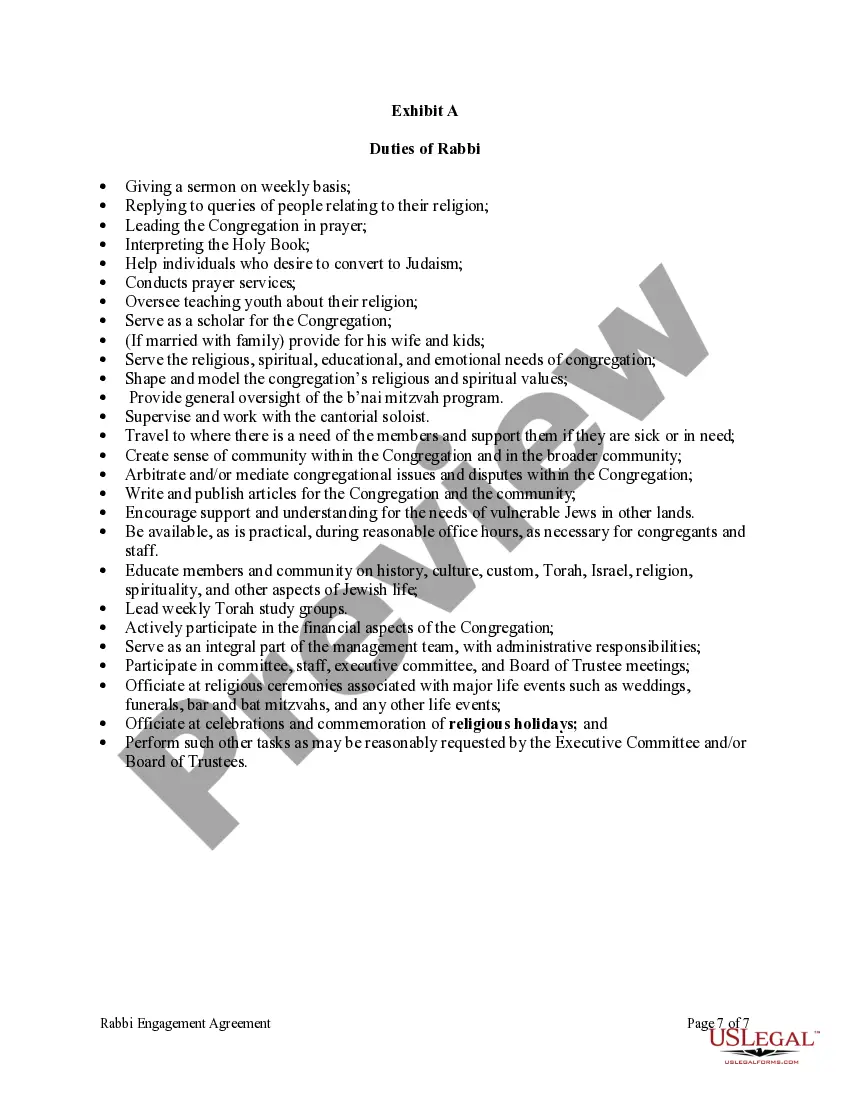

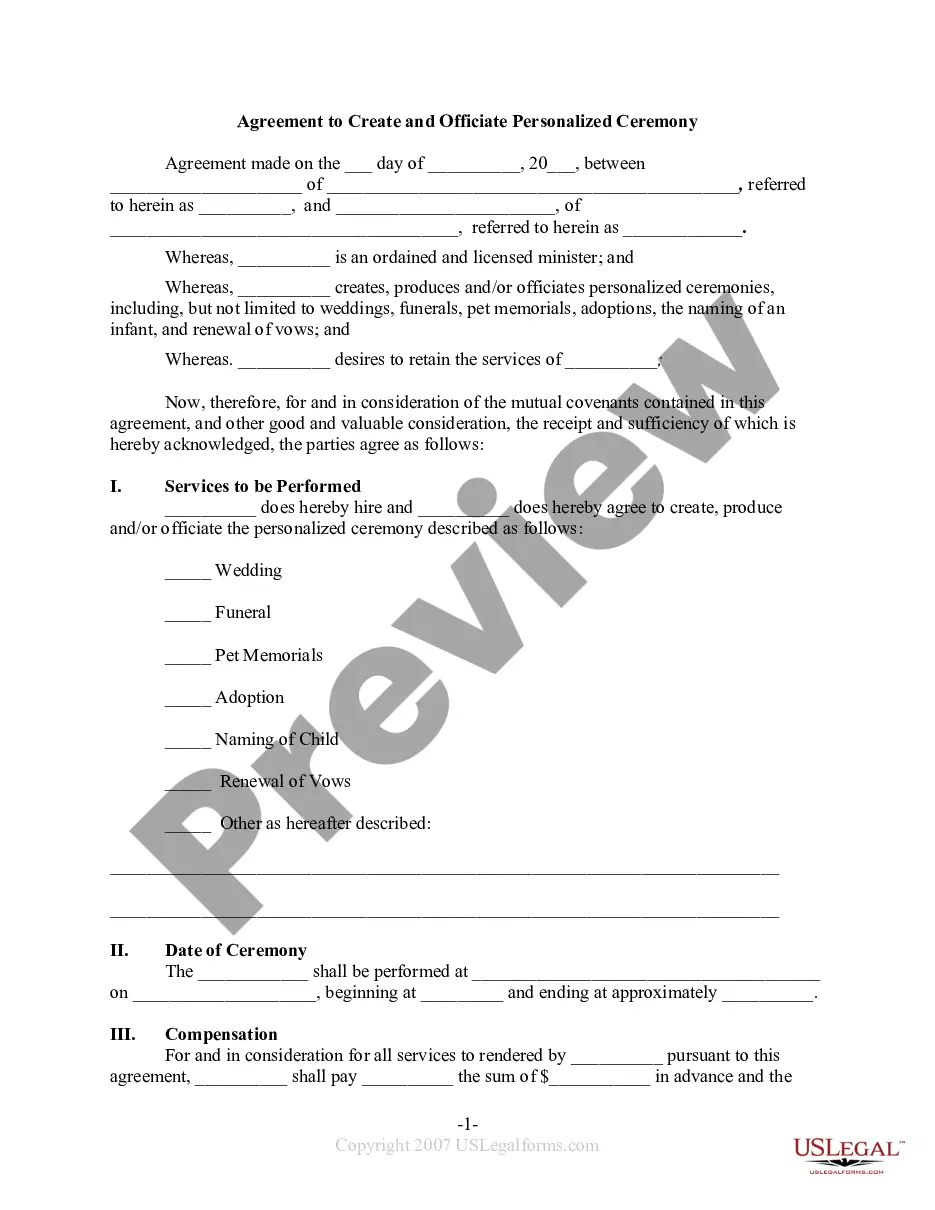
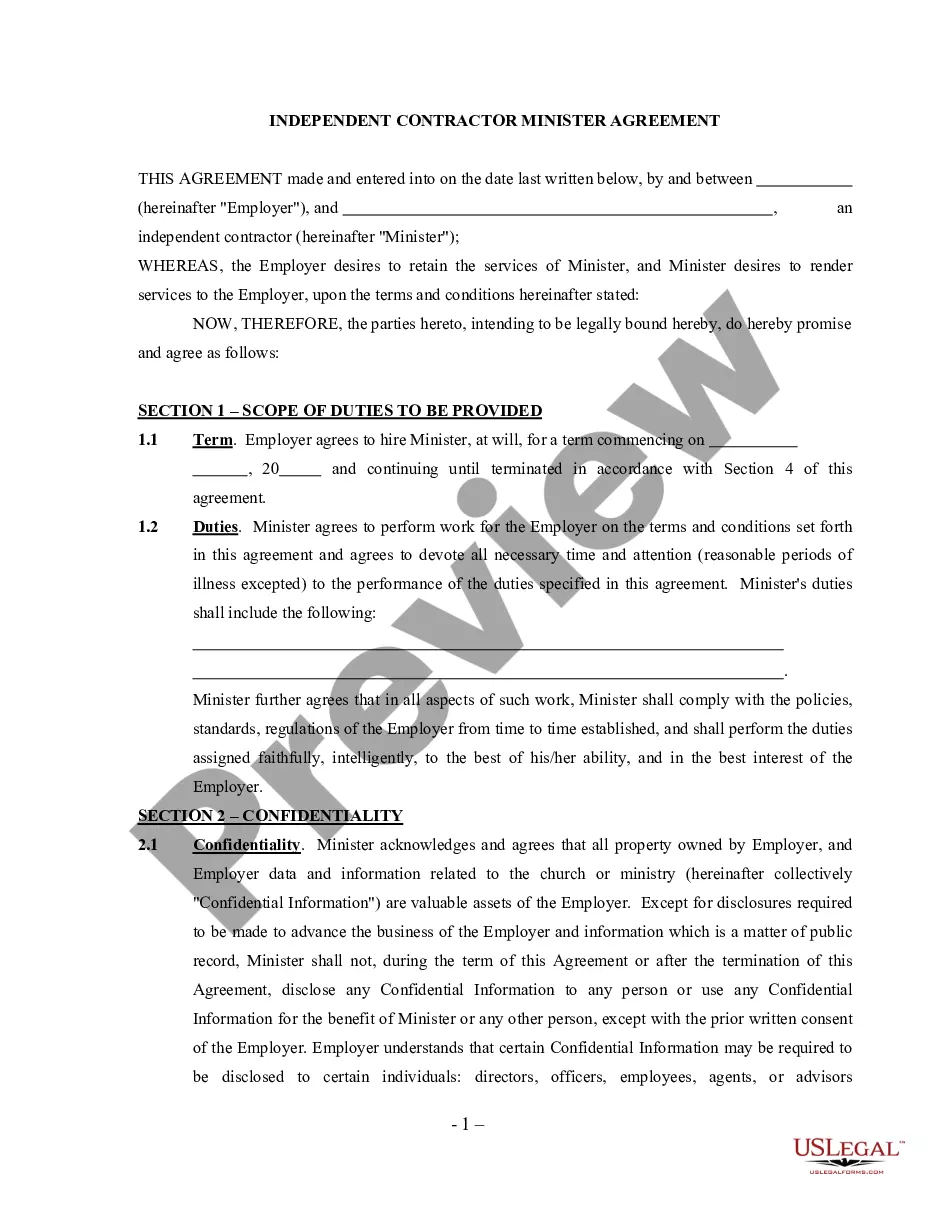

How to fill out Rabbi Engagement Agreement?
If you need to compile, obtain, or create authentic document templates, utilize US Legal Forms, the largest collection of legal forms available online.
Employ the site’s straightforward and user-friendly search feature to locate the documents you require.
Numerous templates for business and personal purposes are organized by categories and regions, or keywords.
Step 4. Once you’ve found the form you need, click on the Purchase now button. Choose your preferred pricing plan and enter your details to register for an account.
Step 5. Complete the transaction. You may use your credit card or PayPal account to finalize the purchase.
- Utilize US Legal Forms to acquire the Connecticut Rabbi Engagement Agreement in just a few clicks.
- If you are already a US Legal Forms user, sign in to your account and select the Download option to get the Connecticut Rabbi Engagement Agreement.
- You can also find forms you previously downloaded from the My documents section of your account.
- If you're using US Legal Forms for the first time, follow the steps outlined below.
- Step 1. Ensure you have chosen the form for the correct jurisdiction.
- Step 2. Use the Preview feature to review the contents of the form. Don’t forget to read the description.
- Step 3. If you are not satisfied with the form, use the Search box at the top of the screen to find other versions of the legal form template.
Form popularity
FAQ
In the United States, a ketubah is primarily a religious document rather than a legally binding contract. However, it can hold legal significance in certain circumstances, especially when it aligns with state law regarding marital agreements. By using a Connecticut Rabbi Engagement Agreement, you can clarify the legal implications of your ketubah and make sure it complies with both religious and legal standards in your state.
Creating a ketubah, or Jewish marriage contract, is accessible to anyone, but it is best done by someone knowledgeable about Jewish laws and customs. A Connecticut Rabbi Engagement Agreement can help you ensure that the ketubah reflects your unique relationship and meets all religious specifications. Engaging a rabbi through this agreement guarantees proper guidance during the creation process and ensures that your ketubah is both meaningful and relevant.
To fill out a ketubah properly, start by gathering all necessary personal information, including the full names of both partners and the date of the wedding. In a Connecticut Rabbi Engagement Agreement, you may want to work closely with your chosen rabbi to ensure that everything aligns with Jewish law. Once the information is collected, take your time to interpret the commitments you are making clearly. This careful approach ensures that your ketubah reflects your unique relationship.
Typically, the ketubah is held by the couple, with either partner being responsible for its safekeeping. In a Connecticut Rabbi Engagement Agreement, some couples choose to display the ketubah in their home as a constant reminder of their commitments. It symbolizes the bond they've created and their intentions for the future. Keeping it safe reinforces the importance of the promises made within.
Filling out a ketubah involves providing personal information such as the names of the couple, the witnesses, and the date of the ceremony. In a Connecticut Rabbi Engagement Agreement, it's essential to accurately represent each person's identity to validate the document legally. Consider discussing the content with your rabbi to ensure it meets the necessary religious and legal standards. Doing so will reinforce the meaning behind this sacred agreement.
A ketubah does not need to be signed by a rabbi; however, having a rabbi officiate the ceremony adds weight to the document. In a Connecticut Rabbi Engagement Agreement, the rabbi plays an integral role in ensuring that the agreement aligns with religious requirements. The rabbi's presence can provide reassurance and honor the couple’s commitment to their faith. It reflects respect for the celebratory tradition.
In the traditional setting, the groom typically signs the ketubah first, followed by the bride. This sequence, while common in many celebrations, is outlined clearly in a Connecticut Rabbi Engagement Agreement. By following this order, the couple honors their roles within the ceremony and storyline of their wedding. Staying aware of these traditions adds a layer of significance to the exchange.
When signing a ketubah, it is important to follow specific rules that often arise in a Connecticut Rabbi Engagement Agreement. Typically, two witnesses, who are not relatives of the couple, must sign the document. Likewise, the individuals involved should ideally sign the ketubah in a festive, communal setting, often during the wedding ceremony. These rules help to validate the agreement and reinforce the couple's commitment.
A ketubah does not necessarily need to be handwritten, though many couples prefer this traditional approach. In a Connecticut Rabbi Engagement Agreement, the personal touch of handwriting can enhance the sentimental value of the document. Whether printed or handwritten, it is important that the contents are clear and respectful of Jewish law. Ultimately, the focus should remain on the mutual agreement between the partners.
The obligations of the ketubah outline the responsibilities of each partner within the marriage. In a Connecticut Rabbi Engagement Agreement, the ketubah serves as a contract that details both financial and emotional commitments. It ensures that both individuals are aware of their roles and obligations, enhancing mutual respect and understanding. By clarifying expectations, the ketubah fosters a healthier relationship.