Connecticut Witness Subpoena and Request for Production of Documents
About this form
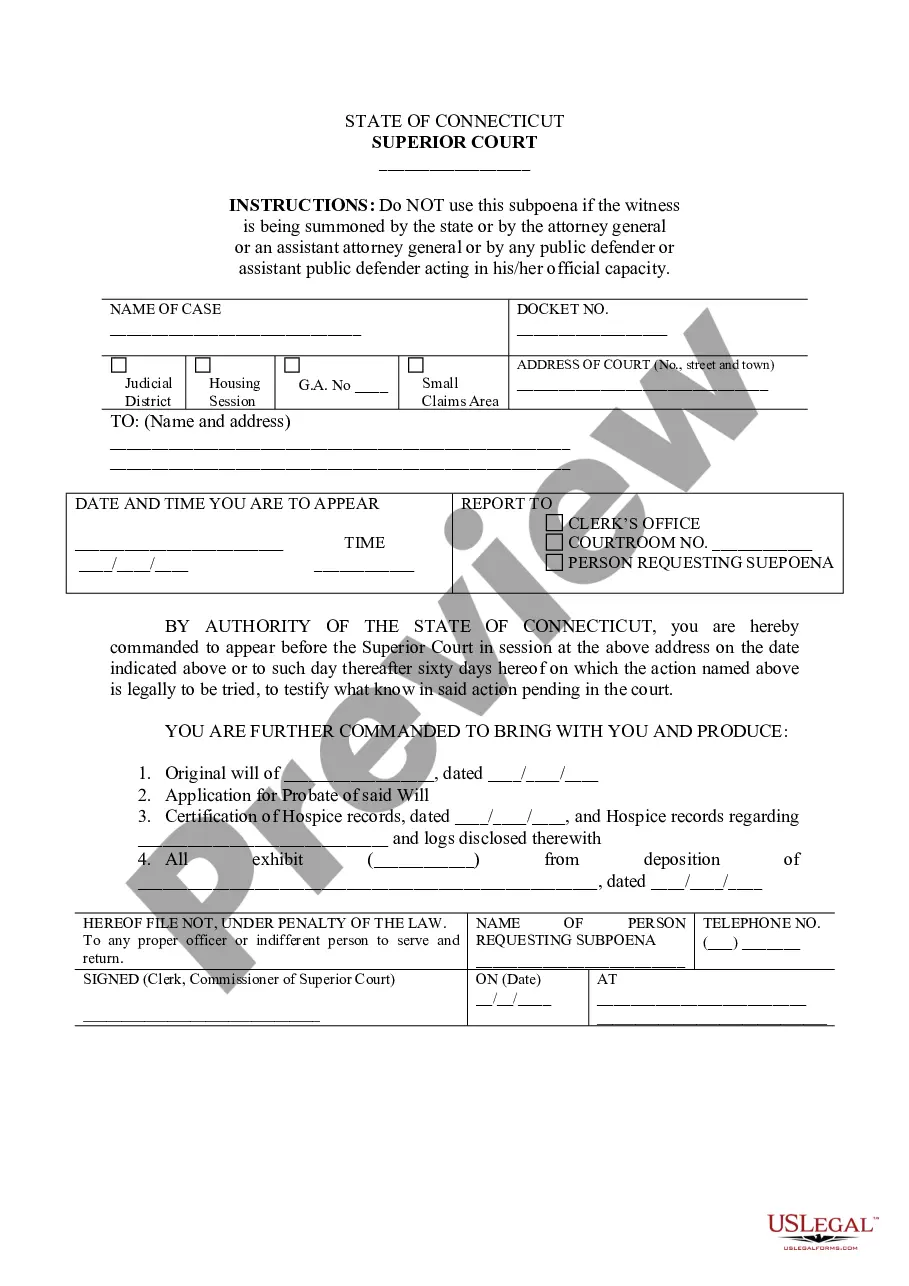
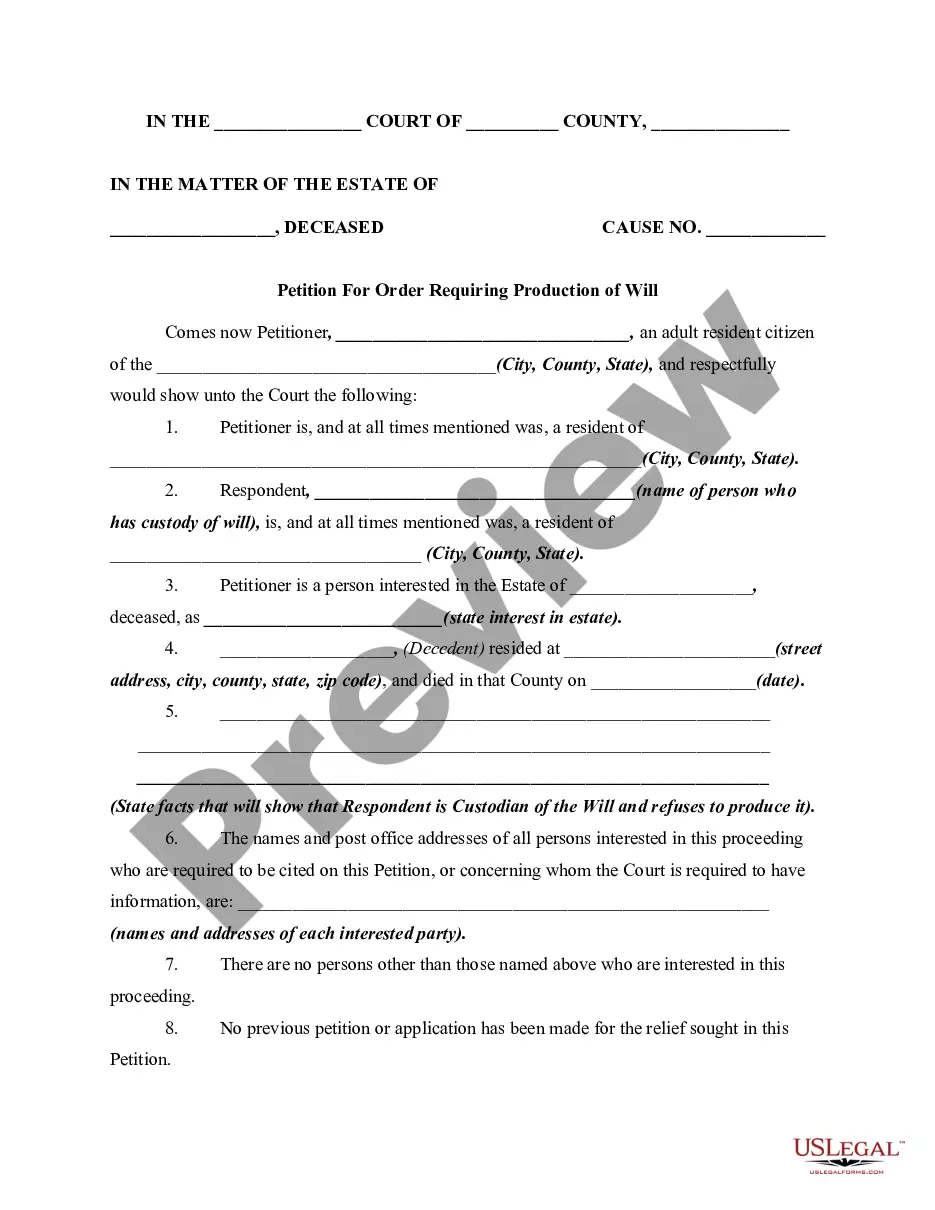
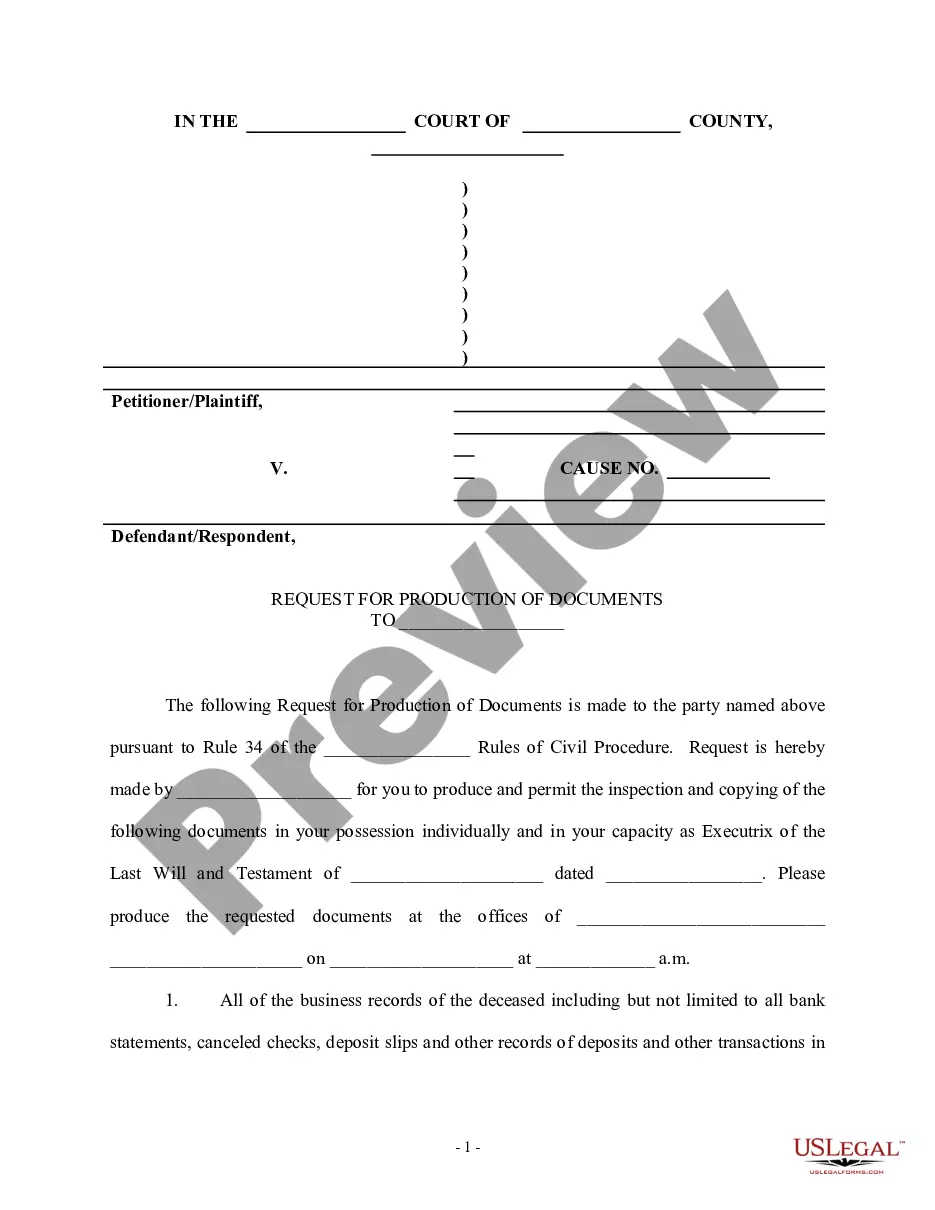
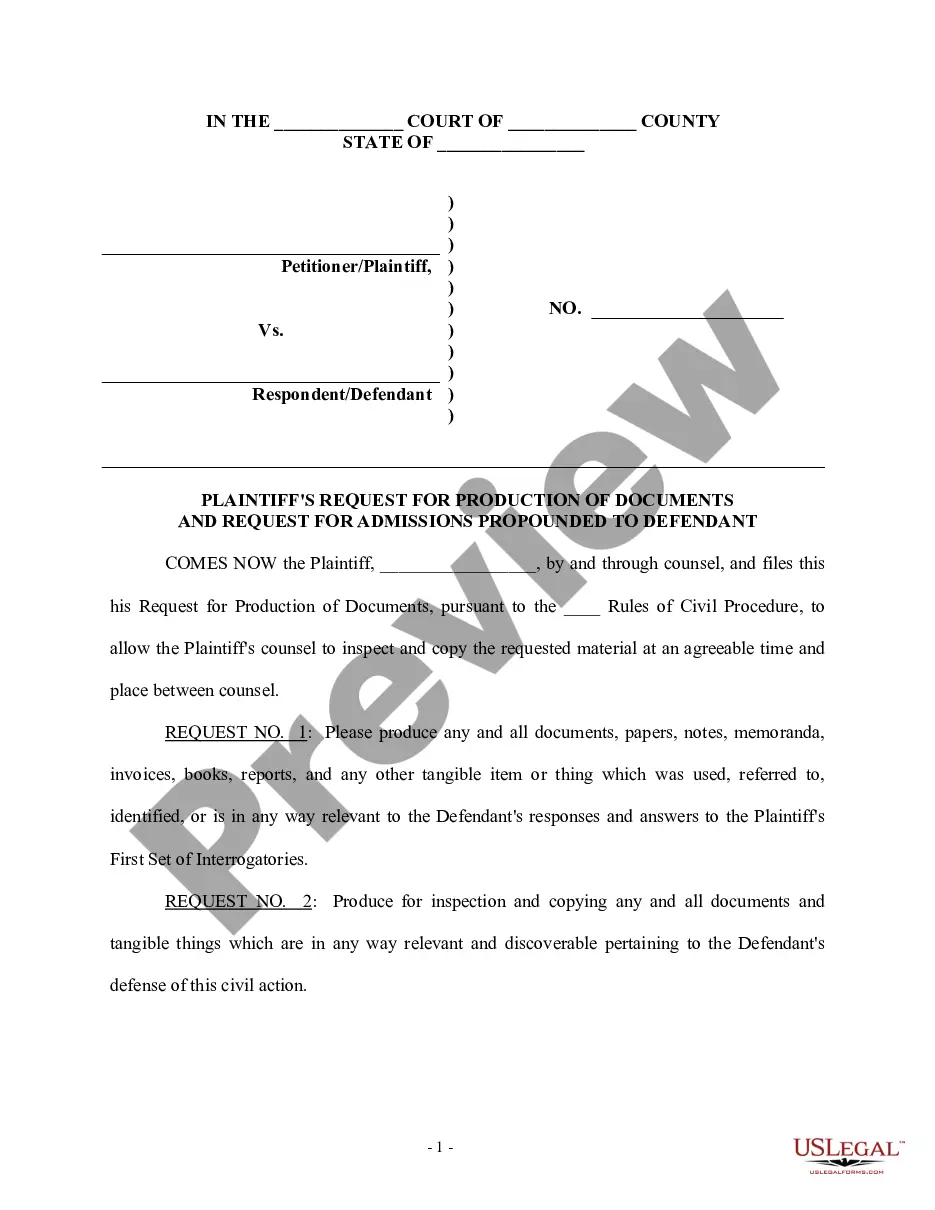
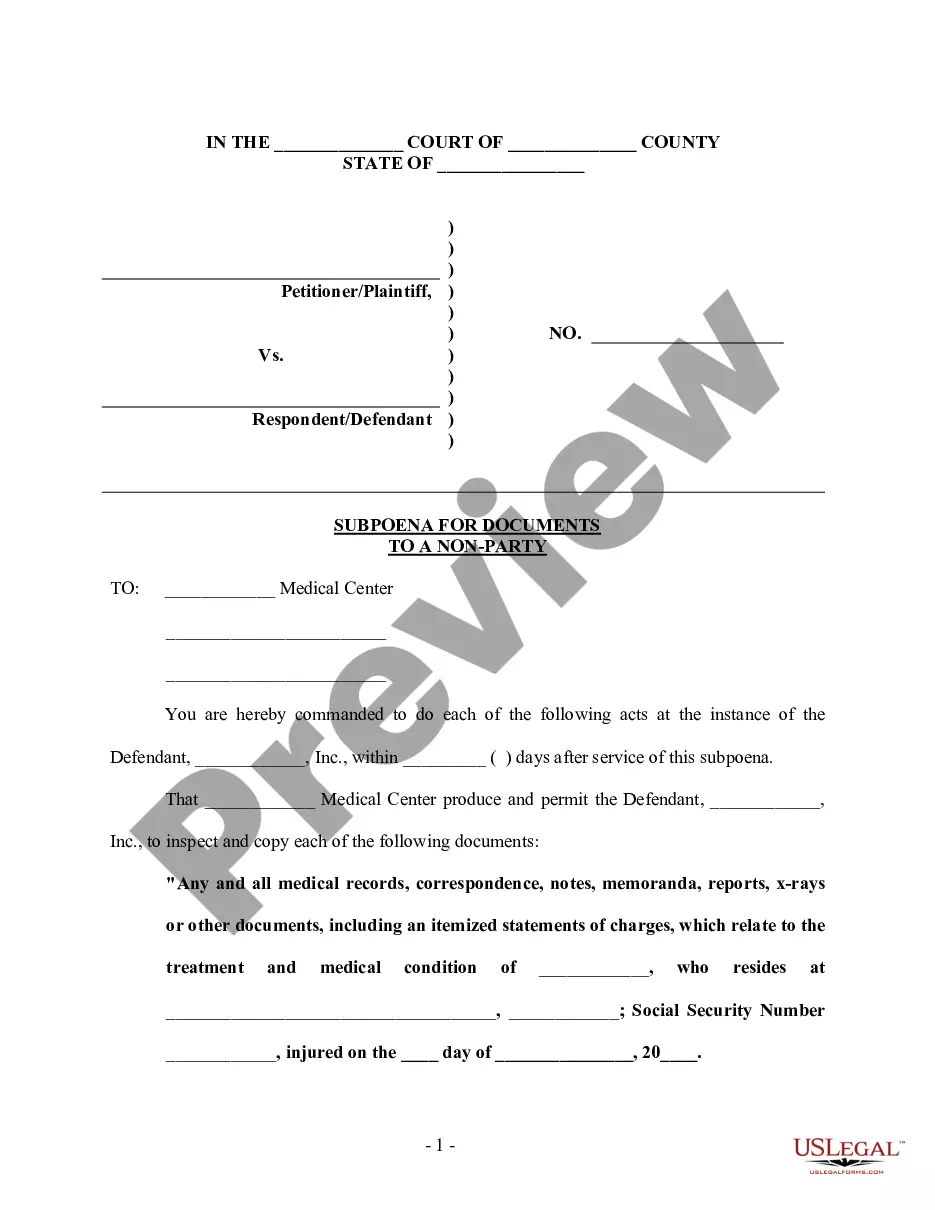
The Witness Subpoena and Request for Production of Documents is a legal document issued by a court in the state of Connecticut. It compels a witness to testify in a legal case and to produce specific documents relevant to that case. This form is distinct because it not only summons a witness but also requests the production of particular evidence, unlike a standard subpoena that may only require testimony.
What’s included in this form
- Case name and docket number, identifying the legal proceedings.
- Date and time for the witness appearance, ensuring schedule compliance.
- Person requesting the subpoena, listing the individual responsible for the request.
- Specific documents the witness must bring, outlining evidence needed for the case.
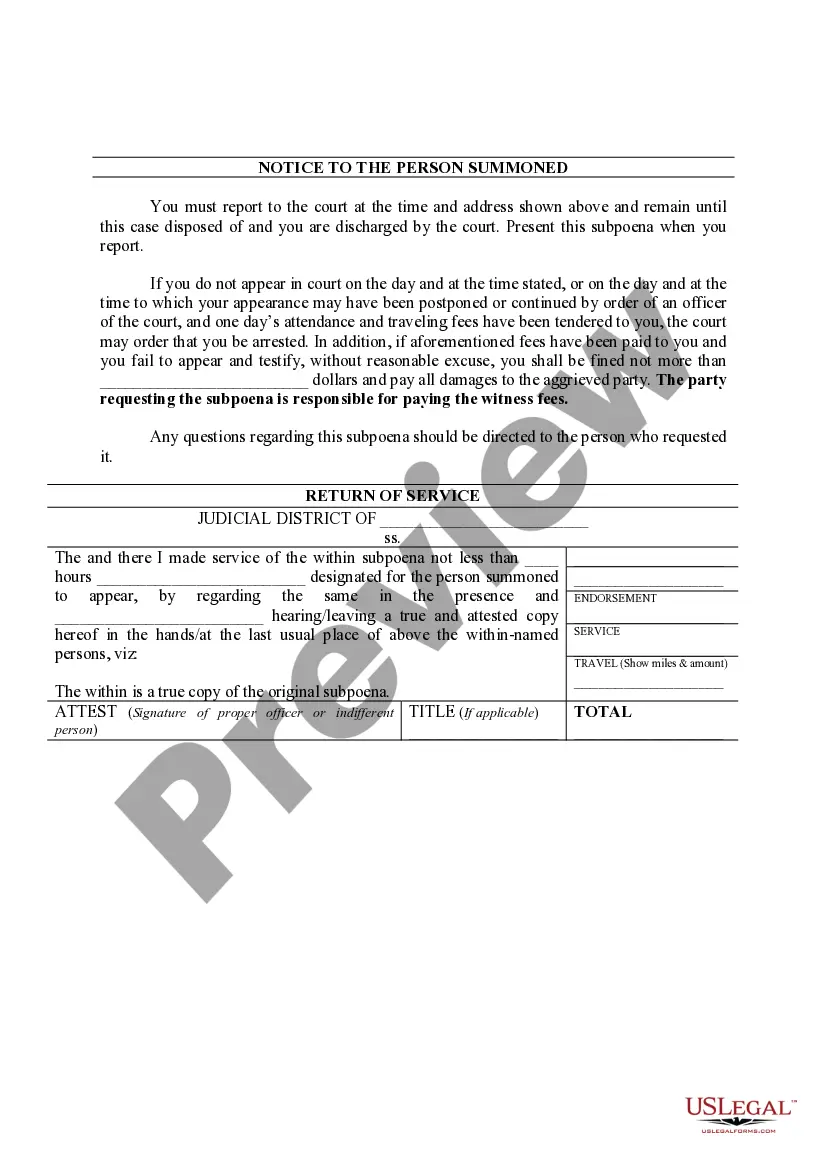
- Instructions for service, detailing how the subpoena should be delivered.
- Penalties for non-compliance, informing the witness of legal consequences for failing to appear.
When to use this form
This form is used in legal proceedings when a party needs to compel a witness to testify and present evidence pertinent to a case. It is particularly important when documentary evidence is crucial for the resolution of the case, such as in probate or civil litigation where certain documents might profoundly affect the outcome.
Intended users of this form
- Attorneys representing clients in a court case who need testimony and evidence from witnesses.
- Parties involved in legal proceedings, including plaintiffs and defendants, seeking to gather necessary evidence.
- Individuals involved in probate matters requiring documentation related to wills or estate matters.
How to prepare this document
- Enter the name of the case and the docket number to identify the legal matter.
- Specify the date and time the witness is required to appear at the court.
- List the name and address of the witness to whom the subpoena is directed.
- Detail the specific documents that the witness must bring to the court.
- Ensure the form is signed and dated by the appropriate court official.
Notarization requirements for this form
This form does not typically require notarization unless specified by local law. However, it is essential to ensure that the document is correctly completed and served in accordance with applicable state regulations.
Get your form ready online
Our built-in tools help you complete, sign, share, and store your documents in one place.
Make edits, fill in missing information, and update formatting in US Legal Forms—just like you would in MS Word.
Download a copy, print it, send it by email, or mail it via USPS—whatever works best for your next step.
Sign and collect signatures with our SignNow integration. Send to multiple recipients, set reminders, and more. Go Premium to unlock E-Sign.
If this form requires notarization, complete it online through a secure video call—no need to meet a notary in person or wait for an appointment.
We protect your documents and personal data by following strict security and privacy standards.

Make edits, fill in missing information, and update formatting in US Legal Forms—just like you would in MS Word.

Download a copy, print it, send it by email, or mail it via USPS—whatever works best for your next step.

Sign and collect signatures with our SignNow integration. Send to multiple recipients, set reminders, and more. Go Premium to unlock E-Sign.

If this form requires notarization, complete it online through a secure video call—no need to meet a notary in person or wait for an appointment.

We protect your documents and personal data by following strict security and privacy standards.
Common mistakes to avoid
- Failing to provide complete details in the case name and docket number.
- Not including the correct date and time for the witness's appearance.
- Leaving out specific documents required, which can lead to non-compliance issues.
- Not properly signing or dating the subpoena before serving it.
- Ignoring state-specific rules regarding service of the subpoena.
Why complete this form online
- Convenience of downloading and customizing the form to meet specific needs.
- Time-saving access to legally drafted templates for quick use.
- Reliable legal language, crafted by licensed attorneys to ensure compliance.
- Easy edits to reflect the unique facts of your case, ensuring accuracy.
Looking for another form?
Form popularity
FAQ
The Connecticut Witness Subpoena and Request for Production of Documents is a probate-focused form used to compel a witness to appear and to demand documents in a probate matter. In Connecticut, use this combined subpoena and production request when a single directive is needed to secure both appearance and document production for a case.
Service of the Connecticut Witness Subpoena and Request for Production of Documents generally follows Connecticut subpoena rules, requiring delivery to the witness and any required recipients before the scheduled appearance. The exact method and timing can vary by court, so consult a probate attorney or the court clerk for the correct service steps.
The Connecticut Witness Subpoena and Request for Production of Documents should be completed with the case caption, the witness’s full name, the date and location of appearance, and a clear list of requested documents. Ensure the information is accurate and legible; the production request should specify what documents are sought.
Domestication is the process of enforcing a subpoena issued in another jurisdiction in Connecticut. In probate matters, this would apply if a witness or requested documents are outside Connecticut. The Connecticut Witness Subpoena and Request for Production of Documents is designed for Connecticut proceedings; cross-state enforcement typically requires additional steps and legal guidance.
This form is intended for individuals involved in Connecticut probate cases who need to compel a witness to appear and request production of documents. It is suitable for parties such as heirs, executors, attorneys, or petitioners seeking probate-related evidence in court.
This form combines a witness subpoena and a production request into one document for Connecticut probate cases, streamlining issuance. Using separate forms would require issuing two directives; this single form ensures appearance and document production are addressed together, reducing procedural steps and potential mismatch between subpoena and production demands.