Connecticut Revocable Living Trust Agreement with Sum Certain to Spouse in Trust, Part of Remainder to Two of Children and Final Remainder to Education Trust
What this document covers
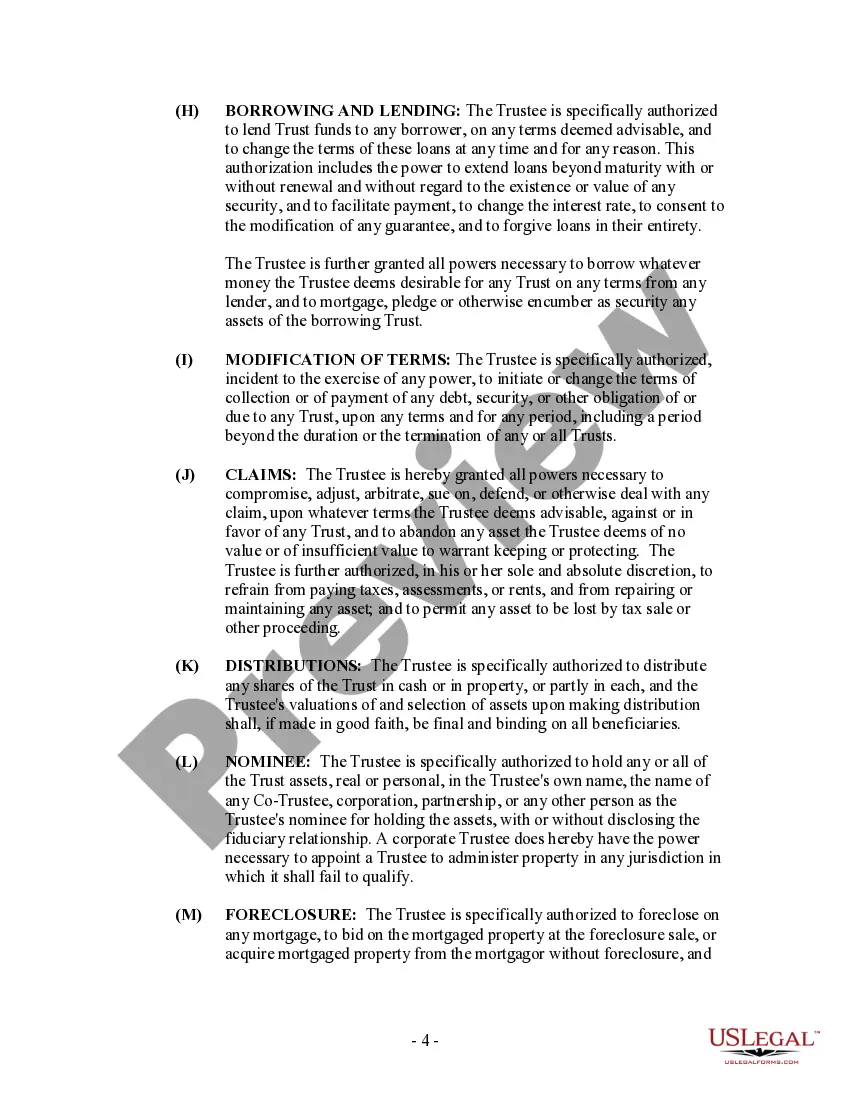
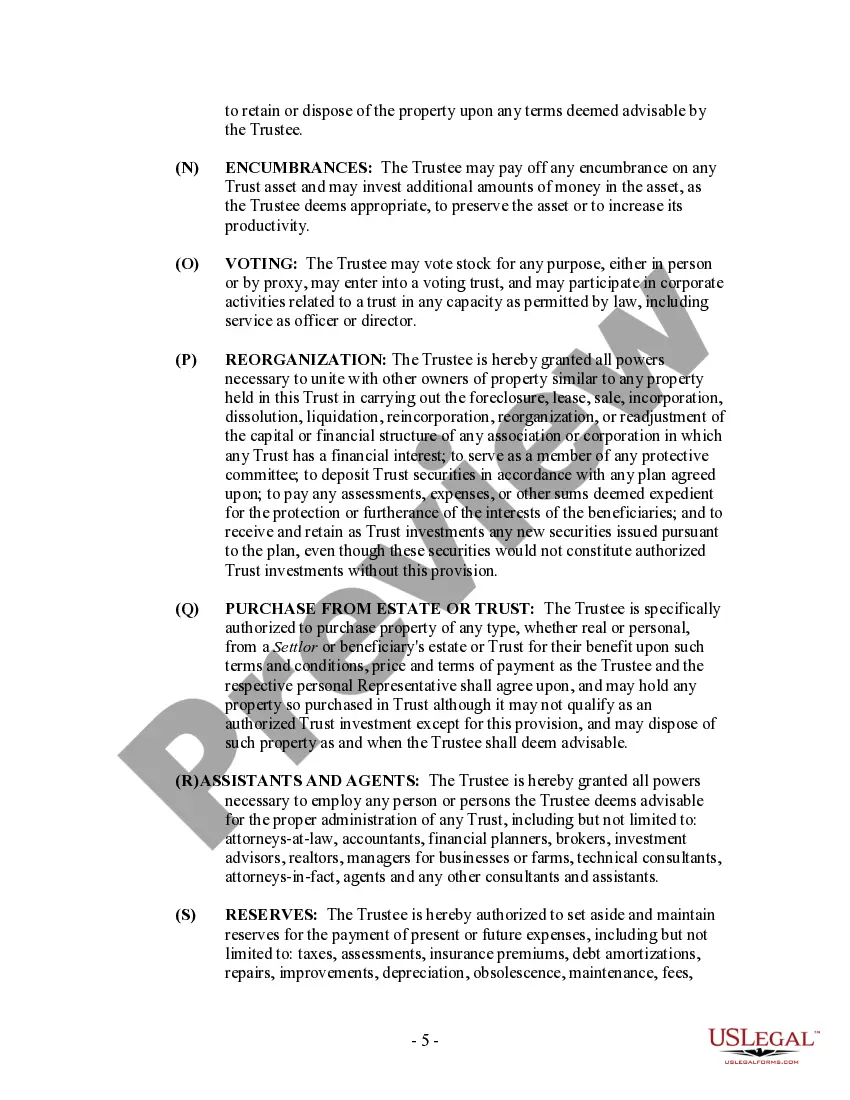
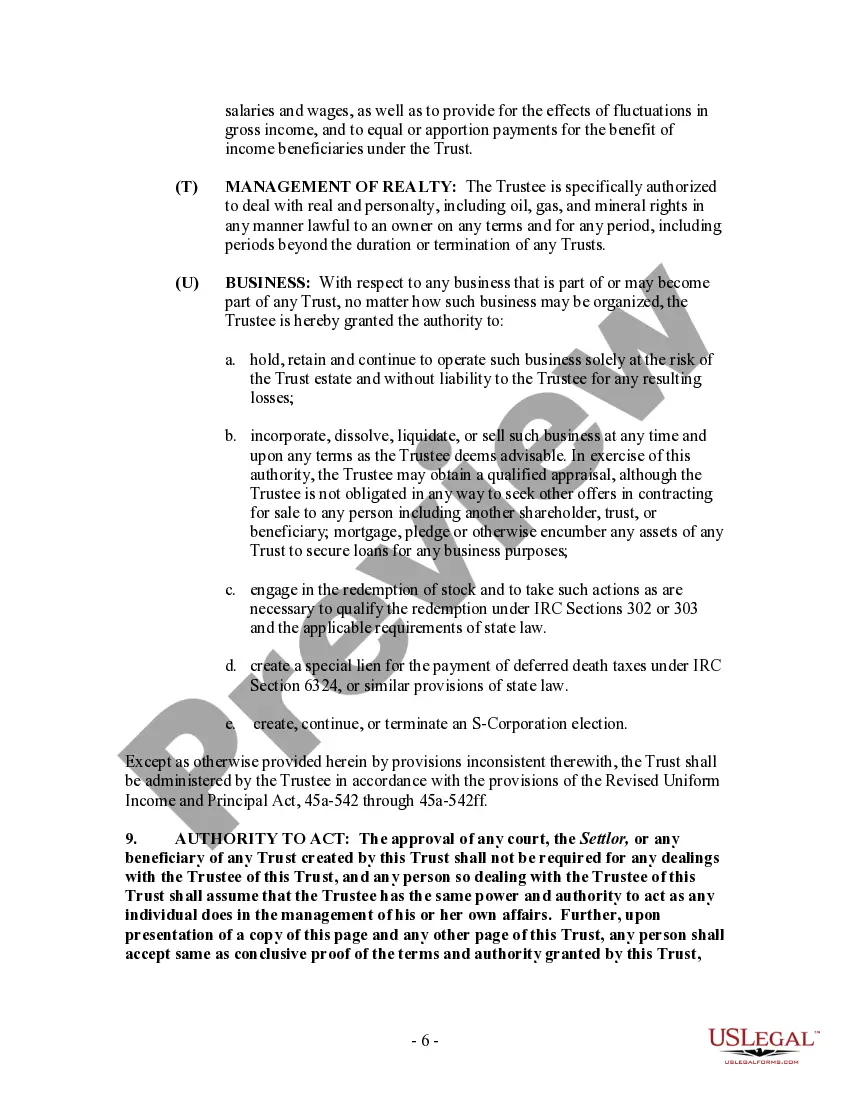
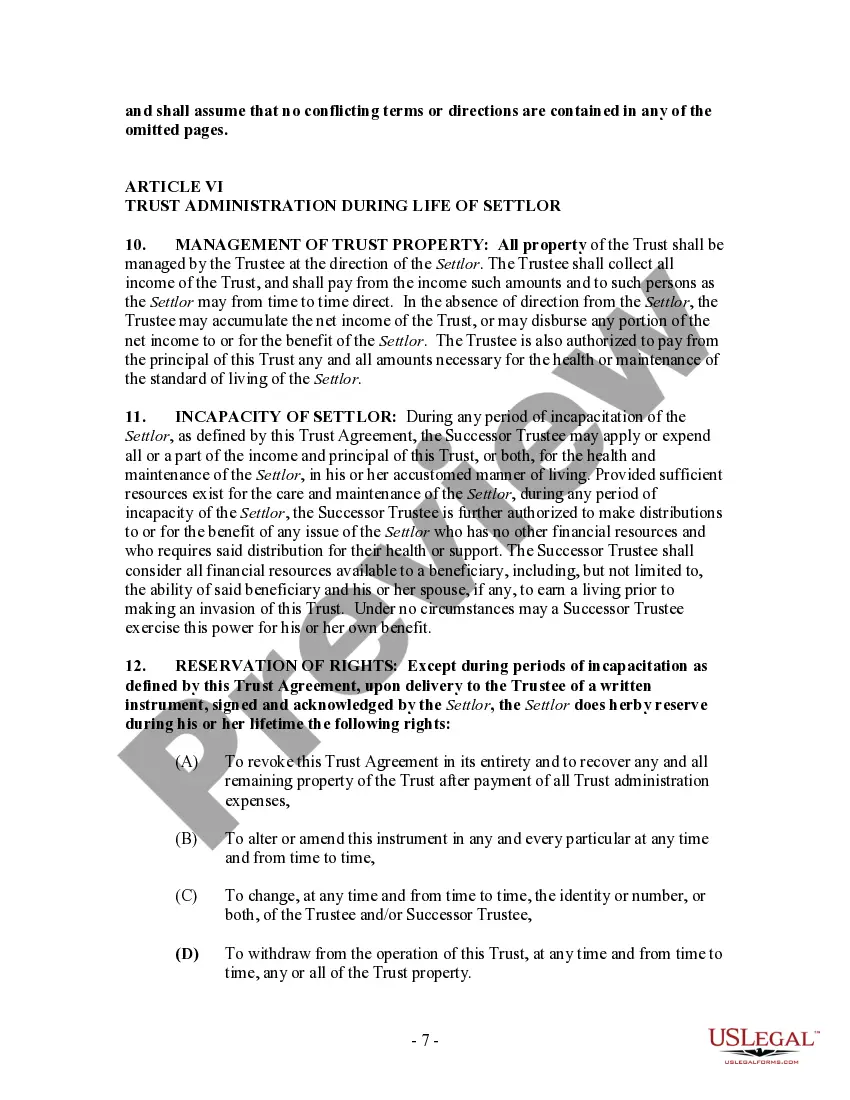
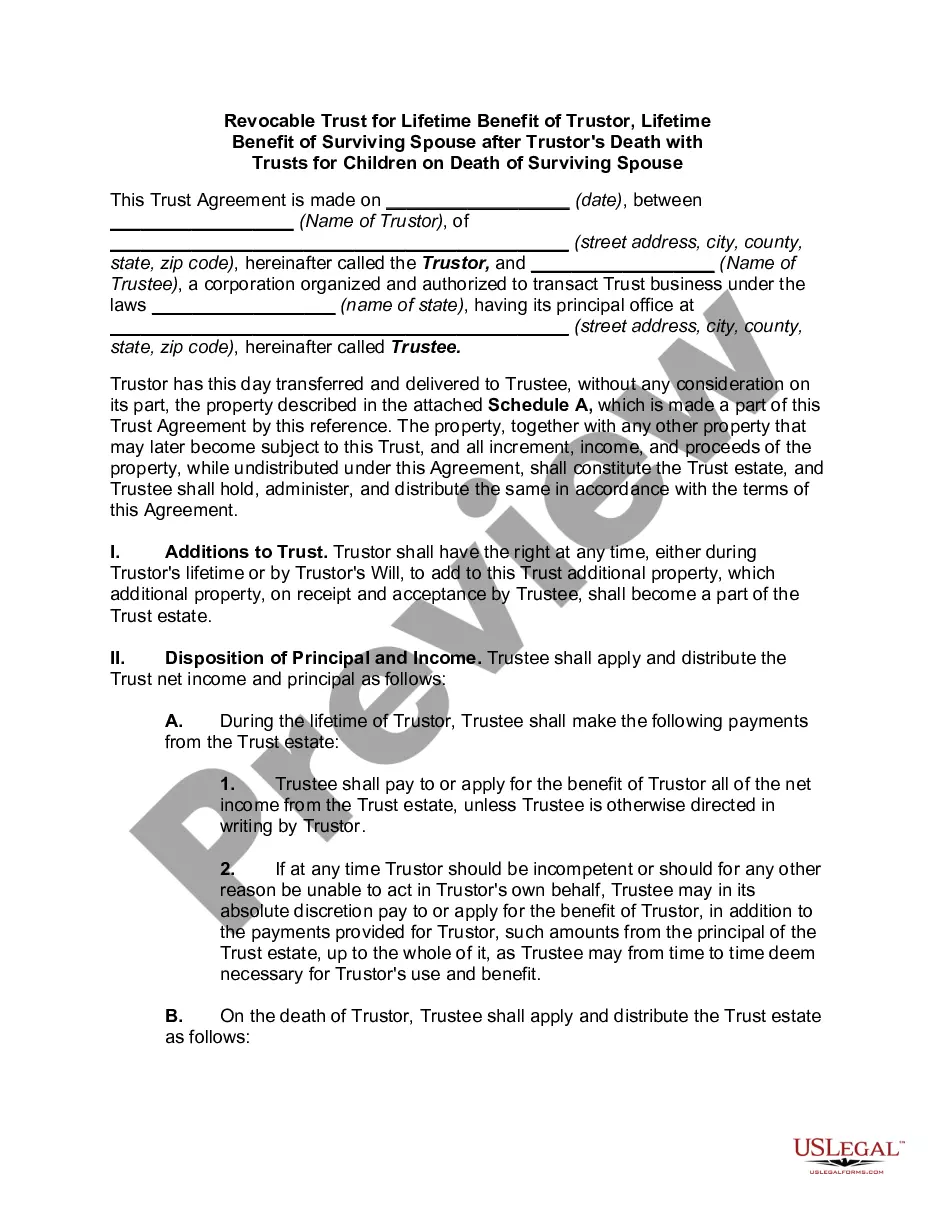
The Revocable Living Trust Agreement with Sum Certain to Spouse in Trust is a legal document used to create a trust during an individualâs lifetime. This type of trust allows the creator, known as the settlor, to manage their assets while providing for their spouse and children after their death. It avoids probate, ensuring a quicker and more private distribution of assets. This trust specifically allocates a certain sum to the spouse while ensuring the remainder benefits the children and an educational trust, making it a comprehensive estate planning tool that safeguards the financial future of loved ones.
Key parts of this document
- Name of the trust.
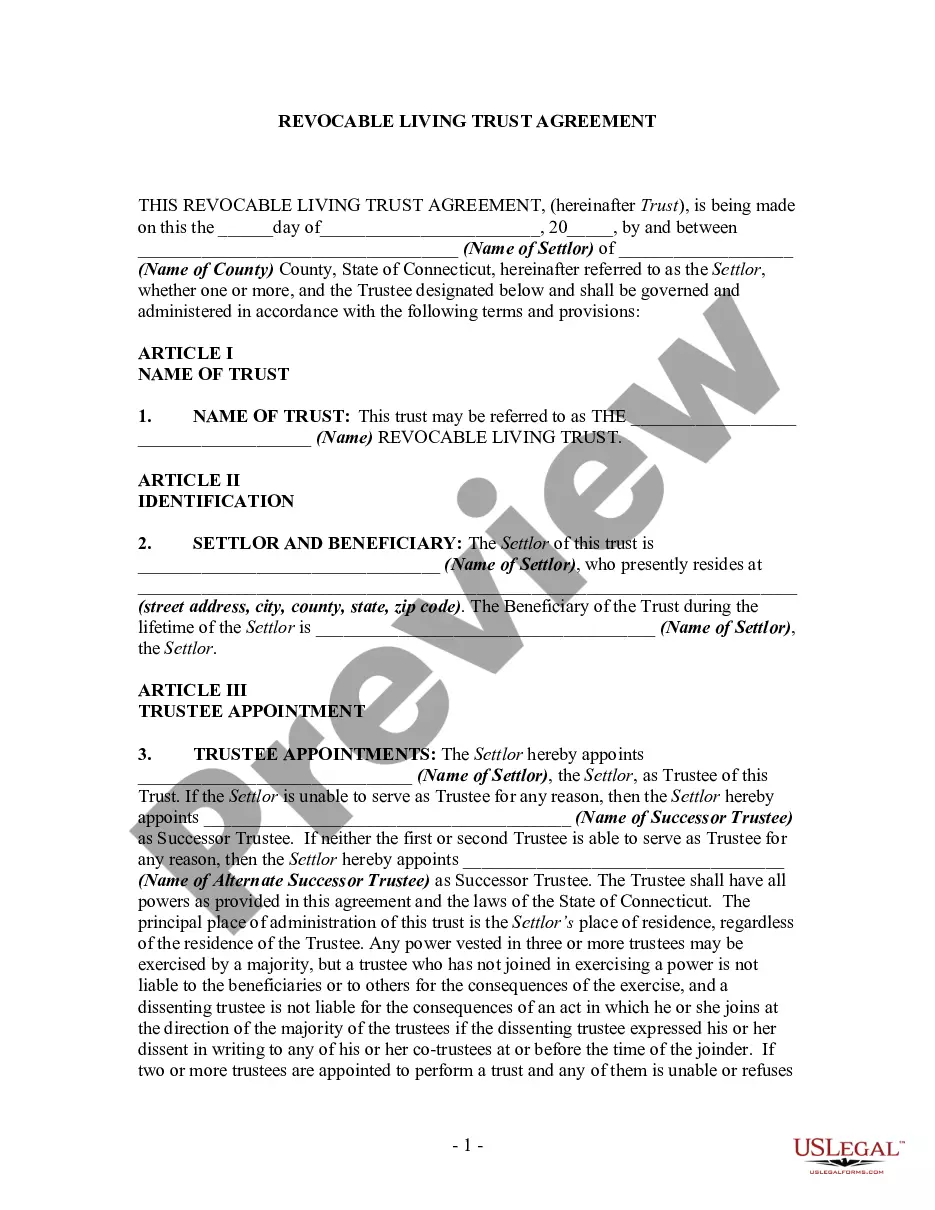
- Identification of the settlor, trustee, and beneficiaries.
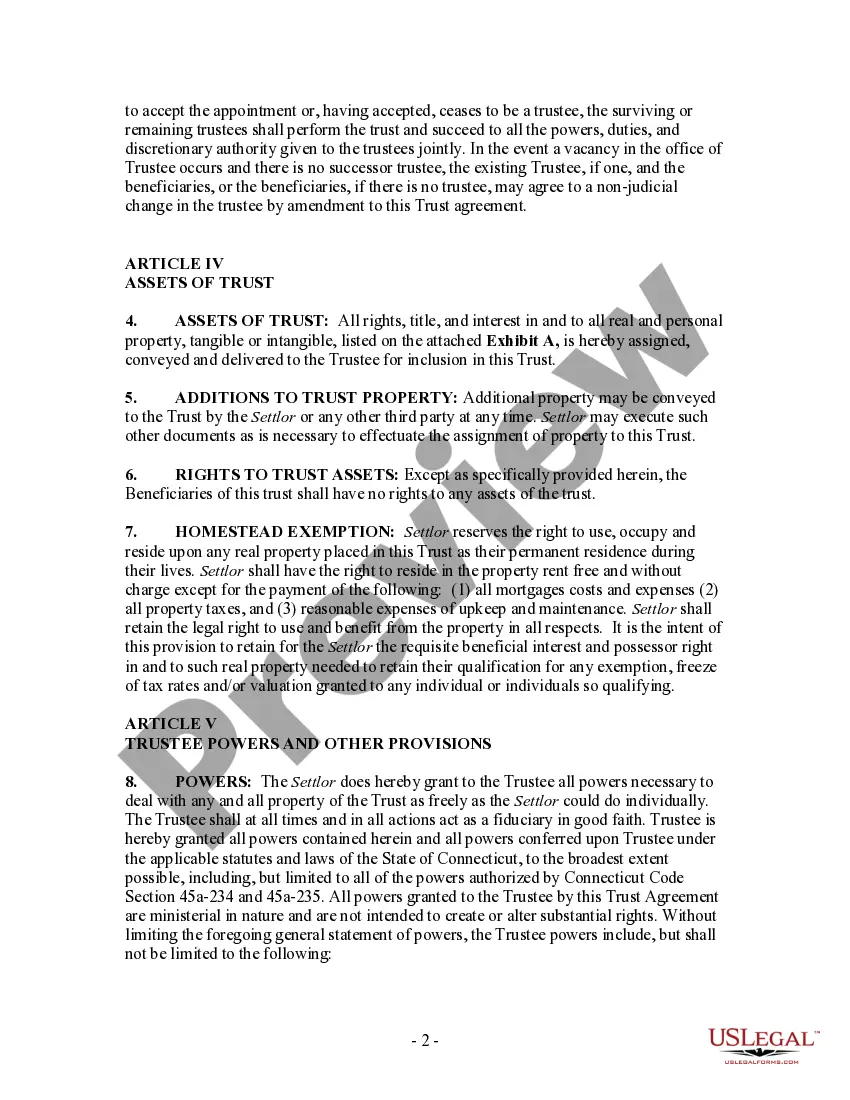
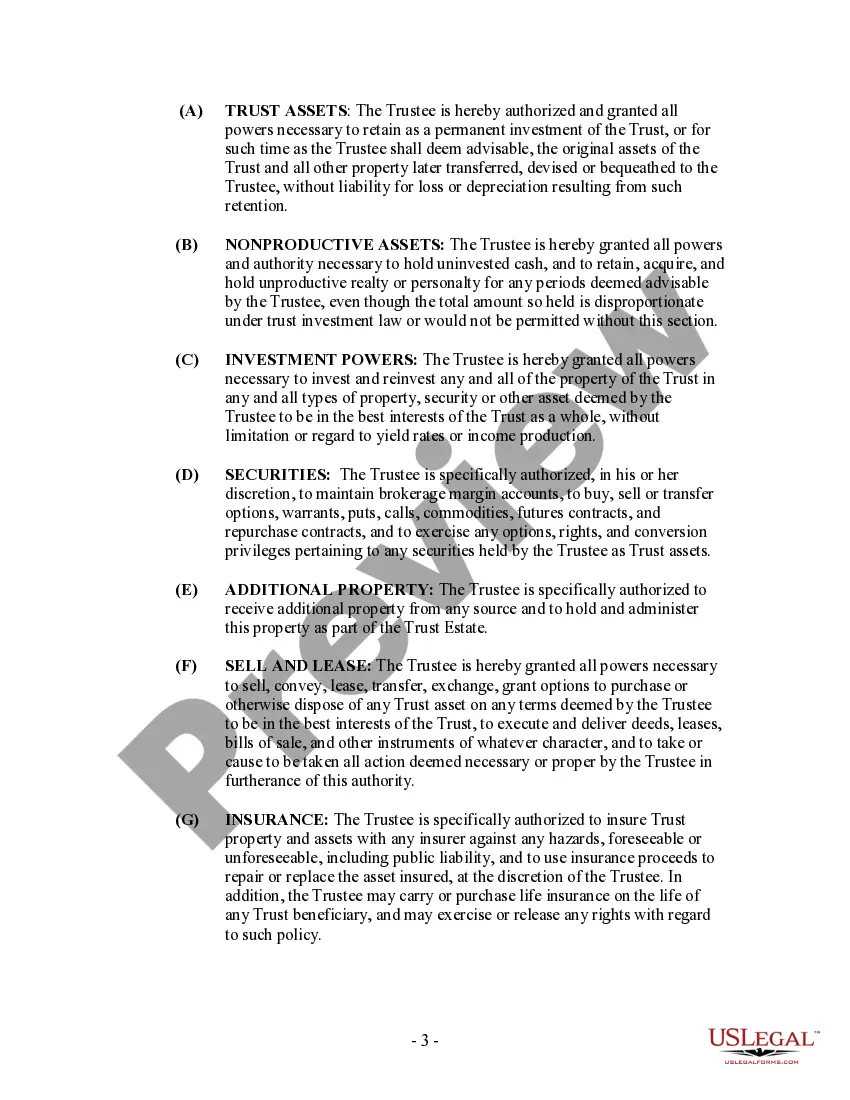
- Appointment and powers of the trustee.
- Assets included in the trust.
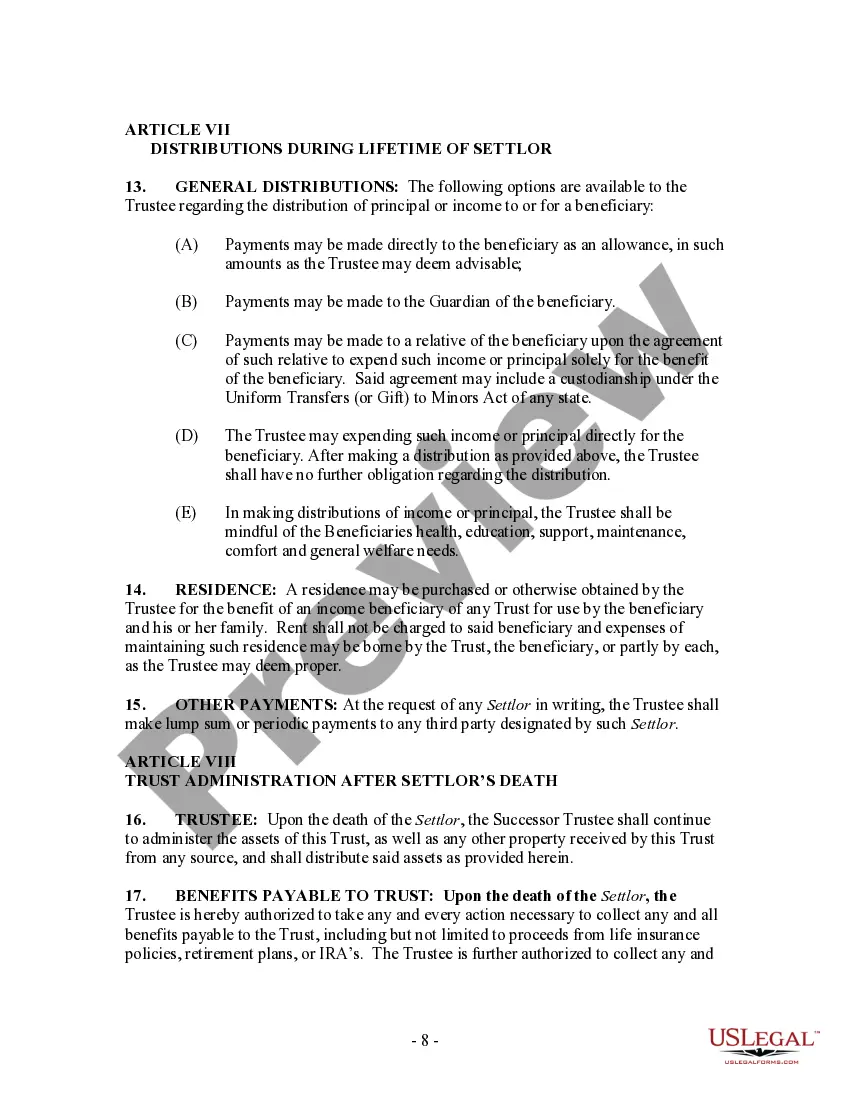
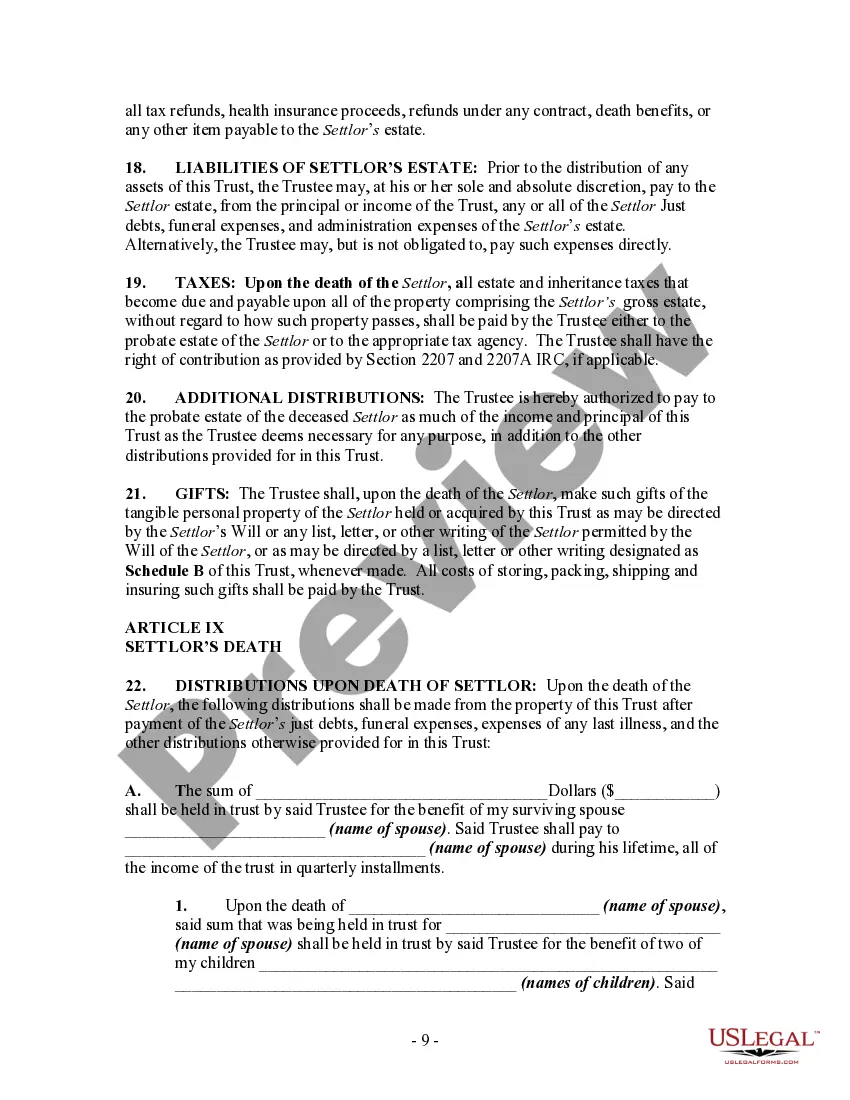
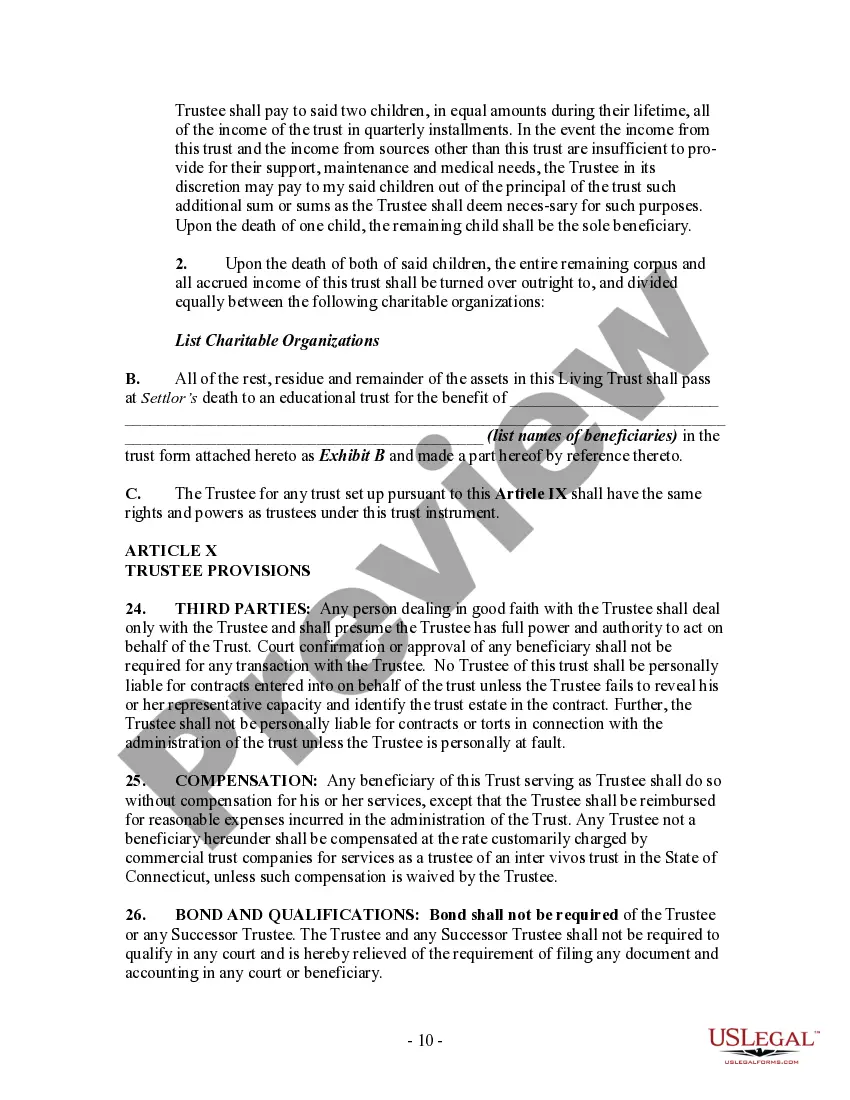
- Distribution of assets upon the settlor's death.
- Provisions regarding incapacity.



Common use cases
This trust should be used when you want to establish a clear plan for the management and distribution of your assets upon your death. It is particularly suitable for individuals wishing to provide financial support to a spouse and children while also setting aside funds for educational purposes. Additionally, it is beneficial for those wanting to avoid the probate process and minimize delays and legal costs associated with asset distribution.
Who this form is for
Individuals who should consider using this form include:
- Parents who wish to ensure their children's financial security.
- Couples looking to manage their assets together.
- Individuals wanting to support educational initiatives for their family.
- Anyone seeking a flexible solution that allows for changes and adaptations in estate planning.
How to prepare this document
To complete this form, follow these steps:
- Identify the parties involved: the settlor, trustee, and beneficiaries.
- Specify the name of the trust and complete the identification section with the settlor's details.
- Designate the trustee and any successor trustees.
- List the assets that will be included in the trust.
- Outline the distribution plan for the spouse and children upon the settlorâs death.
- Ensure all provisions regarding incapacity and administration are included and understood.
Does this form need to be notarized?
This form does not typically require notarization unless specified by local law. However, it's recommended to consult with a legal professional for guidance based on individual situations and requirements.
Get your form ready online
Our built-in tools help you complete, sign, share, and store your documents in one place.
Make edits, fill in missing information, and update formatting in US Legal Forms—just like you would in MS Word.
Download a copy, print it, send it by email, or mail it via USPS—whatever works best for your next step.
Sign and collect signatures with our SignNow integration. Send to multiple recipients, set reminders, and more. Go Premium to unlock E-Sign.
If this form requires notarization, complete it online through a secure video call—no need to meet a notary in person or wait for an appointment.
We protect your documents and personal data by following strict security and privacy standards.

Make edits, fill in missing information, and update formatting in US Legal Forms—just like you would in MS Word.

Download a copy, print it, send it by email, or mail it via USPS—whatever works best for your next step.

Sign and collect signatures with our SignNow integration. Send to multiple recipients, set reminders, and more. Go Premium to unlock E-Sign.

If this form requires notarization, complete it online through a secure video call—no need to meet a notary in person or wait for an appointment.

We protect your documents and personal data by following strict security and privacy standards.
Avoid these common issues
- Failing to specify accurate names and details of beneficiaries.
- Not updating the trust when personal circumstances change.
- Neglecting to include all assets or providing incomplete asset details.
- Not designating a successor trustee.
- Overlooking state-specific requirements for trust formation.
Benefits of using this form online
- Convenience of easy access and download from US Legal Forms.
- Editability to tailor the trust according to personal needs.
- Reliability due to compliance with legal standards and feedback from licensed attorneys.
- Ability to avoid probate, saving time and money for heirs.
Key takeaways
- The Revocable Living Trust Agreement allows for management of assets during the settlor's lifetime and provides a clear plan for distribution after death.
- This trust is especially useful for those concerned about their spouse and children's financial future.
- It avoids probate, offering a smoother transition of assets.
- Compliance with state laws is crucial for the validity of the trust.
Looking for another form?


Form popularity
FAQ
In Connecticut, co-trustees usually need to act collectively unless the trust document specifies otherwise. In a Connecticut Revocable Living Trust Agreement with Sum Certain to Spouse in Trust, Part of Remainder to Two of Children and Final Remainder to Education Trust, this cooperation helps streamline management and ensures compliance with your wishes. Should co-trustees face challenges in operating together, they might consider seeking assistance from a legal professional to clarify their roles.
Yes, trustees are generally required to work together to manage the trust according to its terms. In the context of a Connecticut Revocable Living Trust Agreement with Sum Certain to Spouse in Trust, Part of Remainder to Two of Children and Final Remainder to Education Trust, collaboration is crucial for ensuring that the assets are handled appropriately and according to your intentions. If trust issues arise among trustees, legal help may be necessary to navigate the situation.
In Connecticut, co-executors must cooperate and act together unless the court grants them the authority to act independently. This requirement helps ensure transparency and accountability in managing the estate according to the wishes outlined in a Connecticut Revocable Living Trust Agreement with Sum Certain to Spouse in Trust, Part of Remainder to Two of Children and Final Remainder to Education Trust. If a dispute arises, co-executors may need to seek legal advice to resolve issues effectively.
When one spouse passes away, the terms of the Connecticut Revocable Living Trust Agreement with Sum Certain to Spouse in Trust, Part of Remainder to Two of Children and Final Remainder to Education Trust come into action. The trust typically becomes irrevocable upon the death of the first spouse, protecting the remaining assets according to the established terms. This arrangement ensures that the surviving spouse receives their designated sum, while the remainder is allocated to the children and the education trust, providing clear guidance on asset distribution.
While it is possible to amend a revocable trust without an attorney, doing so without proper knowledge can lead to mistakes. A Connecticut Revocable Living Trust Agreement with Sum Certain to Spouse in Trust, Part of Remainder to Two of Children and Final Remainder to Education Trust may include specific legal language that needs to be followed carefully. Engaging a legal expert can help ensure that amendments are executed correctly and that your intentions are honored. It is always better to be safe and seek professional guidance.
A spouse can change a revocable trust if they are the grantor. In a Connecticut Revocable Living Trust Agreement with Sum Certain to Spouse in Trust, Part of Remainder to Two of Children and Final Remainder to Education Trust, this also allows the spouse to reflect personal wishes, reallocating assets according to their preferences. If both spouses have established a joint trust, they must work together to make changes. Seeking assistance from an experienced attorney can ensure all legal requirements are met.
Whether a husband and wife should have separate revocable trusts depends on individual circumstances and goals. Separate trusts can provide more control over assets and personalized management, particularly in a Connecticut Revocable Living Trust Agreement with Sum Certain to Spouse in Trust, Part of Remainder to Two of Children and Final Remainder to Education Trust. They also help ensure that each spouse's wishes are accurately reflected after their passing. Engaging with a legal advisor can help you determine the most suitable approach for your family.
In Connecticut, the spousal elective share allows a surviving spouse to claim a portion of the deceased spouse’s estate, regardless of what the will states. Under the law, this share amounts to 50% of the estate, which may significantly affect a Connecticut Revocable Living Trust Agreement with Sum Certain to Spouse in Trust, Part of Remainder to Two of Children and Final Remainder to Education Trust. Understanding this share is crucial for estate planning, as it ensures that the surviving spouse has a fair claim. Consulting with a legal professional can provide clarity on how to navigate this issue.
The 5 year rule for trusts in Connecticut primarily refers to how assets in a trust can impact Medicaid eligibility. To qualify for Medicaid, individuals must typically disclose any assets placed in a revocable trust within five years prior to applying. This rule is especially relevant for those setting up a Connecticut Revocable Living Trust Agreement with Sum Certain to Spouse in Trust, Part of Remainder to Two of Children and Final Remainder to Education Trust. A knowledgeable attorney can help ensure that your trust complies with this rule and retains its intended benefits.
Yes, one spouse can change a revocable trust, provided they are the sole grantor of that trust. In the case of a Connecticut Revocable Living Trust Agreement with Sum Certain to Spouse in Trust, Part of Remainder to Two of Children and Final Remainder to Education Trust, review the trust terms to ensure you can make modifications independently. However, if both spouses are co-grantors, both must agree on any changes. Consulting an attorney may help clarify the best course of action.