Connecticut Electrical Contract for Contractor
Overview of this form
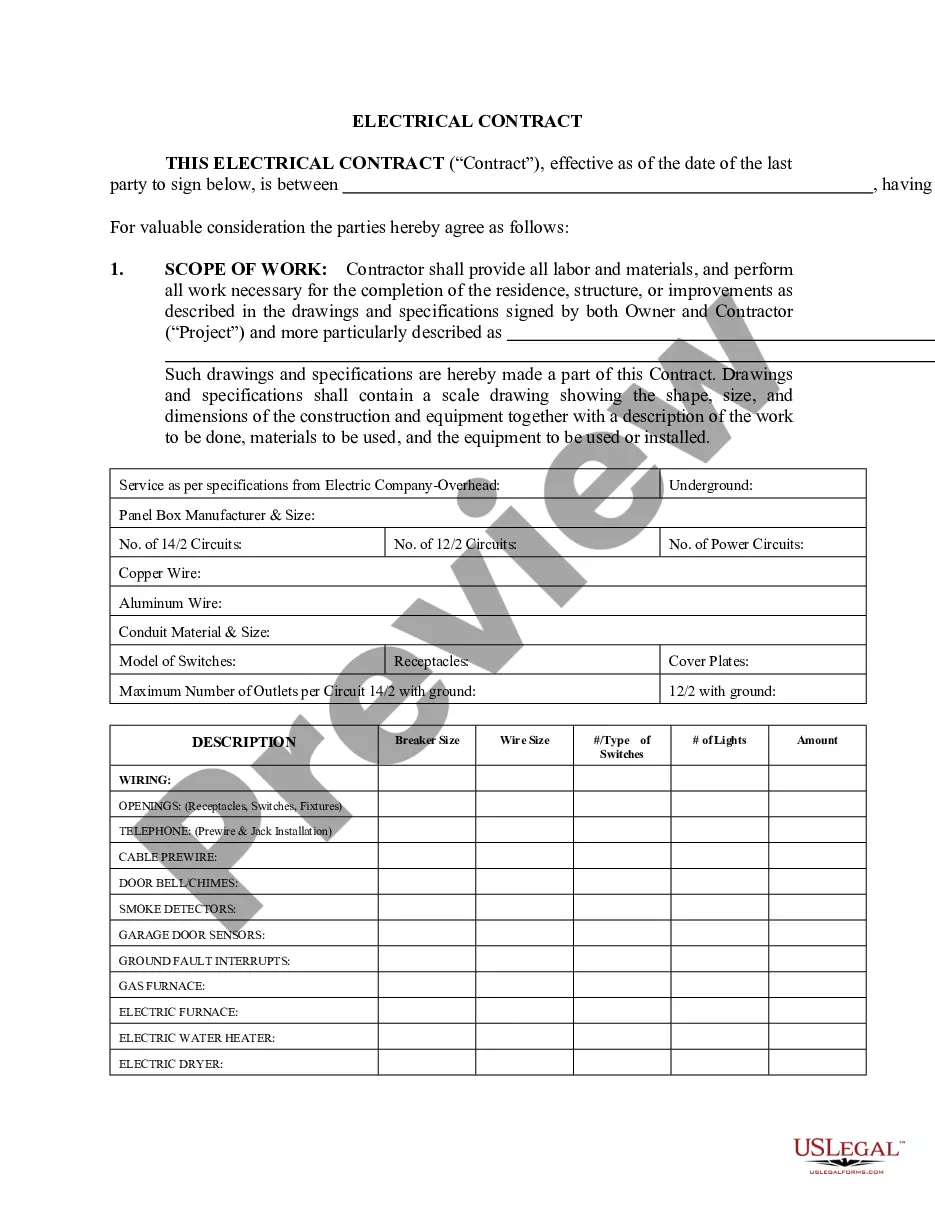
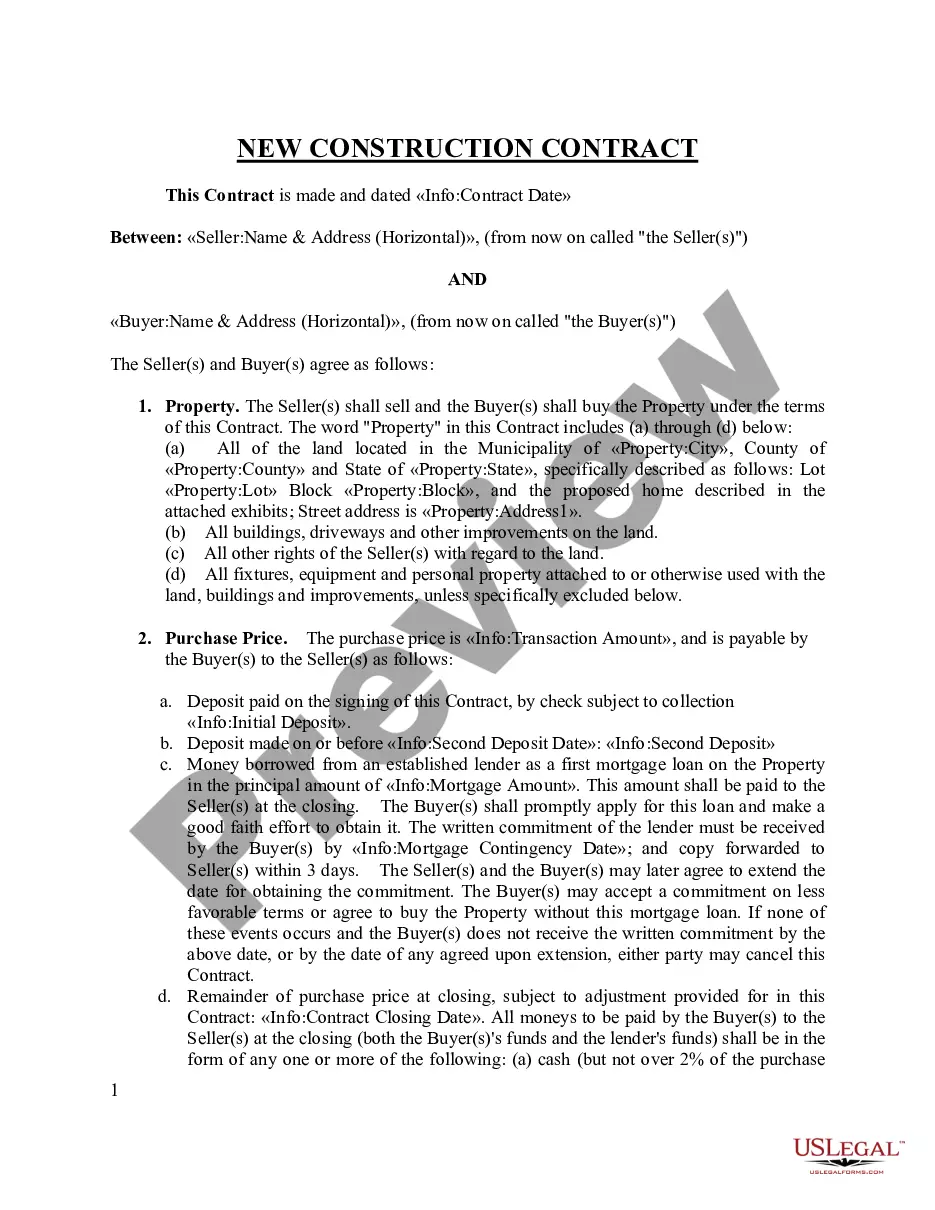
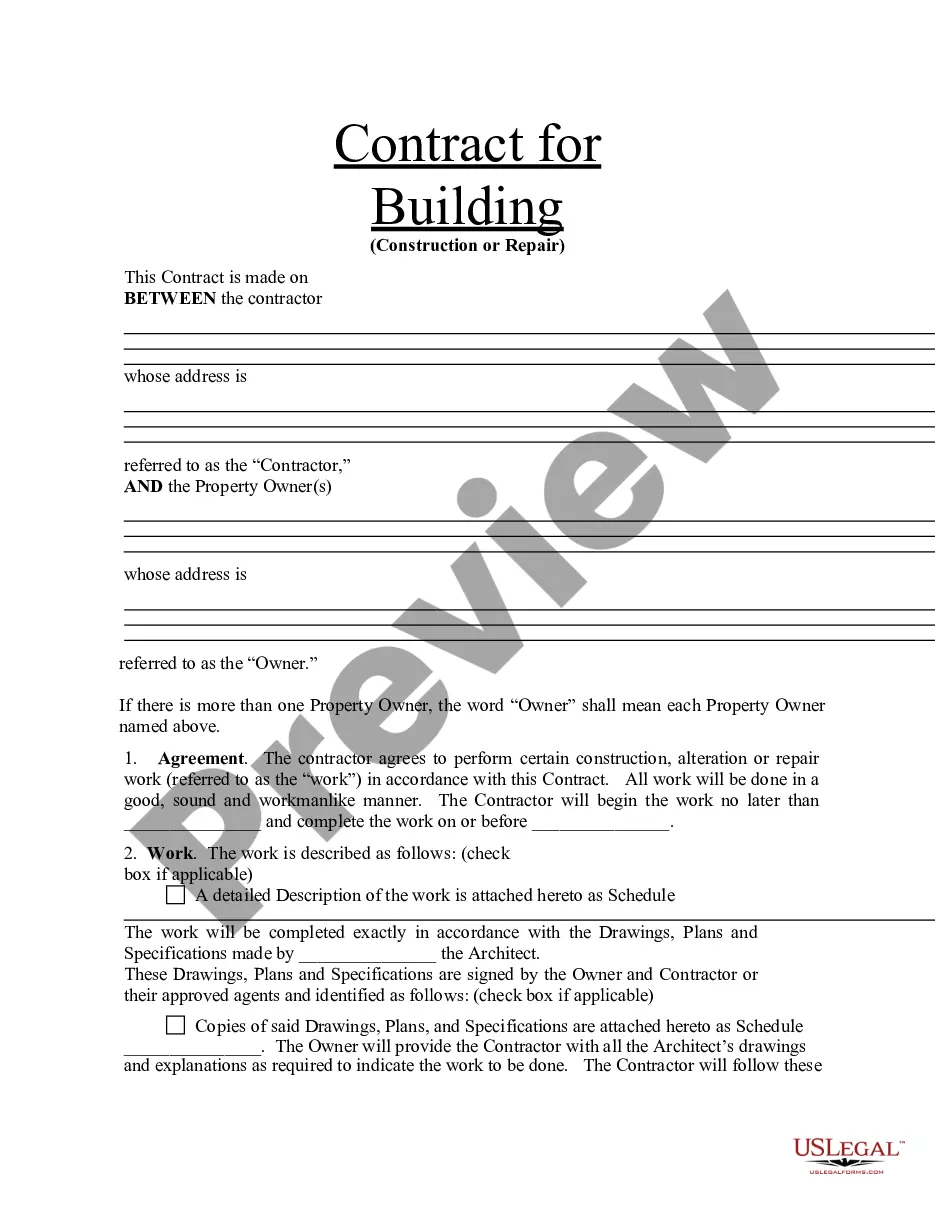
The Electrical Contract for Contractor is a legal document that outlines the agreement between electrical contractors and property owners. This form is essential for defining the scope of work, payment terms, and responsibilities of each party involved. Unlike general contractor agreements, this specific contract focuses on electrical work, ensuring compliance with Connecticut laws and providing clear guidance on change orders, warranties, and insurance coverage.
Key components of this form
- Identification of parties: clearly states the names and addresses of the contractor and property owner.
- Scope of work: details the specific electrical services to be provided.
- Payment terms: outlines whether a cost plus or fixed fee payment arrangement is established.
- Change orders: specifies the process for handling any changes to the original agreement.
- Warranty and insurance provisions: explains coverage and guarantees related to the work performed.


When to use this form
This Electrical Contract for Contractor should be used whenever an electrical contractor is hired to perform services for a property owner. It's particularly useful in scenarios involving renovations, installations, or repairs of electrical systems in residential or commercial settings. Ensuring a formal agreement helps protect both parties by clearly defining expectations and obligations.
Who can use this document
- Electrical contractors looking for a legally binding agreement with property owners.
- Property owners seeking to hire electrical services for any project.
- Individuals or businesses needing clarity on terms related to electrical work.
Completing this form step by step
- Identify the parties: fill in the names and addresses of the electrical contractor and property owner.
- Specify the scope of work: outline the electrical tasks to be performed.
- Choose payment terms: indicate whether the arrangement will be cost plus or fixed fee.
- Document change order procedures: describe how changes will be managed.
- Include warranty and insurance details: ensure that both parties agree to the relevant coverage.
Does this document require notarization?
Notarization is generally not required for this form. However, certain states or situations might demand it. You can complete notarization online through US Legal Forms, powered by Notarize, using a verified video call available anytime.
Get your form ready online
Our built-in tools help you complete, sign, share, and store your documents in one place.
Make edits, fill in missing information, and update formatting in US Legal Forms—just like you would in MS Word.
Download a copy, print it, send it by email, or mail it via USPS—whatever works best for your next step.
Sign and collect signatures with our SignNow integration. Send to multiple recipients, set reminders, and more. Go Premium to unlock E-Sign.
If this form requires notarization, complete it online through a secure video call—no need to meet a notary in person or wait for an appointment.
We protect your documents and personal data by following strict security and privacy standards.

Make edits, fill in missing information, and update formatting in US Legal Forms—just like you would in MS Word.

Download a copy, print it, send it by email, or mail it via USPS—whatever works best for your next step.

Sign and collect signatures with our SignNow integration. Send to multiple recipients, set reminders, and more. Go Premium to unlock E-Sign.

If this form requires notarization, complete it online through a secure video call—no need to meet a notary in person or wait for an appointment.

We protect your documents and personal data by following strict security and privacy standards.
Common mistakes
- Not clearly defining the scope of work, leading to misunderstandings.
- Failing to include payment terms, which can cause disputes later.
- Overlooking change order procedures, making adjustments difficult.
Why complete this form online
- Convenience: easily download and access the form from anywhere.
- Editability: customize the document to fit specific needs and circumstances.
- Reliability: forms are drafted by licensed attorneys to ensure legal compliance.
Quick recap
- The Electrical Contract for Contractor is essential for formalizing agreements between contractors and property owners.
- It includes critical elements like payment arrangements, project scope, and warranties.
- Completing this form accurately can prevent disputes and misunderstandings in electrical projects.
Looking for another form?


Form popularity
FAQ
The best state to become an electrician often combines competitive wages, vibrant job markets, and supportive training programs. States like Texas and Florida are common choices due to their demand for electrical services. However, if you decide to stay in Connecticut, be sure to familiarize yourself with state-specific regulations to capitalize on Connecticut electrical contracts for contractors.
The quickest route to becoming a licensed electrician typically includes completing an apprenticeship program that provides hands-on experience and technical knowledge. Some training programs can be completed relatively quickly, allowing you to take the necessary licensure exams sooner. Once you're licensed, you can start applying for Connecticut electrical contracts for contractors right away.
The ease of obtaining an electrical license varies tremendously by state, but some like Mississippi, may have simpler routes to licensure. Researching the requirements, including apprenticeship hours and exams, can help streamline your path. If you're looking specifically at Connecticut, be sure to follow local regulations closely as you pursue Connecticut electrical contracts for contractors.
Easiest government contracts often include projects with local municipalities or small government agencies that require electrical work. These contracts can sometimes have lenient bidding processes compared to larger federal contracts. Being aware of the requirements and using platforms like uslegalforms can help you navigate the process for securing Connecticut electrical contracts for contractors.
Securing electrical contracts online involves using bidding websites, industry-specific job boards, and social media platforms. Create a professional profile showcasing your skills and experience to attract clients. Additionally, uslegalforms offers templates and resources that simplify the process of creating valid agreements for Connecticut electrical contracts for contractors.
The easiest state to obtain an electrical license often depends on the specific requirements and regulations in each state. Some states, like Louisiana, tend to have fewer hurdles for licensure, allowing electricians to start working quickly. However, if you're considering working on Connecticut electrical contracts for contractors, understanding the local licensing requirements is essential.
Finding clients as an electrician involves leveraging online presence, attending local events, and utilizing social media. Sharing customer testimonials and project photos on platforms like Facebook and Instagram can showcase your skills effectively. By using uslegalforms, you can also access client contracts that enhance your credibility and attract potential clients looking for Connecticut electrical contracts for contractors.
Electricians typically acquire contracts through networking, referrals, and marketing their services online. Building relationships with general contractors, local businesses, and homeowners can create opportunities for securing valuable contracts. Additionally, platforms like uslegalforms can provide resources to streamline contract acquisition, ensuring a smooth process for obtaining Connecticut electrical contracts for contractors.
In Connecticut, handymen are generally not required to have a contractor's license for minor repair and maintenance tasks. However, for certain specialized electrical jobs, a license is mandatory. Thus, ensuring that your work complies with local regulations protects your business and clients. Utilizing a Connecticut Electrical Contract for Contractor clarifies the scope and legality of your services.
Filling out an independent contractor agreement involves detailing essential elements like the services provided, payment terms, and duration of the contract. Be sure to include both parties' responsibilities and any specific legal requirements necessary for the agreement to be binding. A well-structured Connecticut Electrical Contract for Contractor can serve as an effective framework for this document.