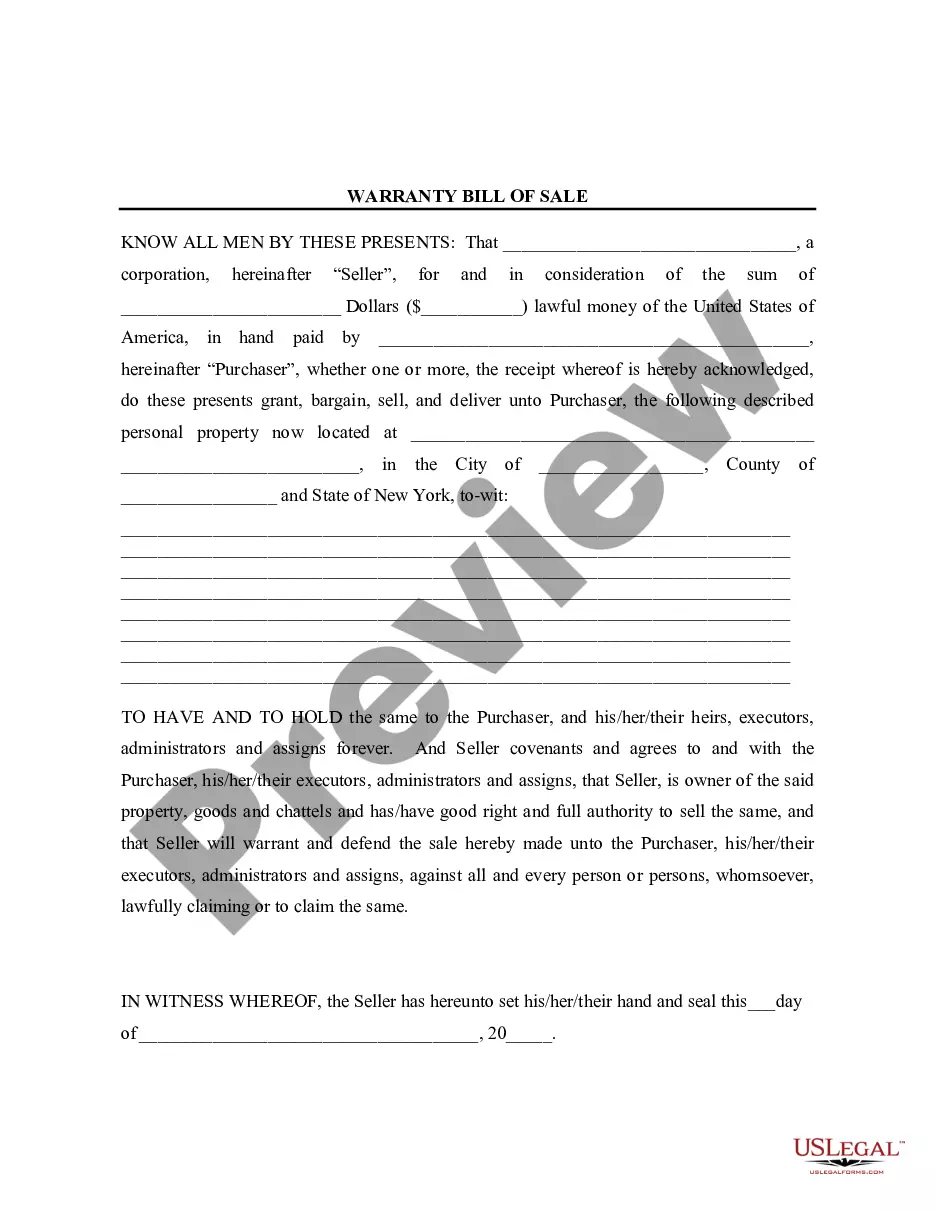
Connecticut Plumbing Contract for Contractor
What this document covers
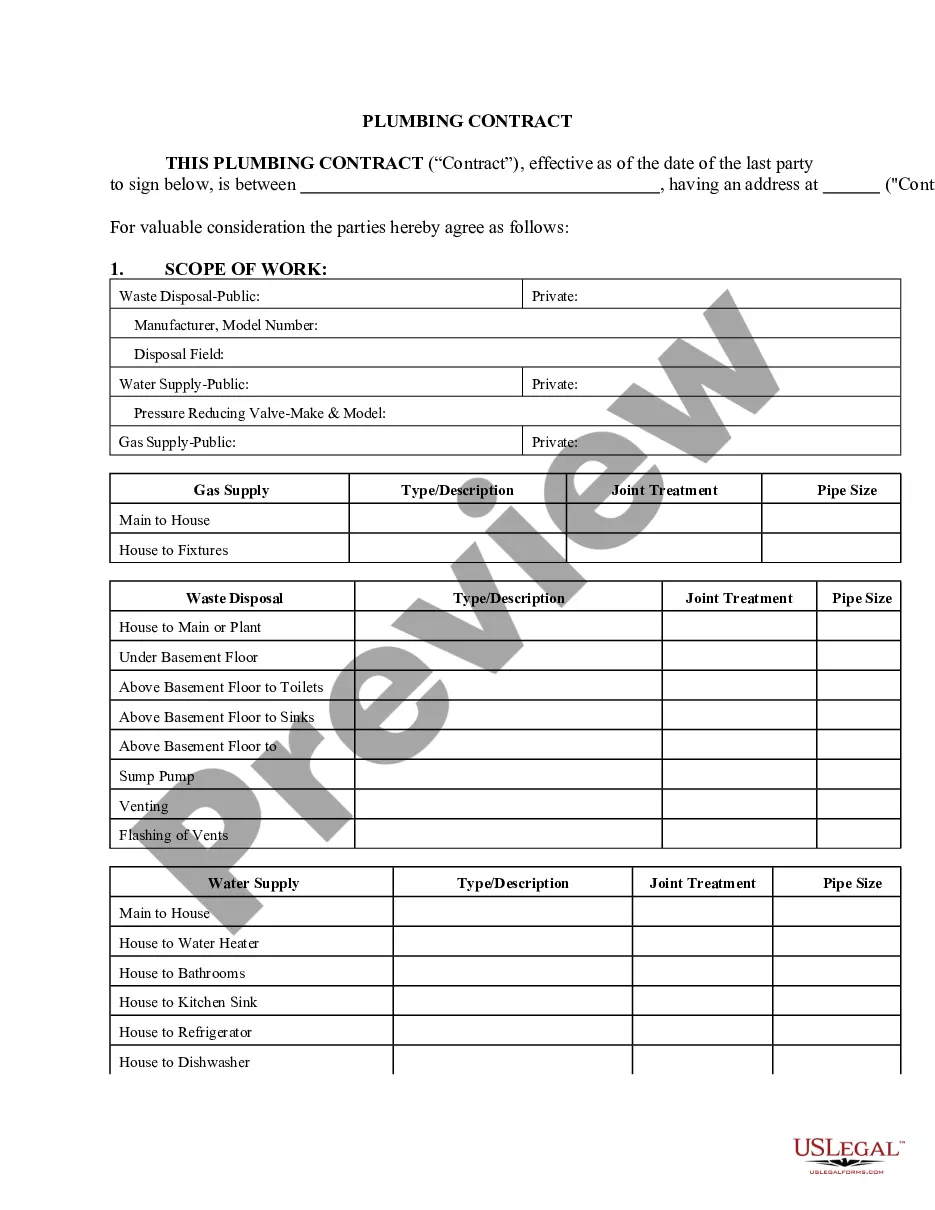
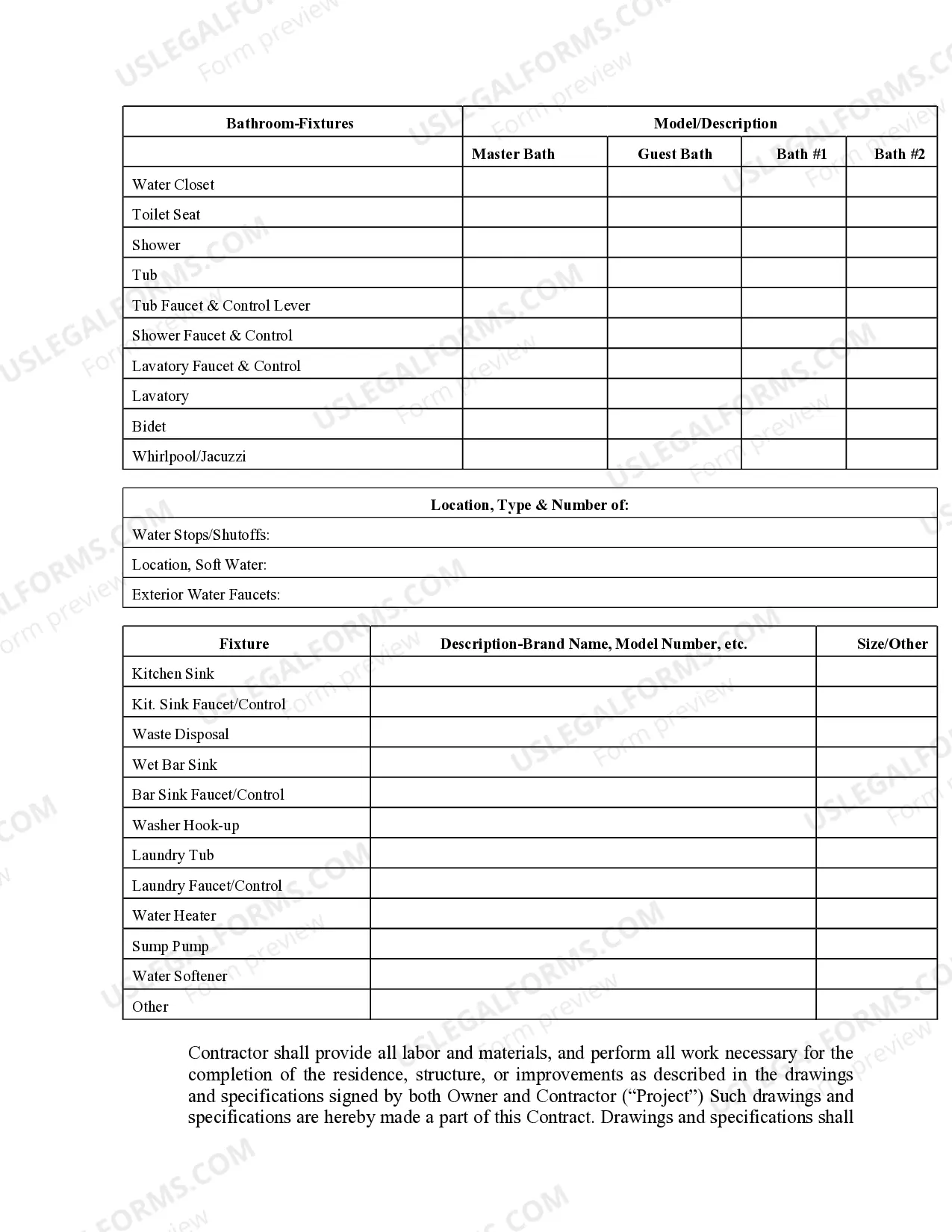
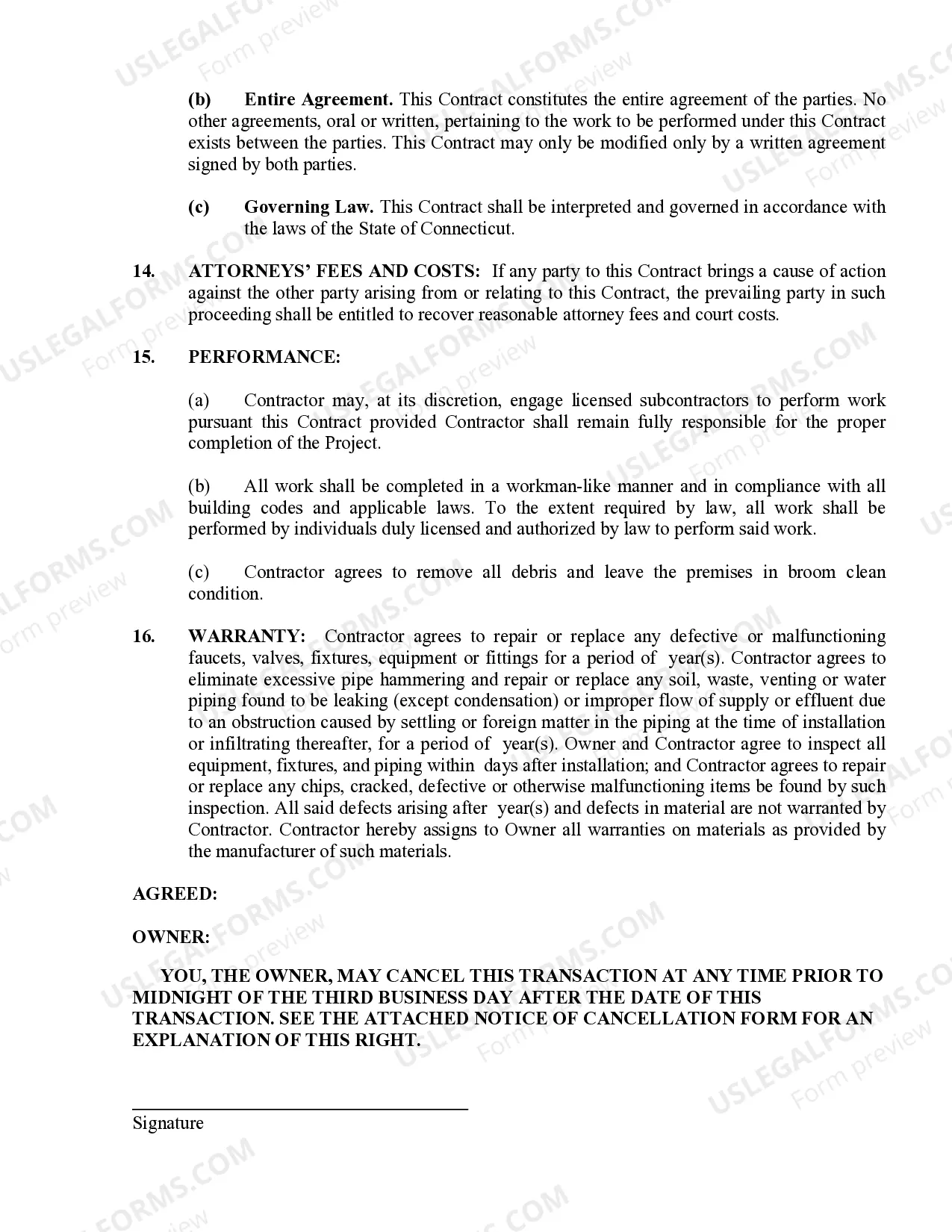
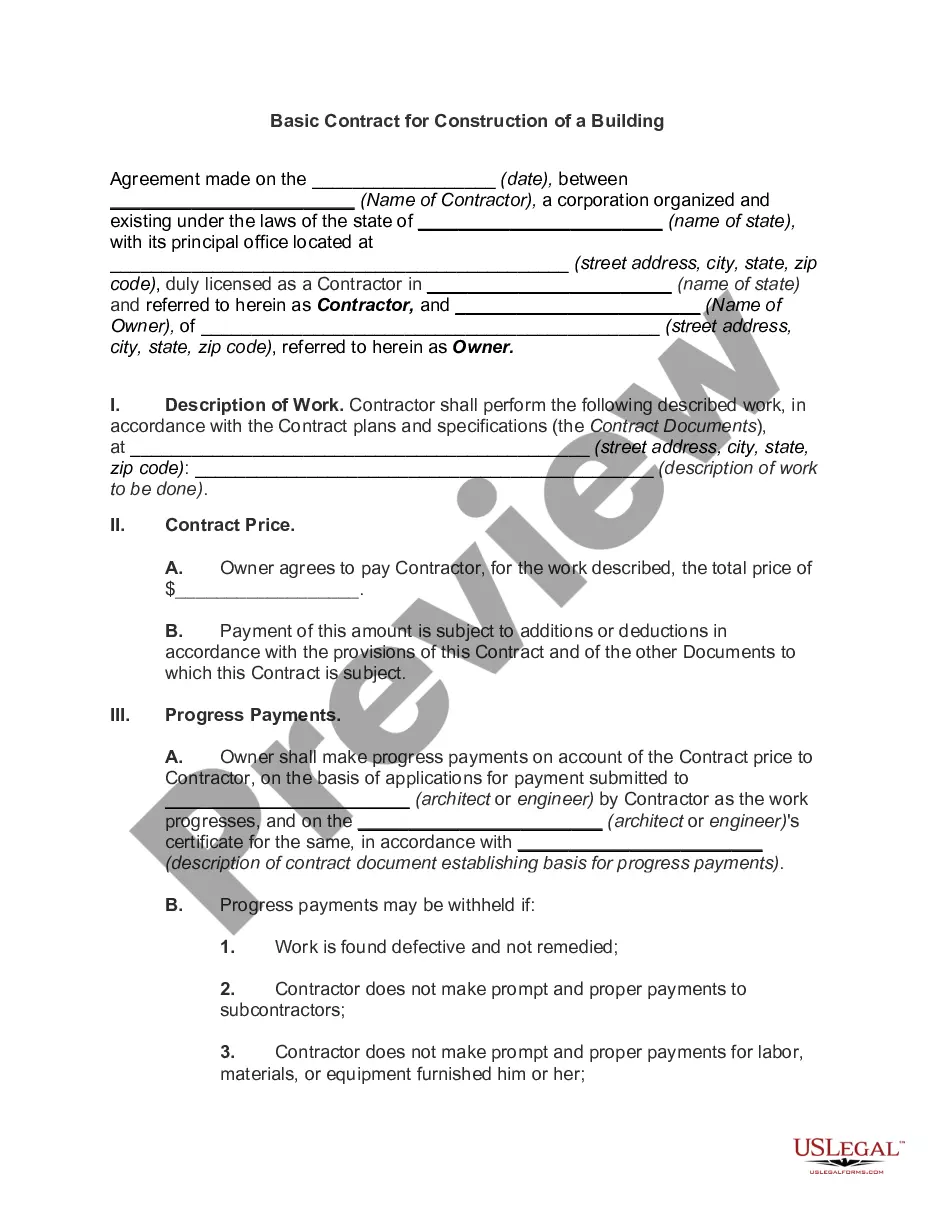
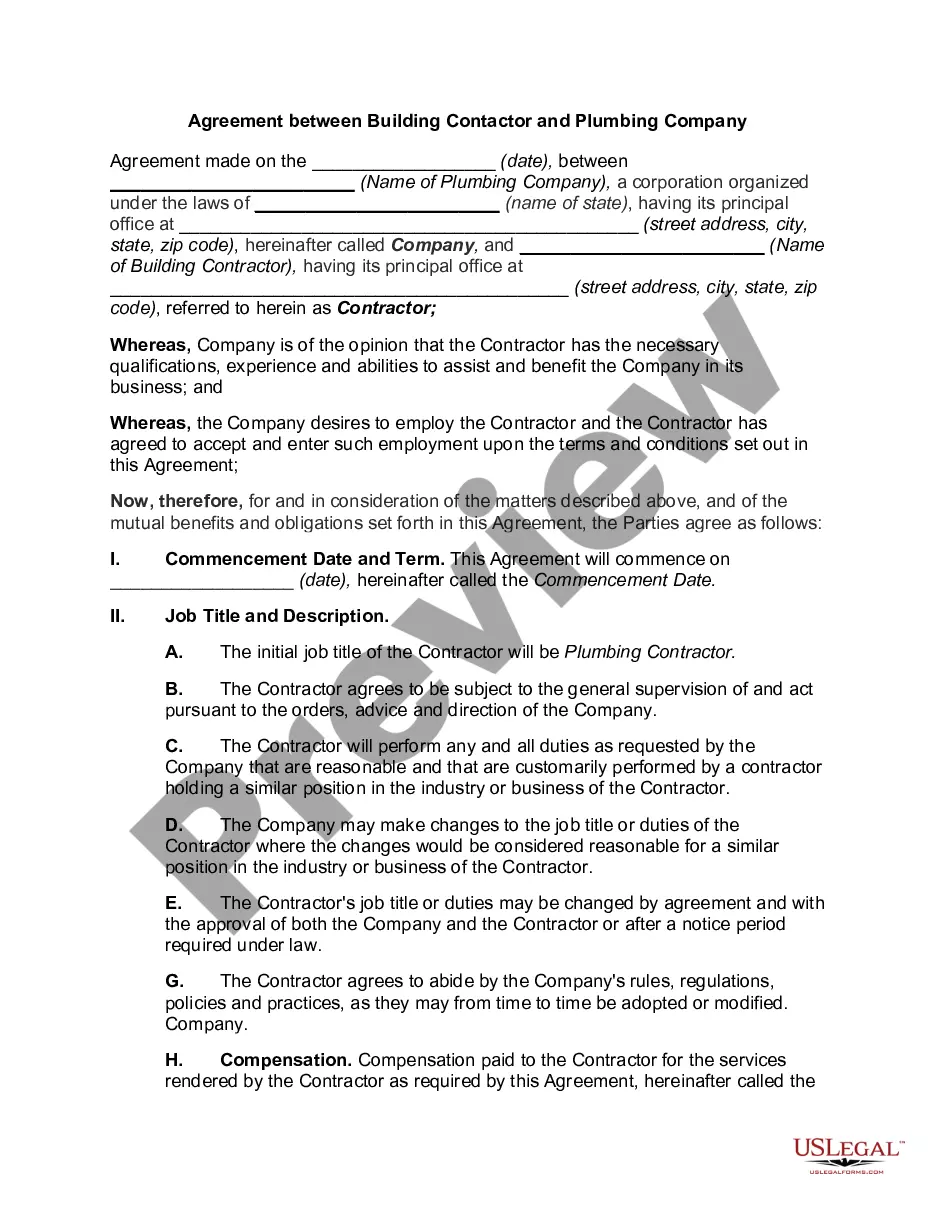
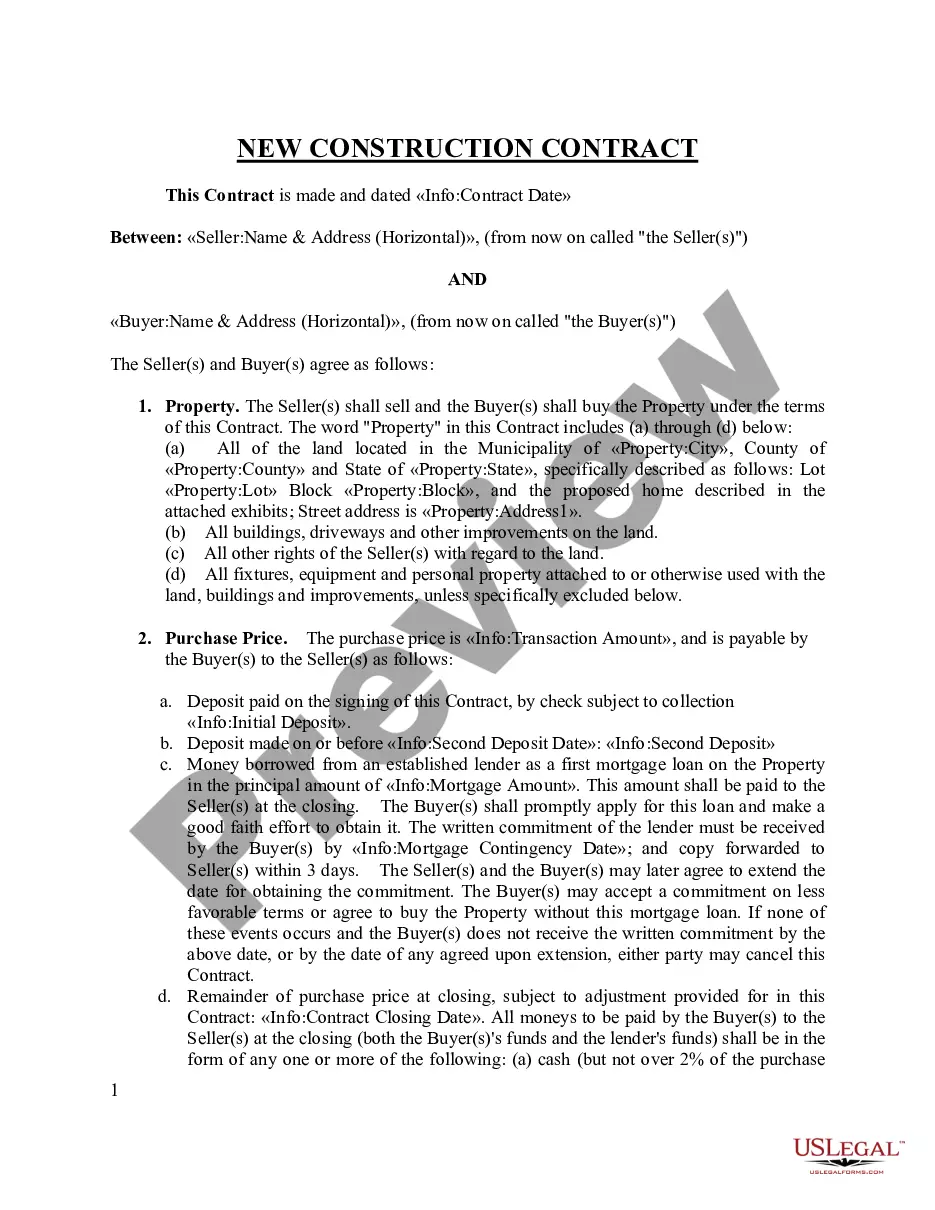
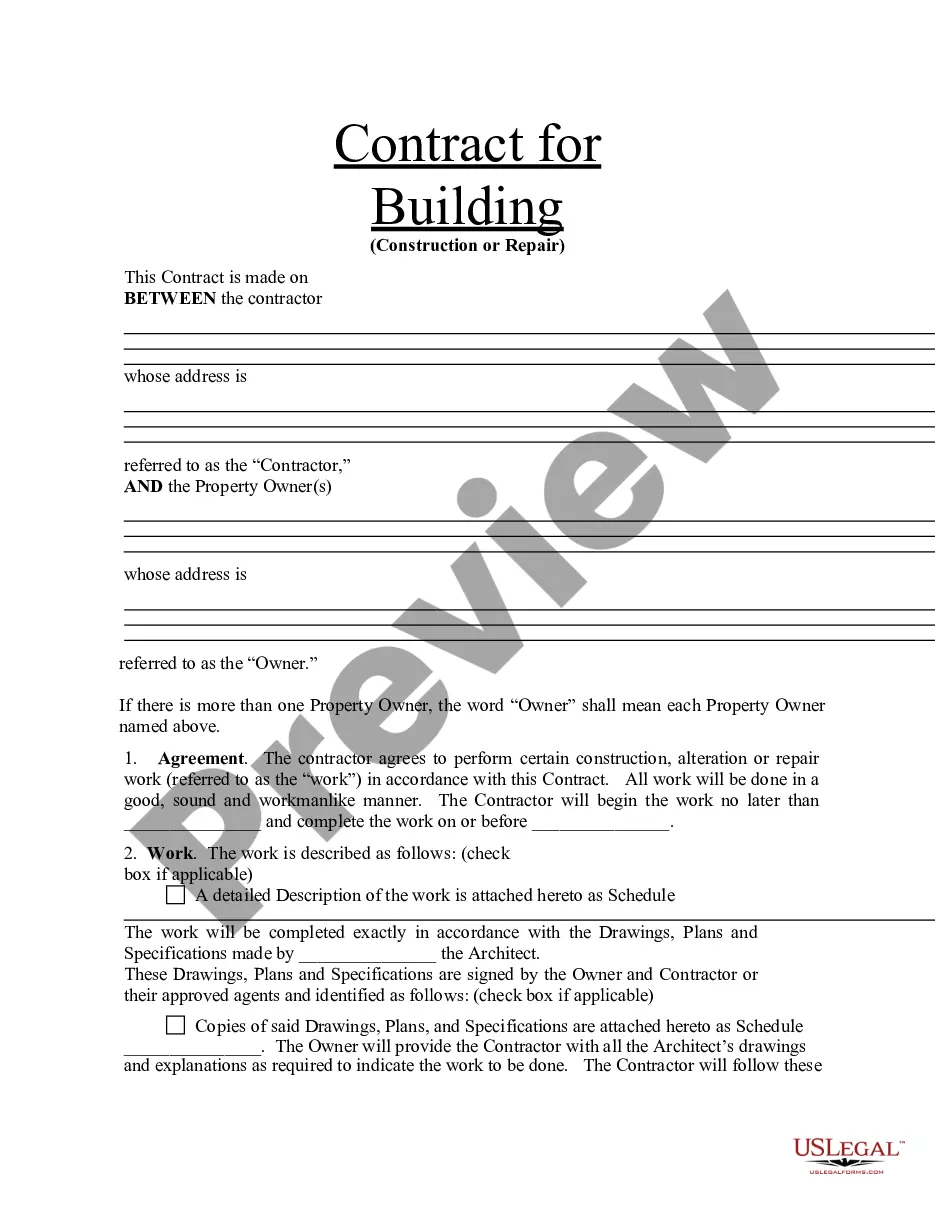
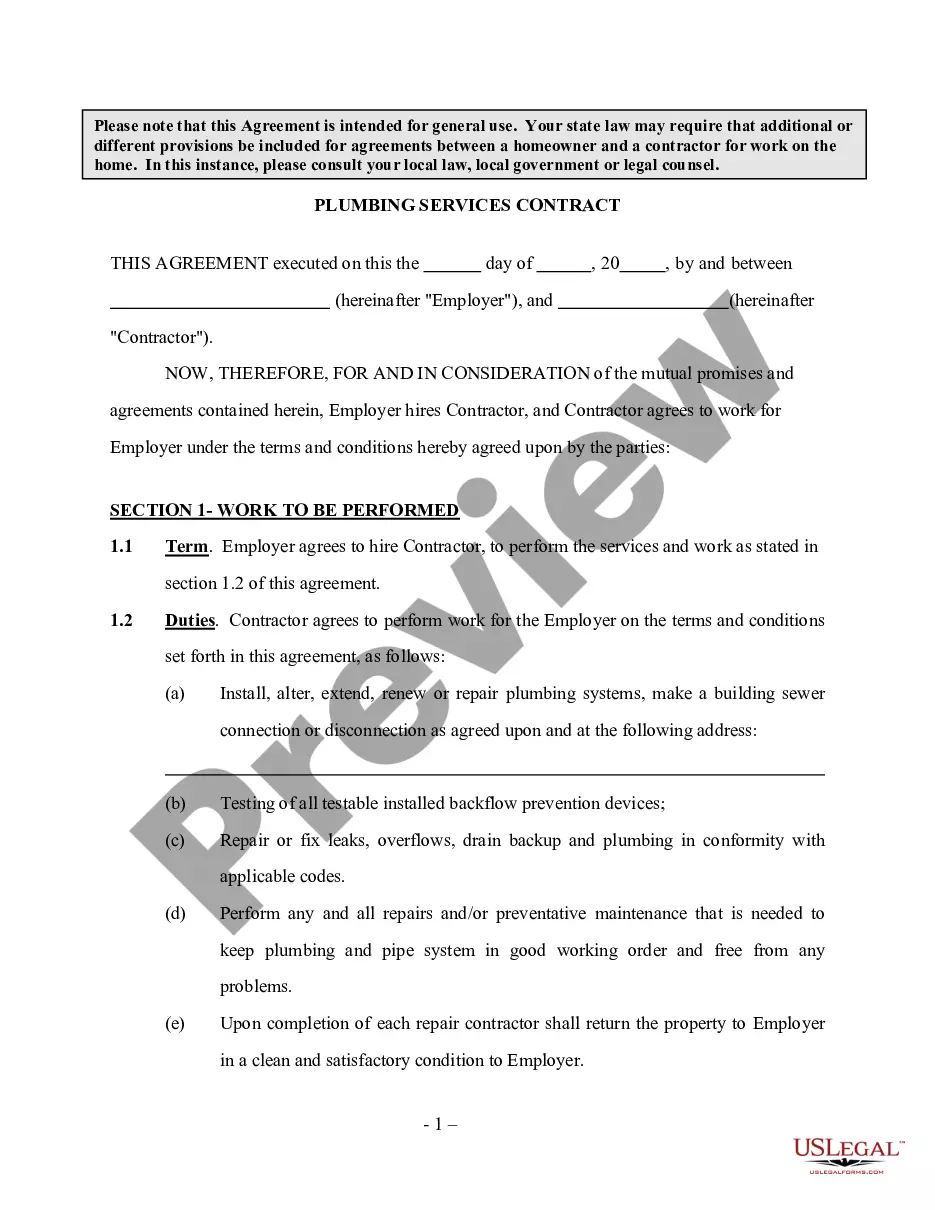
The Plumbing Contract for Contractor is a legal agreement designed for use between plumbing contractors and property owners. This form outlines essential aspects of the project, including payment arrangements, change orders, and insurance requirements. Unlike generic contracts, this document is tailored to comply with Connecticut laws, ensuring that it meets specific state regulations and protects the interests of both parties involved in plumbing services.
Key components of this form
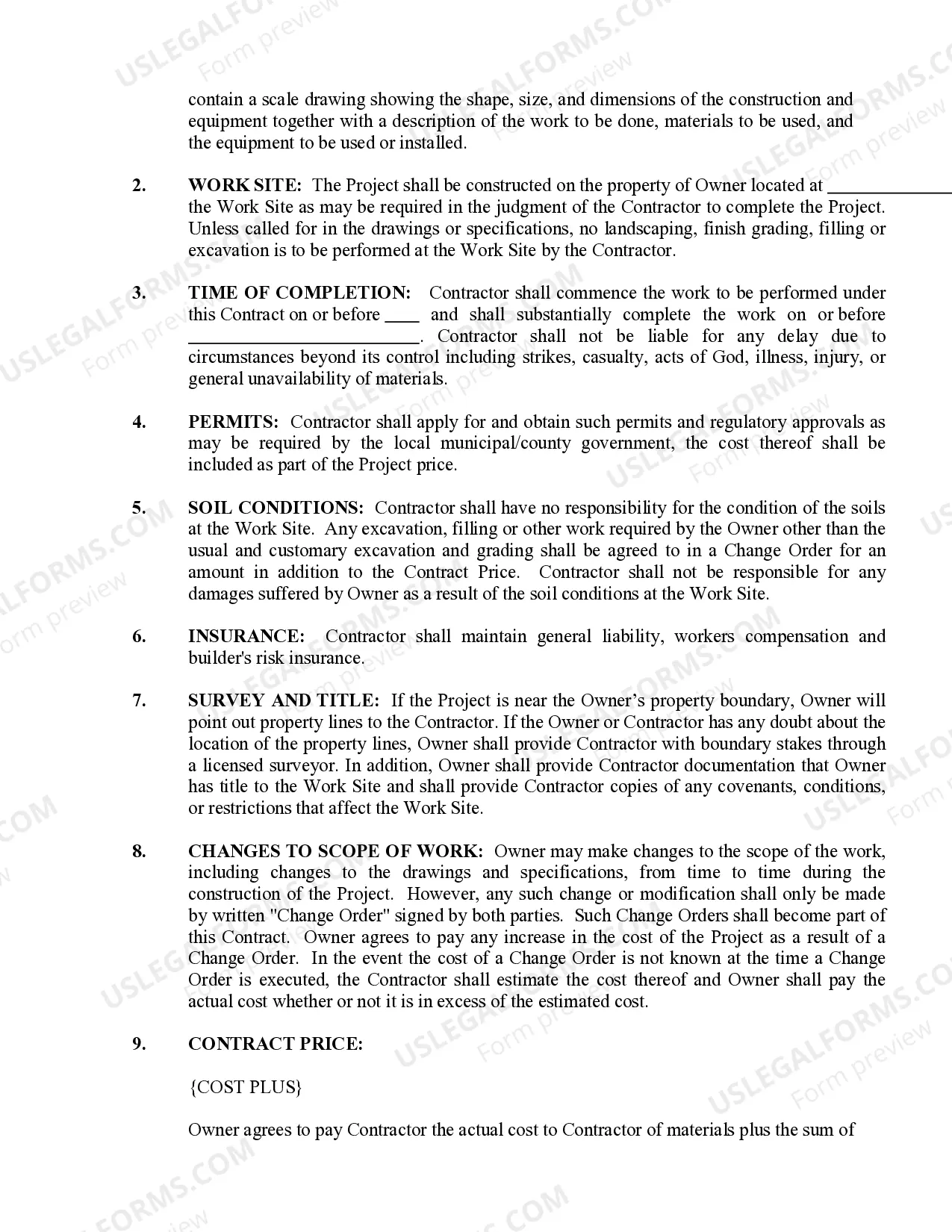
- Permits: The contractor is responsible for obtaining necessary permits, with associated costs included in the project price.
- Soil Conditions: The contractor is not liable for soil issues at the work site, and special requirements may lead to additional charges.
- Insurance: The contractor must maintain general liability, workers' compensation, and builder's risk insurance throughout the project.
- Change Orders: Any changes to the project scope must be documented in a signed Change Order, which can affect the contract price.
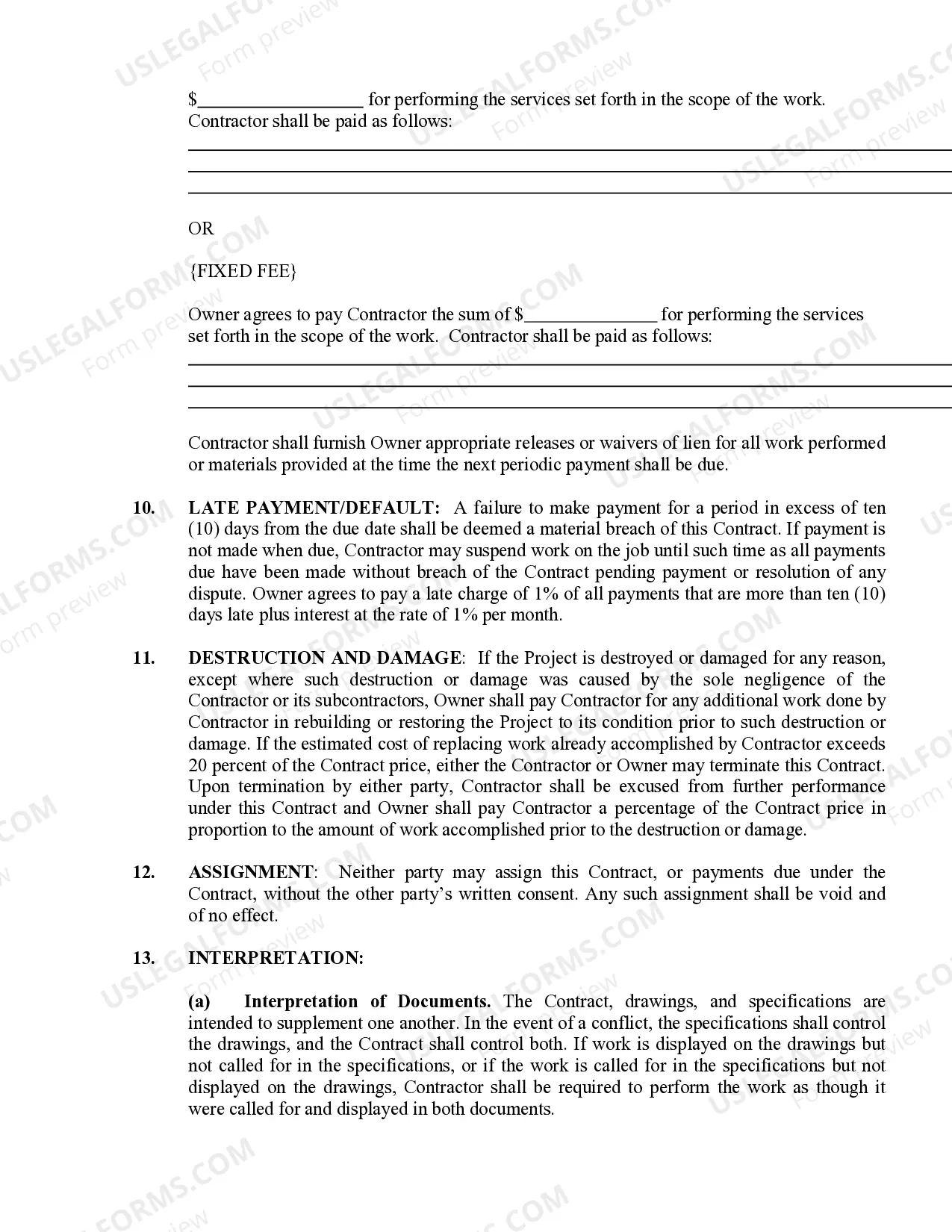
- Late Payment: A material breach is defined as failure to pay within ten days, allowing the contractor to suspend work until payment is received.
- Destruction and Damage: Specific terms address responsibilities if the project is damaged, including options for termination of the contract if damages exceed defined limits.
When this form is needed
This plumbing contract should be used when a property owner hires a plumbing contractor for a project. It is necessary when establishing the terms of work, ensuring that all parties understand their responsibilities and the financial aspects of the project. This form is especially important in situations where changes to the work scope may arise, or if specific site conditions could lead to unforeseen additional costs.
Intended users of this form
- Property owners seeking plumbing services to ensure clear terms and protections.
- Plumbing contractors wanting a legally sound contract that outlines their responsibilities and payment requirements.
- Individuals or businesses involved in renovation or new construction that requires plumbing work.
How to prepare this document
- Identify the parties involved, including the contractor and the property owner.
- Specify the details of the project, including any specific tasks to be performed and the project location.
- Determine the payment structure, choosing either a cost-plus or fixed fee arrangement.
- Outline any required permits and confirm that the contractor will obtain them.
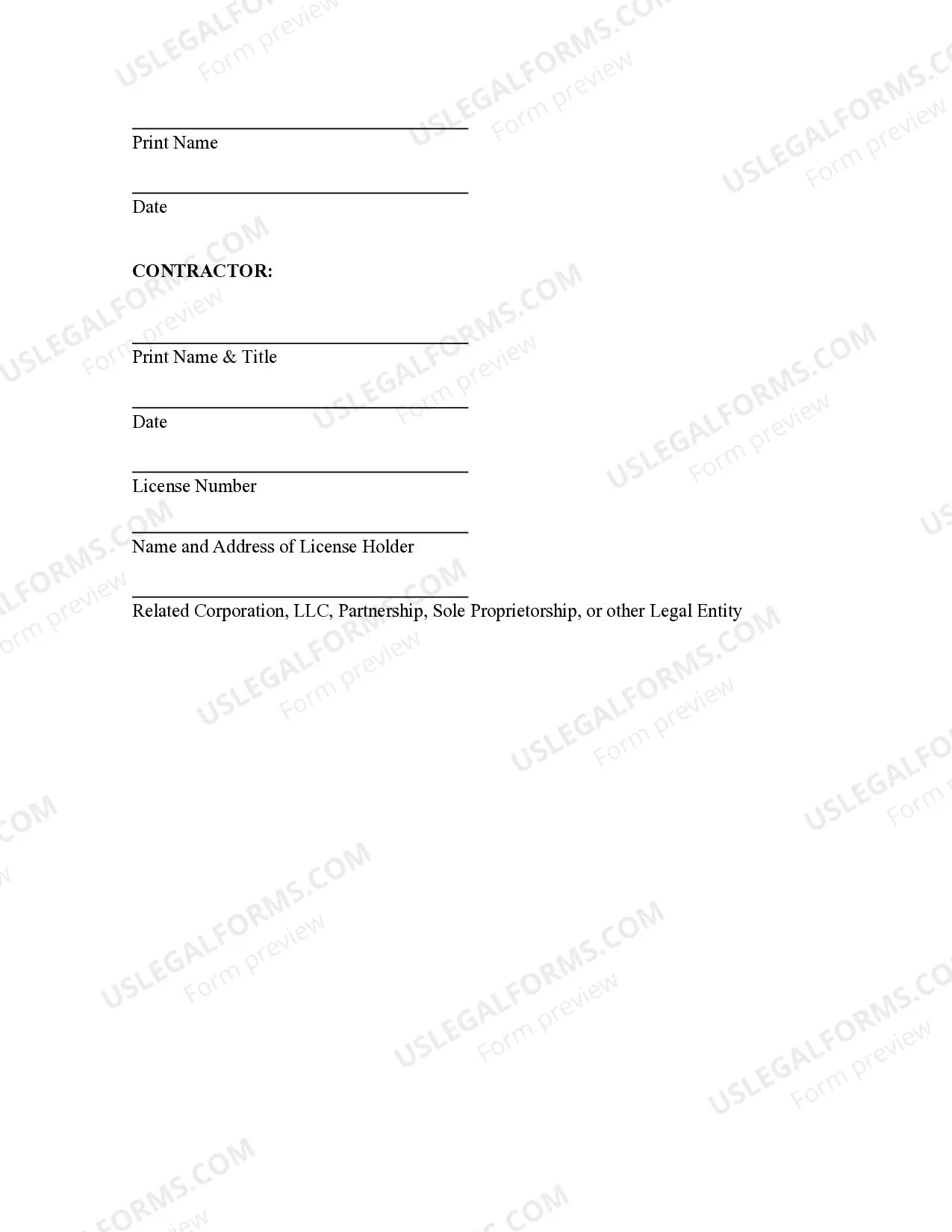
- Include spaces for signatures and dates to formalize the agreement.
Notarization requirements for this form
This form does not typically require notarization to be legally valid. However, some jurisdictions or document types may still require it. US Legal Forms provides secure online notarization powered by Notarize, available 24/7 for added convenience.
Get your form ready online
Our built-in tools help you complete, sign, share, and store your documents in one place.
Make edits, fill in missing information, and update formatting in US Legal Forms—just like you would in MS Word.
Download a copy, print it, send it by email, or mail it via USPS—whatever works best for your next step.
Sign and collect signatures with our SignNow integration. Send to multiple recipients, set reminders, and more. Go Premium to unlock E-Sign.
If this form requires notarization, complete it online through a secure video call—no need to meet a notary in person or wait for an appointment.
We protect your documents and personal data by following strict security and privacy standards.

Make edits, fill in missing information, and update formatting in US Legal Forms—just like you would in MS Word.

Download a copy, print it, send it by email, or mail it via USPS—whatever works best for your next step.

Sign and collect signatures with our SignNow integration. Send to multiple recipients, set reminders, and more. Go Premium to unlock E-Sign.

If this form requires notarization, complete it online through a secure video call—no need to meet a notary in person or wait for an appointment.

We protect your documents and personal data by following strict security and privacy standards.
Typical mistakes to avoid
- Failing to detail the scope of work, leading to misunderstandings between parties.
- Not specifying the payment terms clearly, which can cause disputes over finances.
- Neglecting to include contingency clauses for unforeseen circumstances, such as soil issues.
- Not obtaining necessary permits before work begins, resulting in legal complications.
Why complete this form online
- Convenience of immediate access to a professionally drafted contract.
- Editability allows customization based on specific project needs.
- Reliability of a form reviewed by licensed attorneys, tailored for Connecticut compliance.
Legal use & context
- This contract is legally binding once signed by both parties, establishing clear expectations.
- It may be enforced in the state of Connecticut, ensuring adherence to local plumbing and construction laws.
- Properly executed contracts reduce the risk of disputes and provide a framework for resolution.
Main things to remember
- The Plumbing Contract is essential for defining the relationship between property owners and contractors.
- It safeguards both parties by outlining responsibilities and terms before work begins.
- Utilizing this contract helps facilitate a smoother project execution while complying with state regulations.
Looking for another form?
Form popularity
FAQ
It is a Connecticut-specific contract between a plumbing contractor and a property owner that sets payment, change orders, and insurance requirements. Use it when a property owner hires a plumber, especially if scope changes or site conditions could add costs. Key provisions cover permit responsibilities, soil-condition limitations, and termination options if damages exceed limits.
Yes. The Connecticut Plumbing Contract for Contractor is designed for use between plumbing contractors (the plumbing company) and property owners, outlining duties and terms for a CT project. The form requires the contractor to obtain permits, maintain insurance, and manage change orders, as well as addressing late payments and potential termination if damages occur.
For the Connecticut Plumbing Contract for Contractor, the three core elements are the payment terms, how changes to the work are handled (change orders), and the required insurance provisions (general liability, workers’ compensation, and builder’s risk). These provisions help ensure project finances, scope changes, and risk are managed between owner and contractor.
For the Connecticut Plumbing Contract for Contractor, the three elements of a simple contract are the parties (owner and contractor), the scope of work with payment terms, and the procedures for change orders and required insurance.
This contract addresses permits, soil conditions, insurance, change orders, late payment, and destruction or damage with termination options. It assigns permit responsibilities to the contractor, limits liability for soil issues, requires ongoing insurance coverage, and requires signed Change Orders for any scope changes, potentially affecting price.
It is tailored to Connecticut law and project needs, requiring CT-specific elements like permit responsibilities, builder’s risk insurance, and a defined ten-day period for payment lapses with the contractor allowed to suspend work, plus explicit handling of damages and termination if damages exceed limits.