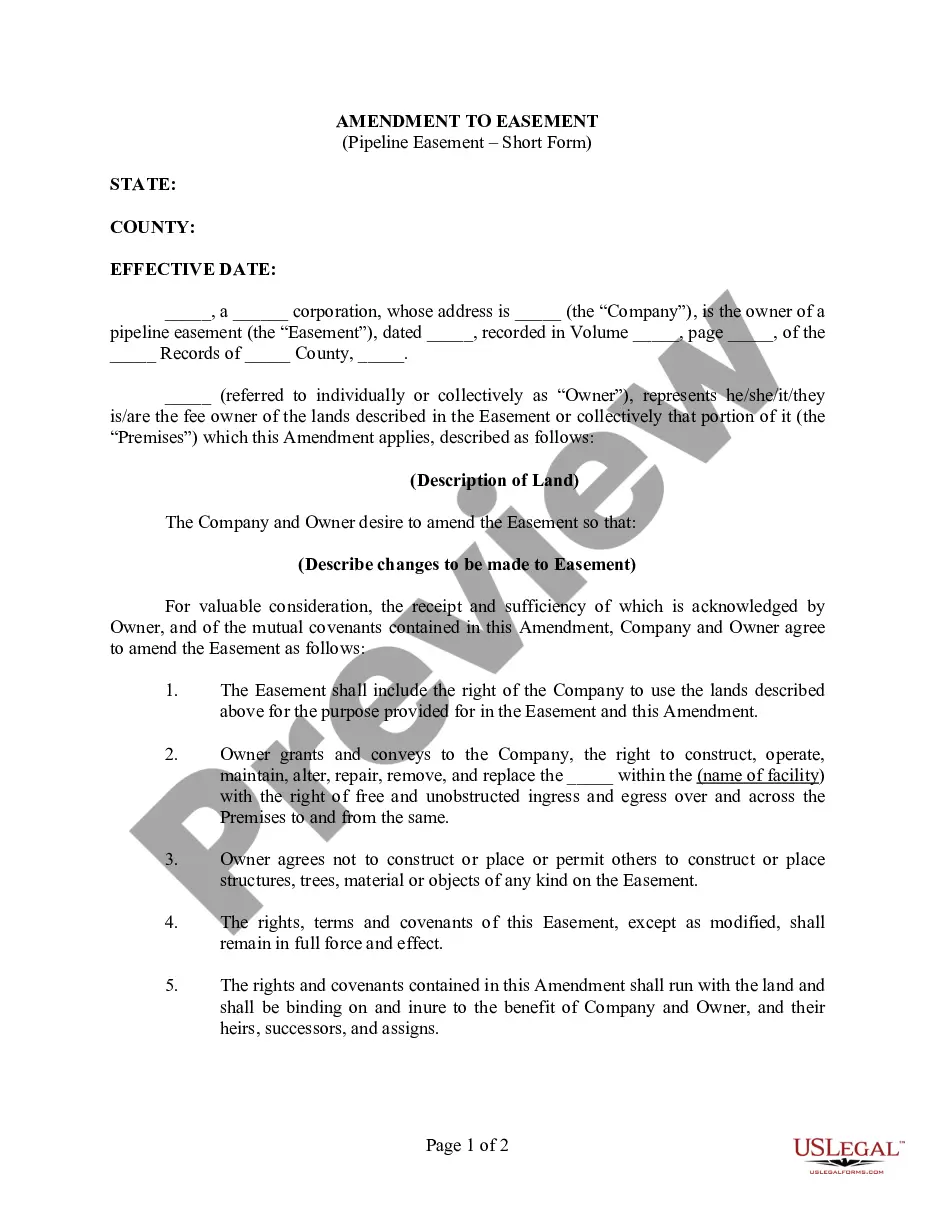
Colorado Amendment to Easement (Pipeline Easement - Short Form)
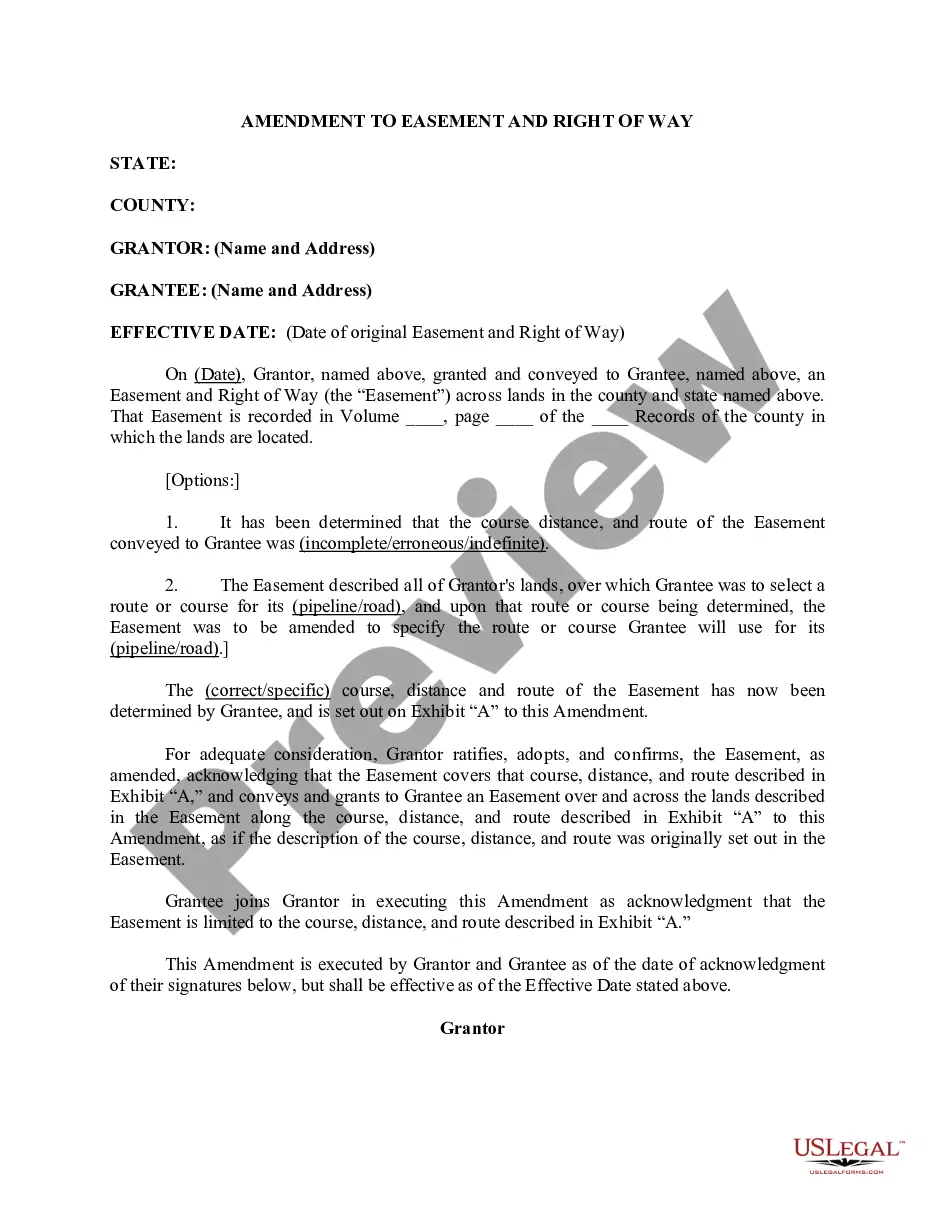
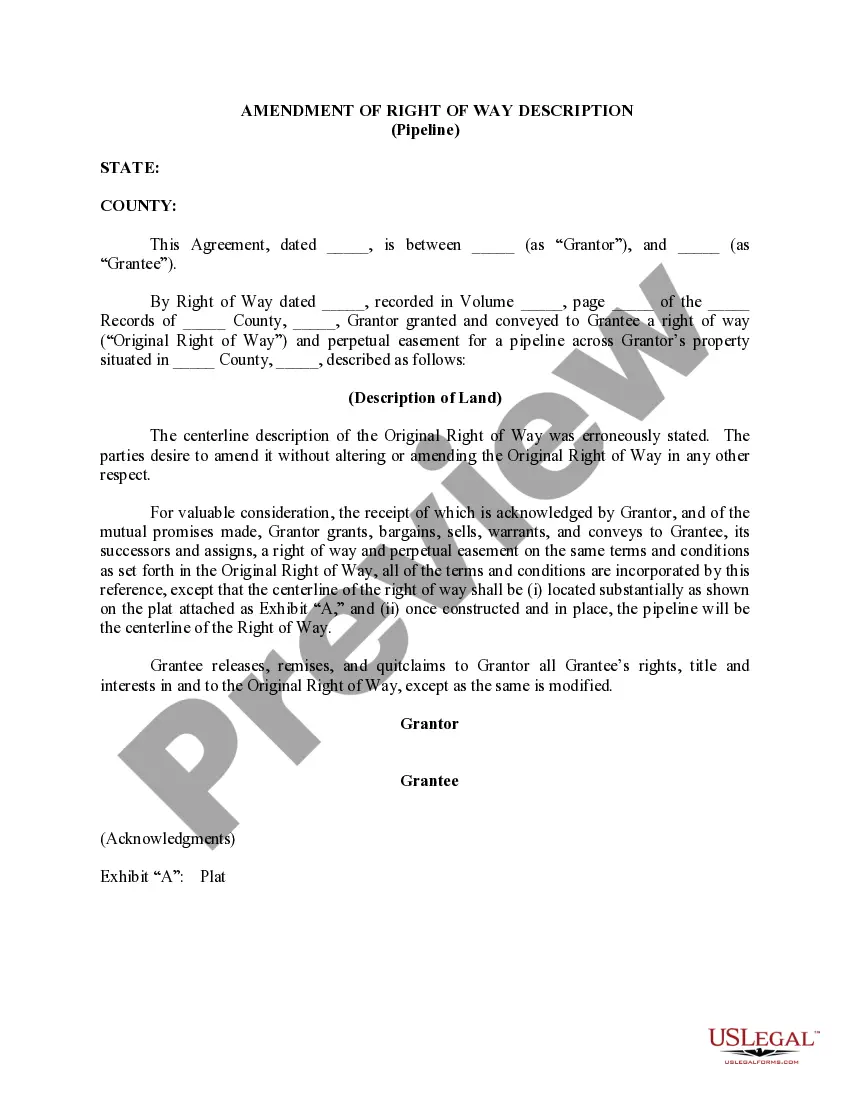
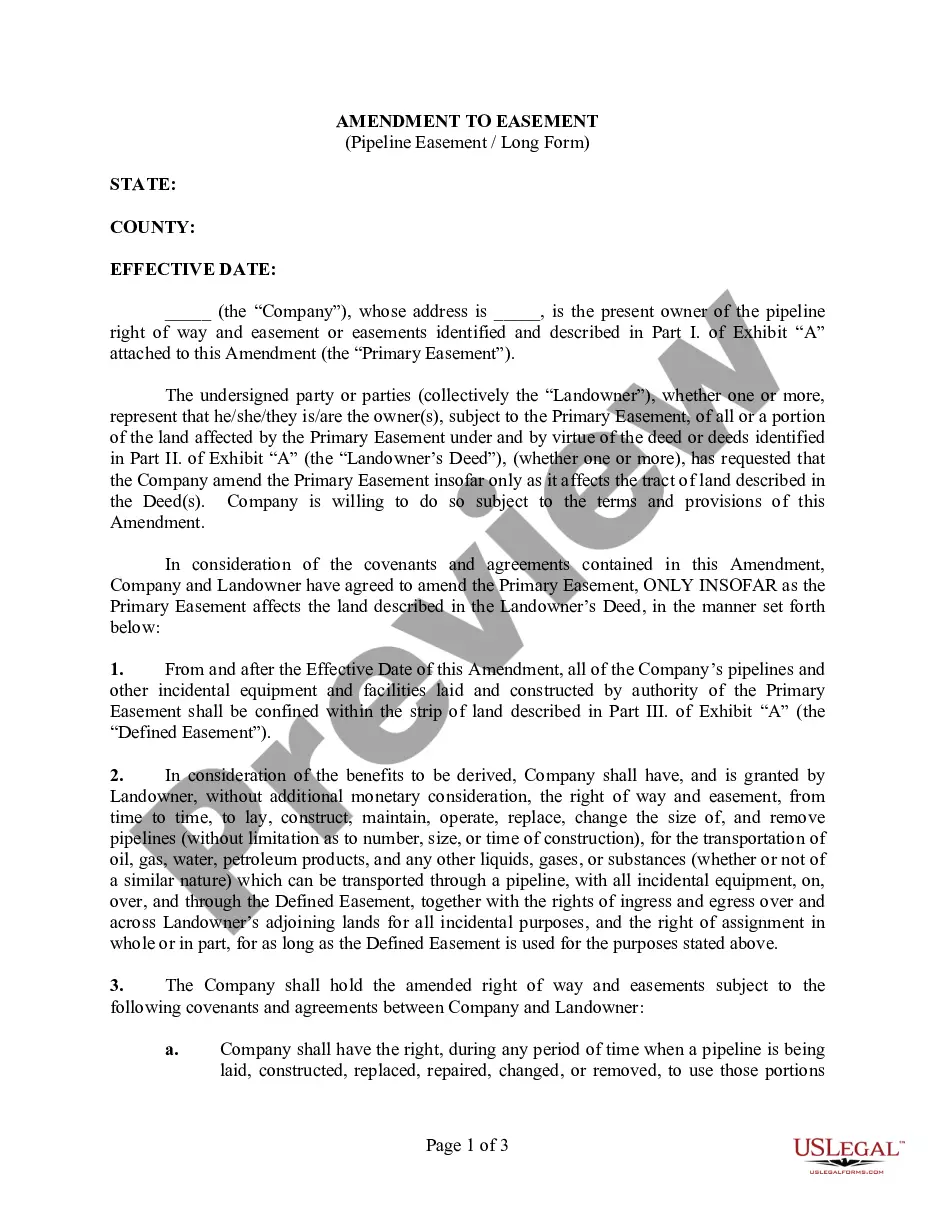
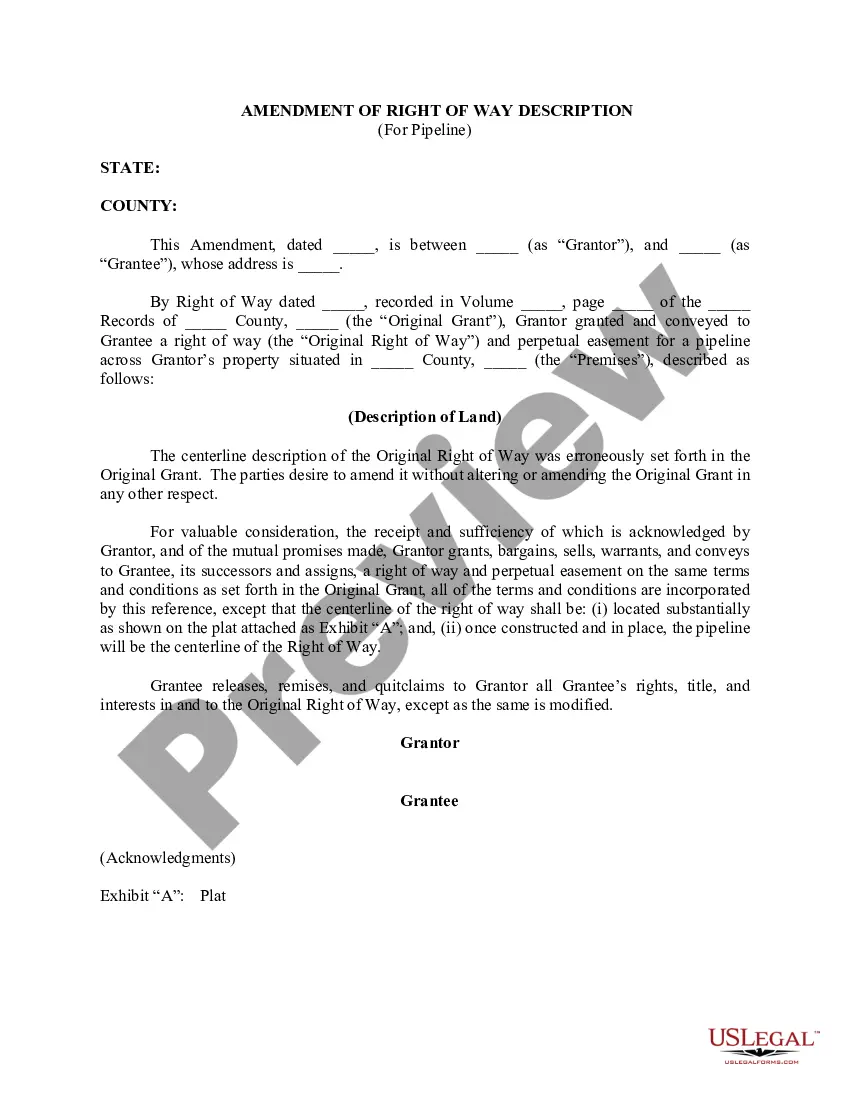
Description


Get your form ready online
Our built-in tools help you complete, sign, share, and store your documents in one place.
Make edits, fill in missing information, and update formatting in US Legal Forms—just like you would in MS Word.
Download a copy, print it, send it by email, or mail it via USPS—whatever works best for your next step.
Sign and collect signatures with our SignNow integration. Send to multiple recipients, set reminders, and more. Go Premium to unlock E-Sign.
If this form requires notarization, complete it online through a secure video call—no need to meet a notary in person or wait for an appointment.
We protect your documents and personal data by following strict security and privacy standards.

Make edits, fill in missing information, and update formatting in US Legal Forms—just like you would in MS Word.

Download a copy, print it, send it by email, or mail it via USPS—whatever works best for your next step.

Sign and collect signatures with our SignNow integration. Send to multiple recipients, set reminders, and more. Go Premium to unlock E-Sign.

If this form requires notarization, complete it online through a secure video call—no need to meet a notary in person or wait for an appointment.

We protect your documents and personal data by following strict security and privacy standards.
Looking for another form?

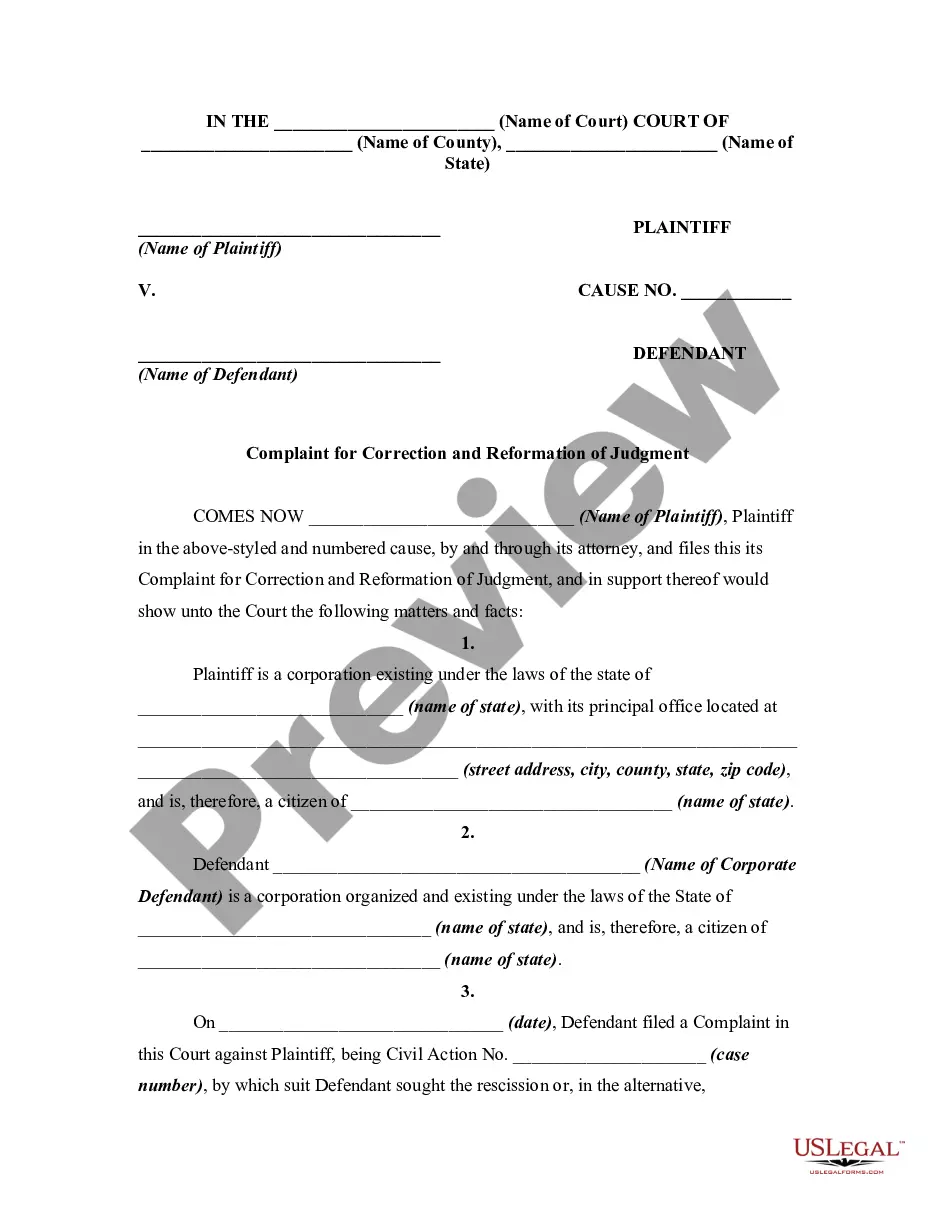



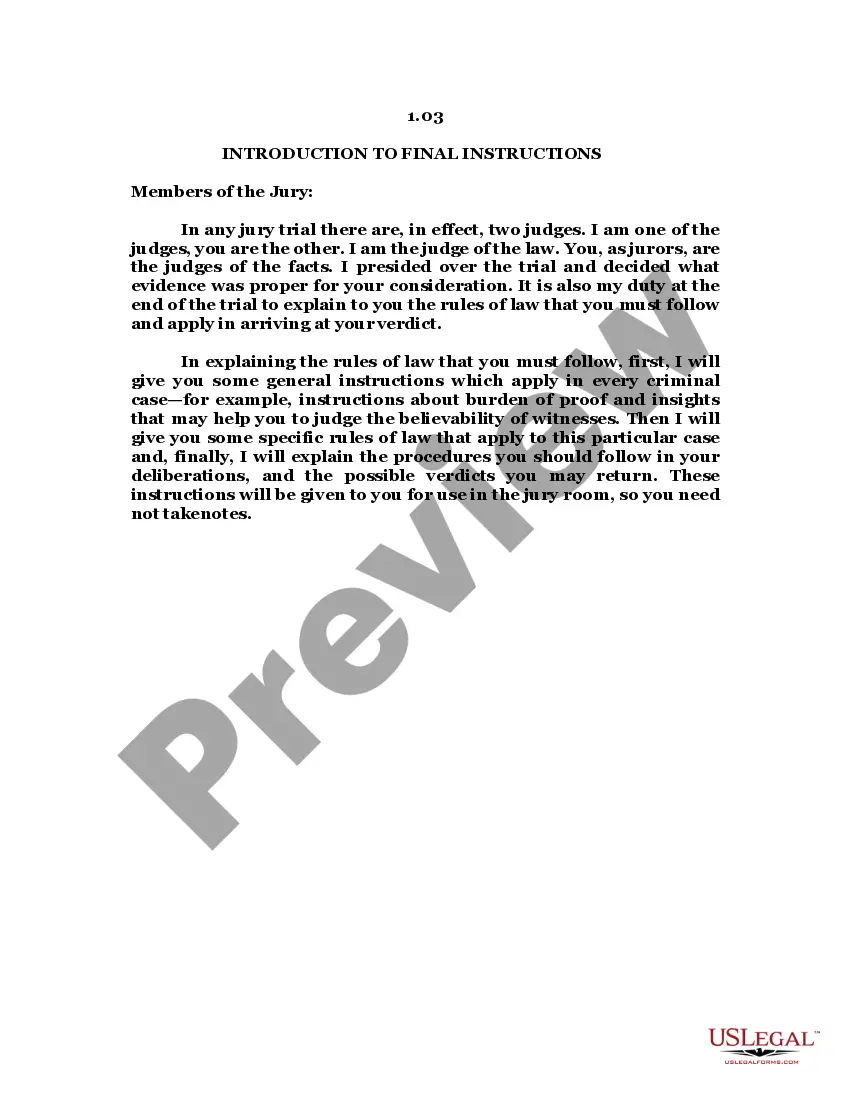

How to fill out Amendment To Easement (Pipeline Easement - Short Form)?
It is possible to devote hrs online looking for the lawful file design that suits the federal and state needs you want. US Legal Forms gives 1000s of lawful varieties that are reviewed by pros. It is possible to download or produce the Colorado Amendment to Easement (Pipeline Easement - Short Form) from your service.
If you currently have a US Legal Forms profile, you can log in and click on the Obtain button. After that, you can complete, edit, produce, or sign the Colorado Amendment to Easement (Pipeline Easement - Short Form). Every lawful file design you purchase is your own permanently. To acquire another backup associated with a obtained form, visit the My Forms tab and click on the corresponding button.
If you work with the US Legal Forms website for the first time, follow the basic directions listed below:
- Initially, be sure that you have chosen the correct file design for the state/area of your choosing. See the form explanation to ensure you have chosen the correct form. If offered, take advantage of the Preview button to appear with the file design also.
- If you want to find another version of your form, take advantage of the Look for area to obtain the design that meets your needs and needs.
- After you have located the design you desire, simply click Purchase now to continue.
- Choose the prices program you desire, enter your credentials, and register for a free account on US Legal Forms.
- Total the purchase. You can use your credit card or PayPal profile to pay for the lawful form.
- Choose the formatting of your file and download it to the product.
- Make adjustments to the file if needed. It is possible to complete, edit and sign and produce Colorado Amendment to Easement (Pipeline Easement - Short Form).
Obtain and produce 1000s of file layouts using the US Legal Forms website, which provides the greatest variety of lawful varieties. Use specialist and condition-specific layouts to handle your company or personal needs.
Form popularity
FAQ
An owner of real property in Colorado may create an easement by a written document, which can be in the form of a deed, easement agreement, or other document including the language of a conveyance or grant. An easement must be classified as affirmative or negative.
In Colorado a prescriptive easement applies when someone has made use of access to a property continuously, without the owner's consent, with no attempt of concealment of the use or access, for a period of 18 years. Most commonly, this is applied to thoroughfares crossing over someone's property.
An easement is a real property right authorizing the easement owner to do something or maintain something on the land of another. They are usually created by a granting instrument such as a deed. Most easements are ?appurtenant,? meaning they are attached to and benefit a particular property.
A prescriptive easement can be created by: Continuously using the property for 5 years; In a manner that is open, notorious, and clearly visible to the owner of the land; and. Hostile and adverse to the owner.
A right of way allows parties to travel across a property?this may be granted to the general public or to a specific entity. Right of ways are more restrictive than easements because they do not allow the public or entity to use the property, just move through it.
The pipeline company typically pays the landowner in price per foot or per acre for farm land of the property that the pipeline passes. The price is based on the length of the easement. Some companies offer prices based on linear rod, not linear foot.
Most easements don't automatically end when a property is sold. Instead, they often transfer with the property. In some cases, the existence of an easement can make the property less desirable. For example, when a neighbor's driveway runs across your land.