Colorado Cease and Desist for Defamation
Description
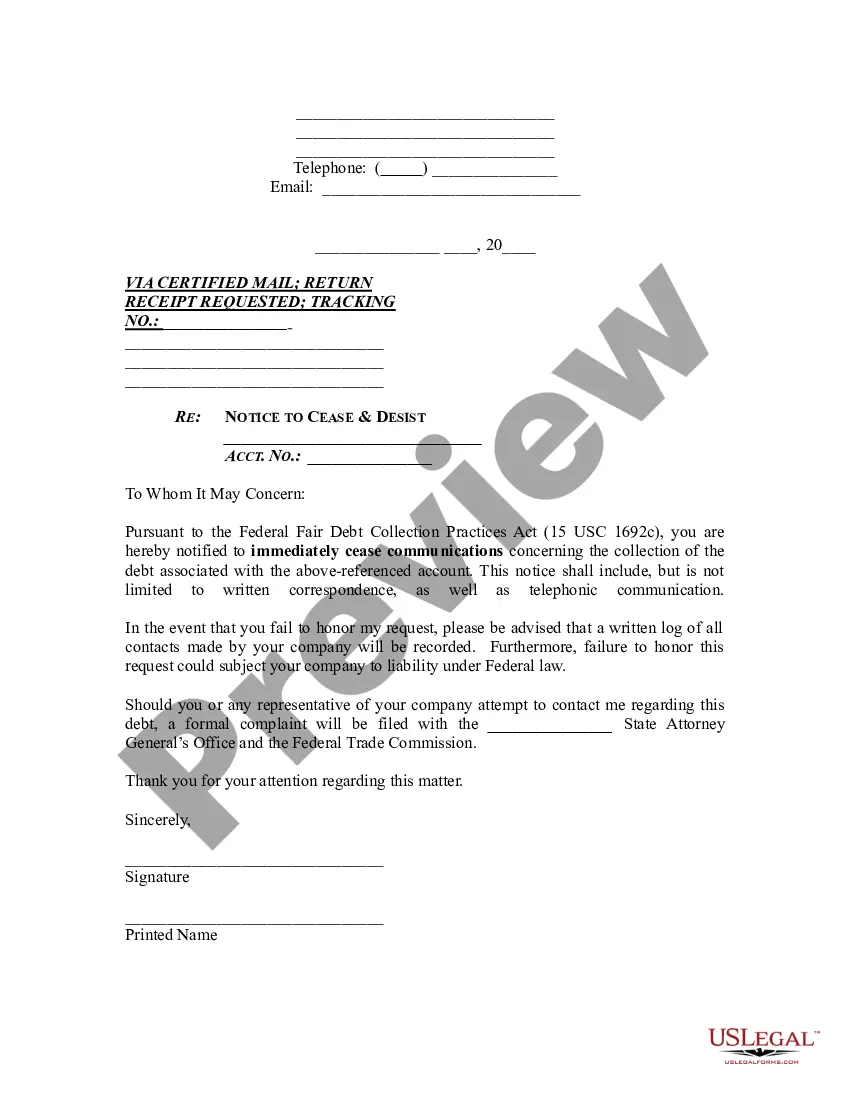
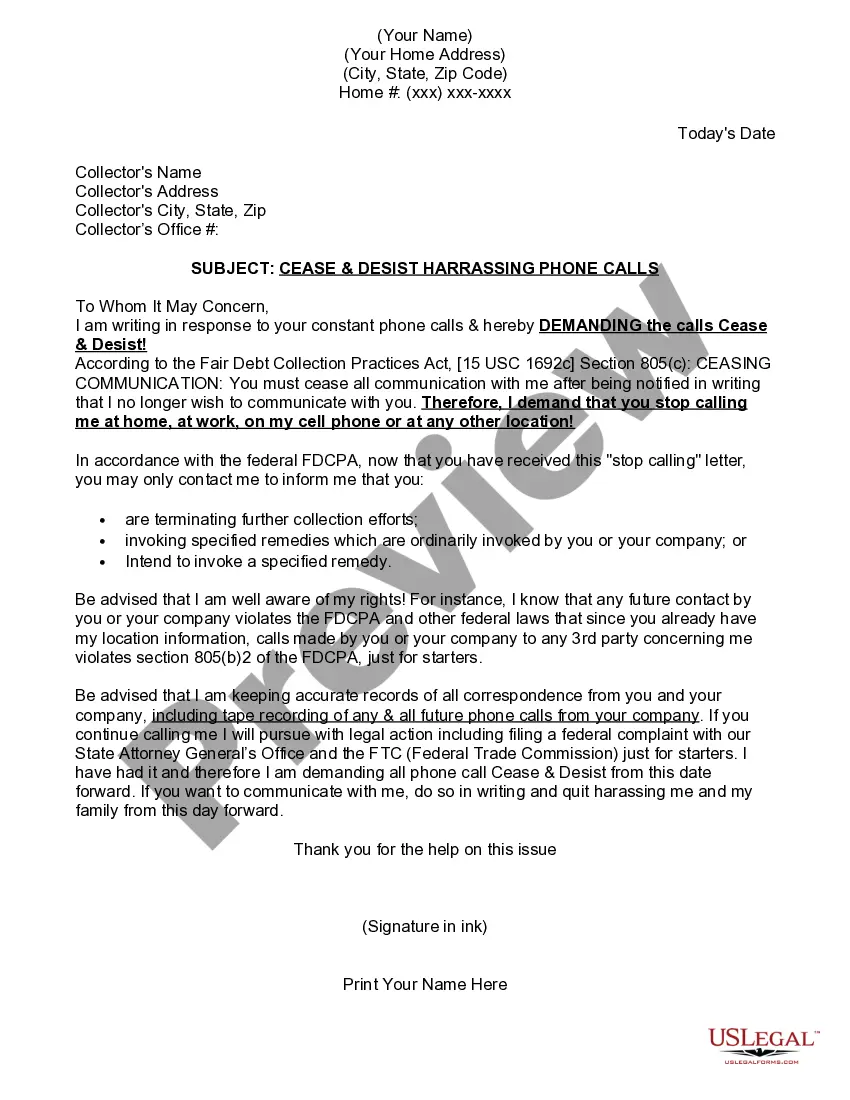
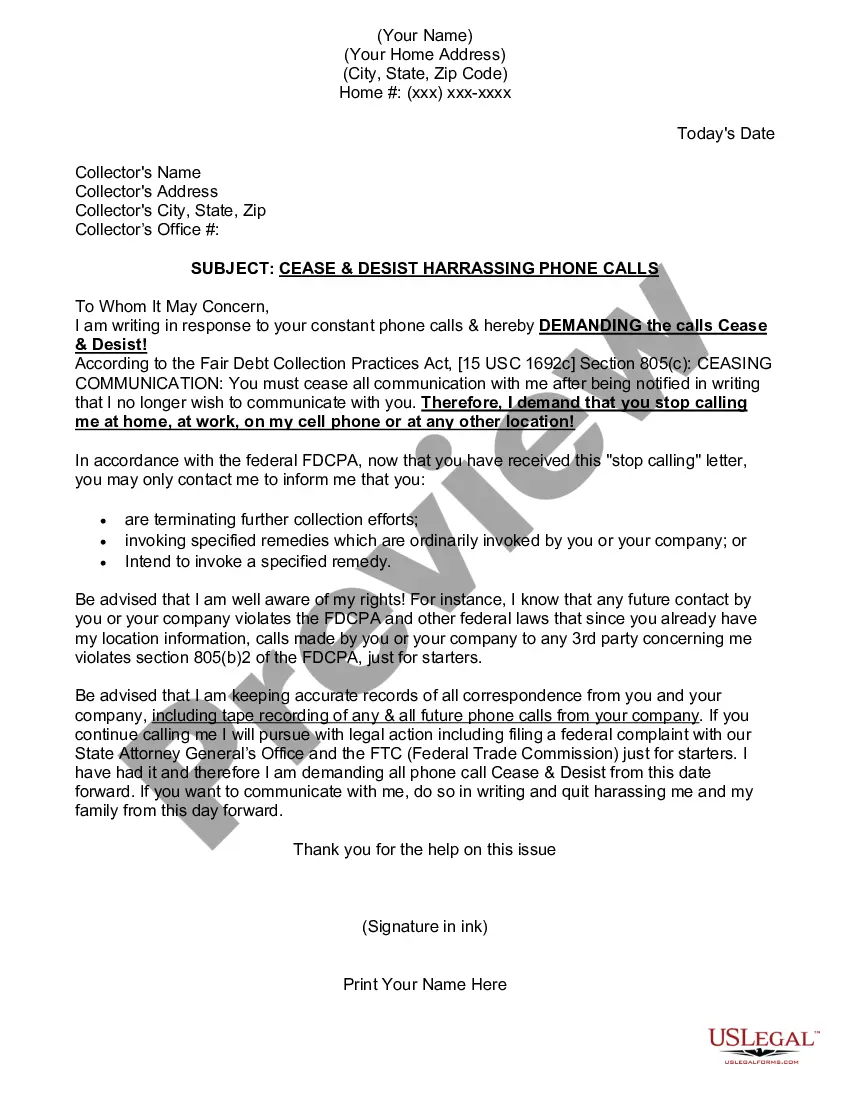
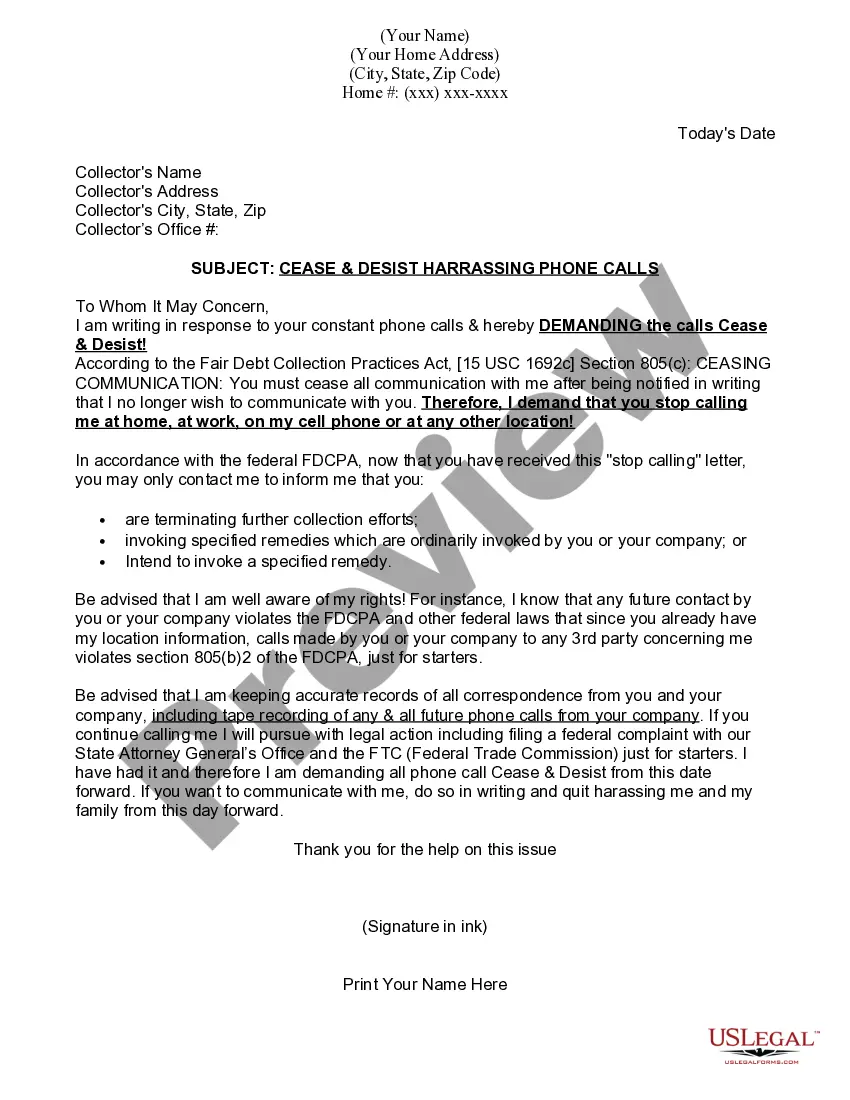
How to fill out Cease And Desist For Defamation?
Locating the appropriate legal document format can be challenging. It goes without saying that there are numerous templates accessible online, but how can you acquire the legal form you require? Utilize the US Legal Forms website. The platform offers thousands of templates, including the Colorado Cease and Desist for Defamation, which can be utilized for business and personal needs. All of the forms are vetted by professionals and comply with state and federal regulations.
If you are already registered, Log In to your account and click on the Download button to find the Colorado Cease and Desist for Defamation. Use your account to browse through the legal forms you have previously obtained. Navigate to the My documents section of your account and acquire another copy of the document you require.
If you are a new user of US Legal Forms, here are simple steps that you can follow: First, ensure that you have chosen the correct form for the city/state. You may review the document using the Preview option and examine the document description to confirm it is the right one for you. If the form does not fit your needs, use the Search field to find the appropriate document. Once you are certain that the form is suitable, select the Purchase now button to obtain the form. Choose the pricing plan you prefer and enter the required information. Create your account and pay for your order using your PayPal account or credit card. Select the document format and download the legal template to your device. Finally, complete, review, print, and sign the received Colorado Cease and Desist for Defamation.
In conclusion, US Legal Forms is a valuable resource for obtaining legal documents that comply with necessary legal standards.
- US Legal Forms is the largest repository of legal documents where you can find various document templates.
- Utilize the service to download properly crafted documents that adhere to state regulations.
- The platform ensures that all templates are reviewed by experts.
- You can access both business and personal legal forms.
- It provides a user-friendly interface for easy navigation.
- You can manage and retrieve your previously downloaded forms effortlessly.
Form popularity
FAQ
To obtain a Colorado Cease and Desist for Defamation, you should first draft a formal letter outlining the defamatory statements and requesting their removal. This letter should include a clear explanation of why the statements are false and harmful. Once you have your letter prepared, consider using platforms like US Legal Forms to access templates and resources that simplify the process. If the issue persists, you may need to escalate to legal action, where an attorney can help you file a lawsuit.
To initiate a Colorado Cease and Desist for Defamation, you must demonstrate that the statement in question is false, damaging, and made with negligence or actual malice. It's essential to provide clear evidence that the defamation has harmed your reputation or caused you financial losses. Moreover, the statement must be presented as a fact rather than an opinion. If you believe you meet these criteria, it’s beneficial to consult with legal experts who can guide you through the process.
Yes, you can sue for defamation of character in Colorado if you can prove that false statements were made about you that caused harm. Your case must show that the statements were published to a third party and were not mere opinions. Utilizing a Colorado Cease and Desist for Defamation can be a proactive step before pursuing a lawsuit. This approach not only protects your reputation but may also encourage the other party to retract their statements.
The grounds for a cease and desist defamation typically include false statements that harm your reputation. In Colorado, the statements must be untrue, made with negligence or actual malice, and must have caused you harm. It is crucial to gather evidence and consider using a Colorado Cease and Desist for Defamation to formally address the issue. This legal step can help protect your rights effectively.
To legally stop someone from slandering you, consider sending a Colorado Cease and Desist for Defamation letter. This letter formally requests that the individual cease their defamatory statements. It is essential to document instances of slander and provide evidence to support your claims. If the slander continues, you may need to pursue legal action.
Writing a cease and desist letter for defamation in Colorado requires clarity and directness. Begin with a clear statement of the defamatory statements, including details about where and when they were made. Next, specify the actions you want the recipient to take, such as retracting the statements and ceasing further communication. Using a reputable platform like US Legal Forms can help you access templates and guidance tailored for a Colorado cease and desist for defamation, ensuring your letter is effective and legally sound.
Yes, you can send a cease and desist letter for defamation in Colorado. This letter serves as a formal request for the person making the defamatory statements to stop immediately. It is essential to clearly explain how the statements are false and damaging. Using a dependable service like US Legal Forms can help you craft an effective letter that communicates your position clearly and professionally.
To file a cease and desist in Colorado, begin by preparing a detailed letter that describes the issue at hand, such as defamation. Include specific examples and any evidence you have to support your claim. Once your letter is ready, send it to the individual or entity involved, preferably via certified mail for tracking purposes. Utilizing platforms like US Legal Forms can streamline this process by offering ready-to-use templates tailored for your needs.
Filing a cease and desist order in Colorado typically involves drafting a formal letter that outlines the objectionable behavior, the legal basis for your request, and any relevant evidence. You may choose to send this letter directly to the offending party or their legal representative. If the situation does not improve, you could explore court options to enforce your rights. Resources like US Legal Forms can provide templates to guide you through this process effectively.
You can send a cease and desist for various grounds, including defamation, harassment, or copyright infringement. In the context of a Colorado Cease and Desist for Defamation, you should focus on false statements that harm your character or business. It's vital to clearly outline these grounds in your letter to ensure the recipient understands the seriousness of their actions. This clarity can prevent further disputes and promote resolution.