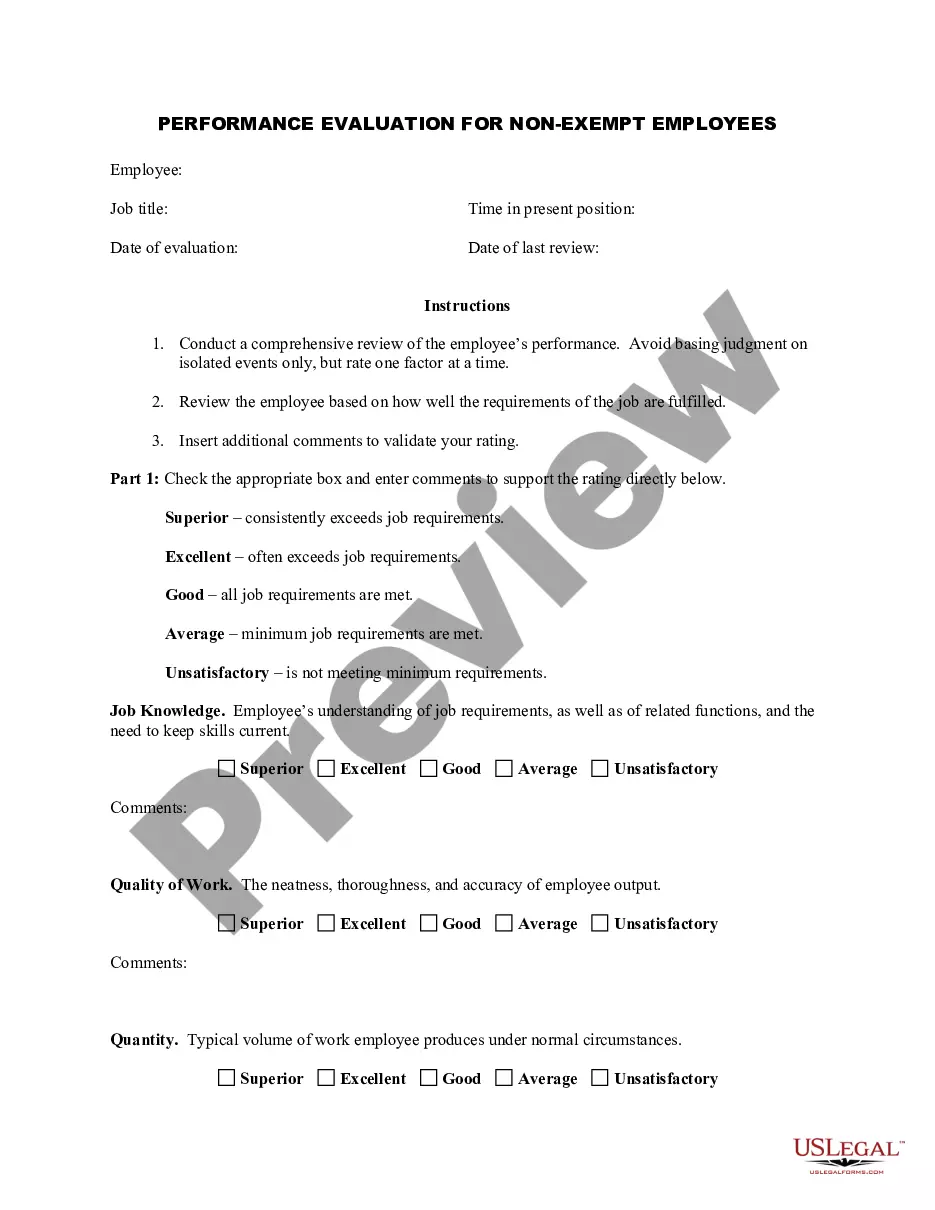
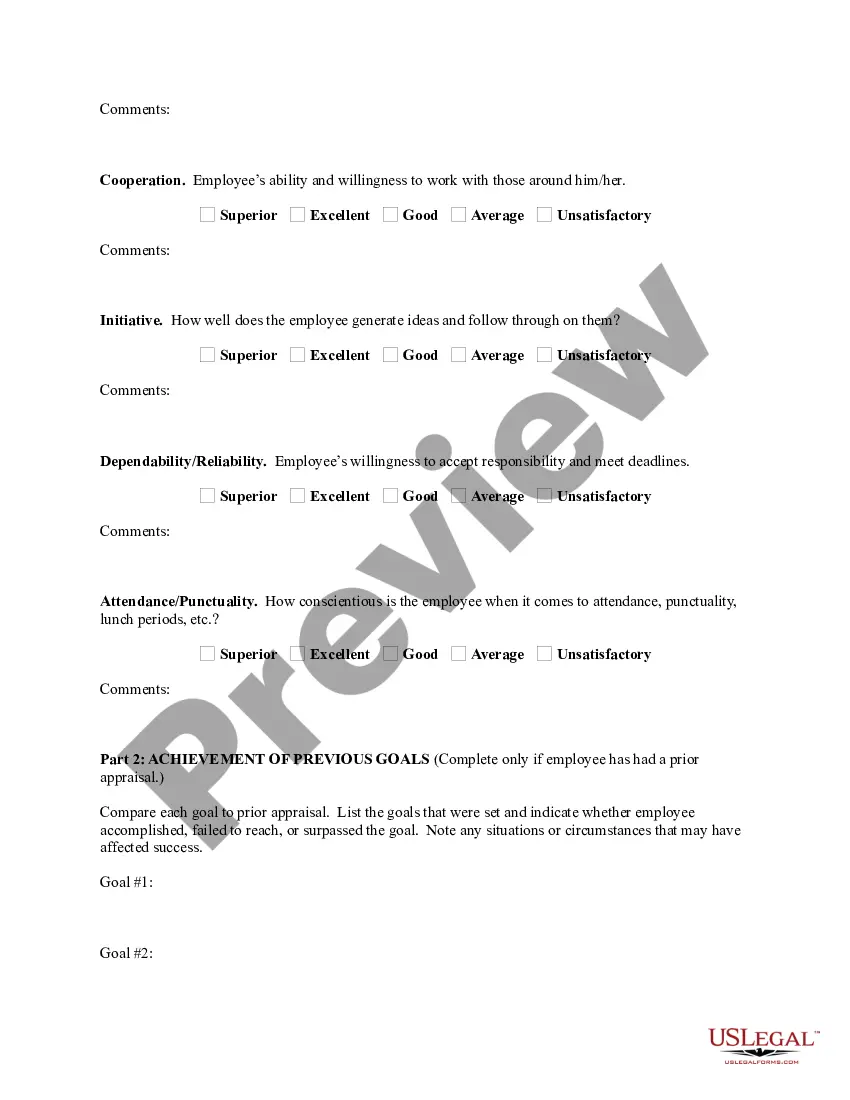
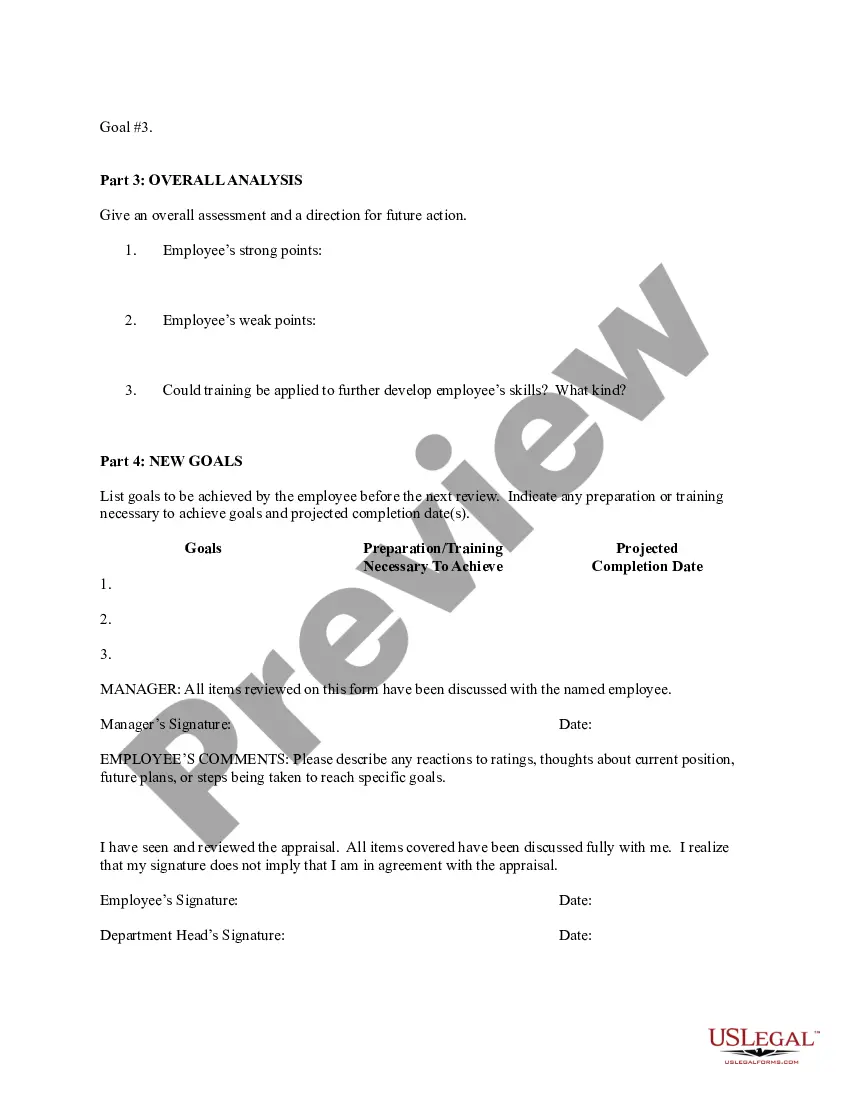
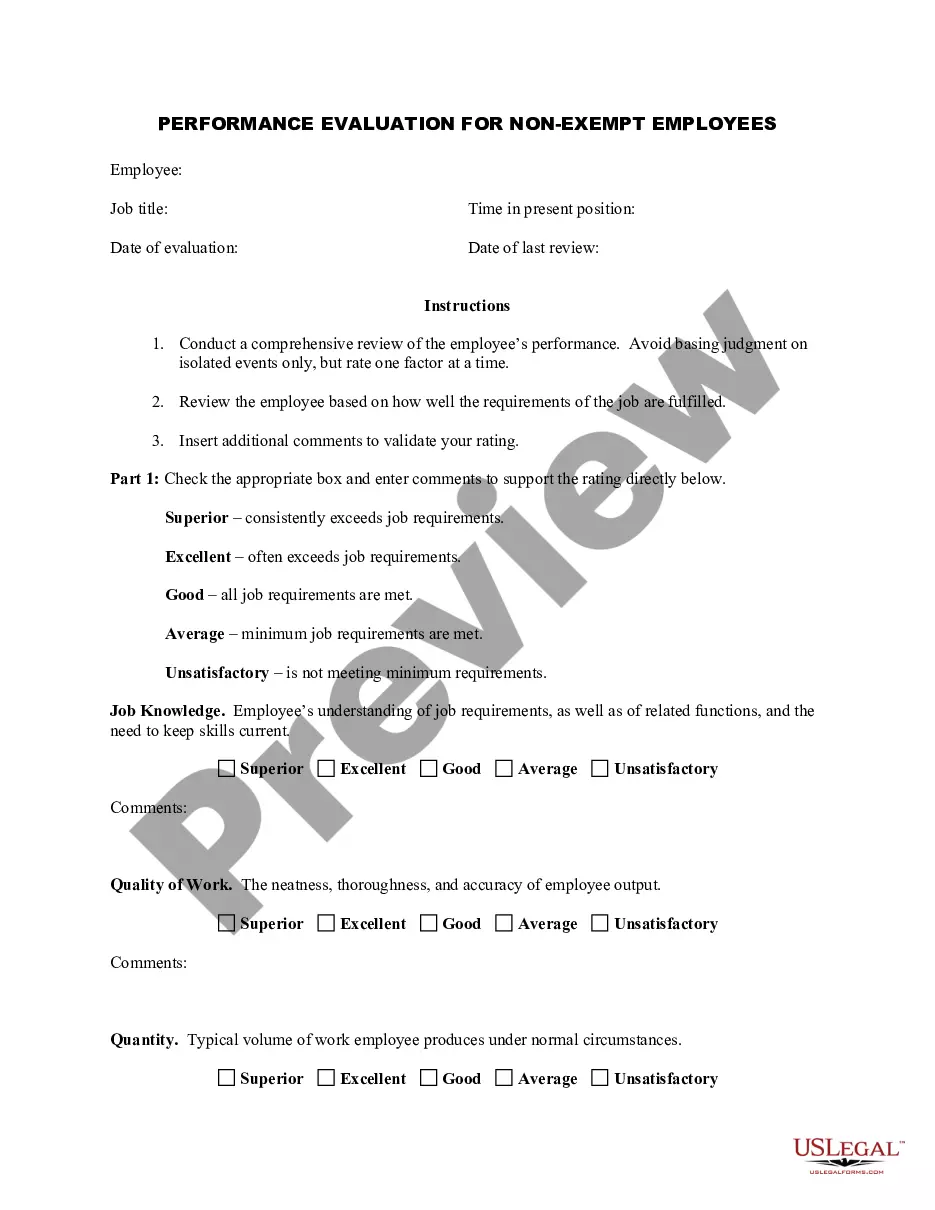
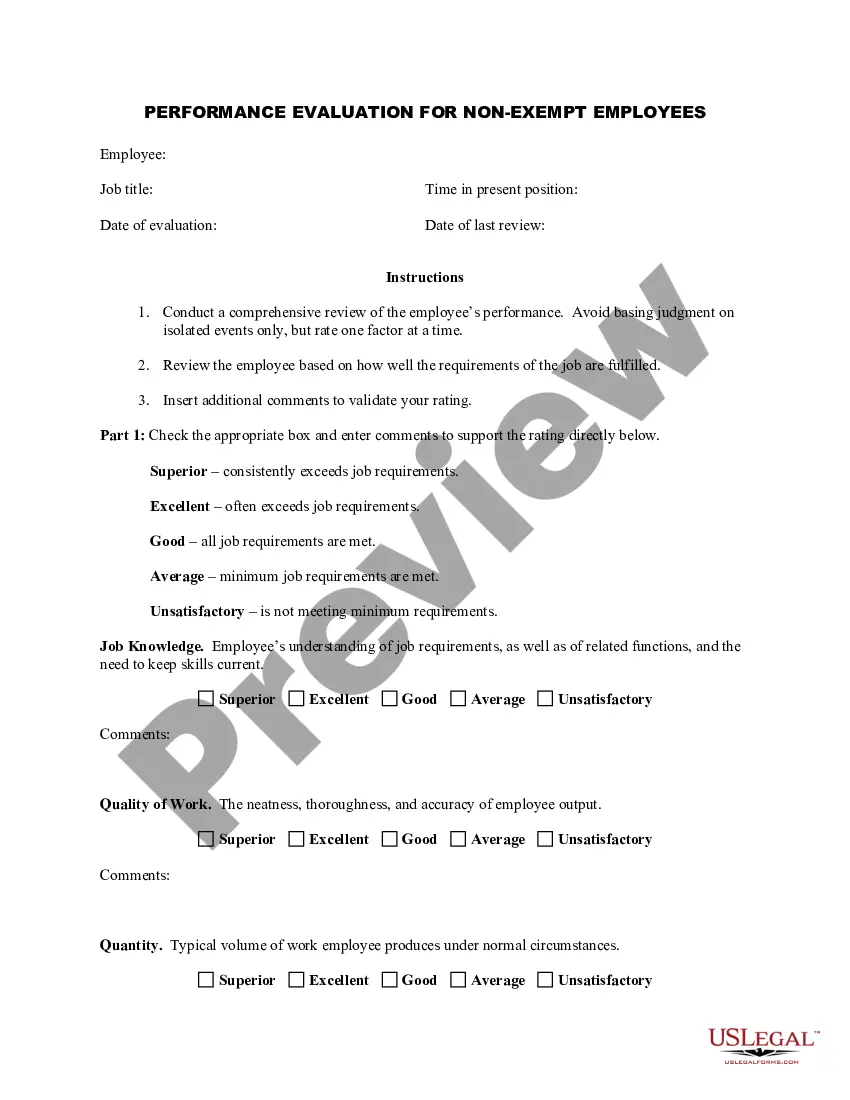
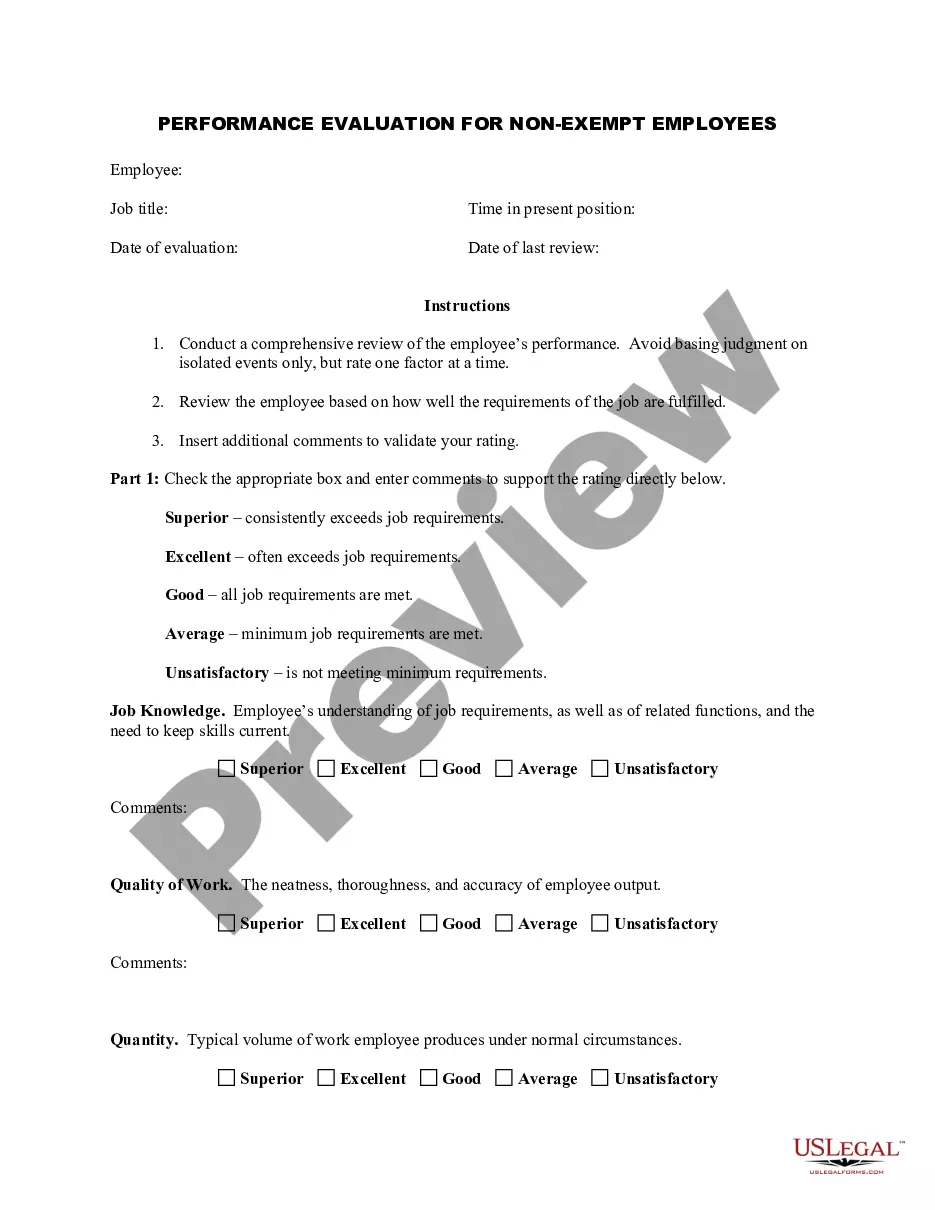
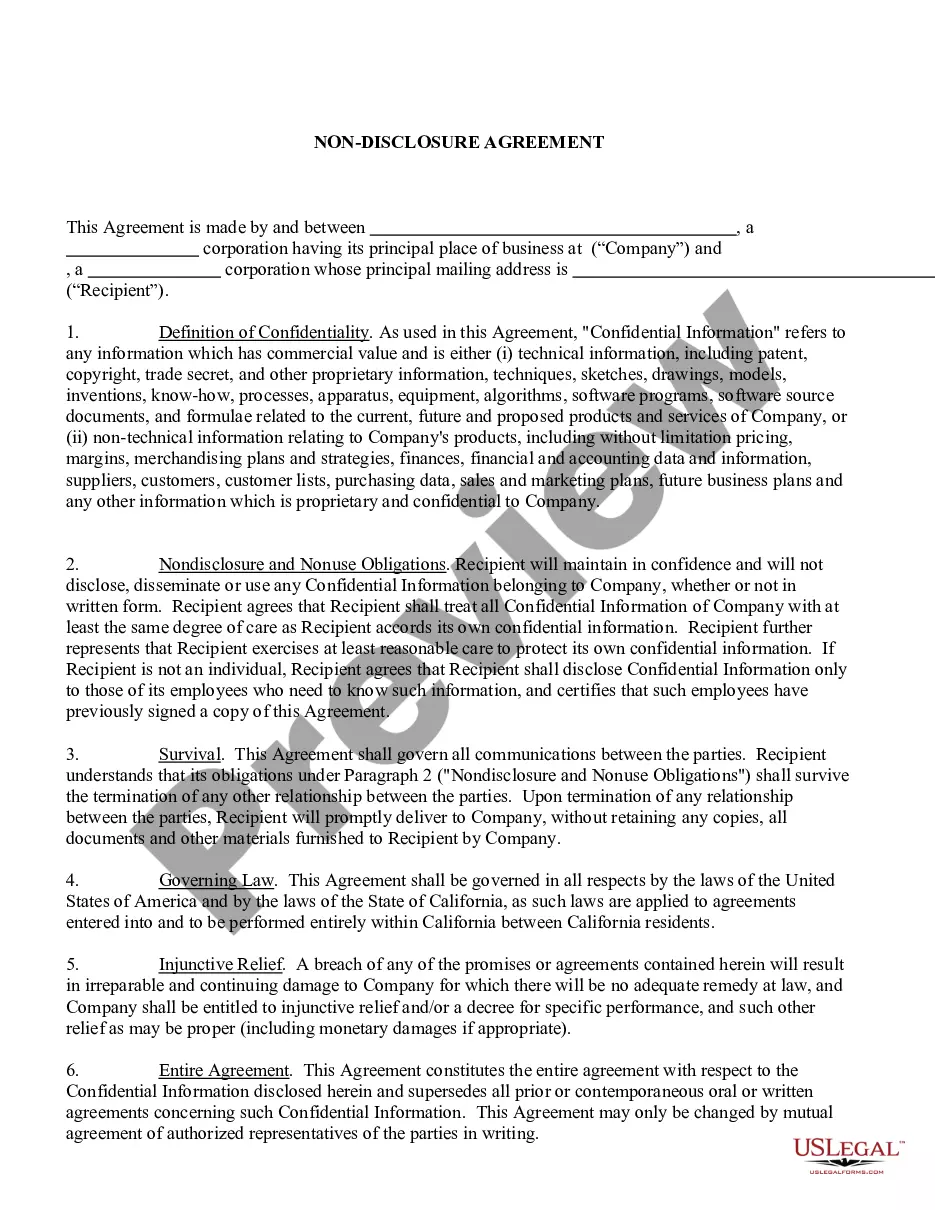
Colorado Employee Evaluation Form for Veterinarian
Description
Get your form ready online
Our built-in tools help you complete, sign, share, and store your documents in one place.
Make edits, fill in missing information, and update formatting in US Legal Forms—just like you would in MS Word.
Download a copy, print it, send it by email, or mail it via USPS—whatever works best for your next step.
Sign and collect signatures with our SignNow integration. Send to multiple recipients, set reminders, and more. Go Premium to unlock E-Sign.
If this form requires notarization, complete it online through a secure video call—no need to meet a notary in person or wait for an appointment.
We protect your documents and personal data by following strict security and privacy standards.

Make edits, fill in missing information, and update formatting in US Legal Forms—just like you would in MS Word.

Download a copy, print it, send it by email, or mail it via USPS—whatever works best for your next step.

Sign and collect signatures with our SignNow integration. Send to multiple recipients, set reminders, and more. Go Premium to unlock E-Sign.

If this form requires notarization, complete it online through a secure video call—no need to meet a notary in person or wait for an appointment.

We protect your documents and personal data by following strict security and privacy standards.
Looking for another form?
How to fill out Employee Evaluation Form For Veterinarian?
Selecting the finest official document template can be challenging.
Certainly, there are numerous templates found online, but how can you obtain the official form you require.
Utilize the US Legal Forms website. This service provides a vast array of templates, including the Colorado Employee Evaluation Form for Veterinarian, which you can apply for professional and personal purposes.
Firstly, ensure you have selected the correct form for your region. You can review the form using the Review option and read the form description to confirm it is suitable for you.
- All of the forms are reviewed by specialists and conform to state and federal regulations.
- If you are already registered, Log In to your account and click on the Download button to acquire the Colorado Employee Evaluation Form for Veterinarian.
- Use your account to search for the official documents you have previously obtained.
- Go to the My documents section of your account and download another copy of the document you need.
- If you are a new user of US Legal Forms, here are simple steps for you to follow.
Form popularity
FAQ
Target earnings before interest, tax, depreciation and amortization (EBITDA) is typically 14% to 17%, but the average is 11% to 12% for small-animal practices. Farquer and McCormick consider a practice of any type to be financially healthy if it is 14% to 18% EBITDA.
Veterinary supervision steps taken and veterinary checks carried out by official veterinarians and authorised veterinarians are not considered veterinary practice. All movements must take place under State Veterinary supervision.
All veterinary technicians work under the supervision of a licensed veterinarian. While a veterinary technician can assist in performing a wide variety of tasks, they cannot diagnose, prescribe, perform surgery, or engage in any activity prohibited by a state's veterinary practice act.
Small animal hospitals typically generate a profit of 10% to 15%, while specialty and emergency practices often earn 15% to 25%. The higher the profit, the more valuable the practice will be at selling time. Does that mean your practice profit needs to be in the 10% to 25% range and that you are a failure if it is not?
1. The easy part: calculate Last Twelve Months EBITDA (an industry proxy for cash earnings or cash flow) of the practice by adding interest, income taxes, depreciation and amortization to operating earnings.
Anecdotally, practice value has been expected to be between 2/3rd's of gross revenue and 100% of 1 year's gross revenue. Often, practice owners will blindly offer that their practice is worth anywhere between 2/3rd's and 1 year's gross revenue.
8 Benefits of being a veterinarianYou can have as much variety as you want.There's considerable job security.You can effect real change.You'll likely have fantastic colleagues.Learning is part of the job.You have the opportunity to shape your own career.You may have a hand in educating the next generation of vets.More items...?01-Feb-2022
Most veterinarians work full time, often working more than 40 hours per week. Some work nights or weekends, and they may have to respond to emergencies outside of scheduled work hours.
To provide high quality service, today's veterinary team utilizes the skills of trained professionals known as veterinary technicians. As per the American Veterinary Medical Association, veterinary technicians perform valuable medical and non- medical services in clinical practice.
One major difference in these careers is that a veterinary technician works under the supervision of a licensed veterinarian and must pass a credentialing exam. Veterinary assistants work with the veterinarian or veterinary technician and do not need to pass a credentialing exam1.