Colorado Co-Branding Agreement
Description

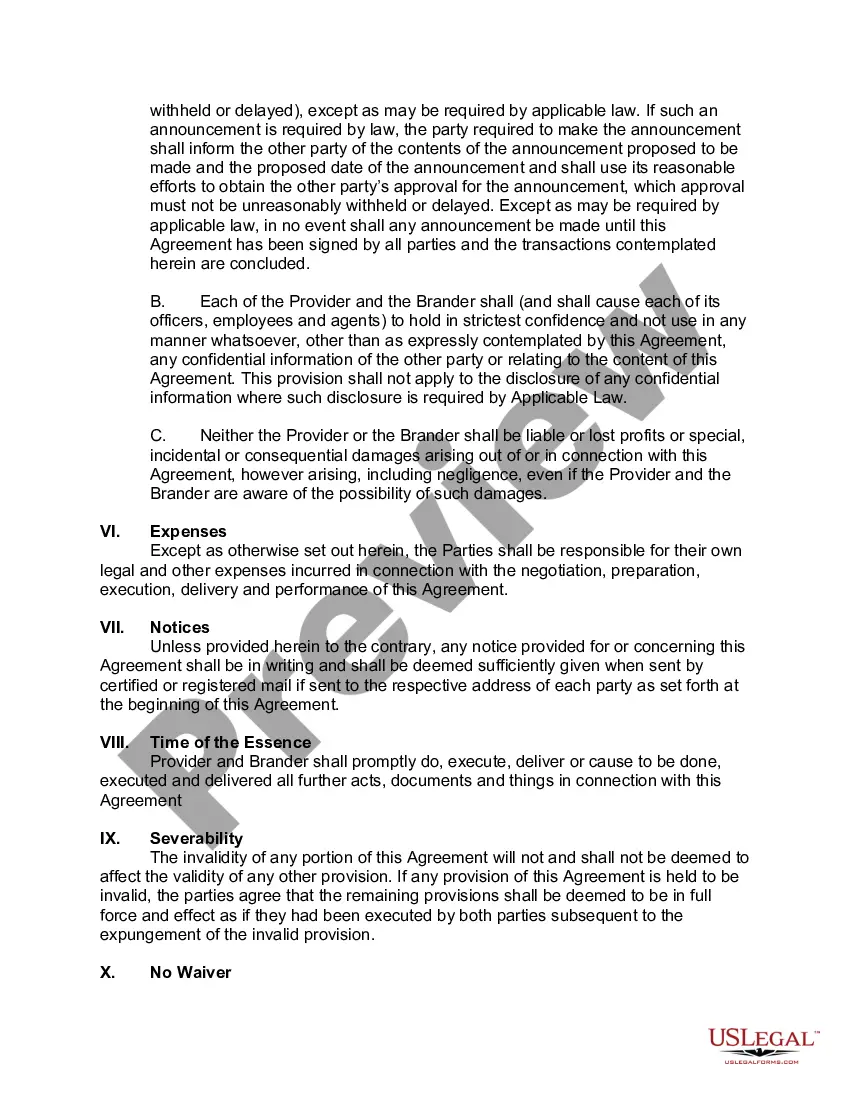
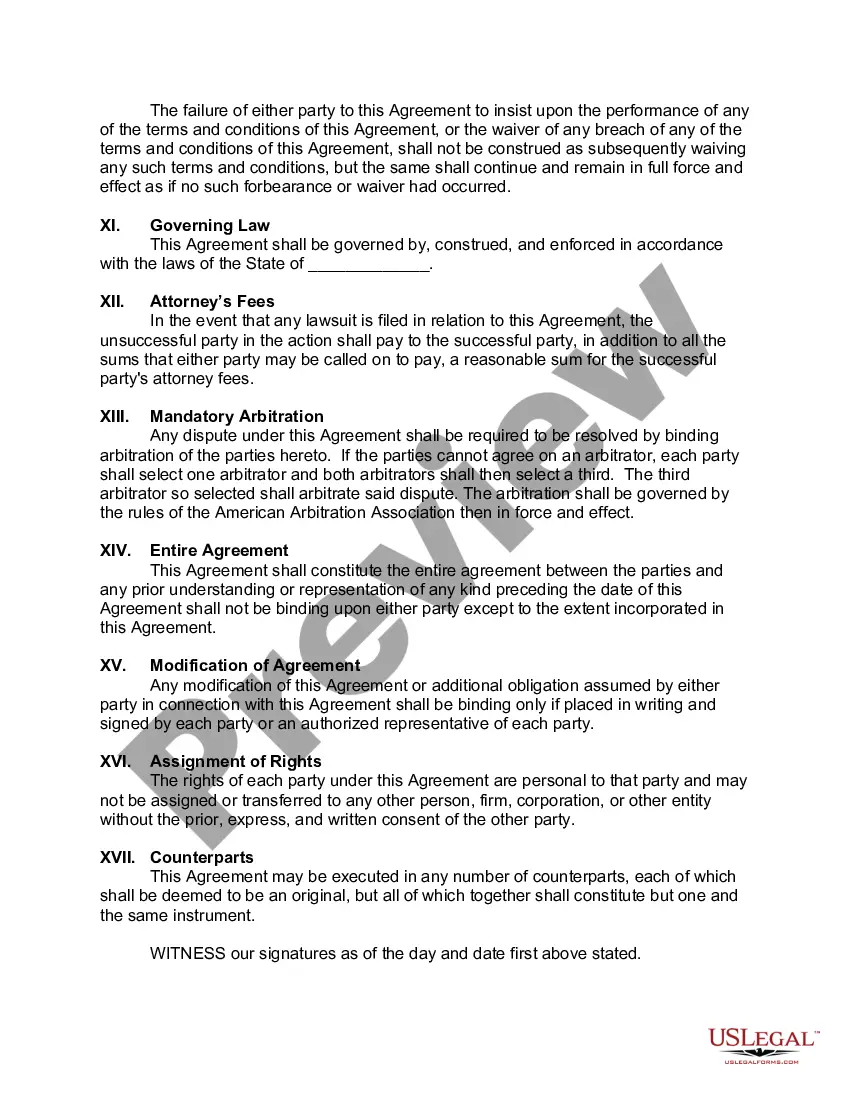
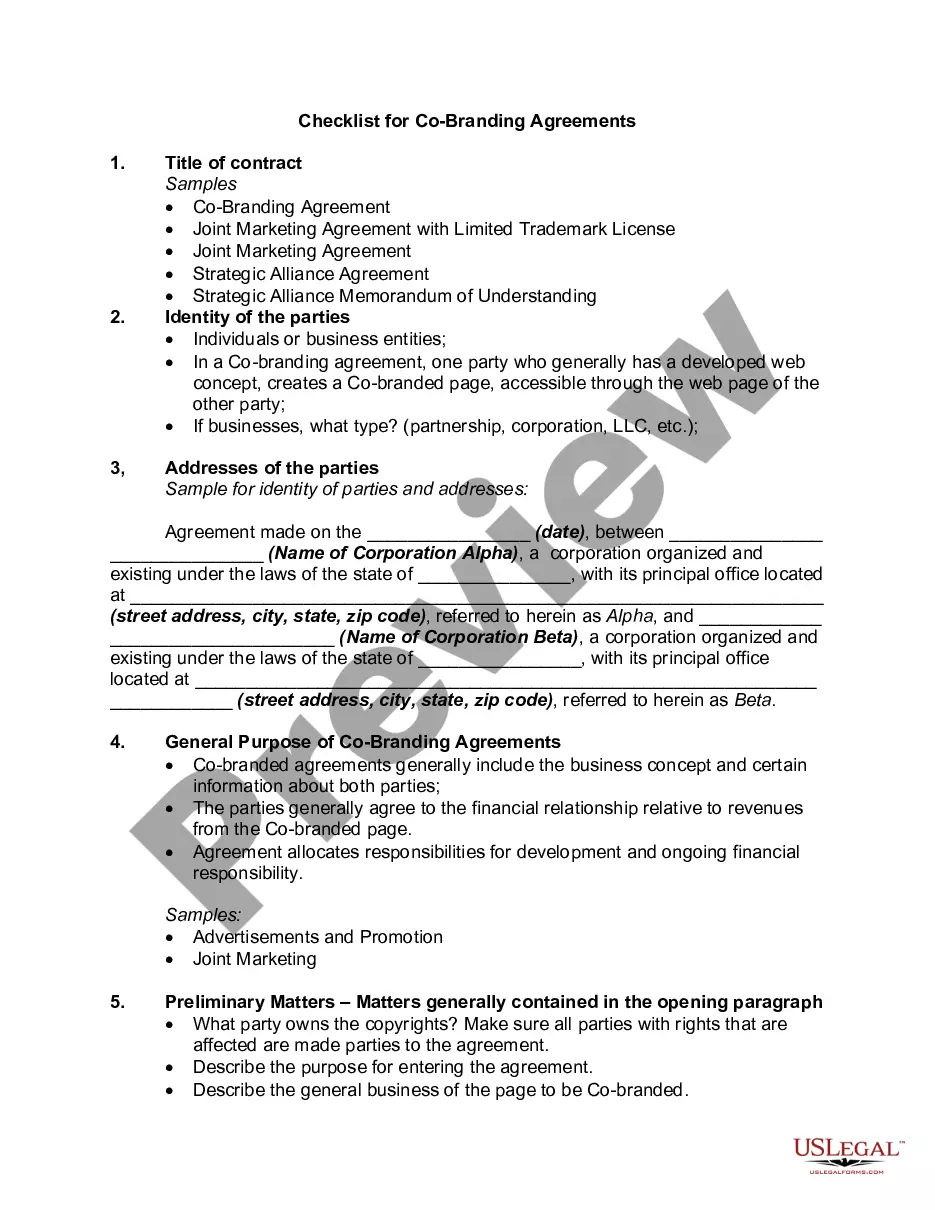
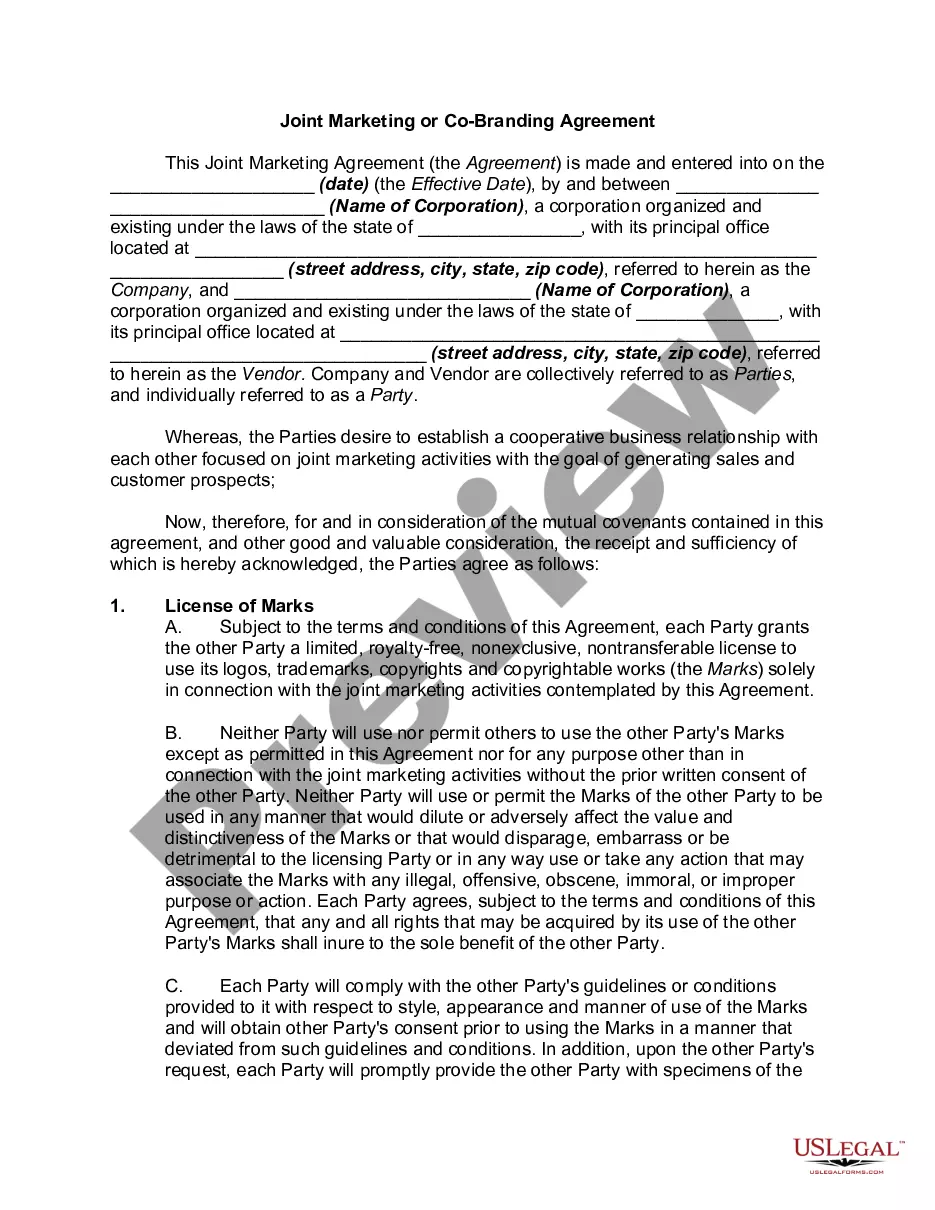
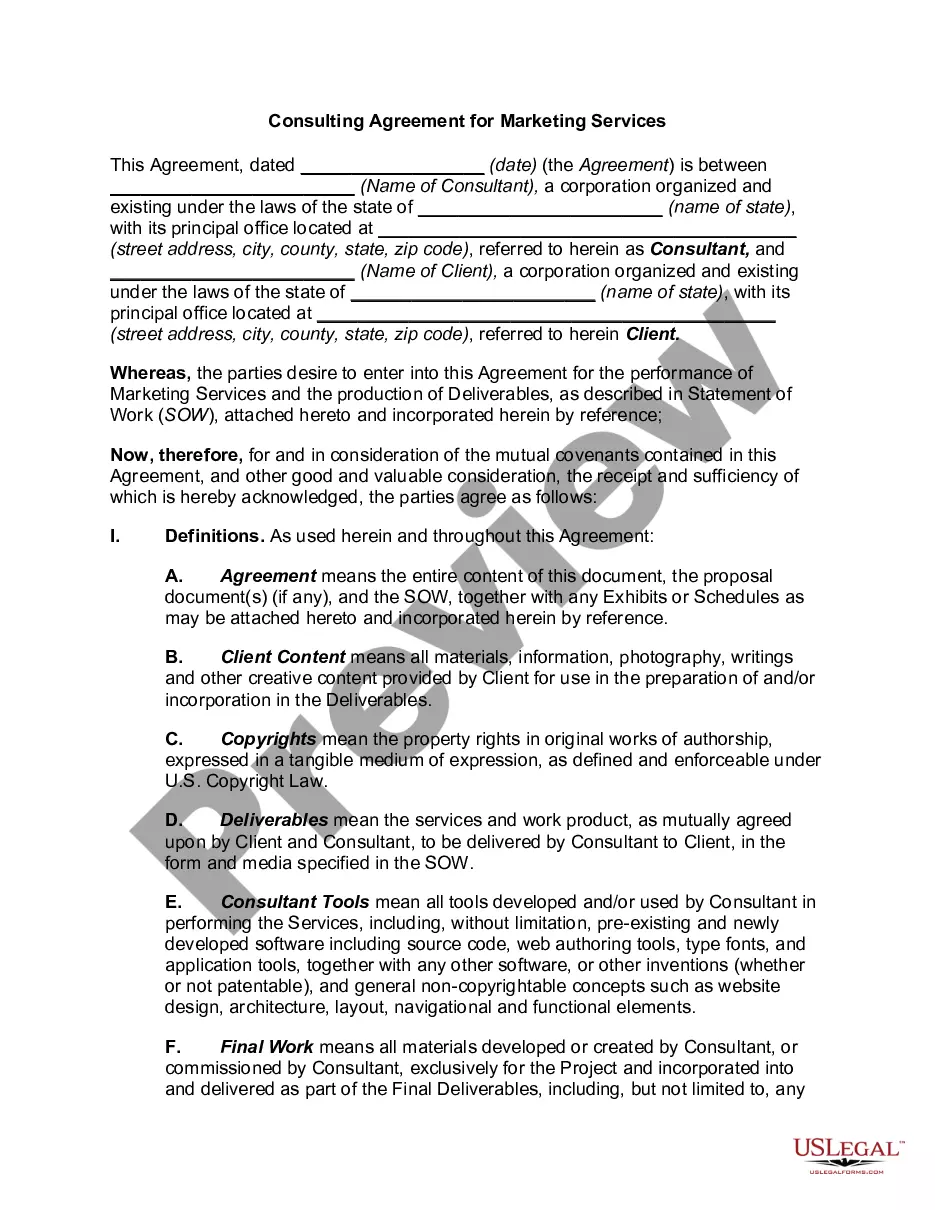

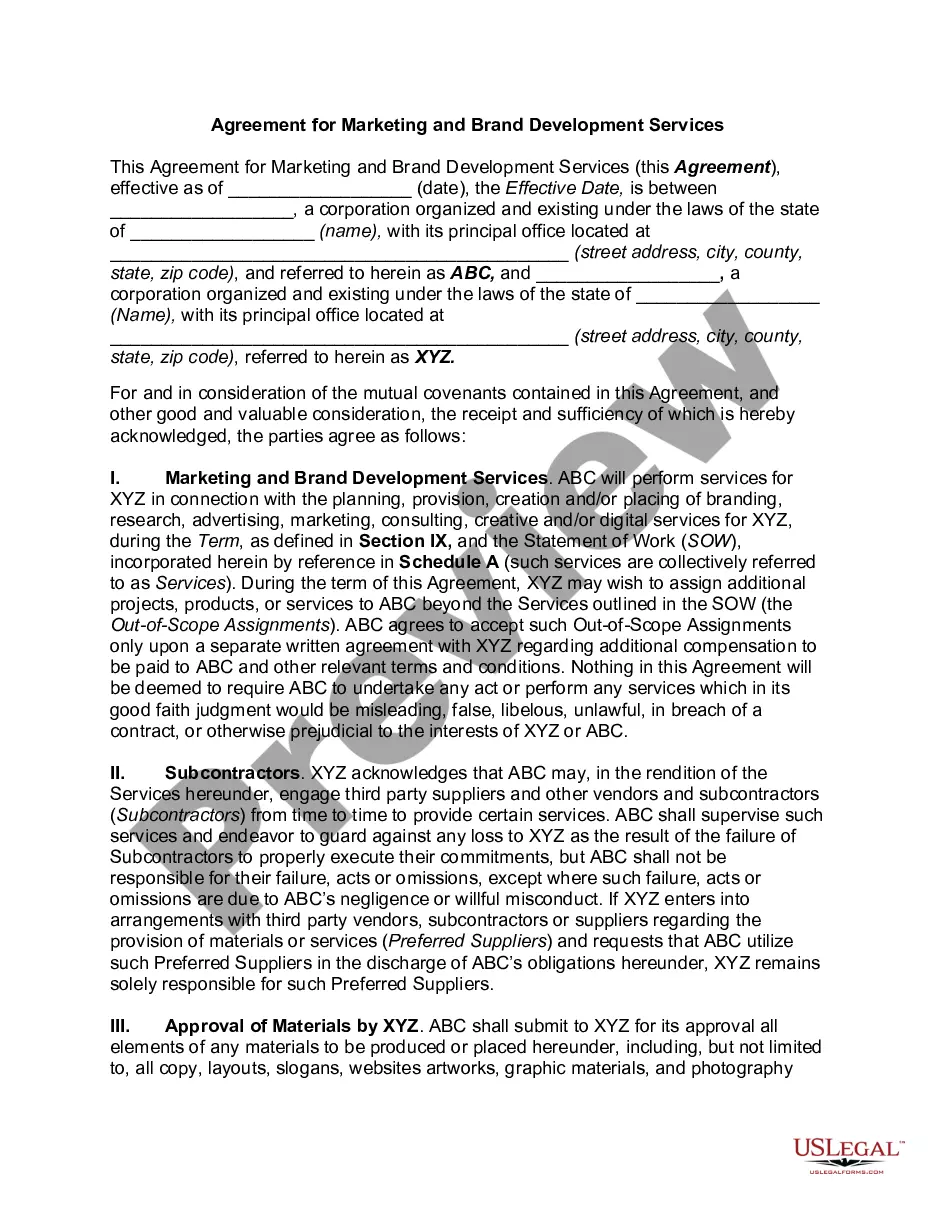
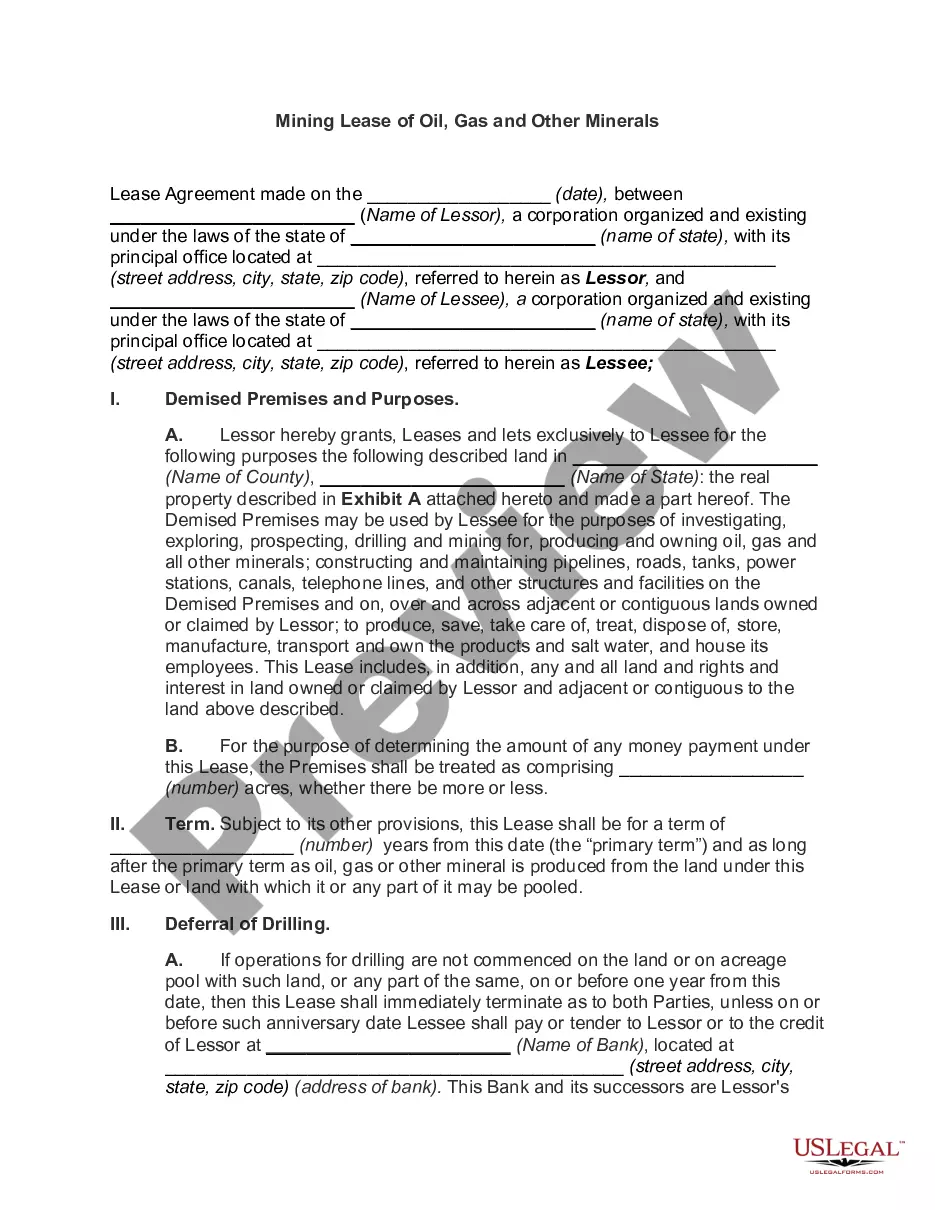

How to fill out Co-Branding Agreement?
Selecting the optimal legal document template can be challenging. Undoubtedly, there are numerous templates available online, but how do you find the legal document you need? Utilize the US Legal Forms website. This service provides a vast array of templates, including the Colorado Co-Branding Agreement, suitable for both business and personal requirements. All forms are reviewed by professionals and comply with federal and state regulations.
If you are already registered, Log In to your account and click on the Download button to obtain the Colorado Co-Branding Agreement. Use your account to browse through the legal forms you have previously purchased. Navigate to the My documents section of your account to retrieve another copy of the document you need.
If you are a new user of US Legal Forms, here are simple instructions to follow: First, ensure that you have selected the correct form for your city/state. You can review the form using the Preview feature and examine the form details to confirm it is suitable for your needs. If the form does not meet your requirements, utilize the Search field to find the appropriate form. Once you are certain the form is appropriate, click on the Buy now button to acquire the form. Select your preferred pricing plan and enter the necessary information. Create your account and complete the transaction using your PayPal account or credit/debit card. Choose the file format and download the legal document template to your device. Complete, revise, and print, and sign the acquired Colorado Co-Branding Agreement.
- US Legal Forms is the largest repository of legal documents where you can discover countless document templates.
- Utilize the service to download professionally crafted paperwork that meets state regulations.
Form popularity
FAQ
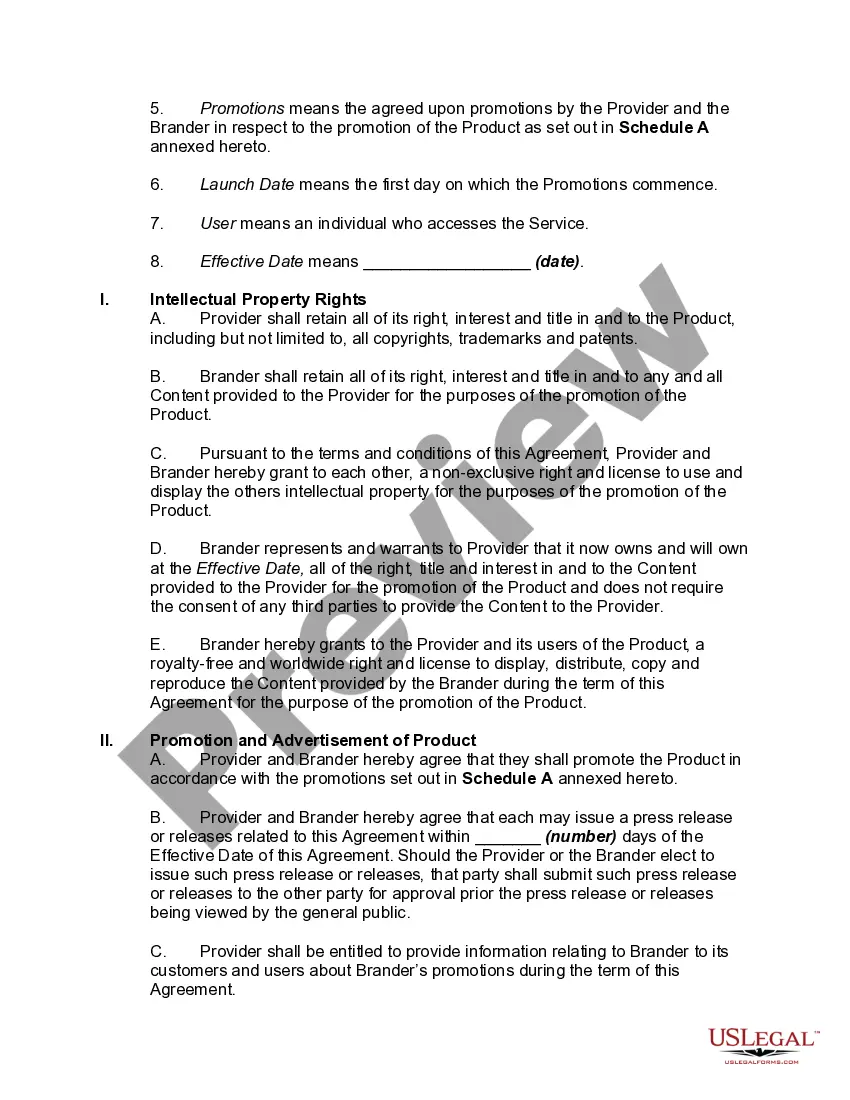
The co-branding process involves specific steps to ensure a successful collaboration. Initially, brands must identify a partner that complements their offerings and aligns with their values. Then, they establish a Colorado Co-Branding Agreement, detailing their roles and strategies. Ultimately, careful execution of the partnership and ongoing communication lead to a thriving co-branded initiative.
The co-branding process begins with both parties assessing compatibility and shared goals. Following that, companies draft a Colorado Co-Branding Agreement that outlines the terms, responsibilities, and branding strategies. Implementing the agreement requires coordination in marketing efforts, product development, and sales tactics to achieve a successful partnership.
Co-branding refers to a partnership where two brands collaborate to offer a product or service that highlights both identities. A classic example is the collaboration between Nike and Apple, where Nike sports equipment integrates with Apple's technology. Through a Colorado Co-Branding Agreement, brands can align their visions and provide added value to their customers.
The three levels of co-branding include ingredient co-branding, composite co-branding, and joint co-branding. Ingredient co-branding features one brand’s product as a critical part of another brand’s offering. A Colorado Co-Branding Agreement can facilitate these partnerships, allowing each brand to leverage its strengths and enhance customer experiences.
Co-marketing and co-branding may seem similar, but they have distinct differences. Co-marketing involves two or more companies collaborating on a marketing campaign to benefit from shared exposure without merging their brands. In contrast, a Colorado Co-Branding Agreement allows companies to create a unified brand offering that combines their identities, effectively enhancing their market presence.
Co-branding occurs when two brands collaborate on a product or service to mutually benefit from their brand equity. For example, a well-known chocolate company teaming up with a popular snack brand to create a new treat can attract fans from both sides. Such alliances can significantly enhance market visibility and consumer interest. Exploring options for a Colorado Co-Branding Agreement can provide a structured approach to these beneficial partnerships.
One notable disadvantage of co-branding is the potential loss of control over brand messaging and identity. When two brands collaborate, they must agree on how the partnership is portrayed, which can sometimes lead to inconsistencies. Additionally, if one brand's strategy misfires, it can negatively affect the other. This is why structuring a strong Colorado Co-Branding Agreement is essential.
The risks of co-branding include potential conflicts between the brands, as well as issues related to public perception. If one brand fails to meet consumer expectations, it can tarnish the image of both parties involved in the collaboration. Furthermore, any legal complexities can arise if the terms of the Colorado Co-Branding Agreement are not adhered to. Identifying these risks early can help mitigate potential problems.
When engaging in co-branding, businesses should consider factors such as brand compatibility, shared goals, and customer perception. It's important to evaluate how each brand's reputation may impact the partnership. Additionally, ensure that the financial responsibilities are clearly outlined in the Colorado Co-Branding Agreement. Consulting with legal experts via uslegalforms can provide guidance in this process.
To create a successful co-branding partnership, businesses should first identify complementary brands that share similar values and target audiences. Next, draft a comprehensive agreement outlining each party's roles, financial arrangements, and marketing strategies. Clear communication is key to maintaining alignment throughout the partnership. Utilize the resources available on the uslegalforms platform to draft a solid Colorado Co-Branding Agreement.