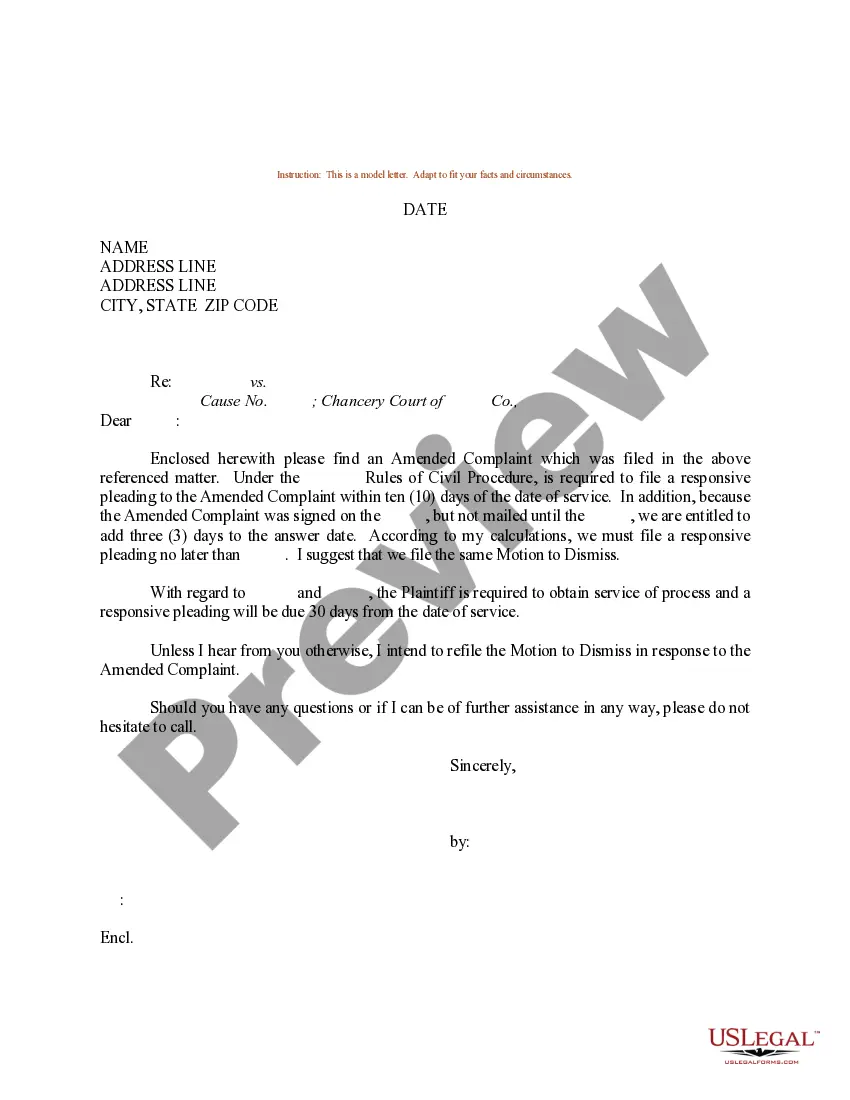
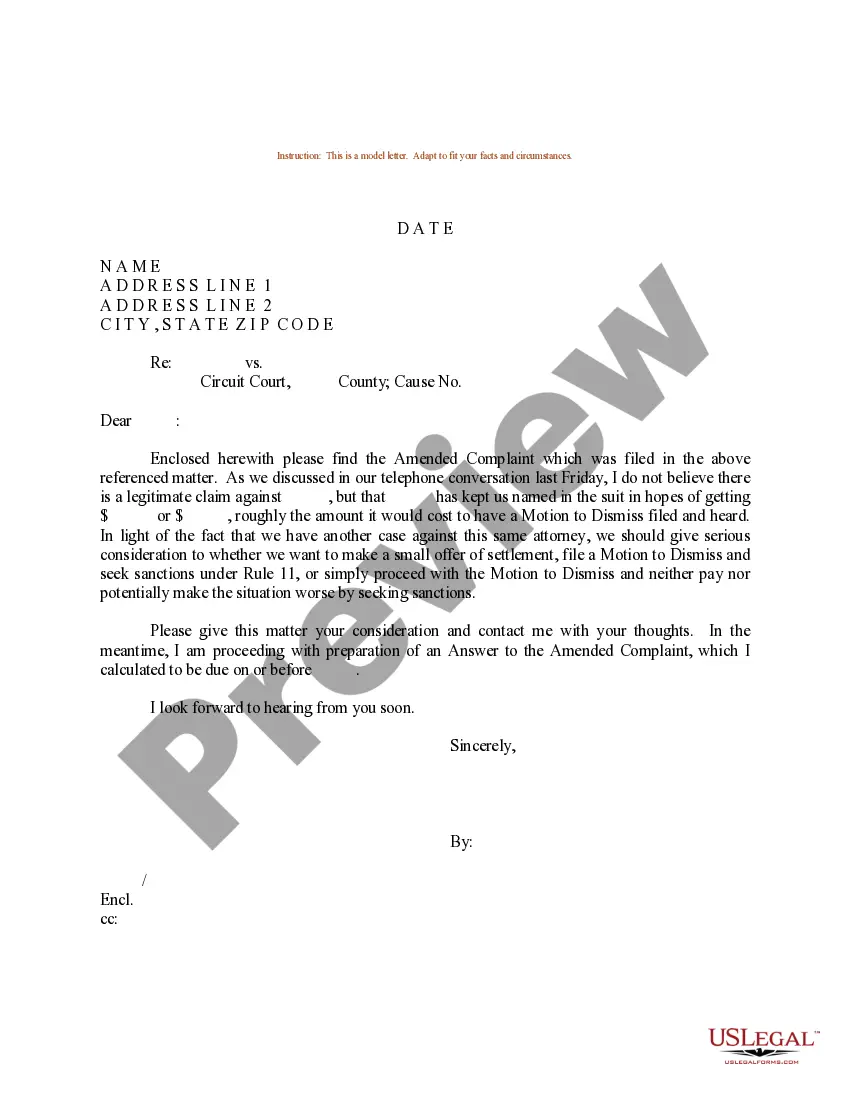
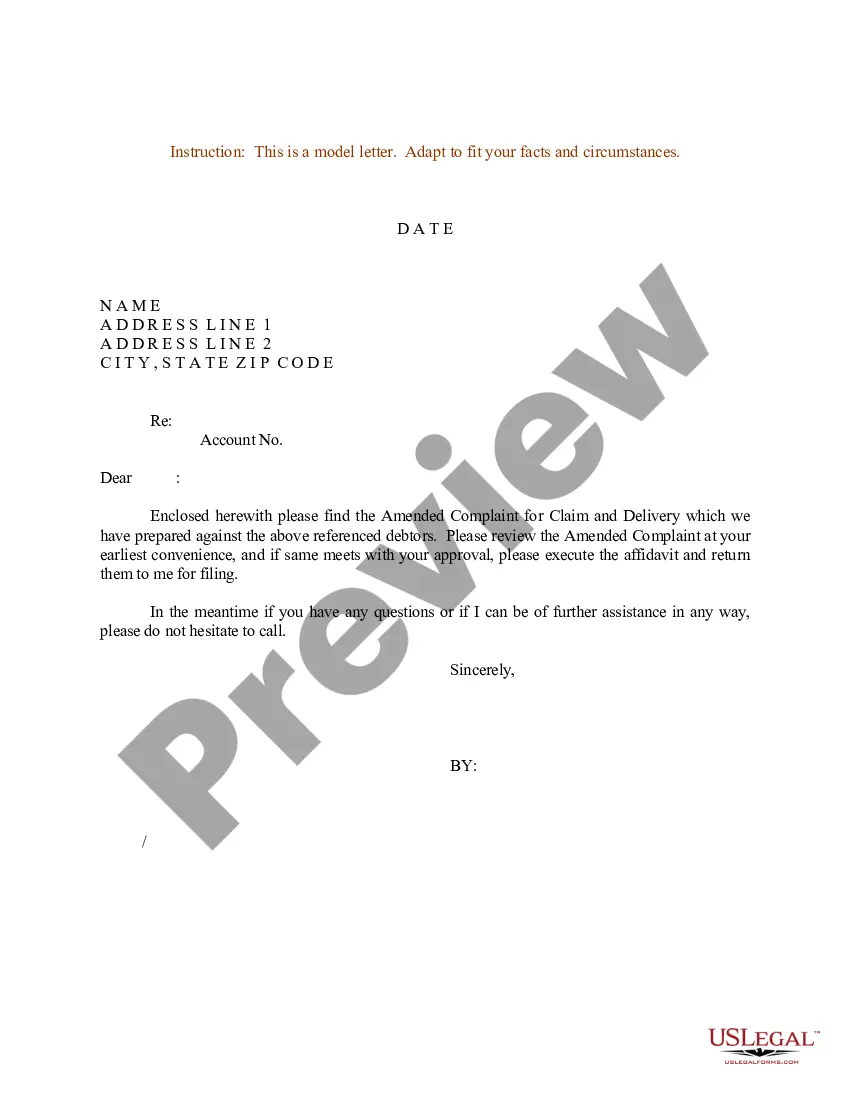
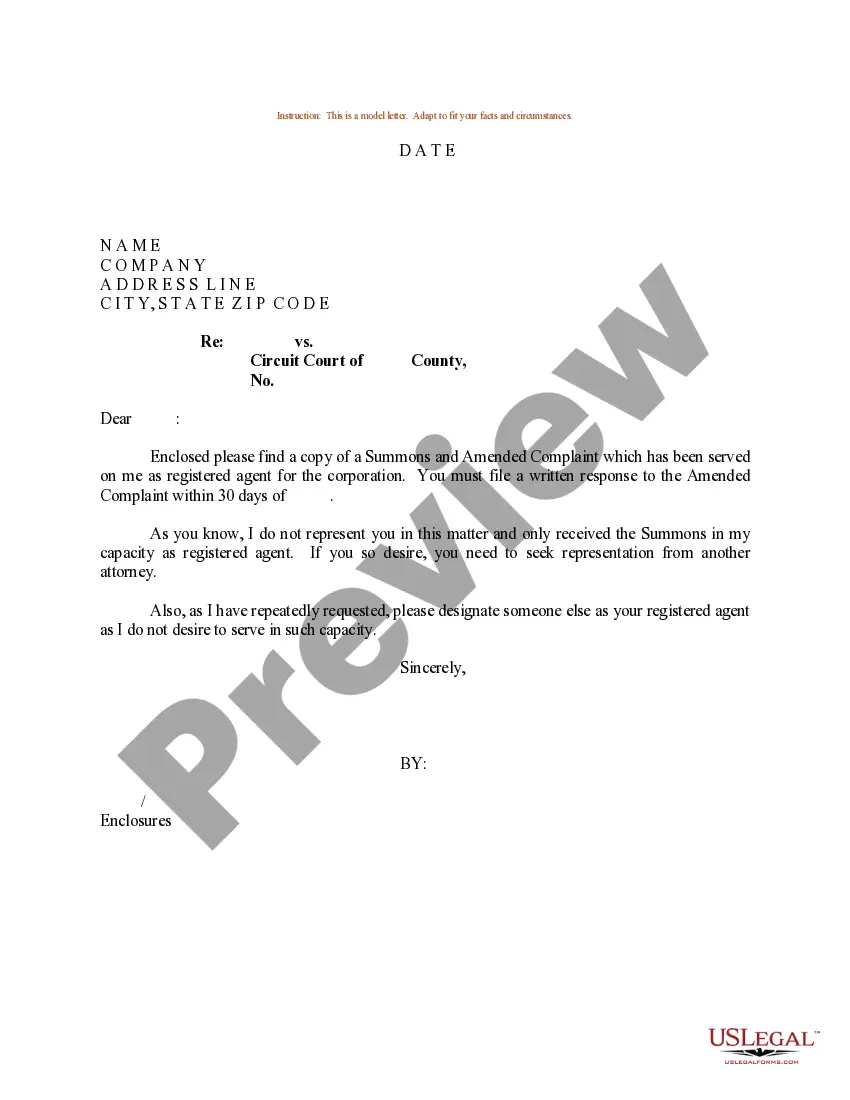
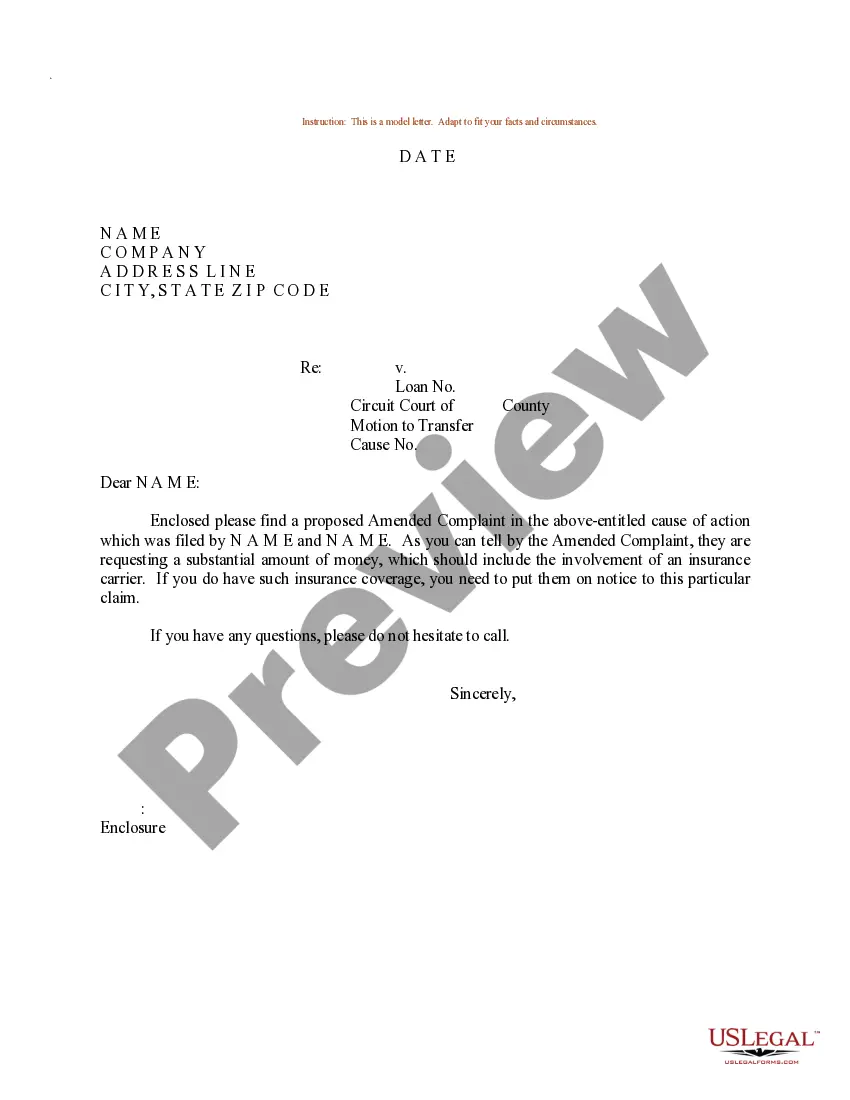
Colorado Sample Letter to Include Amended Complaint
Description
Get your form ready online
Our built-in tools help you complete, sign, share, and store your documents in one place.
Make edits, fill in missing information, and update formatting in US Legal Forms—just like you would in MS Word.
Download a copy, print it, send it by email, or mail it via USPS—whatever works best for your next step.
Sign and collect signatures with our SignNow integration. Send to multiple recipients, set reminders, and more. Go Premium to unlock E-Sign.
If this form requires notarization, complete it online through a secure video call—no need to meet a notary in person or wait for an appointment.
We protect your documents and personal data by following strict security and privacy standards.

Make edits, fill in missing information, and update formatting in US Legal Forms—just like you would in MS Word.

Download a copy, print it, send it by email, or mail it via USPS—whatever works best for your next step.

Sign and collect signatures with our SignNow integration. Send to multiple recipients, set reminders, and more. Go Premium to unlock E-Sign.

If this form requires notarization, complete it online through a secure video call—no need to meet a notary in person or wait for an appointment.

We protect your documents and personal data by following strict security and privacy standards.
Looking for another form?







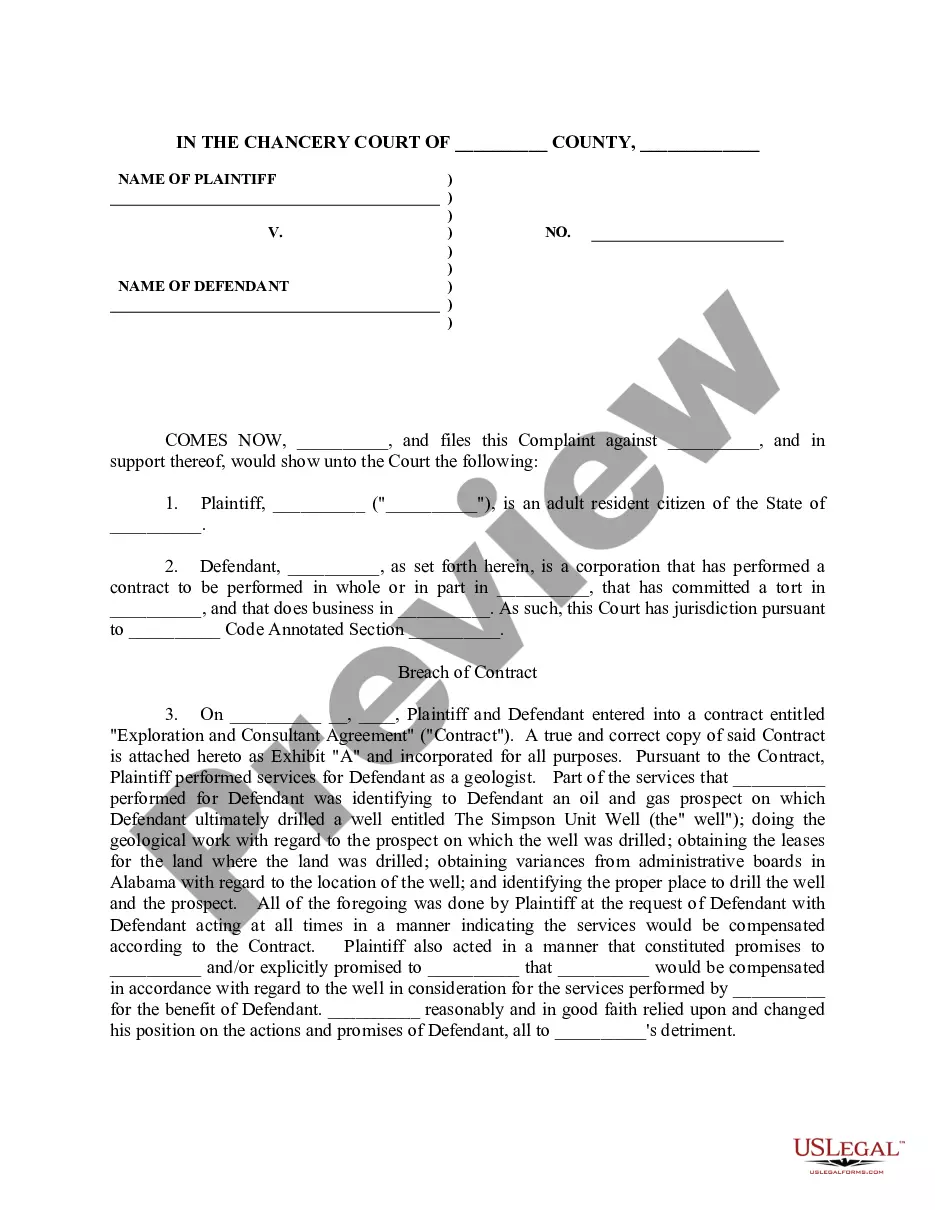
How to fill out Sample Letter To Include Amended Complaint?
You have the capacity to spend time online searching for the appropriate legal document template that meets your state and federal requirements.
US Legal Forms offers a vast array of legal forms that have been reviewed by experts.
It is easy to download or print the Colorado Sample Letter to Include Amended Complaint from your account.
If available, utilize the Preview button to examine the document template as well.
- If you already possess a US Legal Forms account, you can Log In and click the Download button.
- Afterward, you can complete, modify, print, or sign the Colorado Sample Letter to Include Amended Complaint.
- Every legal document template you obtain is yours permanently.
- To retrieve another copy of any downloaded form, navigate to the My documents section and click the appropriate button.
- If you are using the US Legal Forms site for the first time, follow the simple instructions below.
- First, ensure that you have selected the correct document template for your chosen region.
- Review the form details to confirm you have picked the right document.
Form popularity
FAQ
Third Amended Complaint means the [Proposed] Third Consolidated Amended Class Action Complaint (a copy of which is attached as Exhibit D to this Settlement Agreement), which is proposed for filing in the Consolidated Action.
The main purpose of a relation-back doctrine is to permit a plaintiff to amend a complaint to allege different or addi- tional theories of recovery after expiration of the applicable statute of limitations, typically after discovery has disclosed new information.
Rule 106(a)(2) ? Compelling a Non-Discretionary Action Rule 106(a)(2) is an action to compel a body or person, including a governmental body, to perform a non-discretionary or mandatory action; this is similar to a writ of mandamus under common law. Judgments in favor of the claimant can include damages.
The Supreme Court must determine what constitutes a mistake for the purposes of invoking the ?relation back? doctrine under Federal Rule of Civil Procedure 15(c), which permits a plaintiff to amend their complaint to name a party after the statute of limitations has already run on a claim.
An amended complaint is a written revision of the original complaint filed by a plaintiff or petitioner. Rule 15 of the federal rules of civil procedure allows the plaintiff to amend their complaint one time within 21 days of serving the original complaint or at any point before the defendant answers the complaint.
A party shall plead in response to an amended pleading within the time remaining for response to the original pleading or within 14 days after service of the amended pleading, whichever period may be the longer, unless the court otherwise orders.
By its legal definition, the ?relation back doctrine? enables a plaintiff to correct a pleading error, by adding either a new claim or a new party, after the expiration of the statutory limitation period.
R. Civ. P. 15(c)(1)(B) states that an amended pleading will ?relate back? to the date of an original pleading if the amended pleading ?asserts a claim or defense that arose out of the conduct, transaction or occurrence set out ? or attempted to be set out ? in the original pleading.?