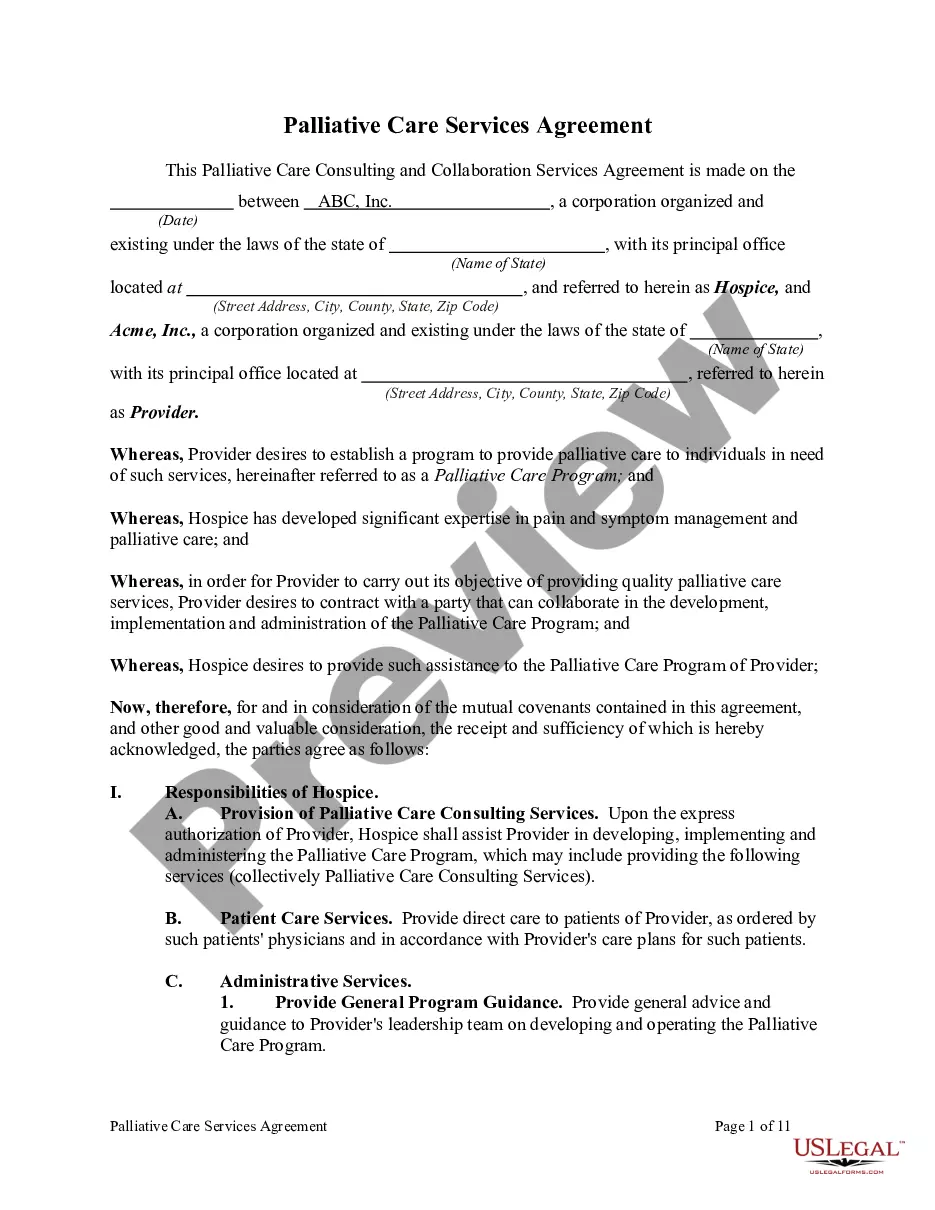
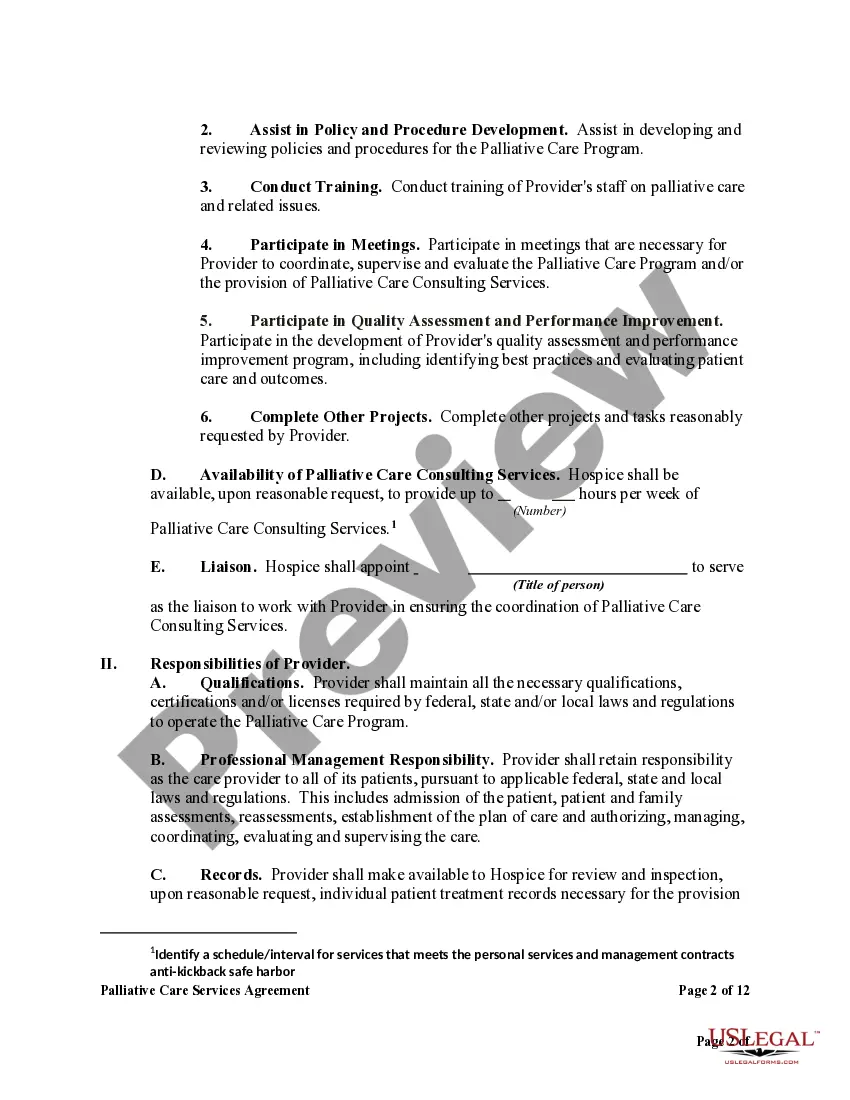
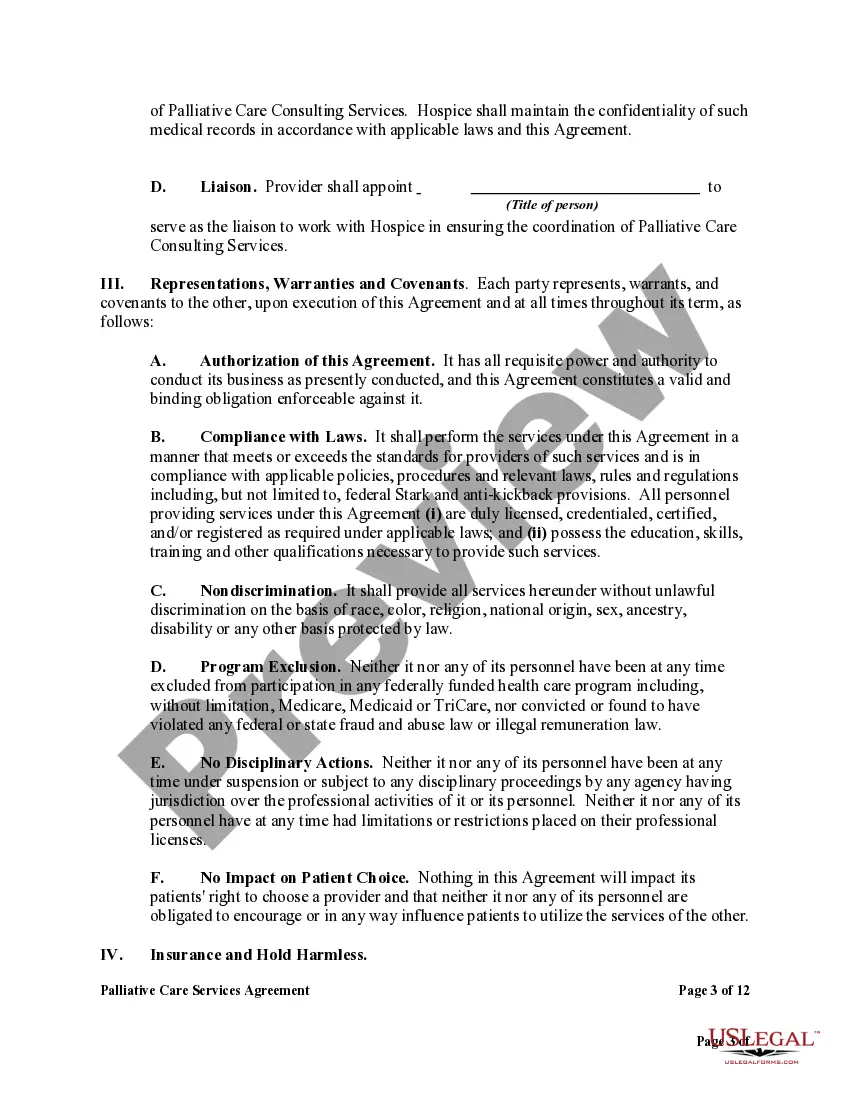
Colorado Palliative Care Services Agreement
Description
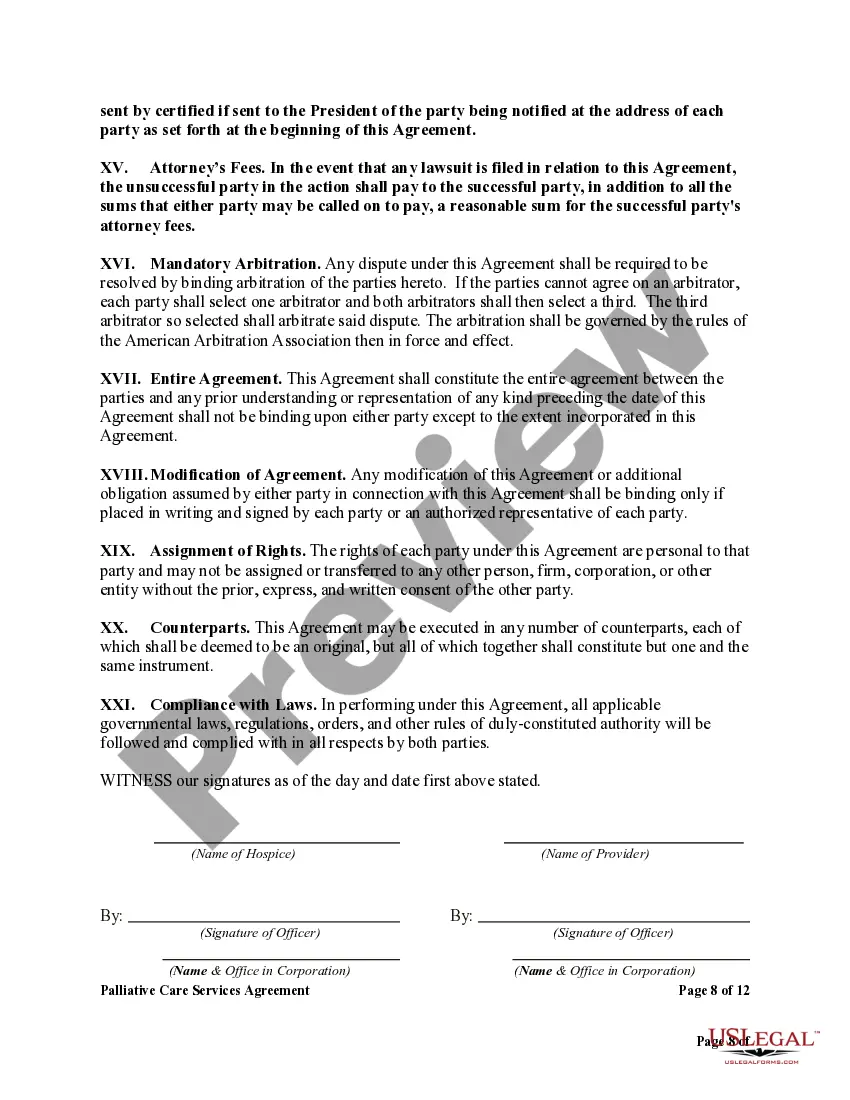

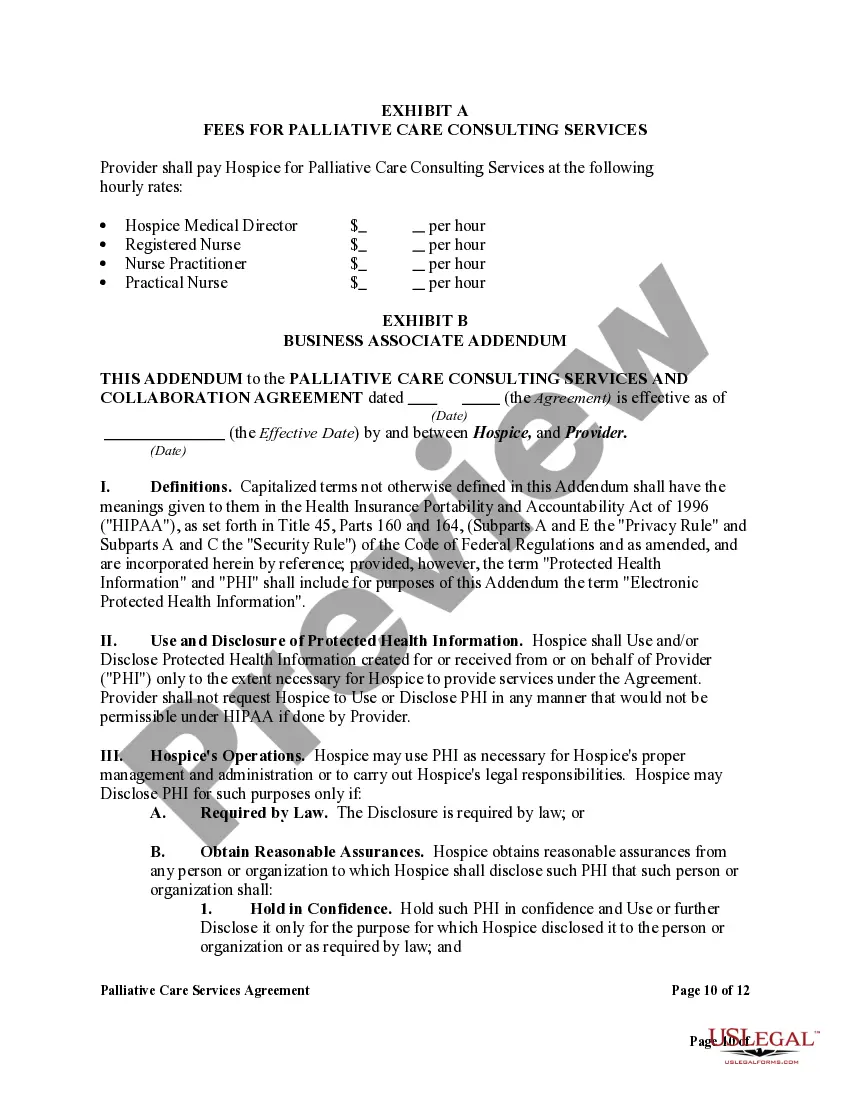



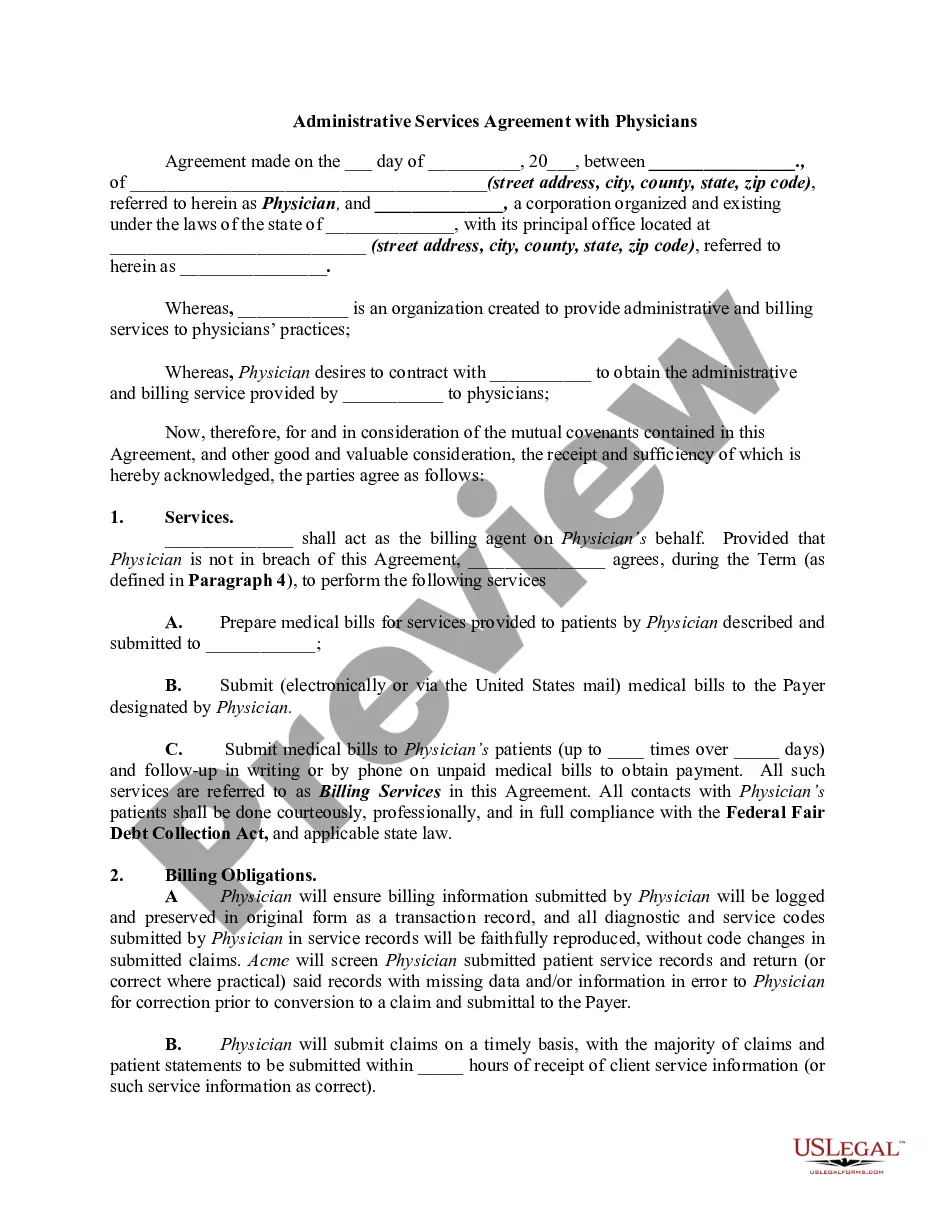
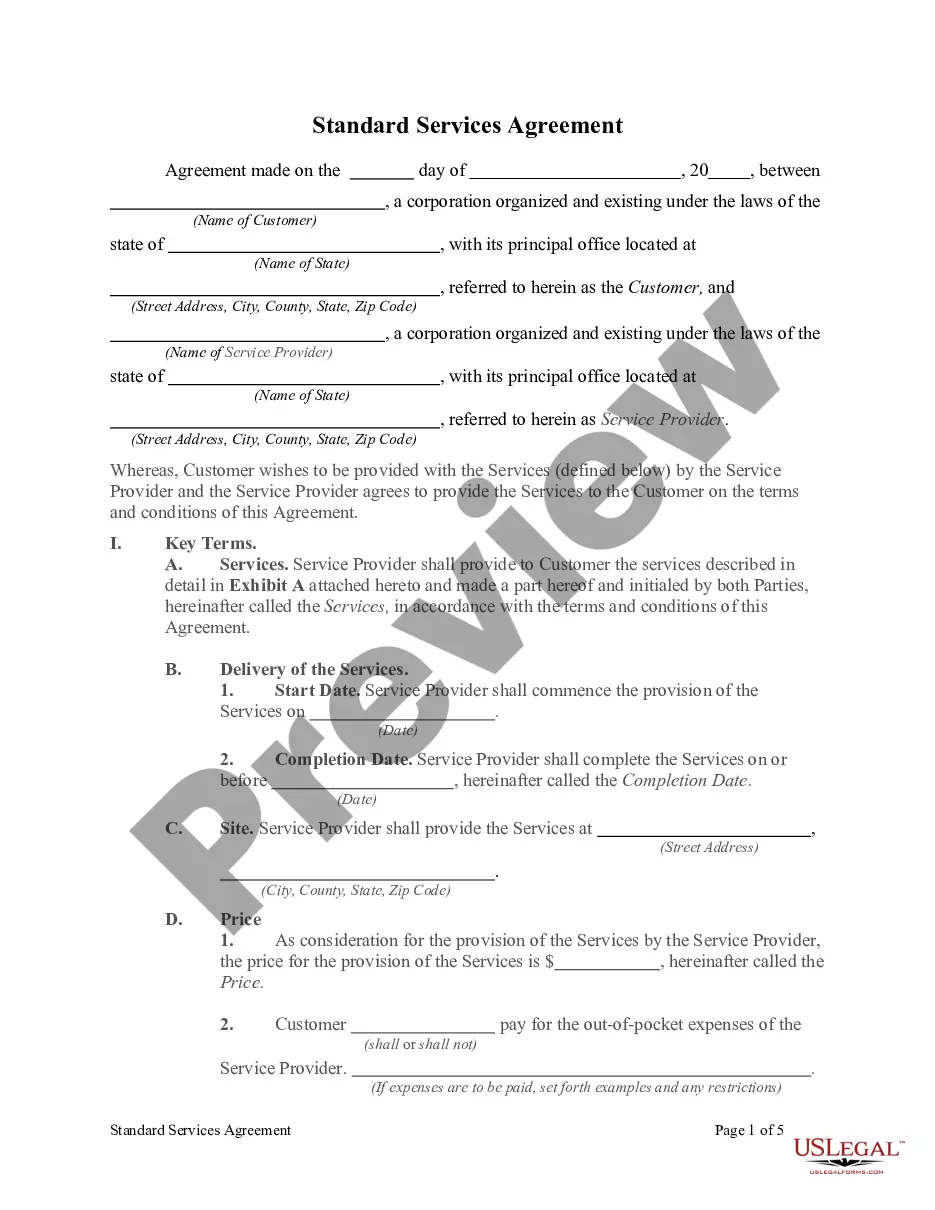
Get your form ready online
Our built-in tools help you complete, sign, share, and store your documents in one place.
Make edits, fill in missing information, and update formatting in US Legal Forms—just like you would in MS Word.
Download a copy, print it, send it by email, or mail it via USPS—whatever works best for your next step.
Sign and collect signatures with our SignNow integration. Send to multiple recipients, set reminders, and more. Go Premium to unlock E-Sign.
If this form requires notarization, complete it online through a secure video call—no need to meet a notary in person or wait for an appointment.
We protect your documents and personal data by following strict security and privacy standards.

Make edits, fill in missing information, and update formatting in US Legal Forms—just like you would in MS Word.

Download a copy, print it, send it by email, or mail it via USPS—whatever works best for your next step.

Sign and collect signatures with our SignNow integration. Send to multiple recipients, set reminders, and more. Go Premium to unlock E-Sign.

If this form requires notarization, complete it online through a secure video call—no need to meet a notary in person or wait for an appointment.

We protect your documents and personal data by following strict security and privacy standards.
Looking for another form?

How to fill out Palliative Care Services Agreement?
US Legal Forms - one of the largest collections of authorized templates in the USA - offers a broad range of legal document templates that you can download or create.
By utilizing the website, you can access thousands of templates for business and personal purposes, organized by categories, states, or keywords.
You can find the latest versions of documents like the Colorado Palliative Care Services Agreement in moments.
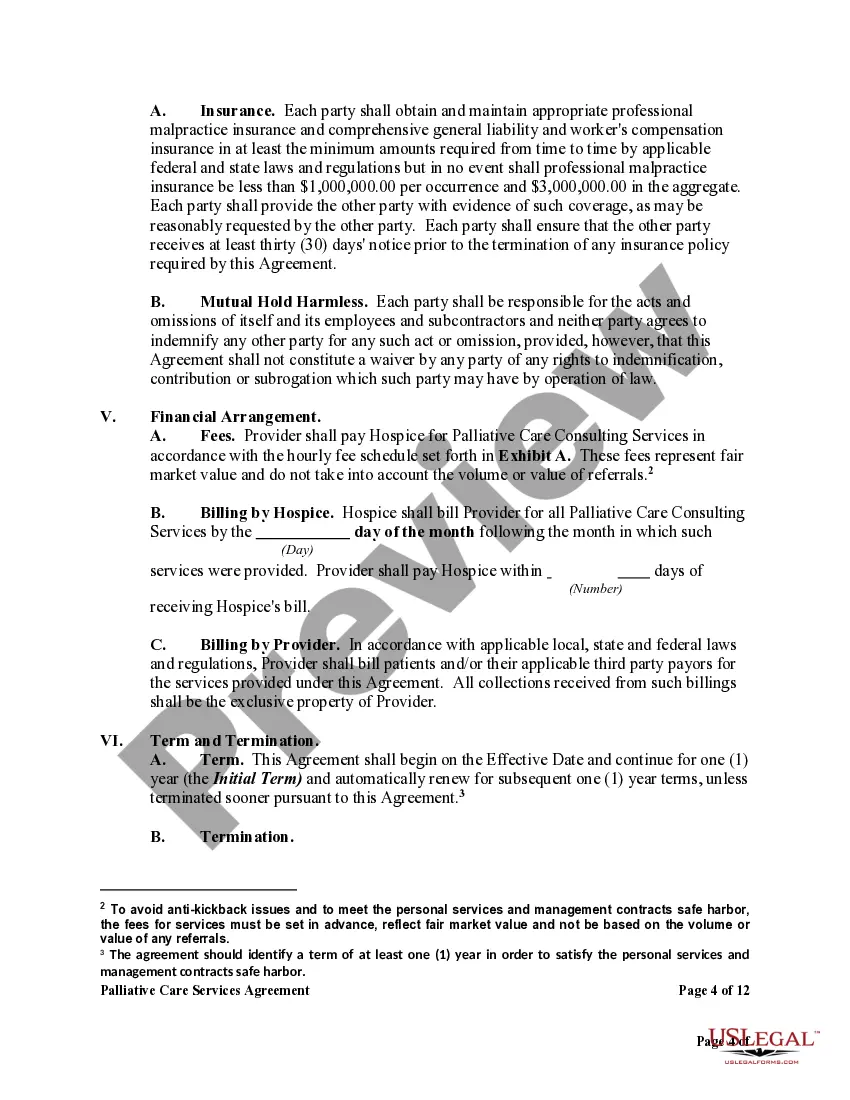
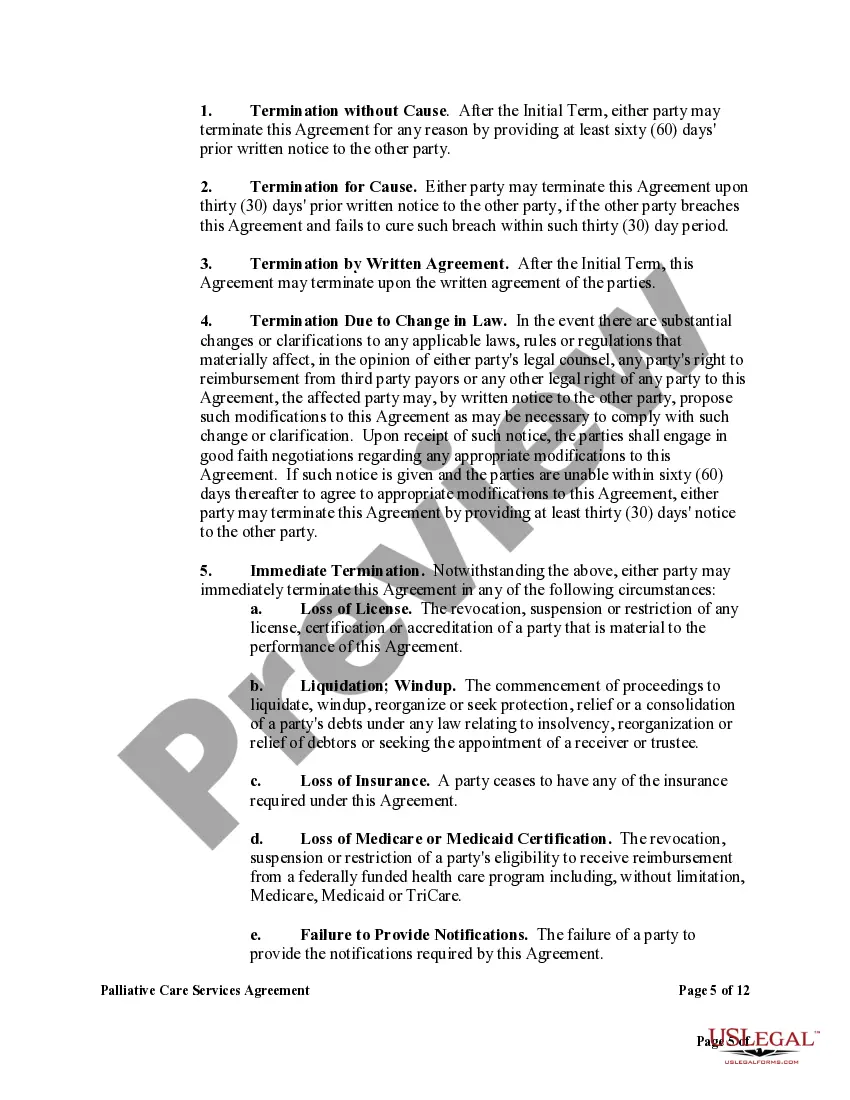
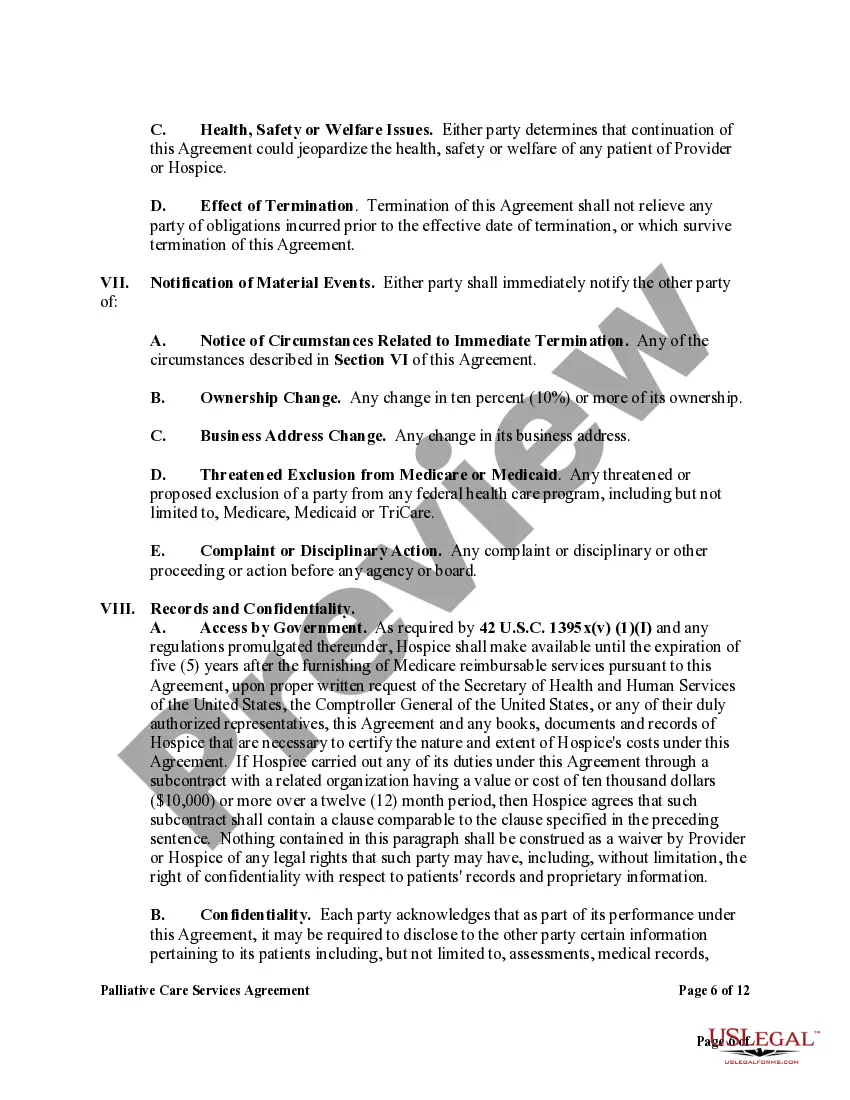
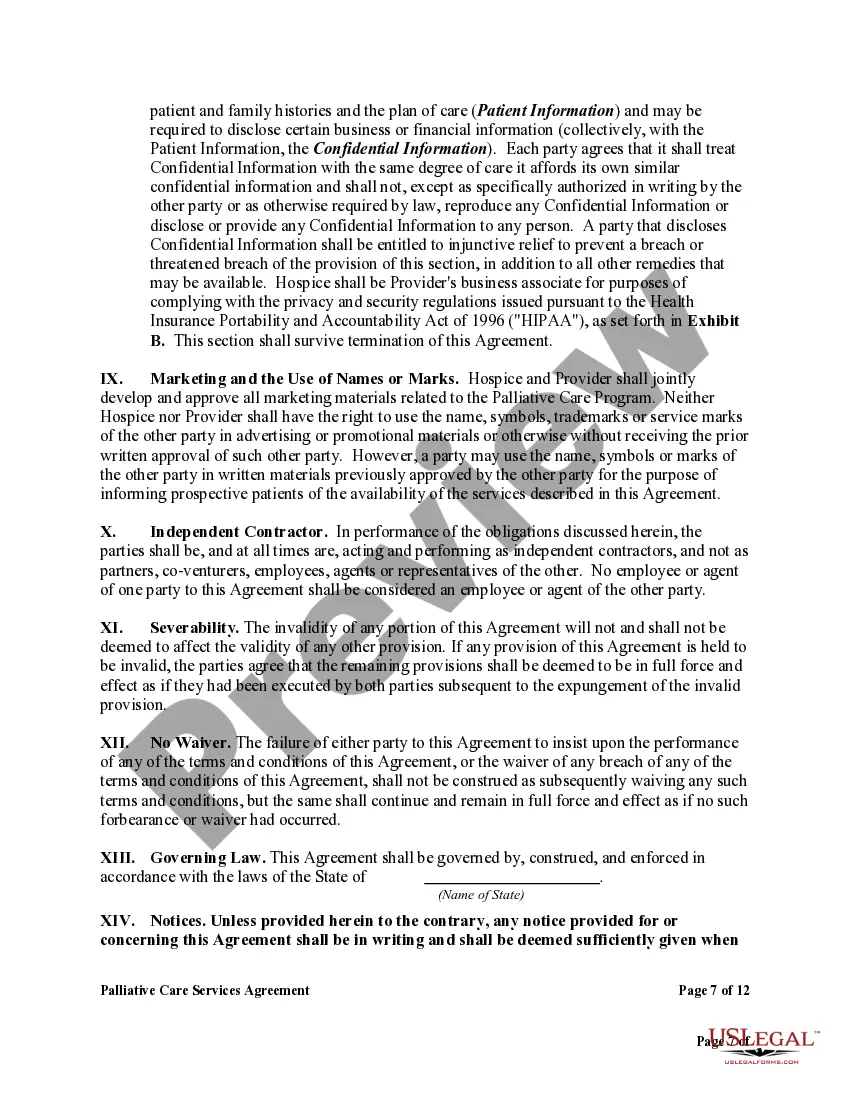
Review the form summary to verify that you've chosen the correct one.
If the form doesn't suit your needs, utilize the Search field at the top of the page to find the right one.
- If you already have a subscription, Log In and download the Colorado Palliative Care Services Agreement from the US Legal Forms library.
- The Download button will be visible on every form you view.
- You can access all previously downloaded templates in the My documents section of your account.
- If you're using US Legal Forms for the first time, here are simple steps to get started.
- Ensure that you have selected the appropriate form for your city/state.
- Click the Preview button to examine the content of the form.
Form popularity
FAQ
In palliative care, treatments focus on managing symptoms rather than curing the illness. This often includes pain management, emotional support, and assistance with daily activities. By signing a Colorado Palliative Care Services Agreement, patients can access tailored treatment plans that address their unique needs and enhance their overall well-being.
Payment for palliative care often comes from health insurance providers, Medicare, or Medicaid, depending on the patient's situation. Families should check the specifics of their plan to understand coverage options. Entering into a Colorado Palliative Care Services Agreement can also help clarify financial responsibilities and ensure that patients receive the care they need.
To apply for palliative care, you typically need to consult with a healthcare provider who can assess the patient's condition. They will guide you through the process and help you understand the necessary steps and documentation needed. A Colorado Palliative Care Services Agreement can streamline this process, making it easier for families to access the support they need swiftly.
The three main types of palliative care include outpatient care, home care, and inpatient care. Each type accommodates different patient needs and preferences, allowing for more personalized support. By entering a Colorado Palliative Care Services Agreement, you can choose the best type of care that suits your or your loved one's situation.
A patient may be placed in palliative care to enhance their quality of life while managing serious illnesses. This type of care focuses on relieving symptoms, pain, and stress, making it easier for individuals and their families to cope. When entering into a Colorado Palliative Care Services Agreement, families can ensure that the patient's needs are prioritized, allowing for a more compassionate approach during challenging times.
A person is eligible for palliative care based on the presence of a serious illness that affects their quality of life. Eligibility also considers the patient’s need for support with symptoms or psychological distress. With a Colorado Palliative Care Services Agreement, patients can outline their unique needs and preferences, ensuring they receive the necessary care tailored to their situation.
The 7 C's of palliative care encompass compassion, communication, coordination, continuity, collaboration, culture, and competence. Each of these principles plays a crucial role in ensuring effective palliative care. By incorporating these elements in your Colorado Palliative Care Services Agreement, you can enhance the quality of care and support provided to patients and families.
Getting approved for palliative care requires a referral from your healthcare provider after assessing your needs. The provider will evaluate the severity of your condition and the level of support you require. A well-structured Colorado Palliative Care Services Agreement can facilitate this process by explicitly stating your care requirements and expectations, making it easier to align with healthcare policies.
To get admitted to palliative care, start by discussing your situation with your primary healthcare provider. They can assess your condition and refer you to a palliative care team. Securing a Colorado Palliative Care Services Agreement can help ensure a smooth admission process, as it clarifies the services to be provided and the goals of care.
The three forms of palliative care include inpatient care, outpatient care, and home-based care. Inpatient care typically takes place in hospitals, while outpatient care occurs in clinics. Home-based care allows patients to receive support in a familiar environment, which is often detailed in a Colorado Palliative Care Services Agreement. Each form is designed to meet the needs of the patient effectively.