Colorado Complaint Against Contractor and Surety for Abandonment of Construction Project

State:
Multi-State
Control #:
US-01129BG
Format:
Word; 
Rich Text
Instant download

Description

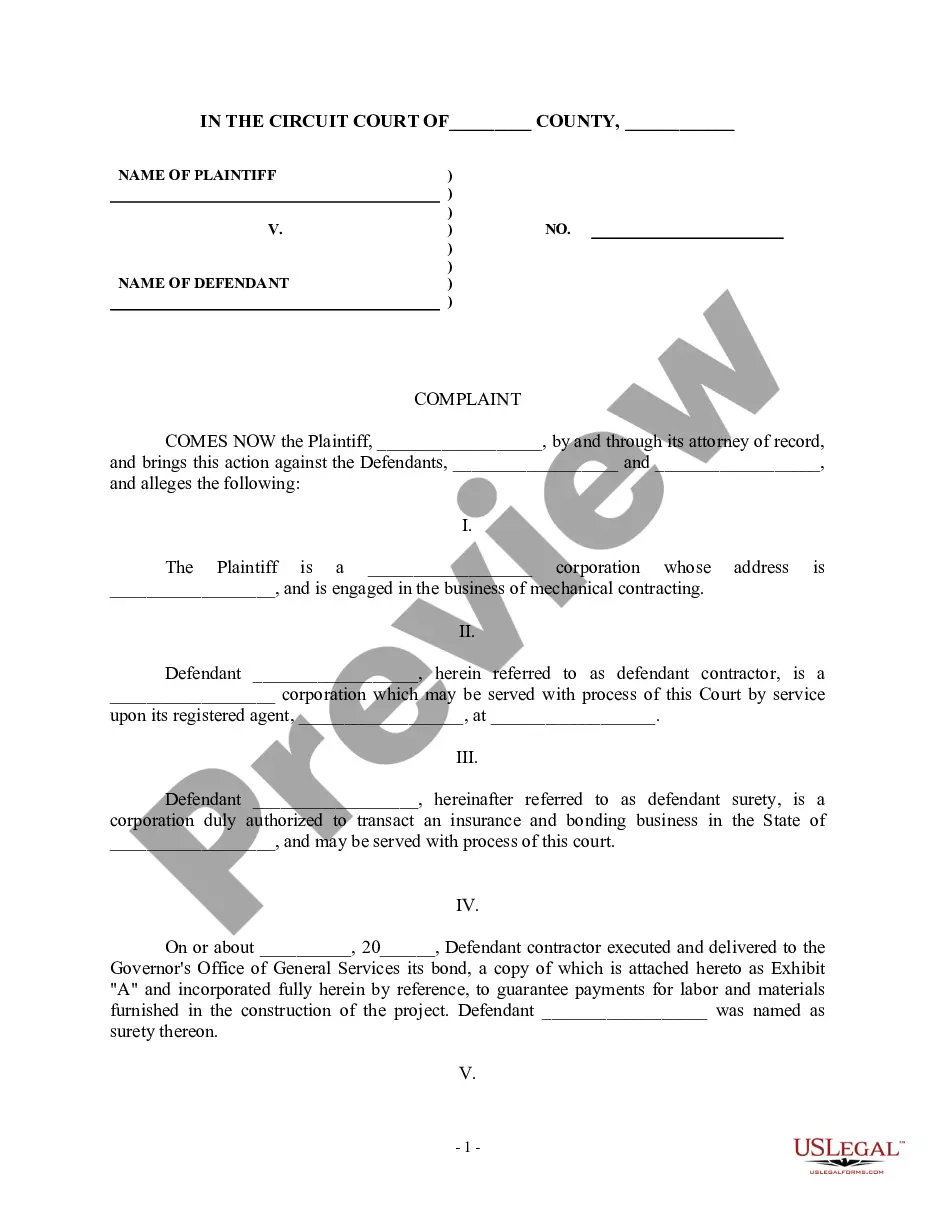
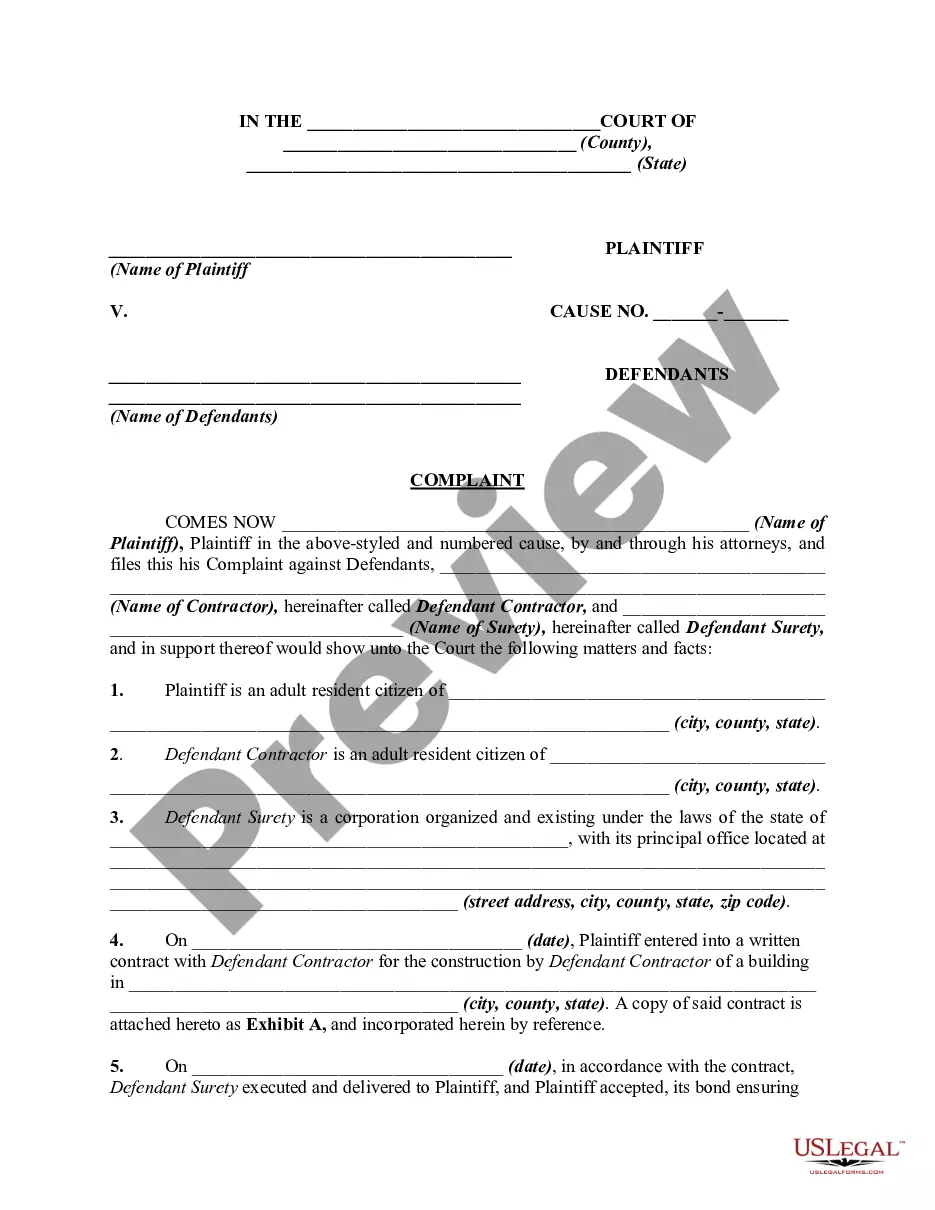
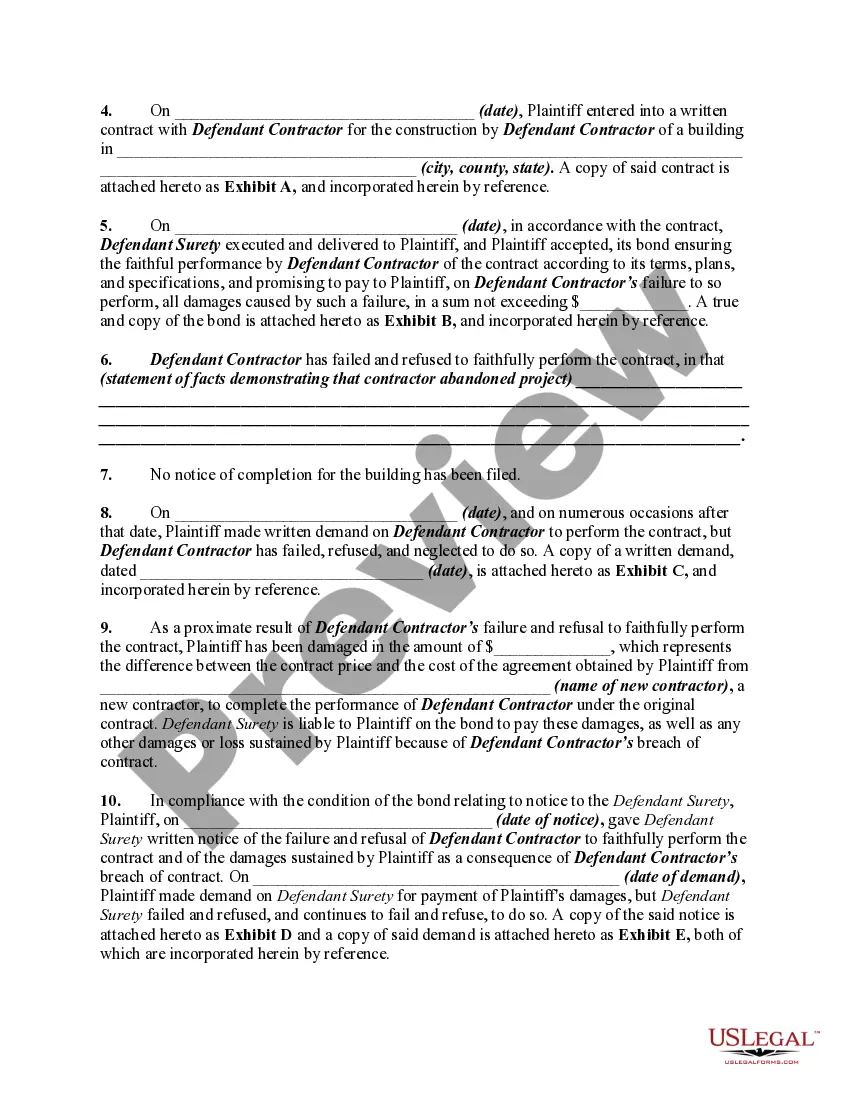
The failure of a building contractor to substantially perform the terms and conditions of a building contract entitles the other party to the contract to sue for damages resulting from the breach of the contract. The measure of damages in such cases is generally held to be the amount above the contract price that it costs the other party to complete the services in accordance with the terms of the contract.


A surety is a person obligated by a contract under which one person agrees to pay a debt or perform a duty if the other person who is bound to pay the debt or perform the duty fails to do so. A surety is often found when someone is required to post a bond to secure a promise to perform.


This form is a generic complaint and adopts the "notice pleadings" format of the Federal Rules of Civil Procedure, which have been adopted by most states in one form or another. This form is for illustrative purposes only. Local laws should be consulted to determine any specific requirements for such a form in a particular jurisdiction.
Free preview
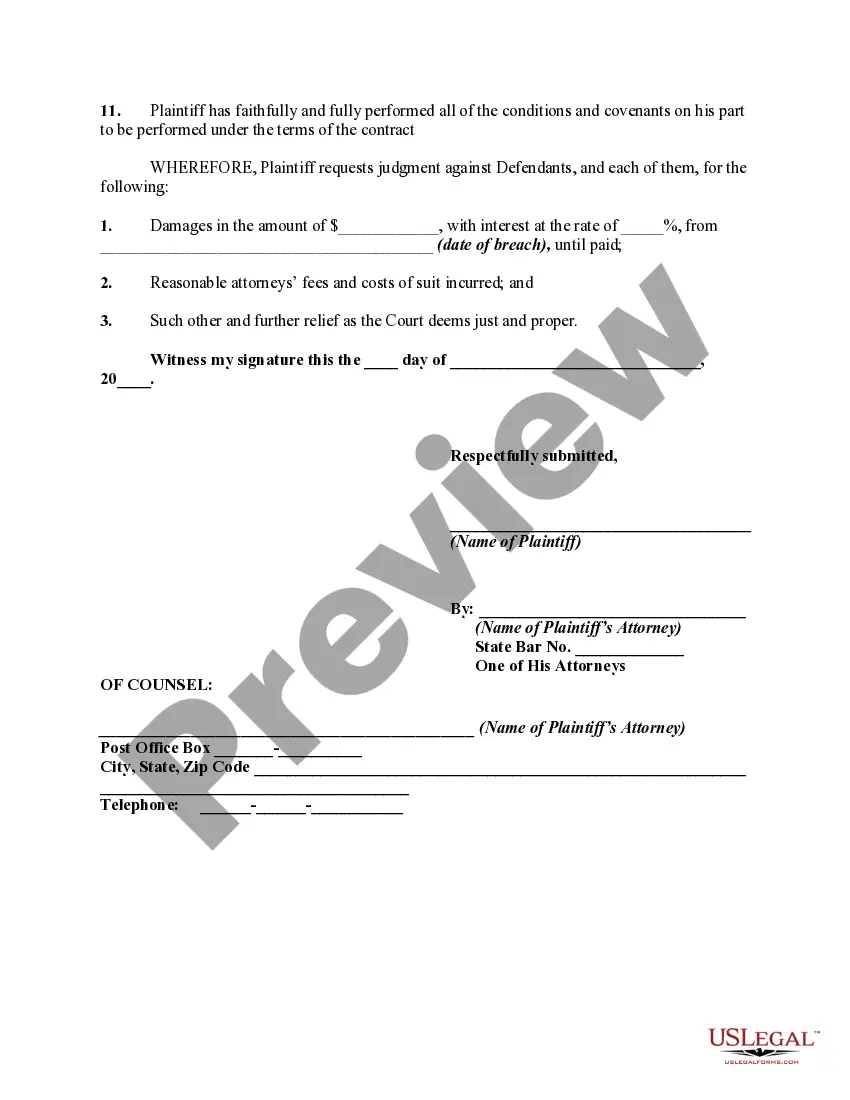
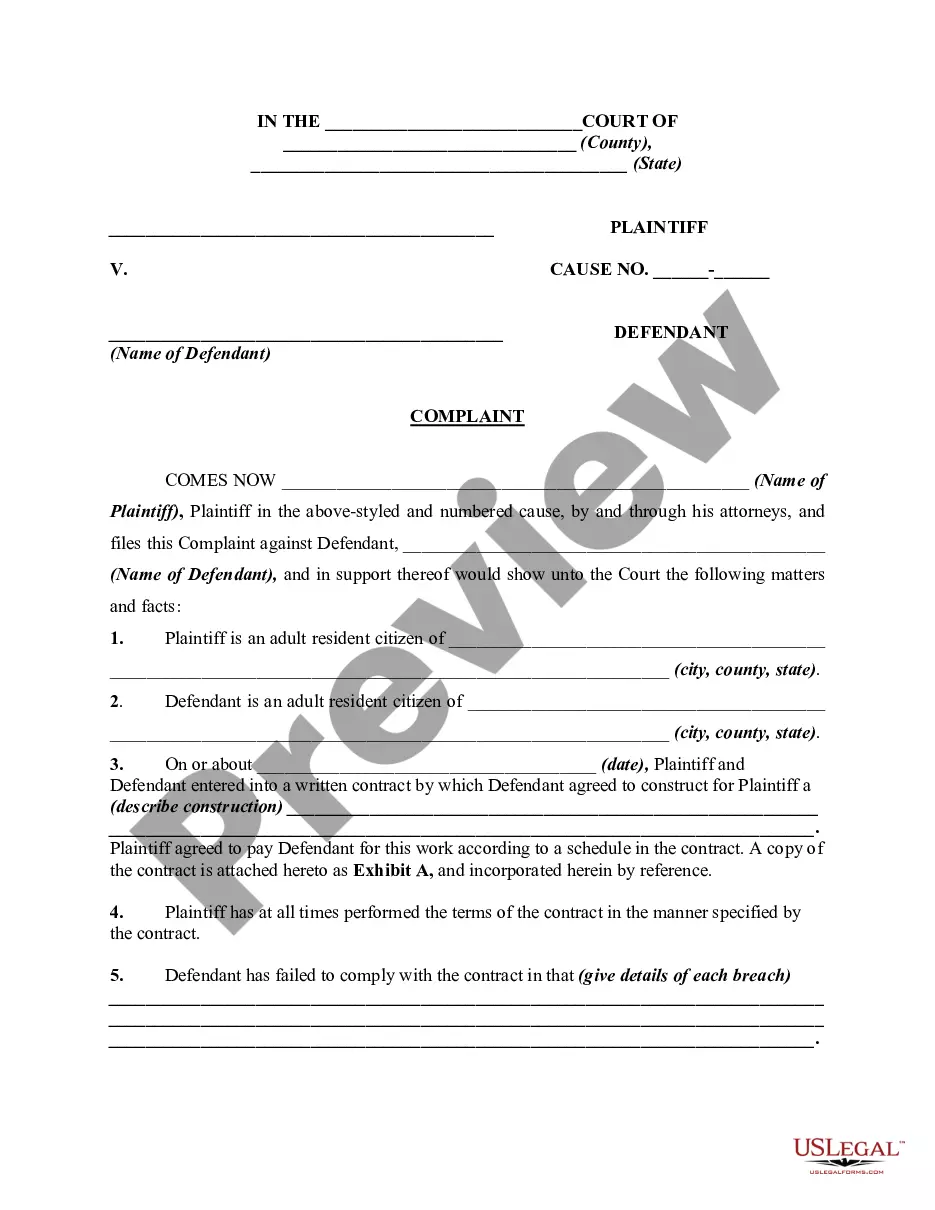
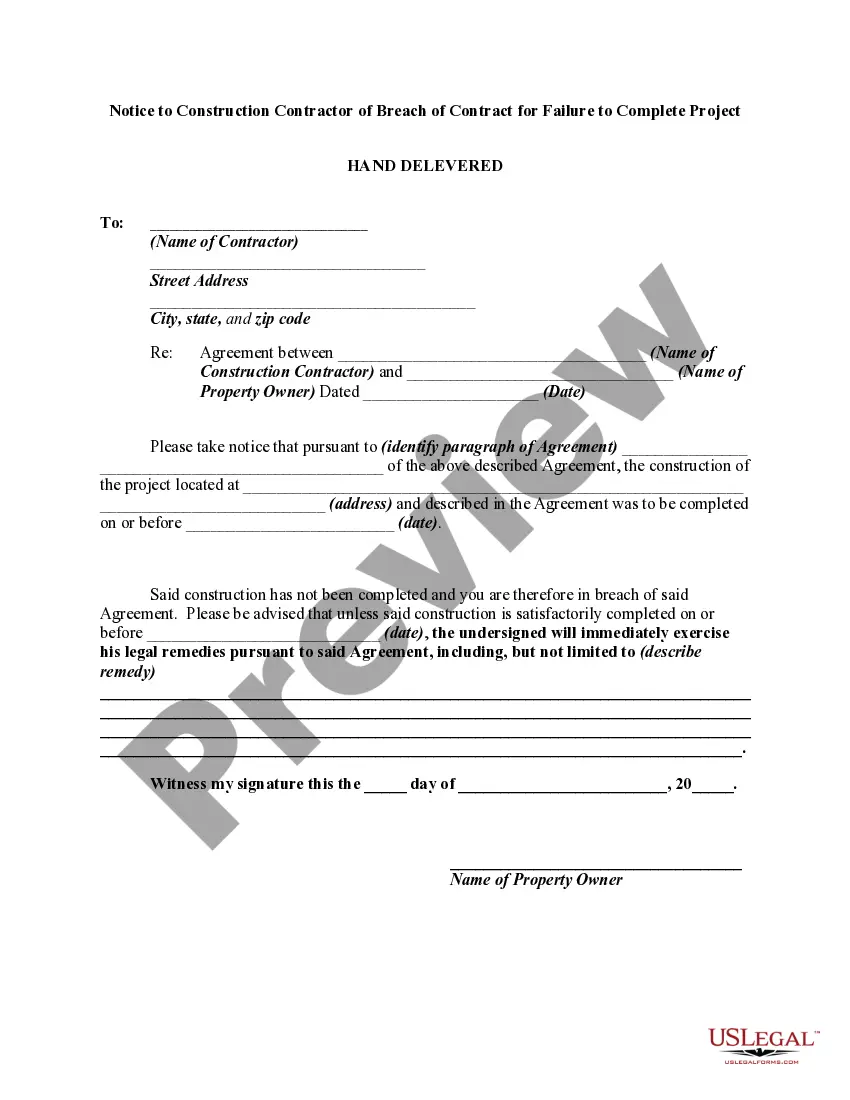
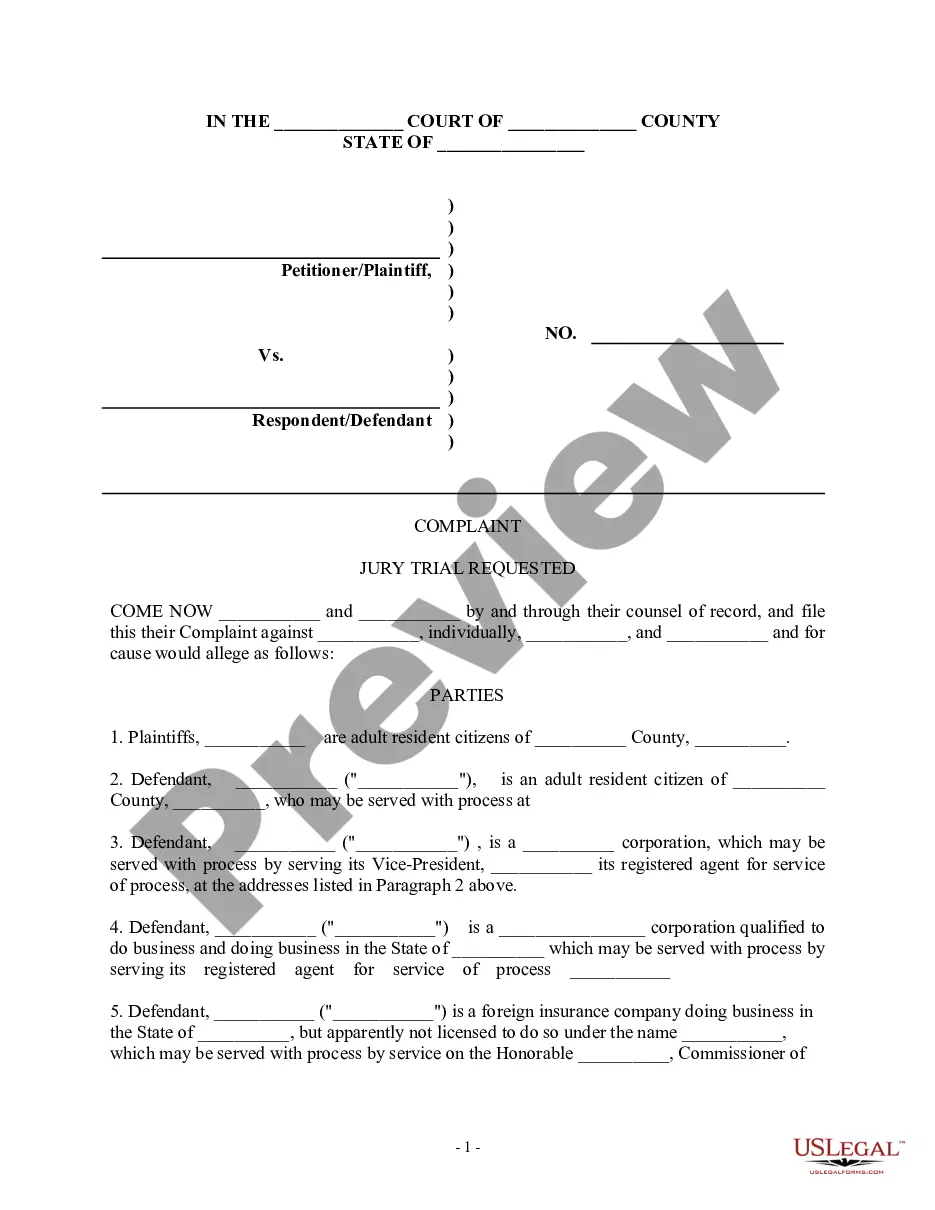
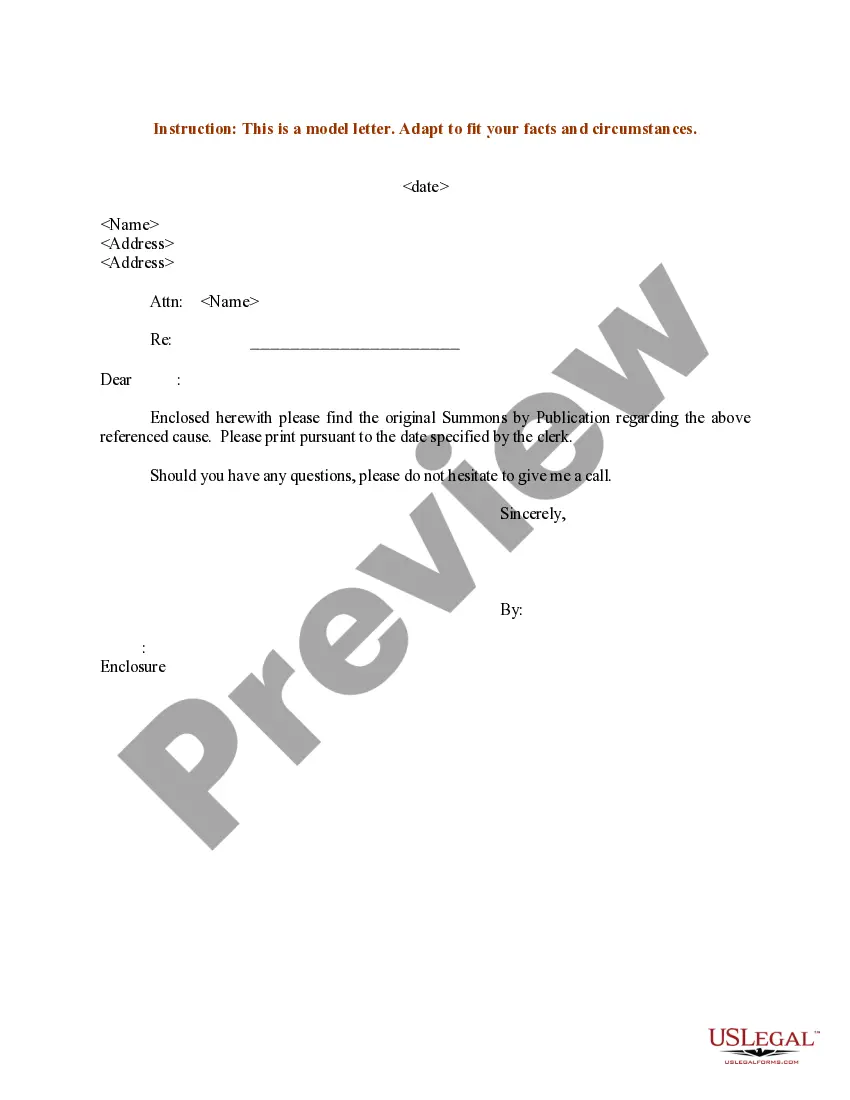
  • Preview Complaint Against Contractor and Surety for Abandonment of Construction Project
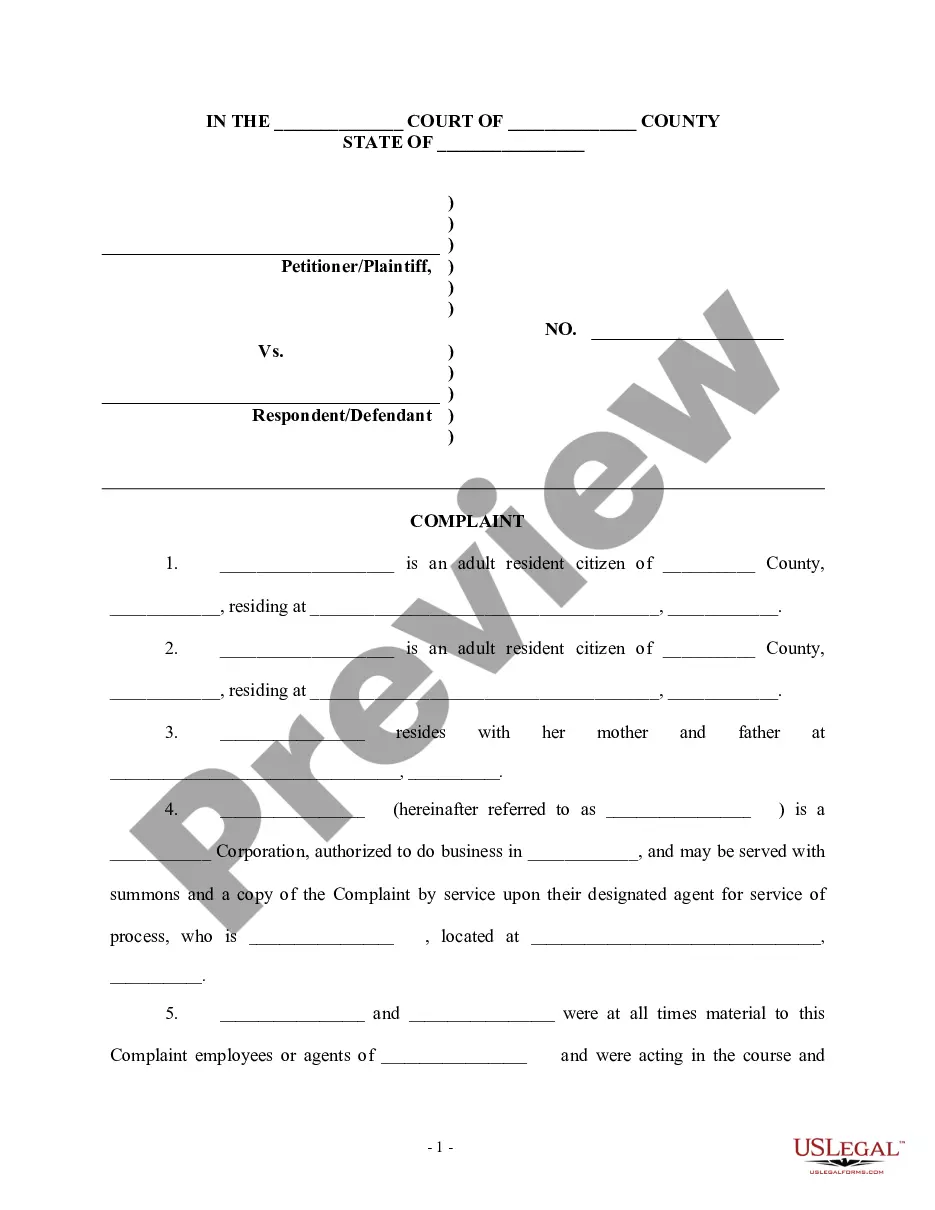
  • Preview Complaint Against Contractor and Surety for Abandonment of Construction Project
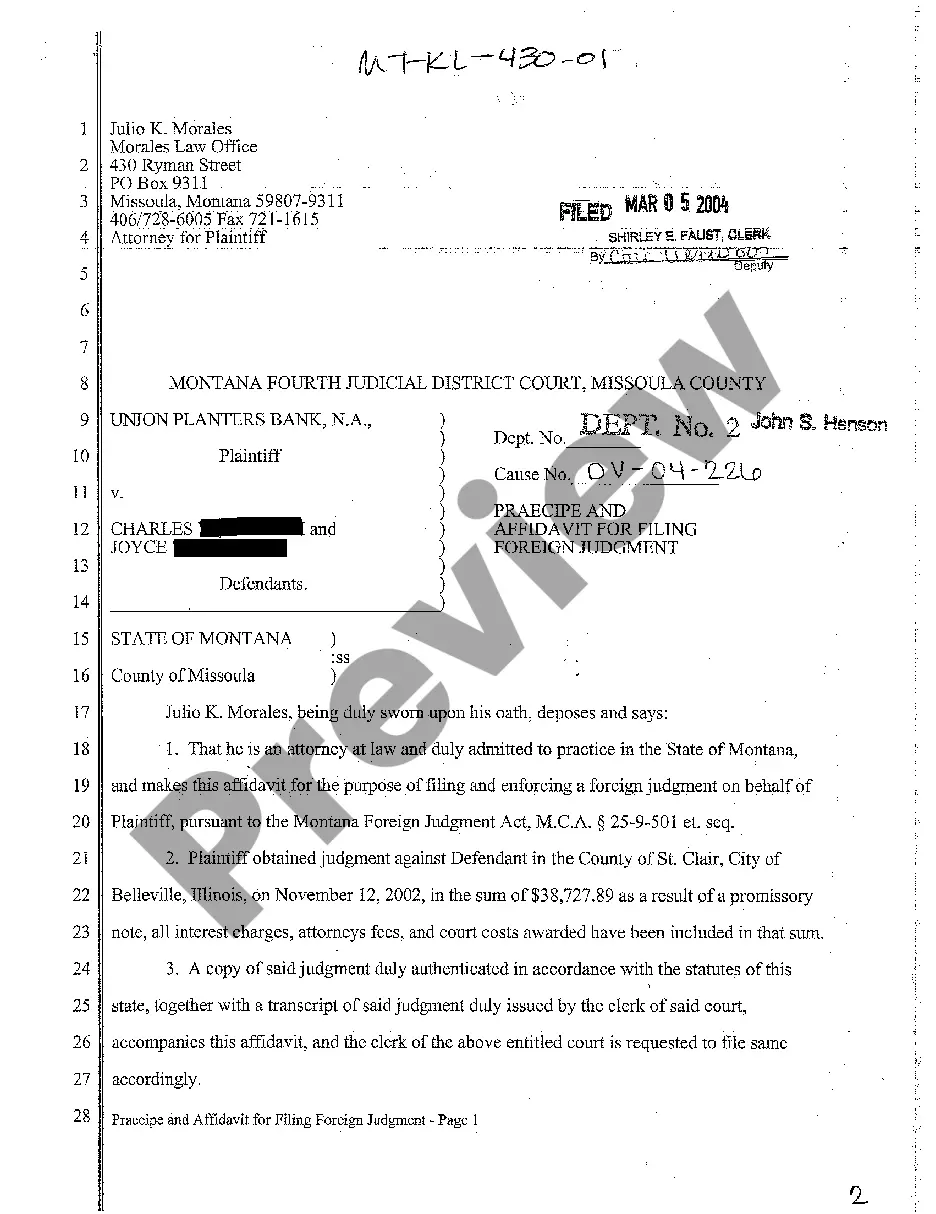
  • Preview Complaint Against Contractor and Surety for Abandonment of Construction Project

How to fill out Complaint Against Contractor And Surety For Abandonment Of Construction Project?

In case you need to finalize, fetch, or print sanctioned document templates, utilize US Legal Forms, the best array of legal documents that are accessible online.

Make use of the site’s straightforward and convenient search function to find the papers you require. Various templates for commercial and individual purposes are organized by categories and states, or keywords.

Leverage US Legal Forms to acquire the Colorado Complaint Against Contractor and Surety for Abandonment of Construction Project in just a few clicks.

Step 5. Complete the transaction. You can use your credit card or PayPal account to finalize the payment.

Step 6. Select the format of the legal document and download it to your device. Step 7. Complete, modify and print or sign the Colorado Complaint Against Contractor and Surety for Abandonment of Construction Project. Each legal document template you purchase is yours forever. You will have access to every form you obtained with your account. Go to the My documents section and select a form to print or download again. Compete and download, and print the Colorado Complaint Against Contractor and Surety for Abandonment of Construction Project with US Legal Forms. There are many professional and state-specific forms available for your business or personal needs.

  1. If you are already a US Legal Forms user, sign in to your account and click the Get button to obtain the Colorado Complaint Against Contractor and Surety for Abandonment of Construction Project.
  2. You can also access forms you previously purchased in the My documents section of your account.
  3. If you are using US Legal Forms for the first time, follow the steps below.
  4. Step 1. Ensure you have selected the form for your correct city/state.
  5. Step 2. Utilize the Preview feature to review the form’s content. Be sure to read the details.
  6. Step 3. If you are not satisfied with the form, take advantage of the Search box at the top of the screen to find other versions in the legal form template.
  7. Step 4. Once you have located the form you need, click the Buy now button. Choose the payment plan you prefer and enter your details to register for an account.

Form popularity

FAQ

I.e. by intentionally giving false information or failing to provide relevant information, is invalid. Other grounds for invalidity are e.g. false documents which are not intended to become ?real? contracts, contracts that violate law or are contrary to good practice as well as dishonourable and worthless procedures.

The terms of a contract specify the illegal activity. One of the parties to which the agreement relates doesn't have legal capacity (is mentally incapable of entering into a legally binding agreement). One of the parties was coerced (undue influence) or manipulated (misrepresentation) into signing the contract.

1 | Create a Collaborative Project to Help Identify Problems Early Use Daily Reports. ... Perform Subcontractor Performance Assessments. ... Talk to their Foreman, Employees, and/or Sub-Subs at the Site. ... Supplementing a Non-Performing Subcontractor. ... Terminating a Non-Performing Subcontractor.

Issues with the general contractor Failing to show up. Not taking the time to do the job right. Not listening to or understanding requests. Leaving a mess.

Some other reasons a contract may be considered voidable are: Coercion or undue influence. Withheld or misrepresented information. Breach of contract by one or more parties. One or more parties lacks the capacity to enter into the contract.

Always inform your contractor in writing that they are at risk of breach of contract. File a complaint with your local state licensing board. When a contractor receives enough complaints, the board can choose to publish this info. You can attempt to resolve any issues by opting for arbitration or mediation.

Corrective actions can include revising the contract, imposing penalties, withholding payments, terminating the contract, or taking legal action. However, before you take any corrective action, you should consult your contract, follow due process, document the evidence, and communicate with your contractor.

A contract can be declared unenforceable if it does not comply with applicable laws, Wolf said. For example, states like California and Florida have extensive and strict licensing laws, and if a contractor takes on a project without being properly licensed, the contract is likely illegal and therefore unenforceable.

Attempt Communication. Open communication and transparency are critical throughout a home improvement project where you've hired a contractor. ... Review Your Contract. ... Compile a Paper Trail. ... Send a Formal Notice. ... Legal Options. ... Look for a New Contractor. ... Leave Reviews. ... Contact Agencies to Assist.

How to Deal With a Bad Contractor Fire the Contractor. Firing your contractor may seem obvious, but it's not an easy step when things go seriously wrong. ... Request a Hearing. ... Hire an Attorney. ... Take Your Case to Small Claims Court. ... File Complaints and Bad Reviews.

Trusted and secure by over 3 million people of the world’s leading companies

Colorado Complaint Against Contractor and Surety for Abandonment of Construction Project