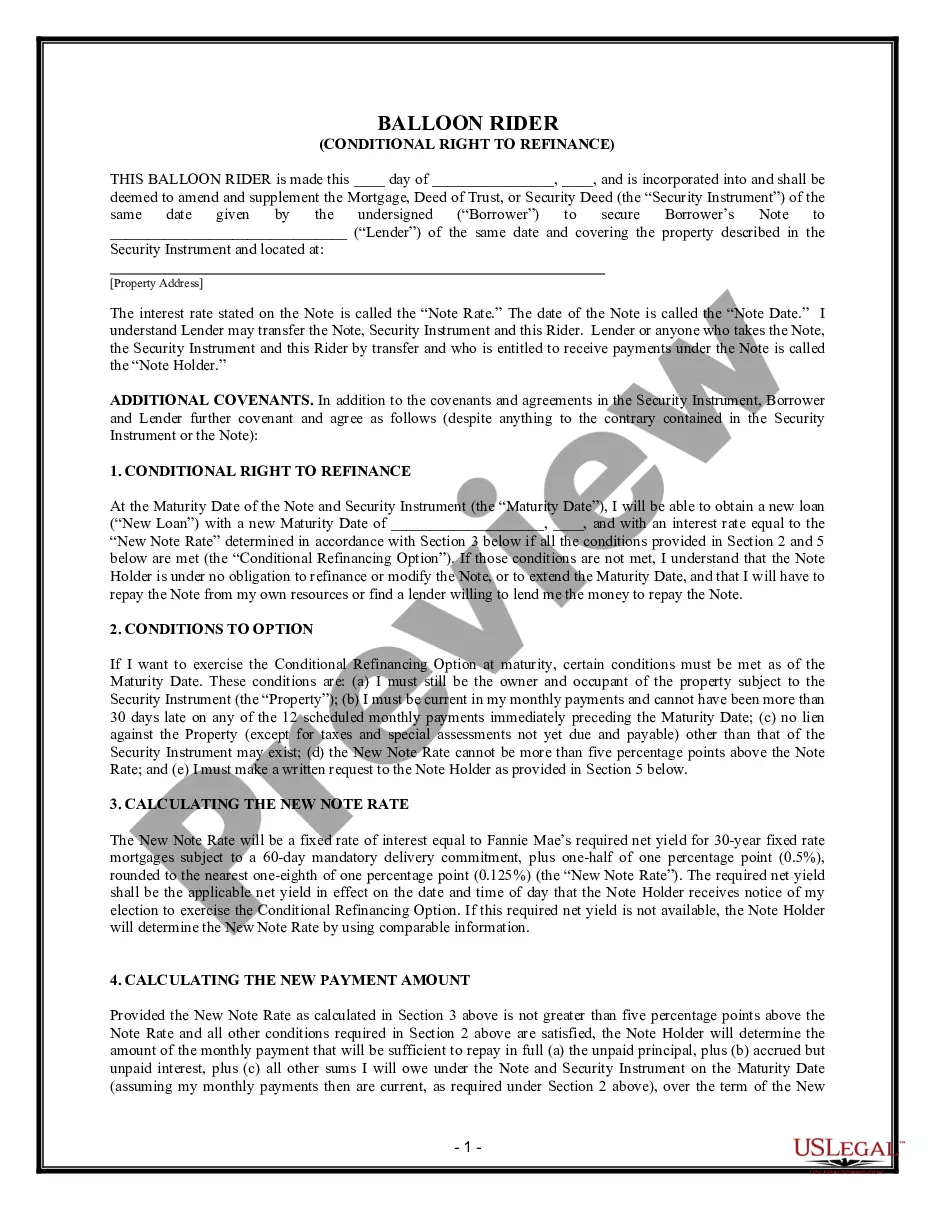
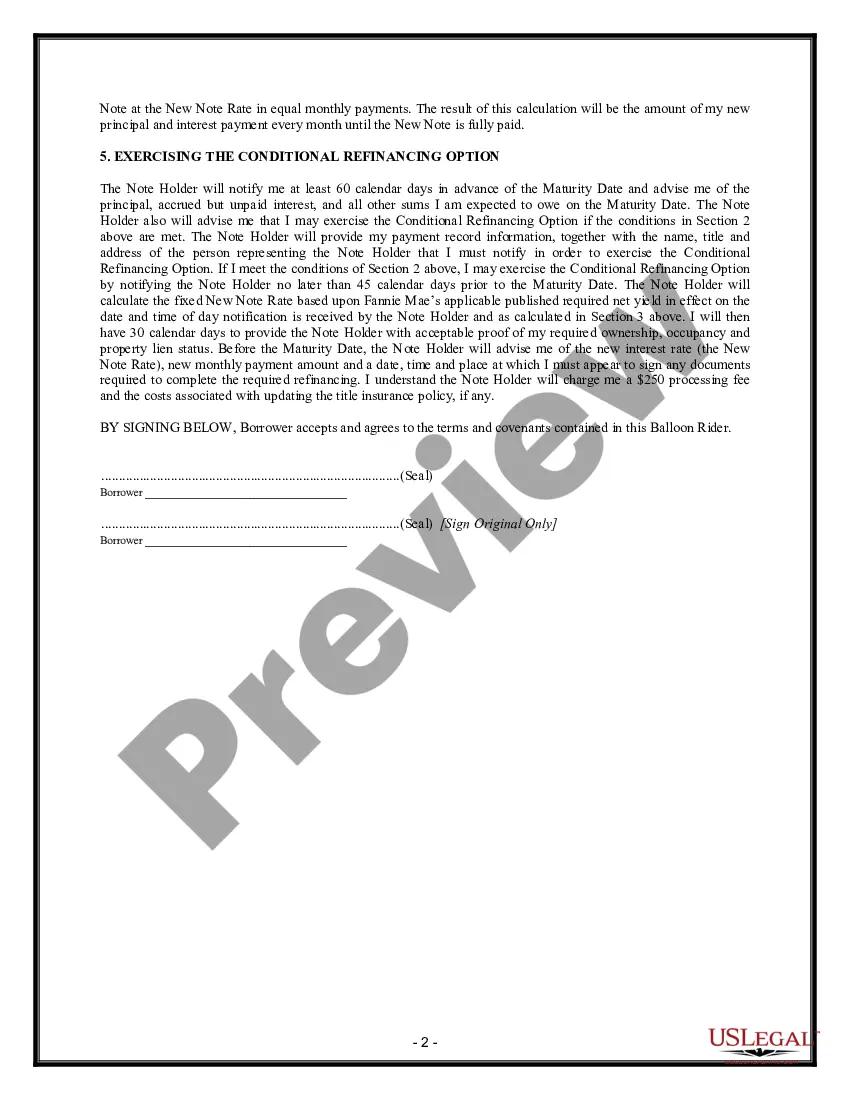
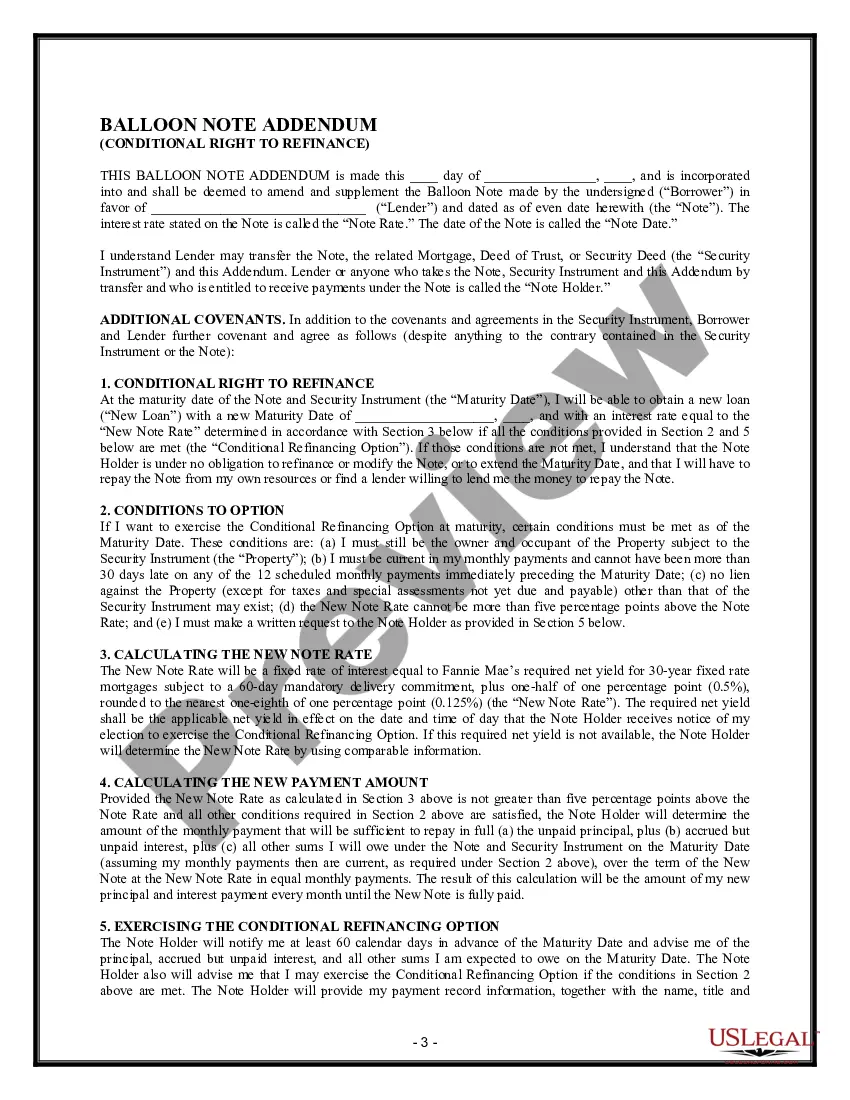
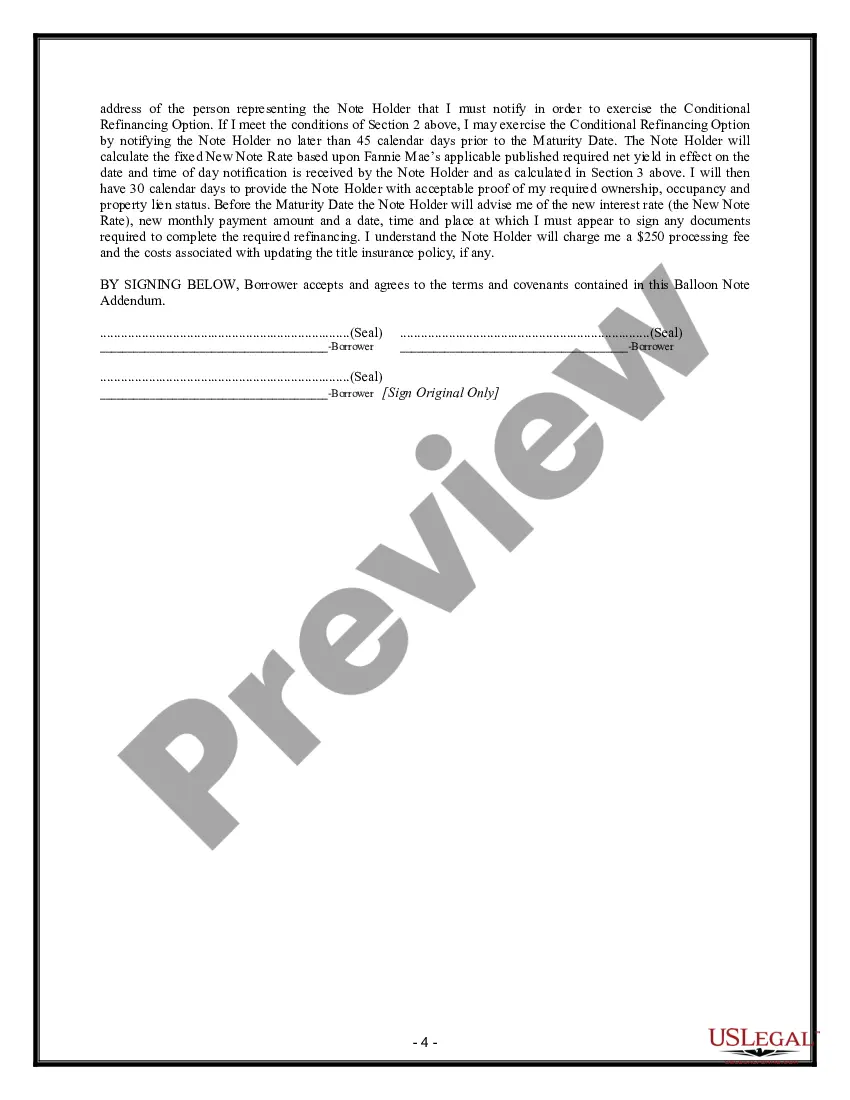
Colorado Balloon Secured Note Addendum and Rider to Mortgage, Deed of Trust or Security Agreement
Description
Get your form ready online
Our built-in tools help you complete, sign, share, and store your documents in one place.
Make edits, fill in missing information, and update formatting in US Legal Forms—just like you would in MS Word.
Download a copy, print it, send it by email, or mail it via USPS—whatever works best for your next step.
Sign and collect signatures with our SignNow integration. Send to multiple recipients, set reminders, and more. Go Premium to unlock E-Sign.
If this form requires notarization, complete it online through a secure video call—no need to meet a notary in person or wait for an appointment.
We protect your documents and personal data by following strict security and privacy standards.

Make edits, fill in missing information, and update formatting in US Legal Forms—just like you would in MS Word.

Download a copy, print it, send it by email, or mail it via USPS—whatever works best for your next step.

Sign and collect signatures with our SignNow integration. Send to multiple recipients, set reminders, and more. Go Premium to unlock E-Sign.

If this form requires notarization, complete it online through a secure video call—no need to meet a notary in person or wait for an appointment.

We protect your documents and personal data by following strict security and privacy standards.
Looking for another form?
How to fill out Balloon Secured Note Addendum And Rider To Mortgage, Deed Of Trust Or Security Agreement?
It is feasible to invest hours online trying to locate the authentic document template that fulfills the federal and state requirements you require.
US Legal Forms offers a multitude of legal forms that are reviewed by professionals.
You can easily obtain or create the Colorado Balloon Secured Note Addendum and Rider to Mortgage, Deed of Trust or Security Agreement from the service.
- If you already have a US Legal Forms account, you can sign in and click on the Download button.
- After that, you can fill out, edit, create, or sign the Colorado Balloon Secured Note Addendum and Rider to Mortgage, Deed of Trust or Security Agreement.
- Every legal document template you purchase is your property indefinitely.
- To obtain another copy of any purchased form, visit the My documents section and click on the appropriate option.
- If you are using the US Legal Forms website for the first time, follow the simple instructions below.
- First, ensure that you have selected the correct document template for the state/city of your choice.
- Review the form description to ensure you have chosen the right form.
- If available, utilize the Preview option to browse through the document template as well.
- To find another version of the form, use the Search field to locate the template that suits your needs and requirements.
- Once you have found the template you want, click on Buy now to proceed.
- Select the pricing plan you desire, enter your details, and register for your account on US Legal Forms.
- Complete the transaction.
- You can use your credit card or PayPal account to pay for the legal form.
- Choose the format of the document and download it to your device.
- Make changes to the document if necessary.
- You can fill out, edit, sign, and print the Colorado Balloon Secured Note Addendum and Rider to Mortgage, Deed of Trust or Security Agreement.
- Download and print numerous document templates using the US Legal Forms website, which provides the largest variety of legal forms.
- Utilize professional and state-specific templates to address your business or personal needs.
Form popularity
FAQ
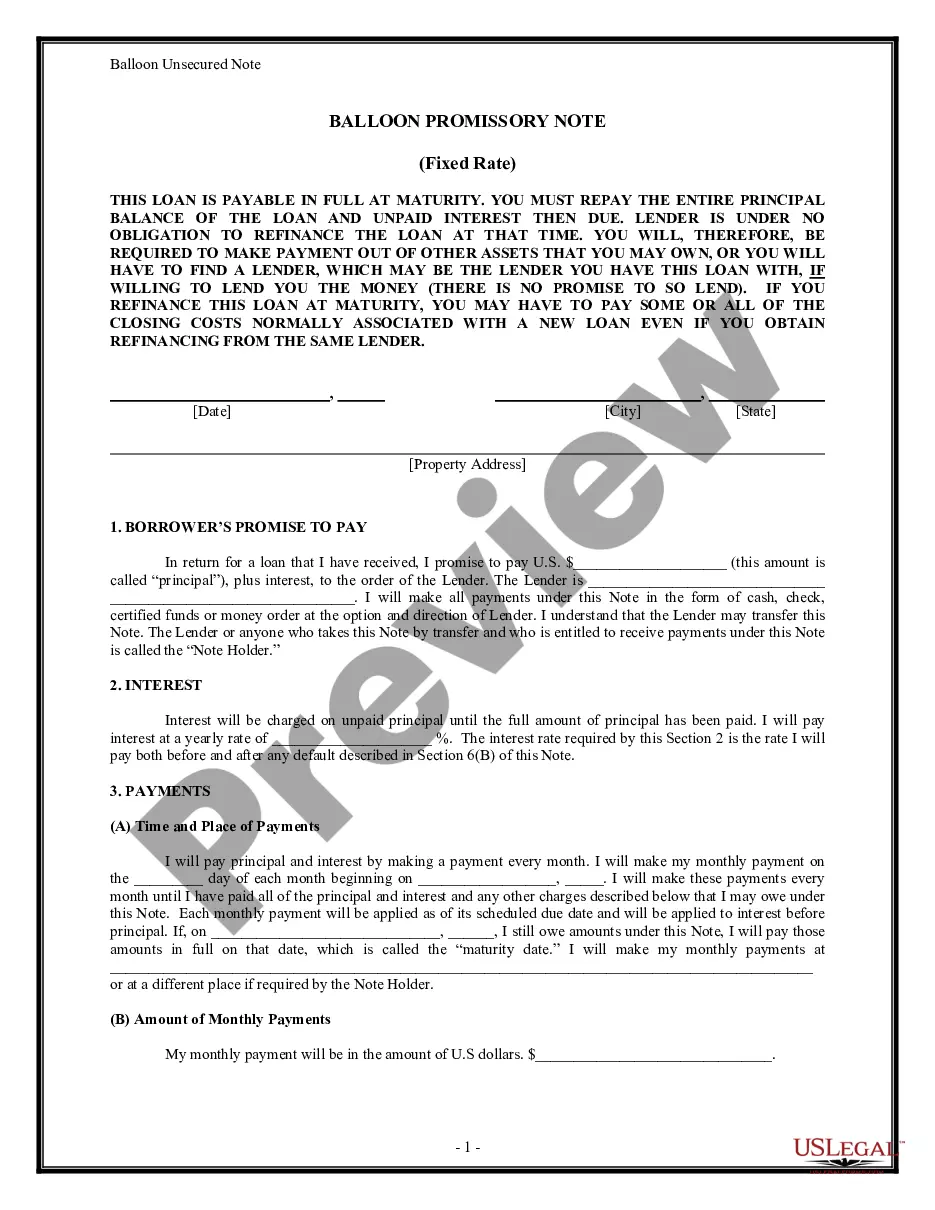
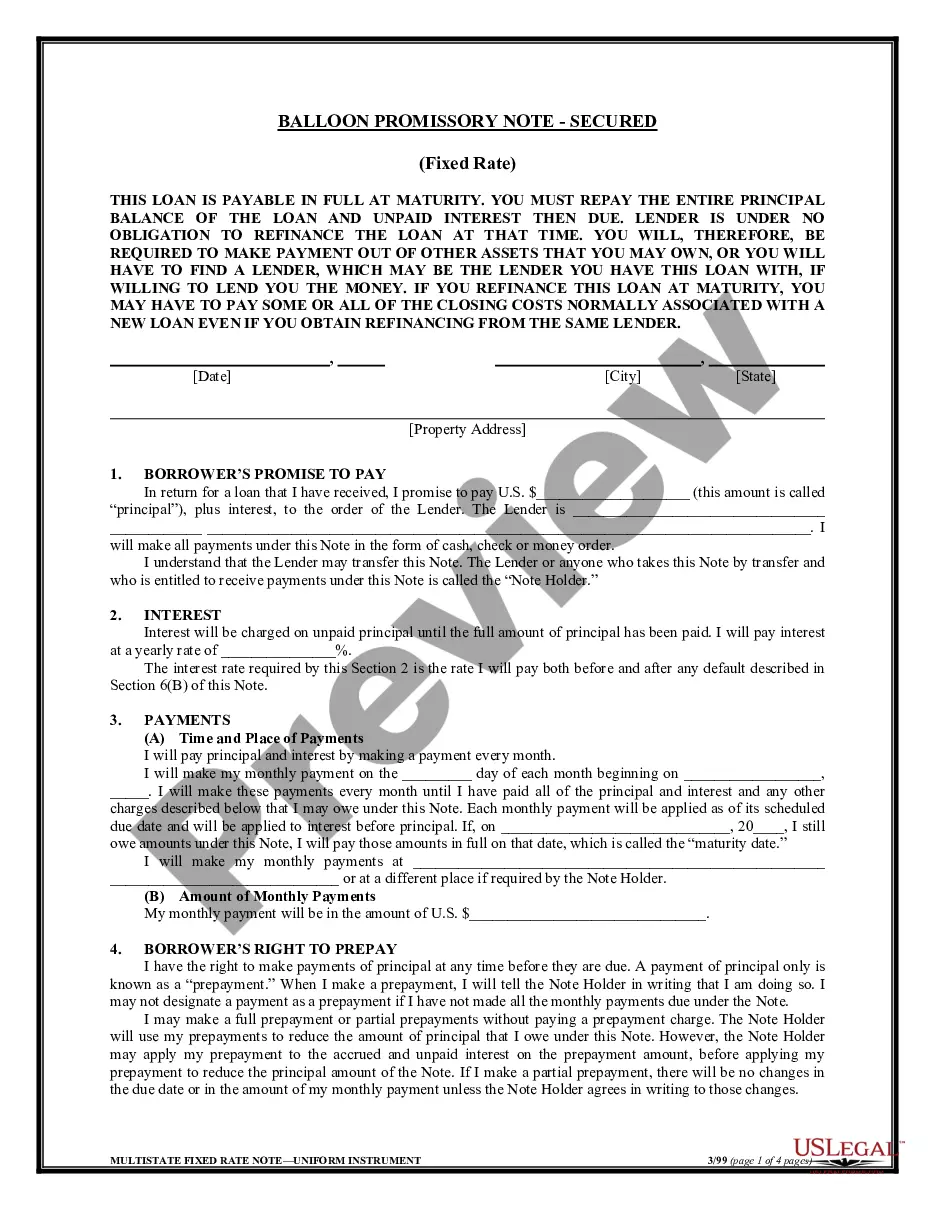
A Promissory Note with Balloon Payments is a loan contract that enables a lender set loan terms with one or more larger payments at the end. This lending document helps you to clarify the terms of a loan, define the payment schedule, and provide an amortization table, if the loan includes interest.
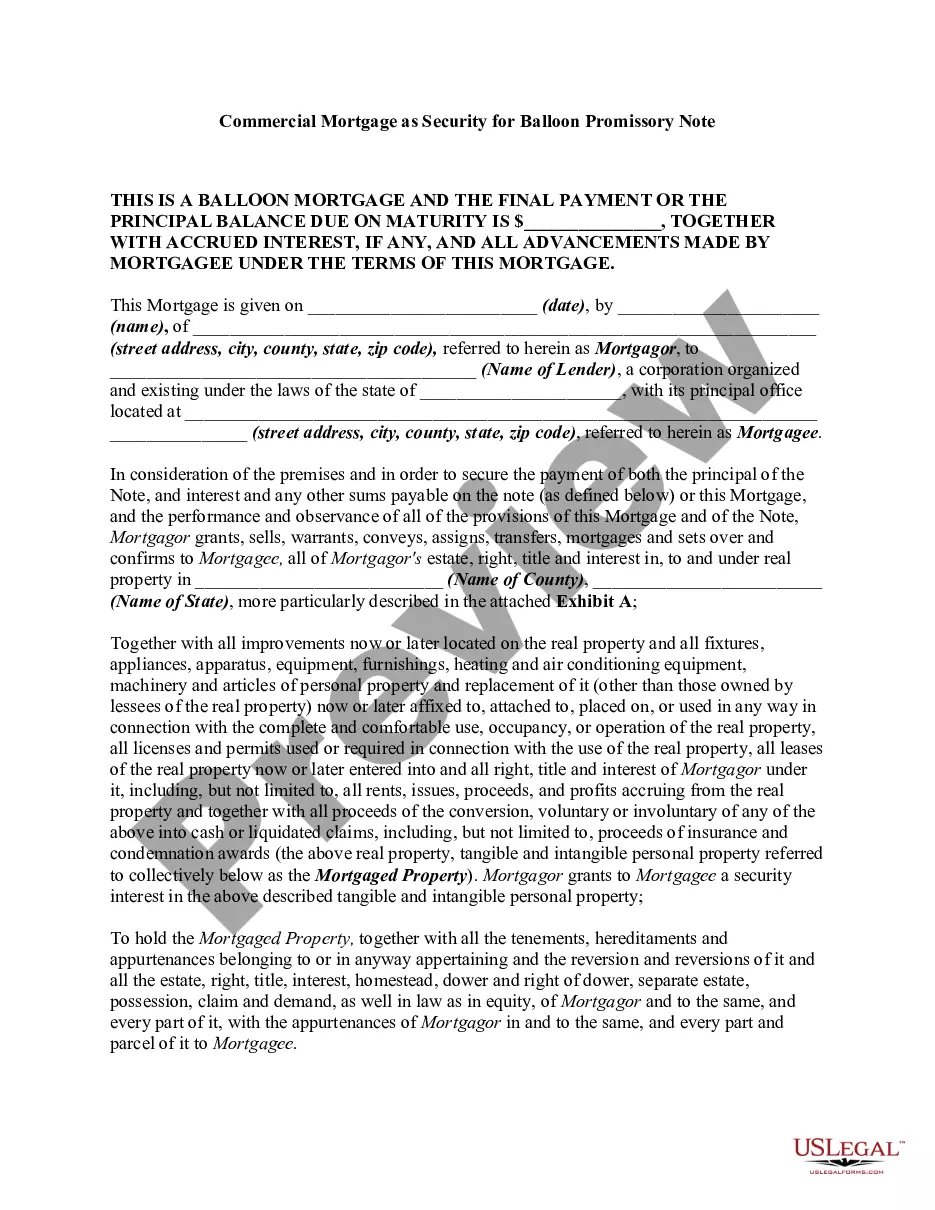
What is the difference between a deed of trust and a mortgage? The mortgage only includes the borrower and the lender while a deed of trust will include the deed of trust will include the borrower, the lender, and the trustee.
A mortgage involves only two parties: the borrower and the lender. A deed of trust has a borrower, lender and a ?trustee.? The trustee is a neutral third party that holds the title to a property until the loan is completely paid off by the borrower.
Let's say a person takes out a $200,000 mortgage with a seven-year term and a 4.5% interest rate. Their monthly payment for seven years is $1,013. At the end of the seven-year term, they owe a $175,066 balloon payment.
When the loan is interest-only, you only pay interest throughout the life of the loan. The final payment on the loan is called a balloon payment and equals the entire principal. This amount is due at the end of the loan period.
If your circumstances change any you are no longer able to make your payments, your Trust Deed may fail and you will still be liable for your debts or even forced into bankruptcy.
A deed of trust is a legal agreement that's similar to a mortgage, which is used in real estate transactions. Whereas a mortgage only involves the lender and a borrower, a deed of trust adds a neutral third party that holds rights to the real estate until the loan is paid or the borrower defaults.
Passage of Title. -The fundamental distinction between deeds of trust and mortgages in California is that in the case of a mortgage legal title does not pass from the debtor,5 whereas the converse is true in con- nection with a trust deed.