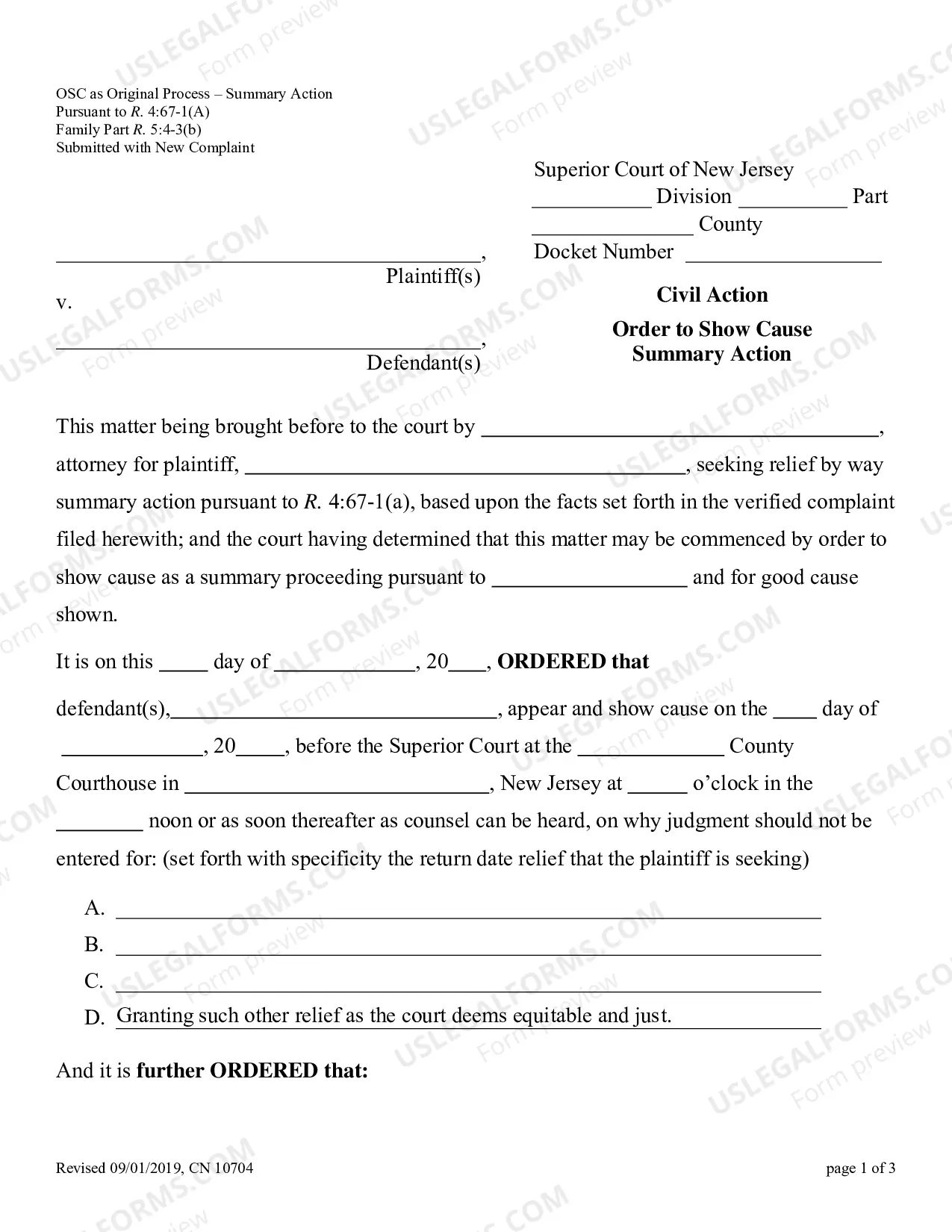
Colorado Living Trust for individual, Who is Single, Divorced or Widow or Widower with Children

What this document covers
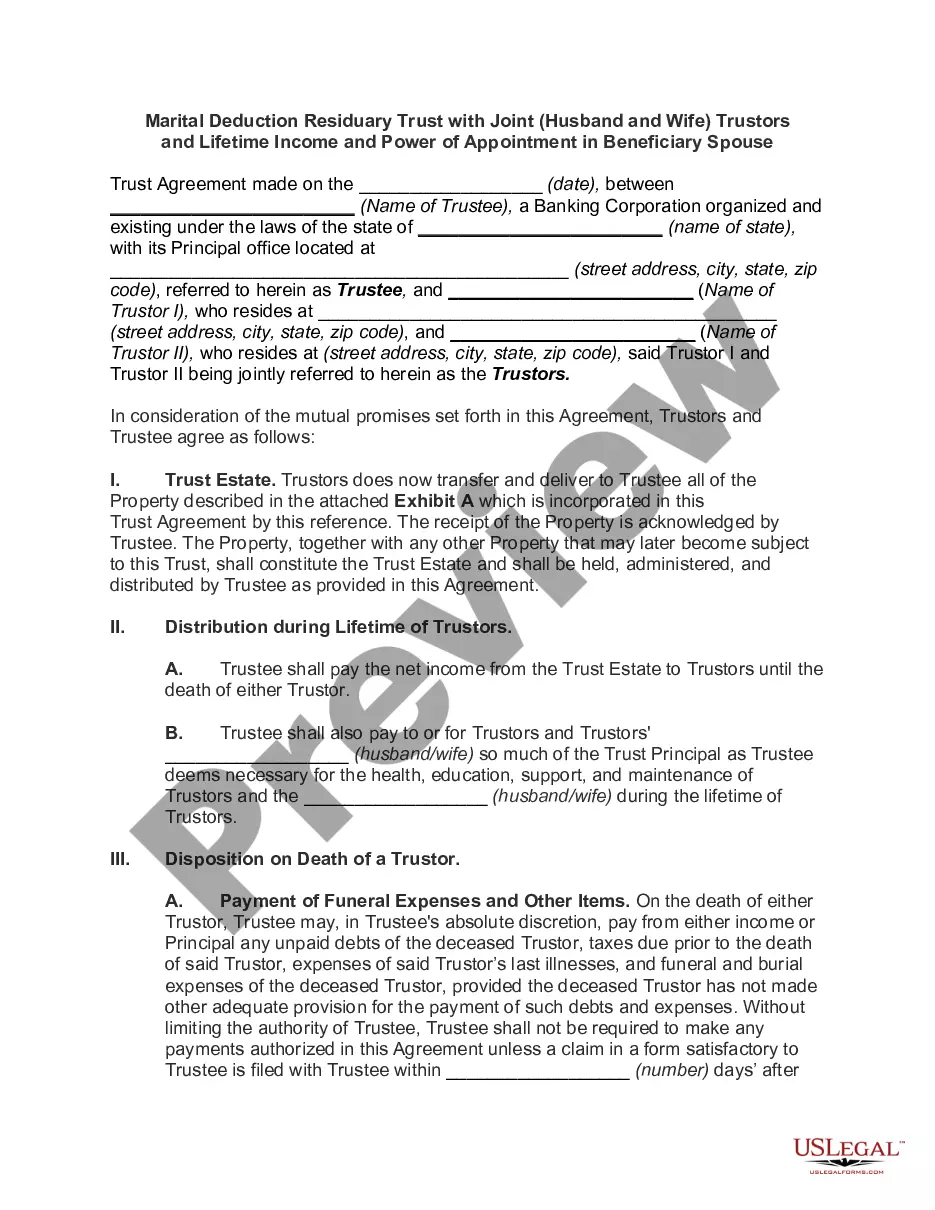
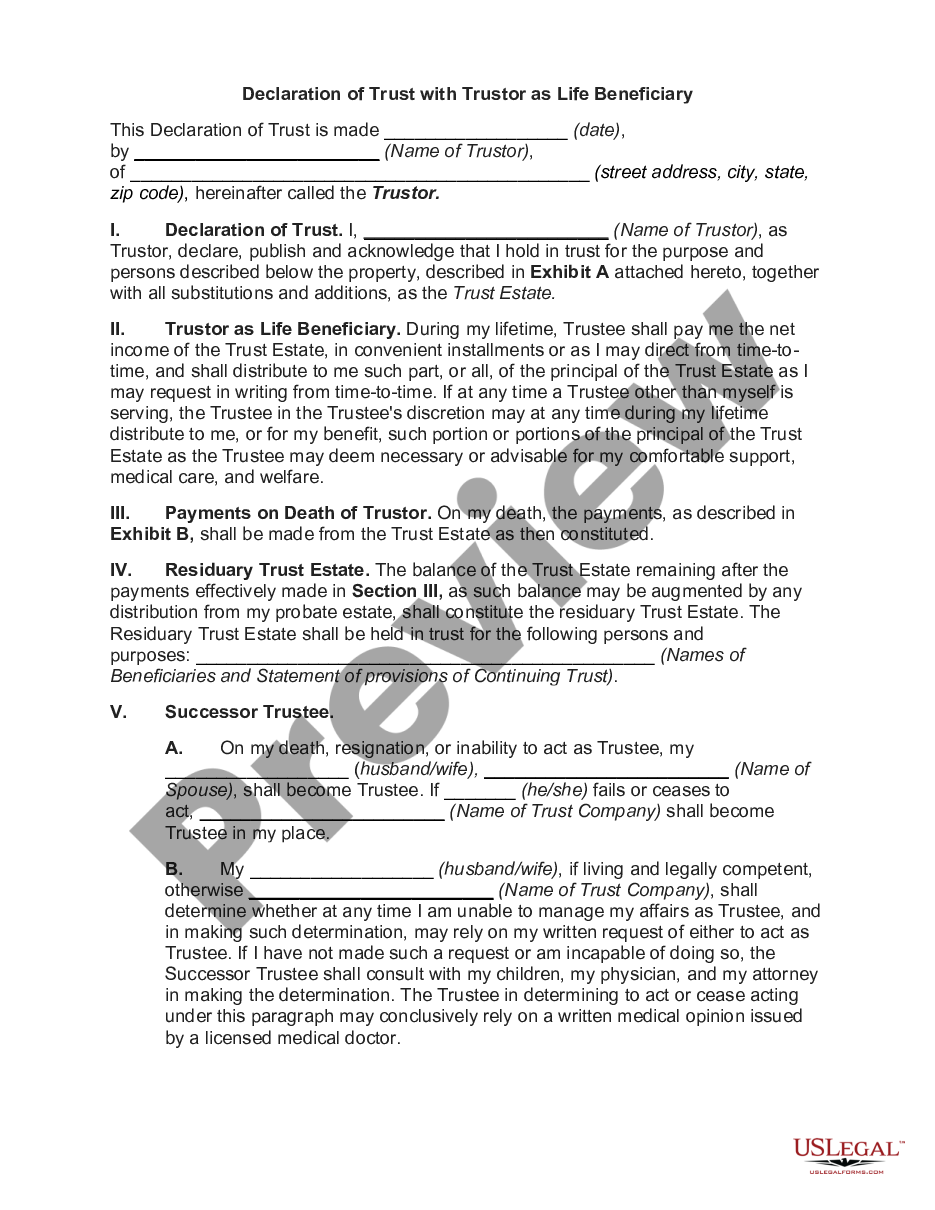
This form is a Living Trust specifically designed for individuals who are single, divorced, or widowed and have children. A Living Trust allows you to manage your assets during your lifetime while designating how your property should be distributed after you pass away. Unlike a will, a Living Trust typically avoids probate, ensuring that your beneficiaries receive their inheritance more quickly and easily. This form is tailored to meet legal requirements in your state, making it a practical choice for effective estate planning.
Key parts of this document
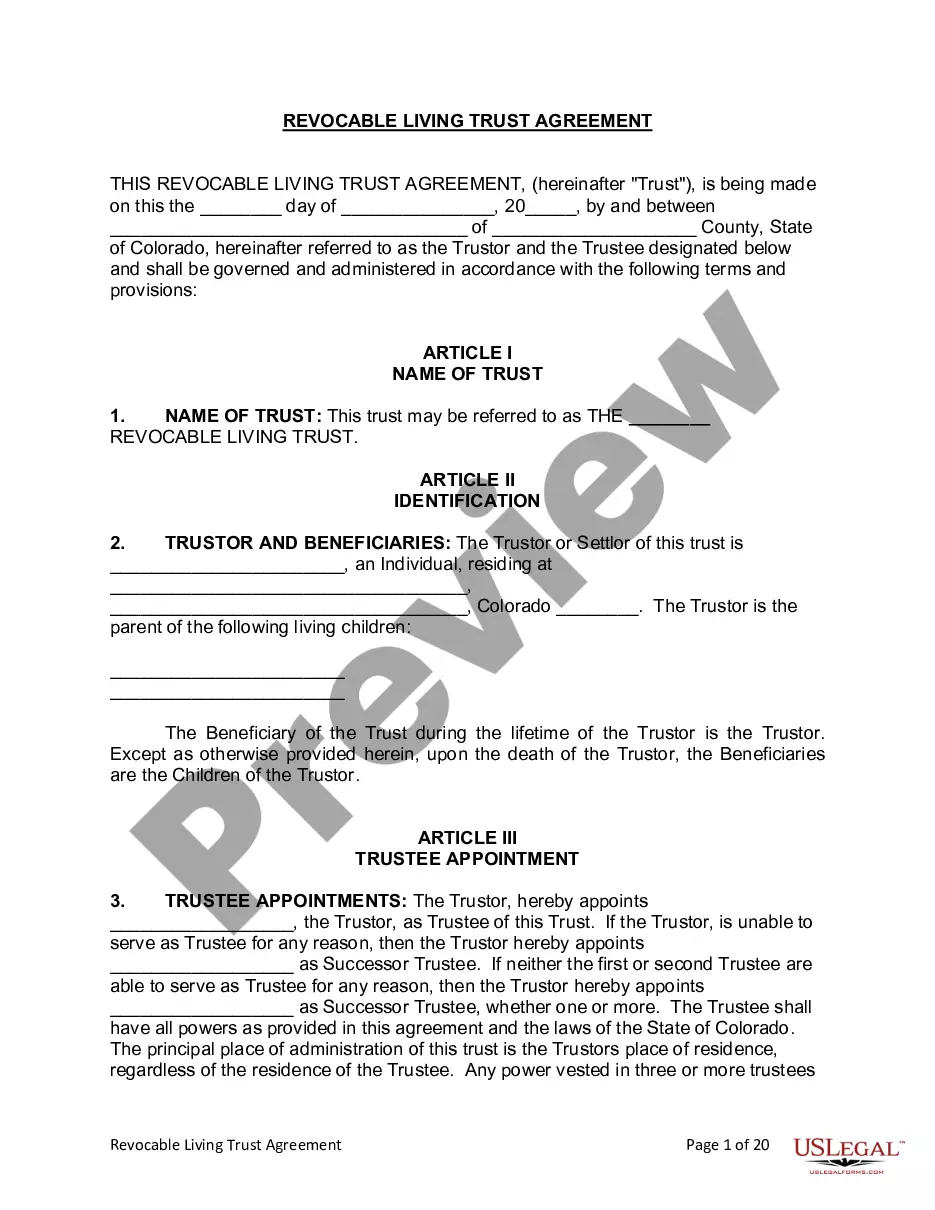
- Name of the Trust: Specifies the official name of the Living Trust.
- Trustor and Beneficiaries: Identifies the creator of the trust and lists the beneficiaries.
- Trustee Appointment: Names the initial trustee and successor trustees responsible for managing the trust.
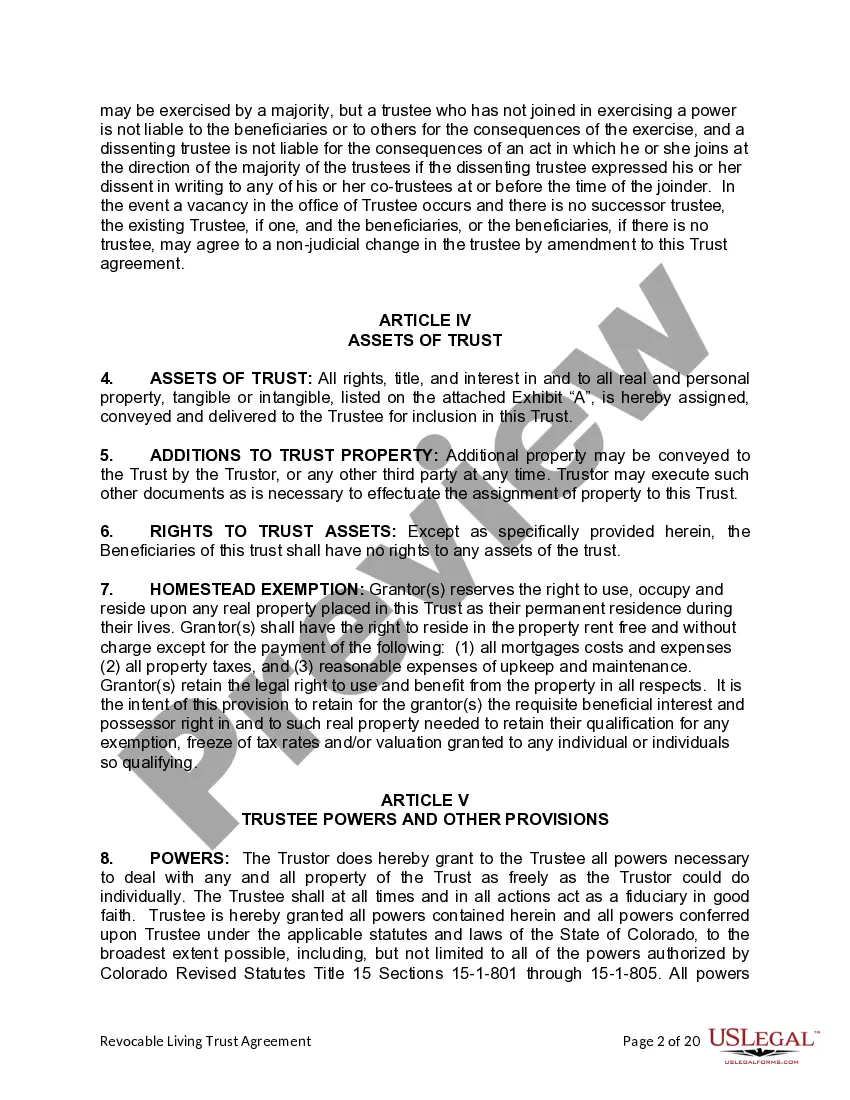
- Assets of the Trust: Details the assets included in the trust and how additional assets can be added.
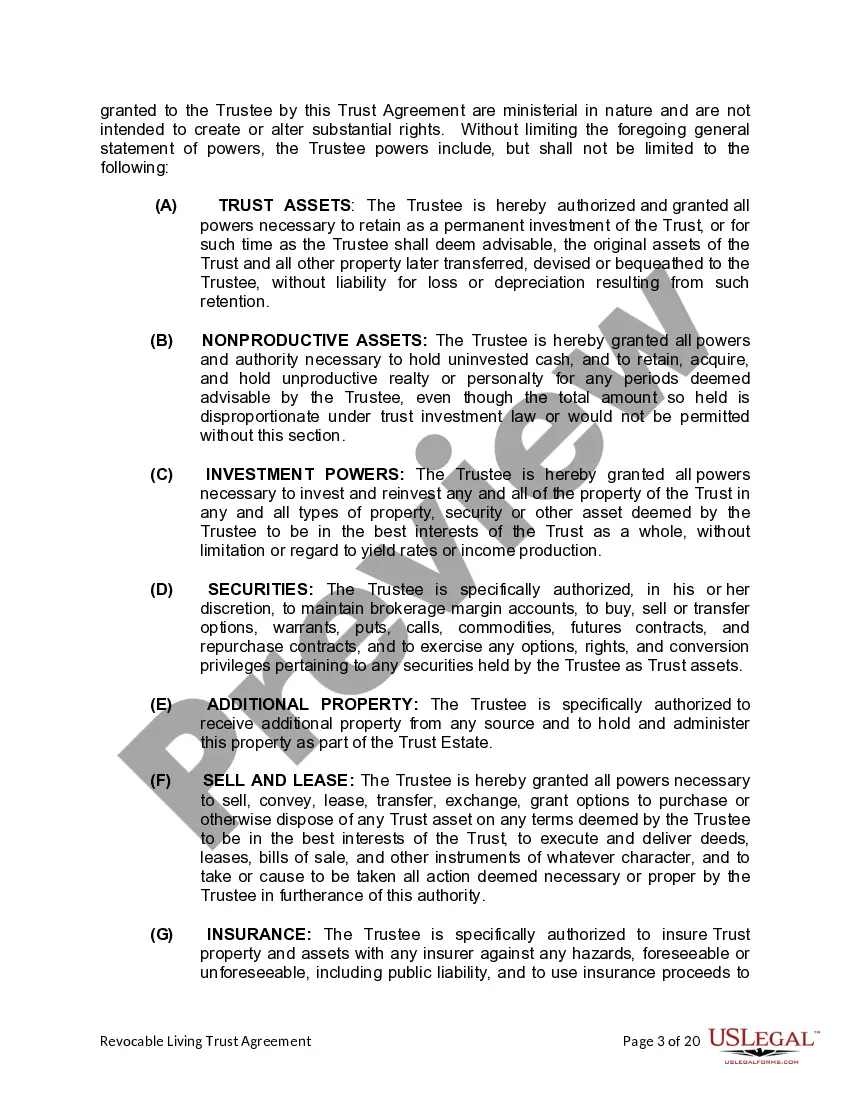
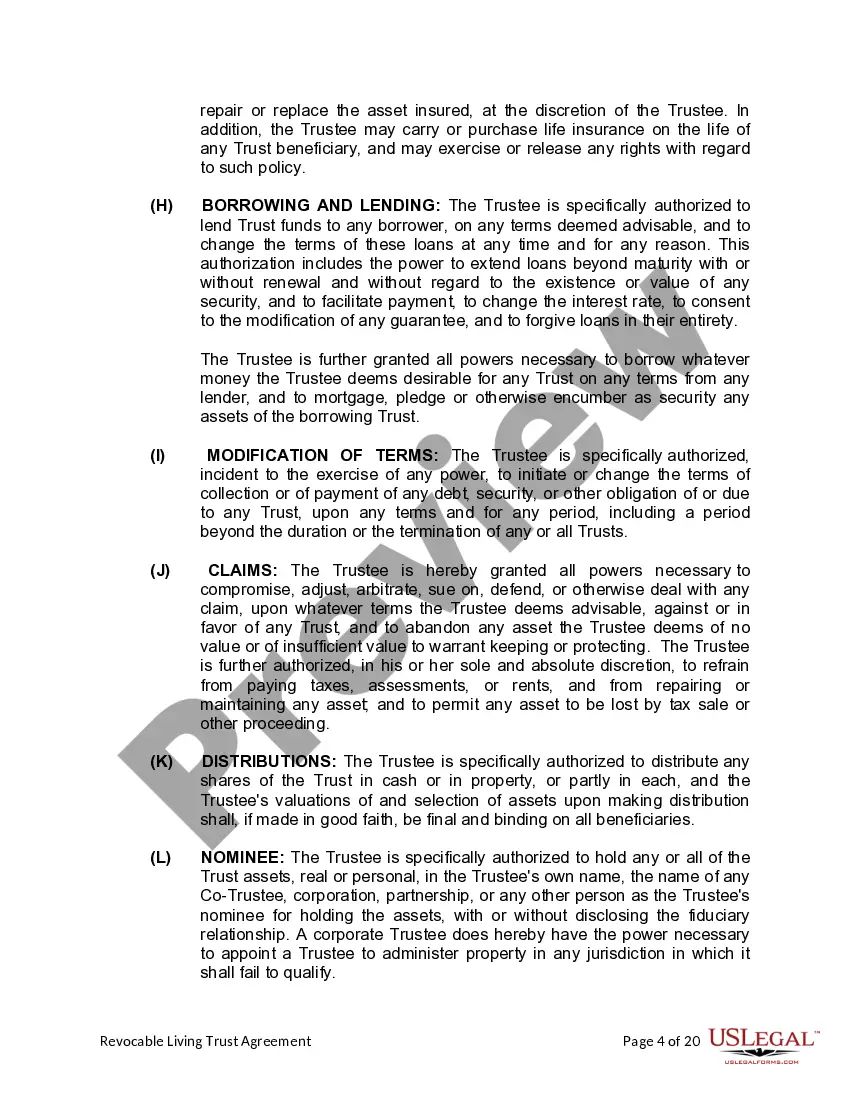
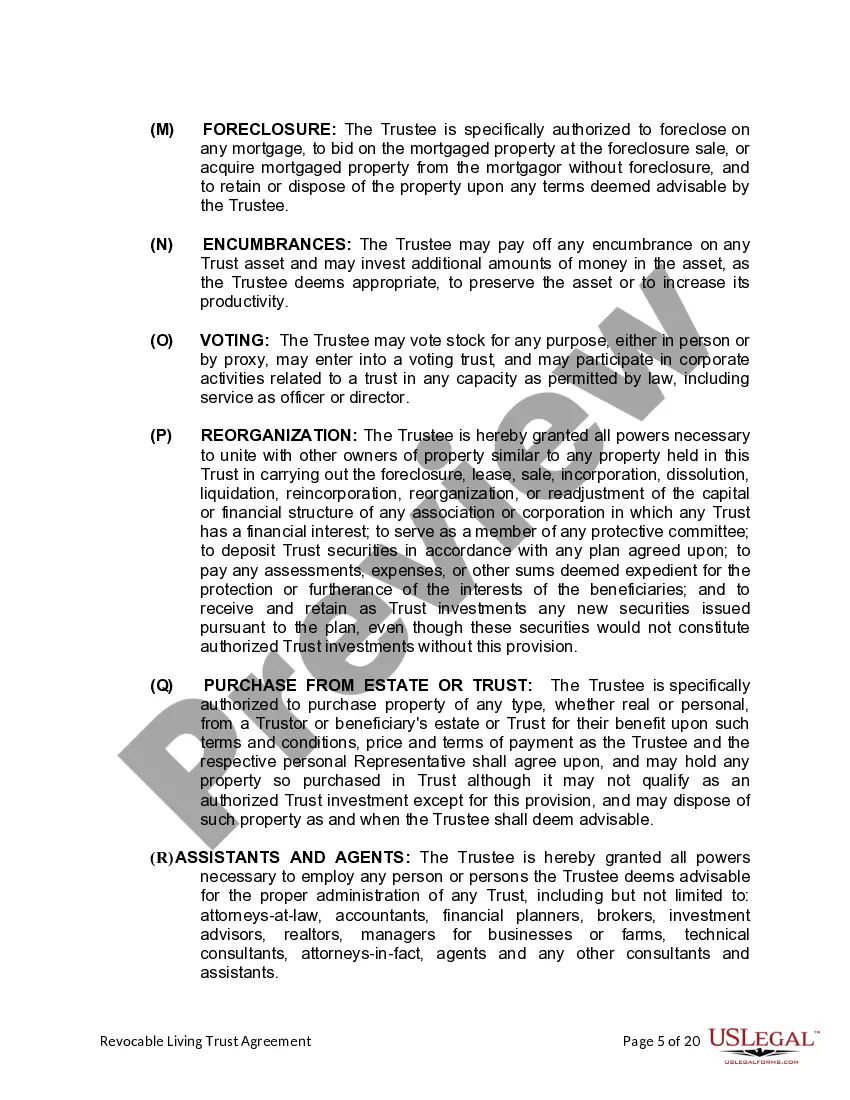
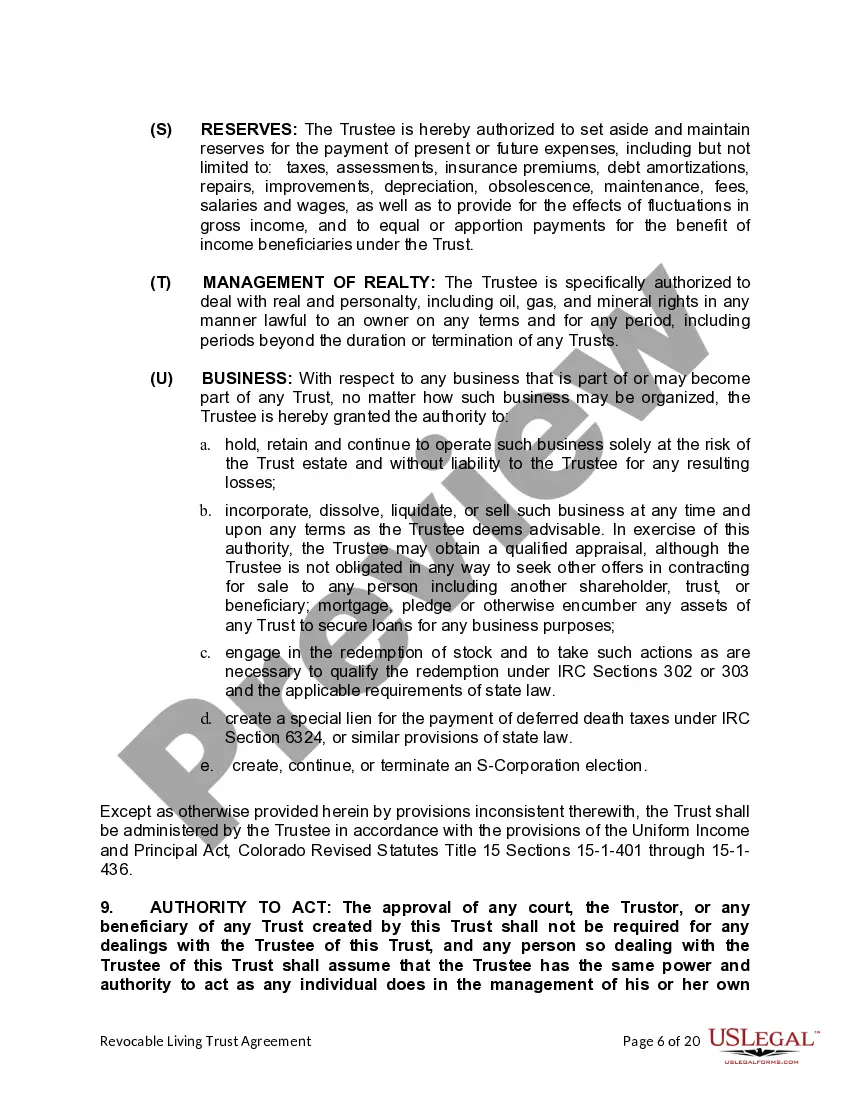
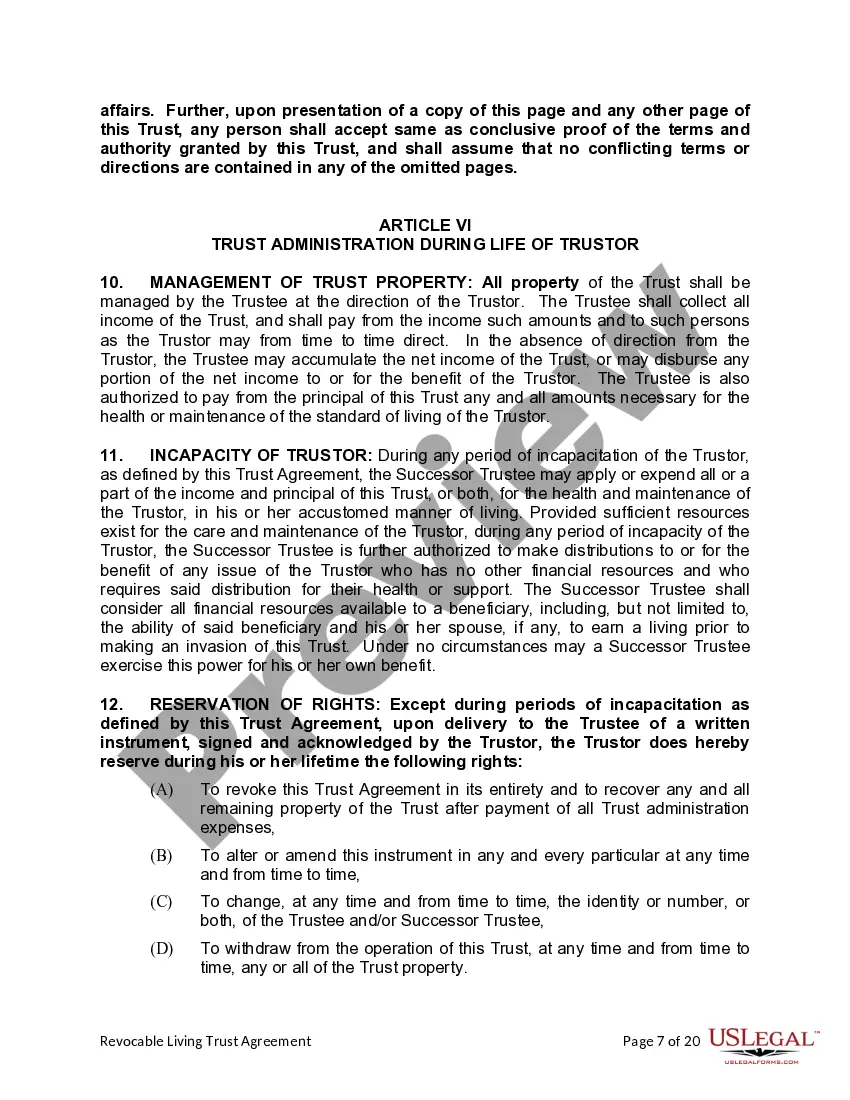
- Powers of the Trustee: Outlines the various powers and responsibilities granted to the trustee for managing the trust assets.
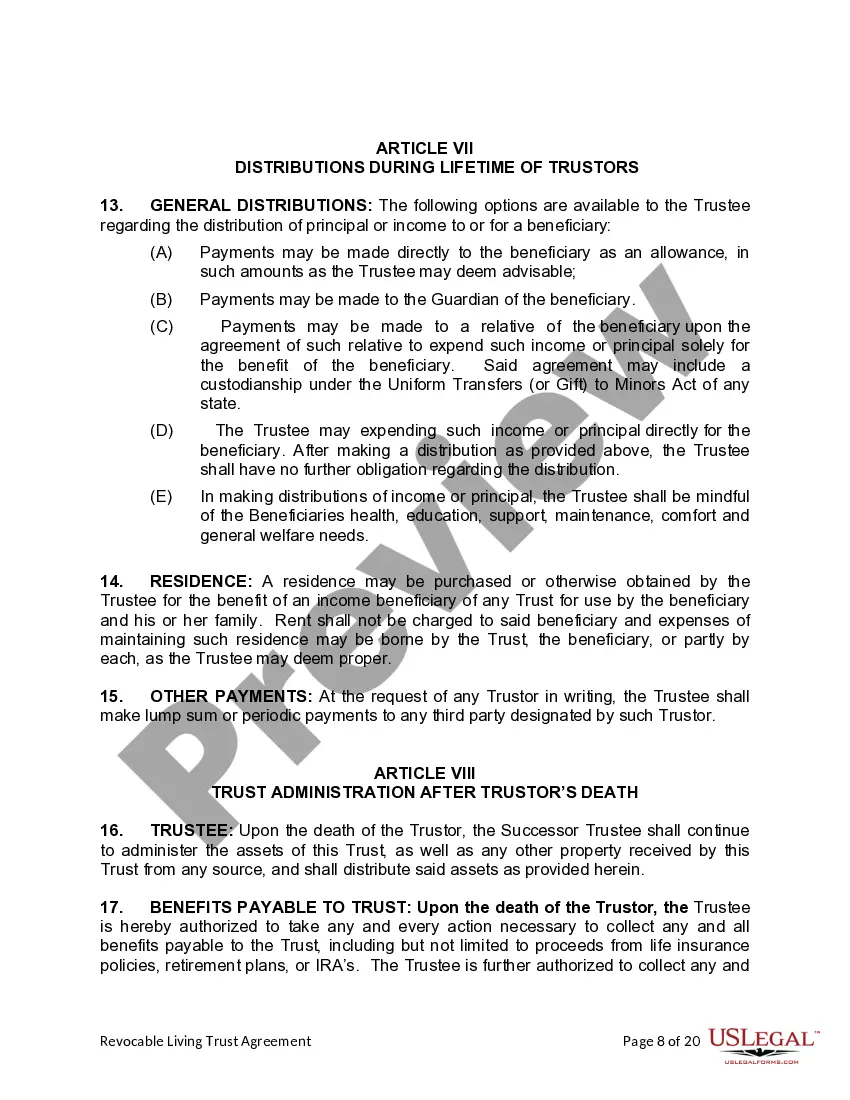
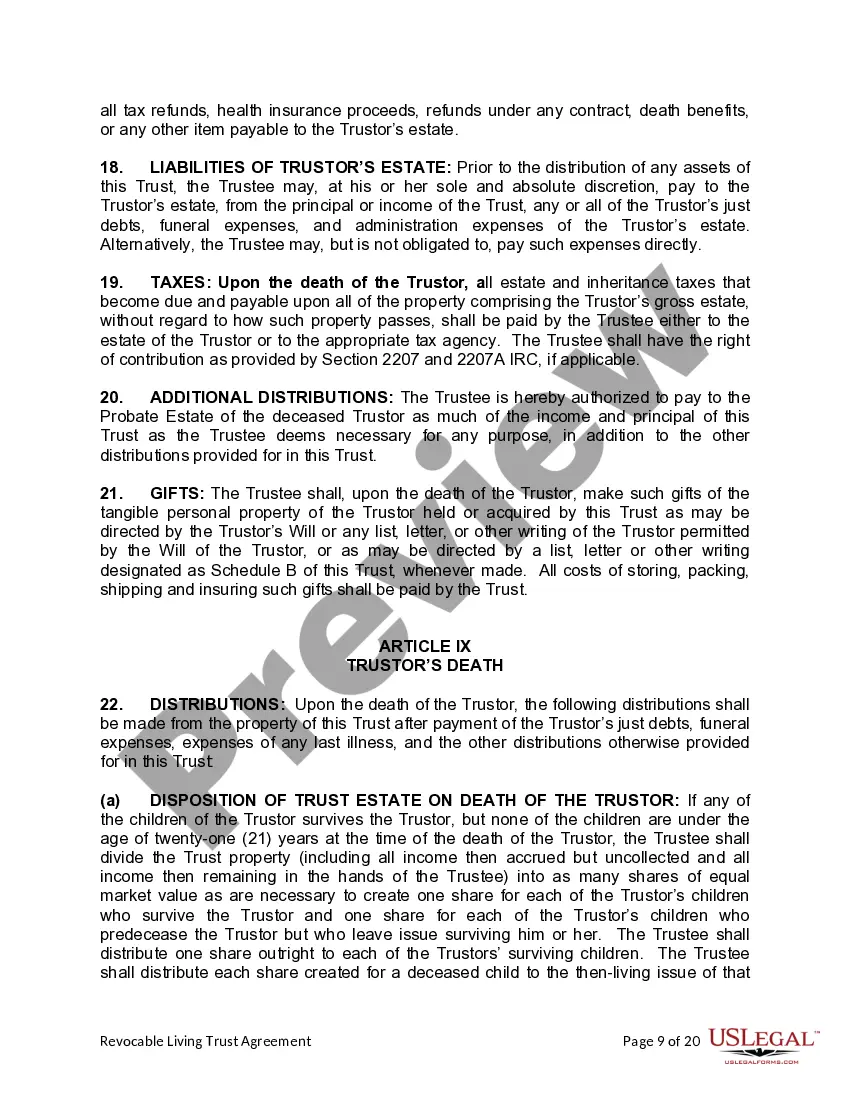
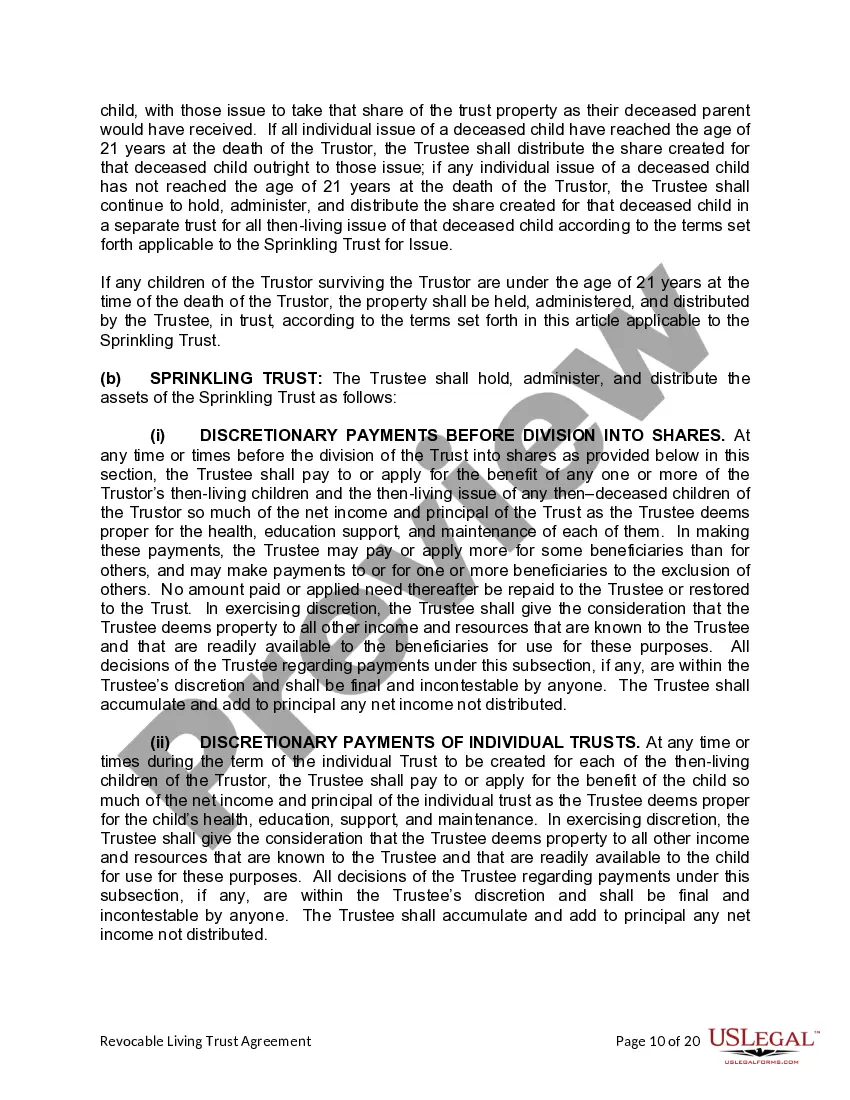
- Distribution Instructions: Provides clear terms on how assets are distributed upon the death of the trustor.



When this form is needed
This form is ideal for individuals who are single, divorced, or widowed with children and wish to establish a Living Trust. You should consider using this form if you want to avoid the probate process, manage your assets during your lifetime, and ensure that your children are taken care of according to your wishes after your death. It is particularly useful if you have significant assets, real estate, or dependents who may need financial support after you pass away.
Who can use this document
- Individuals who are single, divorced, or widowed.
- Parents with one or more children.
- Anyone wanting to control asset distribution after passing.
- Individuals seeking to streamline estate planning and avoid probate.
How to complete this form
- Identify the parties: Enter the names of the trustor, trustee, and beneficiaries.
- Specify the assets: List the property and assets that will be transferred into the trust.
- Name the trust: Give your trust a unique name for identification.
- Designate the trustee: Appoint a trustee who will manage the trust on your behalf.
- Sign and date the document: Ensure all parties involved sign and date the trust agreements.
- Consider notarization: Depending on your state's requirements, you may need the document notarized for it to be legally binding.
Notarization guidance
Notarization is required for this form to take effect. Our online notarization service, powered by Notarize, lets you verify and sign documents remotely through an encrypted video session, available 24/7.
Get your form ready online
Our built-in tools help you complete, sign, share, and store your documents in one place.
Make edits, fill in missing information, and update formatting in US Legal Forms—just like you would in MS Word.
Download a copy, print it, send it by email, or mail it via USPS—whatever works best for your next step.
Sign and collect signatures with our SignNow integration. Send to multiple recipients, set reminders, and more. Go Premium to unlock E-Sign.
If this form requires notarization, complete it online through a secure video call—no need to meet a notary in person or wait for an appointment.
We protect your documents and personal data by following strict security and privacy standards.

Make edits, fill in missing information, and update formatting in US Legal Forms—just like you would in MS Word.

Download a copy, print it, send it by email, or mail it via USPS—whatever works best for your next step.

Sign and collect signatures with our SignNow integration. Send to multiple recipients, set reminders, and more. Go Premium to unlock E-Sign.

If this form requires notarization, complete it online through a secure video call—no need to meet a notary in person or wait for an appointment.

We protect your documents and personal data by following strict security and privacy standards.
Typical mistakes to avoid
- Not listing all assets clearly, which may lead to disputes later.
- Failing to designate successor trustees, leaving the trust management in limbo.
- Inconsistent terminology that could lead to confusion or misinterpretation.
- Not updating the trust to reflect major life changes, such as marriage or divorce.
- Overlooking the need for notarization if required by state law.
Why use this form online
- Convenience: Easily complete the form from the comfort of your home.
- Editability: Modify the document as needed before finalizing the trust.
- Reliability: Access professionally drafted templates that comply with state laws.
- Immediate availability: Download your Living Trust form instantly after purchase.
Looking for another form?
Form popularity
FAQ
The best type of trust to avoid probate is a revocable living trust. A Colorado Living Trust for individual, who is single, divorced, or a widow or widower with children, provides flexibility in managing your assets, while ensuring that they are distributed according to your wishes after you pass. This type of trust is ideal for those looking to simplify the process and minimize the burden on their families.
A living trust works by allowing you to place your assets into a trust during your lifetime. With a Colorado Living Trust for individual, who is single, divorced, or a widow or widower with children, you remain in control of the assets as the trustee. Upon your passing, the trust assets are distributed according to your instructions without going through probate, offering peace of mind for you and your loved ones.
The best way to avoid probate in Colorado is to establish a living trust. A Colorado Living Trust for individual, who is single, divorced, or a widow or widower with children, enables you to manage your assets during your lifetime and includes provisions for their distribution after your death without court intervention. Including other strategies, such as joint ownership or beneficiary designations, can complement this approach.
Yes, a living trust effectively avoids probate in Colorado. When you create a Colorado Living Trust for individual, who is single, divorced, or a widow or widower with children, you can transfer your assets into the trust. This allows for direct distribution to your beneficiaries without the need for court involvement, making the process more straightforward and efficient.
In Colorado, certain assets are exempt from probate. For instance, assets held in a Colorado Living Trust for individual, who is single, divorced, or a widow or widower with children, as well as joint ownership properties and certain beneficiary-designated assets, like life insurance policies and retirement accounts, do not go through probate. These exemptions help simplify the transfer of your assets.
No, trusts generally do not go through probate in Colorado. A Colorado Living Trust for individual, who is single, divorced, or a widow or widower with children, is designed to avoid this lengthy legal process. This means that your assets can be distributed to your beneficiaries without going to court, saving time and potentially reducing costs.
Deciding between a will and a Colorado Living Trust for individuals who are single, divorced, or widowed with children depends on your estate planning goals. A living trust often provides more benefits, such as avoiding probate and ensuring that your assets are managed according to your wishes while you are alive and after you pass away. On the other hand, a will is typically simpler but can lead to more complications during probate. Ultimately, working with an estate planning professional can help you make an informed choice that aligns with your needs.
Navigating a divorce can be challenging, especially for individuals who are single, divorced, or widowed with children. One effective way to manage this process is by establishing a Colorado Living Trust to secure your children's inheritance and minimize disputes over assets. Additionally, seeking professional legal counsel can alleviate stress and provide clear guidance on your options. Remember, focusing on effective communication and maintaining a positive outlook can also facilitate a smoother transition.
A Colorado Living Trust for individuals who are single, divorced, or widowed with children can offer some protection for your assets during a divorce. It acts as an estate planning tool that allows for the separation of your personal assets from marital assets. However, assets placed in a trust may still be subject to division if they are considered marital property. It's essential to consult a legal expert to understand how a living trust may impact your specific situation.
A widow's trust is a specific type of trust designed to protect the assets of a widow or widower while providing for their children. This arrangement allows the surviving spouse to manage the trust assets during their lifetime, ensuring stability and security. When planning for a Colorado Living Trust for individuals who are single, divorced, or widowed with children, incorporating a widow's trust can be an effective strategy to maintain control and provide for future generations. Consulting with a legal expert can help clarify the benefits and structure of such a trust.