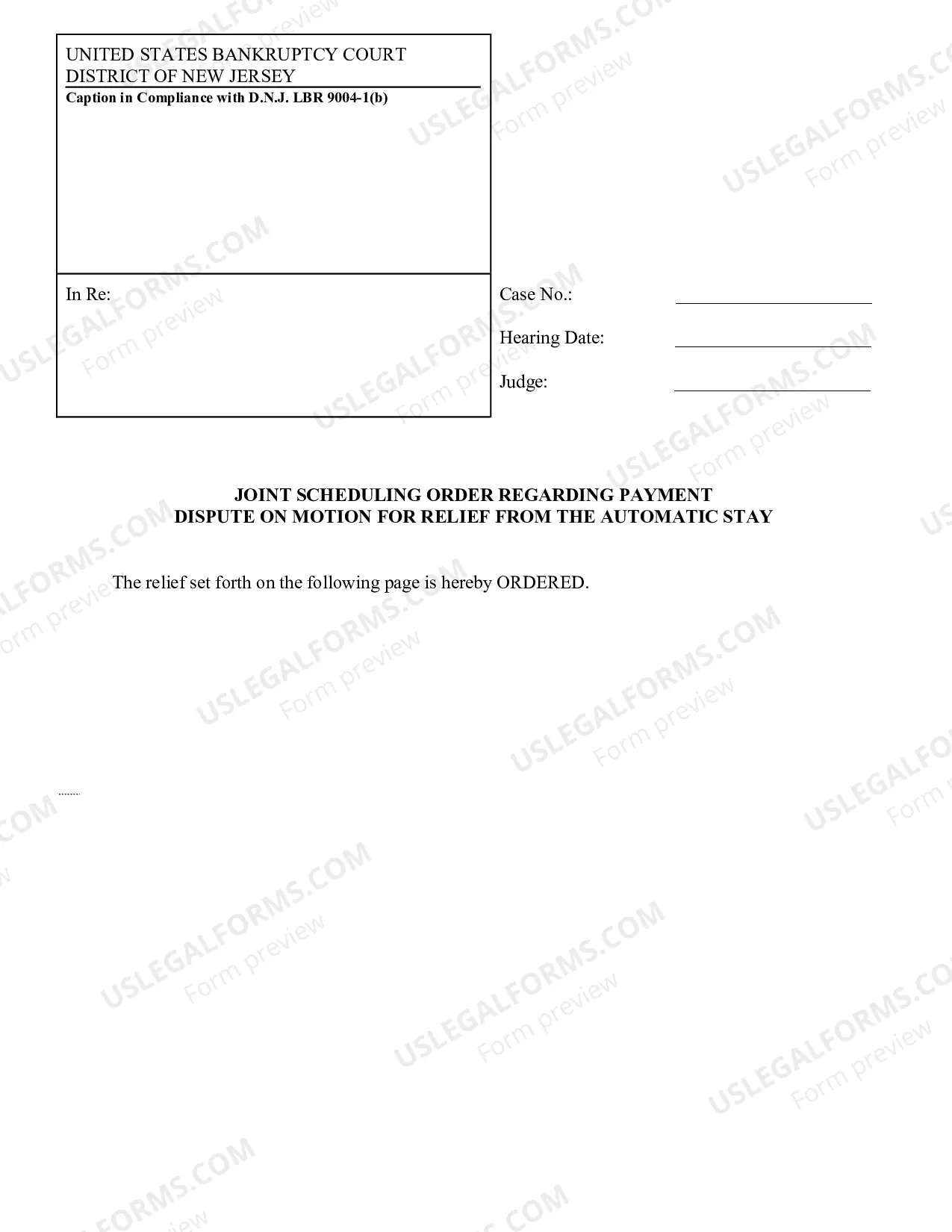
Colorado Office Lease Agreement
What this document covers
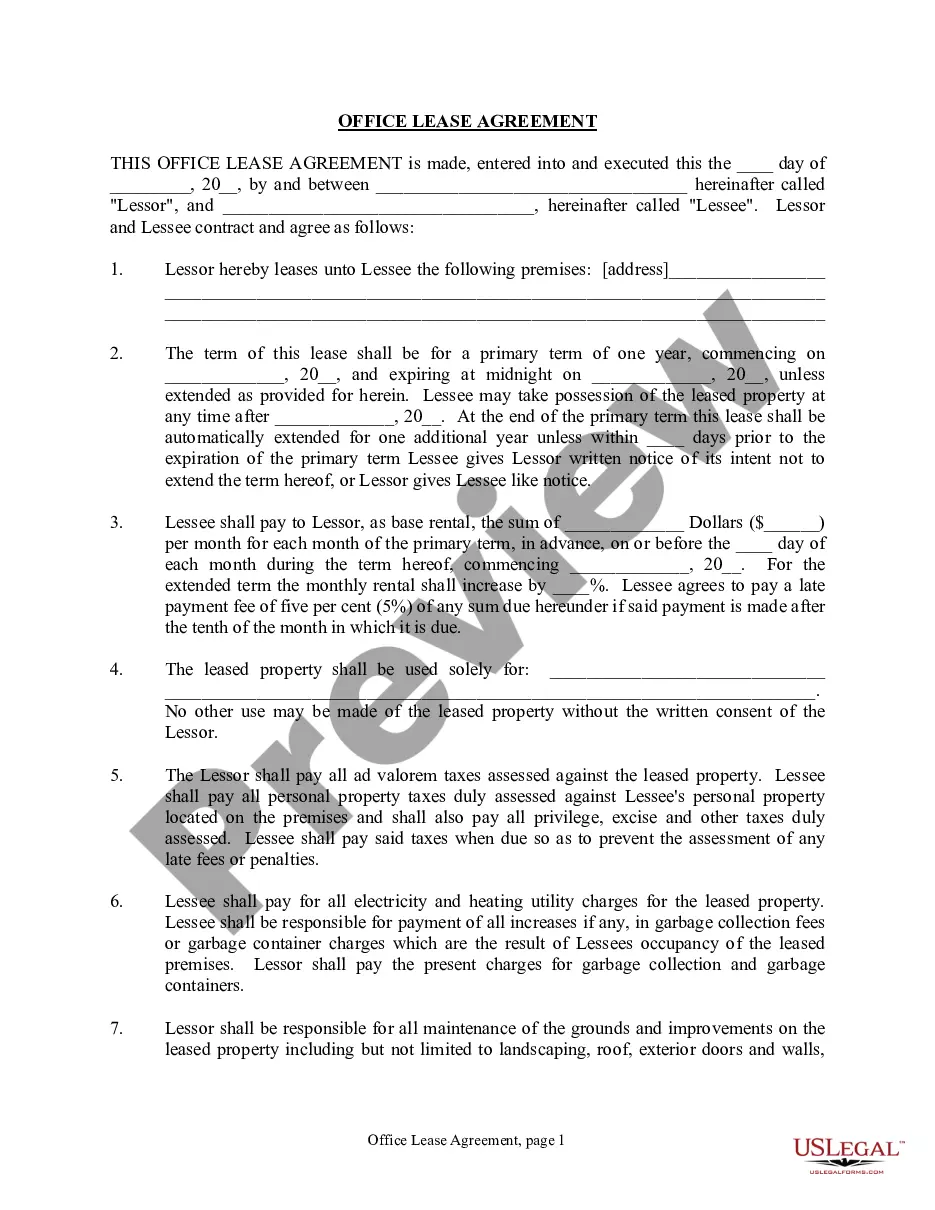
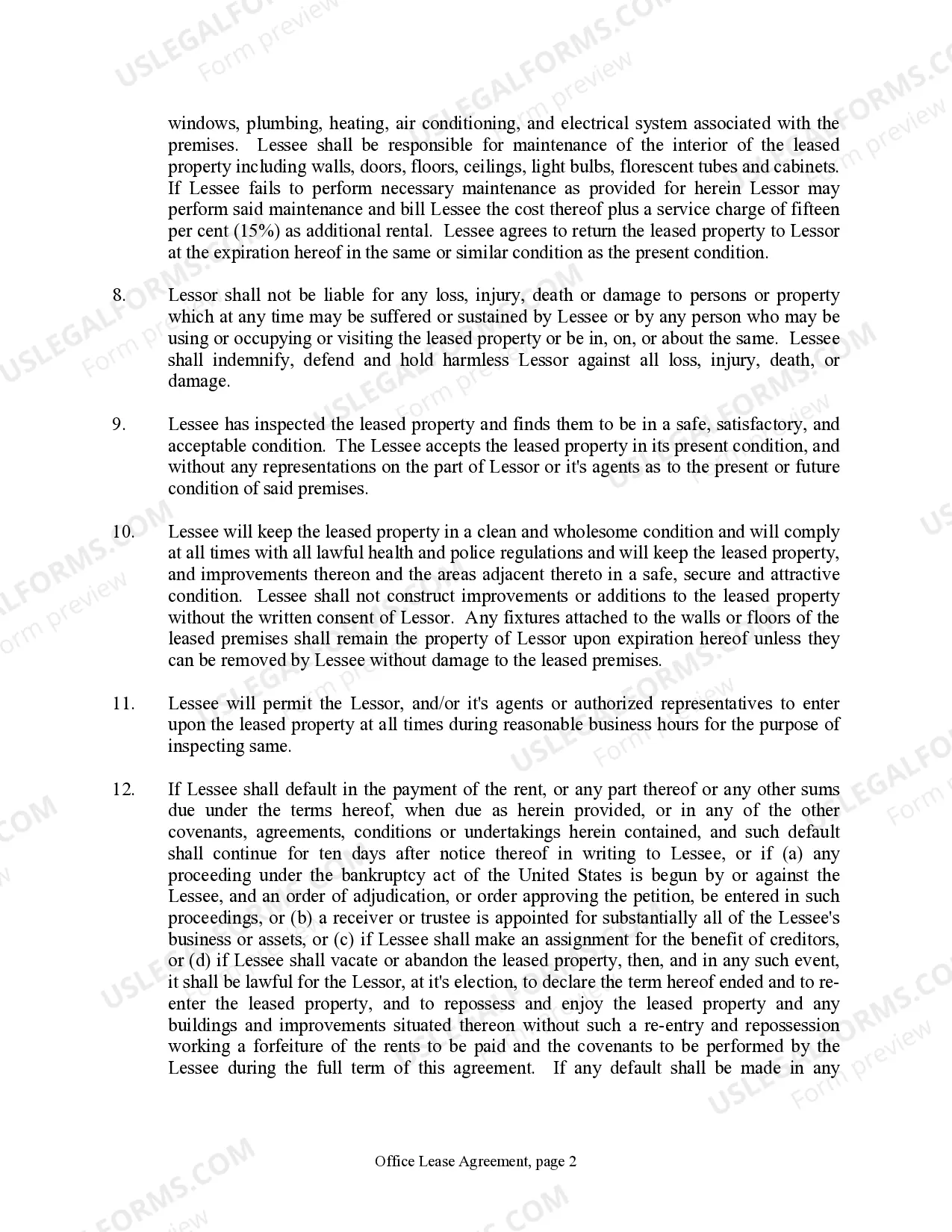
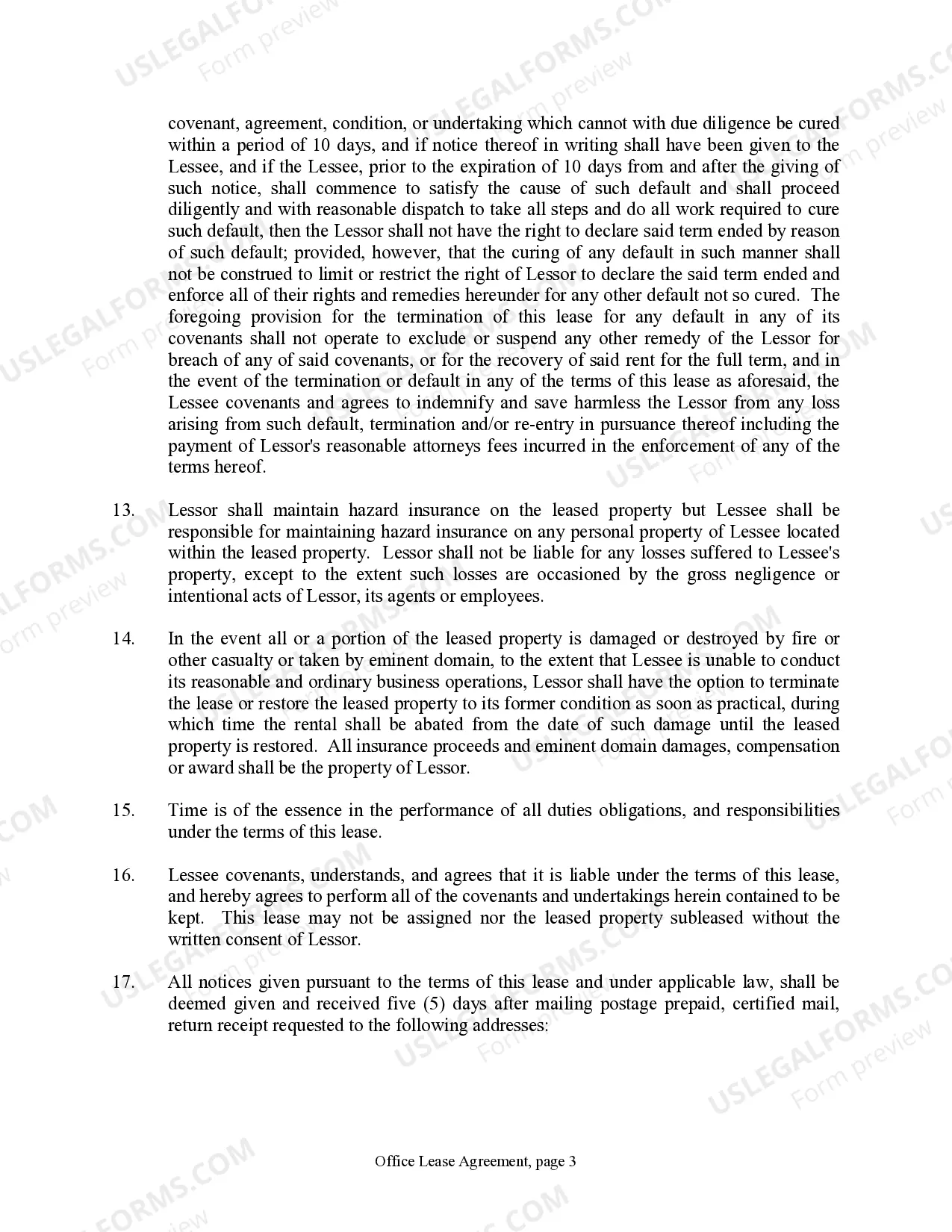
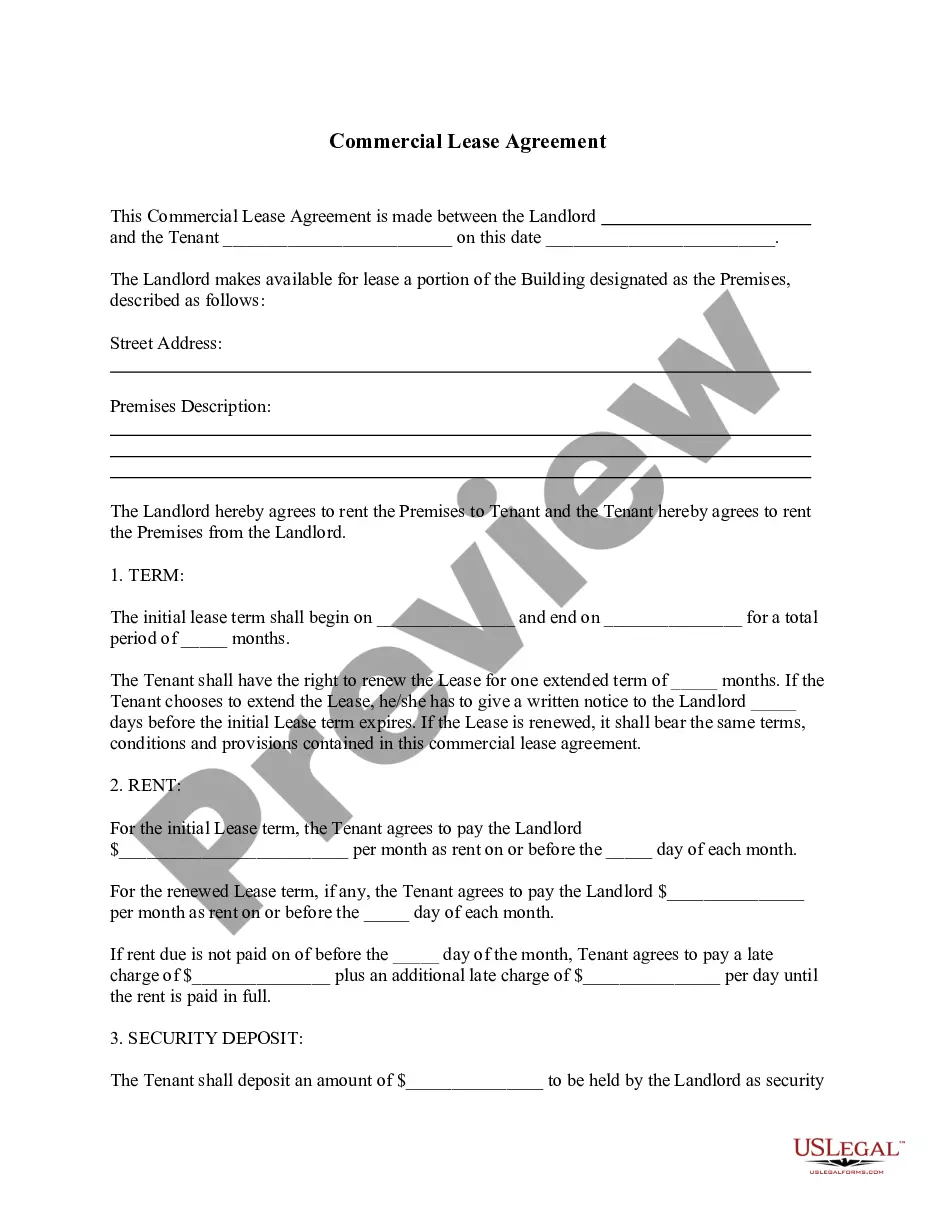
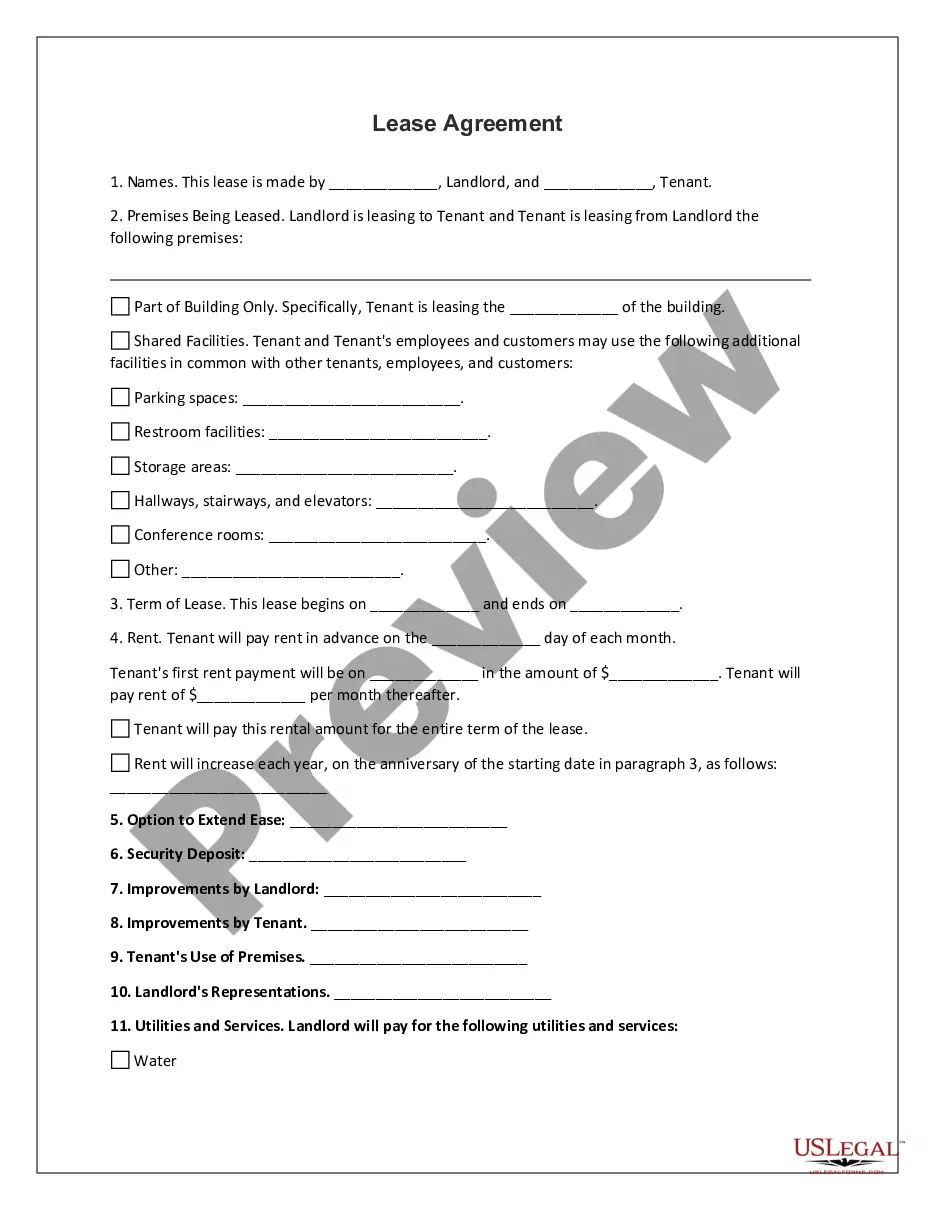
The Office Lease Agreement is a legal document that outlines the terms and conditions for leasing office space from a property owner (lessor) to a tenant (lessee). This agreement is vital in establishing the responsibilities of both parties and ensuring compliance with state statutory laws. Unlike rental agreements for residential properties, this form is specifically tailored for commercial office spaces, addressing unique aspects such as utilities, maintenance, and business operations.
Key parts of this document
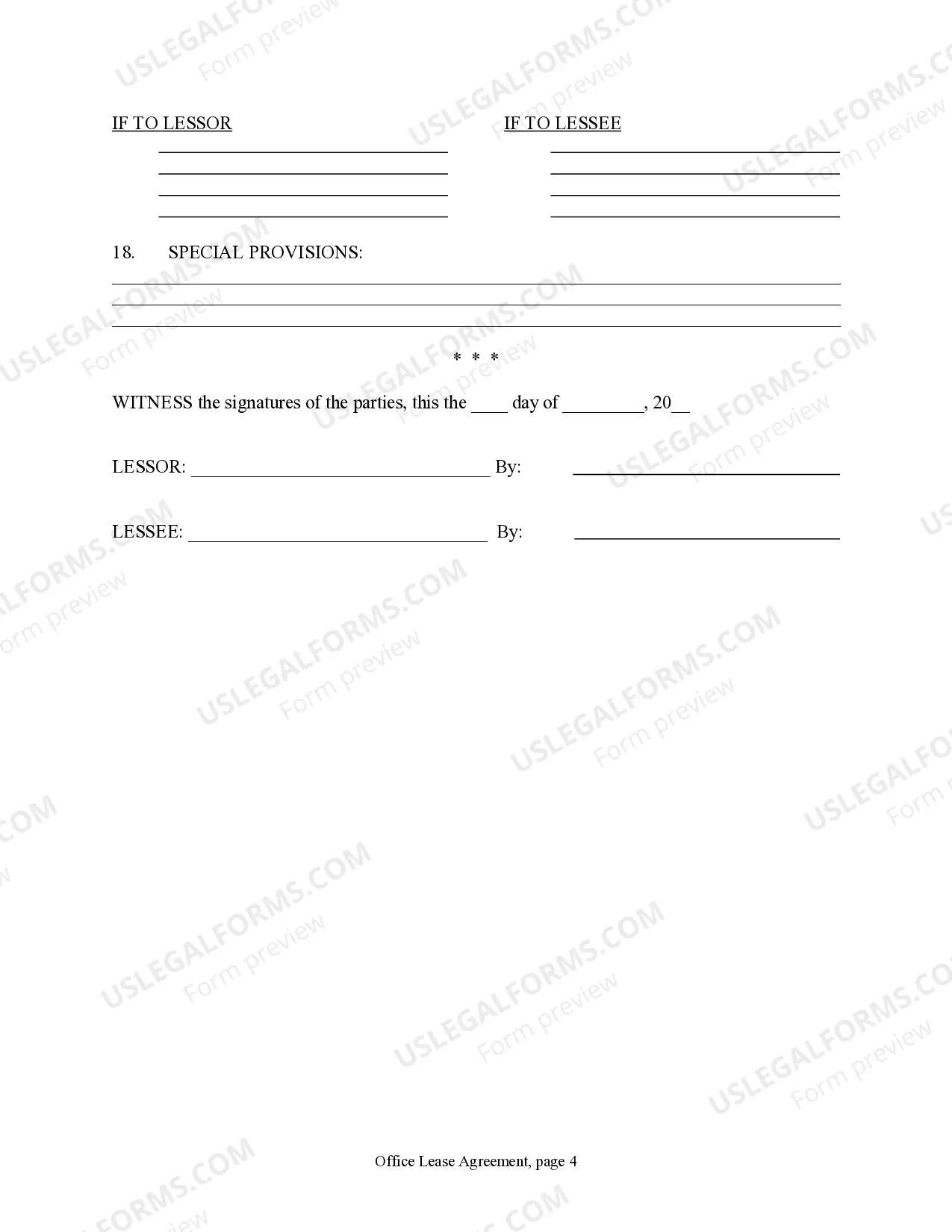
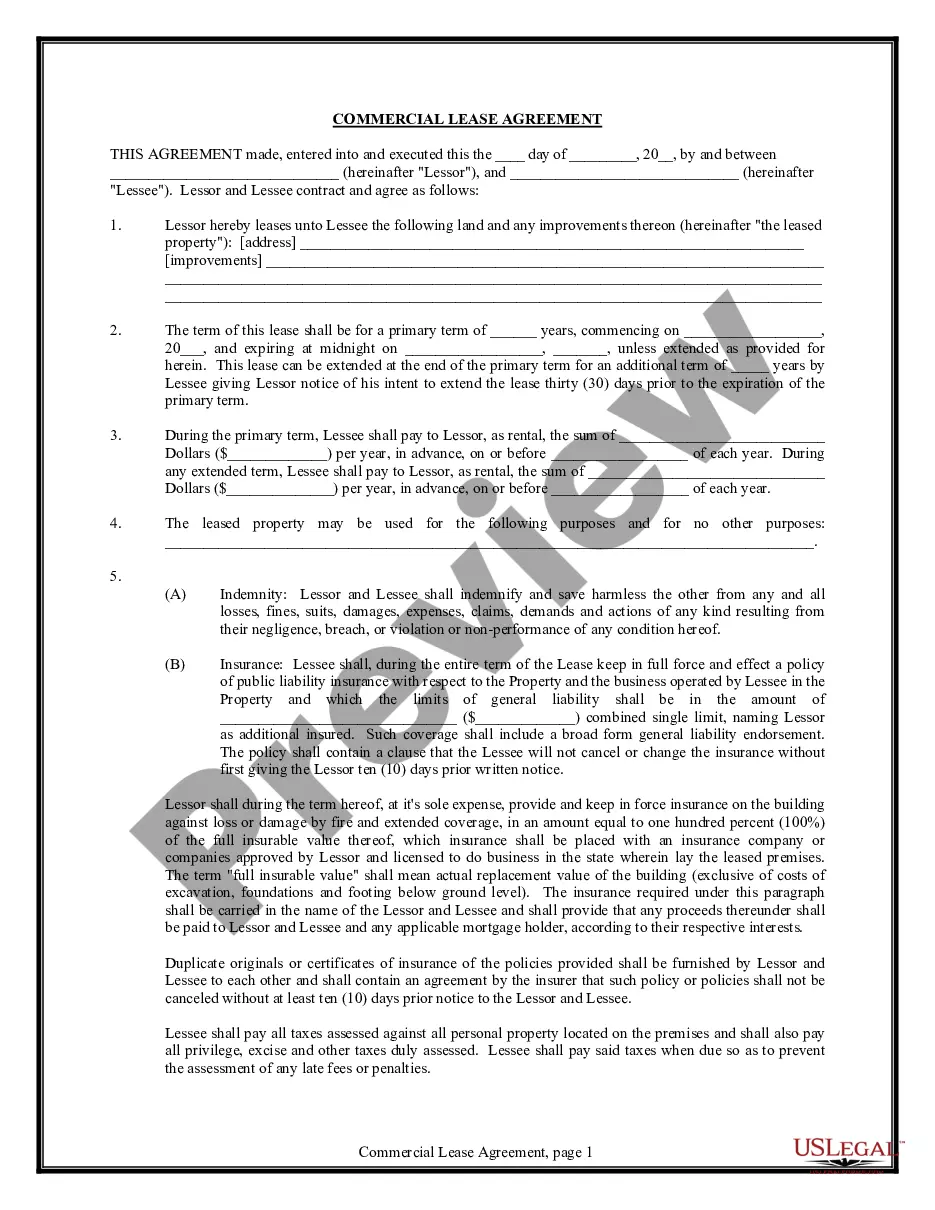
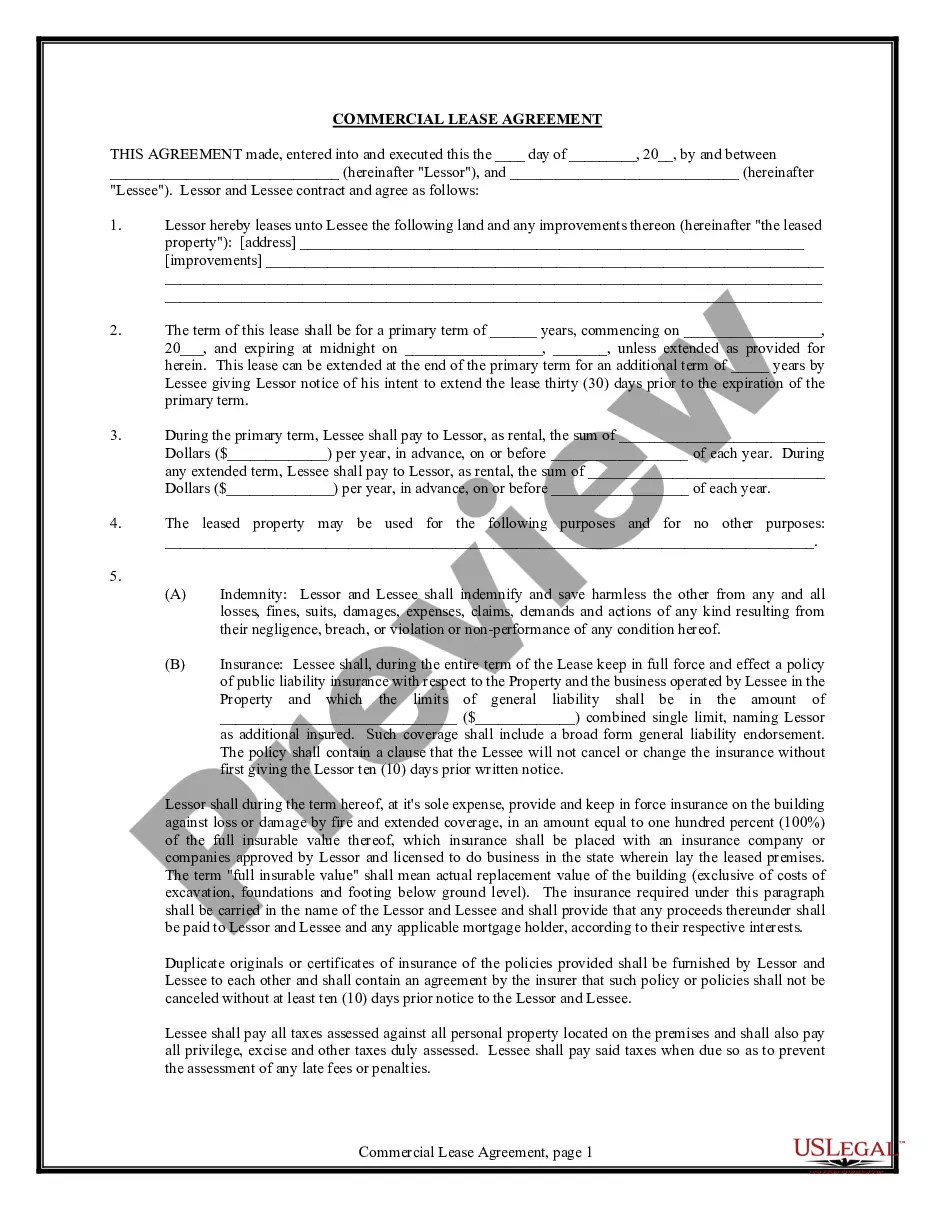
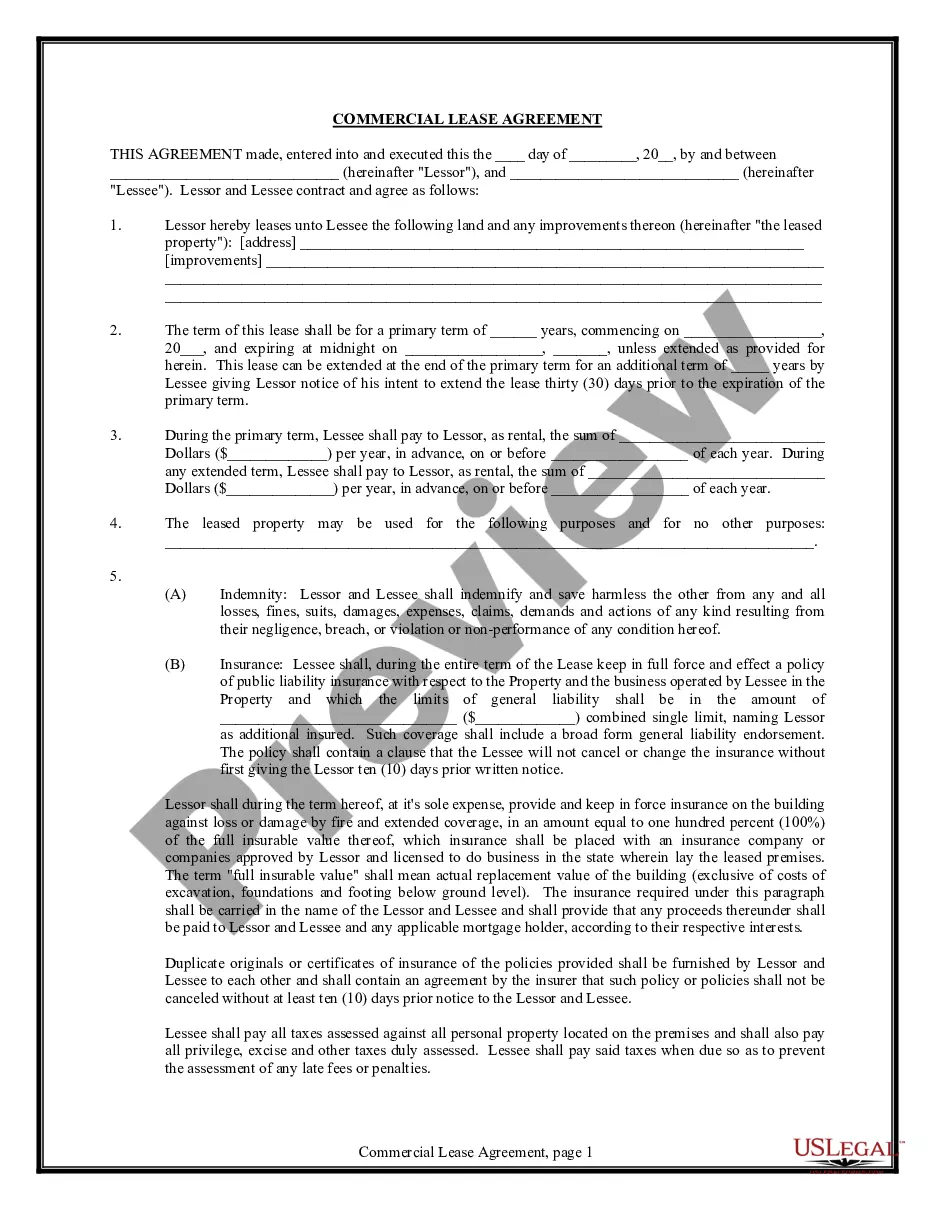
- Identification of parties involved: Names and addresses of the lessor and lessee.
- Property description: Detailed address and description of the leased office space.
- Lease term: Duration of the lease, including start and end dates along with extensions.
- Rent payment terms: Amount of monthly rent, due dates, and conditions for late payments.
- Responsibilities for utility payments and maintenance of the property.
- Indemnification clause: Lessee's responsibility for damages and liabilities on the premises.
When this form is needed
This Office Lease Agreement should be used when a business owner is looking to lease office space from a property owner. It is beneficial for ensuring that both parties have a clear understanding of the lease terms, including rent, maintenance responsibilities, and other essential conditions. Use this form to formalize the leasing process, protect your rights, and establish a legally enforceable contract.
Who should use this form
- Business owners seeking to lease office space for their operations.
- Property owners looking to rent office space to tenants.
- Real estate professionals facilitating lease agreements between parties.
Steps to complete this form
- Identify the parties: Enter the names and addresses of the lessor and lessee.
- Specify the property: Provide the complete address and any specific details about the office space.
- Enter the lease term: Fill in the starting and ending dates of the lease.
- Detail rental terms: Specify the monthly rent amount and payment due dates.
- Sign and date: Both lessor and lessee must sign the agreement on the designated lines.
Does this document require notarization?
Notarization is not commonly needed for this form. However, certain documents or local rules may make it necessary. Our notarization service, powered by Notarize, allows you to finalize it securely online anytime, day or night.
Get your form ready online
Our built-in tools help you complete, sign, share, and store your documents in one place.
Make edits, fill in missing information, and update formatting in US Legal Forms—just like you would in MS Word.
Download a copy, print it, send it by email, or mail it via USPS—whatever works best for your next step.
Sign and collect signatures with our SignNow integration. Send to multiple recipients, set reminders, and more. Go Premium to unlock E-Sign.
If this form requires notarization, complete it online through a secure video call—no need to meet a notary in person or wait for an appointment.
We protect your documents and personal data by following strict security and privacy standards.

Make edits, fill in missing information, and update formatting in US Legal Forms—just like you would in MS Word.

Download a copy, print it, send it by email, or mail it via USPS—whatever works best for your next step.

Sign and collect signatures with our SignNow integration. Send to multiple recipients, set reminders, and more. Go Premium to unlock E-Sign.

If this form requires notarization, complete it online through a secure video call—no need to meet a notary in person or wait for an appointment.

We protect your documents and personal data by following strict security and privacy standards.
Avoid these common issues
- Failure to specify the correct rental amount or payment schedule.
- Omitting details about maintenance responsibilities.
- Not including the right address or description of the leased property.
- Neglecting to sign and date the agreement, making it unenforceable.
Why complete this form online
- Convenience of downloading the form immediately after purchase.
- Editability allows you to customize specific terms to fit your needs.
- Access to forms drafted by licensed attorneys, ensuring legal compliance.
- No need for in-person visits, saving time and costs associated with legal consultations.
Looking for another form?

Form popularity
FAQ
Colorado leases do not need to be notarized to hold legal weight. The essential factor is ensuring that both parties have signed the agreement. While notarization can provide additional security, it isn't a necessity in most cases. To create effective lease agreements, you can use the templates and services offered by uslegalforms, tailored to meet Colorado’s regulations.
No, leases are not required to be notarized in Colorado. The signature of both parties is sufficient for the lease to be enforceable. However, notarization can help in certain situations, such as verifying identities during disputes. For convenient lease preparation, you might want to check out uslegalforms for reliable templates designed for Colorado.
An operating agreement for an LLC in Colorado does not need notarization to be valid. However, having an operating agreement signed and, if possible, notarized can provide clarity and certainty regarding ownership and management. To ensure your documents meet state requirements, consider using resources from uslegalforms to draft a compliant operating agreement.
In Colorado, a lease agreement does not typically need to be notarized to be valid. What matters most is that both parties sign the lease, indicating their acceptance of the terms. Nonetheless, having a notary can add an extra layer of authenticity and can be beneficial in dispute resolutions. It's good practice to refer to credible sources or platforms like uslegalforms for guidance.
Yes, you can create your own Colorado Office Lease Agreement. However, it’s crucial to include specific terms that meet Colorado's legal requirements. To ensure that your lease protects your interests, consider using templates available on platforms like uslegalforms. This way, you can customize the agreement while adhering to legal guidelines.
A lease becomes legally binding in Colorado when both parties sign the agreement, demonstrating mutual consent. The terms must outline the responsibilities of both landlords and tenants, including rent payment, duration, and property maintenance. It's essential to ensure the Colorado Office Lease Agreement complies with state laws to avoid disputes. Using a reliable platform like uslegalforms can help you draft a comprehensive agreement.
Yes, Colorado is generally considered a tenant-friendly state, particularly due to recent laws promoting renters’ rights and protections. Landlords must adhere to the state’s guidelines when drafting a Colorado Office Lease Agreement, ensuring that the lease complies with tenant protection laws. Understanding your rights as a tenant can enhance your rental experience and offer peace of mind. Being informed empowers you to engage better with your landlord.
Recently, Colorado introduced laws enhancing renter protections, focusing on increasing lease transparency and security. These changes benefit tenants by ensuring clearer lease terms and giving more time for lease negotiations. When you create a Colorado Office Lease Agreement, it is crucial to stay informed about these laws to ensure compliance and protect your rights as a tenant or landlord. Knowledge of these regulations can save you from future disputes.
The most typical lease used for office spaces is the gross lease, where the landlord covers most property expenses, including maintenance and property taxes. This arrangement simplifies budgeting for tenants, making it a favorable option when entering a Colorado Office Lease Agreement. Alternatives include net leases and modified gross leases, each with specific terms tailored to various business needs. It is essential to assess which lease aligns best with your operational goals.
The most common residential lease is the month-to-month lease, which allows tenants to live in a rental property while providing flexibility for both parties. However, for long-term stability, many renters opt for a one-year lease agreement. While this focuses on residential leasing, tenants should also understand how a Colorado Office Lease Agreement differs in terms and obligations. Each agreement type has its unique benefits.