Colorado Letter from Tenant to Landlord responding to Notice to Terminate for Noncompliance - Noncompliant condition caused by Landlord's own deliberate or negligent act
What this document covers
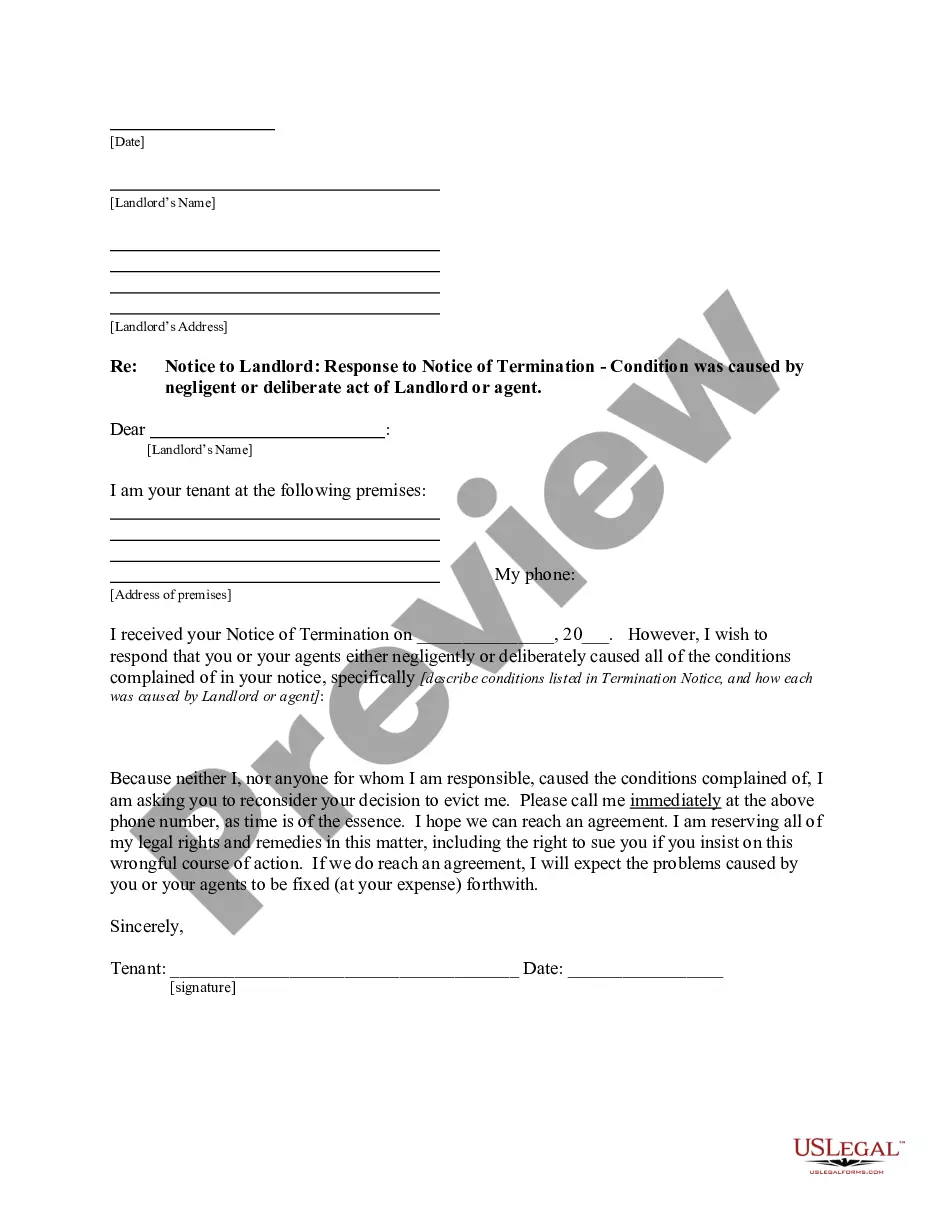
This form is a Letter from Tenant to Landlord responding to a Notice to Terminate for Noncompliance. It is specifically used when a landlord issues an eviction notice due to alleged noncompliant conditions. In this letter, the tenant asserts that such conditions were caused by the landlord's deliberate or negligent actions. The tenant requests to remain in the property and demands necessary repairs while reserving the right to take legal action if needed. This form helps tenants communicate their position clearly and accurately in response to the eviction notice.
Form components explained
- Identification of the tenant and landlord.
- Statement of the eviction notice received.
- Assertion that the noncompliant conditions were caused by the landlord.
- Request for immediate repairs to the property.
- Reservation of legal rights for potential further action.
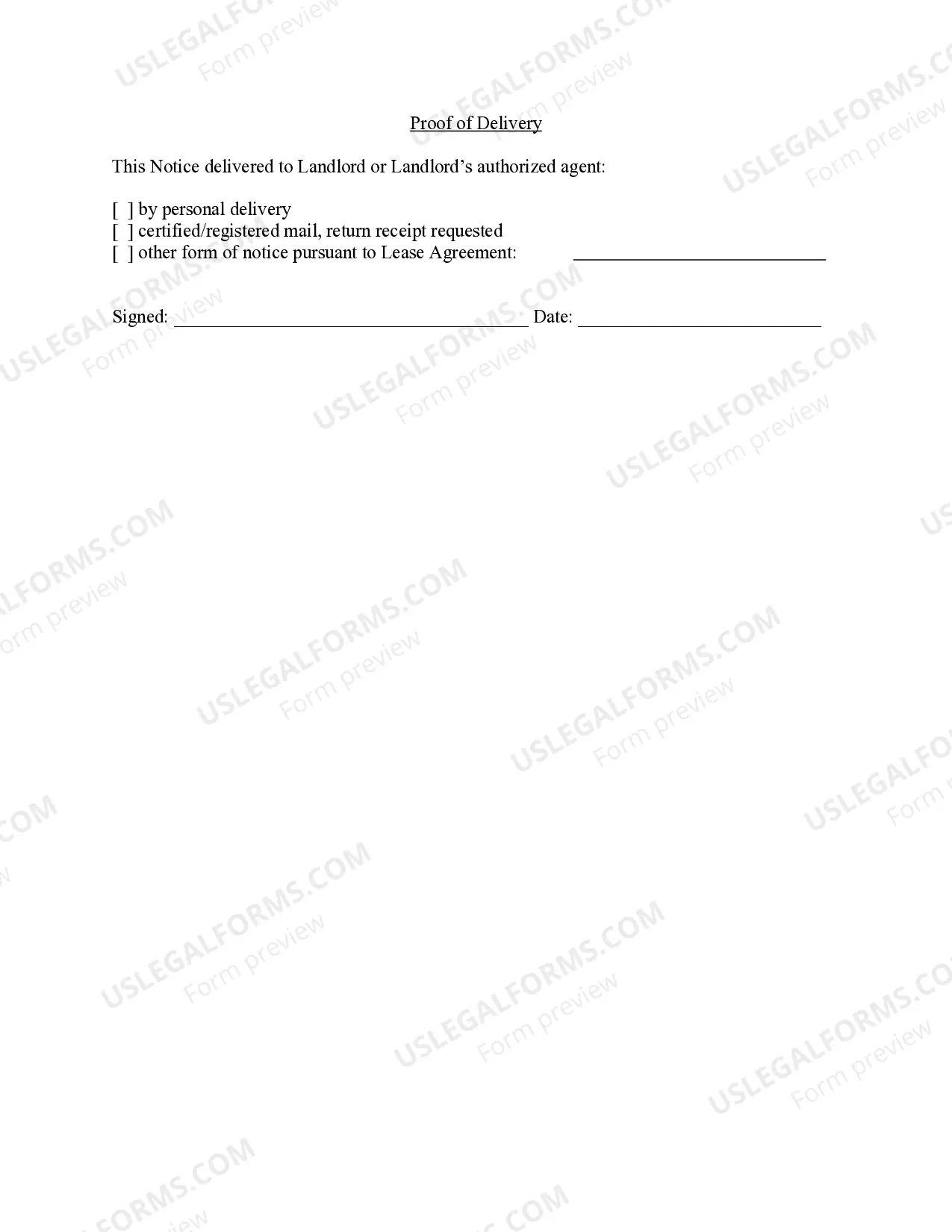
- Proof of delivery of the letter to the landlord.


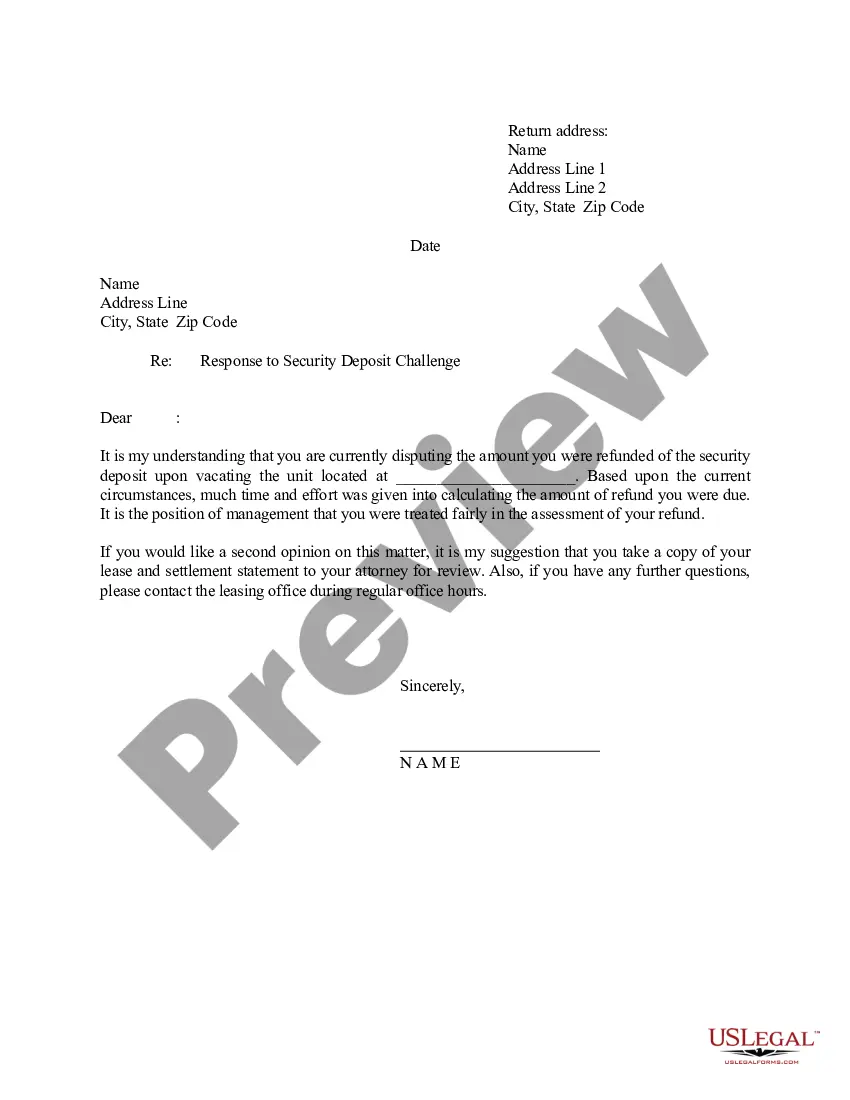


Situations where this form applies
This form should be used when a tenant receives a notice of eviction from their landlord due to alleged noncompliance with lease terms. It is applicable in situations where the tenant believes that the reasons for eviction stem from issues caused by the landlord's actions or neglect. This letter is an essential step in formally communicating the tenant's stance and seeking resolution before legal escalation.
Intended users of this form
- Tenants facing eviction notices from landlords.
- Tenants who believe that eviction is unjust due to landlord negligence.
- Individuals who wish to document their communication with the landlord professionally.
How to complete this form
- Identify yourself as the tenant and provide your landlord's details.
- Clearly state the receipt of the eviction notice.
- Explain how the noncompliance was due to the landlord's actions.
- Request repairs and state your intention to remain in the property.
- Sign and date the letter, providing proof of delivery to your landlord.
Does this document require notarization?
Notarization is generally not required for this form. However, certain states or situations might demand it. You can complete notarization online through US Legal Forms, powered by Notarize, using a verified video call available anytime.
Get your form ready online
Our built-in tools help you complete, sign, share, and store your documents in one place.
Make edits, fill in missing information, and update formatting in US Legal Forms—just like you would in MS Word.
Download a copy, print it, send it by email, or mail it via USPS—whatever works best for your next step.
Sign and collect signatures with our SignNow integration. Send to multiple recipients, set reminders, and more. Go Premium to unlock E-Sign.
If this form requires notarization, complete it online through a secure video call—no need to meet a notary in person or wait for an appointment.
We protect your documents and personal data by following strict security and privacy standards.

Make edits, fill in missing information, and update formatting in US Legal Forms—just like you would in MS Word.

Download a copy, print it, send it by email, or mail it via USPS—whatever works best for your next step.

Sign and collect signatures with our SignNow integration. Send to multiple recipients, set reminders, and more. Go Premium to unlock E-Sign.

If this form requires notarization, complete it online through a secure video call—no need to meet a notary in person or wait for an appointment.

We protect your documents and personal data by following strict security and privacy standards.
Mistakes to watch out for
- Failing to properly identify all parties involved.
- Not citing specific examples of noncompliance.
- Neglecting to sign and date the letter.
- Forgetting to provide proof of delivery.
Benefits of completing this form online
- Convenient access for immediate download and completion.
- Editability allows for customization to fit individual circumstances.
- Reliably drafted by licensed attorneys ensuring legal compliance.
Legal use & context
- This letter is a legally recognized response to an eviction notice.
- It serves to document the tenant's position and actions regarding the eviction.
- It may be used in court if further legal actions are initiated.
Looking for another form?
Form popularity
FAQ
The 10-Day Notice to Quit in Colorado is a legal document you can give to your tenant letting them know that they have ten days to fix their lease violation or pay their rent. For tenants who are on a month-to-month tenancy, they are only given a 7-Day Notice to Quit before the end of the month.
If you think your landlord is violating the Fair Housing Act, you can get that landlord in trouble by filing a complaint at HUD.gov. Your remedy for breach of quiet enjoyment is to terminate the lease and move or sue in small claims court.
If the tenant refuses, you are permitted to send them a notice to agree or quit the property. The tenant refusing you access constitutes a breach in the lease agreement, so they could be evicted if they continue to deny access.
Put cameras everywhere (Nest Cam is a good brand), make sure you put signs "Premises secured by video surveillance" and you will be good to go. While it won't prevent the landlord from entering, it will prevent the landlord from doing anything funky, and who knows, with time even stop.
The landlord is not required to provide notice of entry and therefore may enter the premises for the following reasons: non-emergency maintenance and repairs, emergencies, and showings to prospective tenants. That being said, 24 hours of notice is recommended.
A commonly used privacy clause allows a landlord access to the rental property at reasonable times and with reasonable notice to the tenant to make necessary repairs or reasonable inspections. Additionally, a landlord has the right to enter a rental unit without notice in emergencies.
A landlord may enter the residential premises with the tenant's consent. If the landlord obtains the consent of the tenant, a notice of entry is not required.Landlords can phone or meet with tenants to obtain consent to enter the residential premises. Consent can be given verbally or in writing.
A landlord needs to give a written notice to the tenant to move-out allowing 21 days for the tenant to vacate specifying the exact date on when the tenancy will end.
Tenant's Rights After Breach to Warranty of HabitabilityColorado tenants have the right to live in a rental unit that meets certain standards. These standards are known as the warranty of habitability.If the landlord does not fix the breach, the tenant can terminate the rental agreement or take the issue to court.