Colorado Quitclaim Deed from a Corporation to a Limited Liability Company
About this form
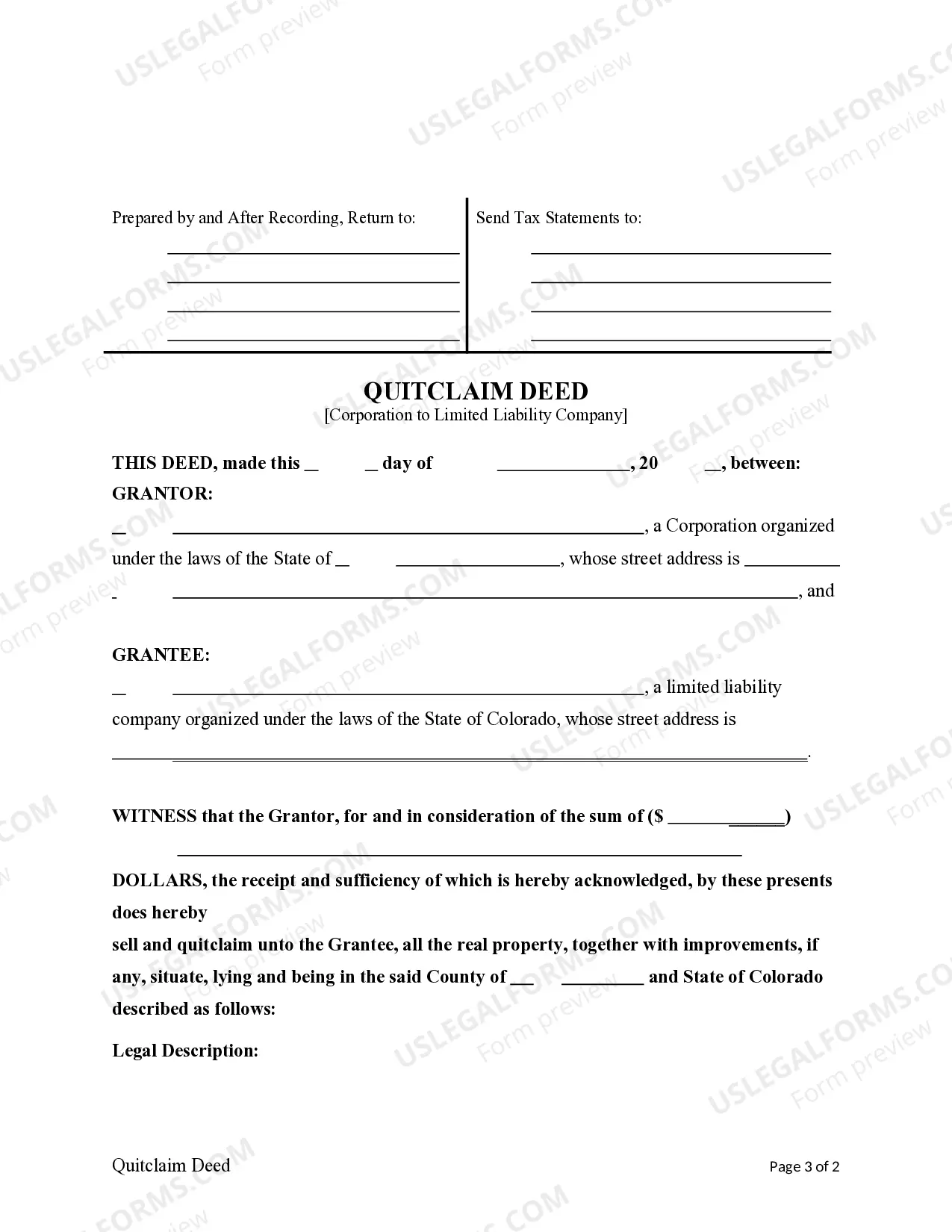
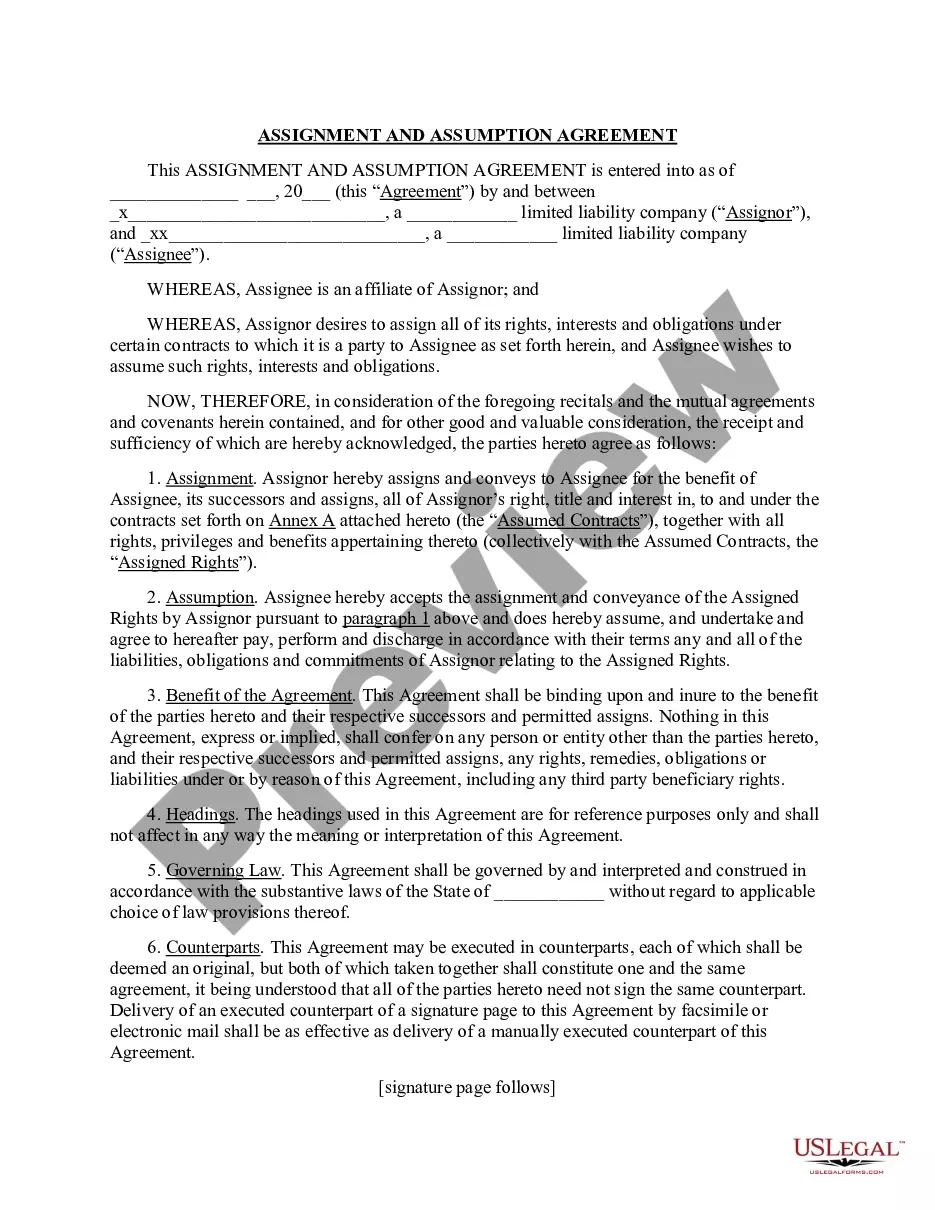
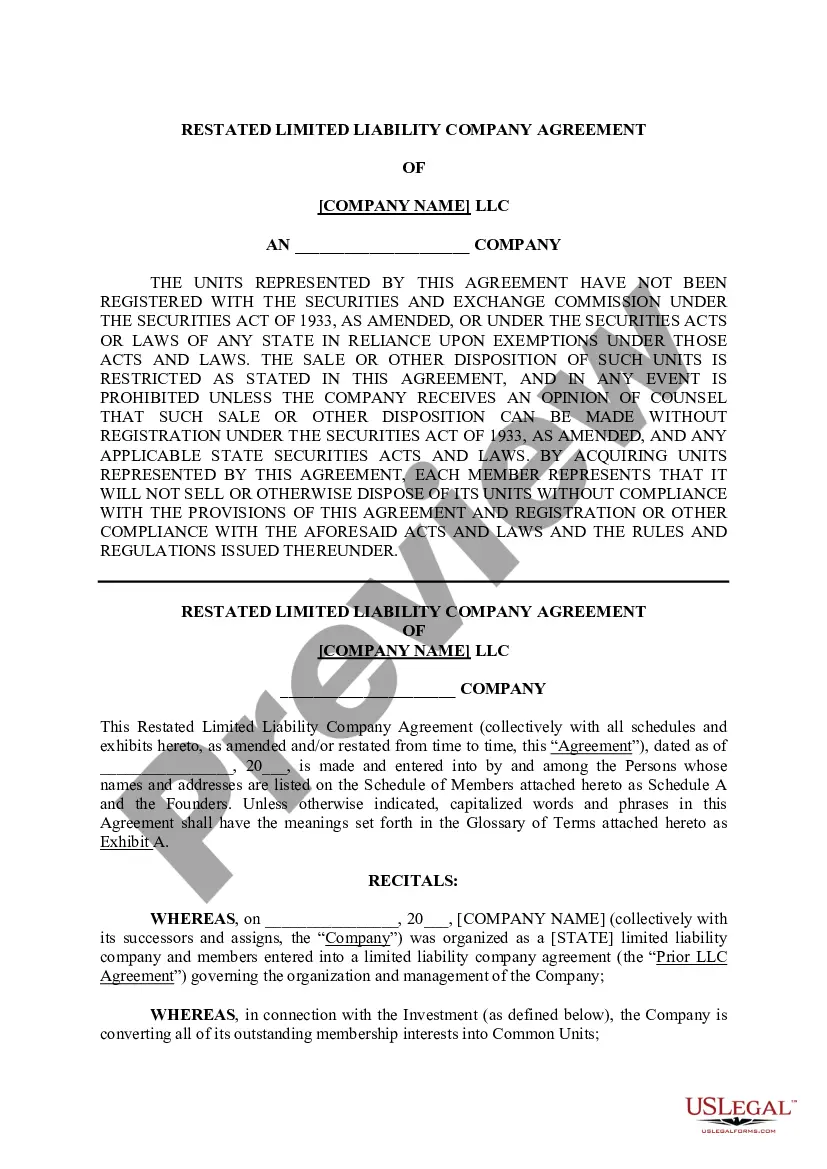
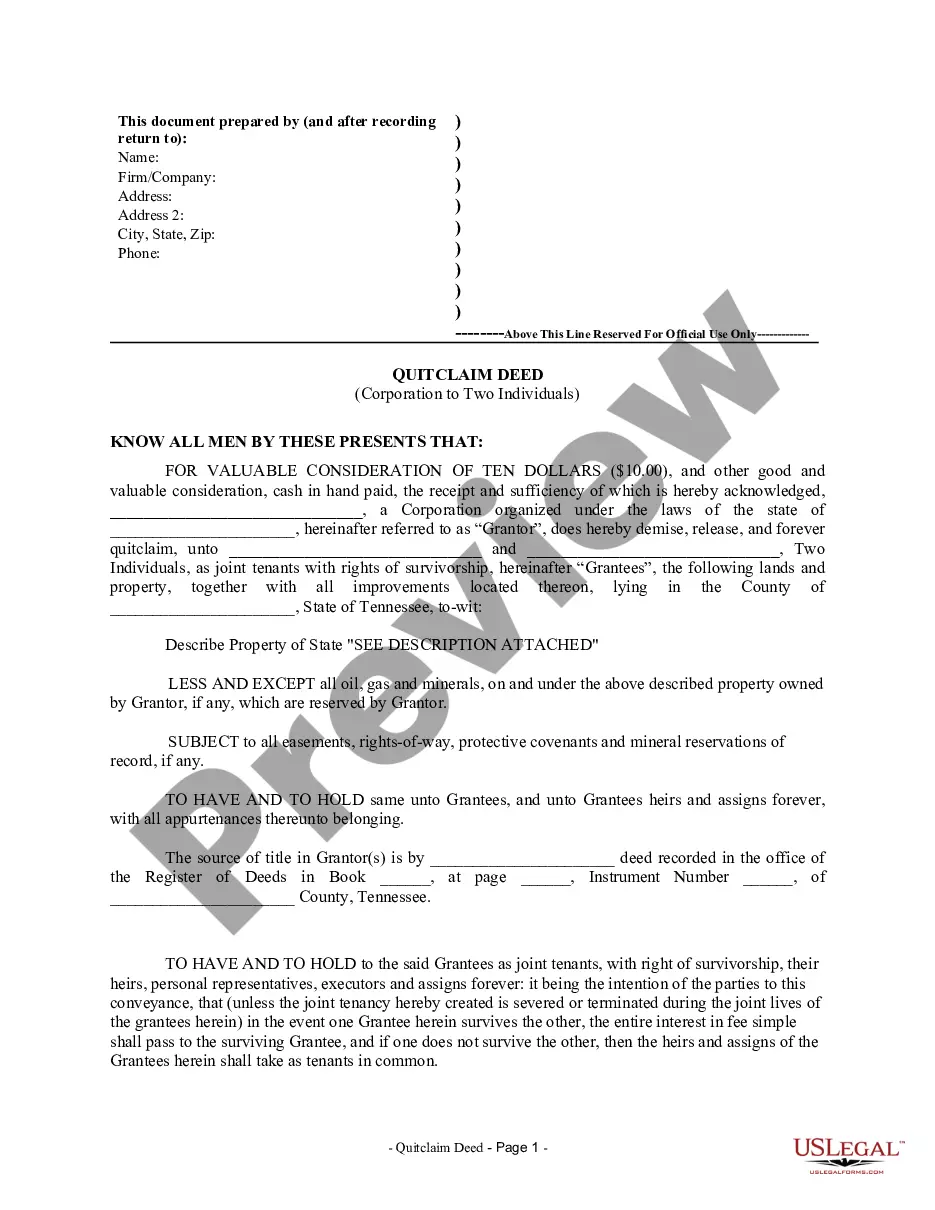
The Quitclaim Deed from a Corporation to a Limited Liability Company is a legal document that allows a corporation (the Grantor) to transfer its interest in a specific property to a limited liability company (the Grantee). This form is used when ownership of property needs to be transferred without any guarantees or warranties regarding the title's validity. Unlike a warranty deed, this quitclaim deed does not assure the Grantee of any rights to the property beyond those held by the Grantor.
Key components of this form
- Identification of the Grantor (the transferring corporation)
- Identification of the Grantee (the receiving limited liability company)
- Description of the property being transferred
- Statement of the transfer (quitclaim clause)
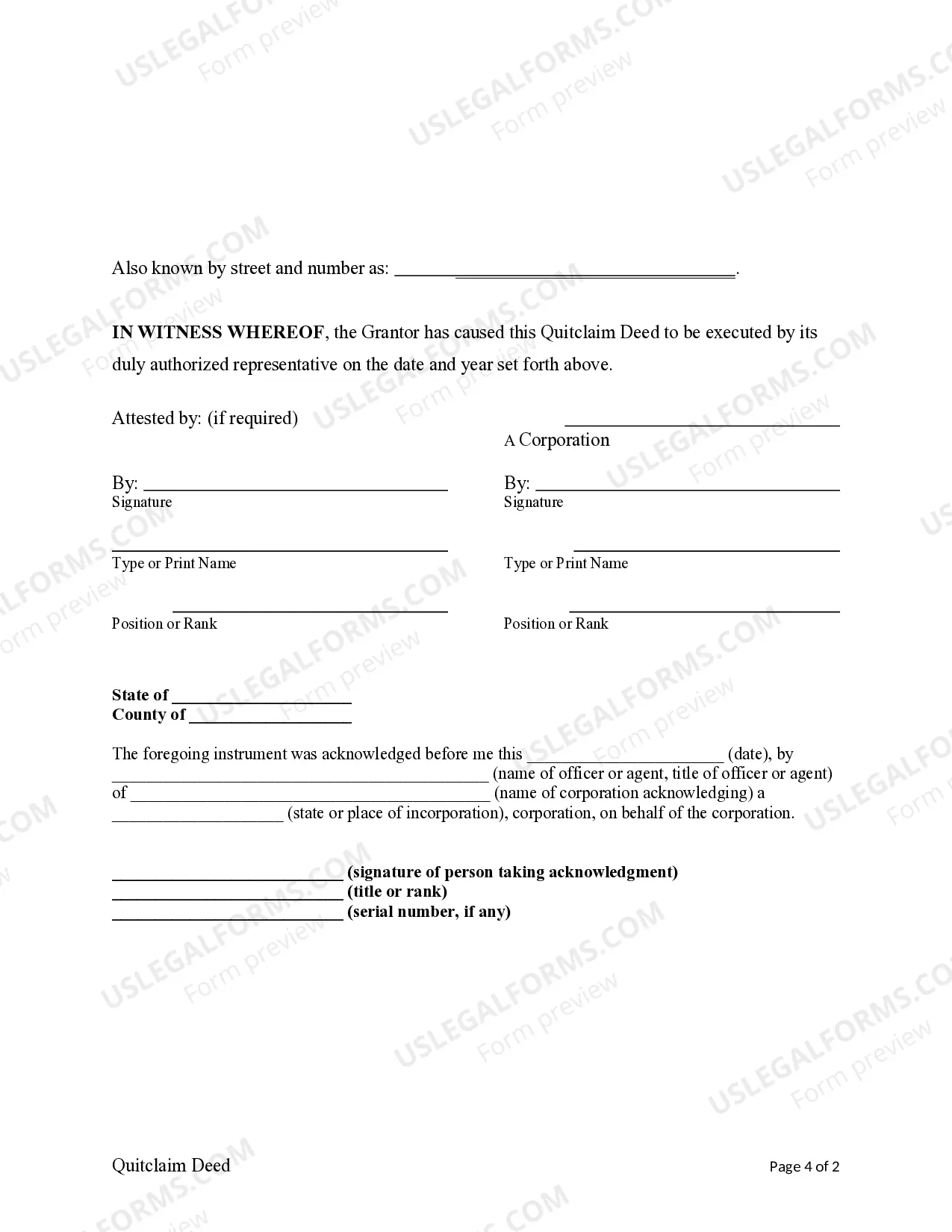
- Signatures of authorized representatives of the Grantor



Situations where this form applies
This form is ideal for situations where a corporation wishes to transfer real estate to a limited liability company, often for the purpose of consolidating assets under a single entity. It's commonly used in business restructuring, property management changes, or when forming new business ventures. Using this quitclaim deed can clarify property interests between different business entities.
Who can use this document
This form is designed for:
- Corporations that own real property and want to transfer it to a limited liability company
- Limited liability companies receiving property from a corporation
- Business owners or authorized representatives involved in corporate asset management
Steps to complete this form
- Identify the parties involved, including the corporation as Grantor and the limited liability company as Grantee.
- Clearly describe the property being transferred, including its address and legal description.
- Add the appropriate quitclaim language indicating the transfer of interest.
- Ensure authorized representatives of the Grantor sign the document.
- Check local requirements for filing or recording the deed with the relevant authorities.
Does this form need to be notarized?
To make this form legally binding, it must be notarized. Our online notarization service, powered by Notarize, lets you verify and sign documents remotely through an encrypted video session.
Get your form ready online
Our built-in tools help you complete, sign, share, and store your documents in one place.
Make edits, fill in missing information, and update formatting in US Legal Forms—just like you would in MS Word.
Download a copy, print it, send it by email, or mail it via USPS—whatever works best for your next step.
Sign and collect signatures with our SignNow integration. Send to multiple recipients, set reminders, and more. Go Premium to unlock E-Sign.
If this form requires notarization, complete it online through a secure video call—no need to meet a notary in person or wait for an appointment.
We protect your documents and personal data by following strict security and privacy standards.

Make edits, fill in missing information, and update formatting in US Legal Forms—just like you would in MS Word.

Download a copy, print it, send it by email, or mail it via USPS—whatever works best for your next step.

Sign and collect signatures with our SignNow integration. Send to multiple recipients, set reminders, and more. Go Premium to unlock E-Sign.

If this form requires notarization, complete it online through a secure video call—no need to meet a notary in person or wait for an appointment.

We protect your documents and personal data by following strict security and privacy standards.
Typical mistakes to avoid
- Failing to provide a complete legal description of the property.
- Not obtaining the necessary signatures from authorized representatives.
- Omitting important details about the transfer, such as the date of the deed.
- Not following local laws regarding recording or filing.
Why complete this form online
- Convenient access to legal forms tailored for various state requirements.
- Edit and fill out the form using your computer, ensuring accuracy and saving time.
- Instant availability of a legally vetted document, eliminating the need for in-person visits to an attorney.
Looking for another form?
Form popularity
FAQ
Yes, a quitclaim deed effectively transfers ownership of property in Colorado. When you use a Colorado Quitclaim Deed from a Corporation to a Limited Liability Company, you are providing a clear way to change ownership without the need for extensive paperwork. This deed is particularly useful for transferring property between entities, as it streamlines the process. If you want an easy and reliable way to execute this transfer, consider using US Legal Forms for your needs.
Individuals looking to transfer property quickly and without the usual hassles benefit most from quitclaim deeds. For example, the Colorado Quitclaim Deed from a Corporation to a Limited Liability Company can be useful for transferring assets during business reorganization or estate planning. However, those receiving the deed should be careful, as they may face risks if the property has title issues.
Transferring property to an LLC in Colorado typically involves drafting a quitclaim deed. The Colorado Quitclaim Deed from a Corporation to a Limited Liability Company allows the transfer of ownership without hesitation. After drafting the deed, ensure that it is signed and recorded appropriately to establish the LLC as the new property owner.
One major disadvantage for a buyer receiving a quitclaim deed is the absence of title insurance. The Colorado Quitclaim Deed from a Corporation to a Limited Liability Company transfers ownership without guaranteeing that the seller has a clear title. This means buyers assume the risk of any issues that existed prior to the transfer.
A quitclaim deed might not provide buyers with comprehensive protection against title issues. With the Colorado Quitclaim Deed from a Corporation to a Limited Liability Company, you may not have recourse if problems arise later, such as unpaid taxes or hidden liens. This lack of warranty can lead to uncertainties that could affect your investment.
Buying a house through a quitclaim deed can be risky. The Colorado Quitclaim Deed from a Corporation to a Limited Liability Company does not offer any guarantees about the property’s title, which means you could inherit unknown liabilities. It is important to conduct thorough due diligence and consult a real estate professional before proceeding.
While placing your house in an LLC offers protection, it also has drawbacks. For instance, using a Colorado Quitclaim Deed from a Corporation to a Limited Liability Company might lead to higher costs related to maintenance and legal fees. Additionally, transferring property can trigger tax implications, so it’s essential to weigh the pros and cons carefully.
To change a home deed to an LLC, you will need to draft a quitclaim deed that renames the property owner as the LLC. Ensure that all relevant information is complete and accurate, then have the deed signed and notarized. Finally, file the deed with your local county office. This process is commonly executed using a Colorado Quitclaim Deed from a Corporation to a Limited Liability Company.
Many individuals place their property in an LLC primarily for liability protection. By doing so, they separate personal assets from business liabilities, which can safeguard personal wealth. Additionally, a Colorado Quitclaim Deed from a Corporation to a Limited Liability Company facilitates this transition, allowing for better management of real estate.
To transfer a deed of a house to an LLC, you should generate a quitclaim deed. Fill out the necessary information regarding the property and the LLC. Then, have the deed signed and notarized, and finally, submit it to the appropriate county office for recording. Utilizing a Colorado Quitclaim Deed from a Corporation to a Limited Liability Company streamlines the process.