Colorado Boundary Line Agreement
What this document covers
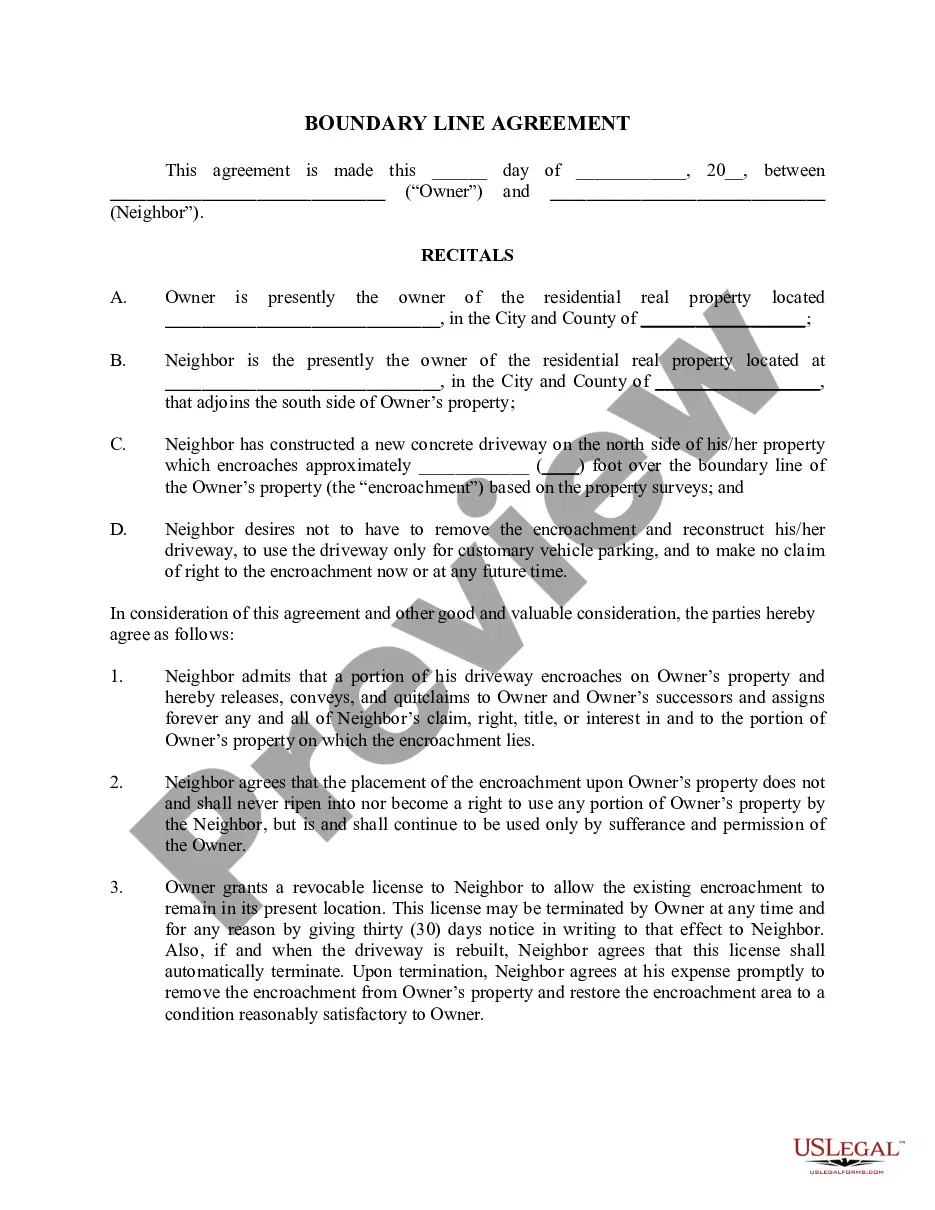
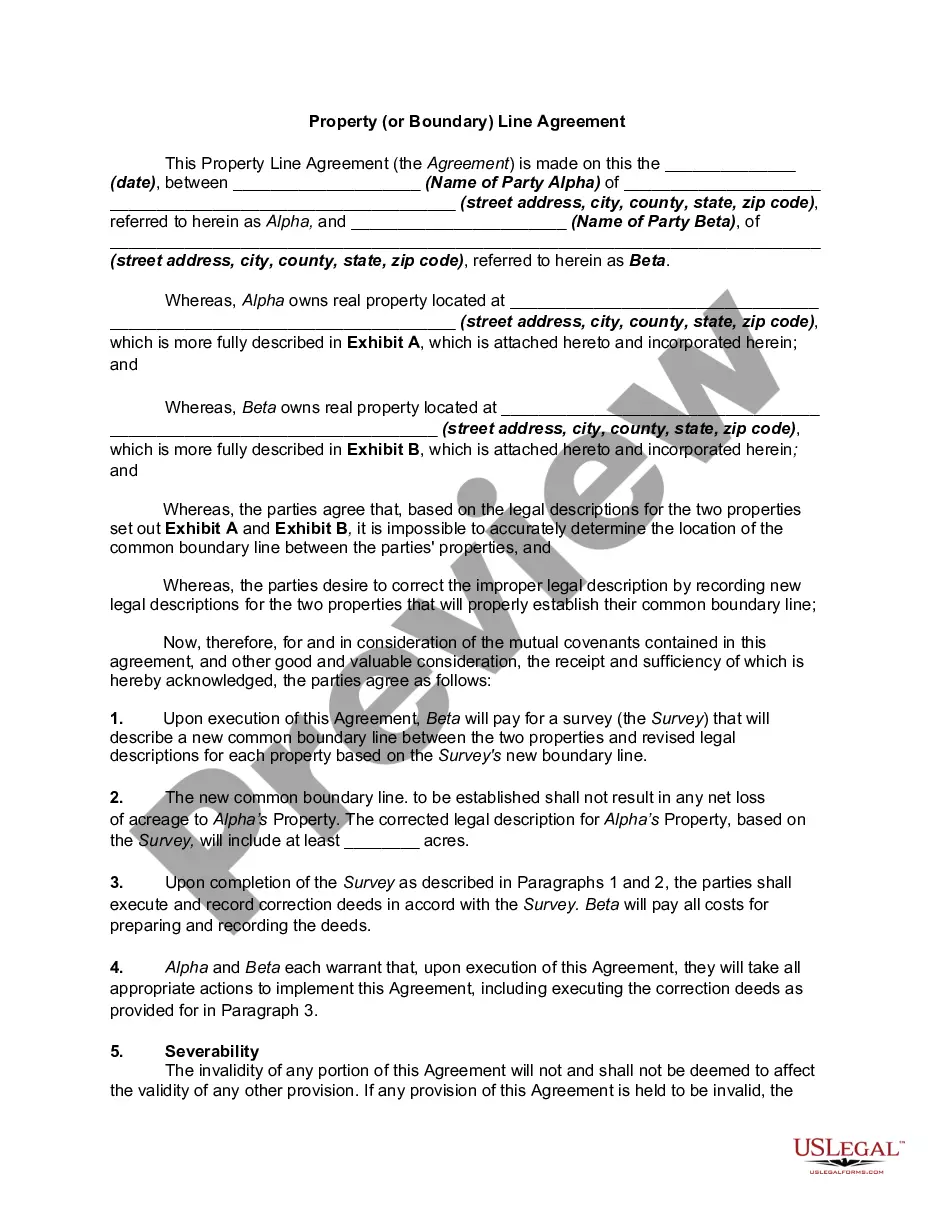
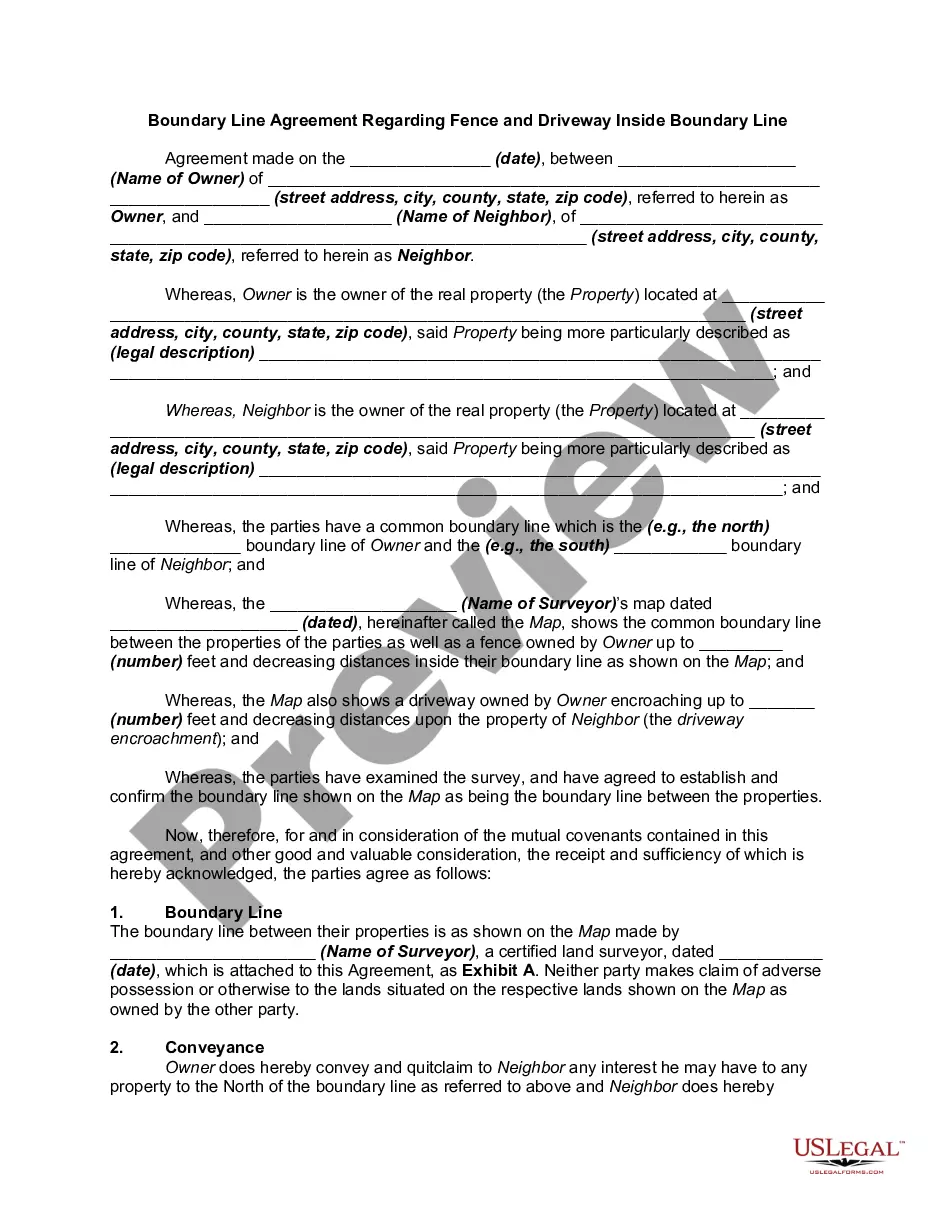
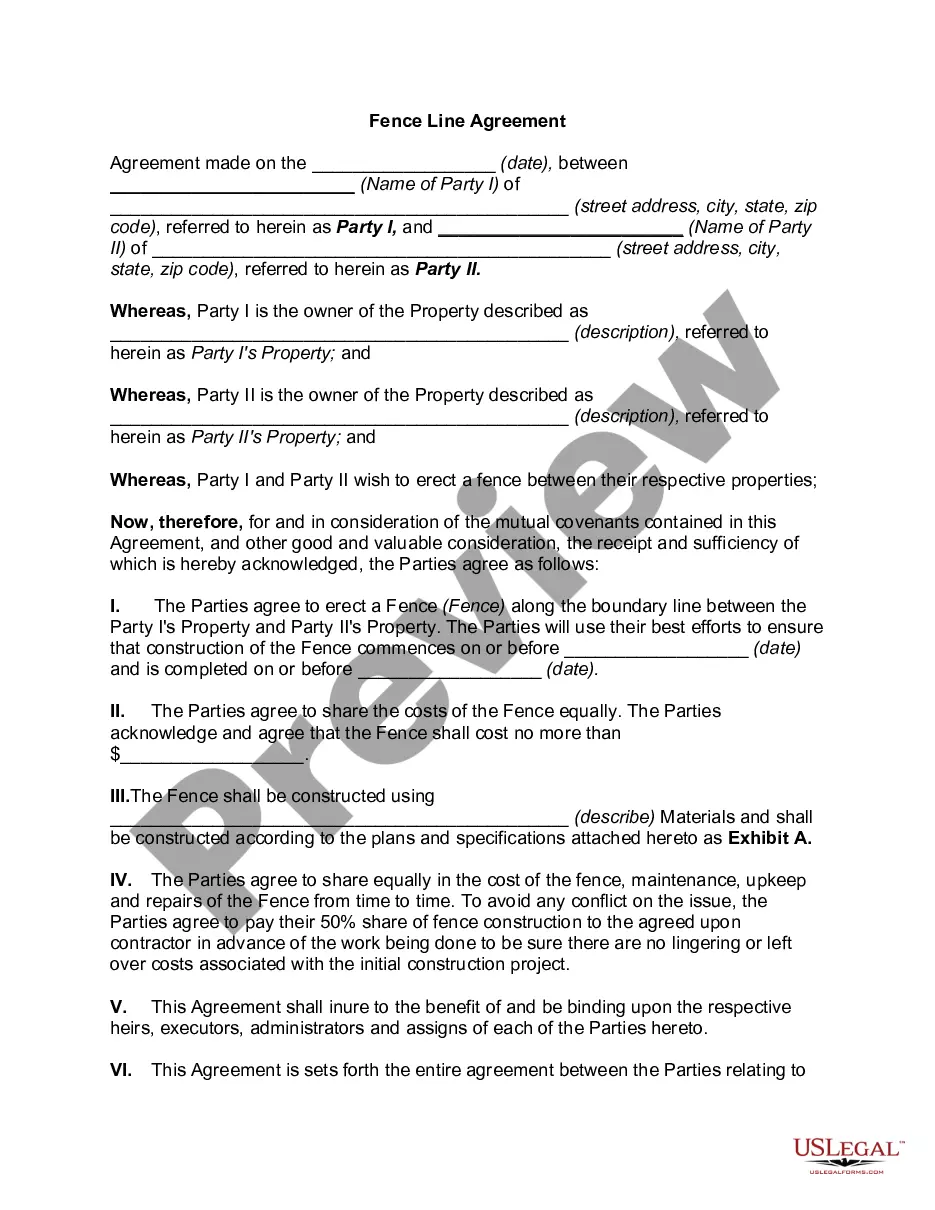
A boundary line agreement is a legal document that allows property owners to officially agree on the placement of a boundary line between their properties. This form is useful when one property owner's structure, such as a driveway, encroaches on another's land. It establishes the terms under which the encroachment can remain and helps to resolve potential disputes between neighboring landowners.
What’s included in this form
- Identification of property owners: Name and addresses of both the Owner and Neighbor.
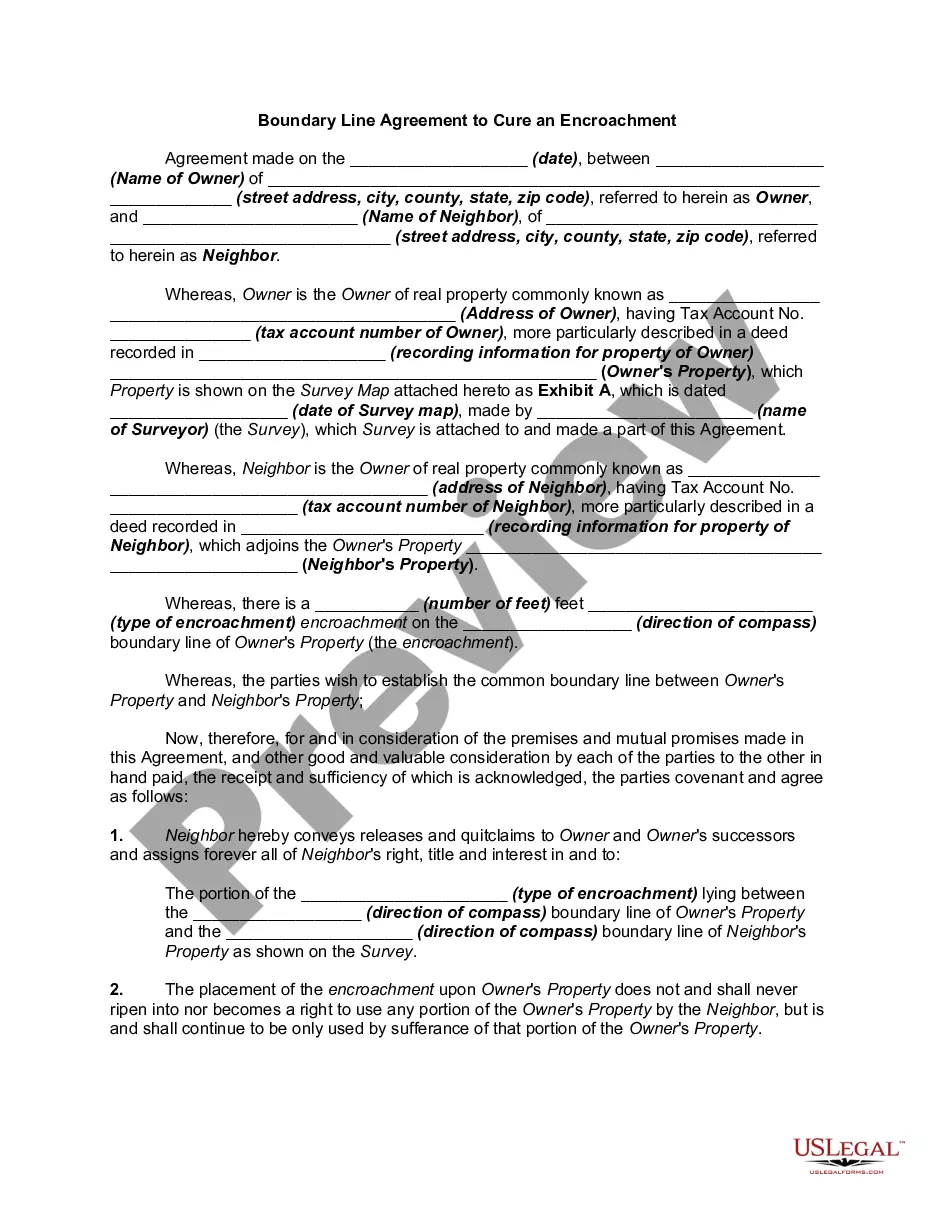
- Recitals section: A description of the properties involved and the encroachment details.
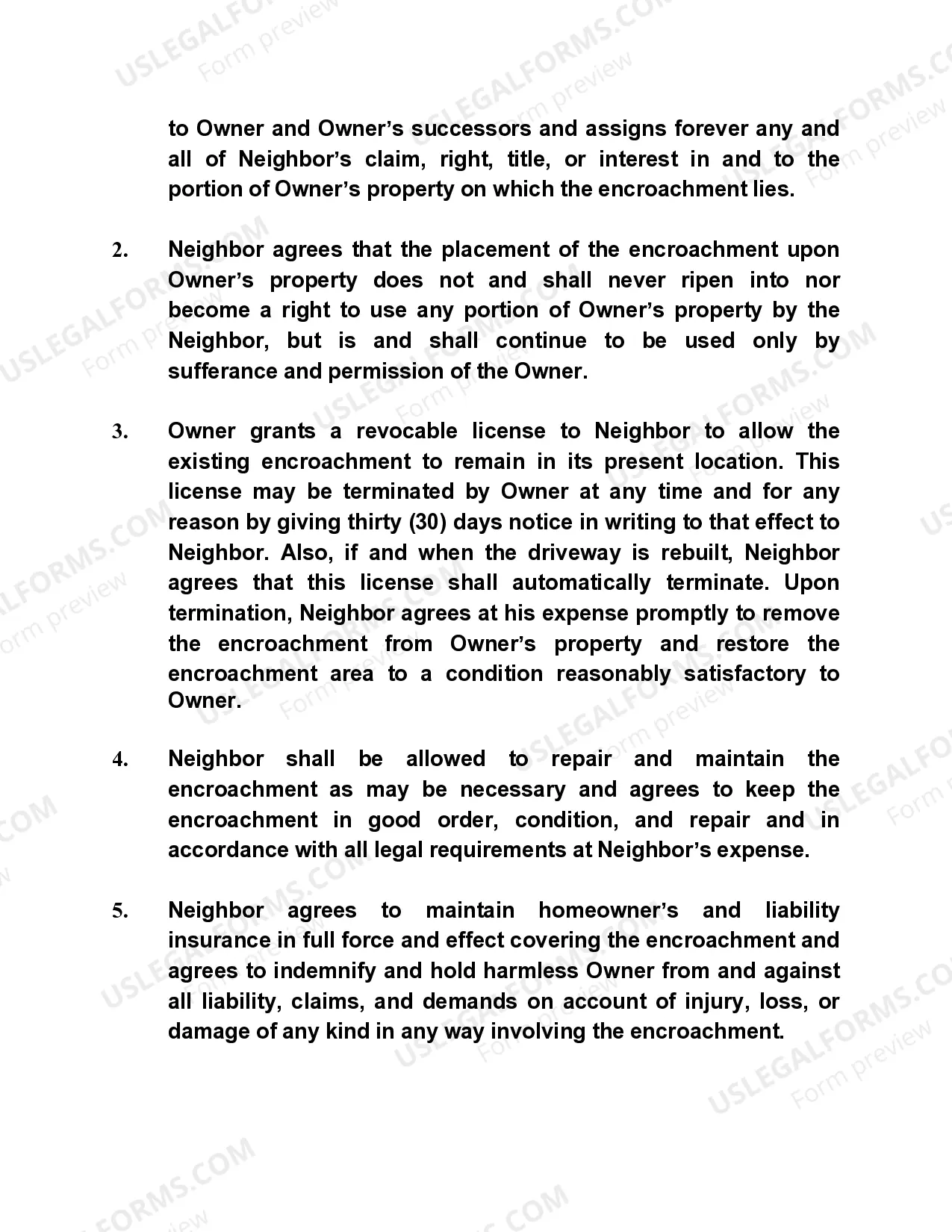
- License agreement: The terms under which the Neighbor can maintain the encroachment on Ownerâs property.
- Indemnification clause: A provision where the Neighbor agrees to hold the Owner harmless from any liability related to the encroachment.
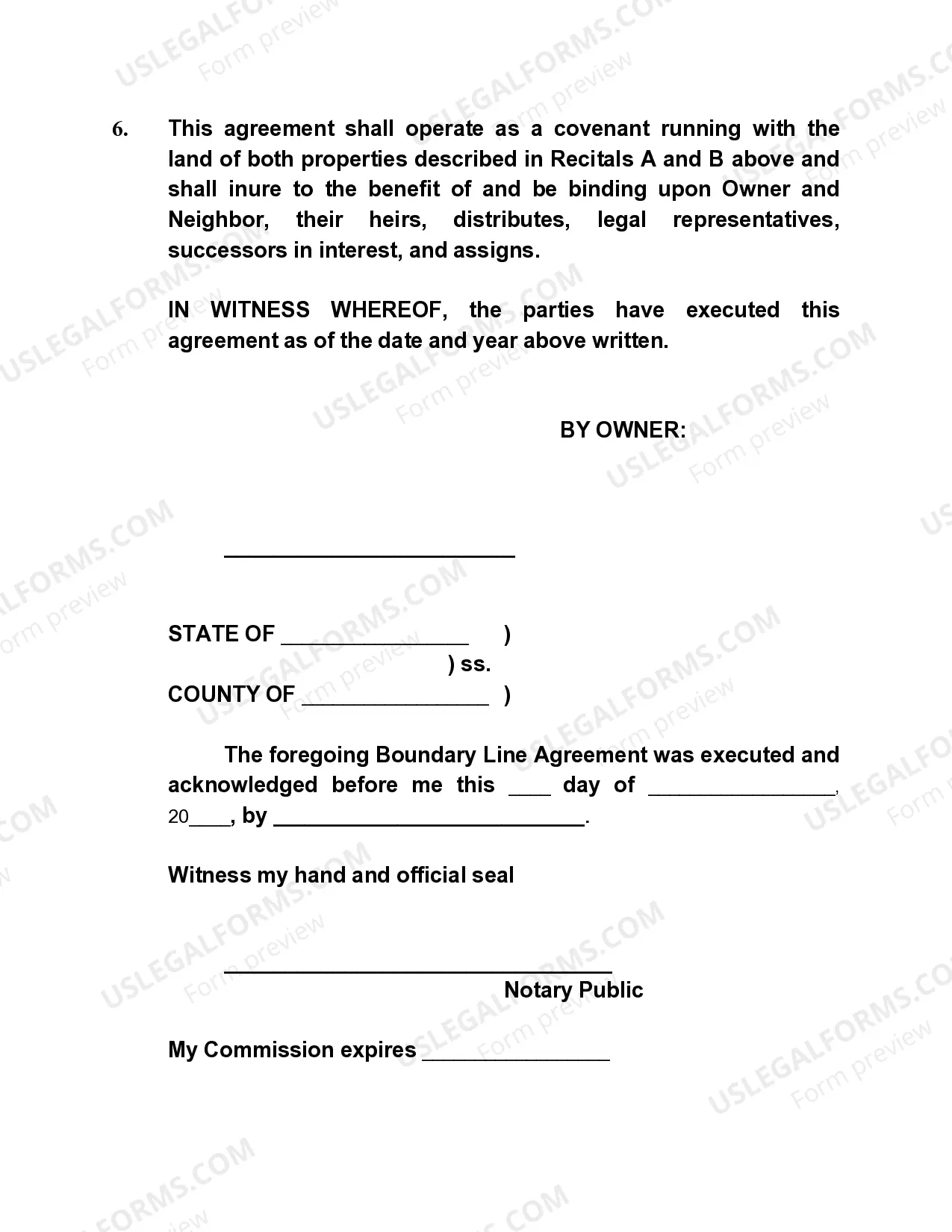
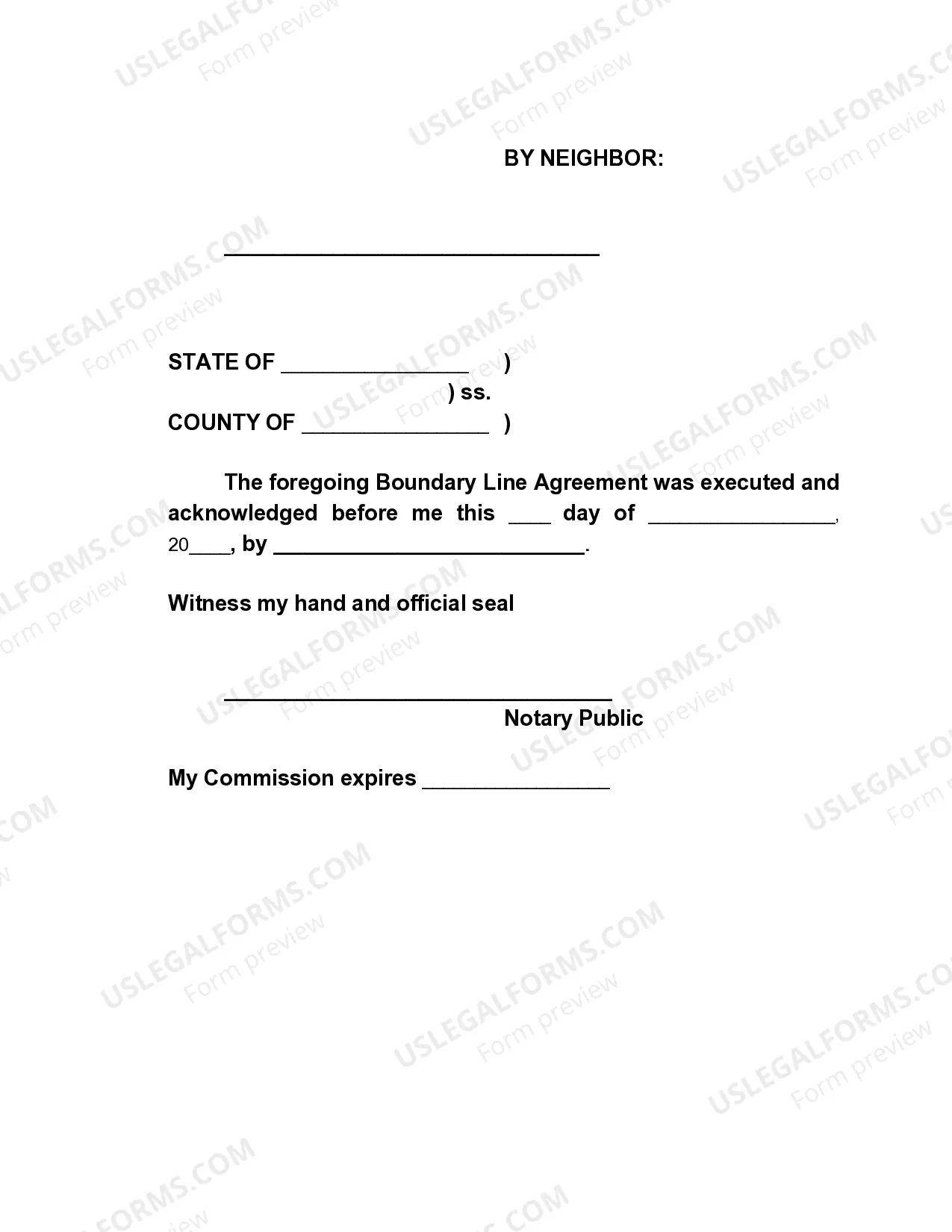
- Notary sections: Required authentication for the signatures of both parties.

When to use this form
This form should be used when property owners find that a structure on one person's property encroaches onto another's land. For example, if a Neighbor has built a driveway that overlaps the Owner's property line, this agreement allows them to acknowledge the encroachment legally and set the terms for its continued use. It can help prevent future disputes and provide a clear understanding of property rights.
Who should use this form
- Property owners who discover that their property line is not clearly defined.
- Neighbors who have made improvements that may unintentionally encroach on adjacent properties.
- Individuals seeking to resolve property disputes amicably and legally.
Completing this form step by step
- Identify the parties involved, including their names and property addresses.
- Specify the encroachment details, including the exact measurements that illustrate the overlap.
- Detail the terms of the agreement, including any rights granted to the Neighbor regarding the encroachment.
- Include the signatures of both parties in front of a notary public.
- Ensure all sections are complete before finalizing the document.
Is notarization required?
Yes, this form must be notarized to be legally valid. This protects both parties by ensuring that the agreement is signed voluntarily and with the understanding of its implications. US Legal Forms offers integrated online notarization services, providing secure and convenient notary services without the need for travel.
Get your form ready online
Our built-in tools help you complete, sign, share, and store your documents in one place.
Make edits, fill in missing information, and update formatting in US Legal Forms—just like you would in MS Word.
Download a copy, print it, send it by email, or mail it via USPS—whatever works best for your next step.
Sign and collect signatures with our SignNow integration. Send to multiple recipients, set reminders, and more. Go Premium to unlock E-Sign.
If this form requires notarization, complete it online through a secure video call—no need to meet a notary in person or wait for an appointment.
We protect your documents and personal data by following strict security and privacy standards.

Make edits, fill in missing information, and update formatting in US Legal Forms—just like you would in MS Word.

Download a copy, print it, send it by email, or mail it via USPS—whatever works best for your next step.

Sign and collect signatures with our SignNow integration. Send to multiple recipients, set reminders, and more. Go Premium to unlock E-Sign.

If this form requires notarization, complete it online through a secure video call—no need to meet a notary in person or wait for an appointment.

We protect your documents and personal data by following strict security and privacy standards.
Mistakes to watch out for
- Failing to clearly identify the properties and the nature of the encroachment.
- Not having all required signatures and notarization completed properly.
- Omitting critical terms regarding the rights and responsibilities of each party.
Benefits of completing this form online
- Convenient access: Easily download and fill out the form from home.
- Editability: You can customize the form to suit your specific situation.
- Reliability: Ensure that the form is drafted to legal standards, reducing the risk of errors.
Looking for another form?



Form popularity
FAQ
A boundary line adjustment refers to the legal modification of property boundaries between adjacent landowners. This process often involves surveying the land and submitting a request to local authorities for approval. It allows homeowners to customize their land usage more effectively or resolve disputes. Engaging legal services can simplify this process and help clarify your rights as a property owner.
A boundary line adjustment changes the physical layout of property lines, frequently involving changes in land ownership. In contrast, a boundary line agreement is a contract between property owners that defines and agrees upon existing boundaries without altering them. Both processes are essential in property management, but they serve different purposes. Understanding these differences can help you choose the right approach for your needs.
Dealing with neighbors who disregard property boundaries can be challenging but manageable. First, try to communicate openly with them to express your concerns about the boundary lines. If discussions do not resolve the issue, consider documenting any encroachments and consulting a professional for advice. A Colorado Boundary Line Agreement can formally define the boundaries and help prevent future conflicts.
A boundary adjustment is a legal process that alters the existing boundaries of two or more properties. This can happen when neighbors wish to reshuffle portions of land to better suit their needs or resolve property line disputes. It usually requires approval from the local government to ensure compliance with zoning regulations. Understanding this process can be crucial in situations where property boundaries need clarification.
A boundary line agreement is a legal document that helps resolve disputes about property lines between neighbors. It establishes a mutual understanding of the boundaries as determined by both parties. By formalizing this agreement, homeowners can avoid potential conflicts in the future. Involving a legal expert can ensure that the agreement complies with local laws.
To mark your property line, start by reviewing your property deed, which usually contains a description of your boundaries. Hiring a licensed surveyor can provide you with an accurate and professional assessment of your land. Once the surveyor establishes the boundaries, you can use markers to visibly indicate where your property begins and ends. This process can clarify any misunderstandings about property lines.
The purpose of a boundary line is to define the limits of your property, ensuring clarity in ownership and use. Boundary lines prevent disputes and provide a clear framework for property development. Utilizing a Colorado boundary line agreement can help you establish and maintain these important distinctions with your neighbors for a harmonious living environment.
A boundary agreement is a legally binding document that outlines the precise location of property lines between neighboring properties. It serves to prevent misunderstandings and disputes related to property ownership. In Colorado, using a boundary line agreement can help protect your rights and foster good relationships with your neighbors.
Your neighbor cannot build right up to your boundary without your consent. Building too close can lead to conflicts and potential legal issues. Understanding Colorado boundary line agreements can help you address these situations, allowing for clarity and mutual respect between property owners.
Boundary agreements are legal documents that define the edges of your property. They help prevent disputes between neighbors by clarifying property lines. In Colorado, a boundary line agreement can provide security and peace of mind, ensuring that everyone understands their property boundaries.