Colorado Notice, Claim, and Summons to Appear
What is this form?
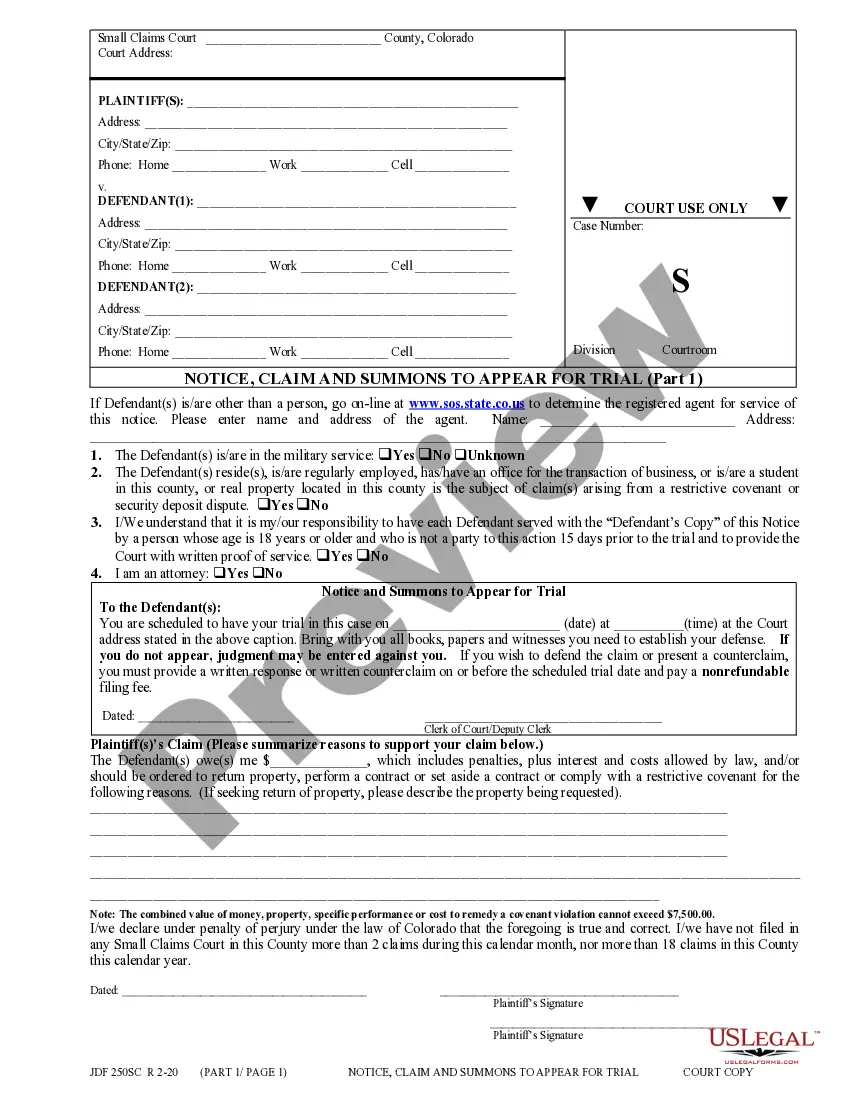
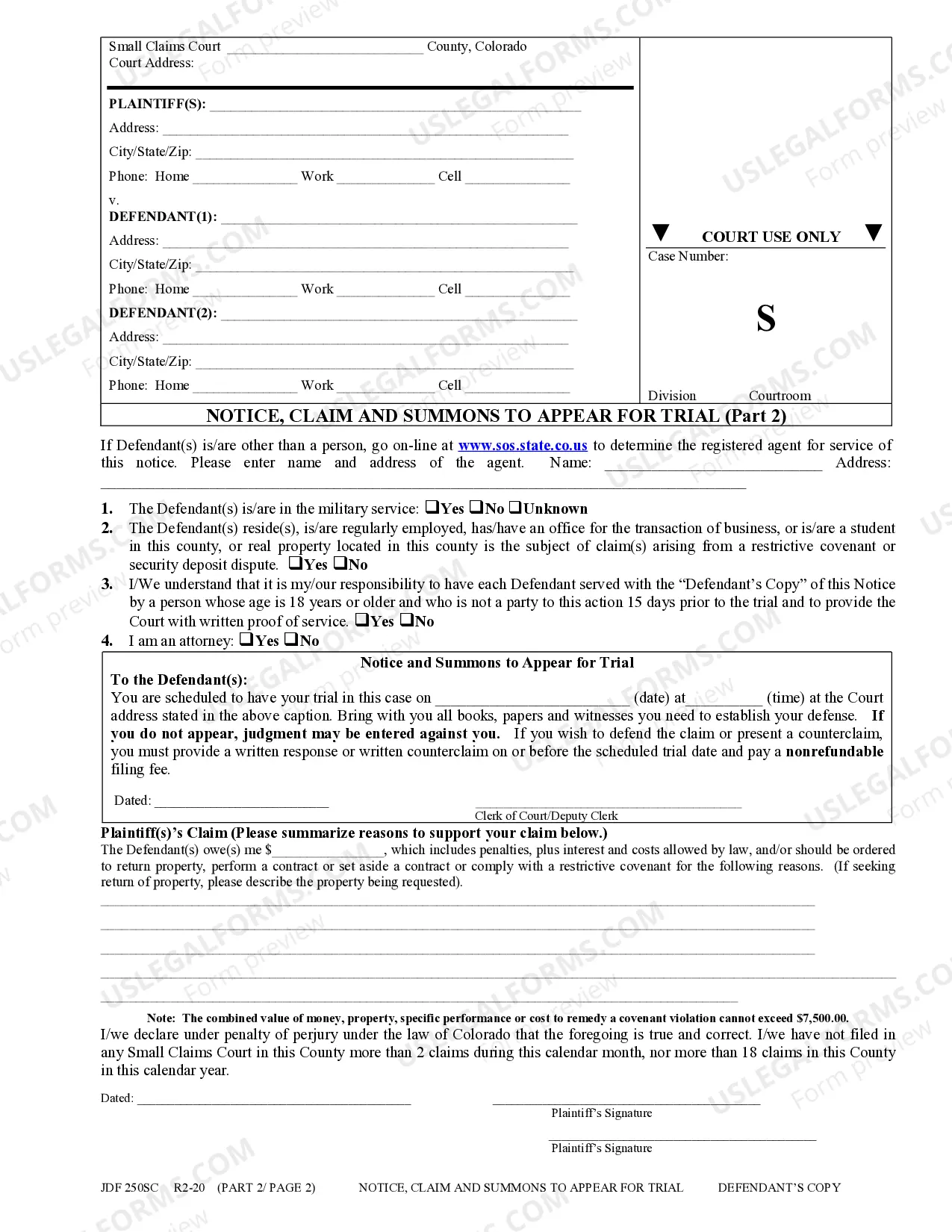
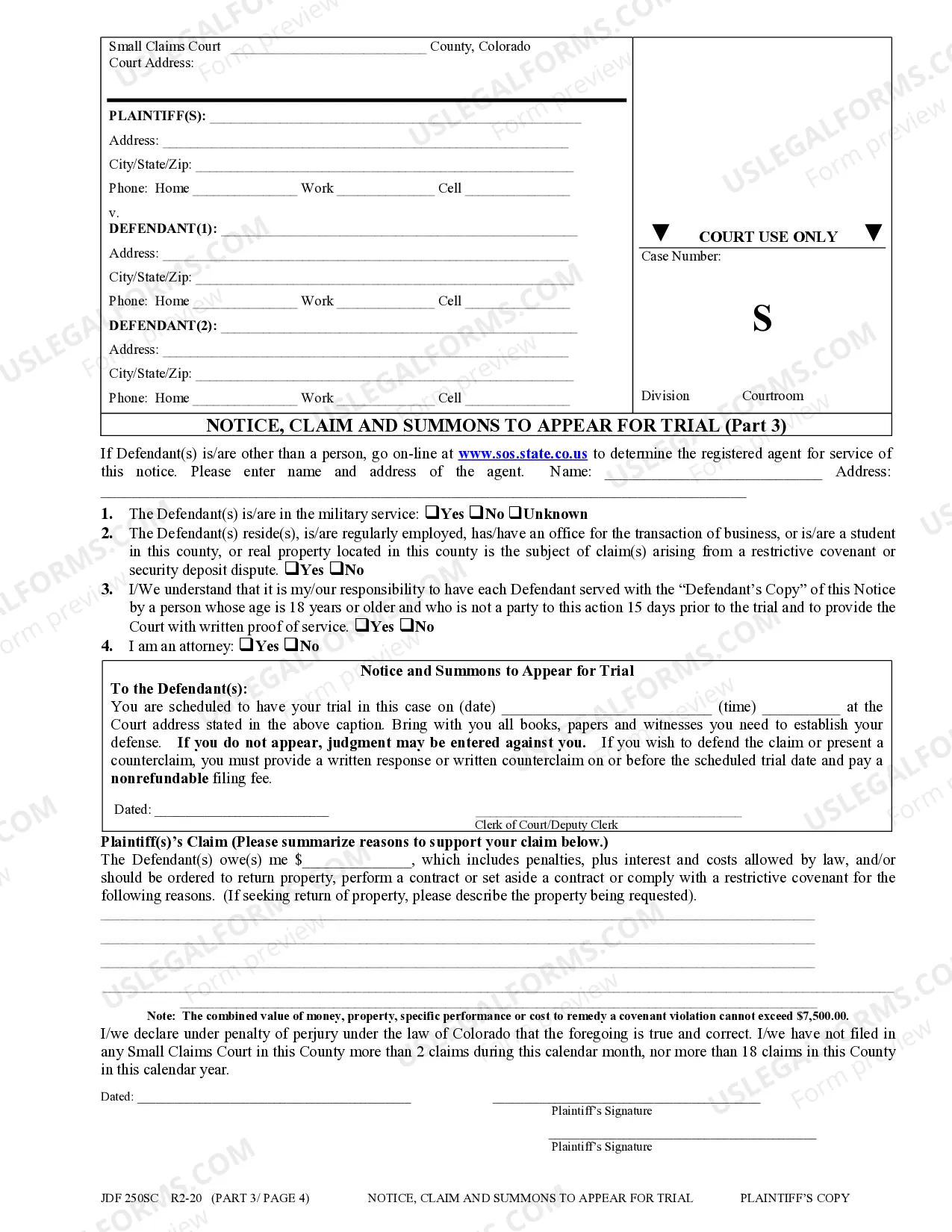
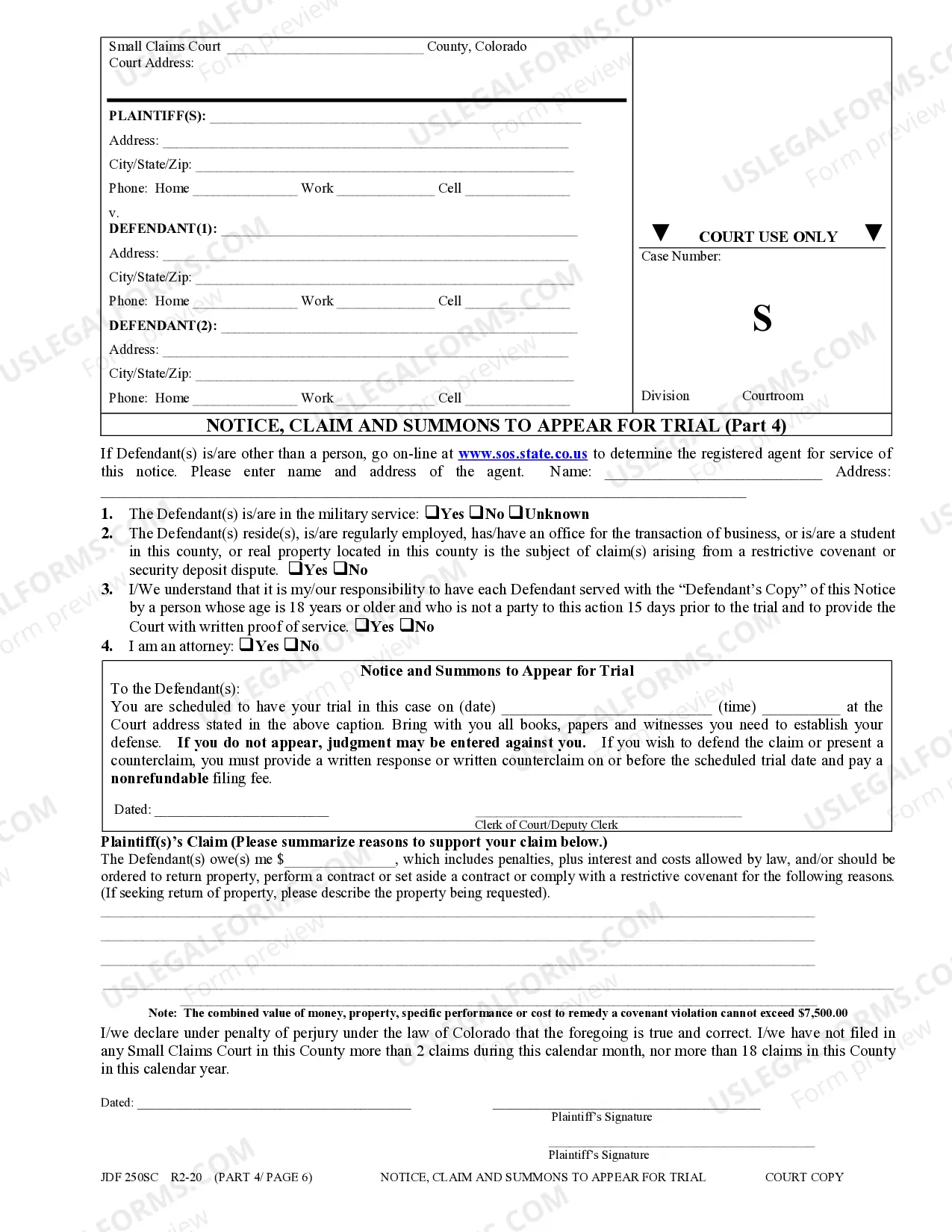
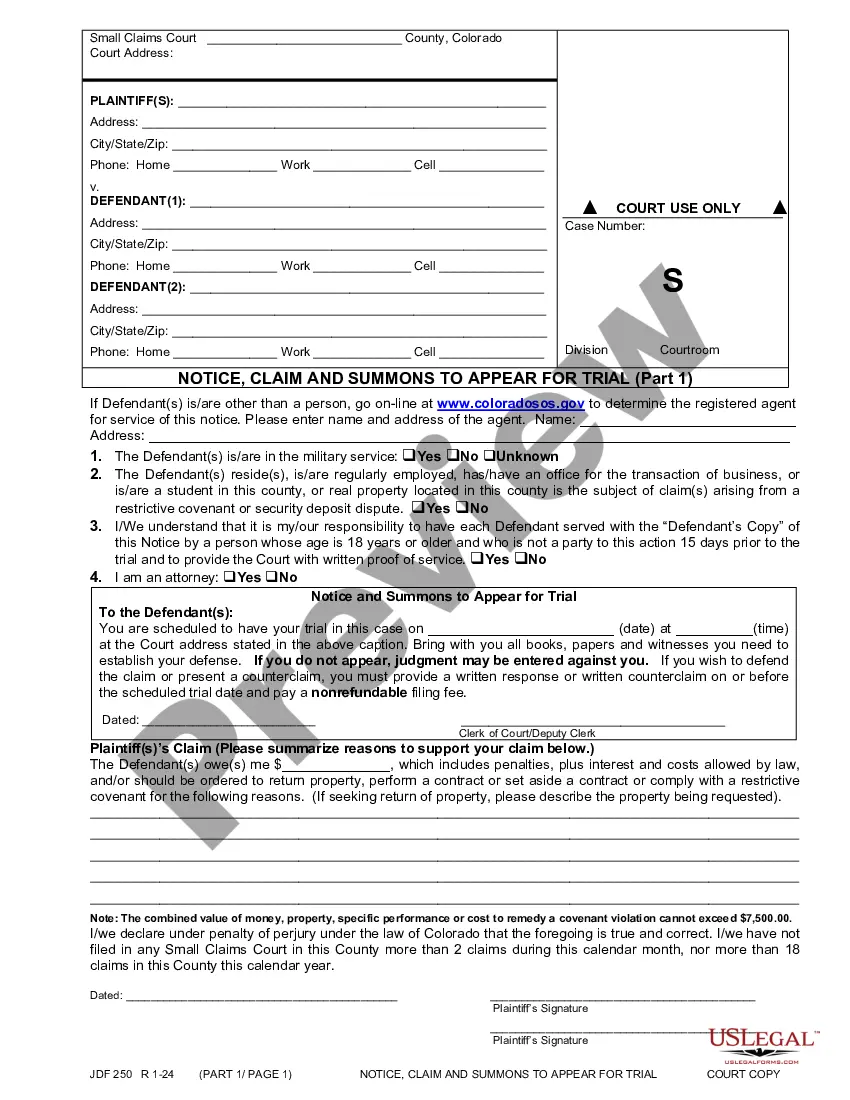
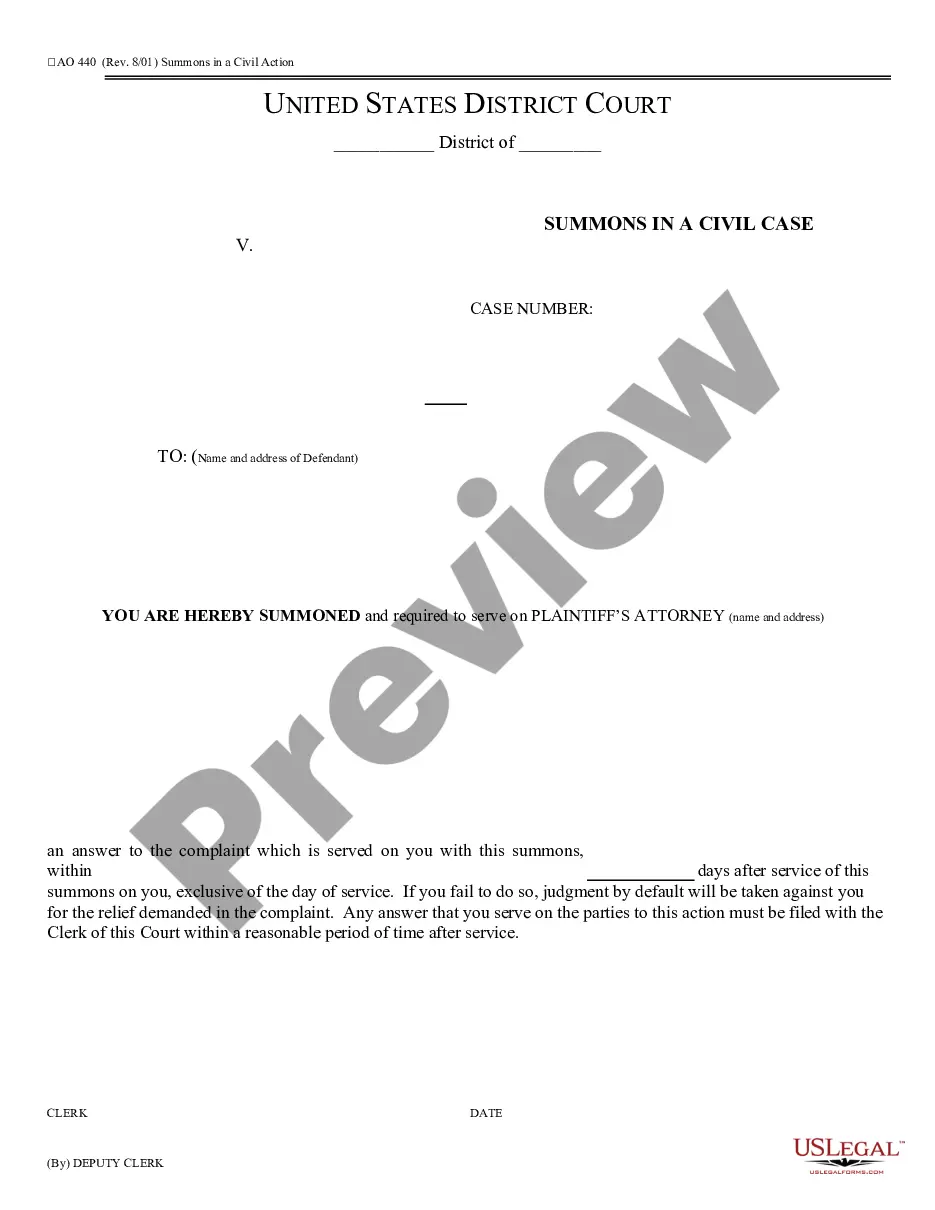
The Notice, Claim, and Summons to Appear is a legal document that provides formal notification to parties involved in a small claims matter. It serves to inform defendants about a scheduled trial and the claims made against them, ensuring that they understand their obligations and rights in the legal process. This form is essential for maintaining the flow of legal proceedings and can be adapted for specific cases.
What’s included in this form
- Information about the plaintiff and defendant(s), including their addresses and contact details.
- Details of the claim, including the amount owed and reasons for the claim.
- Trial date and time, along with court information.
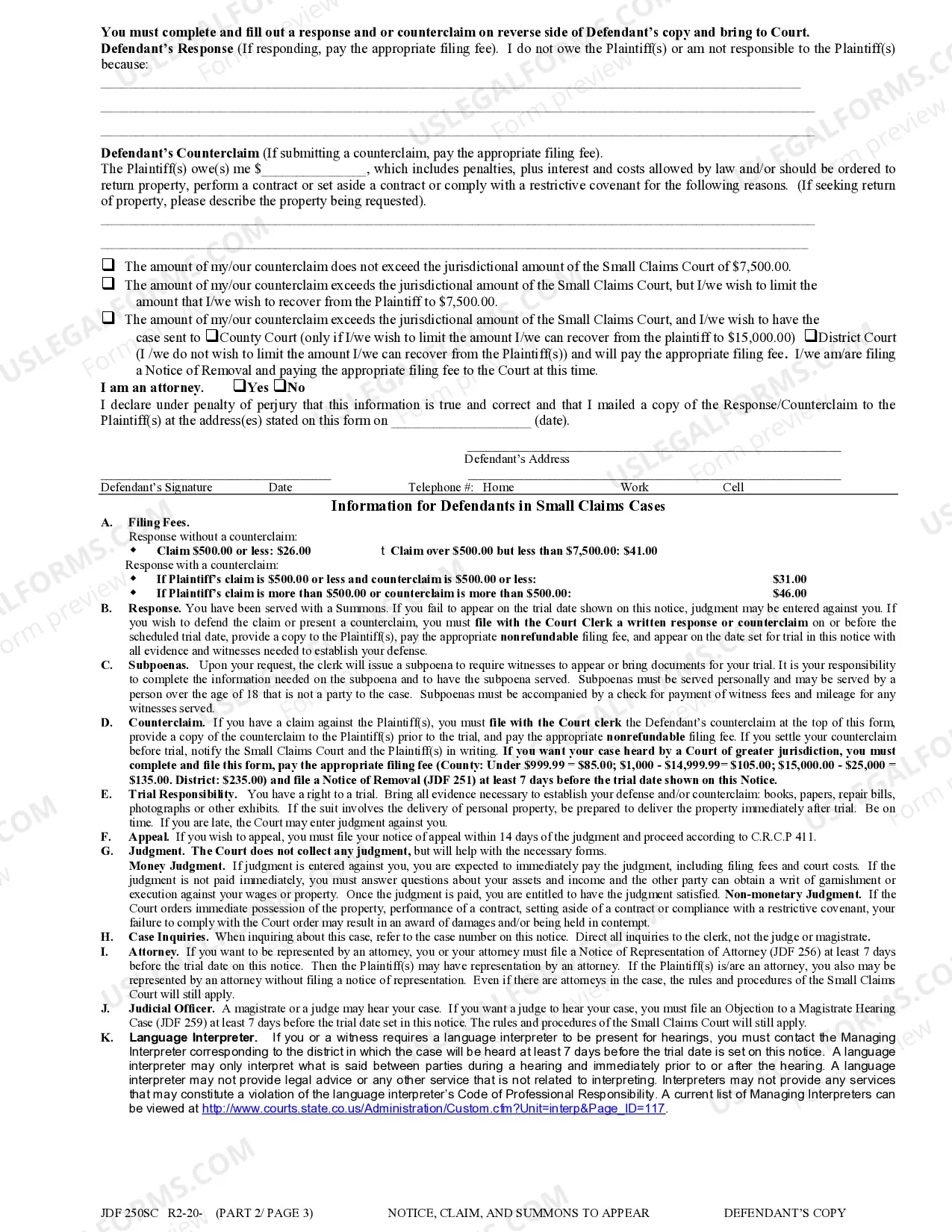
- Instructions for the defendant on how to respond to the claim or file a counterclaim.
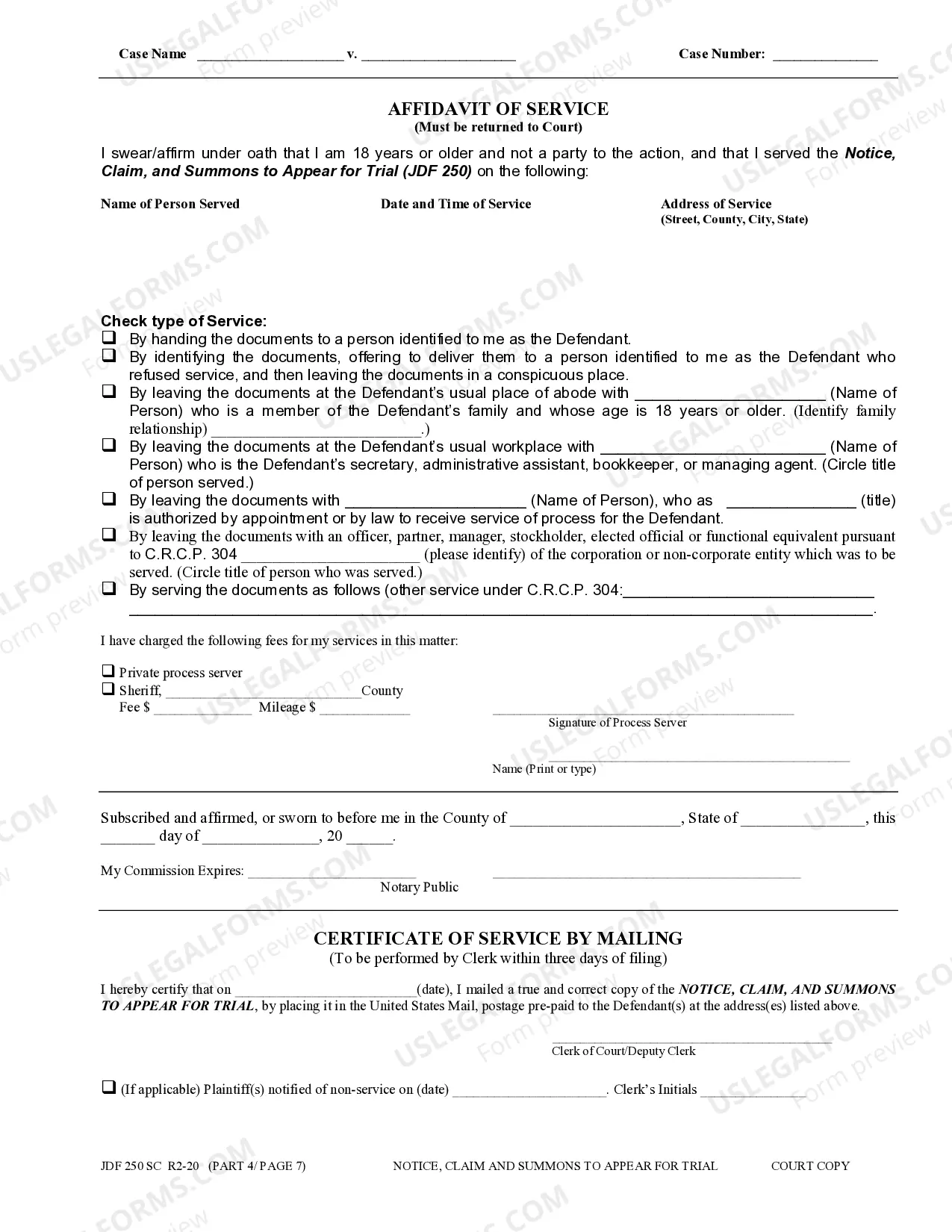
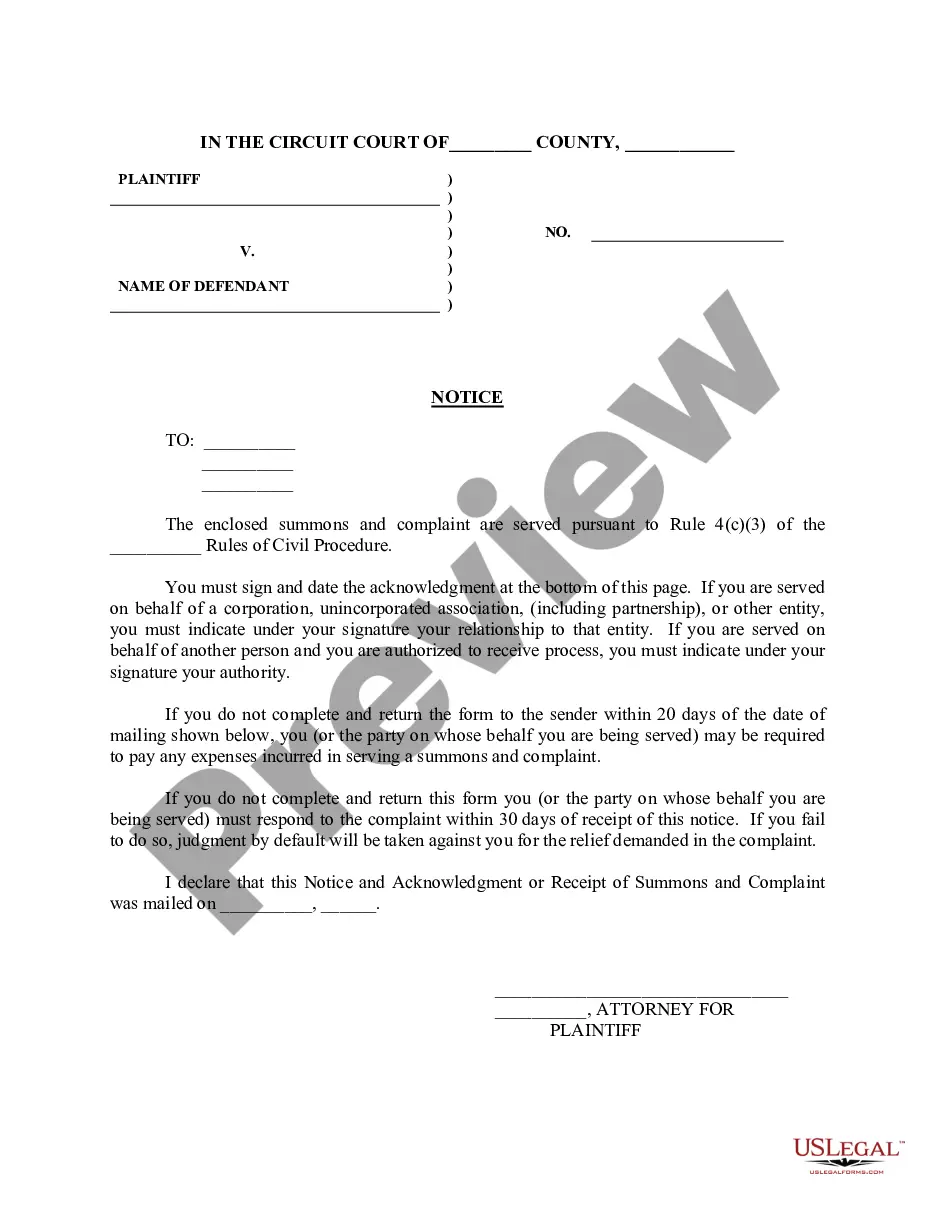
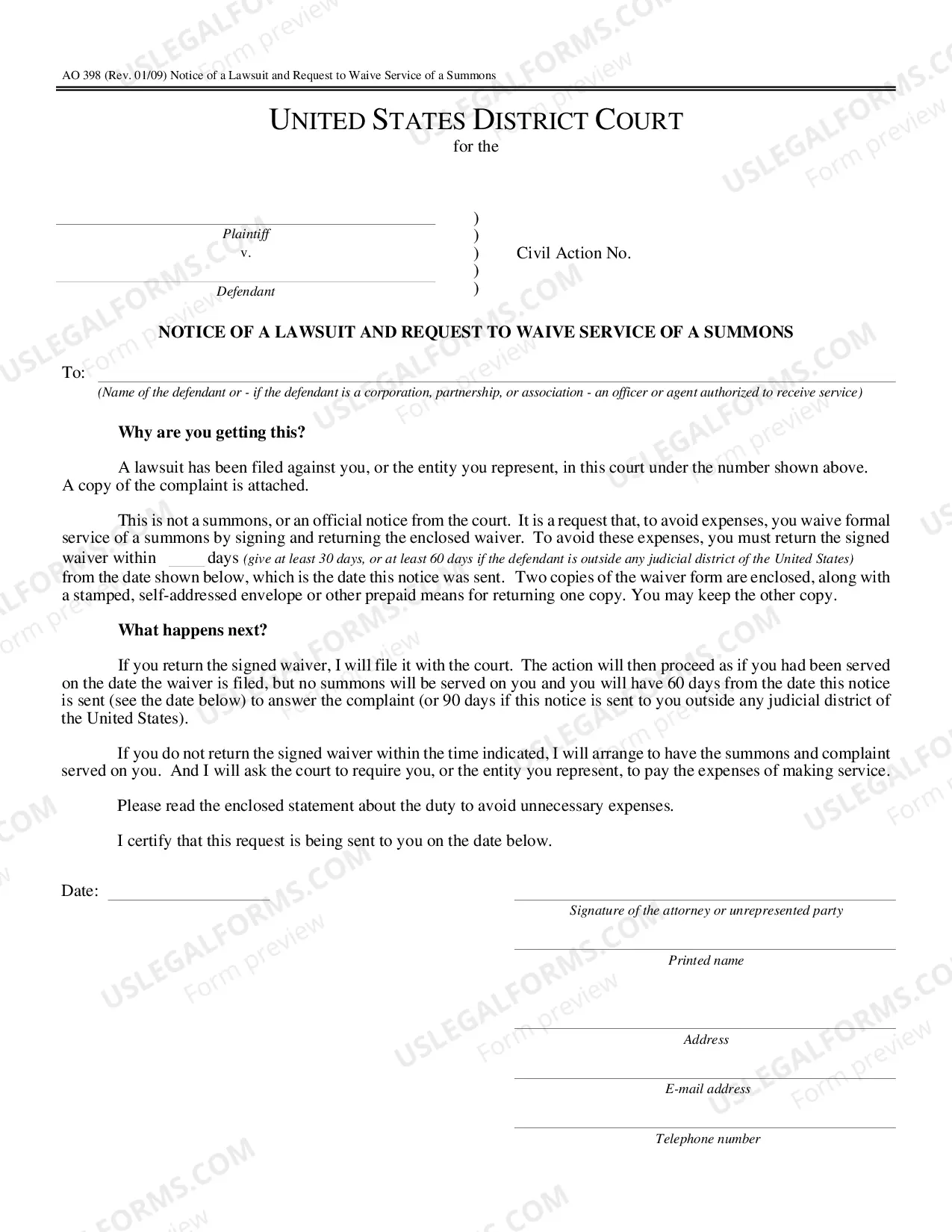
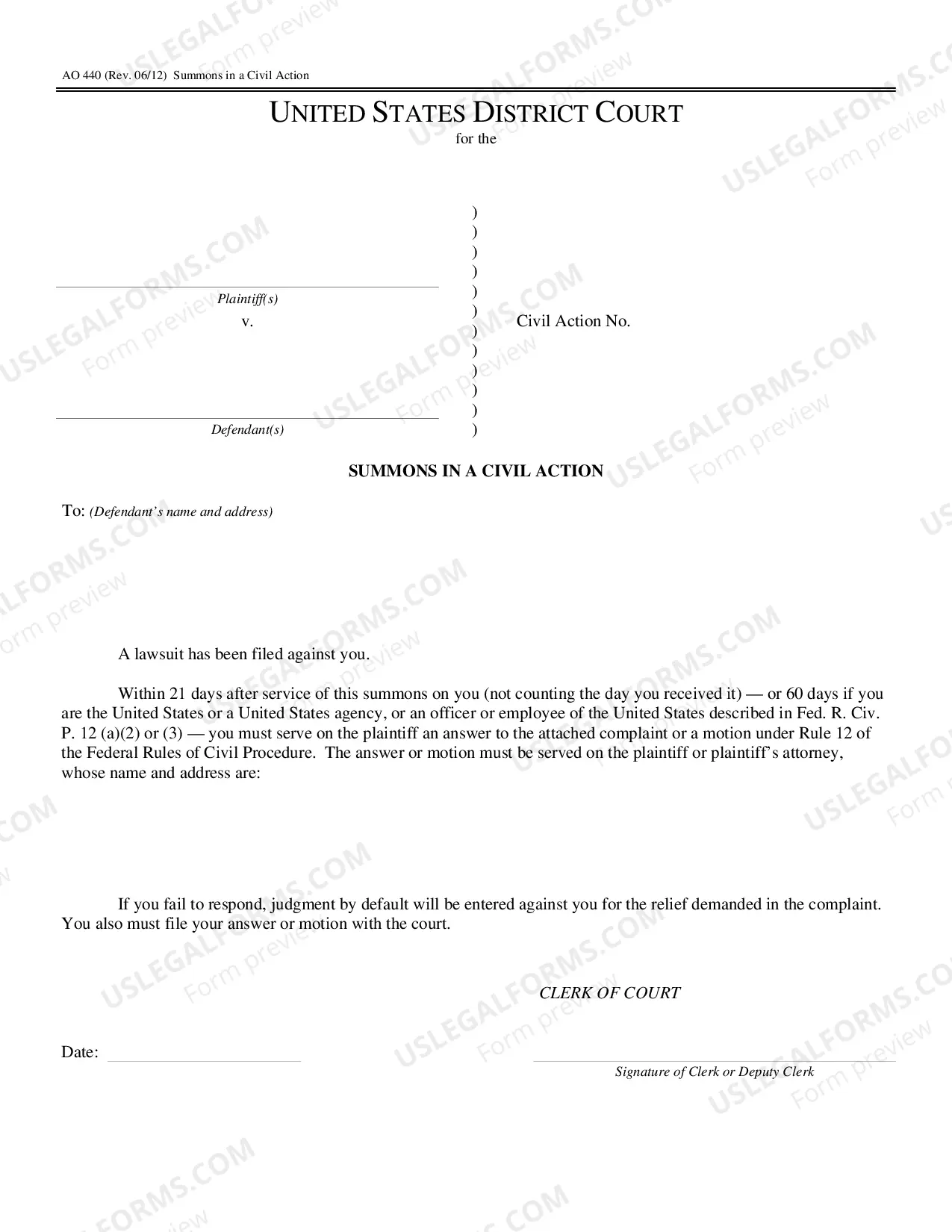
- Affidavit of service to document how the notice was served to the defendant(s).
When to use this form
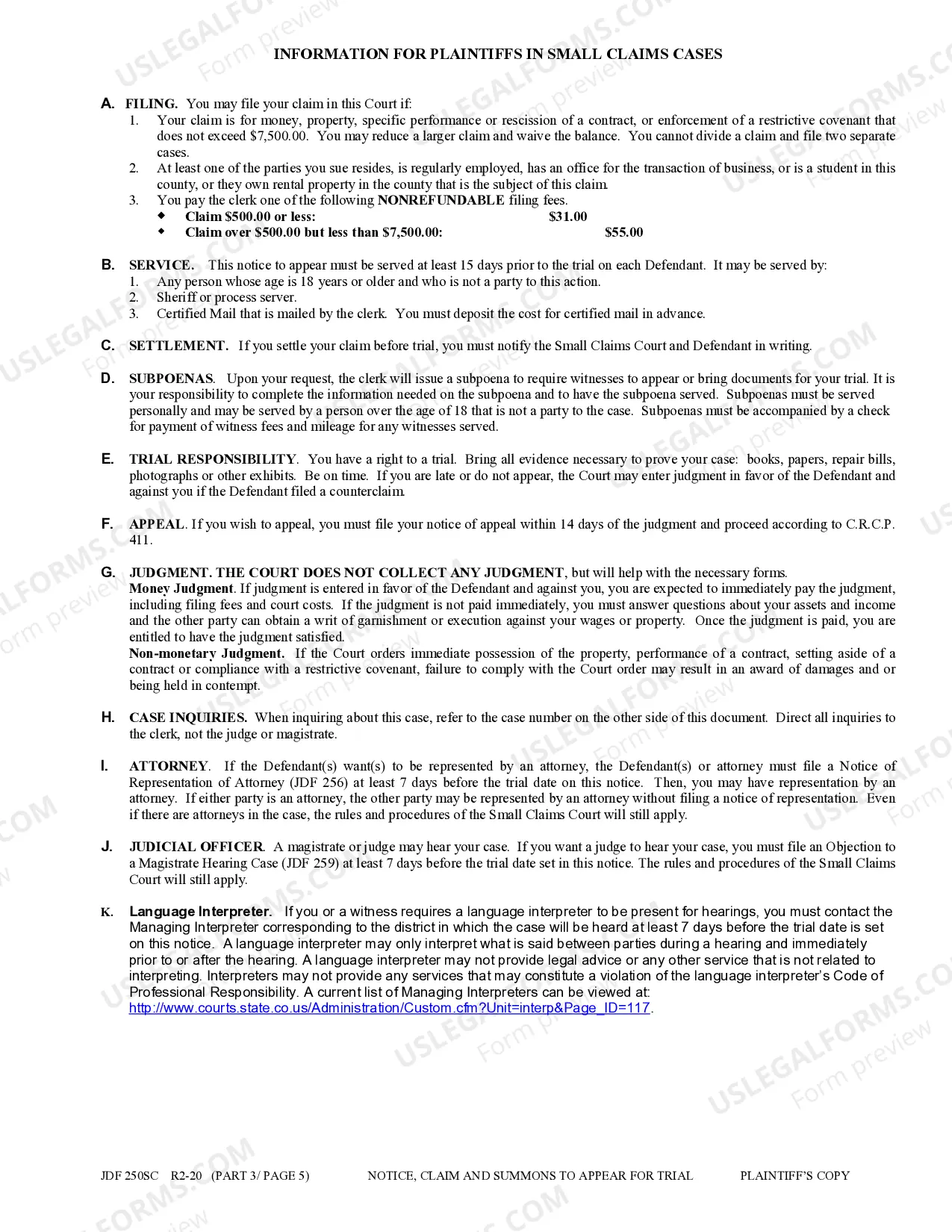
This form should be used when a plaintiff is seeking to bring a claim in small claims court, typically for amounts not exceeding $7,500. It is essential when the plaintiff needs to ensure that the defendant is legally notified of the claim and required to appear in court. Scenarios include disputes regarding unpaid debts, property recovery, or breach of contract cases.
Who this form is for
- Individuals or businesses seeking to resolve a small claims dispute.
- Parties that must formally notify defendants of legal actions against them.
- Anyone needing to file a claim for recovery of money, property, or specific performance in court.
How to complete this form
- Identify the parties involved by entering the names and addresses of the plaintiff(s) and defendant(s).
- Specify the claim amount, including any penalties and interest, along with a brief description of the reasons for the claim.
- Enter the scheduled trial date and time as determined by the court.
- Complete the affidavit of service to confirm how the notice was delivered to the defendants.
- Sign and date the form, ensuring all required signatures are included.
Is notarization required?
Notarization is not commonly needed for this form. However, certain documents or local rules may make it necessary. Our notarization service, powered by Notarize, allows you to finalize it securely online anytime, day or night.
Get your form ready online
Our built-in tools help you complete, sign, share, and store your documents in one place.
Make edits, fill in missing information, and update formatting in US Legal Forms—just like you would in MS Word.
Download a copy, print it, send it by email, or mail it via USPS—whatever works best for your next step.
Sign and collect signatures with our SignNow integration. Send to multiple recipients, set reminders, and more. Go Premium to unlock E-Sign.
If this form requires notarization, complete it online through a secure video call—no need to meet a notary in person or wait for an appointment.
We protect your documents and personal data by following strict security and privacy standards.

Make edits, fill in missing information, and update formatting in US Legal Forms—just like you would in MS Word.

Download a copy, print it, send it by email, or mail it via USPS—whatever works best for your next step.

Sign and collect signatures with our SignNow integration. Send to multiple recipients, set reminders, and more. Go Premium to unlock E-Sign.

If this form requires notarization, complete it online through a secure video call—no need to meet a notary in person or wait for an appointment.

We protect your documents and personal data by following strict security and privacy standards.
Mistakes to watch out for
- Failing to provide accurate addresses for the plaintiff and defendant(s).
- Not including the required filing fee with the notice.
- Omitting the trial date or other essential details of the claim.
- Not serving the notice within the specified timeframe of 15 days before the trial.
- Neglecting to retain proof of service for court records.
Benefits of completing this form online
- Convenient access to legal templates any time, allowing for quick preparation.
- Editable fields that ensure you can customize the form to fit your specific case.
- Reliable, attorney-drafted documents that enhance compliance with legal standards.
Looking for another form?



Form popularity
FAQ
In Colorado, you can legally serve someone by delivering a copy of the Colorado Notice, Claim, and Summons to Appear to them personally or by mail. Additionally, you may use a process server for proper service. Following the correct procedures ensures your legal documents are valid and recognized in court.
You typically have 21 days to file a civil suit after you receive the Colorado Notice, Claim, and Summons to Appear. This timeline is crucial, as it outlines the duration in which you can take legal action. An early start helps ensure you stay on track with your legal rights and options.
In Colorado, the civil case limit can vary depending on the nature of the claim. For most civil cases, the limit falls under the jurisdiction of the district courts, which can handle claims exceeding $25,000. Knowing about the Colorado Notice, Claim, and Summons to Appear helps you understand the implications of your claim and where to file it.
You generally have three years to file a property damage claim in Colorado. This timeframe begins when you discover the damage or when it should reasonably have been discovered. Utilizing the Colorado Notice, Claim, and Summons to Appear can provide guidance on how to frame your claim and ensure you meet the deadlines.
In Colorado, the statute of limitations for filing a civil suit is typically two years from the date of the incident that caused harm. It's essential to act swiftly, as delays can prevent you from pursuing your case effectively. If you need assistance, the Colorado Notice, Claim, and Summons to Appear can help clarify your rights and responsibilities in the legal process.
To serve a Summons in Colorado, you must follow specific legal procedures to ensure it is valid. Typically, this involves delivering the Summons and Complaint to the defendant personally or via a designated process server. Ensure compliance with all local regulations to uphold the legitimacy of your service, and if needed, consult resources like US Legal Forms regarding the requirements of the Colorado Notice, Claim, and Summons to Appear.
Responding to a debt collector who is suing you involves drafting a formal response to the Summons you received. In your response, assert your rights, state any defenses you may have, and request verification of the debt, if applicable. Filing your answer promptly is key, thus using resources like US Legal Forms can guide you through the process and help ensure compliance with the Colorado Notice, Claim, and Summons to Appear.
To write a response to a Summons for debt, start by carefully reviewing the document. Include your personal information, case number, and a clear statement of your defense against the claims. Outline any relevant facts and attach supporting documents if needed. Finally, ensure you file your answer with the court and serve it to the creditor as required by the Colorado Notice, Claim, and Summons to Appear.
Writing a response to a Summons involves summarizing your position regarding the claims in the Summons. Be sure to include your contact information, the case number, and clearly address each point raised. Resources like uslegalforms can guide you in crafting a well-structured, effective response to your Colorado Notice, Claim, and Summons to Appear.
Filing small claims court in Colorado involves choosing the correct court, completing the required forms, and submitting them along with any necessary fees. Ensure your claim clearly states the issue and the amount owed. Filing a Colorado Notice, Claim, and Summons to Appear properly is crucial for moving forward with your case.