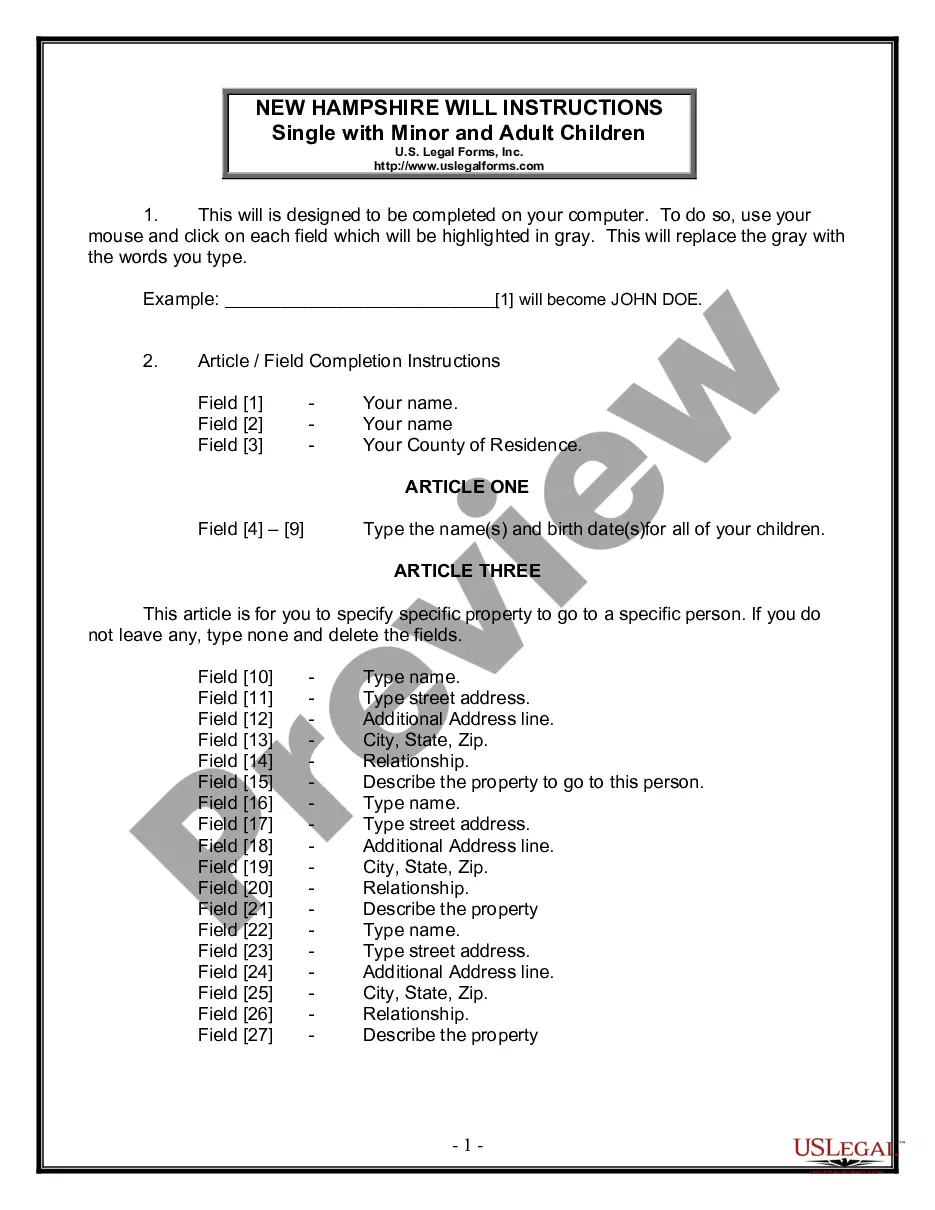
California Written Revocation of Will
Understanding this form
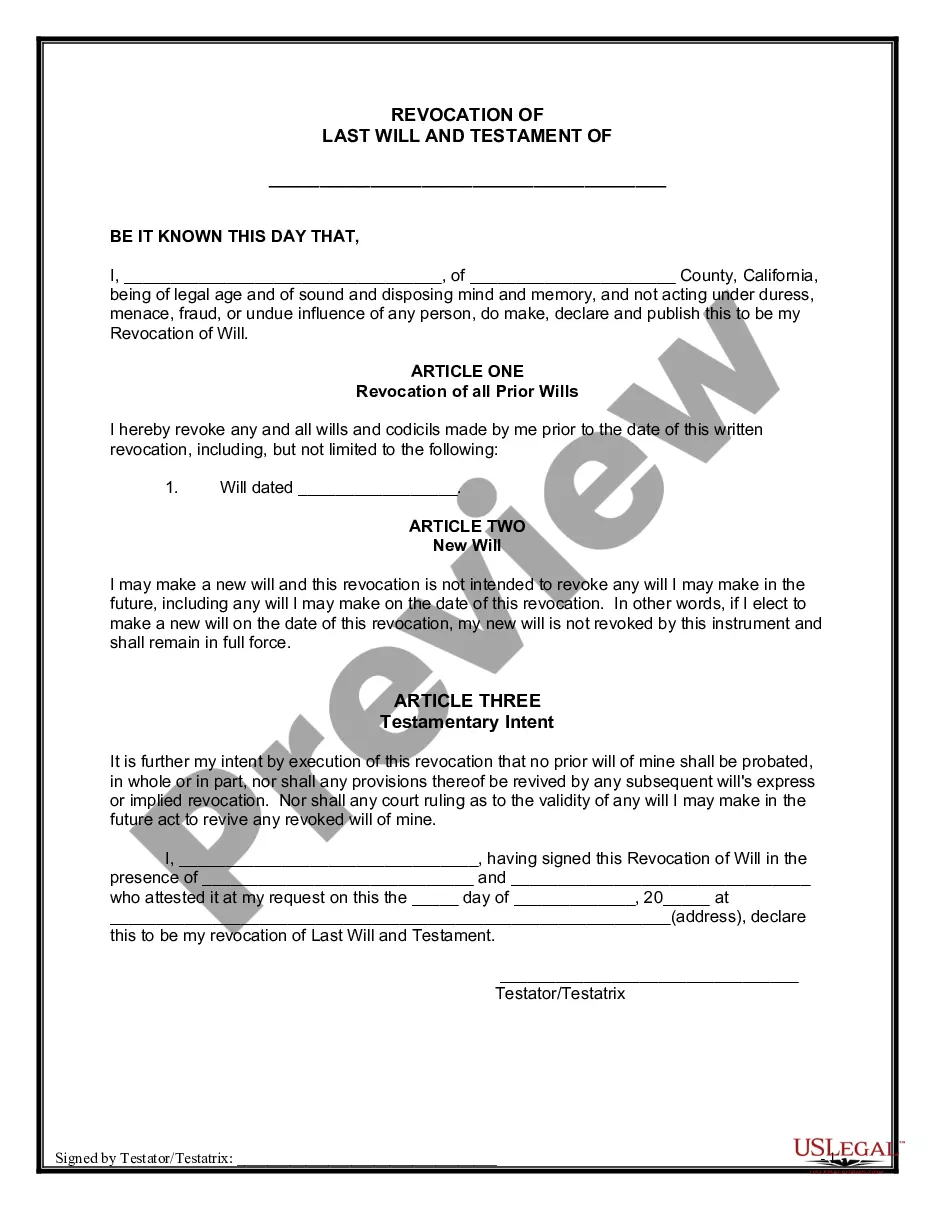
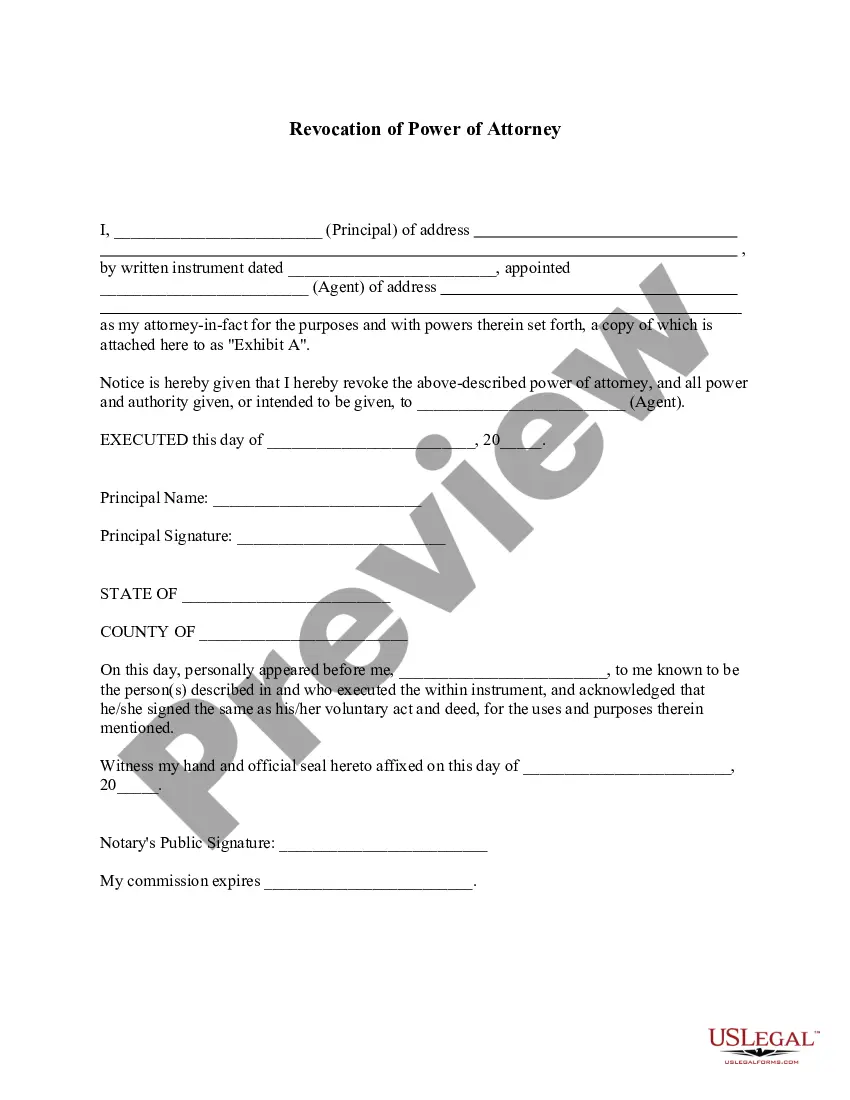
The Written Revocation of Will is a legal document used to invalidate a previously executed will. Unlike a new will that typically revokes prior wills through a clause, this form explicitly states the revocation of earlier wills separately. This is essential if the latest will is contested or if your heirs prefer an older version, ensuring that those heirs do not probate an unwanted will and reaffirming your intent to revoke.
What’s included in this form
- Declaration of revocation for all prior wills and codicils.
- Statement indicating that the revocation does not affect future wills.
- Affirmation of the testator's intent regarding the non-probate of prior wills.
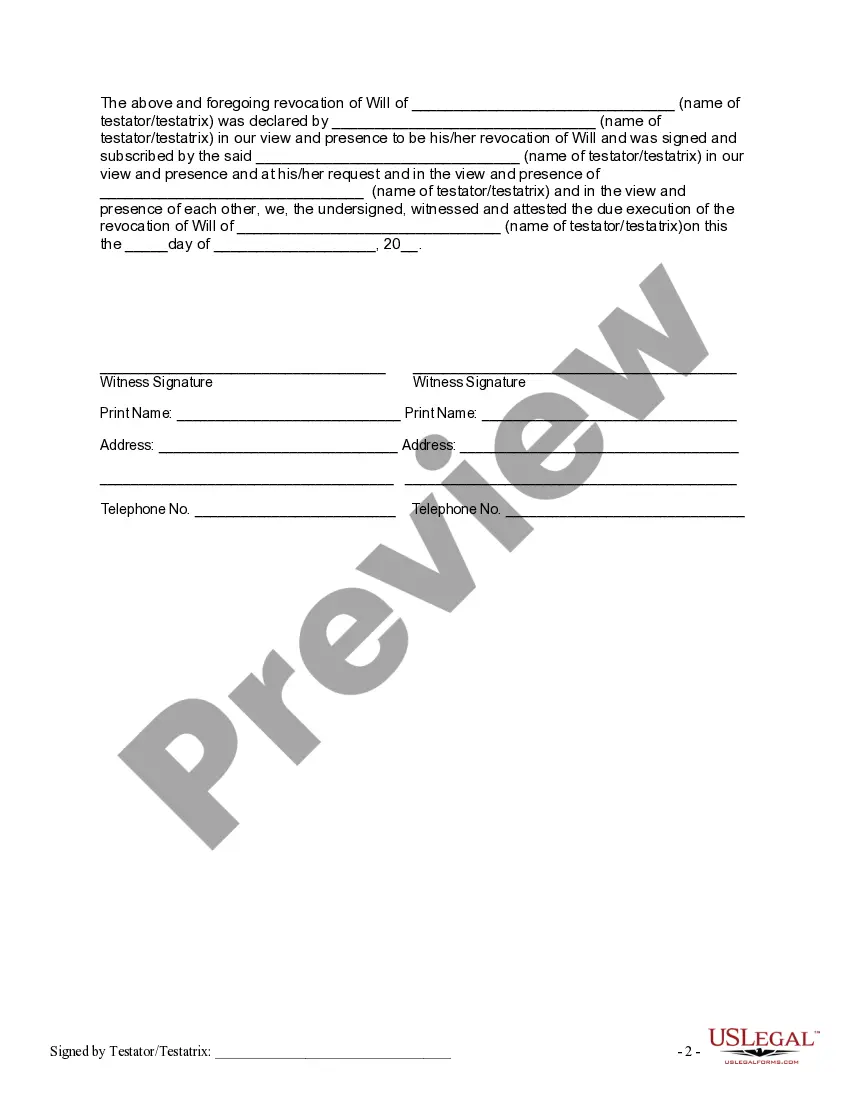
- Spaces for the names and signatures of witnesses.
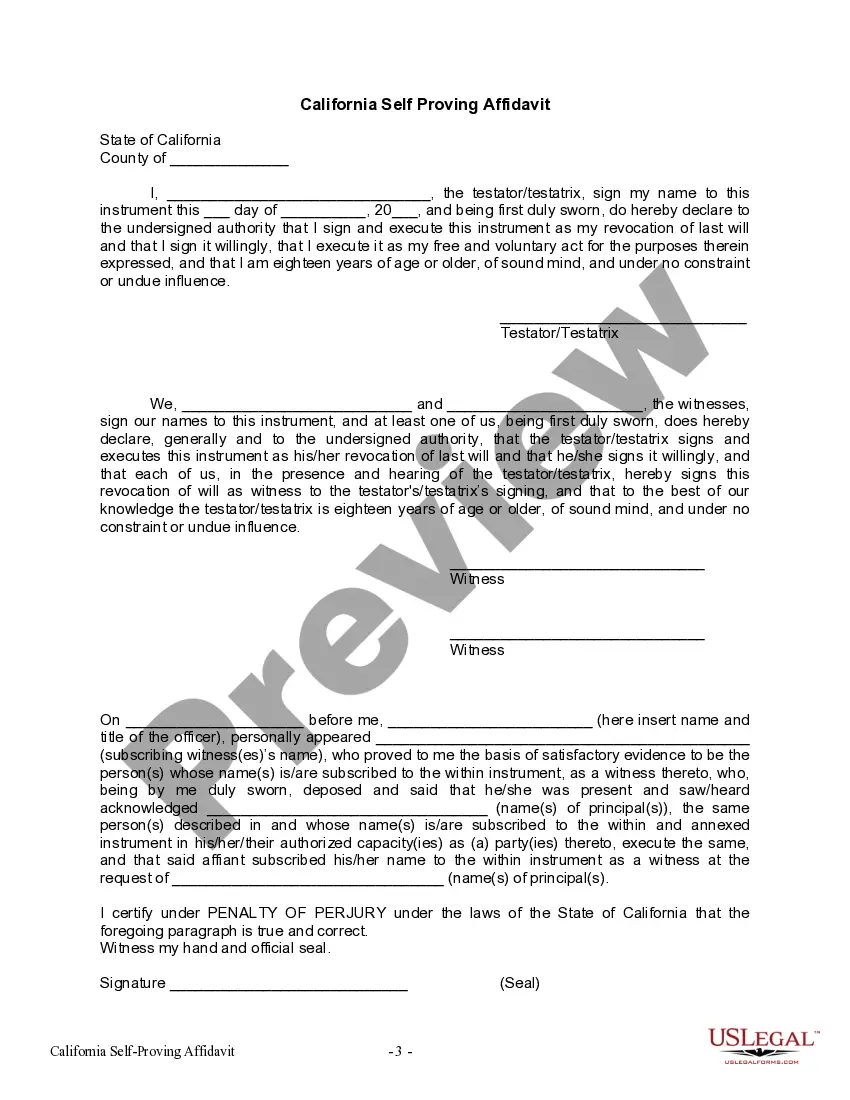
- A self-proving affidavit section to verify the signing process.

When to use this document
This form is useful in various situations, such as when you want to revoke a will due to a change in circumstances, such as marriage, divorce, or the birth of a child. It can also be used if you have created a new will that you prefer to take precedence over an existing one, but for any reason, you want to ensure the older will cannot be used in probate.
Who should use this form
- Individuals who have previously executed a will and wish to revoke it.
- Those who wish to ensure their most current wishes regarding asset distribution are clear.
- Heirs or family members involved in estate planning who want to prevent misinterpretations regarding will validity.
Instructions for completing this form
- Enter your name and address as the testator or testatrix at the beginning of the form.
- Clearly state the date of the will(s) you wish to revoke.
- Sign the form in the presence of two witnesses, ensuring they also sign the document.
- Complete the self-proving affidavit section for added legal validity, if applicable.
- Store this document securely alongside any current or future wills to clarify your intentions.
Notarization guidance
This form does not typically require notarization unless specified by local law. However, having it notarized can add an extra layer of security to the execution of your revocation.
Get your form ready online
Our built-in tools help you complete, sign, share, and store your documents in one place.
Make edits, fill in missing information, and update formatting in US Legal Forms—just like you would in MS Word.
Download a copy, print it, send it by email, or mail it via USPS—whatever works best for your next step.
Sign and collect signatures with our SignNow integration. Send to multiple recipients, set reminders, and more. Go Premium to unlock E-Sign.
If this form requires notarization, complete it online through a secure video call—no need to meet a notary in person or wait for an appointment.
We protect your documents and personal data by following strict security and privacy standards.

Make edits, fill in missing information, and update formatting in US Legal Forms—just like you would in MS Word.

Download a copy, print it, send it by email, or mail it via USPS—whatever works best for your next step.

Sign and collect signatures with our SignNow integration. Send to multiple recipients, set reminders, and more. Go Premium to unlock E-Sign.

If this form requires notarization, complete it online through a secure video call—no need to meet a notary in person or wait for an appointment.

We protect your documents and personal data by following strict security and privacy standards.
Typical mistakes to avoid
- Failing to sign the revocation in front of witnesses.
- Not specifying which wills are being revoked, leading to ambiguity.
- Neglecting to include a self-proving affidavit when required in your state.
- Forgetting to notify relevant parties of the revocation after it is executed.
Benefits of using this form online
- Immediate access to a professionally drafted document tailored for your needs.
- Easy to customize and download, saving time and reducing hassle.
- Secure storage options for your legal documents to keep them safe.
- Ability to update the form as your circumstances change without having to consult a lawyer each time.
Looking for another form?
Form popularity
FAQ
Acts of revocation involve actions taken to cancel a previously executed will. This can include physically destroying the will, making a new will, or stating your intent to revoke in a new document like a California Written Revocation of Will. Such acts ensure that your latest wishes are respected and legally recognized. To simplify this process, you can access templates and guidance through US Legal Forms to create a valid revocation.
Revocation of a will can occur under various circumstances. For example, if a testator creates a new will that contradicts or replaces the previous will, the old will is effectively revoked. Additionally, significant life events such as marriage, divorce, or the birth of a child may compel a testator to revoke a will. Consider using a California Written Revocation of Will to clearly articulate your intent and avoid any confusion in the future.
A testator in California can revoke a will through several methods, including creating a California Written Revocation of Will, physically destroying the document, executing a new will that expressly revokes the old one, or making a signed declaration that states the will's revocation. Each of these methods provides a clear expression of the testator's intent to invalidate a previous will. Remember, it’s important to follow legal requirements to ensure that the revocation holds up in court. US Legal Forms can guide you through these revocation options.
To remove a power of attorney from someone without a formal letter, you can initiate revocation through a California Written Revocation of Will. This process involves creating a new legal document that clearly states your intent to revoke the previous power of attorney. Be sure to sign and date this document in front of a witness, and it is advisable to provide a copy to the person involved. For assistance, consider using US Legal Forms to navigate this process smoothly.
A will can be revoked in three primary ways: by creating a new will that explicitly states the revocation, by physically destroying the document, or by executing a written revocation. Specifically, a California Written Revocation of Will is an effective method to clarify your estate wishes. Understanding these methods gives you control over your estate plans.
A will may be invalidated in California due to issues such as failure to meet signing requirements, lack of testamentary capacity, or if it was made under undue influence. Additionally, if a later will expressly revokes the previous will, the prior document becomes void. Always double-check your documents to ensure they comply with Florida regulations.
You can revoke a will through several methods, including physically tearing it up, writing a new will that includes a revocation clause, or drafting a formal revocation document. The California Written Revocation of Will is a clear path to ensure your previous document is no longer valid. Selecting the right method can help safeguard your assets.
In California, you can revoke a will by creating a new will, designing a revocation document, or physically destroying the old will. It’s essential to ensure that your new document explicitly states it revokes any previous wills. Utilizing a California Written Revocation of Will can prevent confusion and protect your estate planning intentions.
To write a revocation, you should clearly state your intention to revoke the previous will and include relevant details such as your name, date, and signature. A California Written Revocation of Will must be dated and signed to ensure it holds legal weight. For assistance, consider using platforms like USLegalForms to guide you through the process.
Common methods to revoke a will include creating a new will with a revocation clause or physically destroying the original document. In California, a Written Revocation of Will can be executed to clearly indicate your intent to annul previous directives. Utilizing these methods ensures clarity regarding your estate wishes.