California Last Will and Testament for Divorced and Remarried Person with Mine, Yours and Ours Children
What is this form?
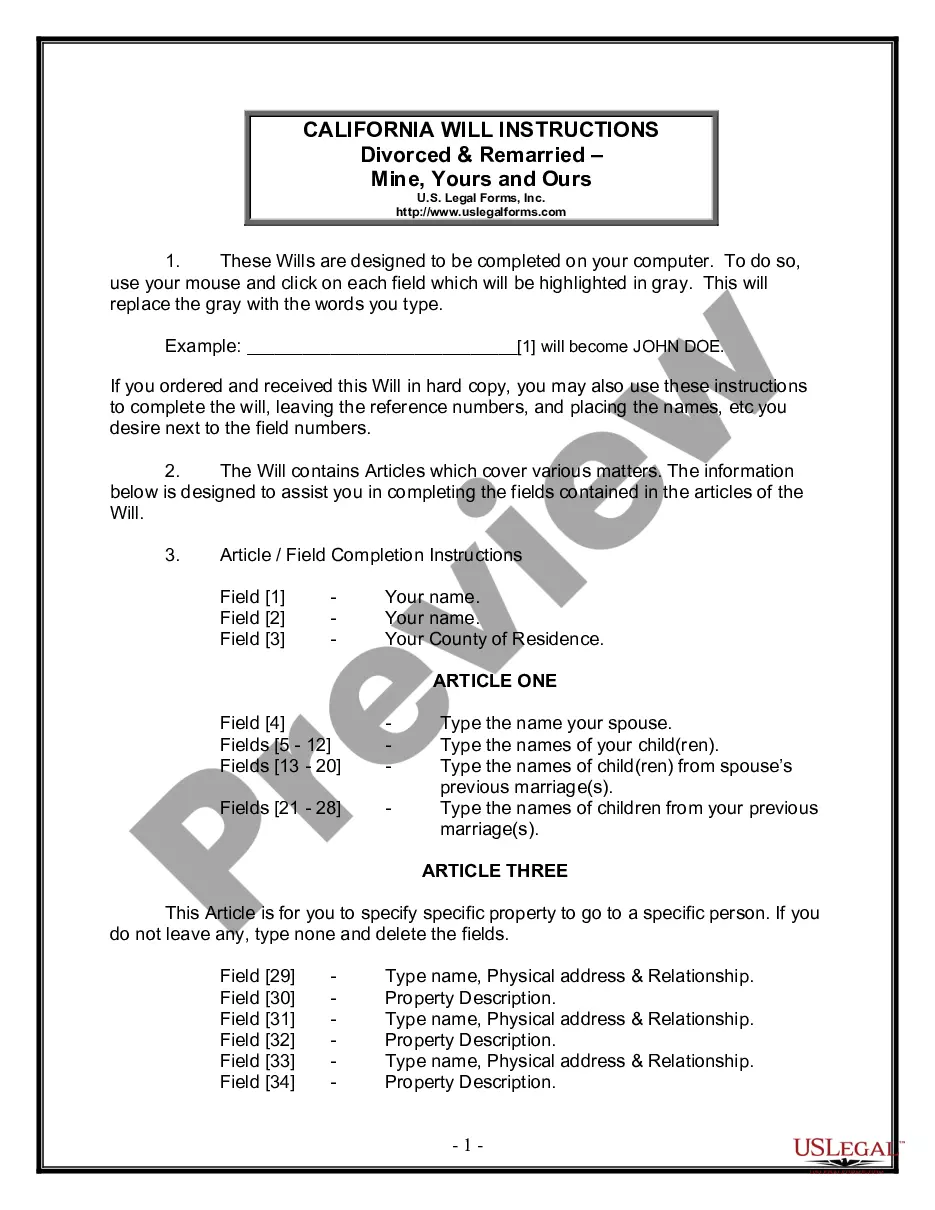
This Last Will and Testament for a Divorced and Remarried Person with Mine, Yours and Ours Children is a legal document that outlines how your assets and property will be distributed after your death. This form is specifically tailored for individuals who have been divorced and then remarried, and it accommodates families with children from previous relationships as well as those from the current marriage. It includes provisions for appointing an executor, specifying beneficiaries, and establishing trusts for minor children, distinguishing it from standard wills that do not account for blended families.
Form components explained
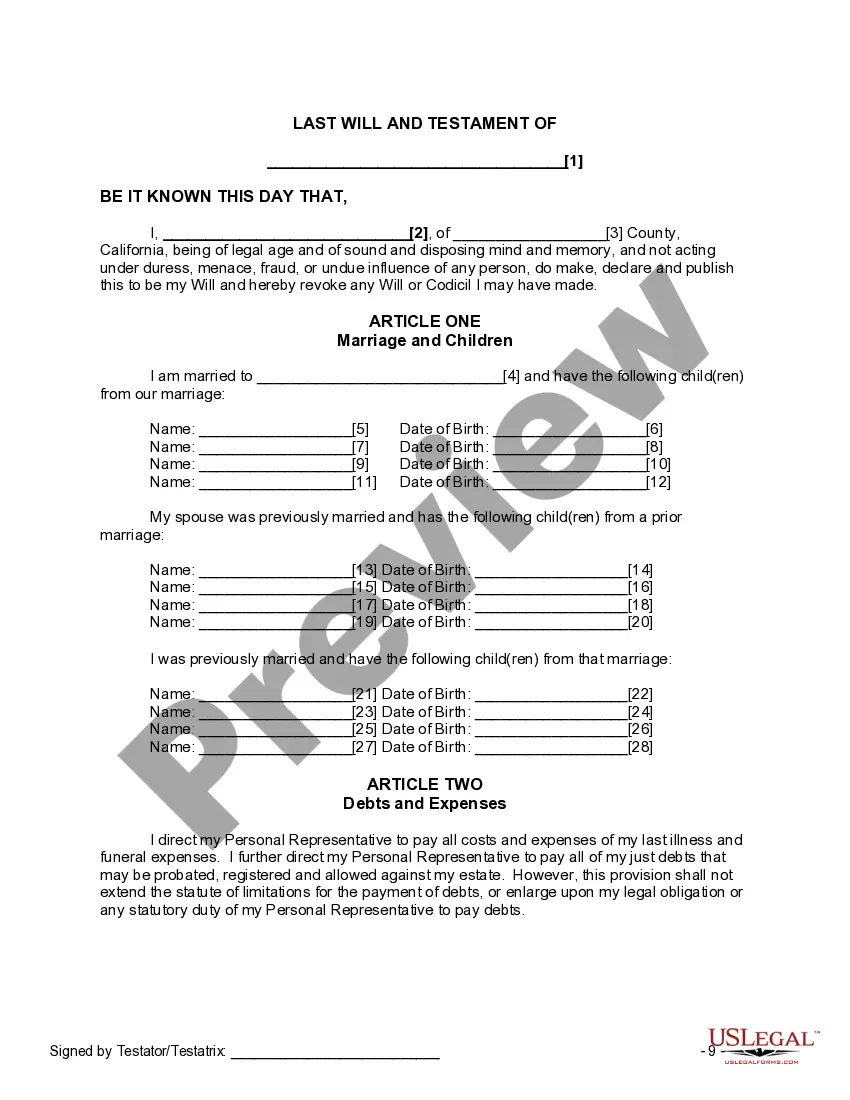
- Article on marriage and children to specify family dynamics.
- Instructions for paying debts and funeral expenses from the estate.
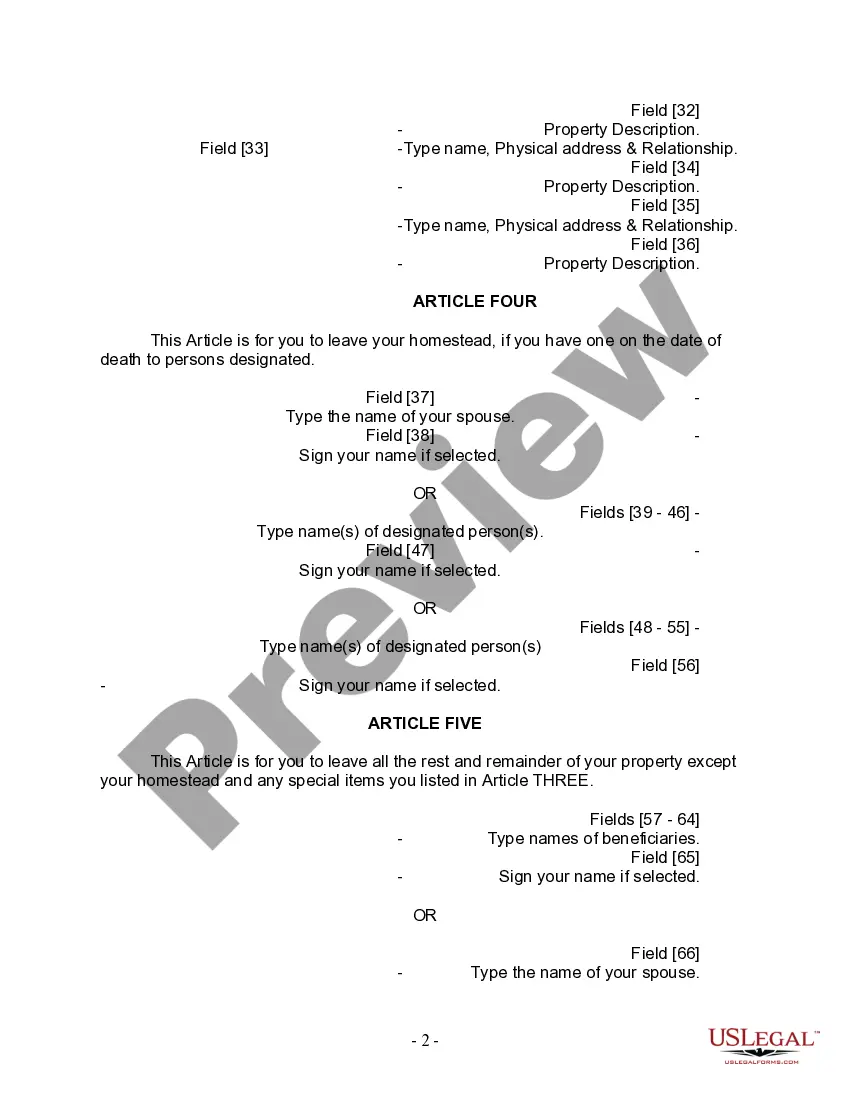
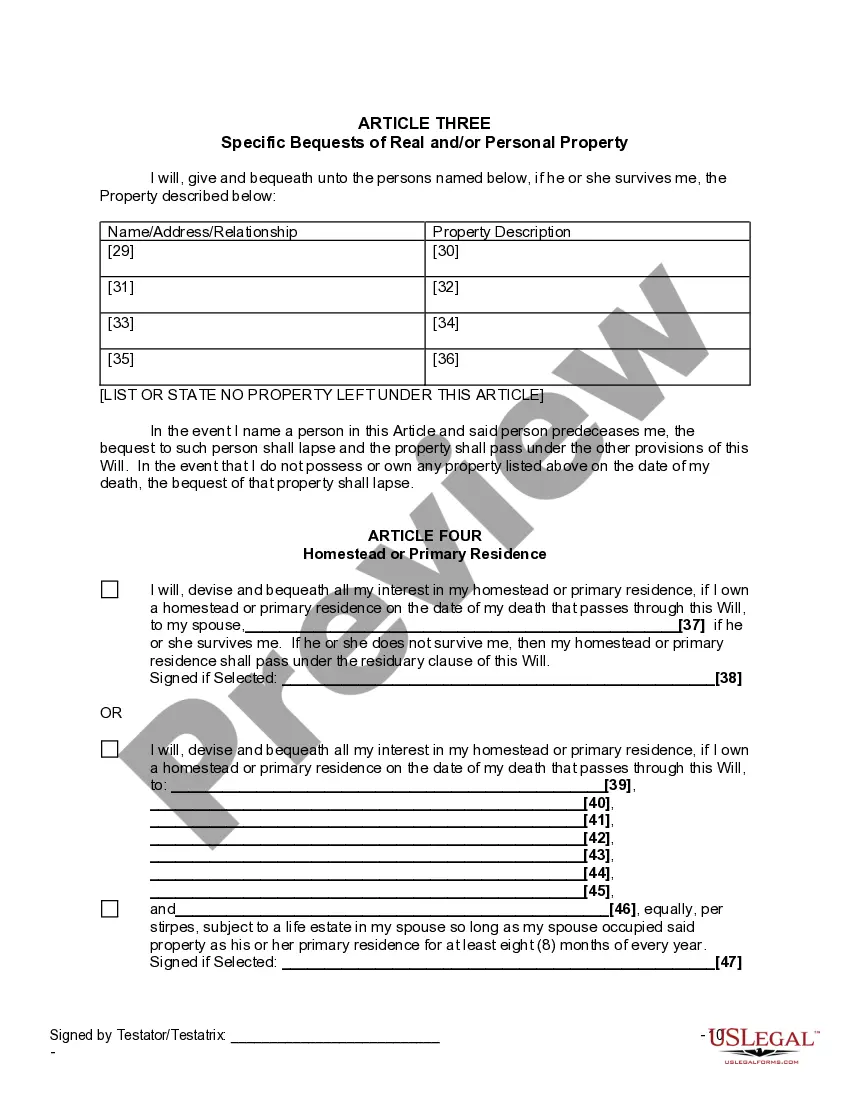
- Specific bequests of property to named beneficiaries.
- Provisions for homestead or primary residence distribution.
- Residuary clause covering the distribution of remaining estate assets.
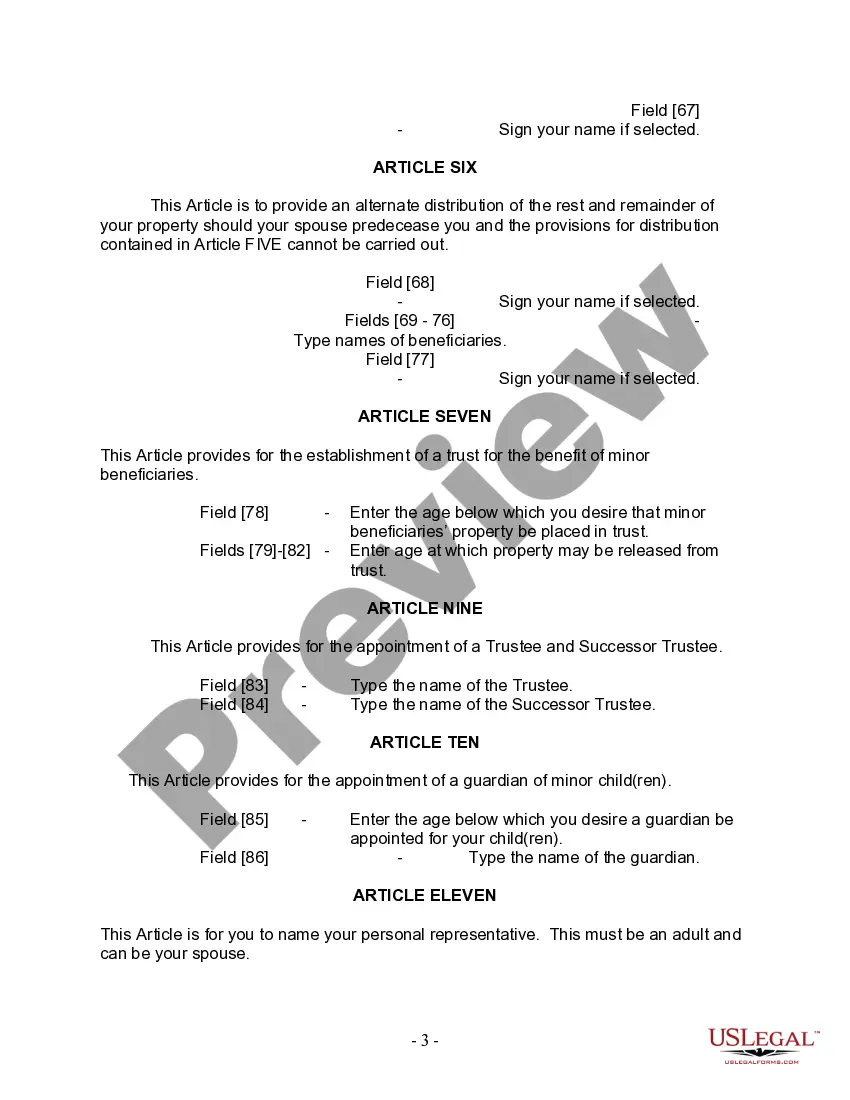
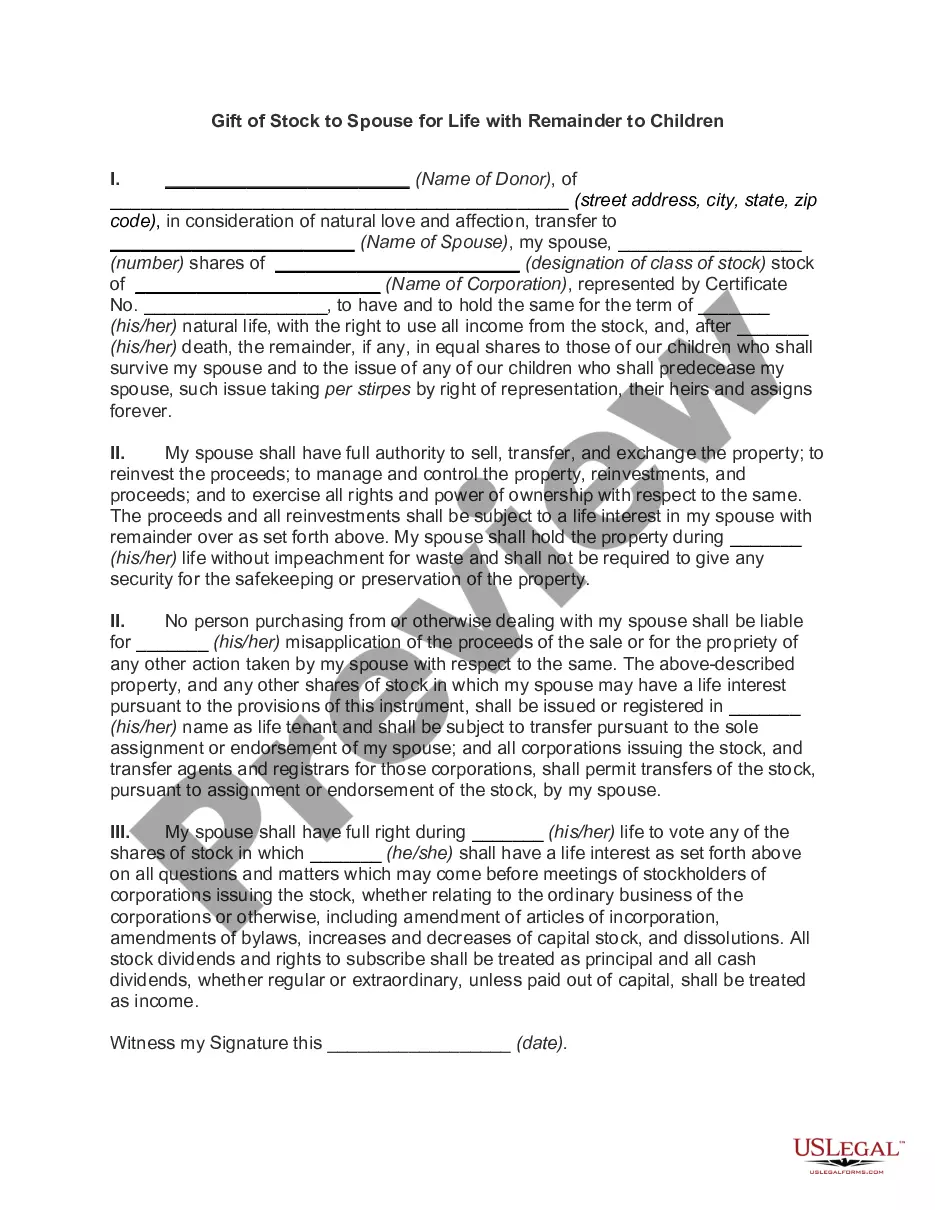
- Appointment of a trustee for managing assets on behalf of minor beneficiaries.
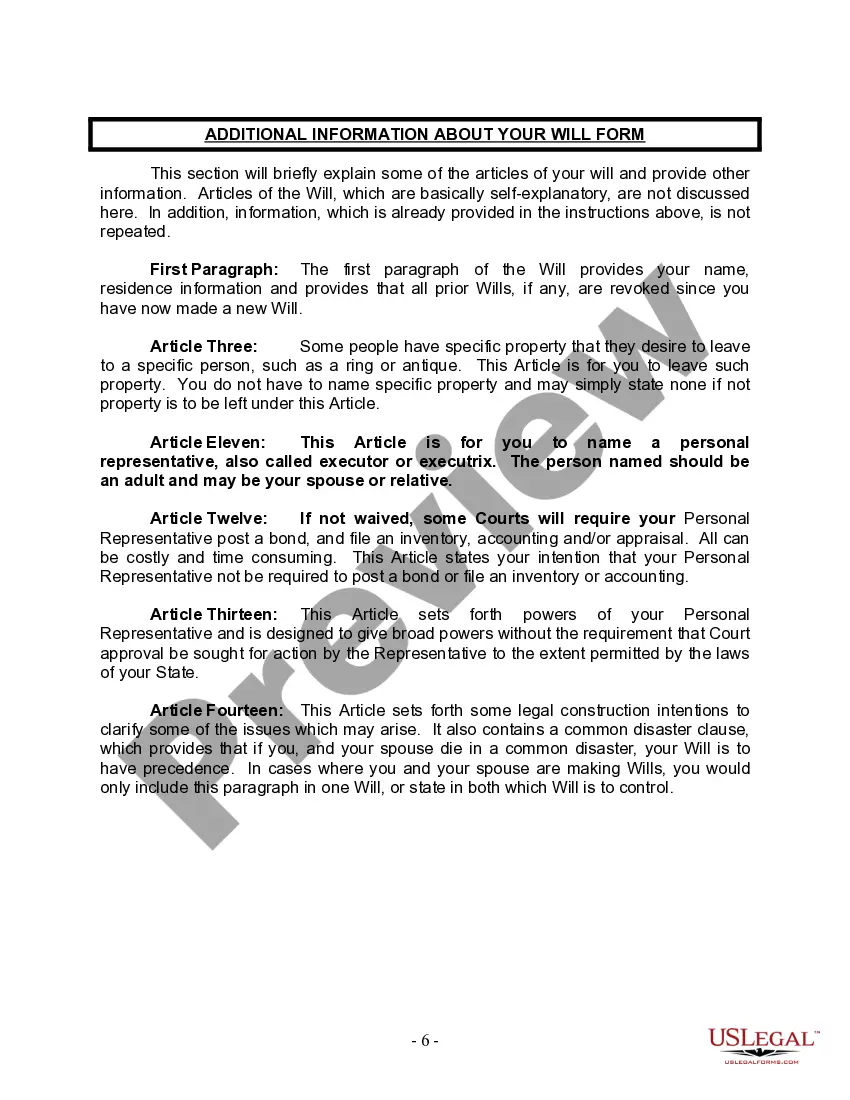
- Executor appointment and powers, detailing administration of the estate.
- Personal representative's waiver of bond and inventory requirements.






When to use this document
This form should be used when you need a legal framework for distributing your estate following your death, particularly if you have been remarried, have children from previous marriages, and wish to ensure that all of your children are provided for. It is especially important if you want to define specific bequests, appoint guardians for minor children, and arrange for the management of assets through a trust.
Who can use this document
- Individuals who are currently married and have had a previous marriage.
- Parents with children from previous relationships and children from the current marriage.
- Those looking to create a comprehensive estate plan that addresses all family members.
- Anyone wishing to appoint a personal representative and define specific bequests.
Completing this form step by step
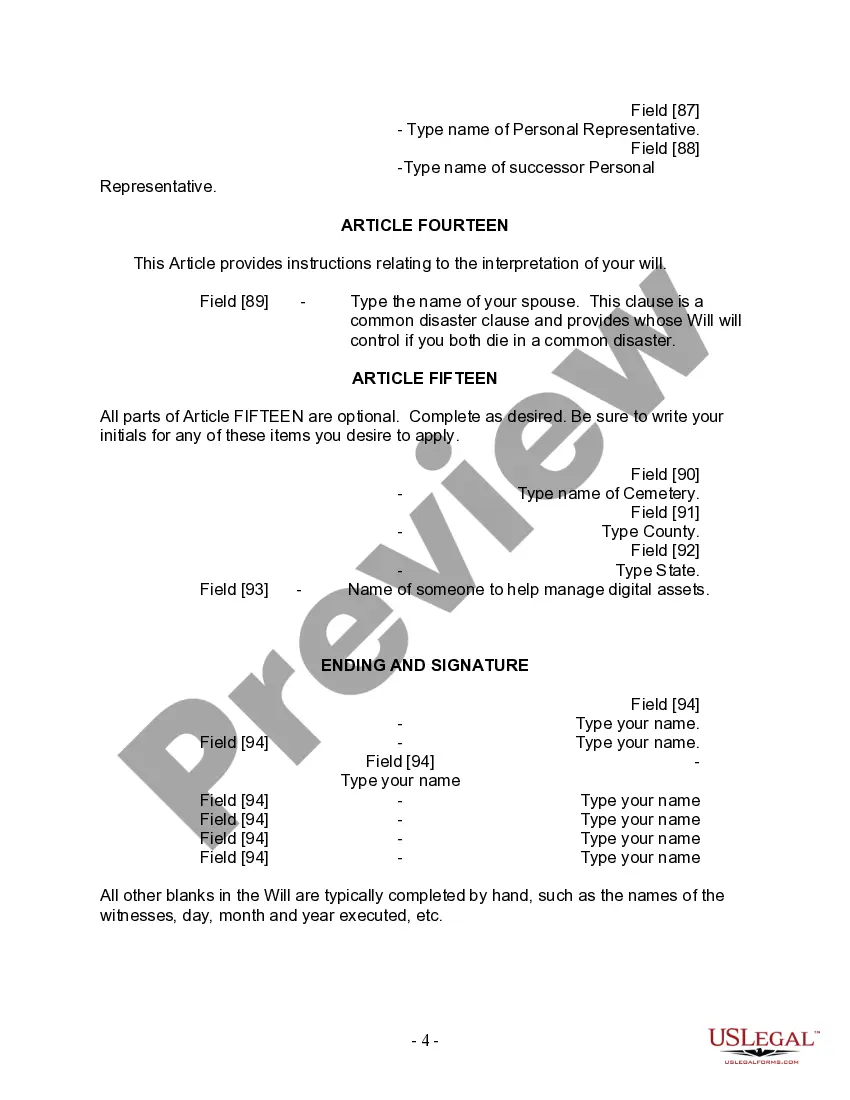
- Identify yourself as the testator and record your legal residence.
- List your current spouse and any children from all marriages.
- Specify the distribution of your property, including any specific bequests.
- Define arrangements for your homestead if applicable.
- Appoint a personal representative and any chosen trustees.
- Signature and date the will in the presence of two witnesses who meet the requirements.
Is notarization required?
This form does not typically require notarization unless specified by local law. However, to ensure acceptance, consider a self-proving affidavit, which can be included with the form if your state allows it.
Get your form ready online
Our built-in tools help you complete, sign, share, and store your documents in one place.
Make edits, fill in missing information, and update formatting in US Legal Forms—just like you would in MS Word.
Download a copy, print it, send it by email, or mail it via USPS—whatever works best for your next step.
Sign and collect signatures with our SignNow integration. Send to multiple recipients, set reminders, and more. Go Premium to unlock E-Sign.
If this form requires notarization, complete it online through a secure video call—no need to meet a notary in person or wait for an appointment.
We protect your documents and personal data by following strict security and privacy standards.

Make edits, fill in missing information, and update formatting in US Legal Forms—just like you would in MS Word.

Download a copy, print it, send it by email, or mail it via USPS—whatever works best for your next step.

Sign and collect signatures with our SignNow integration. Send to multiple recipients, set reminders, and more. Go Premium to unlock E-Sign.

If this form requires notarization, complete it online through a secure video call—no need to meet a notary in person or wait for an appointment.

We protect your documents and personal data by following strict security and privacy standards.
Mistakes to watch out for
- Not having the will signed in the presence of the appropriate number of witnesses.
- Failing to list all children accurately, which can lead to disputes.
- Overlooking the need for guardian appointment for minor children.
- Not reviewing the will after major life changes, such as divorce or remarriage.
Benefits of using this form online
- Convenience of filling out the form at your own pace from home.
- Editability allowing you to make changes before finalizing the document.
- Reliable access to attorney-crafted templates that comply with state laws.
- Immediate availability for download, reducing delays in estate planning.
Summary of main points
- This Last Will and Testament is tailored for divorced and remarried individuals with children from multiple relationships.
- It provides clear instructions for asset distribution, guardianship, and the appointment of personal representatives.
- Following the correct procedures for signing and notarizing ensures the validity of the will.
Looking for another form?


Form popularity
FAQ
An ex-wife can still serve as an executor of a will if you designate her in the document. However, it is wise to evaluate whether this is the best choice based on your current relationship. Updating your California Last Will and Testament for Divorced and Remarried Person with Mine, Yours and Ours Children will allow you to select an executor who aligns with your current wishes and family situation.
When you remarry, your existing will does not automatically become invalid. However, any provisions related to your former spouse may be affected. It is vital to create a new California Last Will and Testament for Divorced and Remarried Person with Mine, Yours and Ours Children to address your updated family dynamics and to ensure the right people inherit.
If you die without a will in California, your spouse may inherit a significant portion of your estate. However, this can vary based on whether you have children and the specific circumstances of your family. To ensure your wishes are honored, it's advisable to create a California Last Will and Testament for Divorced and Remarried Person with Mine, Yours and Ours Children.
Dividing assets in a divorce can be complex, but it is possible to do it without a lawyer. First, list all assets and debts, then agree on how to split them. Use a written agreement to document your decisions. Consider creating a California Last Will and Testament for Divorced and Remarried Person with Mine, Yours and Ours Children to reflect your new circumstances.
In California, a will remains valid even after a divorce. However, certain provisions may change automatically. For instance, if you name your ex-spouse as a beneficiary, that provision may become void. It is essential to review your California Last Will and Testament for Divorced and Remarried Person with Mine, Yours and Ours Children to ensure it reflects your current wishes.
An ex-wife's ability to claim inheritance in California hinges on multiple factors, especially the terms within the California Last Will and Testament for Divorced and Remarried Person with Mine, Yours and Ours Children. If the will includes her as a beneficiary or provides her certain rights, she may have a valid claim. If there are conditions or exclusions outlined in the will or relevant documents, those will guide her rights. It's essential to seek legal advice to navigate inheritance claims post-divorce effectively.
An ex-wife's rights upon her ex-husband's death in California largely depend on the presence of a California Last Will and Testament for Divorced and Remarried Person with Mine, Yours and Ours Children. If the will designates her as a beneficiary or the couple has marital property agreements, she may have rights to certain assets. Conversely, if the will clearly states otherwise, her claims might not hold. Legal assistance can clarify her rights and outline potential avenues to pursue if necessary.
In California, whether an ex-wife can claim inheritance after death depends on several factors, including the terms of the deceased's California Last Will and Testament for Divorced and Remarried Person with Mine, Yours and Ours Children. If the will specifically excludes her or contains clear terms regarding her inheritance rights, she may not be able to claim anything. However, if the estate planning documents are not clear, there may be room for interpretation. It’s wise to consult legal experts to understand the implications of divorce on inheritance rights.
To successfully navigate an uncontested divorce in California, you will need forms such as the Petition for Dissolution of Marriage, the Response, and the Marital Settlement Agreement. Each form plays a crucial role in ensuring your divorce is legally recognized and your agreements are documented. Utilizing services like USLegalForms can simplify the process and help you access the right forms tailored to your situation.
You can obtain uncontested divorce papers from various sources, including online legal services like USLegalForms. This platform provides user-friendly templates that cater specifically to California law. By using these resources, you can ensure that your forms meet legal requirements while saving time and effort during your divorce process.