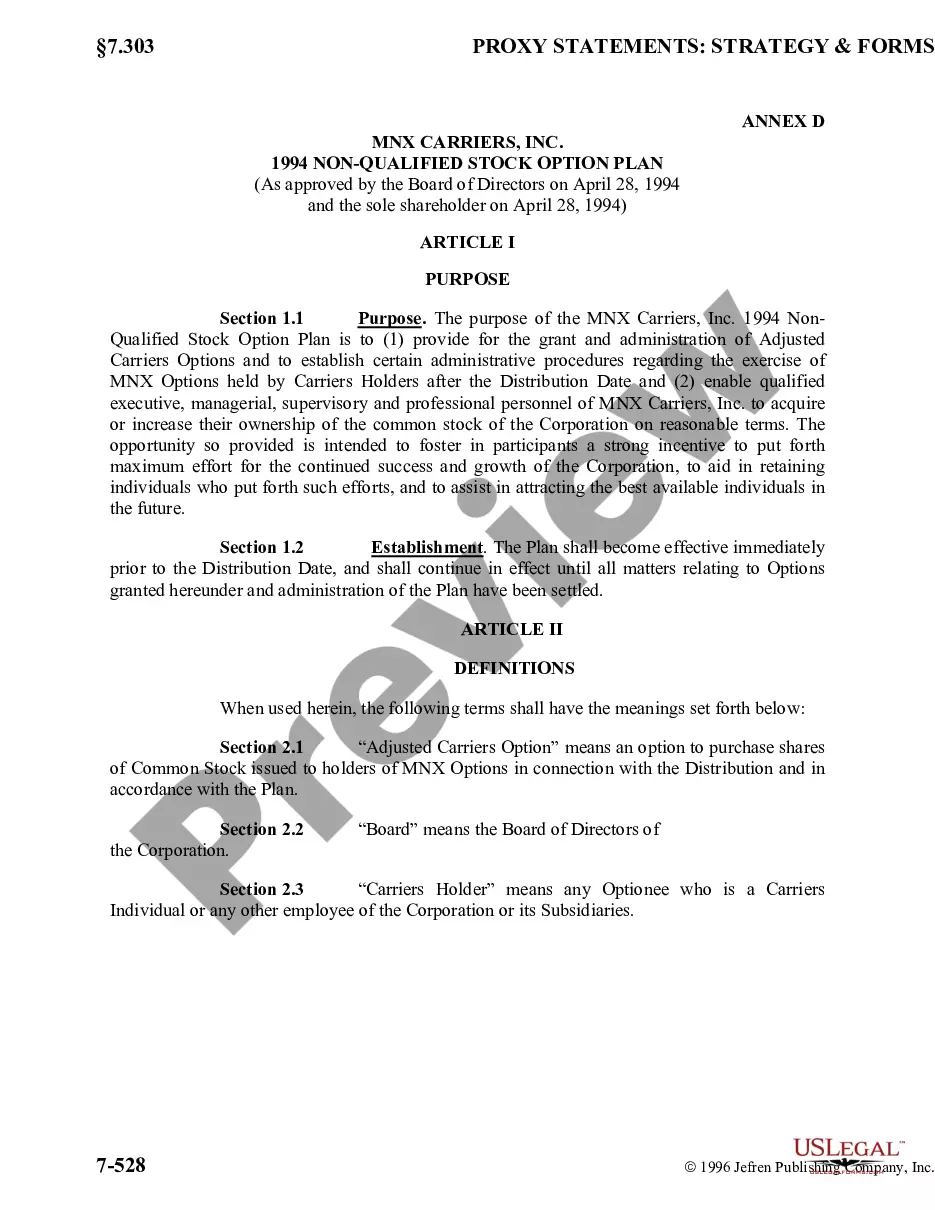
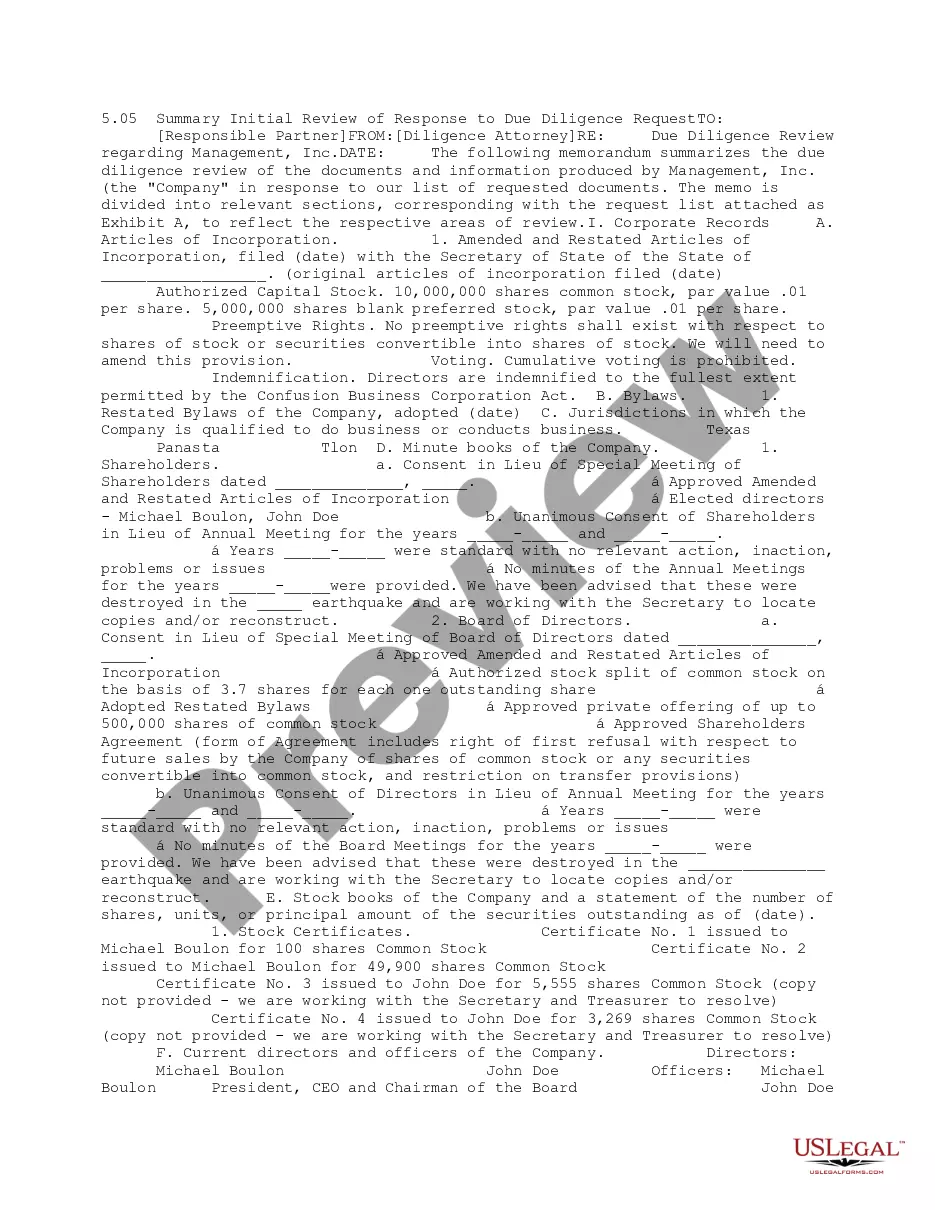
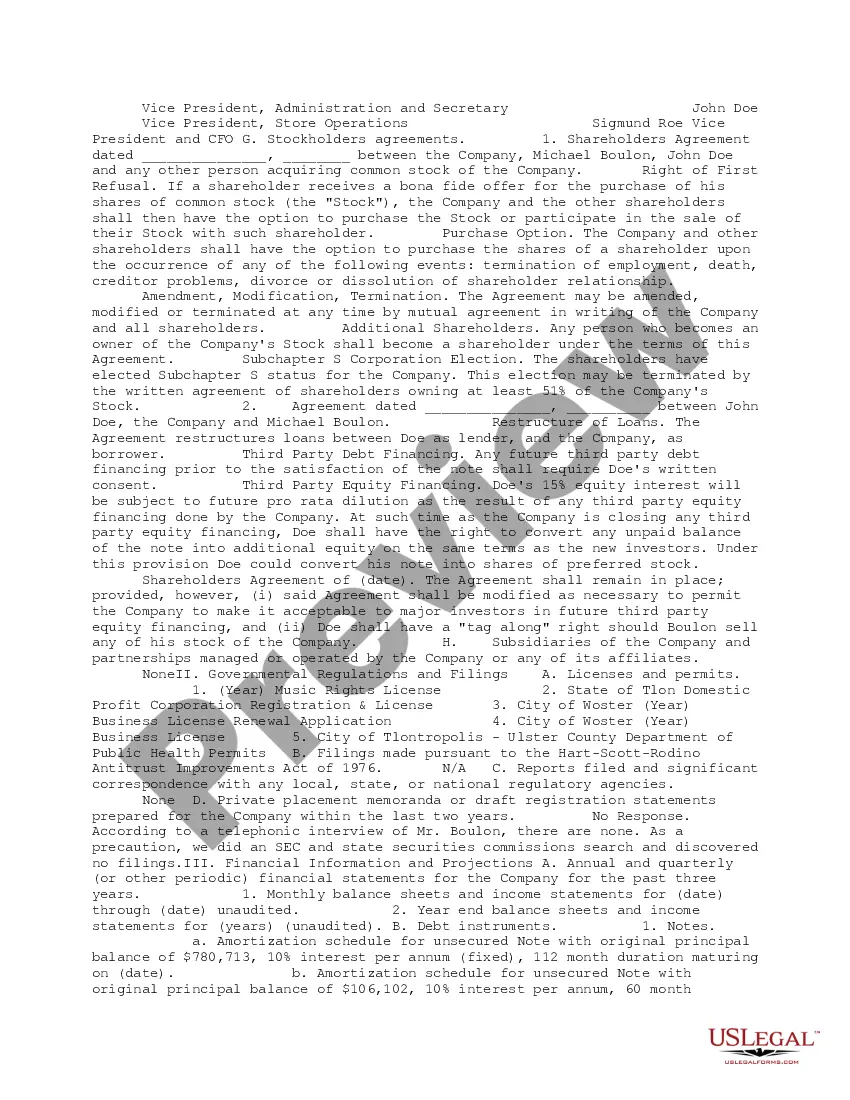
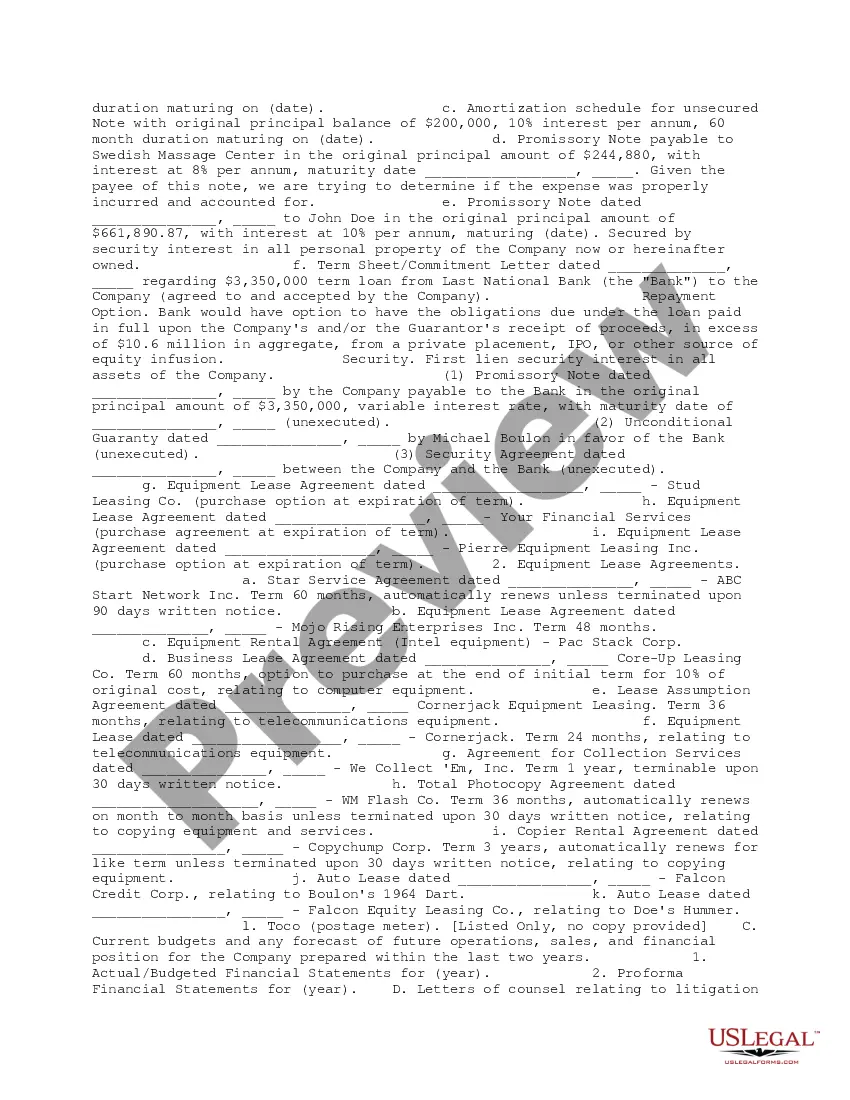
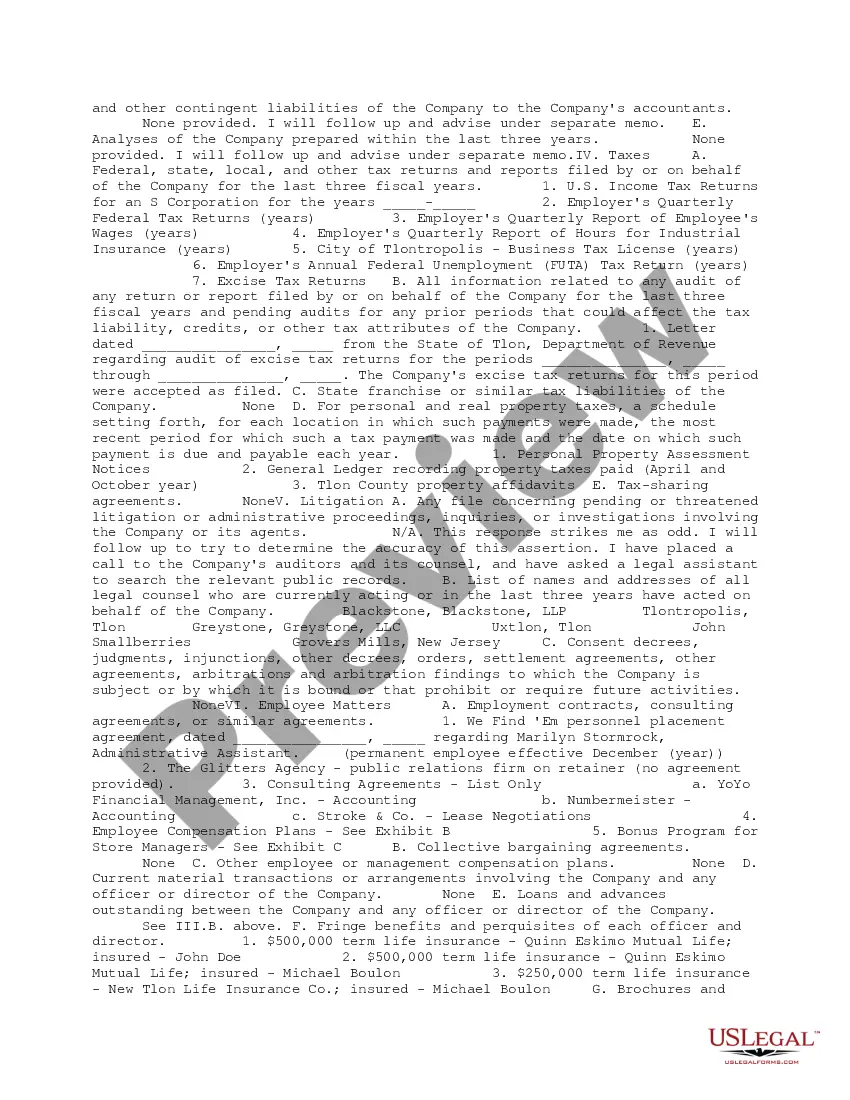
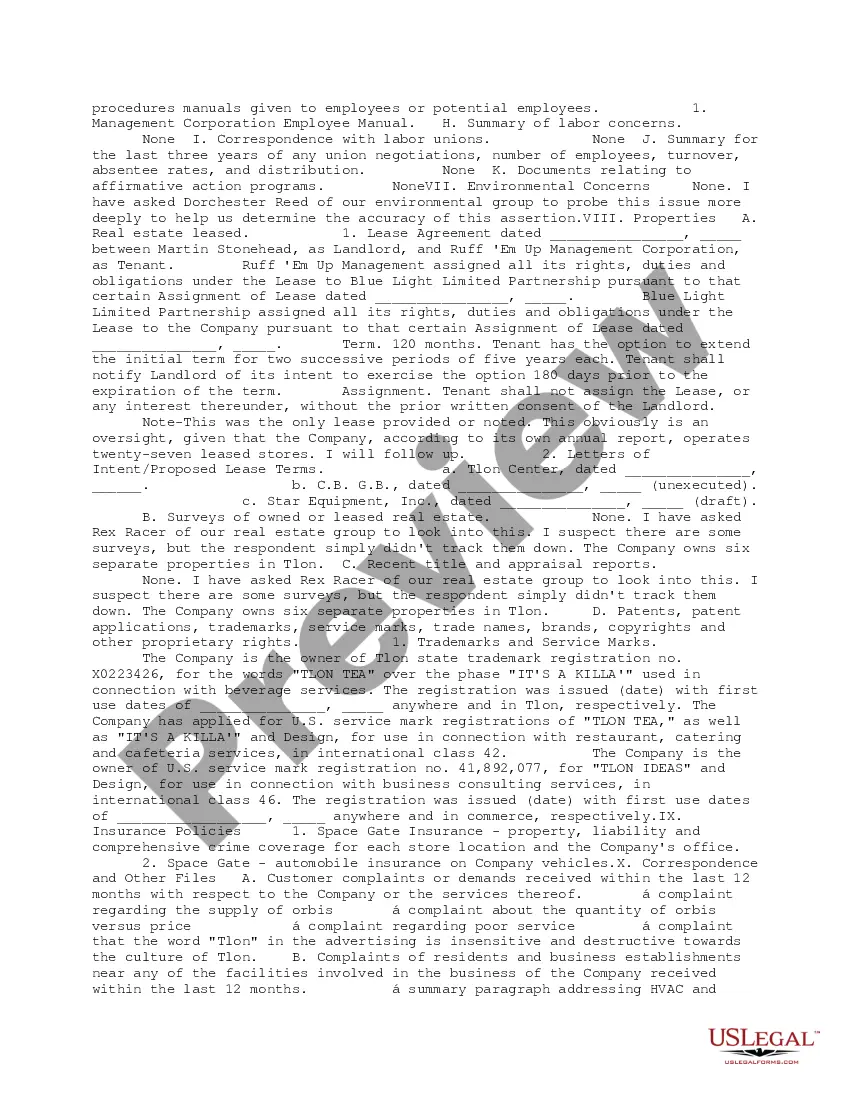
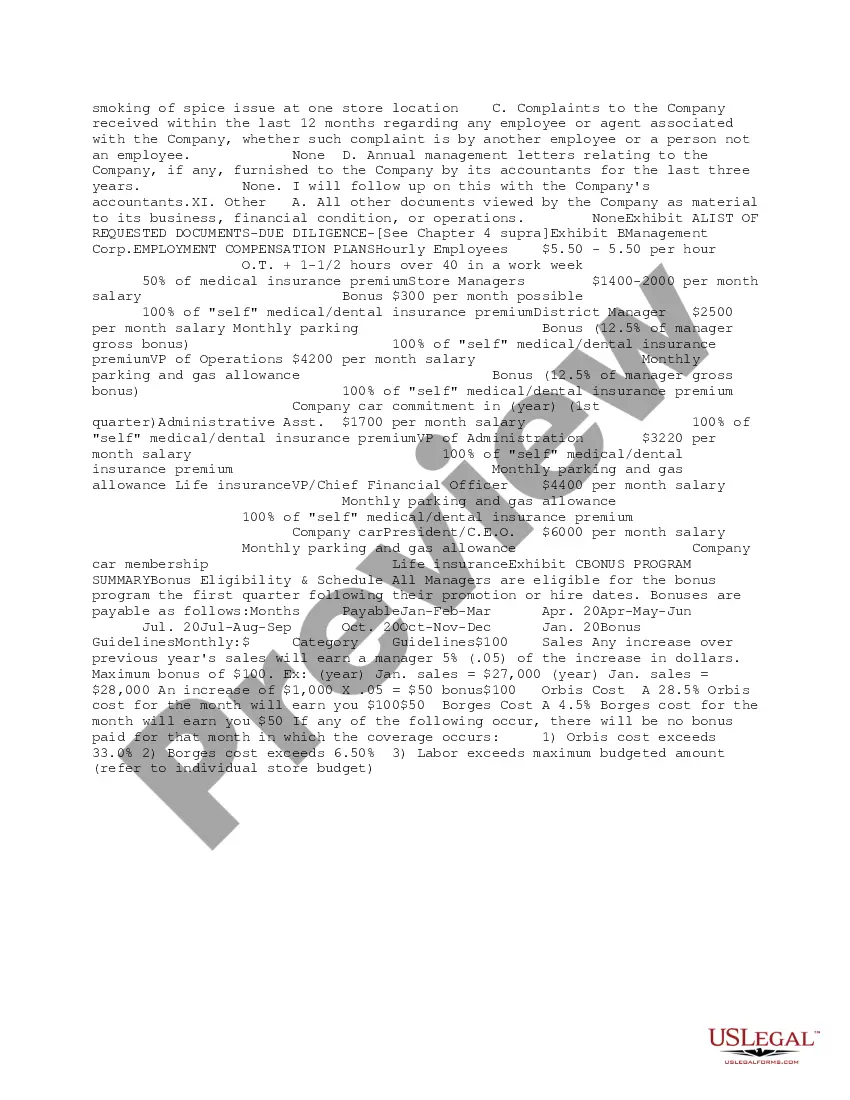
This due diligence form is a memorandum that summarizes the review of documents and the formation produced by a company in response to a list of requested materials.
California Summary Initial Review of Response to Due Diligence Request
Category:
State:
Multi-State
Control #:
US-DD0505
Format:
Word;
PDF;
Rich Text
Instant download
Description
Free preview
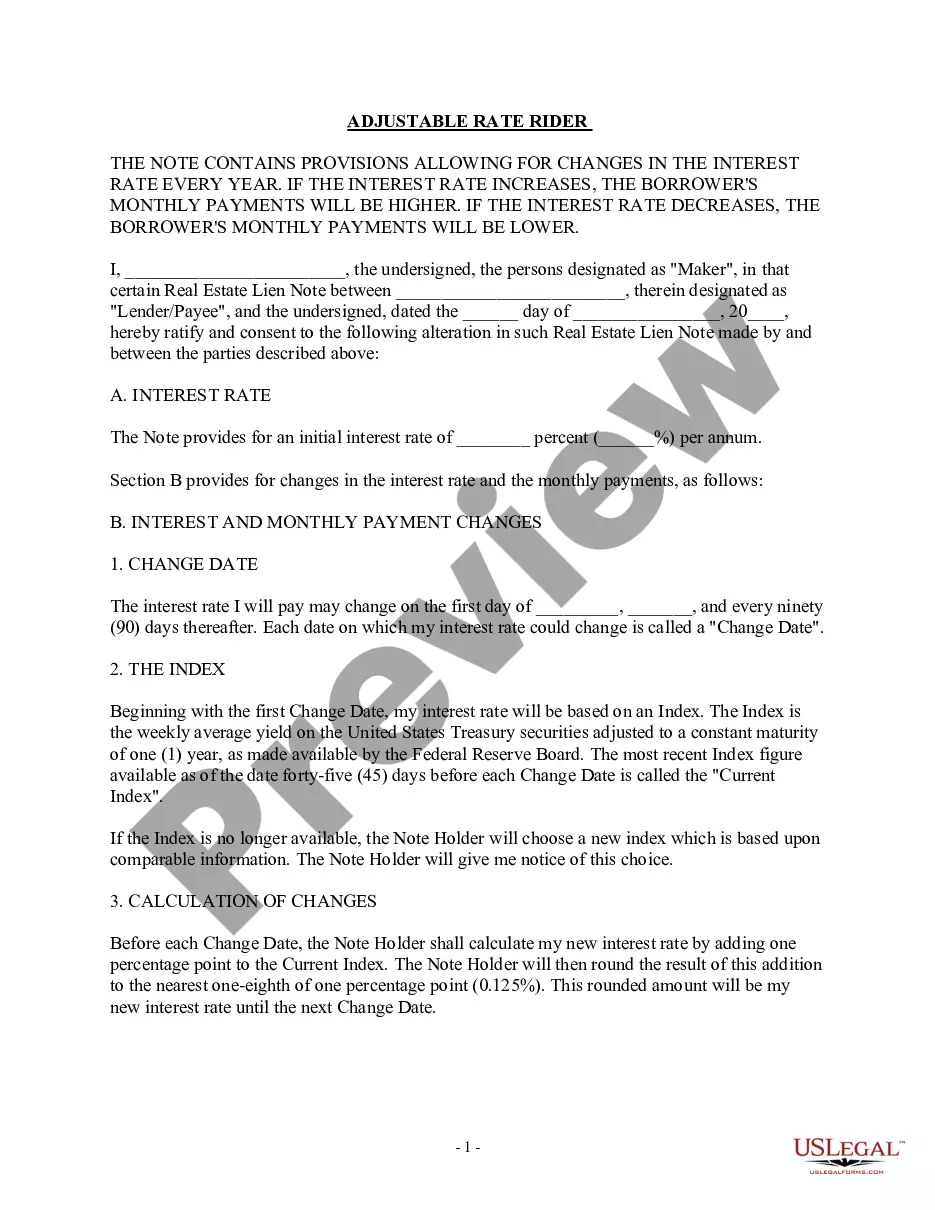
How to fill out Summary Initial Review Of Response To Due Diligence Request?
Selecting the appropriate sanctioned document format can be challenging.
Certainly, there are numerous templates accessible online, but how can you obtain the sanctioned document you need.
Utilize the US Legal Forms website. The service offers a vast selection of templates, such as the California Summary Initial Review of Response to Due Diligence Request, suitable for business and personal purposes.
You may browse the form using the Preview button and review the form description to confirm it is the correct one for you.
- All the forms are reviewed by professionals and meet federal and state requirements.
- If you are already registered, Log In to your account and click the Download button to obtain the California Summary Initial Review of Response to Due Diligence Request.
- Use your account to search through the legal forms you have previously acquired.
- Visit the My documents tab of your account and get another copy of the document you desire.
- If you are a new user of US Legal Forms, here are simple instructions you can follow.
- First, ensure you have selected the appropriate form for your locality.
Form popularity
FAQ
The phases of due diligence typically include property inspection, financial assessments, and legal reviews. Initially, buyers inspect the property to uncover any issues, followed by evaluating the financial aspects such as mortgage and insurance options. Lastly, a California Summary Initial Review of Response to Due Diligence Request helps identify any legal matters, ensuring a comprehensive understanding of the transaction.
A typical due diligence period in California ranges from 10 to 17 days after a buyer's offer is accepted. During this time, buyers should inspect the property, review disclosures, and assess any other pertinent information. Utilizing a California Summary Initial Review of Response to Due Diligence Request can streamline this process, providing clarity and confidence in your investment.
In California, sellers remain liable for certain obligations even after the sale of a house. Generally, this liability lasts for three years regarding fraud or misrepresentation issues. It's essential to complete a California Summary Initial Review of Response to Due Diligence Request to address any potential concerns a buyer might raise, allowing for a smoother transaction.
Section 1530 of California's unclaimed property law outlines the obligations of holders to report unclaimed property after the dormancy period. This section establishes guidelines for how various types of property must be managed and reported. The California Summary Initial Review of Response to Due Diligence Request provides critical insights into understanding these regulations and ensuring compliance.
The dormancy period in California refers to the timeframe during which an account remains inactive before it is considered unclaimed. Each type of property has its own dormancy period, which impacts when it must be reported to the state. With the California Summary Initial Review of Response to Due Diligence Request, you can better comprehend these periods and how they affect your claims.
In California, the dormancy period for unclaimed property typically lasts three years, but some types of property may have longer durations. It's important to understand these periods to avoid losing track of potential assets. The California Summary Initial Review of Response to Due Diligence Request can provide guidance on how to manage and claim such property.
Yes, California imposes specific time limits on unclaimed property, which generally ranges from three to five years, depending on the asset type. After this period, the property is reported to the state as unclaimed. Utilizing the California Summary Initial Review of Response to Due Diligence Request ensures you remain informed about these limits and your options for claiming property.
The dormancy period refers to the time frame in which an asset remains unclaimed before it is reported to the state. In California, this period can vary depending on the type of property. The California Summary Initial Review of Response to Due Diligence Request can clarify these timelines and help you determine your next steps.
If no one claims unclaimed property, the state takes possession of it after a certain period. This process ensures that the property is safeguarded until the rightful owner can be identified. The California Summary Initial Review of Response to Due Diligence Request assists in understanding these complexities, helping individuals navigate the unclaimed property process.