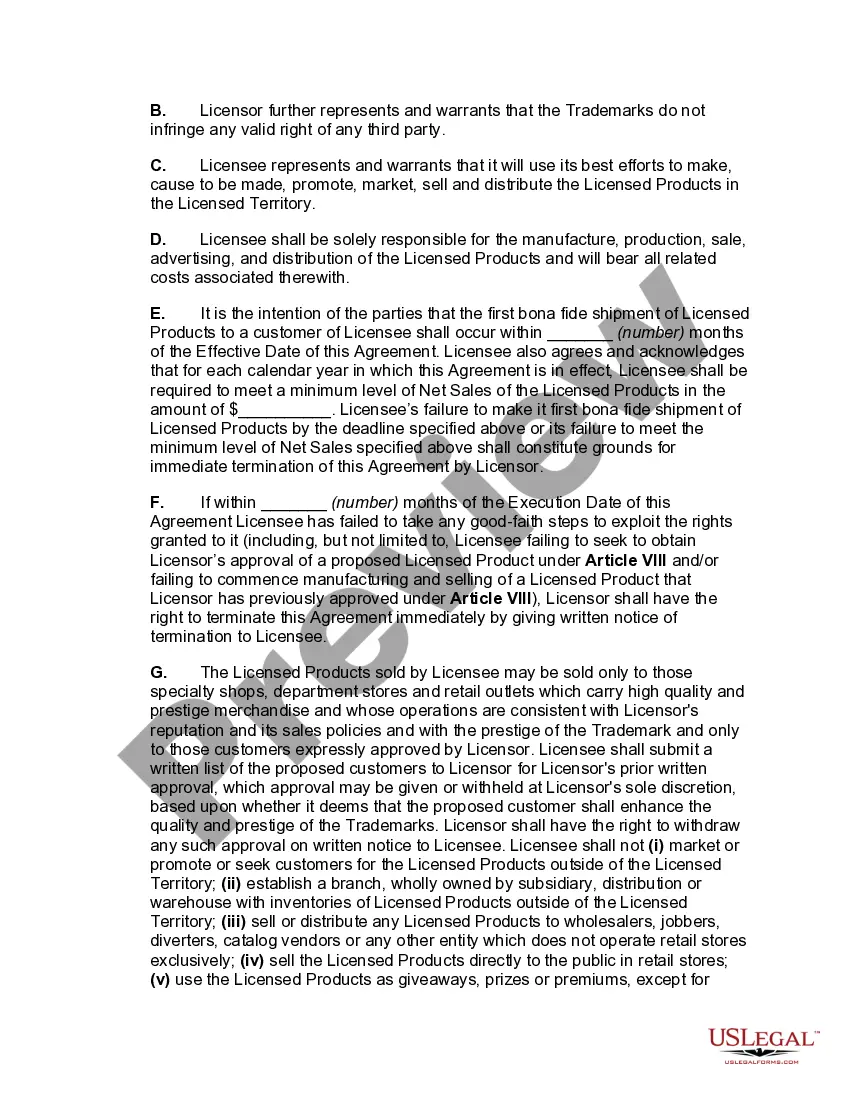
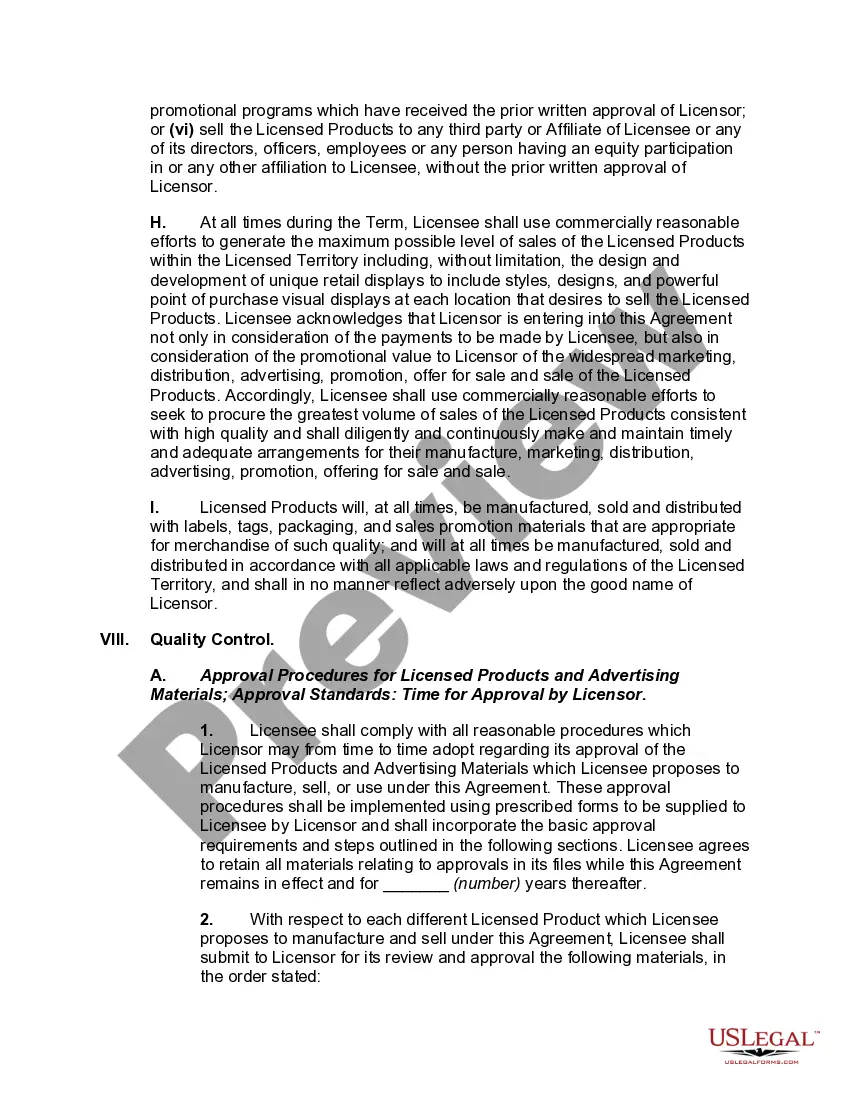
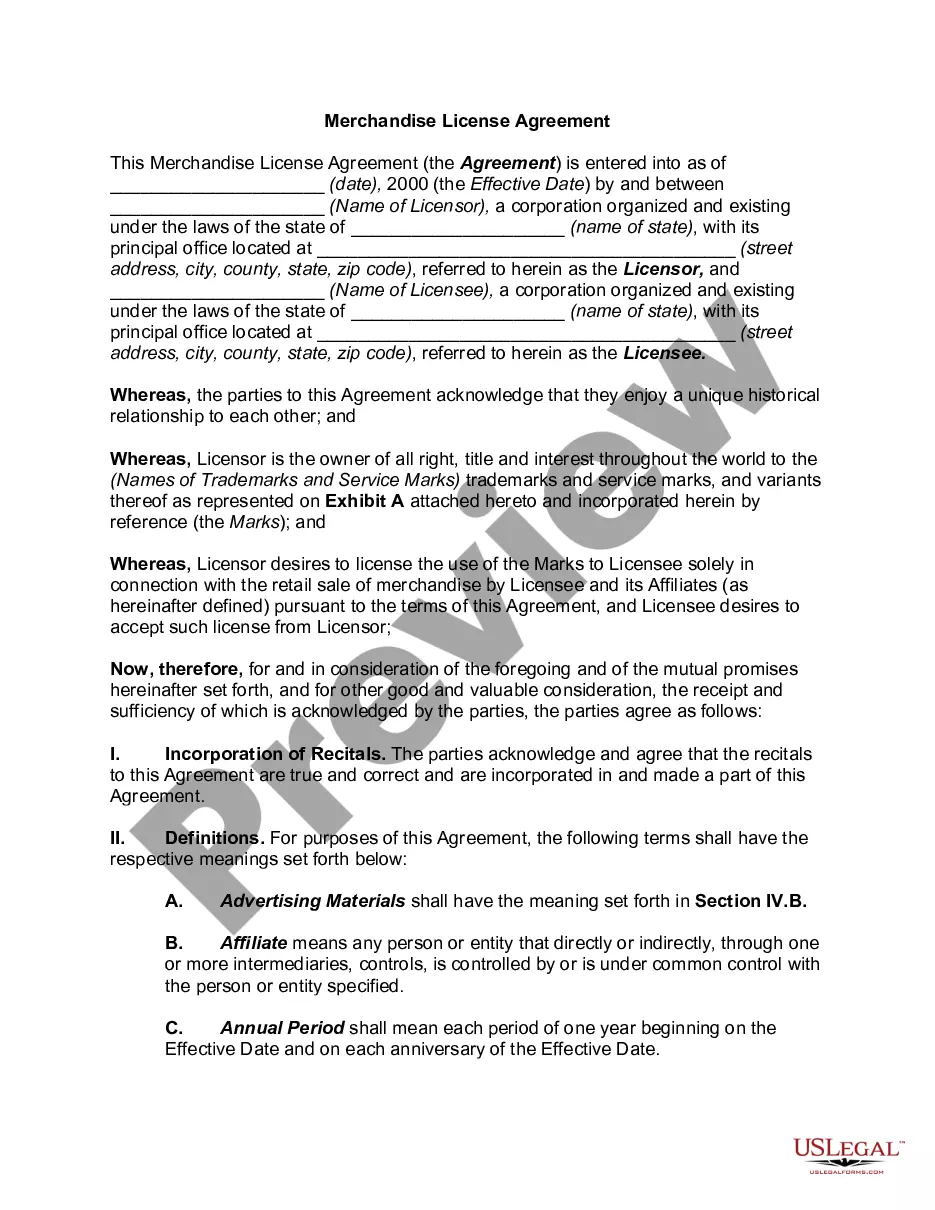
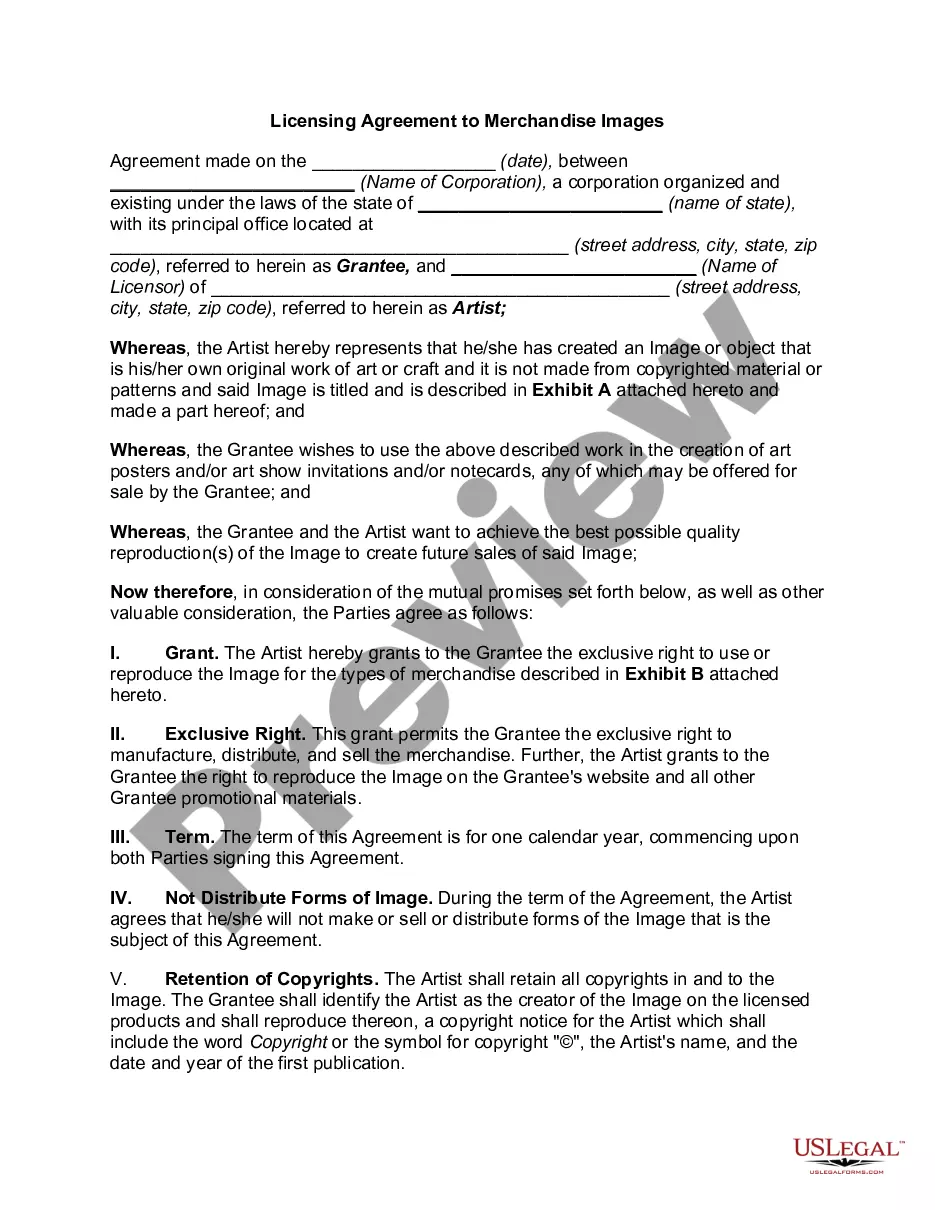
California Merchandising License Agreement
Description

Get your form ready online
Our built-in tools help you complete, sign, share, and store your documents in one place.
Make edits, fill in missing information, and update formatting in US Legal Forms—just like you would in MS Word.
Download a copy, print it, send it by email, or mail it via USPS—whatever works best for your next step.
Sign and collect signatures with our SignNow integration. Send to multiple recipients, set reminders, and more. Go Premium to unlock E-Sign.
If this form requires notarization, complete it online through a secure video call—no need to meet a notary in person or wait for an appointment.
We protect your documents and personal data by following strict security and privacy standards.

Make edits, fill in missing information, and update formatting in US Legal Forms—just like you would in MS Word.

Download a copy, print it, send it by email, or mail it via USPS—whatever works best for your next step.

Sign and collect signatures with our SignNow integration. Send to multiple recipients, set reminders, and more. Go Premium to unlock E-Sign.

If this form requires notarization, complete it online through a secure video call—no need to meet a notary in person or wait for an appointment.

We protect your documents and personal data by following strict security and privacy standards.
Looking for another form?

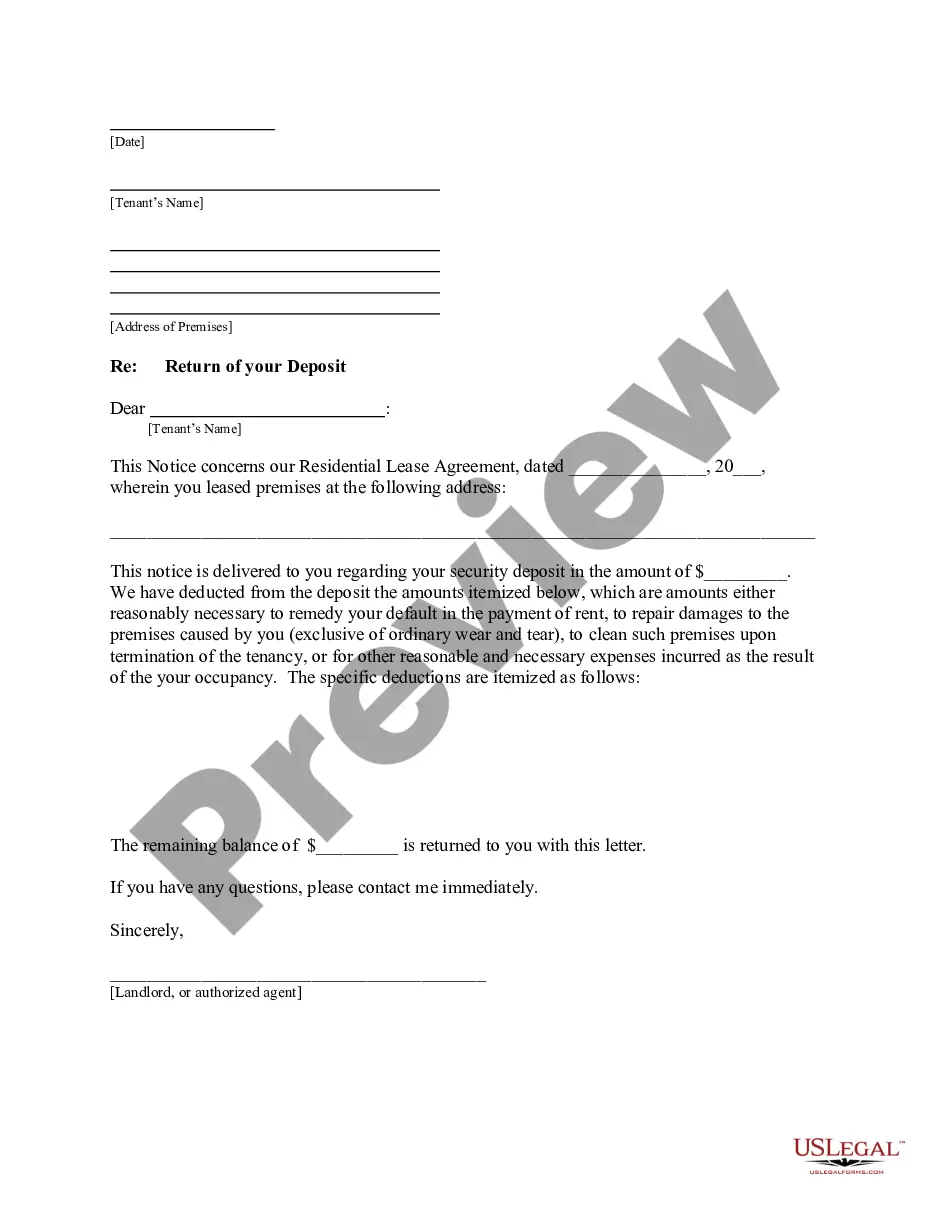
How to fill out Merchandising License Agreement?
Are you presently in the condition where you will require documents for either commercial or particular purposes nearly every working day? There are numerous legitimate document templates available online, but locating ones you can trust isn't simple.
US Legal Forms offers an extensive array of form templates, including the California Merchandising License Agreement, which are crafted to meet state and federal regulations.
If you are already familiar with the US Legal Forms website and have an account, simply Log In. After that, you can download the California Merchandising License Agreement template.
You can find all the document templates you have purchased in the My documents section. You can obtain another version of California Merchandising License Agreement at any time, if needed. Simply go through the required form to download or print the document template.
Utilize US Legal Forms, one of the most extensive collections of legal forms, to save time and prevent errors. The service provides expertly crafted legal document templates that can be used for a variety of purposes. Create an account on US Legal Forms and start making your life easier.
- Obtain the form you need and ensure it is for the correct city/region.
- Use the Review option to examine the form.
- Check the summary to ensure you have selected the correct form.
- If the form isn't what you're looking for, use the Lookup field to find the form that suits your needs and requirements.
- Once you locate the appropriate form, click Buy now.
- Select the payment option you prefer, complete the necessary information to set up your account, and pay for the transaction using your PayPal or credit card.
- Choose a convenient file format and download your copy.
Form popularity
FAQ
To expand trademark rights, the owner can register the trademark with either the state or federal government, or both. State registration is typically done through the secretary of state's office and provides the owner with the right to exclusive use of the trademark throughout the state.
The Four P's of Merchandising: Product, Placement, Pricing, and Promotion Part 1. Consumers eat first with their eyes. This idea creates the foundation for building both retail spaces and restaurant creations.
In general, you will only need a retail business license if you are selling clothing, since trademarked goods cannot be sold under a specialized license. Selling goods under a trademark requires the owner's permission. Once you resell the clothing, you must collect the sales tax.
Merchandising rights are a frequently misunderstood (and often overlooked) part of publishing agreements. They are the right to market, sell, and license physical and tangible articles related to your copyright ownership, such as t-shirts, posters, action figures, games, etc. even your book's cover art.
If they lose money on the album, then that loss is all theirs you still keep your licensing fee. Distribution, on the other hand, refers to getting your albums into the shops. With a distribution deal, you only make money on what you sell, and you as a label are responsible for manufacturing, promotion, and so forth.
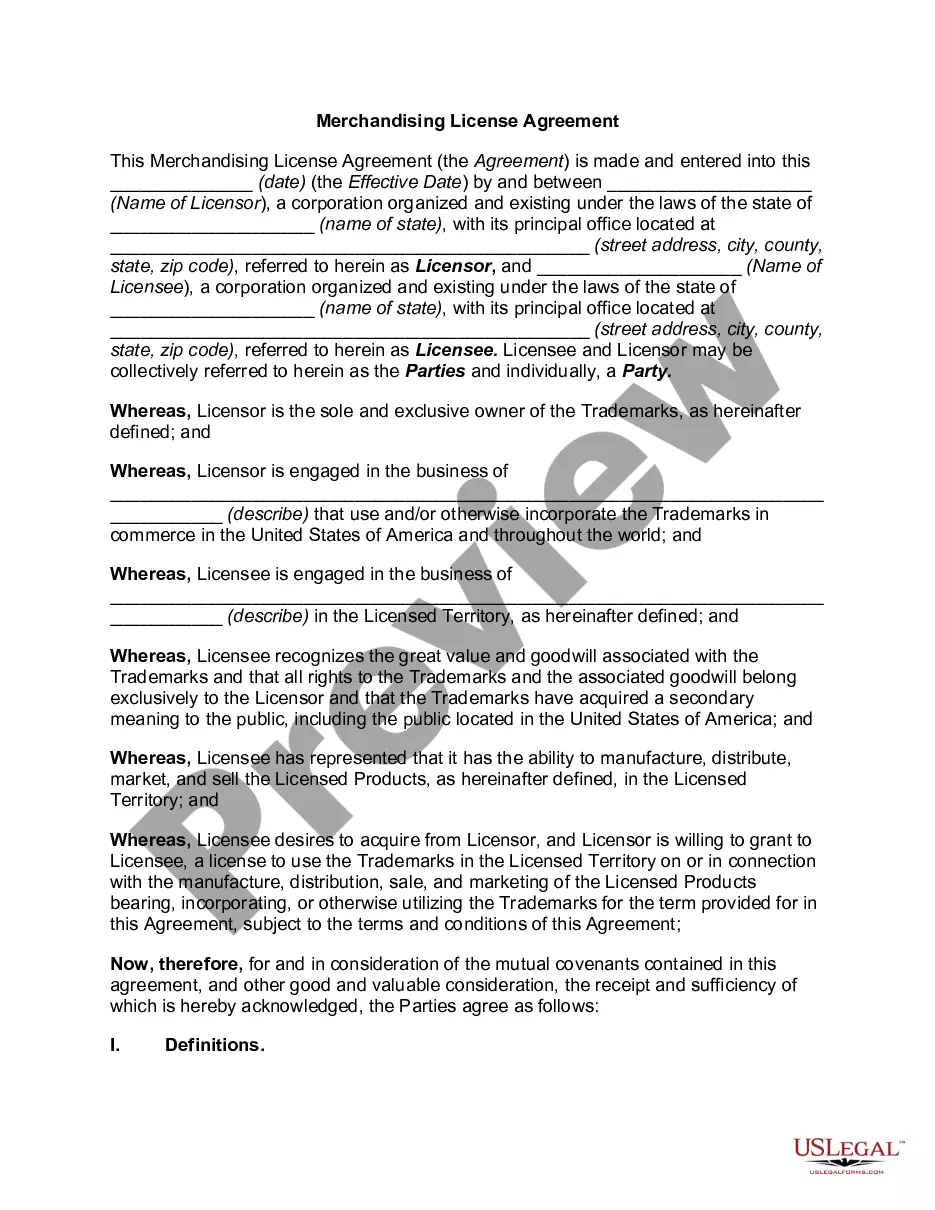
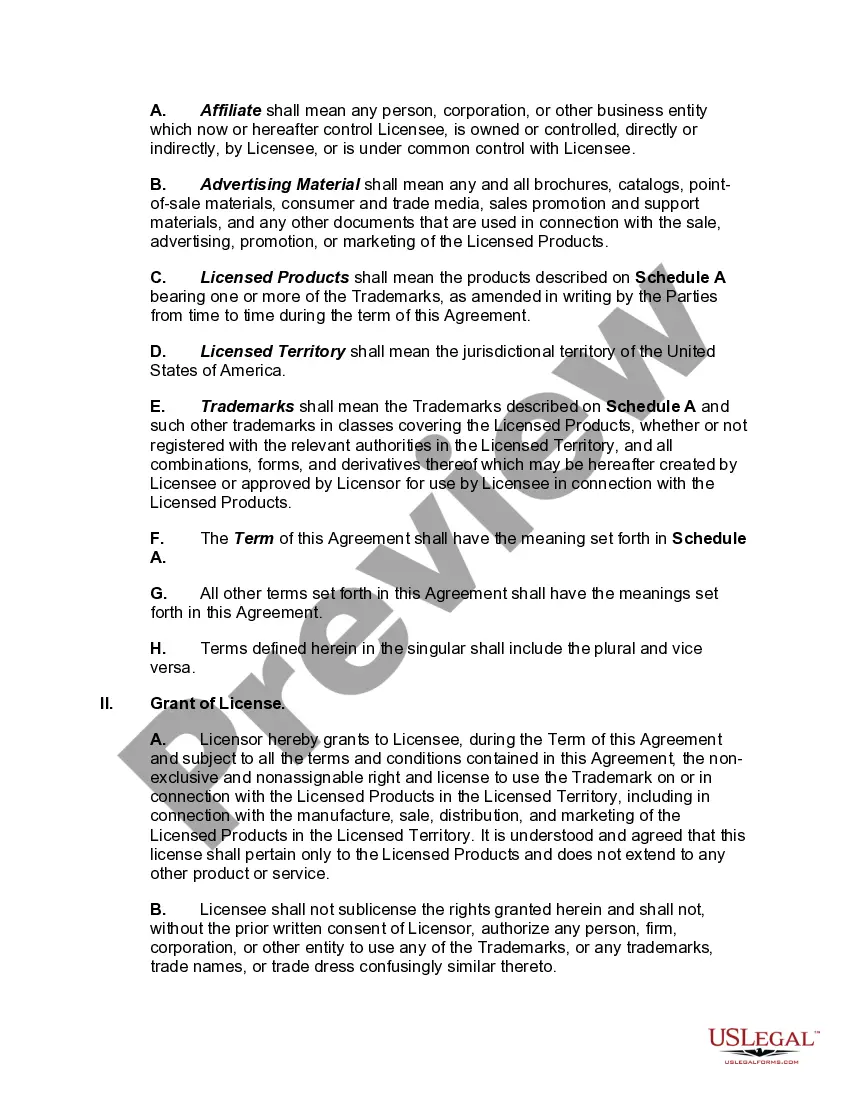
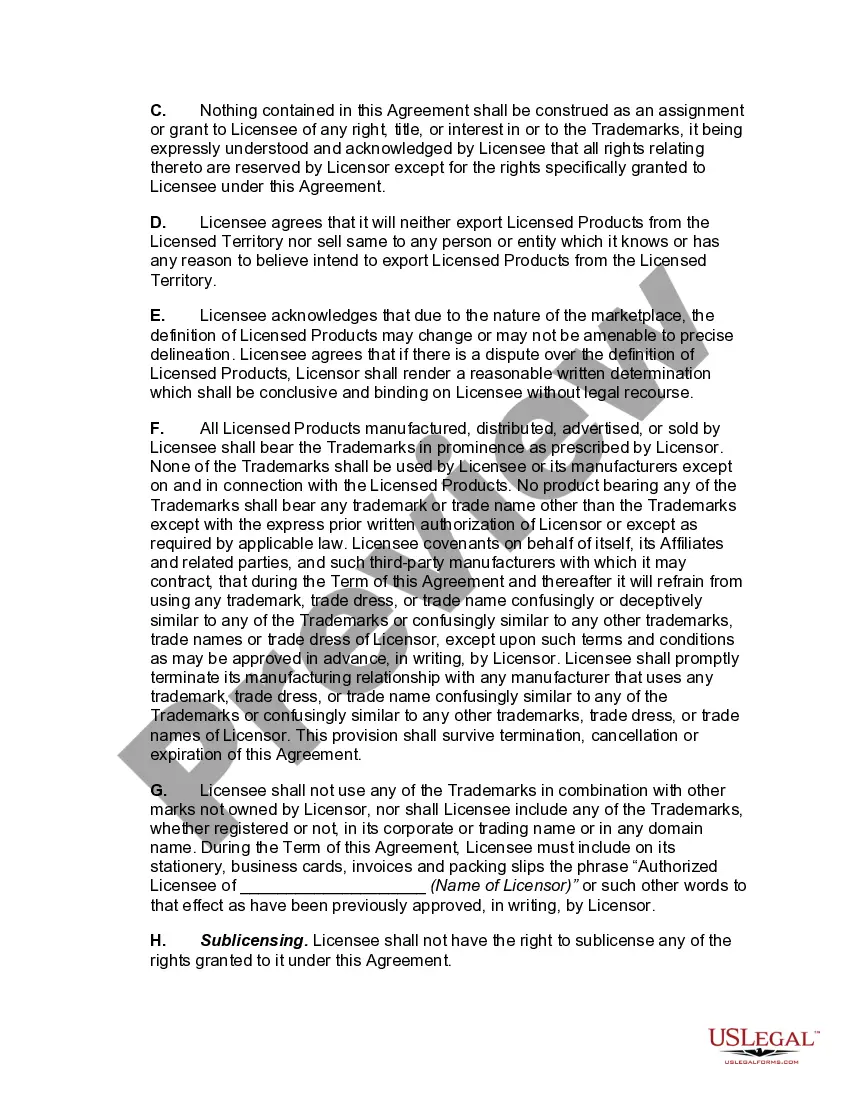
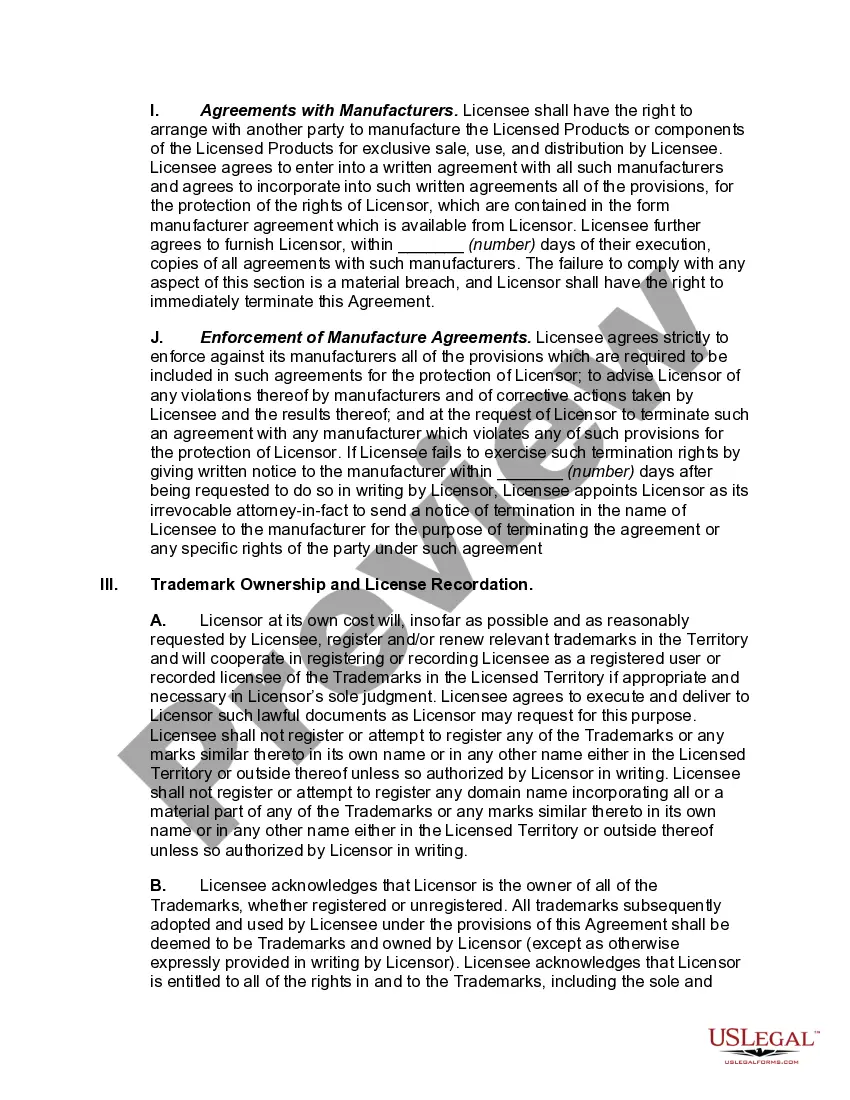
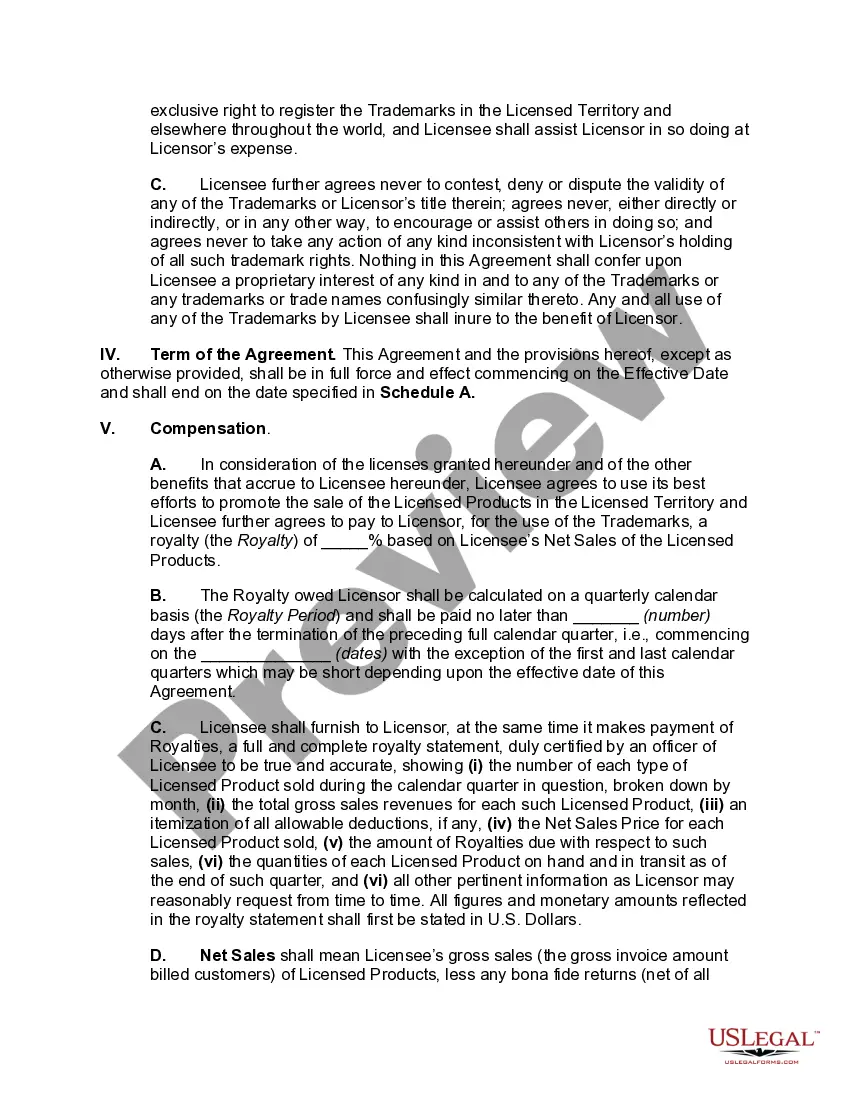
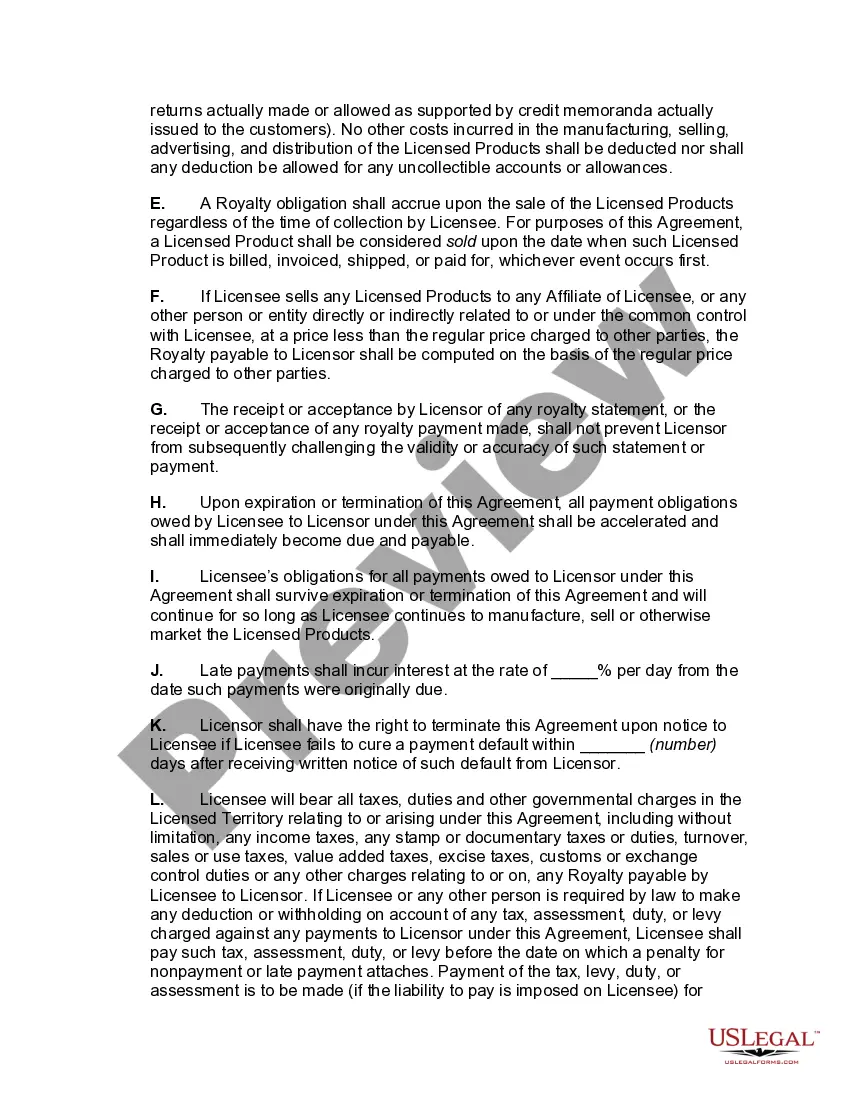
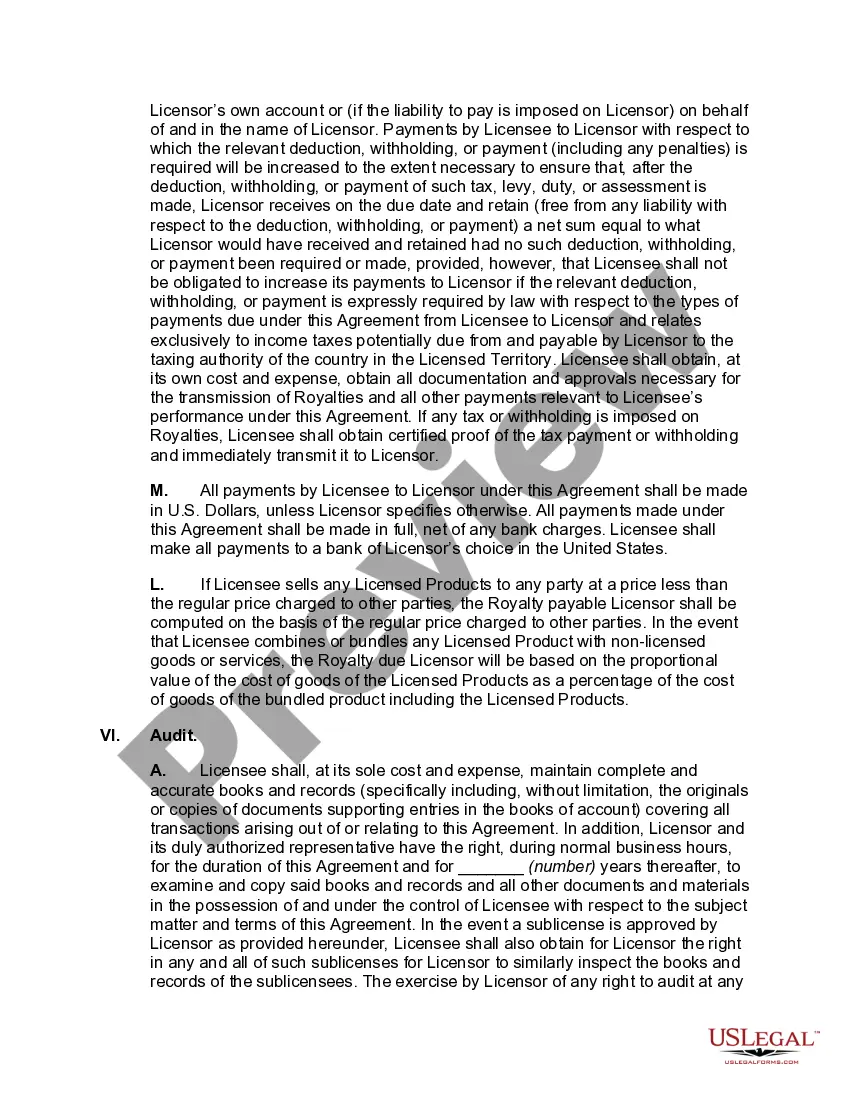
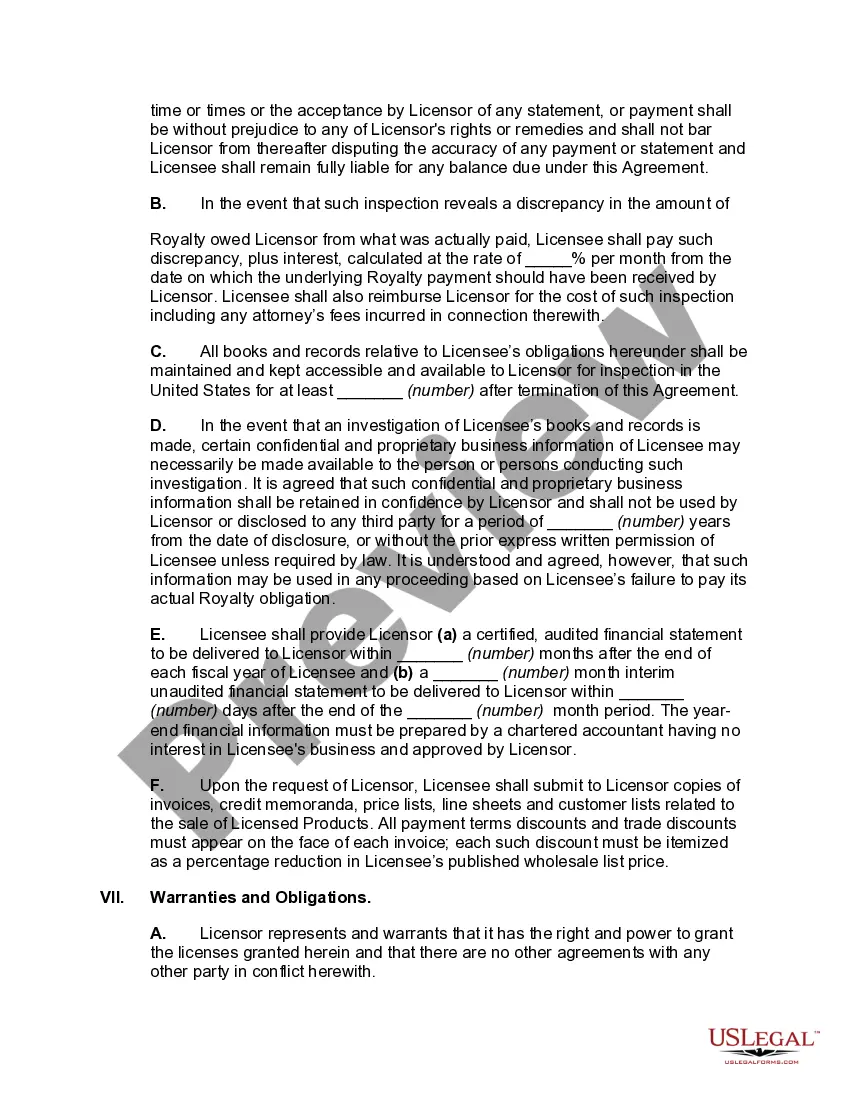
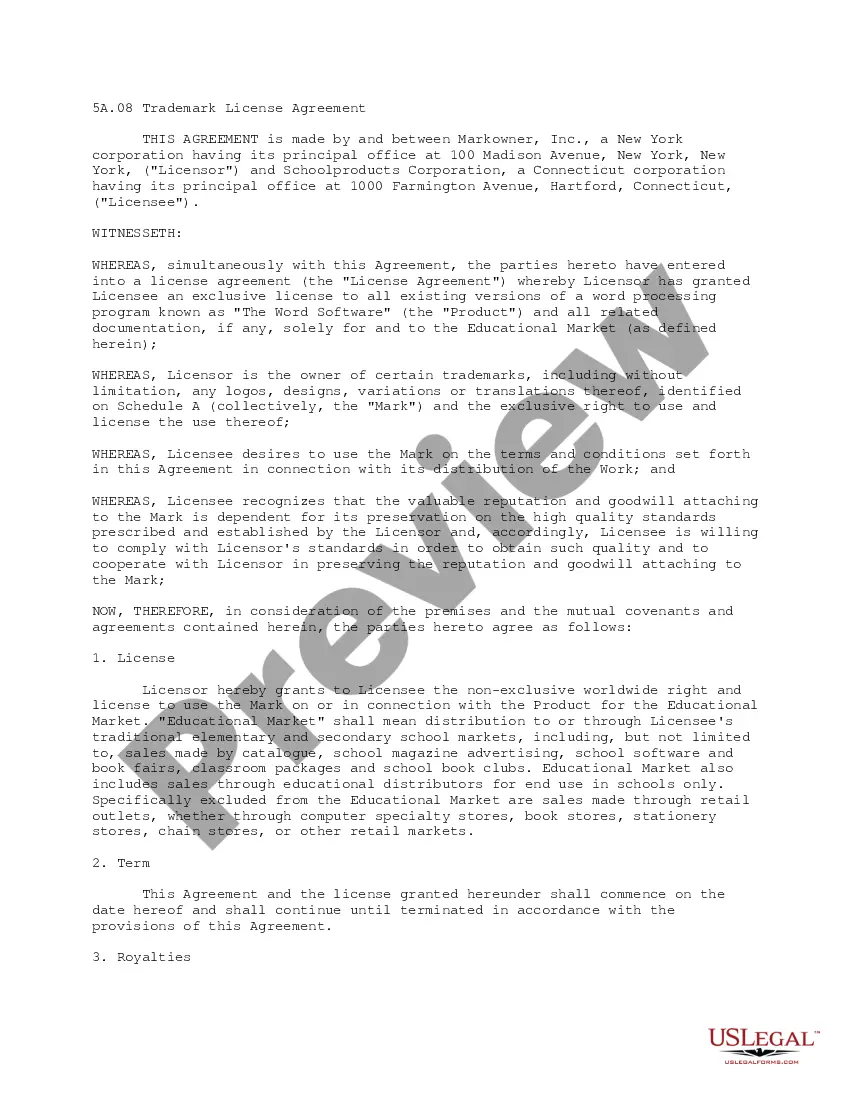
A merchandise license agreement describes the terms through which the owner of intellectual property, notably in the form of a trademark, service mark or copyright, grants a party, called the licensee, the right to use the property for distribution, marketing, and sale.
Under the terms of a licence or distribution agreement a licensee is generally granted the right to use your intellectual property (including your trade mark) or to distribute your product within a defined territory.
A distribution agreement, also known as a distributor agreement, is a contract between a supplying company with products to sell and another company that markets and sells the products. The distributor agrees to buy products from the supplier company and sell them to clients within certain geographical areas.
Distribution License means a license issued to the Company (i) pursuant to the ACMPR, and (ii) pursuant to any Applicable Laws granting the Company the authority to sell, provide, ship, deliver and transport Cannabis for medical uses and if permitted under Applicable Laws, non-medical uses; Sample 2.
Six Steps to Selling Items LegallyGet a Seller's Permit. A business must obtain a seller's permit if it sells physical items to the public.Get a Wholesaler's License.Make Sure You Have No Trademark Issues.Choose a Payment Gateway and Understand Their Limits.Understand Shipping Restrictions.Understand Customer Privacy.