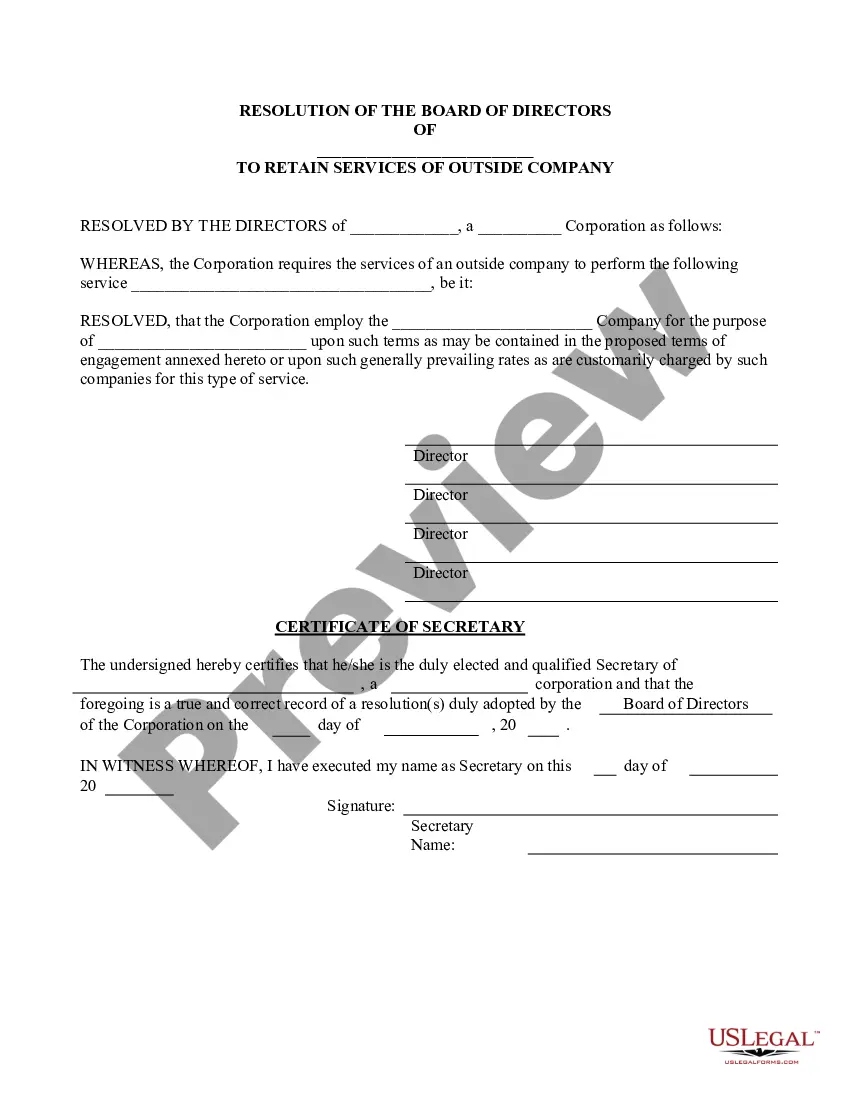
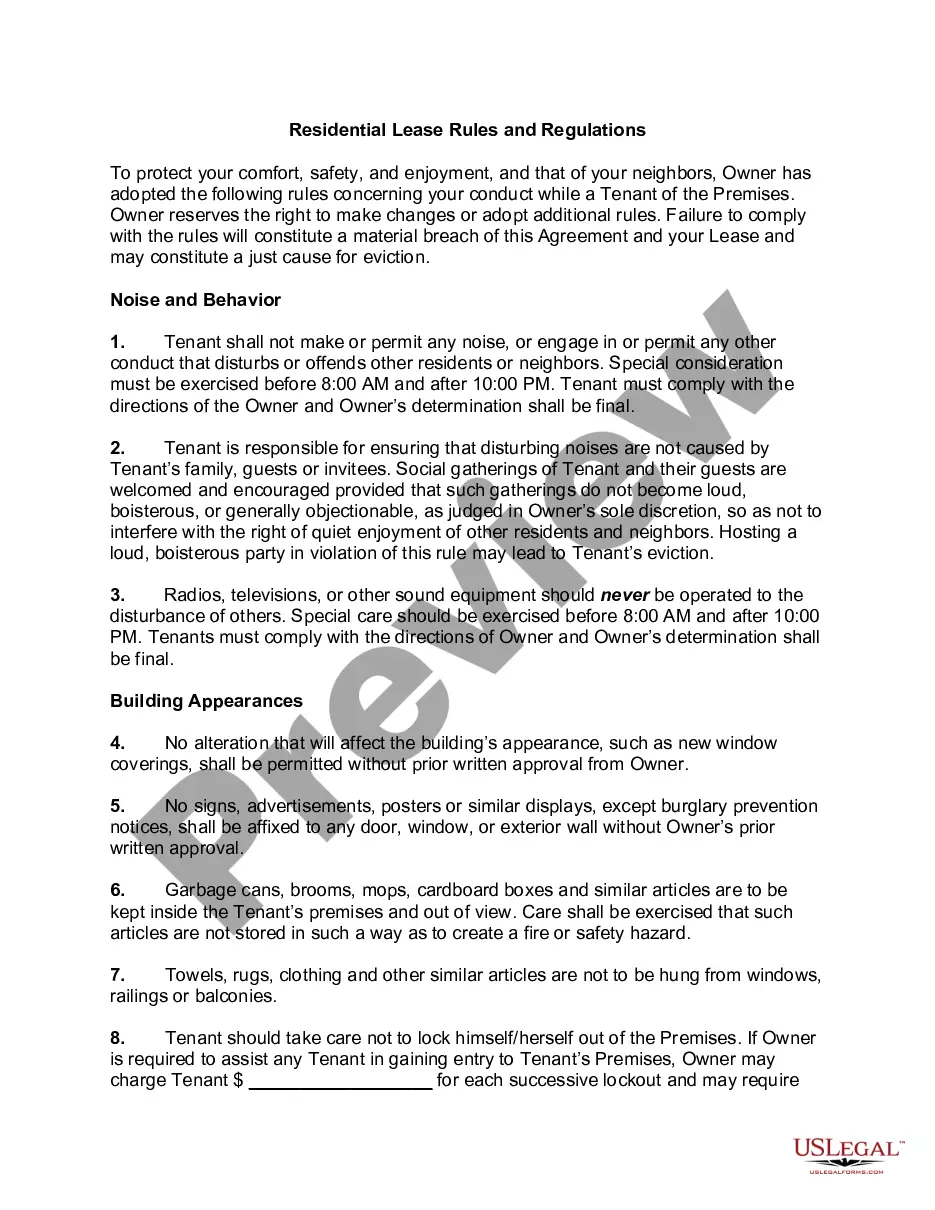
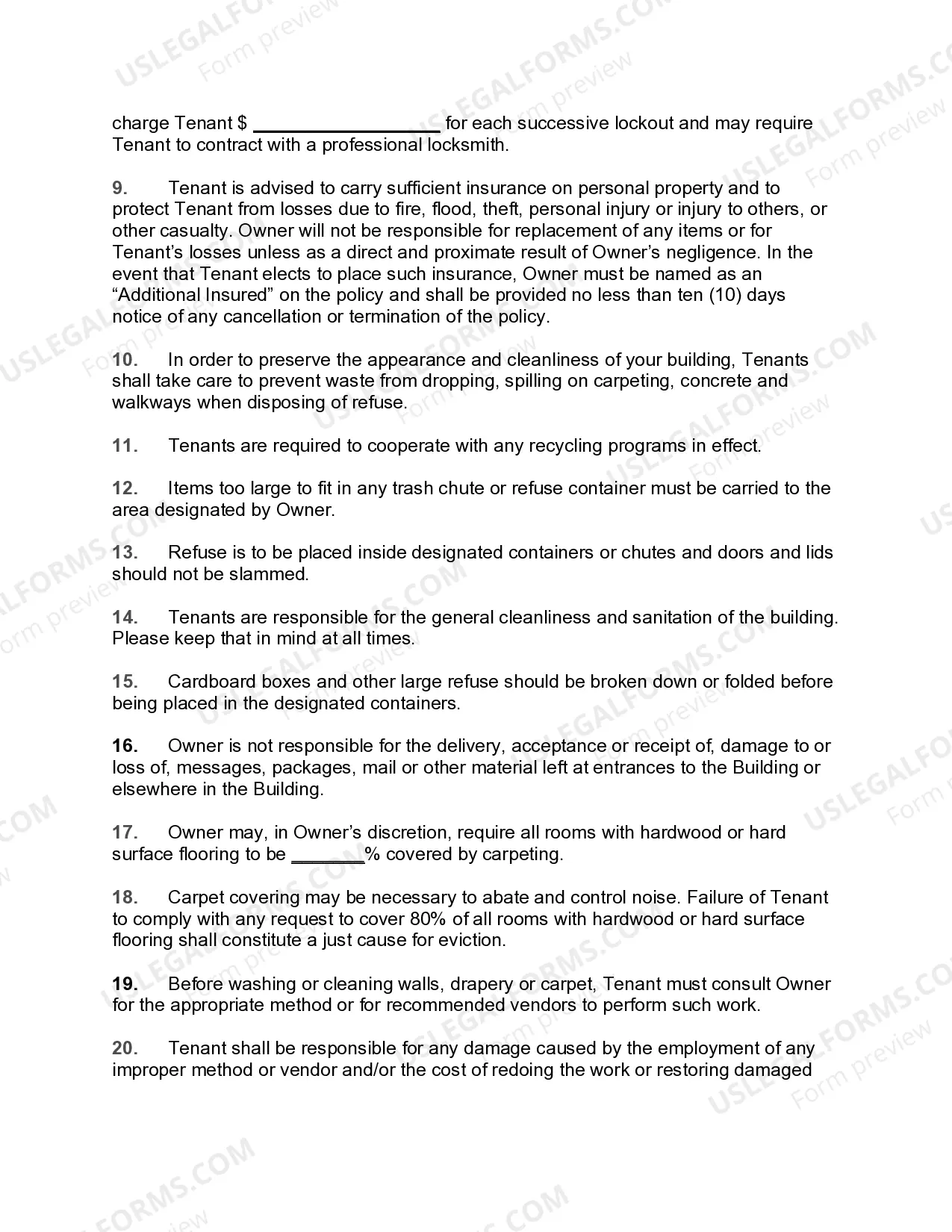
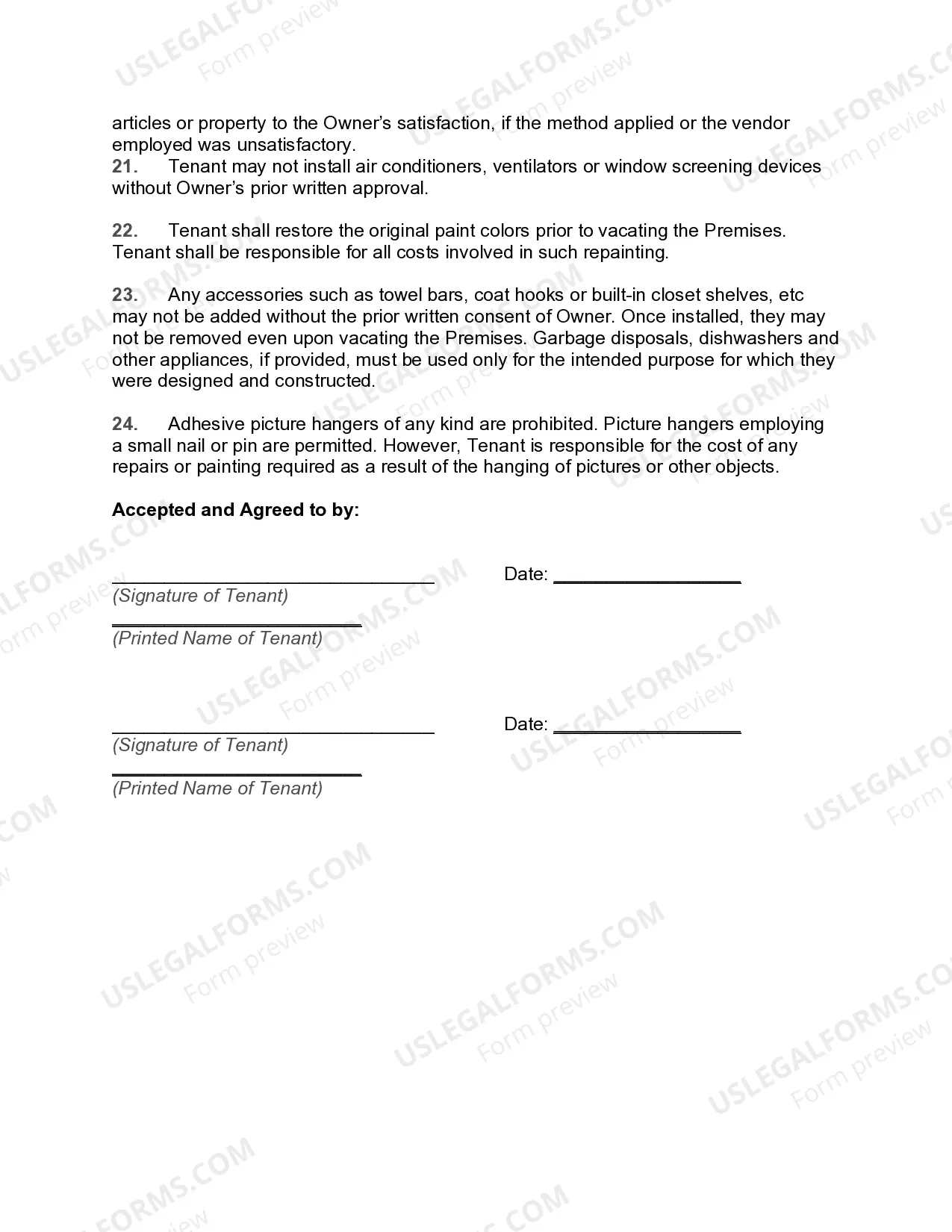
California Residential Lease Rules and Regulations
Description
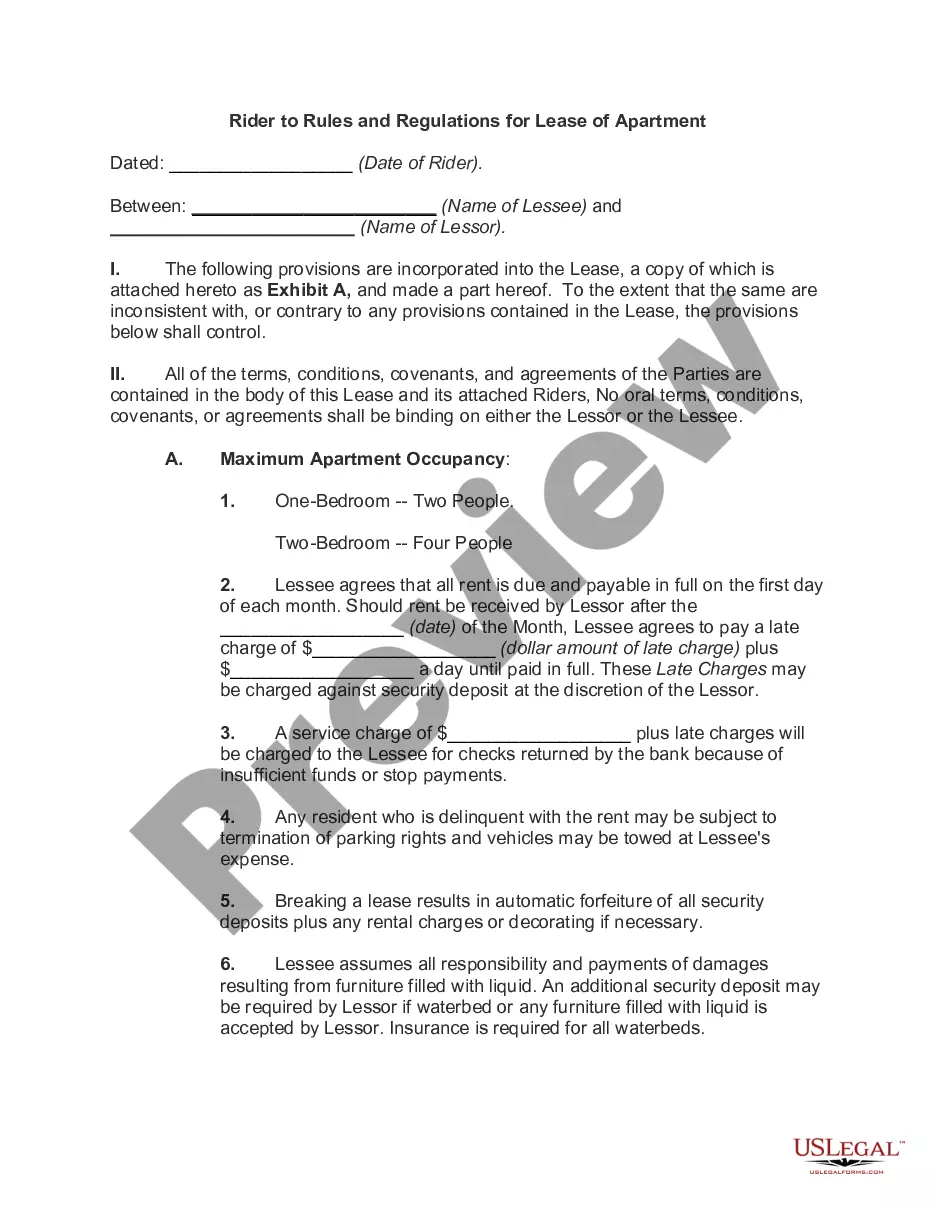
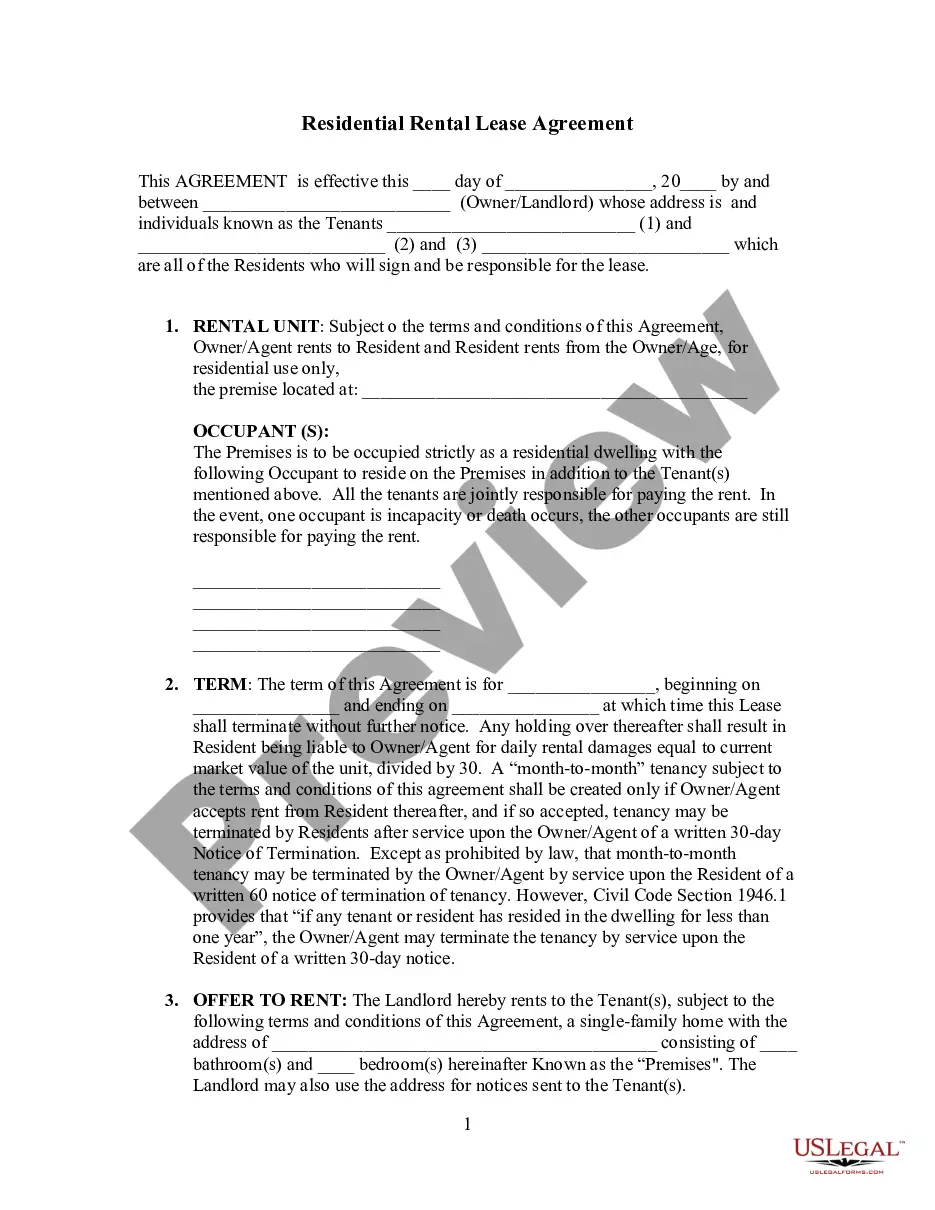
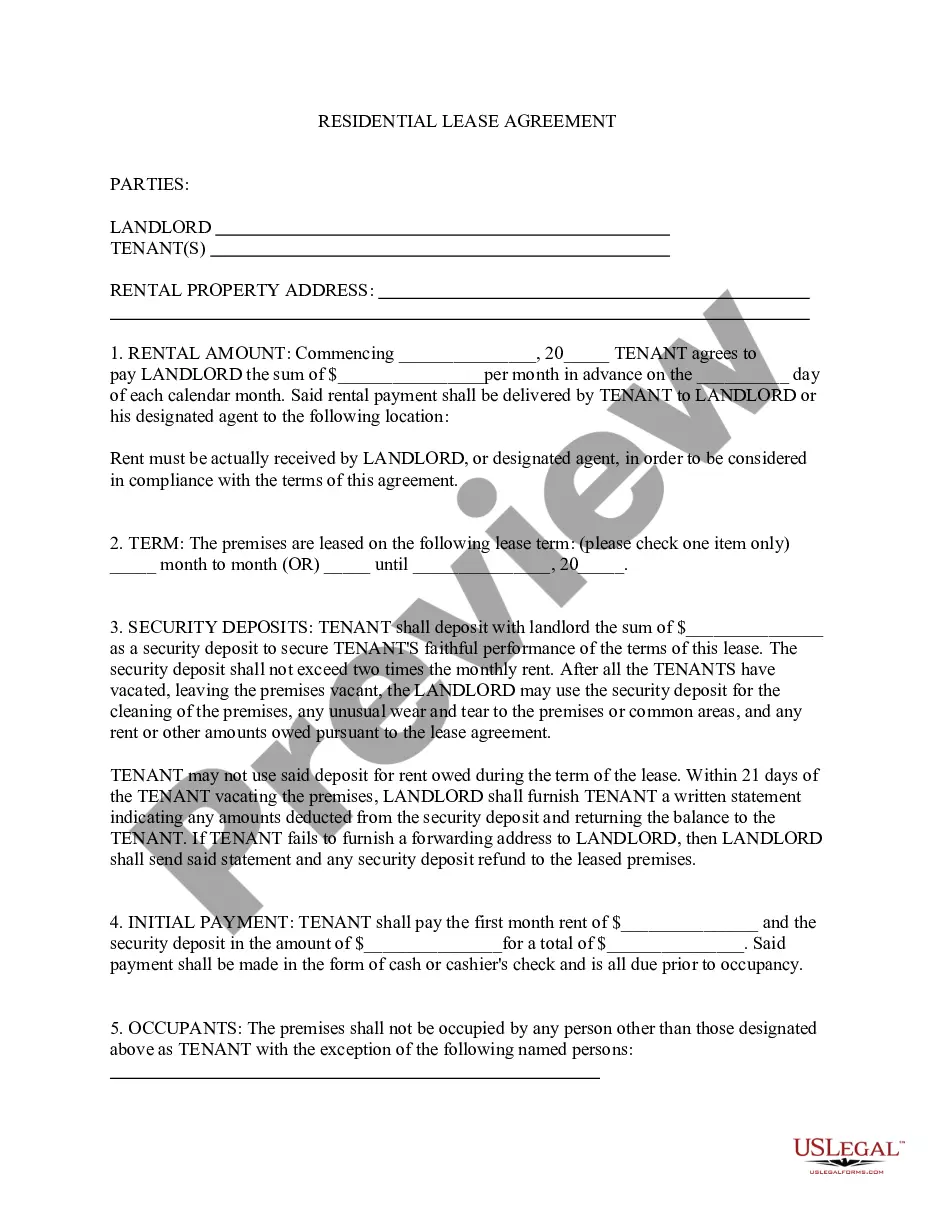
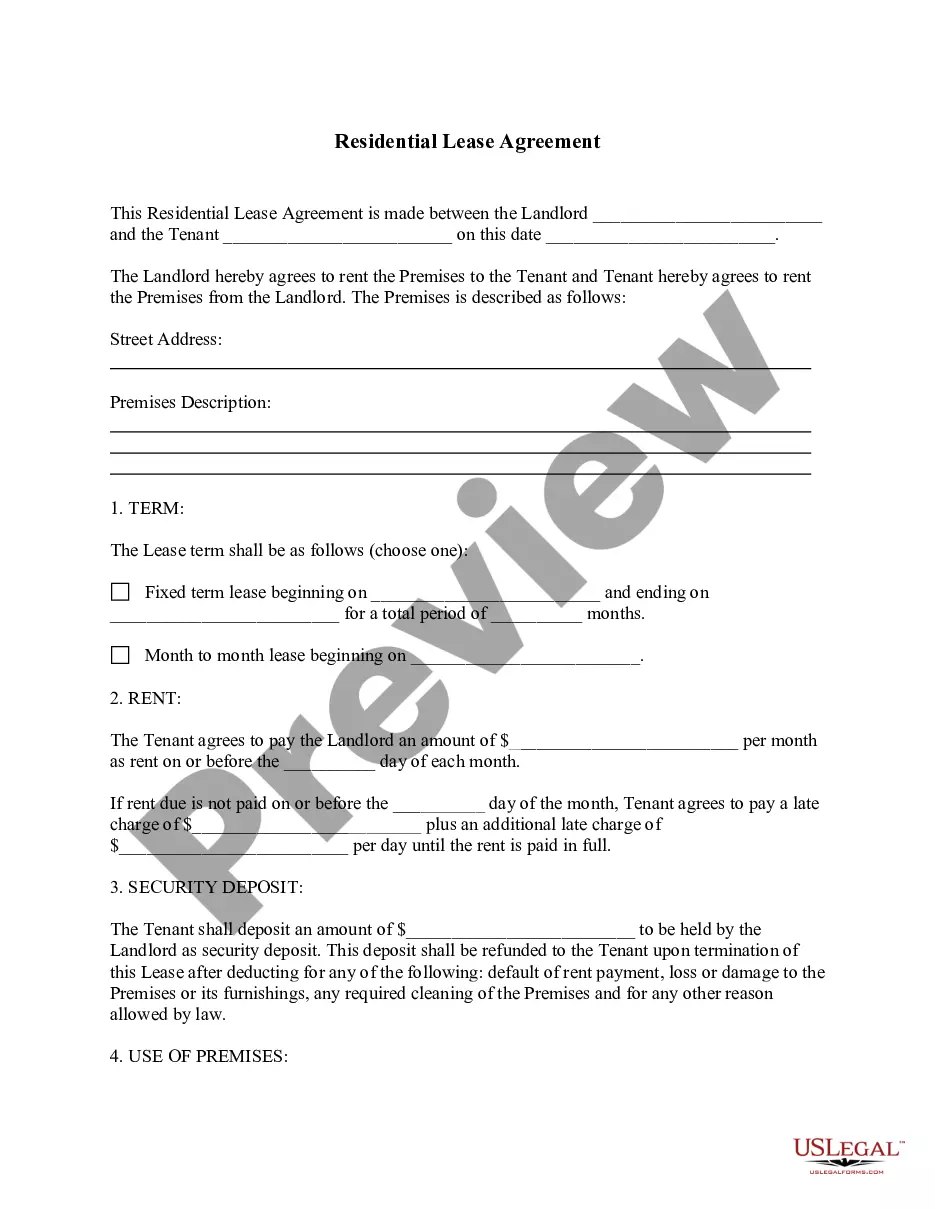
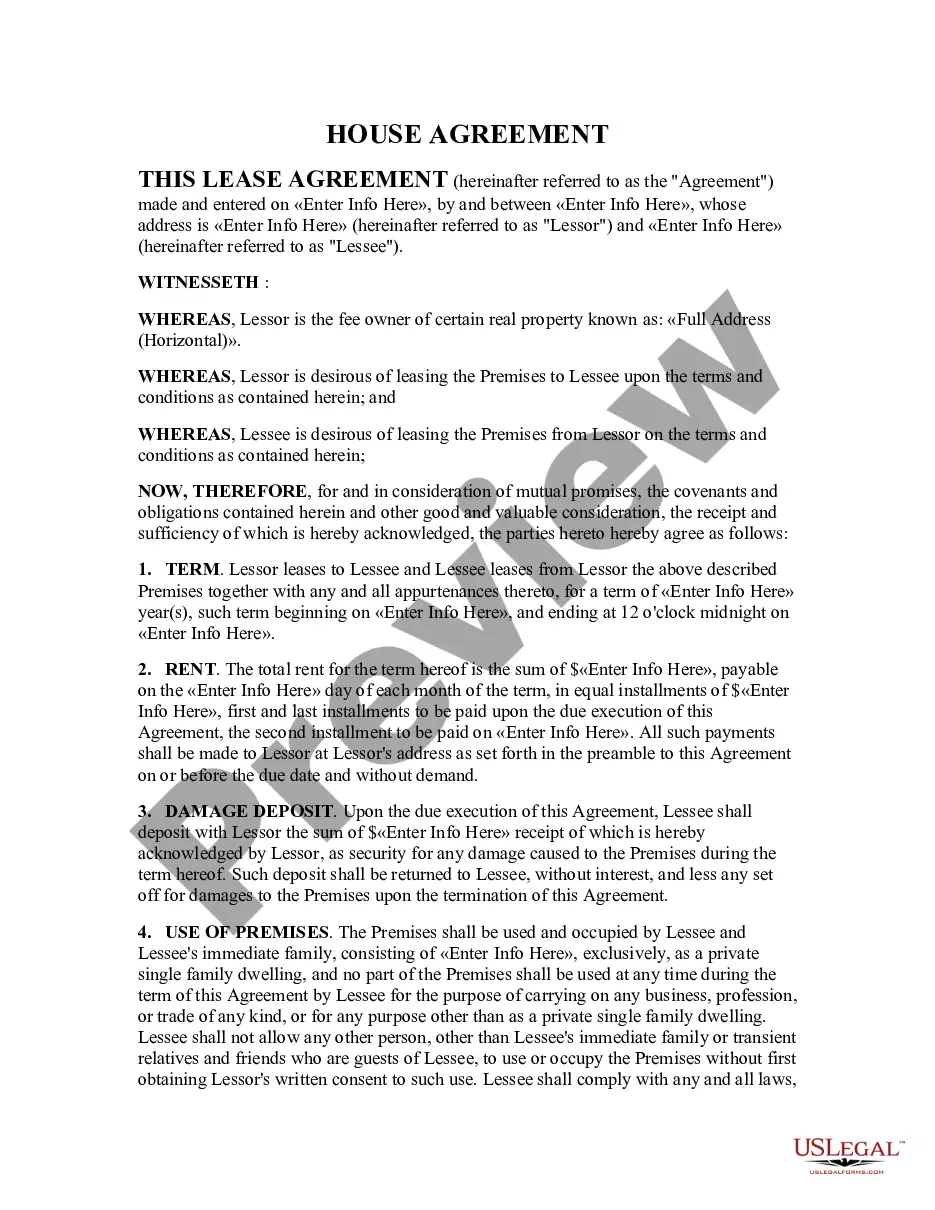
Get your form ready online
Our built-in tools help you complete, sign, share, and store your documents in one place.
Make edits, fill in missing information, and update formatting in US Legal Forms—just like you would in MS Word.
Download a copy, print it, send it by email, or mail it via USPS—whatever works best for your next step.
Sign and collect signatures with our SignNow integration. Send to multiple recipients, set reminders, and more. Go Premium to unlock E-Sign.
If this form requires notarization, complete it online through a secure video call—no need to meet a notary in person or wait for an appointment.
We protect your documents and personal data by following strict security and privacy standards.

Make edits, fill in missing information, and update formatting in US Legal Forms—just like you would in MS Word.

Download a copy, print it, send it by email, or mail it via USPS—whatever works best for your next step.

Sign and collect signatures with our SignNow integration. Send to multiple recipients, set reminders, and more. Go Premium to unlock E-Sign.

If this form requires notarization, complete it online through a secure video call—no need to meet a notary in person or wait for an appointment.

We protect your documents and personal data by following strict security and privacy standards.
Looking for another form?
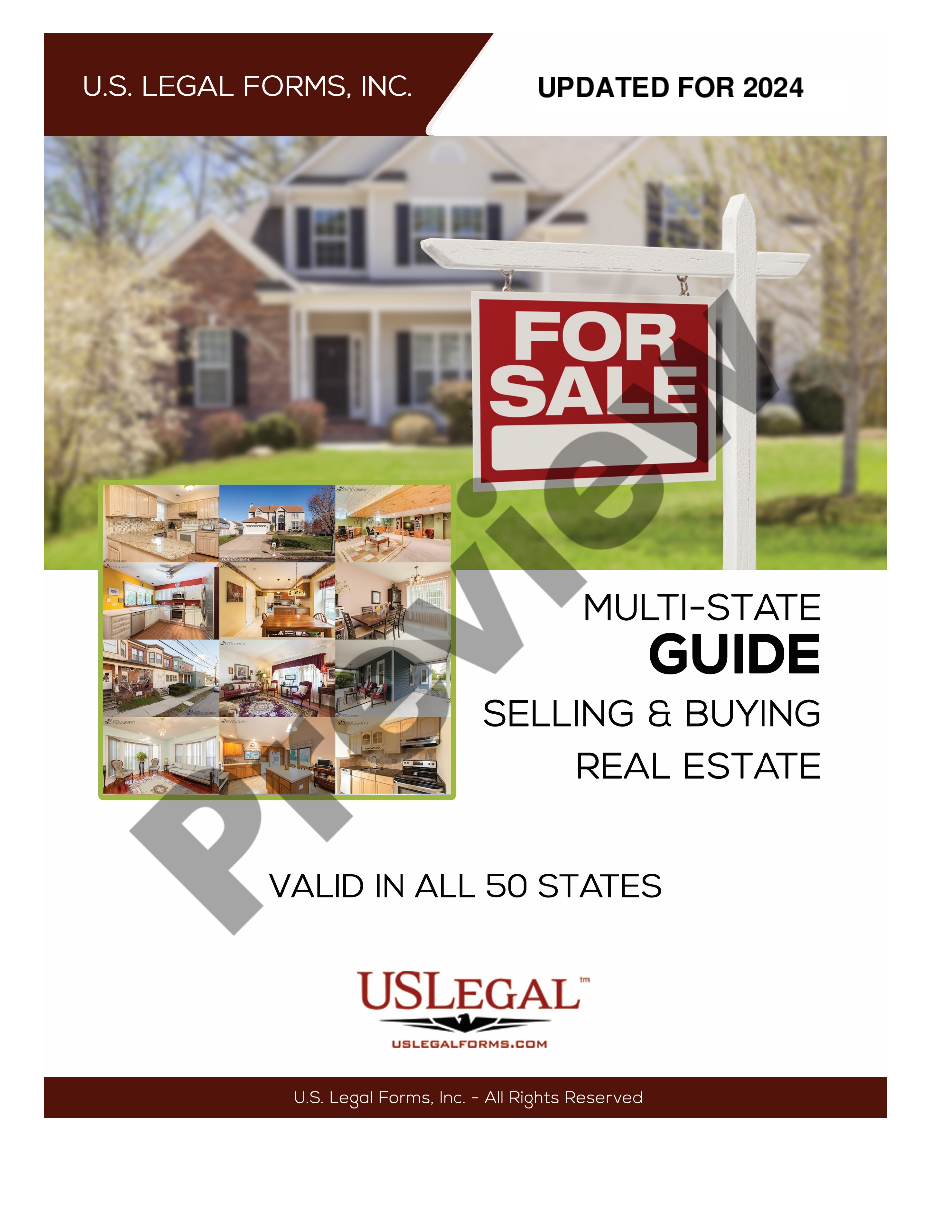

How to fill out Residential Lease Rules And Regulations?
You might spend hours online trying to locate the legal form template that meets the state and federal requirements you need.
US Legal Forms offers thousands of legal documents that are reviewed by experts.
You can easily download or print the California Residential Lease Rules and Regulations from the service.
If you want to find an alternative version of the form, use the Search field to locate the format that suits your needs and requirements.
- If you have a US Legal Forms account, you can Log In and click on the Download option.
- After that, you can complete, edit, print, or sign the California Residential Lease Rules and Regulations.
- Every legal document template you purchase is yours indefinitely.
- To obtain another copy of a purchased form, visit the My documents tab and click the respective option.
- If you are using the US Legal Forms website for the first time, follow the simple instructions below.
- First, make sure you have selected the right document format for your preferred county/city. Check the form description to ensure you've chosen the correct one.
- If available, use the Preview option to review the document format as well.
Form popularity
FAQ
Tenant Rights and Responsibilities According to California landlord-tenant laws, tenants have the right to live in safe, habitable rental units, as well as sue the landlord for retaliation, withhold rent for failure to provide essential services, recover attorney's fees, and more.
California landlords are legally required to offer and maintain habitable rentals. Tenants may withhold rent, move out without notice, sue the landlord, call state or local health inspectors, or exercise the right to "repair and deduct" if a landlord fails to take care of important repairs, such as a broken heater.
Just Cause Eviction: A Law That Impacts California Landlords In California now, landlords can evict tenants at the end of their lease without specifying any reason, as long as they give advance notice of 60 days. Or, 30 days if the tenant has been renting for less than a year.
Minimum legal components of a lease are a statement of the parties, a description of the property, the duration of the lease, the amount of the rental, and the time and manner of the rental payment.
Any provisions that deny a tenant their rights concerning security deposits as stated in the California Civil Code, Section 1950.5 are invalid. 1) Any provision which frees the landlord from liability for damages is invalid under California Civil Code, Section 1953.
Landlords Must Not Just Let Themselves Into The Property You might own the land, but you cannot walk into a filled property whenever you like. If the tenants aren't at home, a landlord must agree a time they can enter the property with the incumbent person. Likewise, you cannot demand entry at any point.
Tenant Rights and Responsibilities According to California landlord-tenant laws, tenants have the right to live in safe, habitable rental units, as well as sue the landlord for retaliation, withhold rent for failure to provide essential services, recover attorney's fees, and more.
The 2019 passage of California Senate Bill No. 644 prohibits landlords from charging active duty military security deposits exceeding the amount of one month's rent for an unfurnished apartment and two months' rent for furnished apartments.
In any standard lease agreement, including those in California, there are basic requirements, such as a description of the property, the rental amount, duration of the rental period, payment due dates, any deposits or fees, condition of the property at the beginning of the lease, maintenance expectations, and how the
Annual rent increases are limited to 5% after inflation over the next 10 years. Landlords must provide a just cause for evicting tenants. Single-family homes or duplexes that are owner-occupied are exempt. California cities that already have rent control laws in place are exempt.