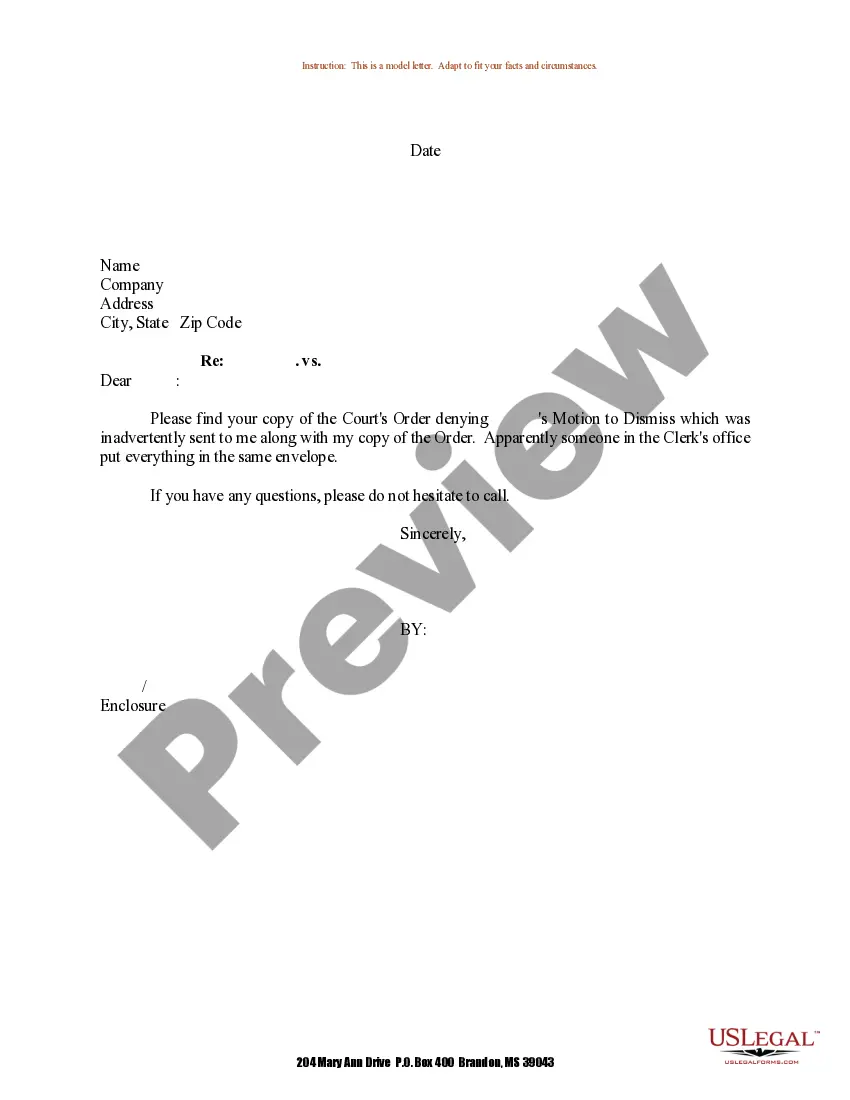
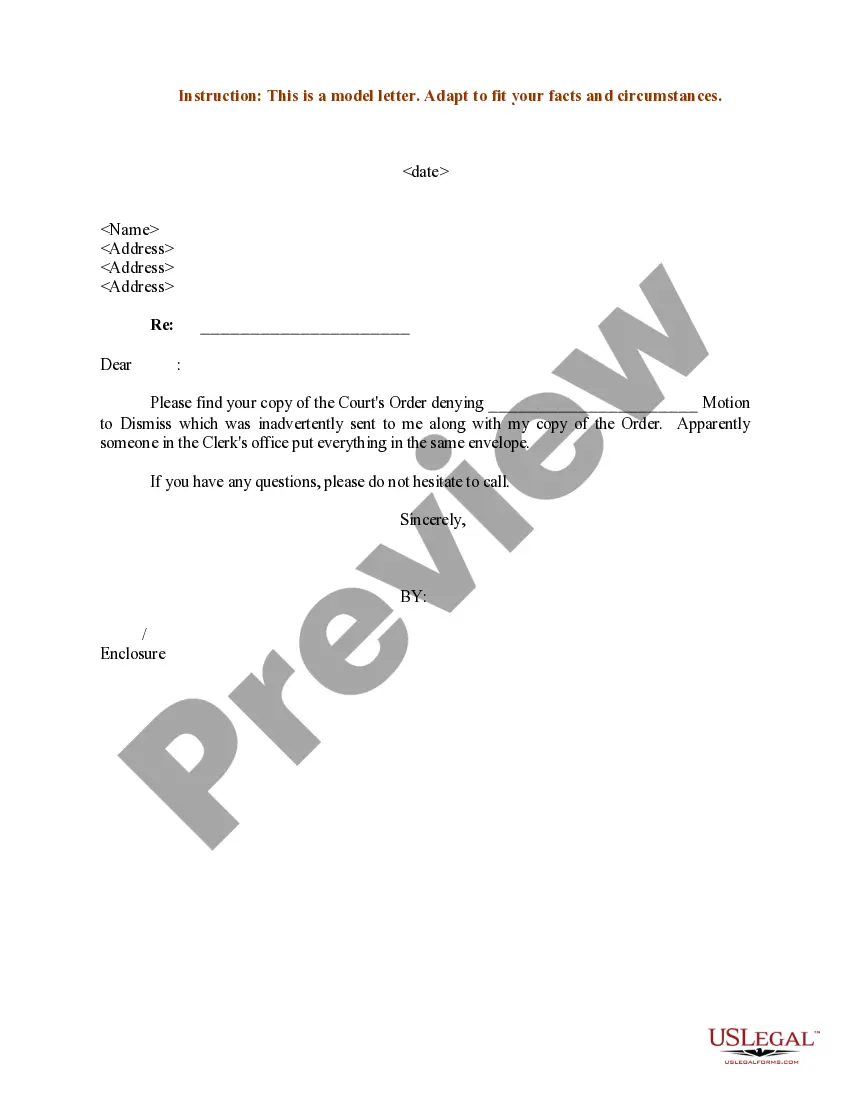
California Sample Letter for Court Order Denying Motion to Dismiss Case
Description
Get your form ready online
Our built-in tools help you complete, sign, share, and store your documents in one place.
Make edits, fill in missing information, and update formatting in US Legal Forms—just like you would in MS Word.
Download a copy, print it, send it by email, or mail it via USPS—whatever works best for your next step.
Sign and collect signatures with our SignNow integration. Send to multiple recipients, set reminders, and more. Go Premium to unlock E-Sign.
If this form requires notarization, complete it online through a secure video call—no need to meet a notary in person or wait for an appointment.
We protect your documents and personal data by following strict security and privacy standards.

Make edits, fill in missing information, and update formatting in US Legal Forms—just like you would in MS Word.

Download a copy, print it, send it by email, or mail it via USPS—whatever works best for your next step.

Sign and collect signatures with our SignNow integration. Send to multiple recipients, set reminders, and more. Go Premium to unlock E-Sign.

If this form requires notarization, complete it online through a secure video call—no need to meet a notary in person or wait for an appointment.

We protect your documents and personal data by following strict security and privacy standards.
Looking for another form?
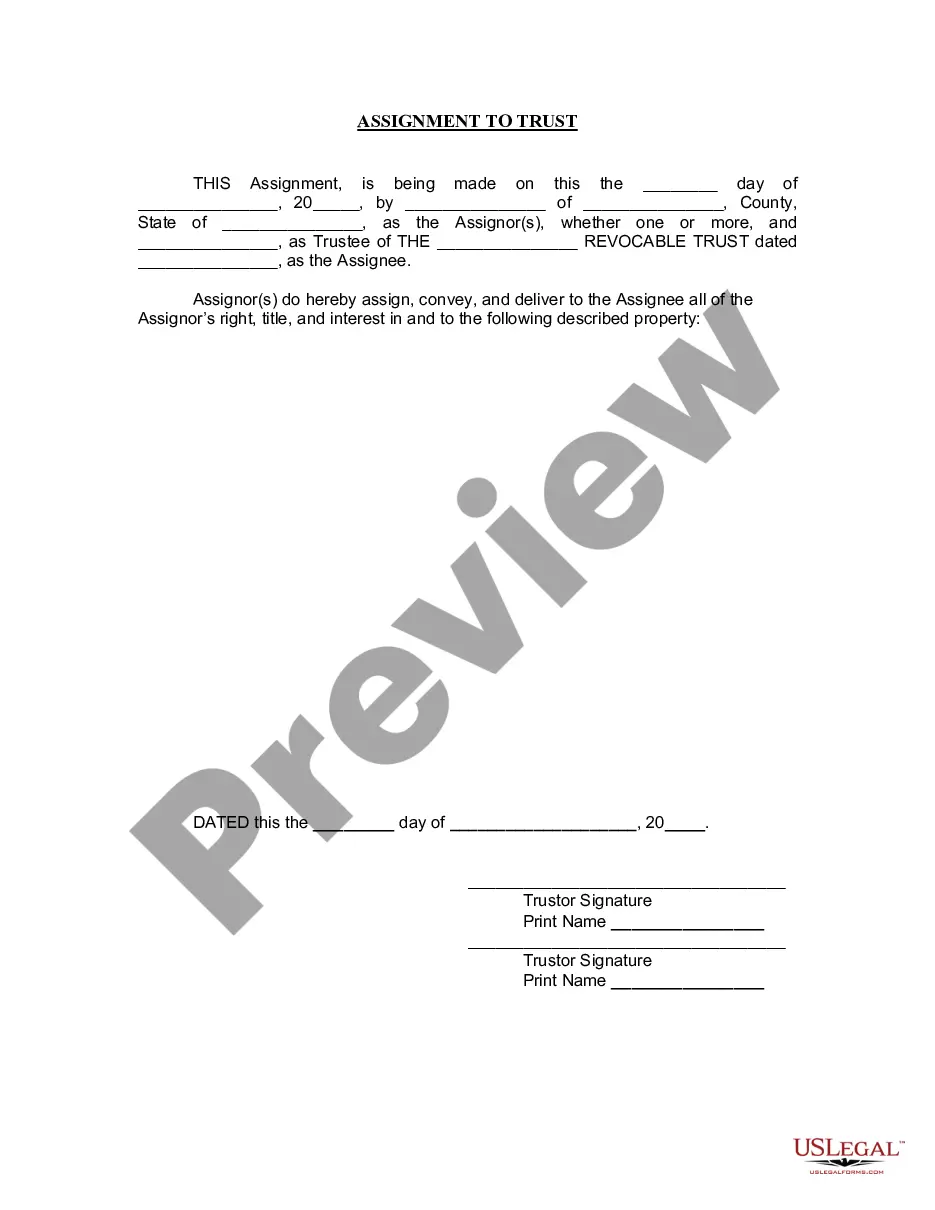
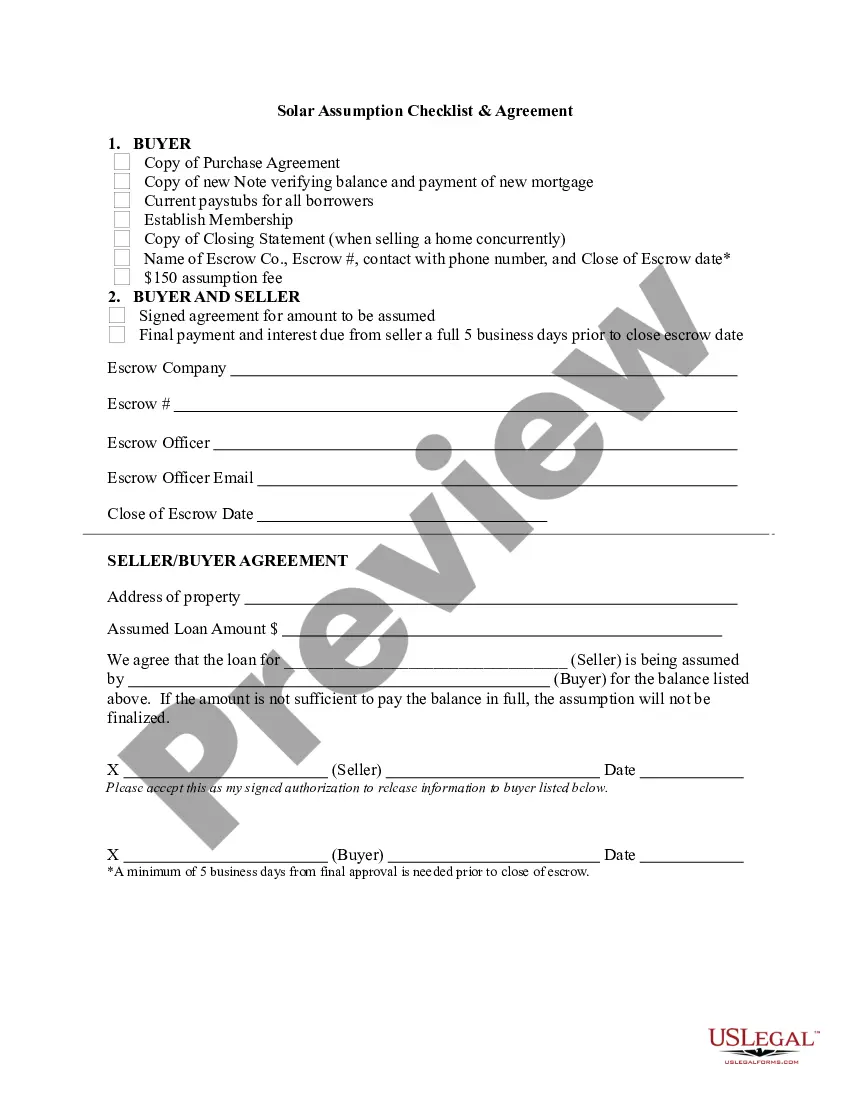
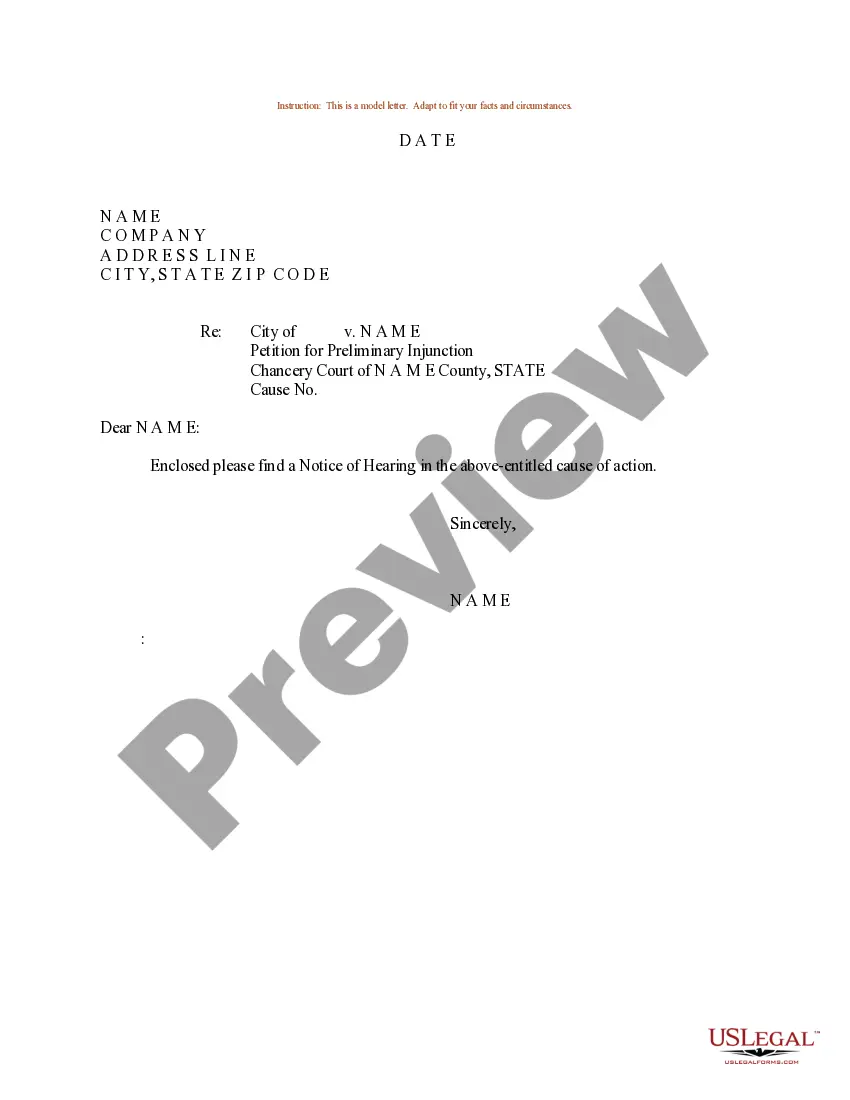
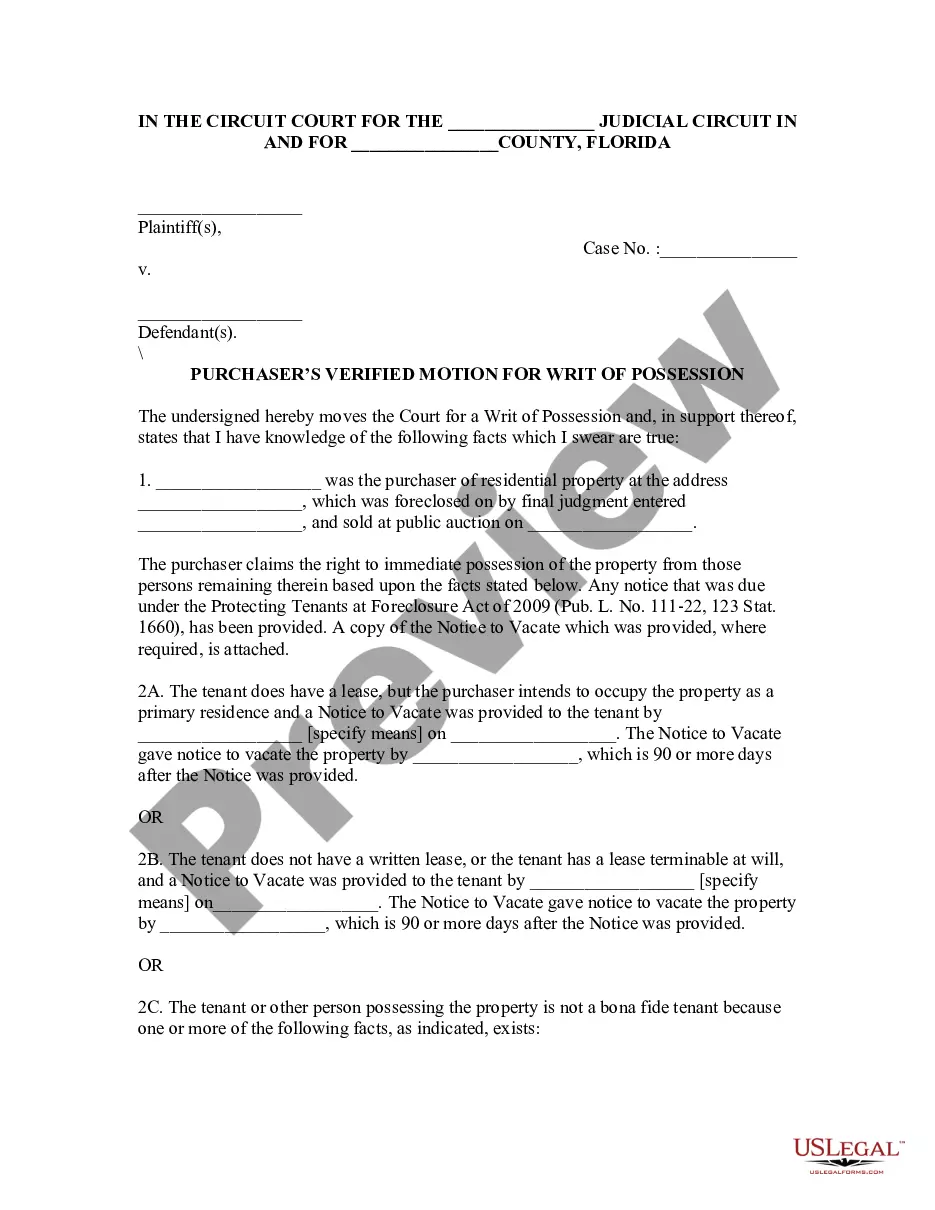
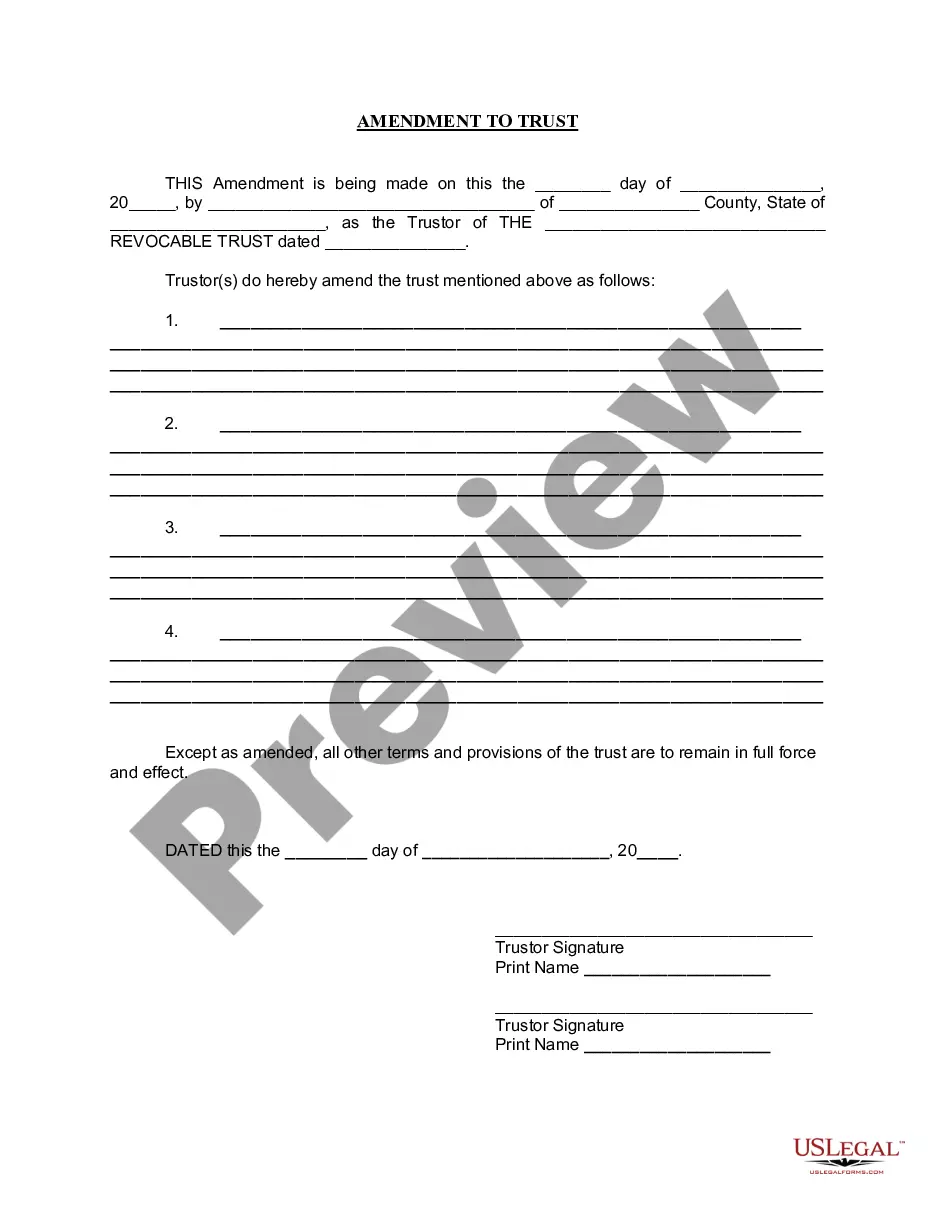

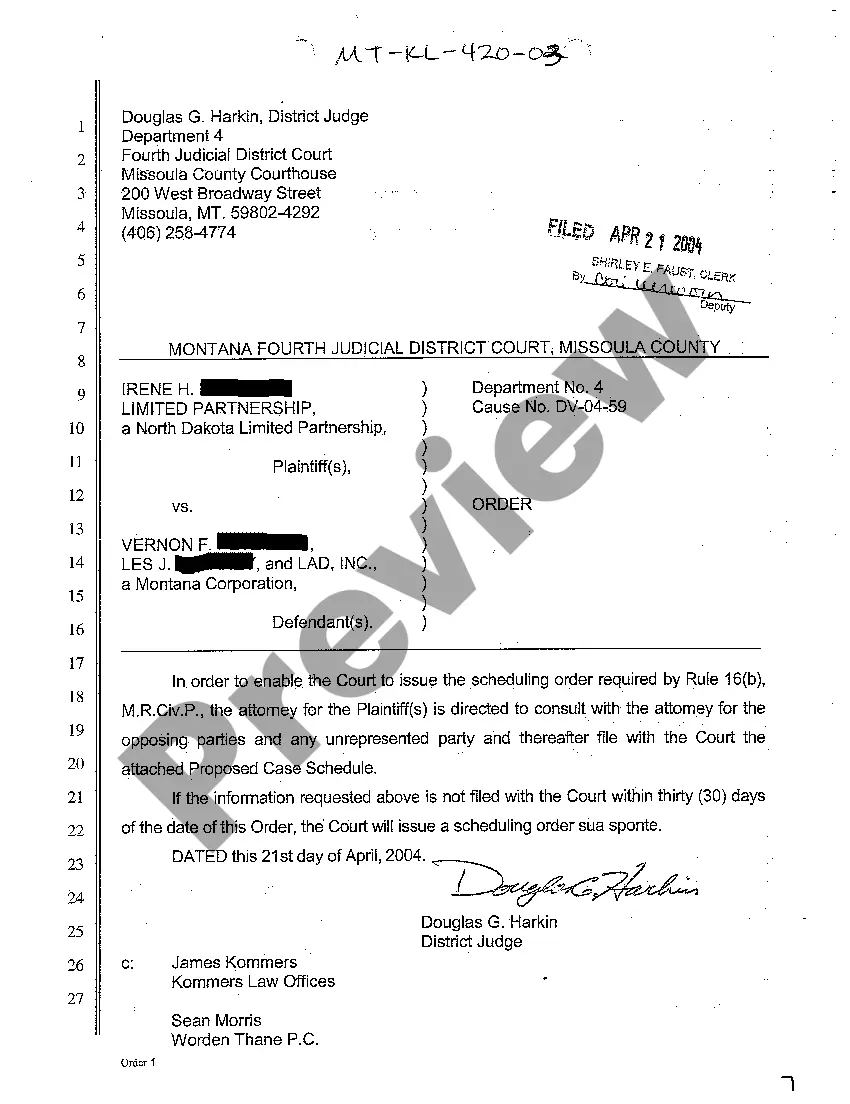
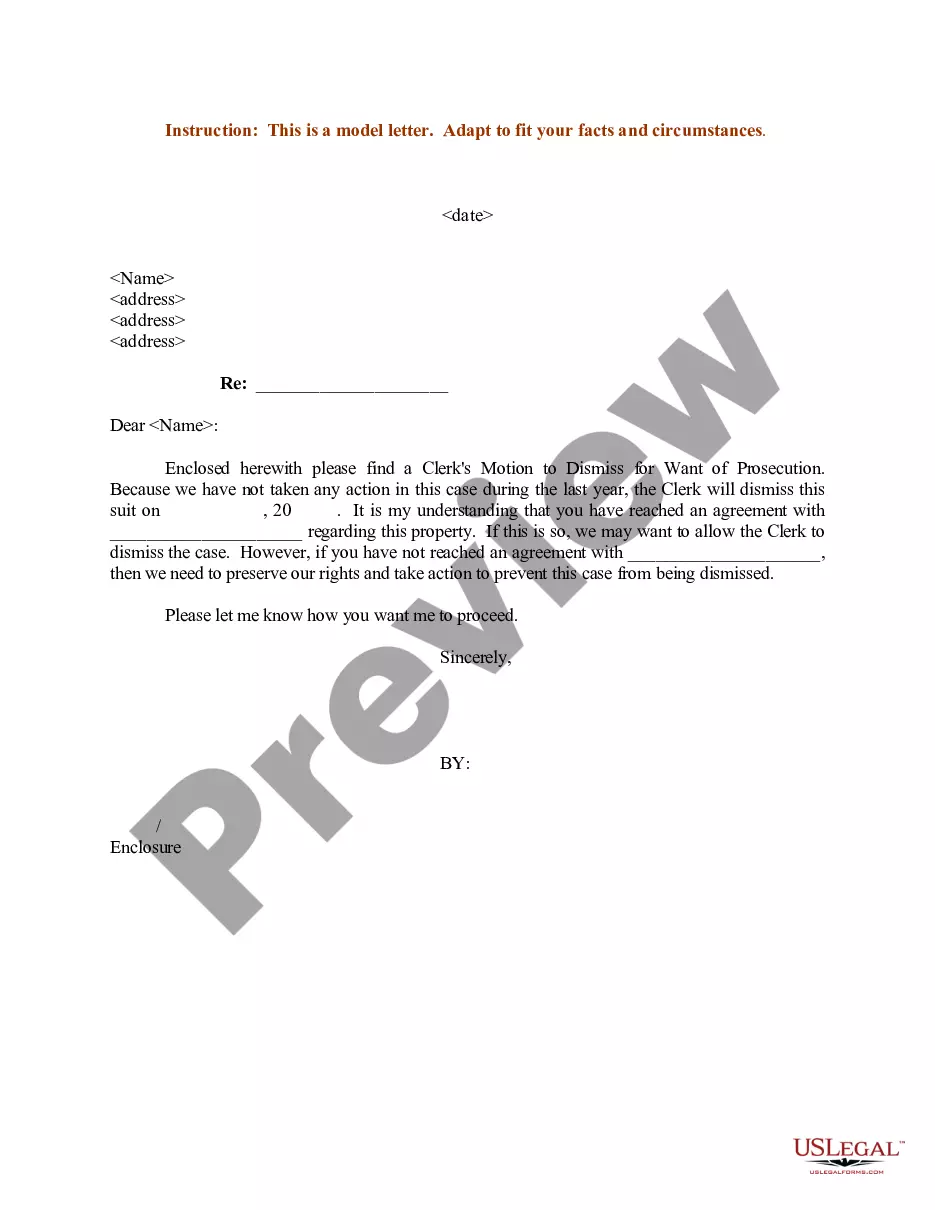
How to fill out Sample Letter For Court Order Denying Motion To Dismiss Case?
Are you currently in the location where you require documents for potential business or personal purposes regularly.
There are numerous legal document templates accessible online, but finding reliable ones can be challenging.
US Legal Forms offers a vast array of form templates, such as the California Sample Letter for Court Order Denying Motion to Dismiss Case, designed to meet federal and state requirements.
Once you find the appropriate form, click Get now.
Select the pricing plan you prefer, provide the necessary information to create your account, and pay for the order using your PayPal or credit card. Choose a convenient format and download your copy. Access all the document templates you have purchased in the My documents menu. You can obtain another copy of the California Sample Letter for Court Order Denying Motion to Dismiss Case at any time if needed. Just click the required form to download or print the document template. Use US Legal Forms, the most extensive collection of legal forms, to save time and avoid errors. The service provides professionally crafted legal document templates that can be used for various purposes. Create your account on US Legal Forms and start making your life easier.
- If you are already familiar with the US Legal Forms website and have an account, simply Log In.
- After that, you can download the California Sample Letter for Court Order Denying Motion to Dismiss Case template.
- If you do not have an account and wish to start using US Legal Forms, follow these steps.
- Find the form you need and ensure it is for the correct city/region.
- Use the Preview button to review the document.
- Check the description to confirm that you have selected the right form.
- If the form isn’t what you’re looking for, use the Search area to find the form that fits your requirements.
Form popularity
FAQ
To contest a motion to dismiss, you should first understand the grounds on which the motion is based. Gather your evidence and legal arguments to support your case. You can draft a California Sample Letter for Court Order Denying Motion to Dismiss Case to formally present your opposition to the court. Using a reliable platform like US Legal Forms can simplify this process by providing templates and guidance tailored to your needs.
Being dismissed by a letter is not a standard legal practice, as dismissals typically require a formal court order. However, a letter can be part of a broader strategy to request dismissal, especially if it contains compelling reasons. For assistance, consider using a California Sample Letter for Court Order Denying Motion to Dismiss Case to structure your communication effectively.
Yes, you can write a letter to a judge requesting the dismissal of a case, but it must be well-reasoned and supported by valid arguments. The letter should be formal and address the legal grounds for your request. A California Sample Letter for Court Order Denying Motion to Dismiss Case can help guide you in drafting a persuasive letter.
Writing an opposition to a motion to dismiss requires you to articulate why the motion should not be granted. Focus on countering the arguments presented in the motion and provide evidence supporting your claims. Utilizing a California Sample Letter for Court Order Denying Motion to Dismiss Case can streamline this process and enhance your argument.
To secure a granted motion to dismiss, you need to provide a strong legal basis that shows the plaintiff's claims are insufficient. This typically involves citing relevant laws and previous cases that support your position. A California Sample Letter for Court Order Denying Motion to Dismiss Case can help you craft your arguments clearly and persuasively.
Writing a letter to a judge can help, especially if it presents a compelling argument or new evidence. However, it is important to maintain professionalism and respect in your communication. A California Sample Letter for Court Order Denying Motion to Dismiss Case can serve as a helpful resource to ensure your letter addresses key points effectively.
Writing a letter to request that charges be dropped involves clearly stating your reasons and providing any supporting evidence. Be respectful and concise, explaining why the charges are unfounded or unjust. Utilizing a California Sample Letter for Court Order Denying Motion to Dismiss Case can provide you with a useful template to structure your letter effectively.
To get a judge removed from a case, you must demonstrate a valid reason, such as bias or conflict of interest. This usually requires filing a motion for recusal, supported by evidence. Legal resources, including a California Sample Letter for Court Order Denying Motion to Dismiss Case, may guide you on how to properly formulate your request.
When a judge denies a motion to dismiss, the case continues to move forward in the legal process. This means that the plaintiff's claims will be considered, and the defendant must prepare for trial or further legal proceedings. If you need assistance navigating this process, a California Sample Letter for Court Order Denying Motion to Dismiss Case can help clarify the next steps.
A motion to dismiss should be denied when there are valid claims that warrant further examination in court. If the plaintiff has sufficiently established a legal basis for their case, the court should allow it to proceed. Utilizing a California Sample Letter for Court Order Denying Motion to Dismiss Case can help articulate the reasons for denying a motion and support the case's continuation.