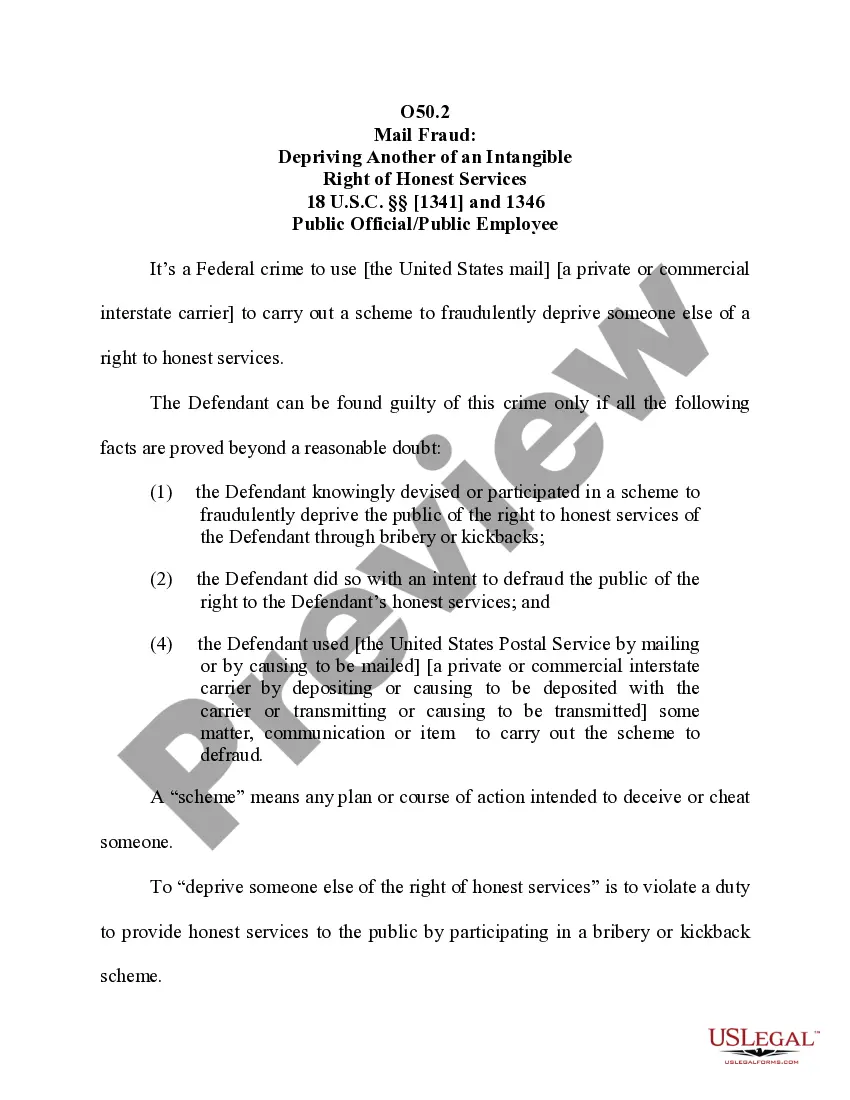
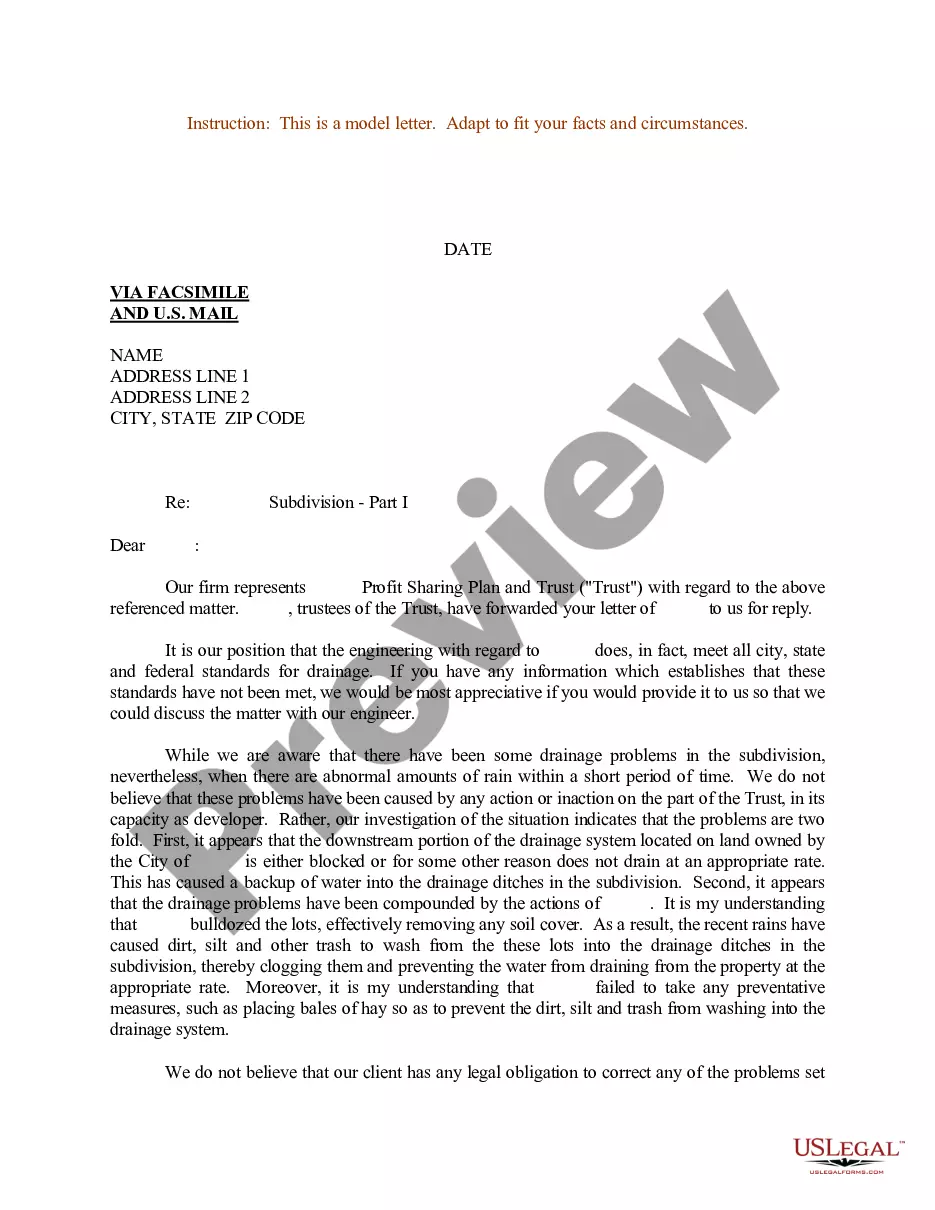
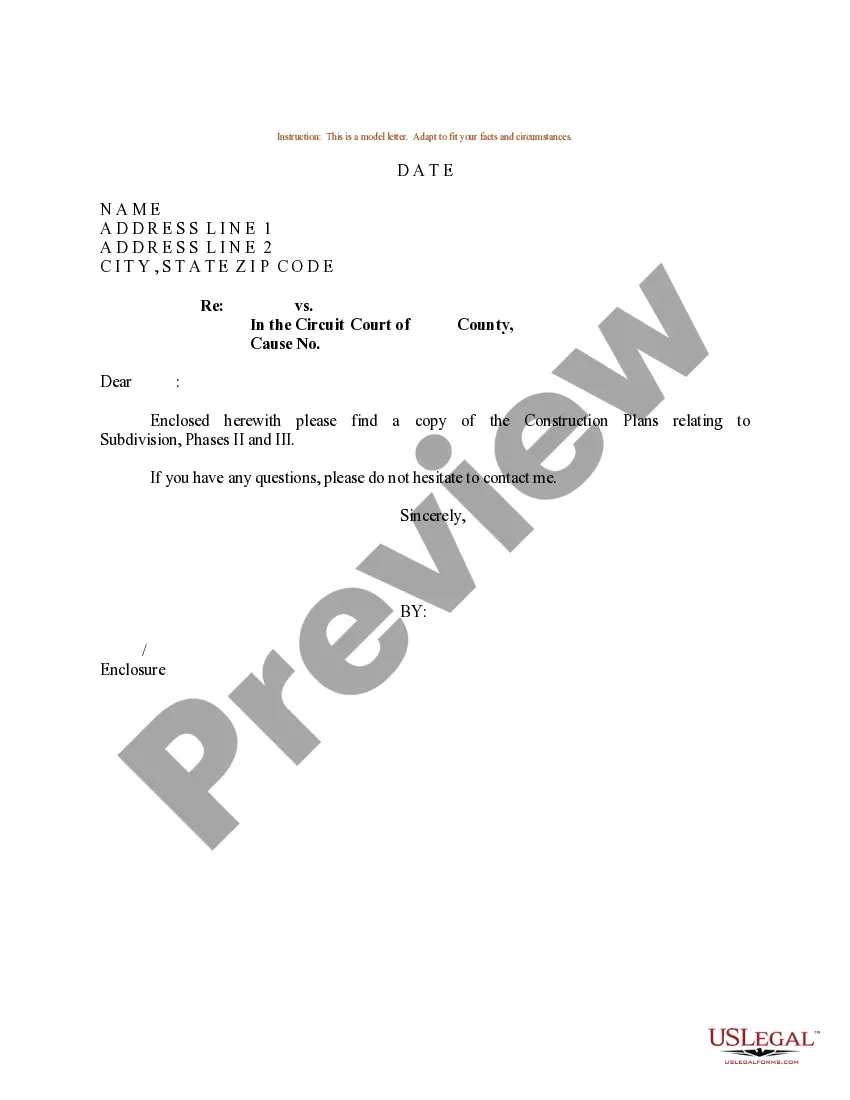
California Sample Letter for Subdivision Construction
Description

Get your form ready online
Our built-in tools help you complete, sign, share, and store your documents in one place.
Make edits, fill in missing information, and update formatting in US Legal Forms—just like you would in MS Word.
Download a copy, print it, send it by email, or mail it via USPS—whatever works best for your next step.
Sign and collect signatures with our SignNow integration. Send to multiple recipients, set reminders, and more. Go Premium to unlock E-Sign.
If this form requires notarization, complete it online through a secure video call—no need to meet a notary in person or wait for an appointment.
We protect your documents and personal data by following strict security and privacy standards.

Make edits, fill in missing information, and update formatting in US Legal Forms—just like you would in MS Word.

Download a copy, print it, send it by email, or mail it via USPS—whatever works best for your next step.

Sign and collect signatures with our SignNow integration. Send to multiple recipients, set reminders, and more. Go Premium to unlock E-Sign.

If this form requires notarization, complete it online through a secure video call—no need to meet a notary in person or wait for an appointment.

We protect your documents and personal data by following strict security and privacy standards.
Looking for another form?


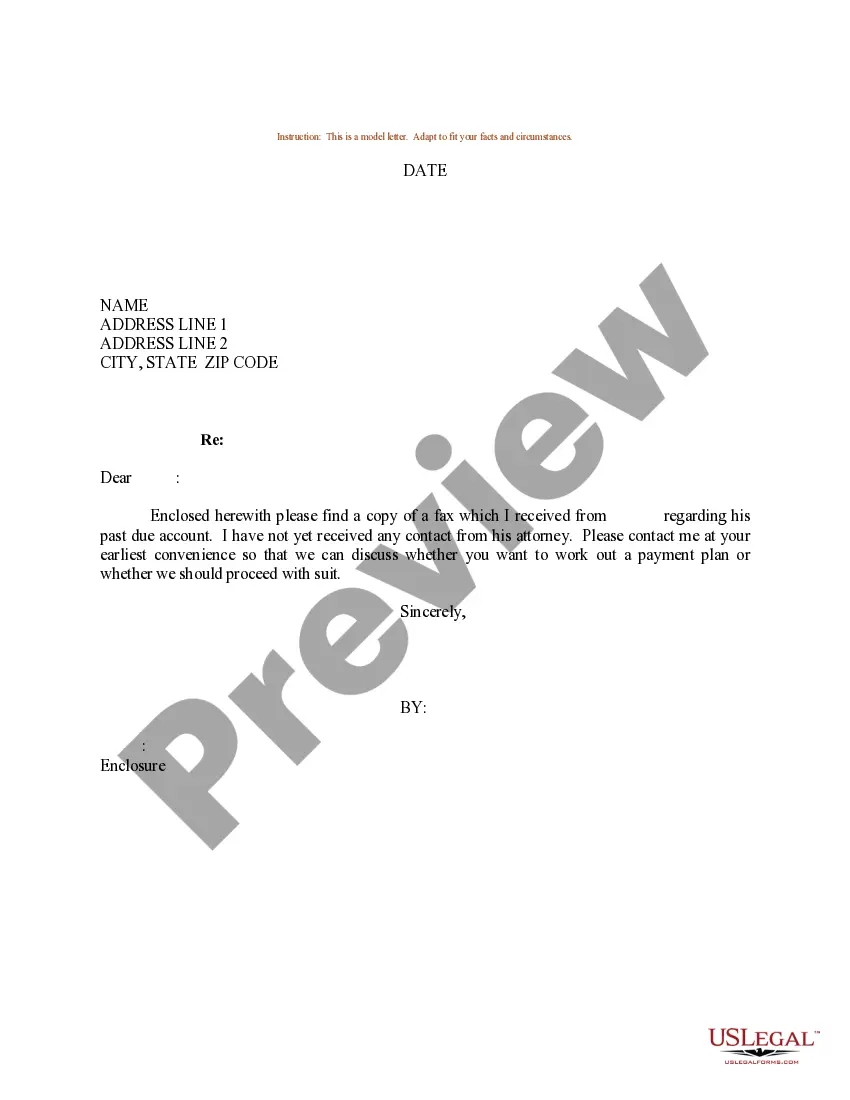

How to fill out Sample Letter For Subdivision Construction?
If you need to finalize, obtain, or print legal document templates, utilize US Legal Forms, the largest array of legal forms available online. Take advantage of the site’s straightforward and user-friendly search to find the documents you require. Various templates for business and personal uses are organized by categories and states, or keywords. Use US Legal Forms to acquire the California Sample Letter for Subdivision Construction in just a few clicks.
If you are already a US Legal Forms user, Log In to your account and click on the Download button to access the California Sample Letter for Subdivision Construction. You can also find forms you previously obtained in the My documents section of your account.
If you are utilizing US Legal Forms for the first time, follow these steps: Step 1. Ensure you have selected the form for the correct area/land. Step 2. Use the Review feature to inspect the content of the form. Remember to read the description. Step 3. If you are dissatisfied with the form, utilize the Search field at the top of the screen to find other types of your legal form template. Step 4. After you have found the form you need, click on the Buy now button. Choose the pricing plan you prefer and enter your details to register for an account. Step 5. Process the payment. You can use your credit card or PayPal account to complete the transaction. Step 6. Select the format of your legal form and download it to your computer. Step 7. Complete, modify, and print or sign the California Sample Letter for Subdivision Construction.
Each legal document template you buy is yours forever. You can access every form you have acquired in your account. Click on the My documents section to choose a form to print or download once more.
Participate and obtain, and print the California Sample Letter for Subdivision Construction using US Legal Forms. There are countless professional and state-specific forms you can utilize for your business or personal requirements.
- Every legal document template you purchase is yours permanently.
- You have access to every form you acquired in your account.
- Click the My documents section to select a form to print or download again.
- Compete and acquire, and print the California Sample Letter for Subdivision Construction with US Legal Forms.
- There are millions of professional and state-specific forms available for your business or personal needs.
Form popularity
FAQ
Generally, the Public Report will disclose such information as: applicant's name, location and size of the subdivision, information on utilities, schools, taxes, management, maintenance and operational expenses, unusual easements, rights of way, set back requirements on vacant land offerings, restrictions or conditions ...
DRE public reports must be filed for proposed properties that contain five or more units/lots. Public reports are not required for subdivisions that are developed and operated by public agencies.
The Subdivided Lands Act is a consumer protection statute primarily intended to ensure disclosure of pertinent information to purchasers or lessees of subdivided lots. The Subdivided Lands Act regulates public offerings of subdivided land for sale or lease and is administered by the state Real Estate Commissioner.
For the most part, the Subdivision Map Act requires tentative and final maps for subdivisions which create five or more parcels, five or more condominiums, a community apartment project containing five or more interests, or the conversion of a dwelling into a stock cooperative of five or more dwelling units.
It is important for consumers to know that a subdivider is required to provide a copy of the public report to a prospective buyer before the buyer becomes obligated to purchase a lot or unit within the subdivision and also to any prospective purchaser who requests it.
DRE public reports must be filed for proposed properties that contain five or more units/lots. Public reports are not required for subdivisions that are developed and operated by public agencies.
Generally, the Public Report will disclose such information as: applicant's name, location and size of the subdivision, information on utilities, schools, taxes, management, maintenance and operational expenses, unusual easements, rights of way, set back requirements on vacant land offerings, restrictions or conditions ...
Public reports contain information of vital importance to prospective buyers including covenant, conditions and restrictions which govern the use of property, costs and assessments for maintaining homeowners' associations and common areas, and other material disclosures.