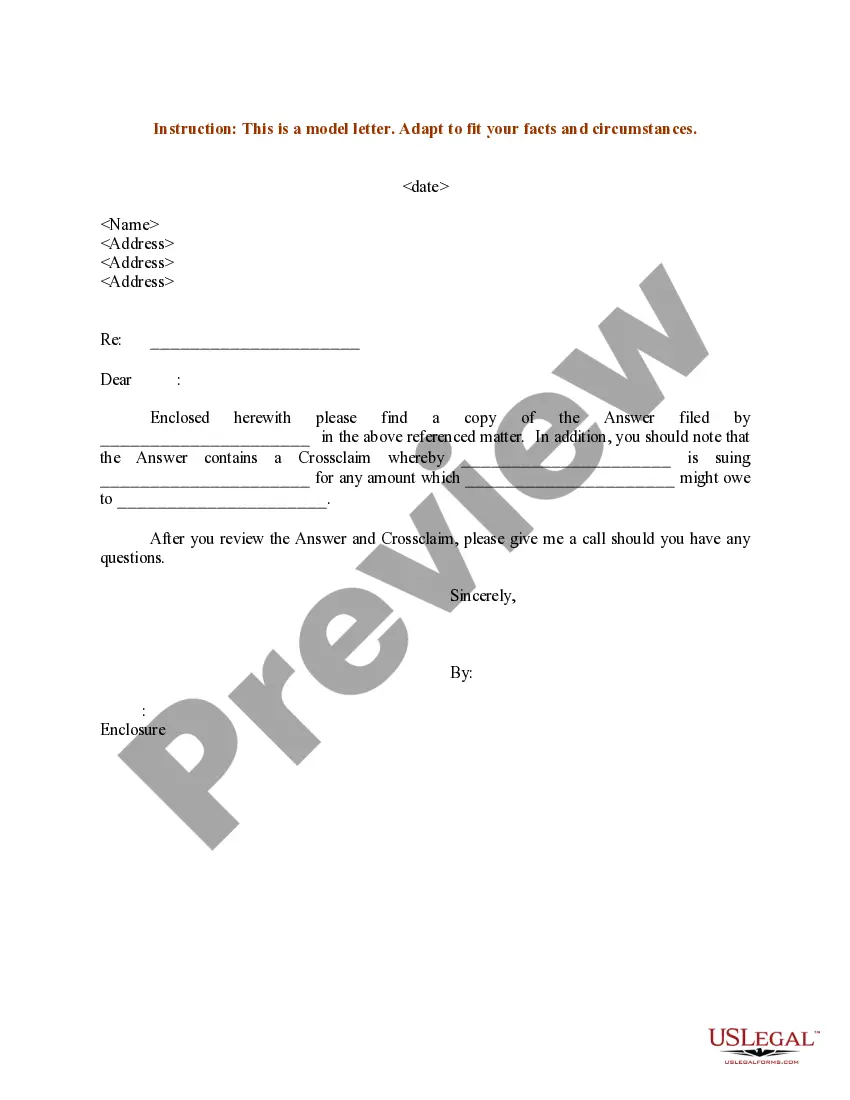
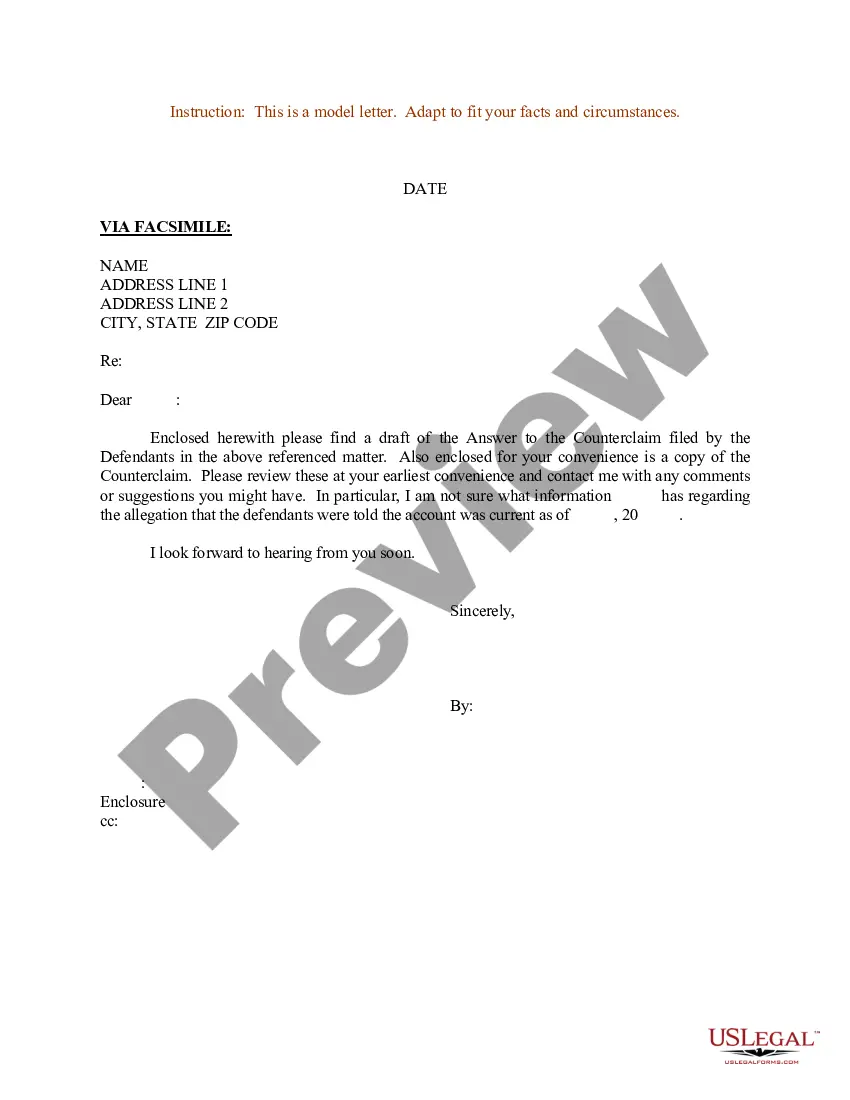
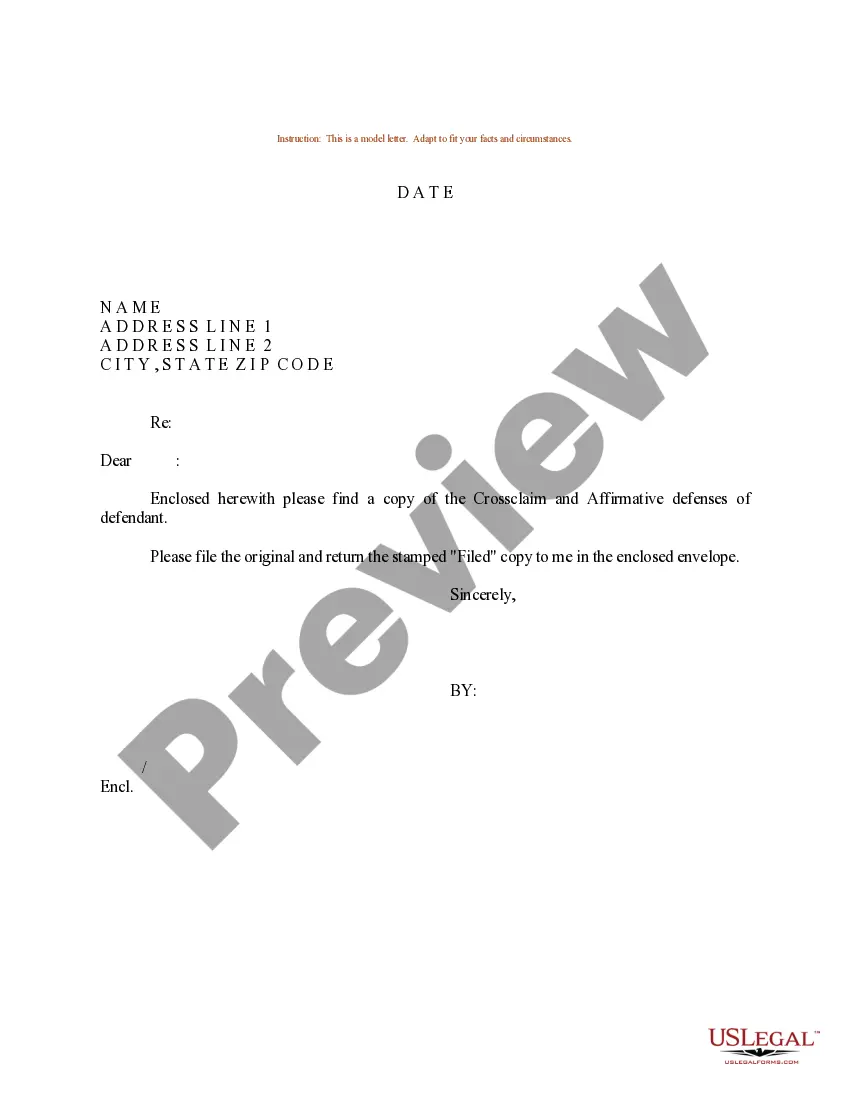
California Sample Letter conveying Crossclaim and Answer
Description
Get your form ready online
Our built-in tools help you complete, sign, share, and store your documents in one place.
Make edits, fill in missing information, and update formatting in US Legal Forms—just like you would in MS Word.
Download a copy, print it, send it by email, or mail it via USPS—whatever works best for your next step.
Sign and collect signatures with our SignNow integration. Send to multiple recipients, set reminders, and more. Go Premium to unlock E-Sign.
If this form requires notarization, complete it online through a secure video call—no need to meet a notary in person or wait for an appointment.
We protect your documents and personal data by following strict security and privacy standards.

Make edits, fill in missing information, and update formatting in US Legal Forms—just like you would in MS Word.

Download a copy, print it, send it by email, or mail it via USPS—whatever works best for your next step.

Sign and collect signatures with our SignNow integration. Send to multiple recipients, set reminders, and more. Go Premium to unlock E-Sign.

If this form requires notarization, complete it online through a secure video call—no need to meet a notary in person or wait for an appointment.

We protect your documents and personal data by following strict security and privacy standards.
Looking for another form?

How to fill out Sample Letter Conveying Crossclaim And Answer?
US Legal Forms - one of the most important repositories of legal documents in the United States - offers a variety of legal document templates that you can download or print.
By using the website, you can discover thousands of forms for commercial and personal use, organized by categories, states, or keywords. You can access the latest editions of forms like the California Sample Letter conveying Crossclaim and Answer within minutes.
If you have a subscription, Log In and download the California Sample Letter conveying Crossclaim and Answer from your US Legal Forms collection. The Download button will appear on every type you view. You have access to all previously downloaded forms in the My documents section of your account.
Make modifications. Fill out, edit, print, and sign the downloaded California Sample Letter conveying Crossclaim and Answer.
Each template you add to your account has no expiration date and is yours permanently. So, if you wish to download or print another copy, simply visit the My documents section and click on the form you need. Access the California Sample Letter conveying Crossclaim and Answer with US Legal Forms, the most extensive repository of legal document templates. Utilize thousands of professional and state-specific templates that fulfill your business or personal needs and requirements.
- If you wish to utilize US Legal Forms for the first time, here are simple instructions to get you started.
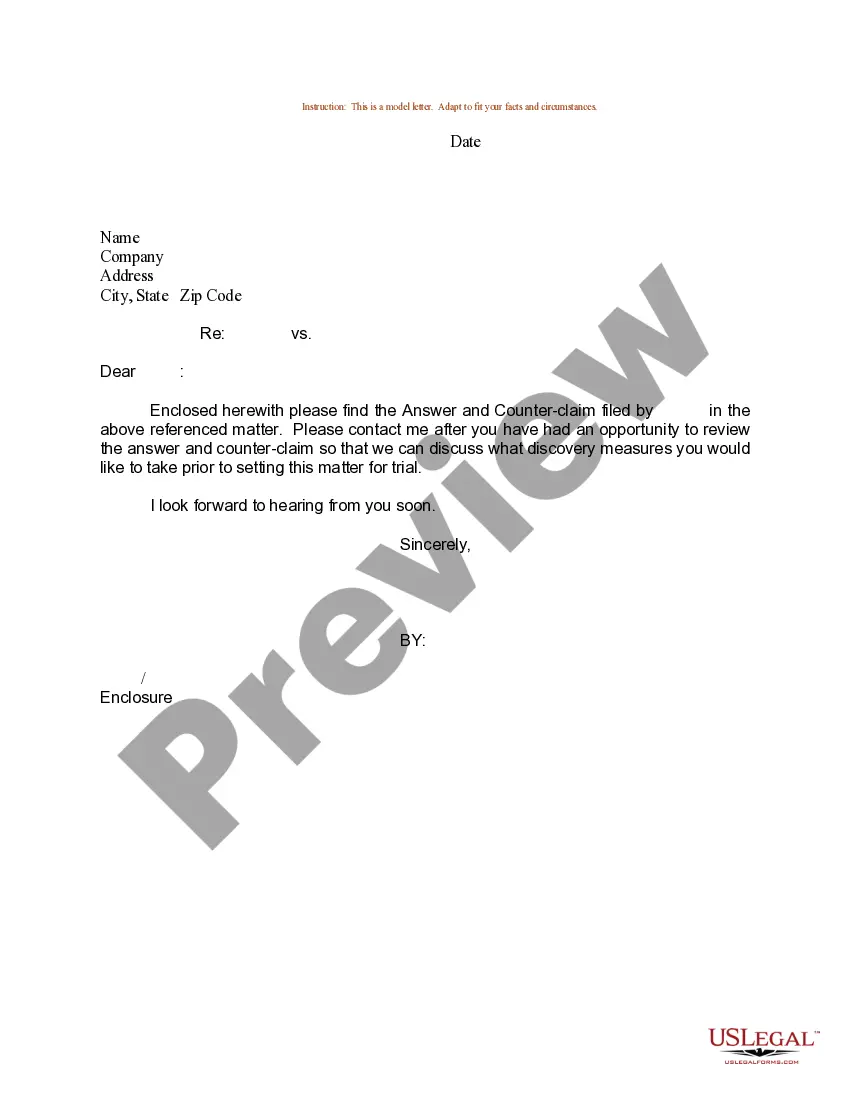
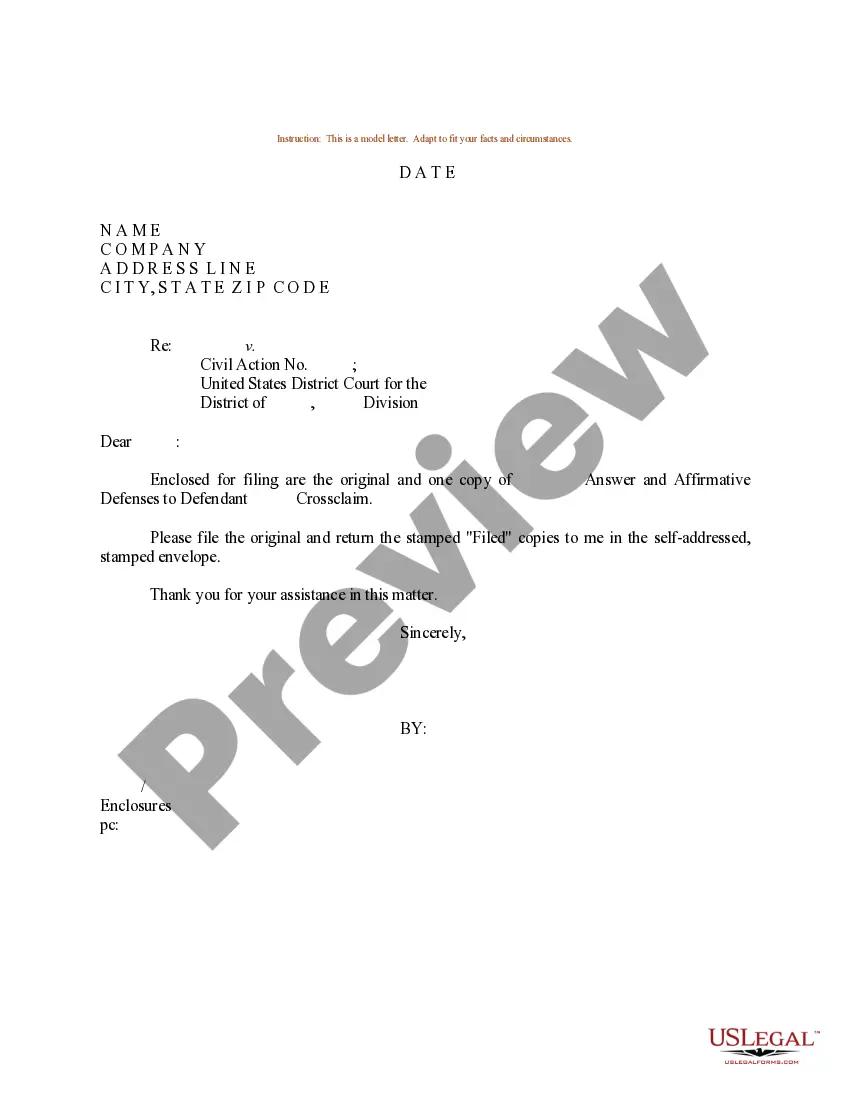
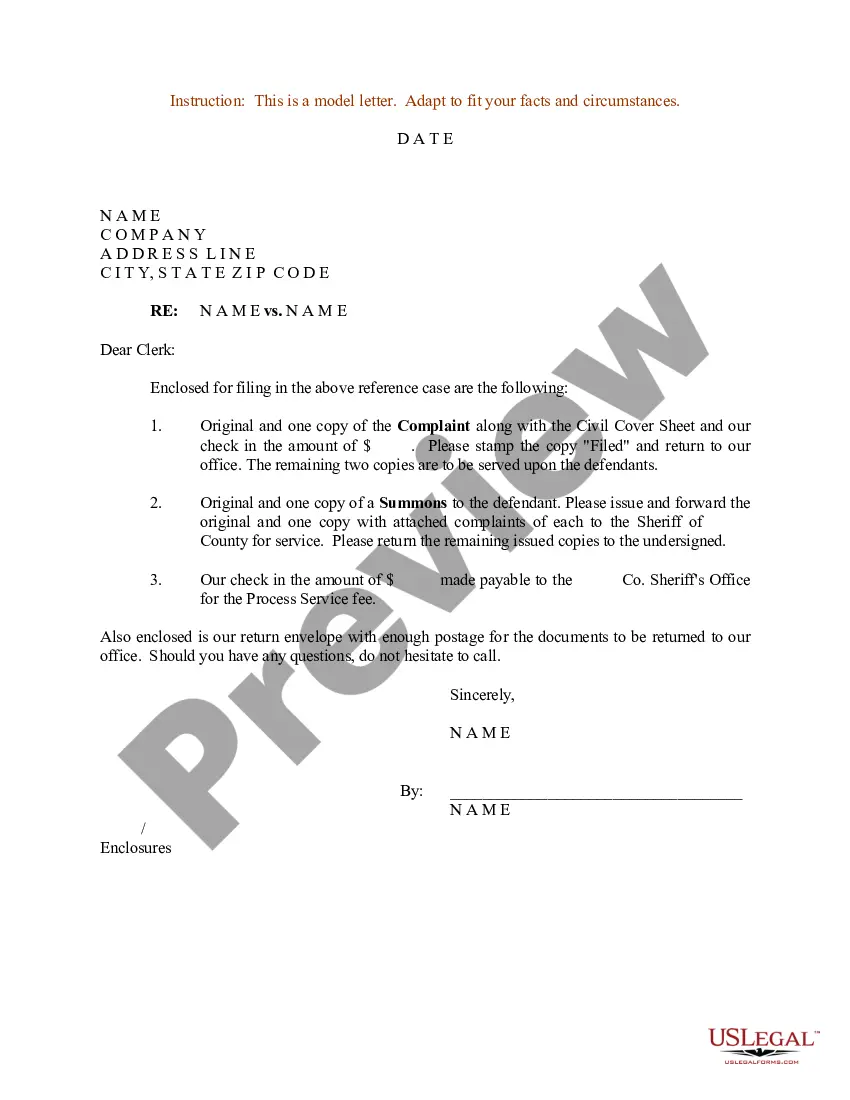
- Ensure that you have selected the correct form for your city/region. Click the Preview button to review the content of the form. Check the form summary to confirm that you have selected the correct form.
- If the form does not meet your requirements, use the Search field at the top of the screen to find one that does.
- Once you are satisfied with the form, confirm your choice by clicking the Buy now button. Then, select the payment plan you prefer and provide your details to register for the account.
- Process the transaction. Use your credit card or PayPal account to complete the transaction.
- Choose the format and download the form to your device.
Form popularity
FAQ
The main difference between a counterclaim and a crossclaim is who is counter-sued. A counterclaim is brought by a defendant against the opposite party, the plaintiff. A crossclaim is a claim by either a plaintiff against another plaintiff or a defendant against another defendant.
Write a short and plain statement of the crossclaim(s). Do not make legal arguments. State as briefly as possible the facts showing that you, the defendant / crossclaim plaintiff, are entitled to the damages or other relief sought.
claim is a claim brought by a plaintiff against a coplaintiff, or by a defendant against a codefendant.
A response to a cross-complaint generally must be filed within 30 days of being served with the cross-complaint. Code of Civil Procedure 432.10. If you learn later that you need to file a cross-complaint you can make a motion to ask for an order allowing you to file a cross-complaint.
There are permissive and compulsory counterclaims. "Common law compulsory counterclaims" are counterclaims that, if successful, would nullify the plaintiff's claim. If defendants do not raise these counterclaims, they cannot sue on them later in a different lawsuit.
For example, if Trucker John hired some loaders to load the furniture, and they were the ones that damaged the furniture, then Trucker John could crossclaim the loaders for all or part of the damage to the furniture.
A counterclaim is brought by a defendant against the opposite party, the plaintiff. A crossclaim is a claim by either a plaintiff against another plaintiff or a defendant against another defendant. Simply put, it is a claim brought against someone on the same side of the aisle on a case.