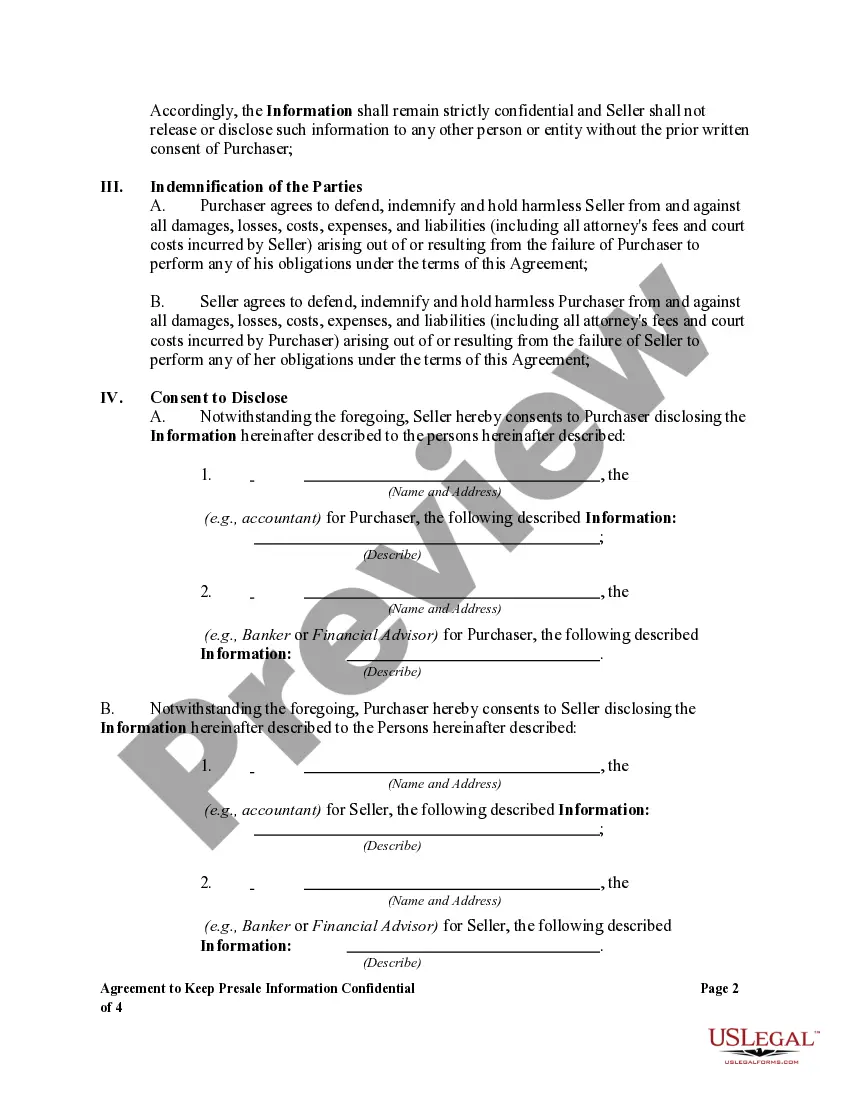
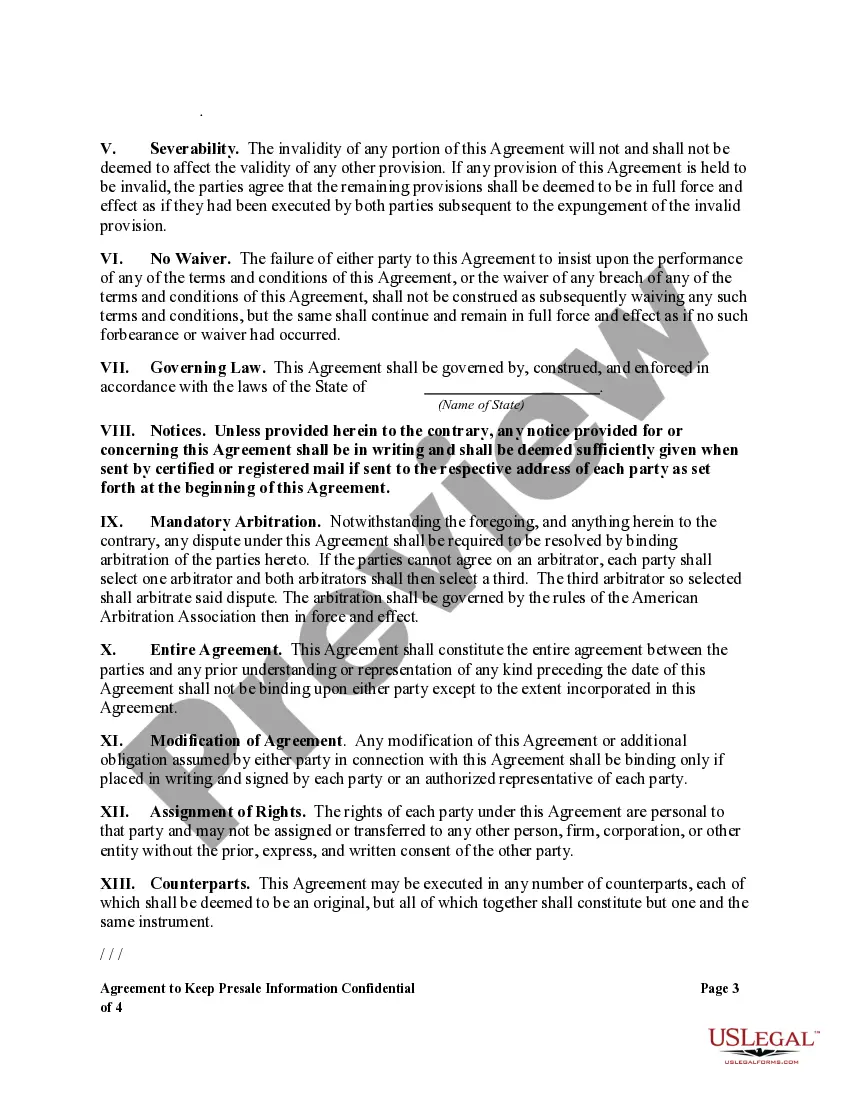
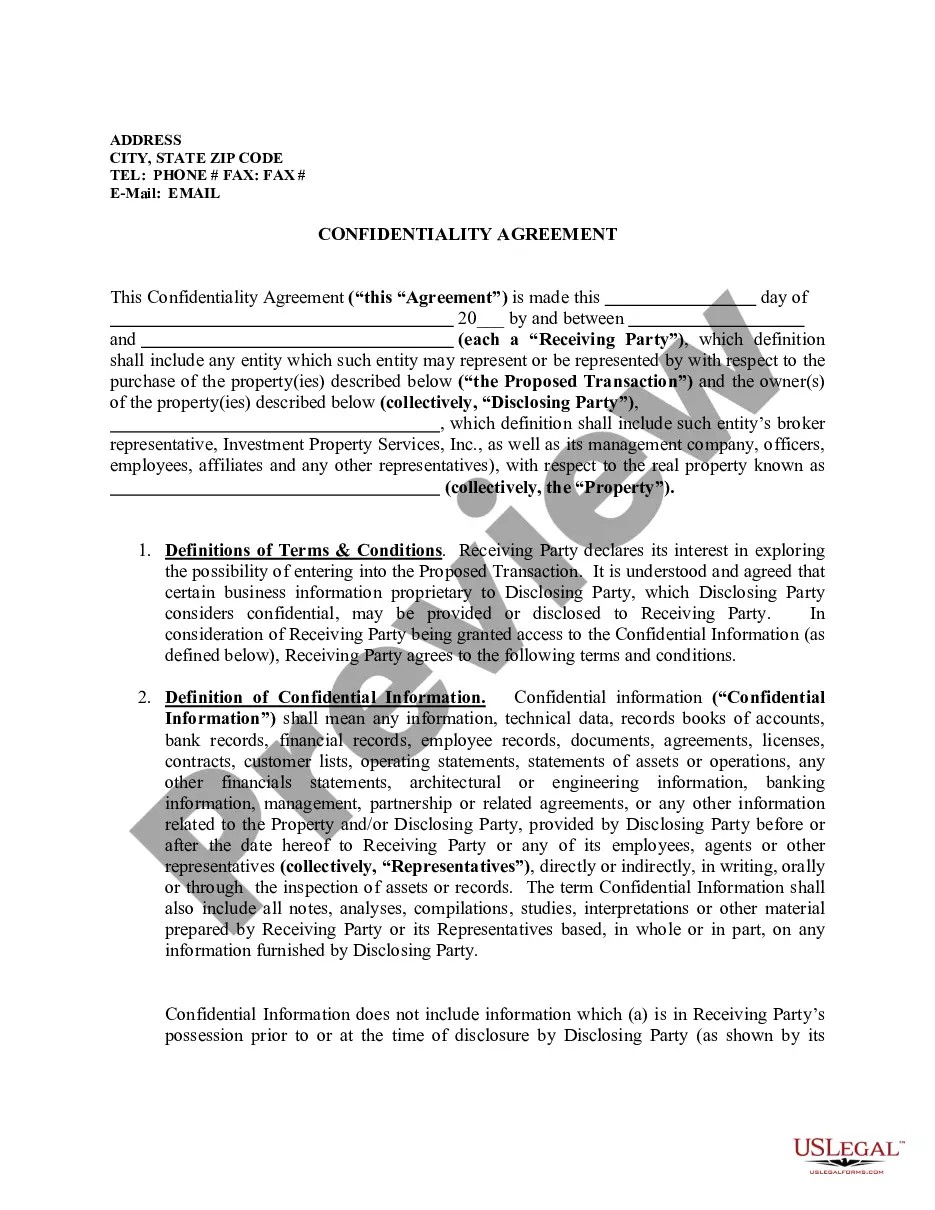
California Agreement to Keep Presale Information Confidential
Description
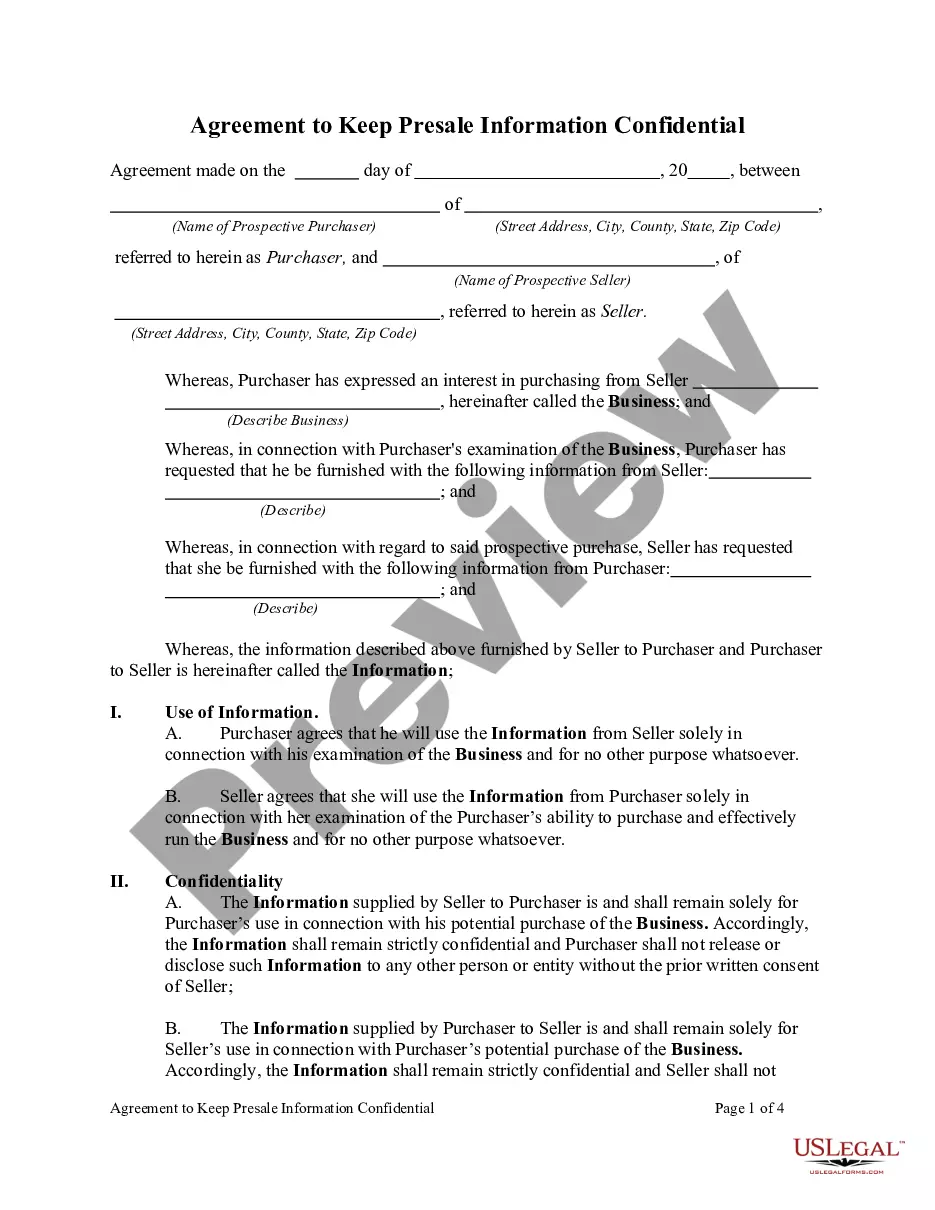
Get your form ready online
Our built-in tools help you complete, sign, share, and store your documents in one place.
Make edits, fill in missing information, and update formatting in US Legal Forms—just like you would in MS Word.
Download a copy, print it, send it by email, or mail it via USPS—whatever works best for your next step.
Sign and collect signatures with our SignNow integration. Send to multiple recipients, set reminders, and more. Go Premium to unlock E-Sign.
If this form requires notarization, complete it online through a secure video call—no need to meet a notary in person or wait for an appointment.
We protect your documents and personal data by following strict security and privacy standards.

Make edits, fill in missing information, and update formatting in US Legal Forms—just like you would in MS Word.

Download a copy, print it, send it by email, or mail it via USPS—whatever works best for your next step.

Sign and collect signatures with our SignNow integration. Send to multiple recipients, set reminders, and more. Go Premium to unlock E-Sign.

If this form requires notarization, complete it online through a secure video call—no need to meet a notary in person or wait for an appointment.

We protect your documents and personal data by following strict security and privacy standards.
Looking for another form?
How to fill out Agreement To Keep Presale Information Confidential?
If you desire to aggregate, obtain, or create legal document templates, utilize US Legal Forms, the premier selection of legal forms, available online.
Leverage the site’s user-friendly and efficient search to find the documents you require.
A range of templates for business and personal purposes are organized by categories and states, or keywords.
Step 4. After locating the form you need, click the Buy now button. Select the pricing plan you prefer and enter your details to create an account.
Step 5. Complete the transaction. You can use your credit card or PayPal account to finalize the purchase.
- Use US Legal Forms to acquire the California Agreement to Maintain Presale Information Confidential in just a few clicks.
- If you are currently a US Legal Forms user, sign in to your account and click the Download button to retrieve the California Agreement to Maintain Presale Information Confidential.
- You can also access forms you previously obtained in the My documents tab of your account.
- If you are using US Legal Forms for the first time, follow the instructions below.
- Step 1. Ensure you have chosen the form for the correct city/state.
- Step 2. Utilize the Review feature to examine the form’s details. Don’t forget to read the information.
- Step 3. If you are not satisfied with the form, make use of the Search field at the top of the screen to find other versions of the legal document template.
Form popularity
FAQ
In California, several types of employee information are considered confidential. This includes personal data such as social security numbers, financial information, and medical records. The California Agreement to Keep Presale Information Confidential helps protect this sensitive information during business negotiations. By using this agreement, you maintain the privacy of your employees and ensure compliance with state laws.
The confidentiality clause in a franchise agreement protects sensitive information shared between the franchisor and franchisee. This clause typically outlines what information must remain confidential and the obligations of both parties to safeguard it. It may also specify consequences for breaches of confidentiality. A thorough confidentiality clause is essential, and you can refer to documents like the California Agreement to Keep Presale Information Confidential to understand how to structure this important provision.
Yes, confidentiality agreements are legal in California. These agreements must comply with state laws and should not violate public policy. As long as they are clear, reasonable, and mutually agreed upon, they offer valid protection. The California Agreement to Keep Presale Information Confidential serves as a reliable option for those looking to establish a legal framework for protecting sensitive information.
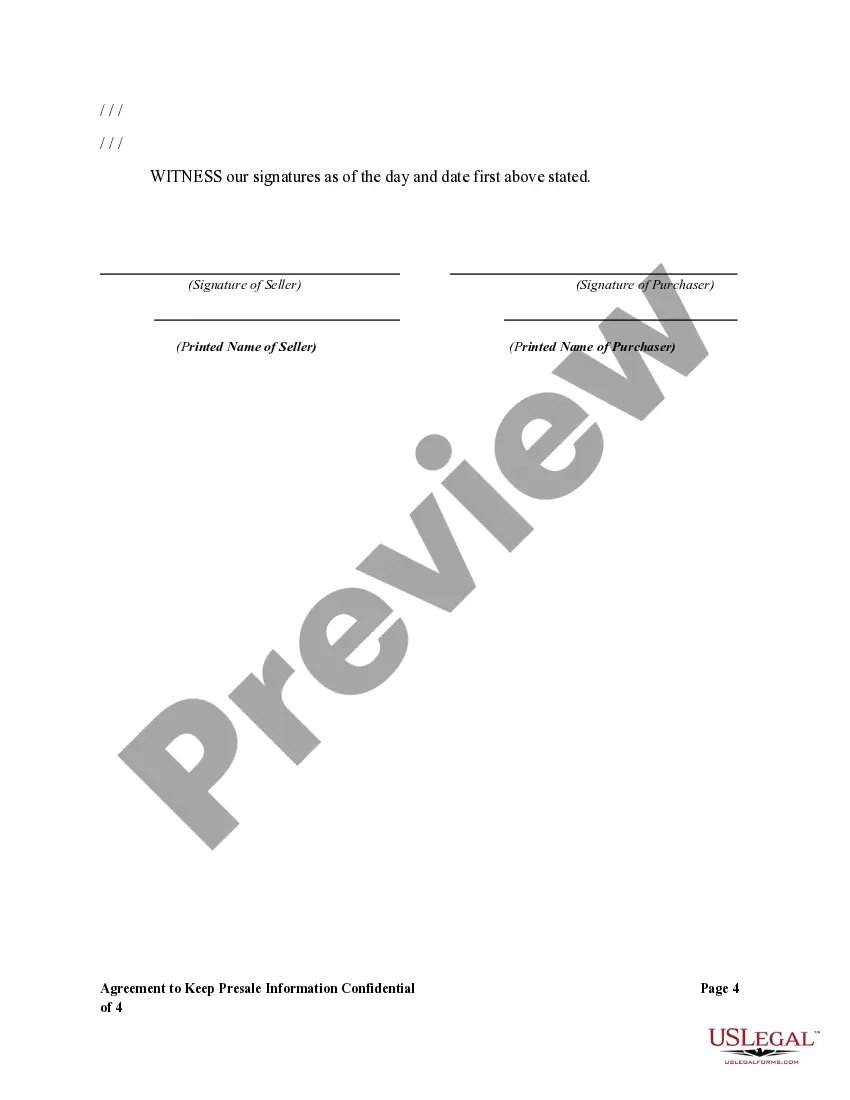
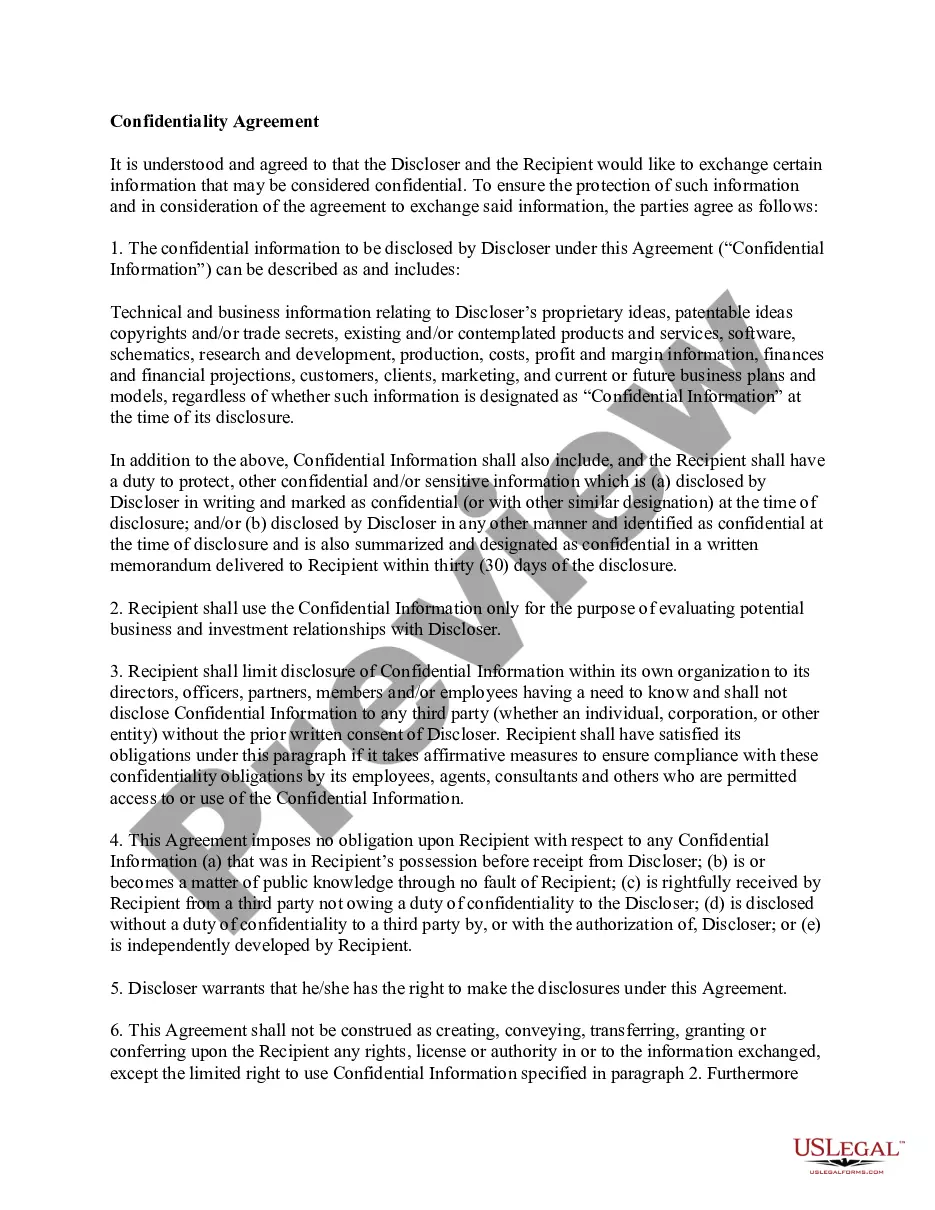
The structure of a confidentiality agreement typically includes several key components: an introduction stating the purpose, definitions of confidential information, obligations of the parties, and the duration of confidentiality. It may also include terms for the return or destruction of information following the agreement's termination. Using a well-formulated document, such as the California Agreement to Keep Presale Information Confidential, provides clarity and legal backing.
Yes, you can write your own Non-Disclosure Agreement (NDA). Start by identifying the information you want to protect and the parties involved in the agreement. Make sure to include essential elements such as purpose, confidentiality obligations, and duration. Using a structured guide, like the California Agreement to Keep Presale Information Confidential, can help you craft a solid NDA that meets your specific needs.
An example of a confidentiality agreement includes a document where one party shares proprietary information, and the other agrees to keep it confidential. For instance, a business may wish to share a unique marketing strategy with a partner while asking them to sign the California Agreement to Keep Presale Information Confidential to protect that information. Such documents typically outline what is confidential and the duration of the agreement.
Writing a confidentiality disclaimer involves specifying the intent to keep certain information private. Start by stating that the information shared is confidential and should not be disclosed without permission. Be clear about who the disclaimer applies to and the consequences of breaching it. Utilizing a framework from the California Agreement to Keep Presale Information Confidential can enhance your disclaimer’s effectiveness.
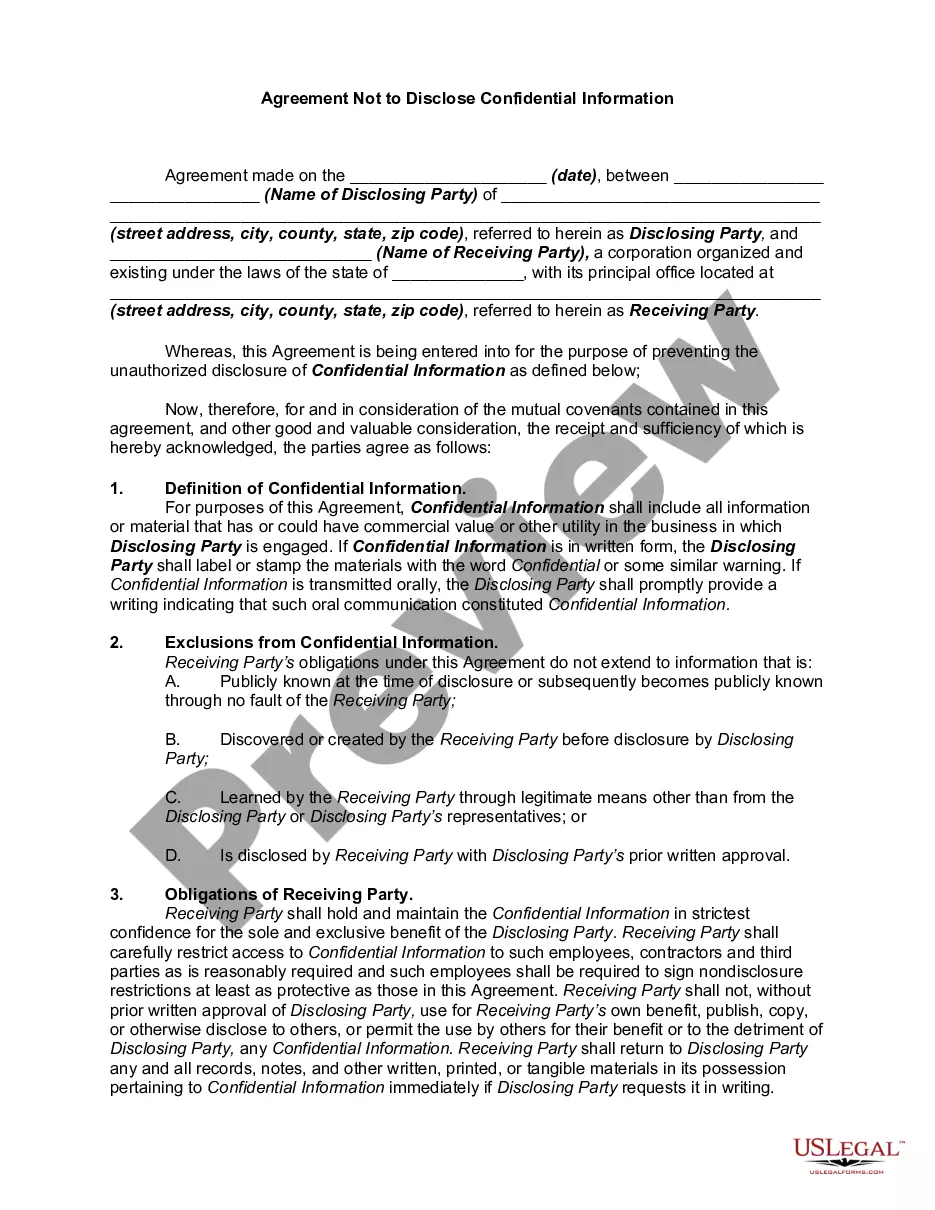
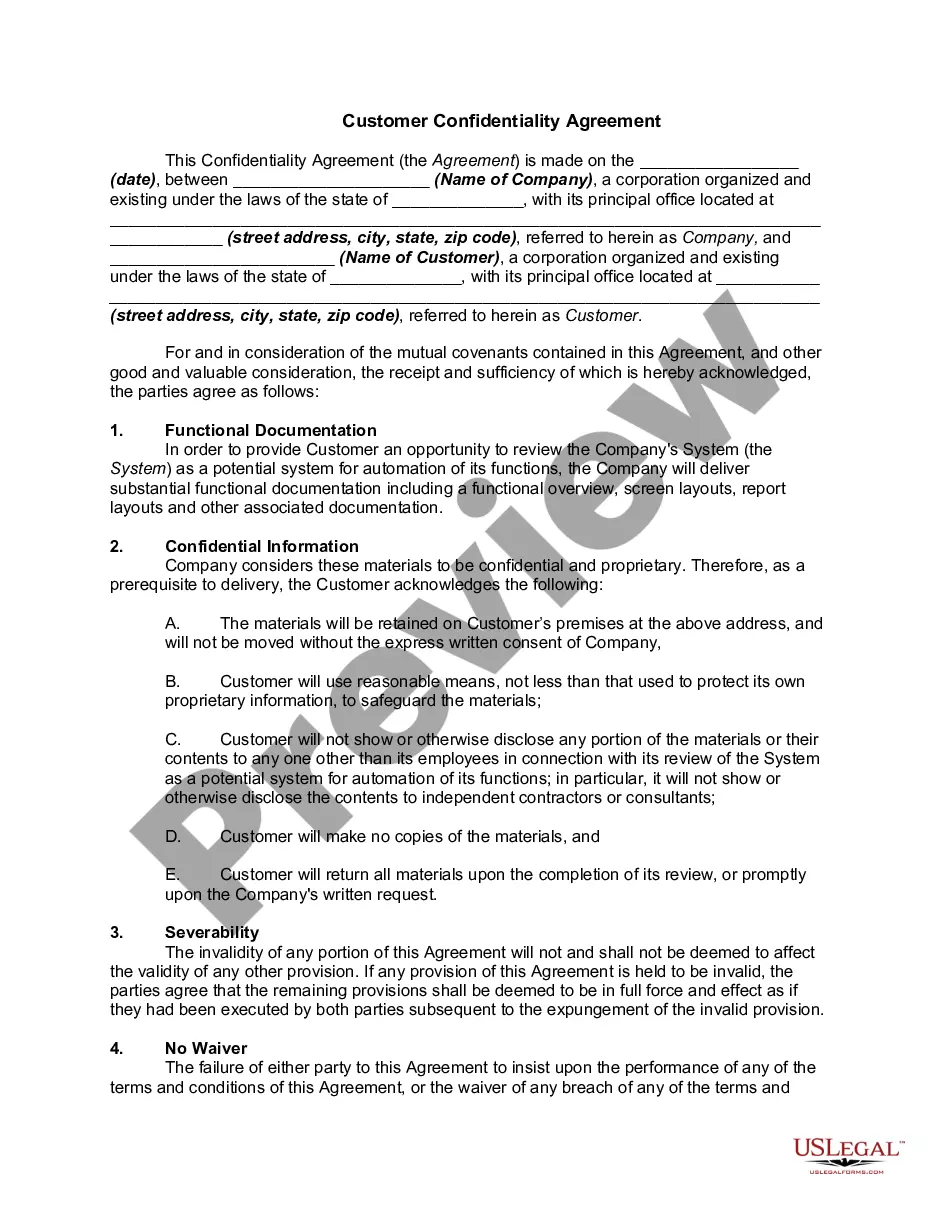
To write a confidentiality agreement, start by defining the parties involved and the confidential information to be protected. Clearly outline the obligations of both parties regarding the handling of this information. Use simple language to ensure both parties understand their responsibilities. Consider using a template, such as the California Agreement to Keep Presale Information Confidential, to streamline the process and safeguard your interests.
To fill out a confidentiality agreement, begin by stating the names of the parties involved and their roles. You should then clearly define what constitutes confidential information, and establish the obligations of both parties regarding this information. Don't forget to include the term of the agreement and the consequences of breach, to ensure everyone is on the same page. Utilizing a platform like US Legal Forms can simplify this process with templates designed specifically for a California Agreement to Keep Presale Information Confidential.
A confidentiality statement in a California Agreement to Keep Presale Information Confidential typically includes a phrase like, 'The undersigned parties agree to keep all disclosed information confidential and will not share it with any third parties.' This statement should also specify the types of information deemed confidential, thereby providing a clear understanding for all parties involved. Such statements foster trust and protect sensitive information effectively.