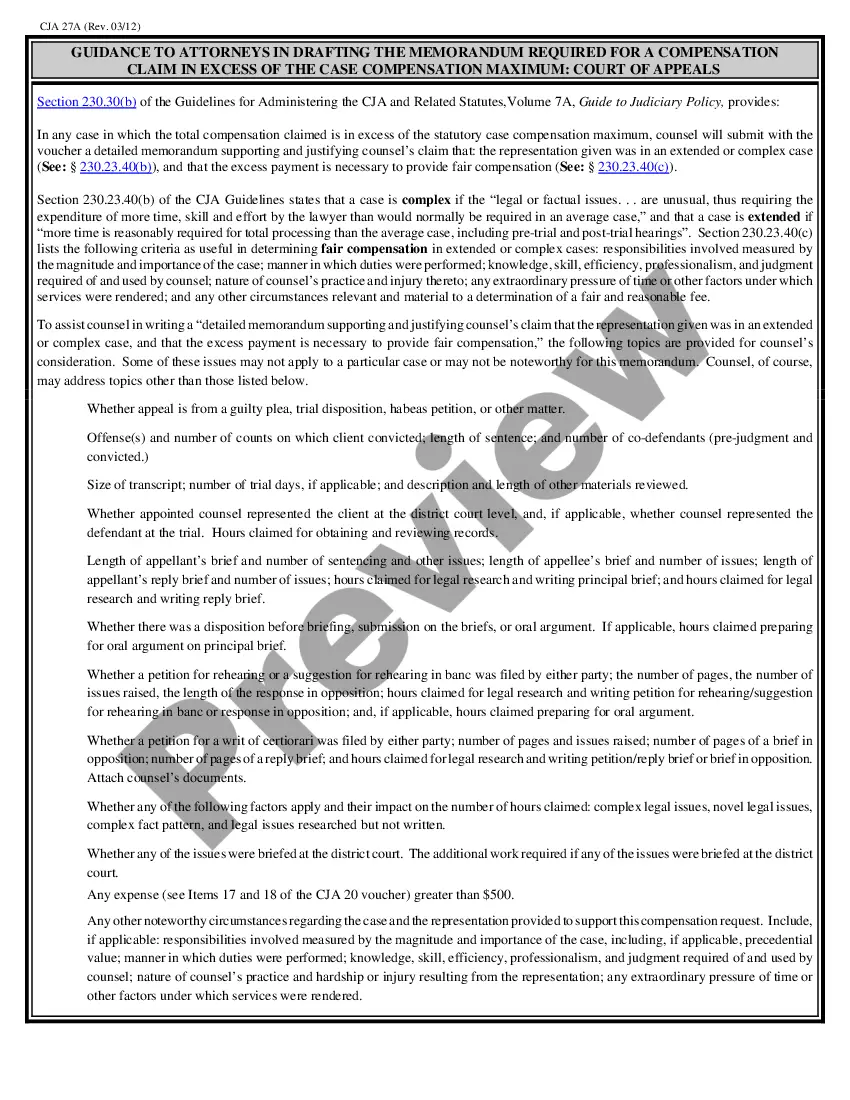
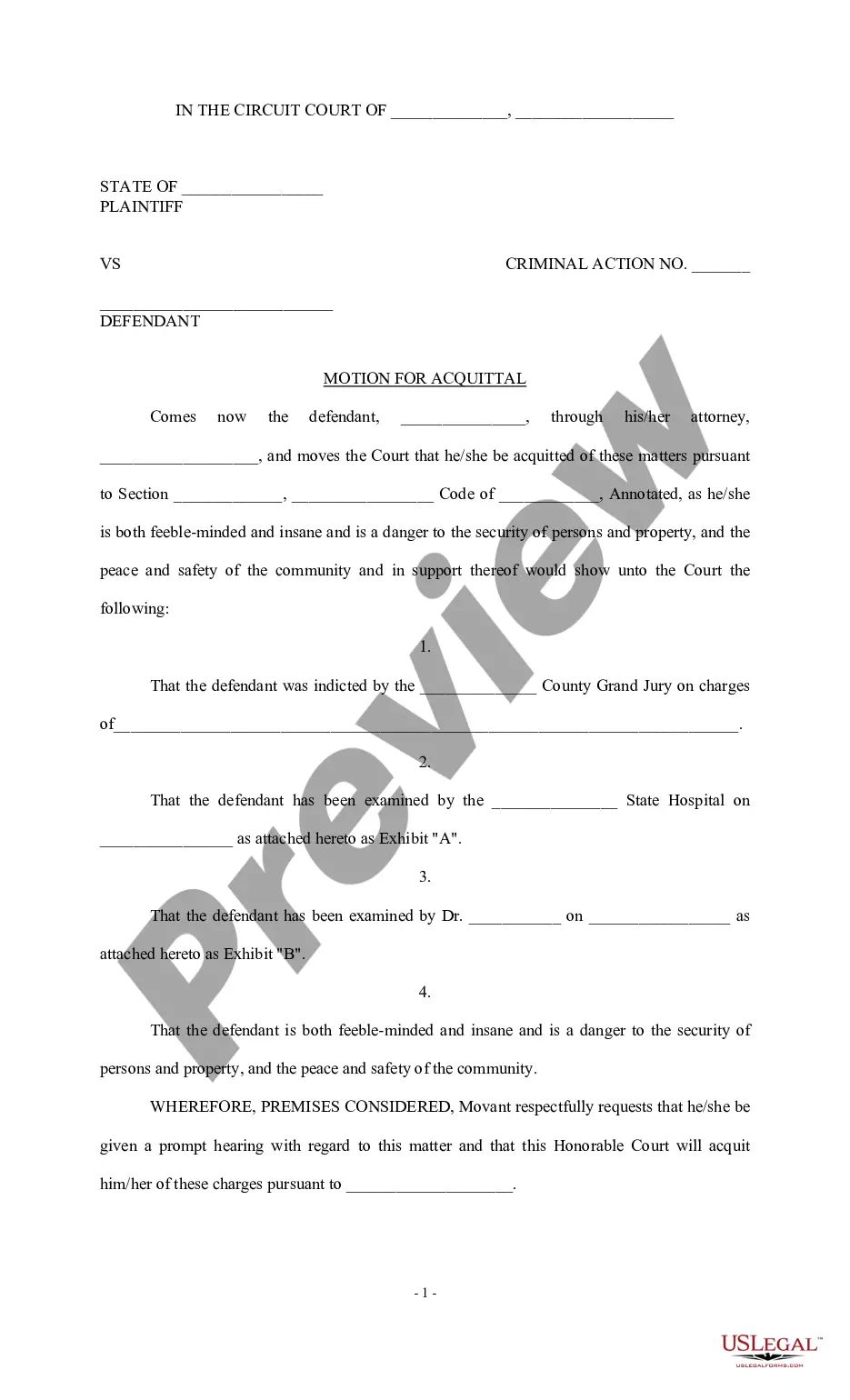
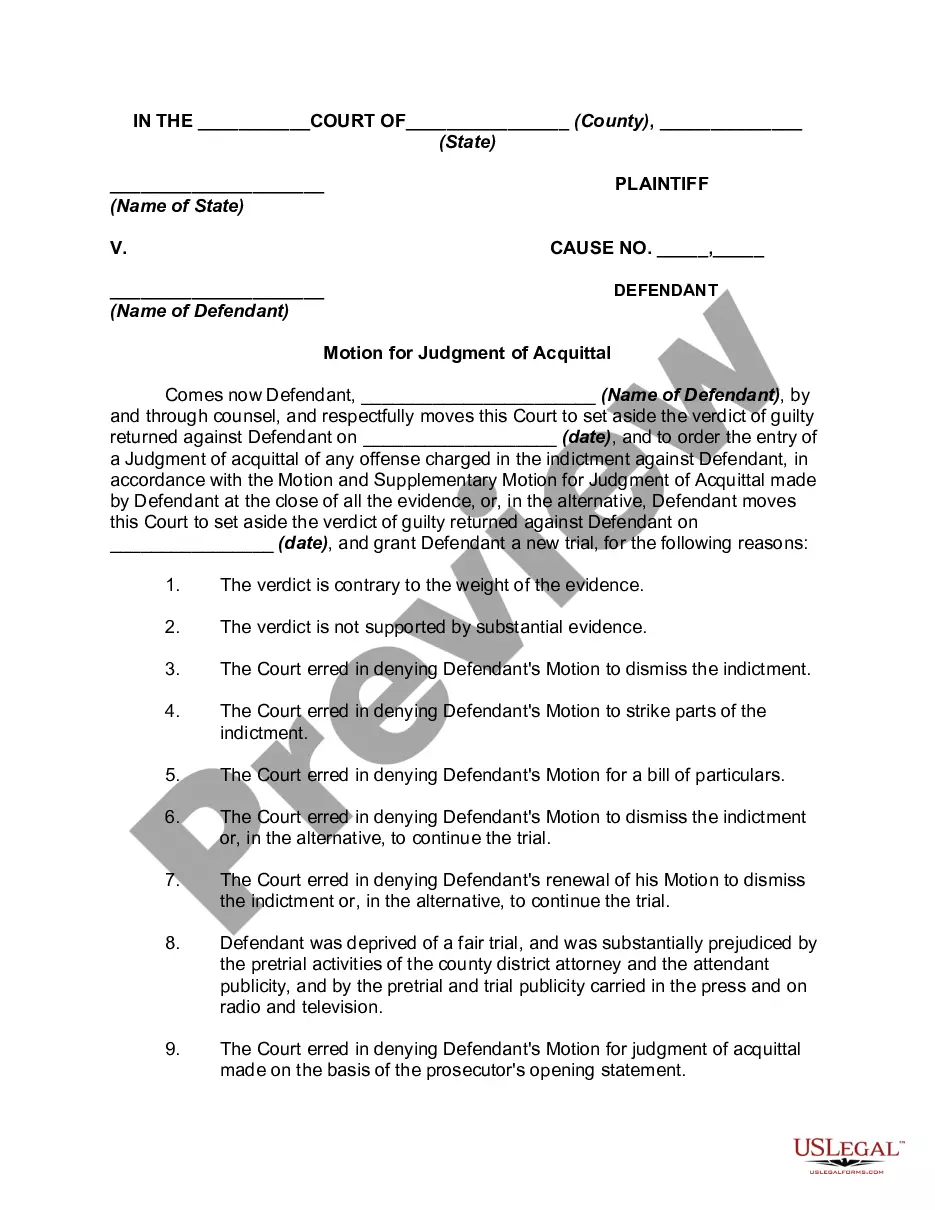
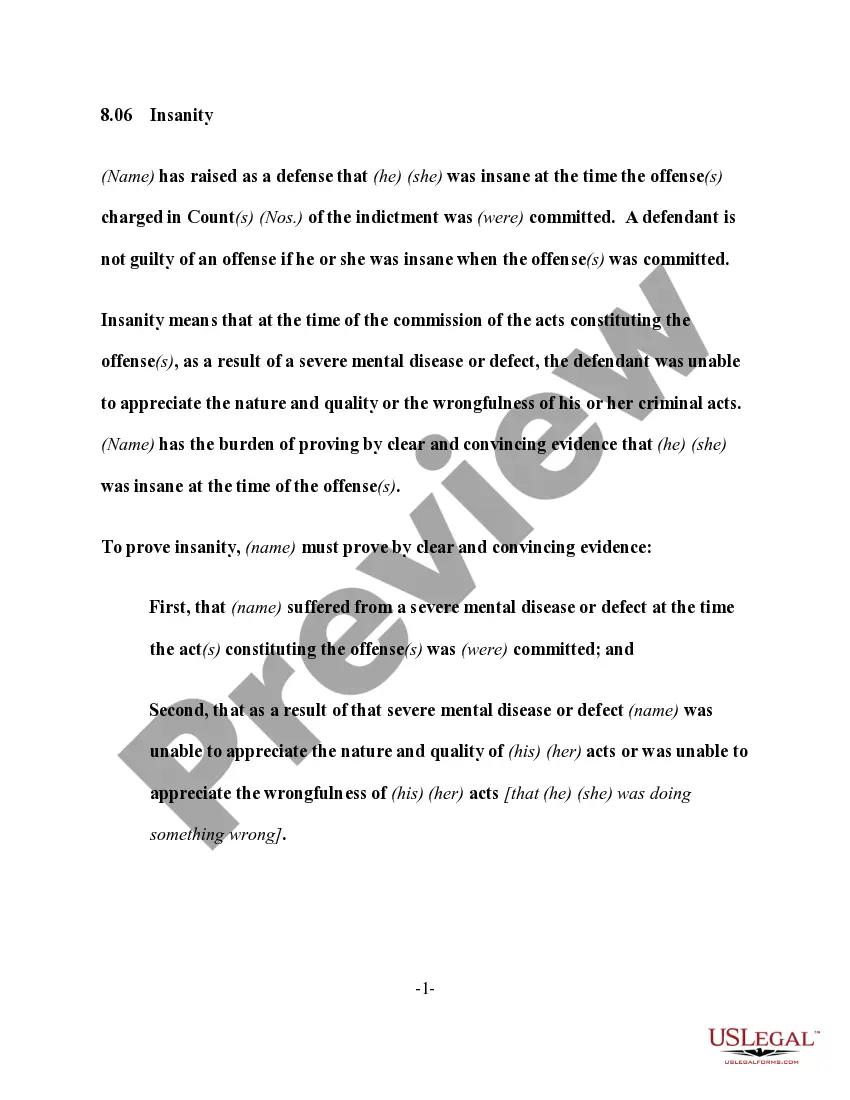
Defendant, through his/her attorney moves the court that he/she be acquitted of certain matters because he/she is both-feeble minded and insane
California Motion for Acquittal Based on Insanity
Instant download
Description
Free preview
Get your form ready online
Our built-in tools help you complete, sign, share, and store your documents in one place.
Built-in online Word editor
Make edits, fill in missing information, and update formatting in US Legal Forms—just like you would in MS Word.
Export easily
Download a copy, print it, send it by email, or mail it via USPS—whatever works best for your next step.
E-sign your document
Sign and collect signatures with our SignNow integration. Send to multiple recipients, set reminders, and more. Go Premium to unlock E-Sign.
Notarize online 24/7
If this form requires notarization, complete it online through a secure video call—no need to meet a notary in person or wait for an appointment.
Store your document securely
We protect your documents and personal data by following strict security and privacy standards.

Make edits, fill in missing information, and update formatting in US Legal Forms—just like you would in MS Word.

Download a copy, print it, send it by email, or mail it via USPS—whatever works best for your next step.

Sign and collect signatures with our SignNow integration. Send to multiple recipients, set reminders, and more. Go Premium to unlock E-Sign.

If this form requires notarization, complete it online through a secure video call—no need to meet a notary in person or wait for an appointment.

We protect your documents and personal data by following strict security and privacy standards.
Looking for another form?
How to fill out Motion For Acquittal Based On Insanity?
US Legal Forms - one of the largest collections of legal documents in the United States - offers a range of legal document templates that you can download or print. Through the website, you can access thousands of forms for business and personal use, organized by categories, states, or keywords. You can obtain the latest forms such as the California Motion for Acquittal Based on Insanity within minutes.
If you have a subscription, Log In and download California Motion for Acquittal Based on Insanity from the US Legal Forms library. The Download button will appear on every form you view. You can access all previously downloaded forms in the My documents section of your account.
If you are using US Legal Forms for the first time, here are simple steps to help you get started: Ensure you have selected the correct form for your jurisdiction/region. Click the Review button to inspect the form's content. Check the form description to confirm you have chosen the right document. If the form does not meet your requirements, utilize the Search box at the top of the page to find one that does. If you are satisfied with the form, confirm your selection by clicking the Buy now button. Then, select your preferred pricing plan and enter your details to register for an account. Process the transaction. Use your credit card or PayPal account to complete the purchase. Choose the format and download the form to your device. Edit. Complete, modify, print, and sign the downloaded California Motion for Acquittal Based on Insanity.
Avoid altering or removing any HTML tags. Only synonymize plain text outside of the HTML tags.
- Every template you add to your account has no expiration date and belongs to you permanently.
- If you wish to download or print another copy, simply navigate to the My documents section and click on the form you need.
- Access the California Motion for Acquittal Based on Insanity via US Legal Forms, one of the most comprehensive libraries of legal document templates.
- Utilize thousands of professional and state-specific templates that meet your business or personal needs.
- Enjoy the convenience of having all legal documents available at your fingertips.
Form popularity
FAQ
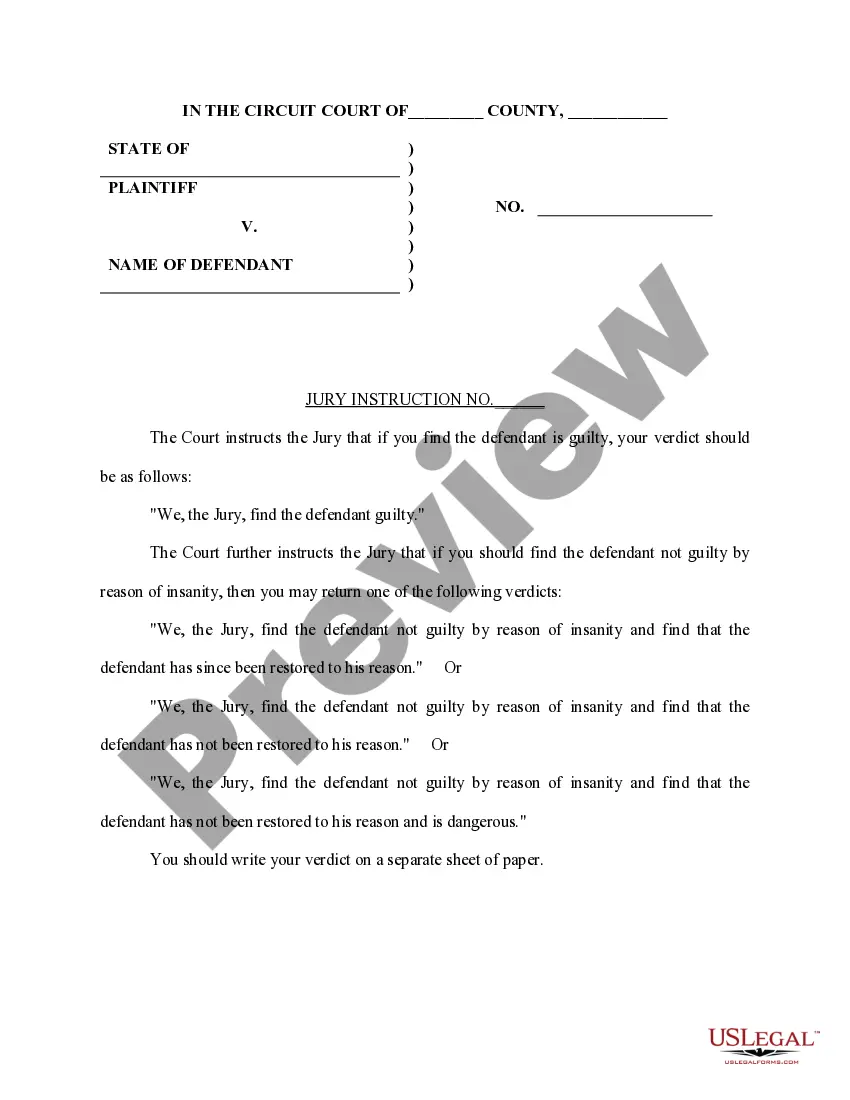
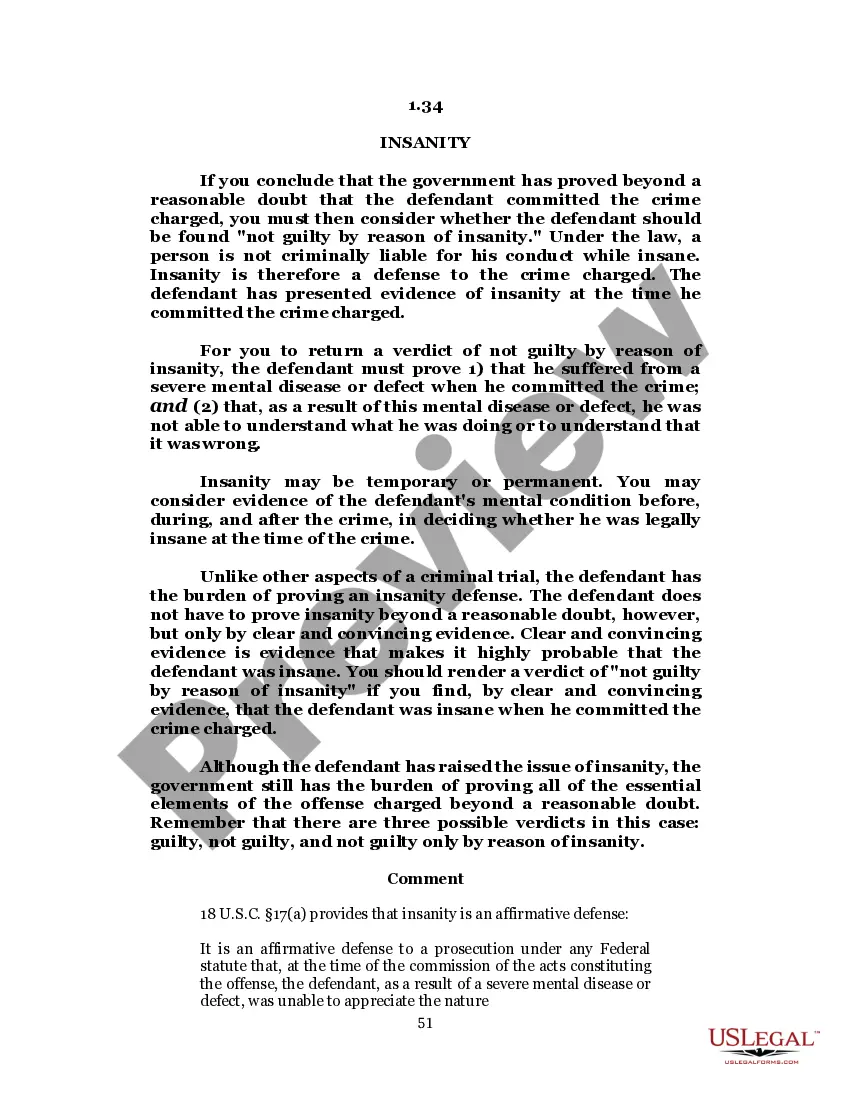
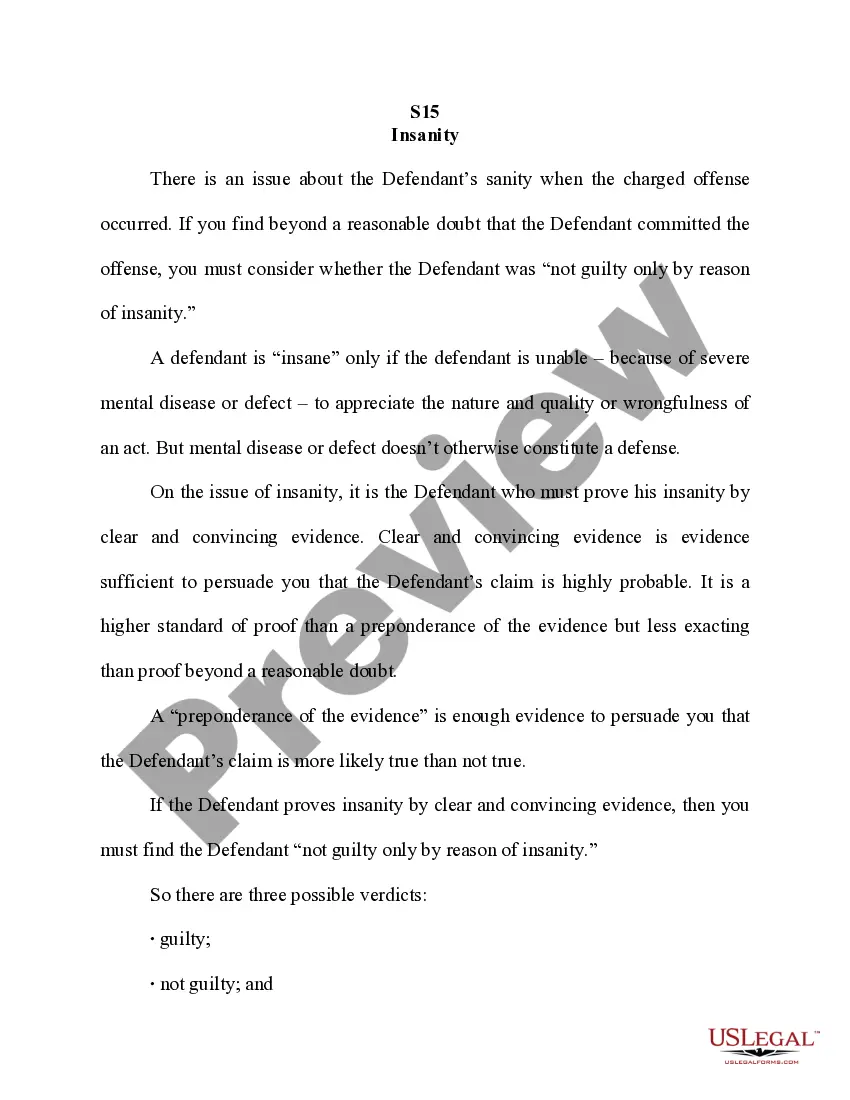
The defendant must provide "clear and convincing" evidence that, due to a mental illness, he/she did not mean to commit the act or did not realize that the criminal act was wrong. A defendant can be found legally insane if he/she can prove that: They did not know that their actions were illegal.
California adopted the McNaghten rule as its legal definition of insanity when voters passed Proposition 8, known as the ?Victim's Bill of Rights,? in 1982. s/he was incapable of distinguishing right from wrong?not both.
Legal insanity requires that the person, by reason of mental disease or defect was incapable of either: Knowing the nature of his or her act. Understanding the nature of his or her act. Distinguishing between right and wrong at the time of commission of the crime.
He was acquitted, and the resulting standard is still used in 26 states in the U.S.: A defendant may be found not guilty by reason of insanity if "at the time of committing the act, he was laboring under such a defect of reason from disease of the mind as not to know the nature and quality of the act he was doing, or ...
What Is an NGI Defense? An insanity plea, or NGI plea, is generally entered into when the defense contends that an accused defendant was criminally insane at the time of the act.
If a defendant successfully pleads not guilty by reason of insanity, they will not simply be released. Instead, the judge will order the defendant to be involuntarily placed in a psychiatric facility or mental institution rather than prison.
Competency refers to a defendant's capacity to comprehend the allegations, while insanity refers to the mental state of the defendant at the time of the crime. What is Competency? Competency determines whether a defendant will be able to appear at trial and understand the proceedings.