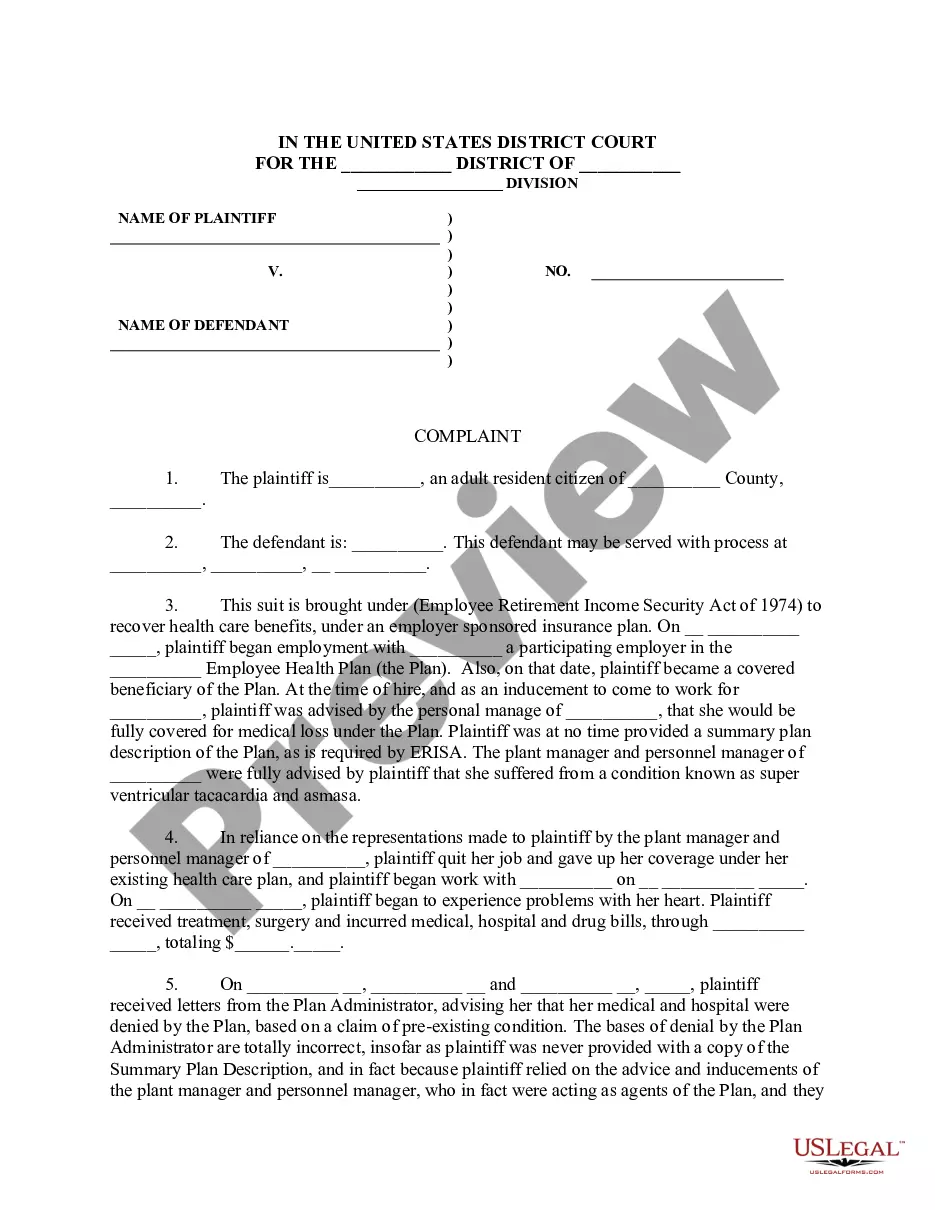
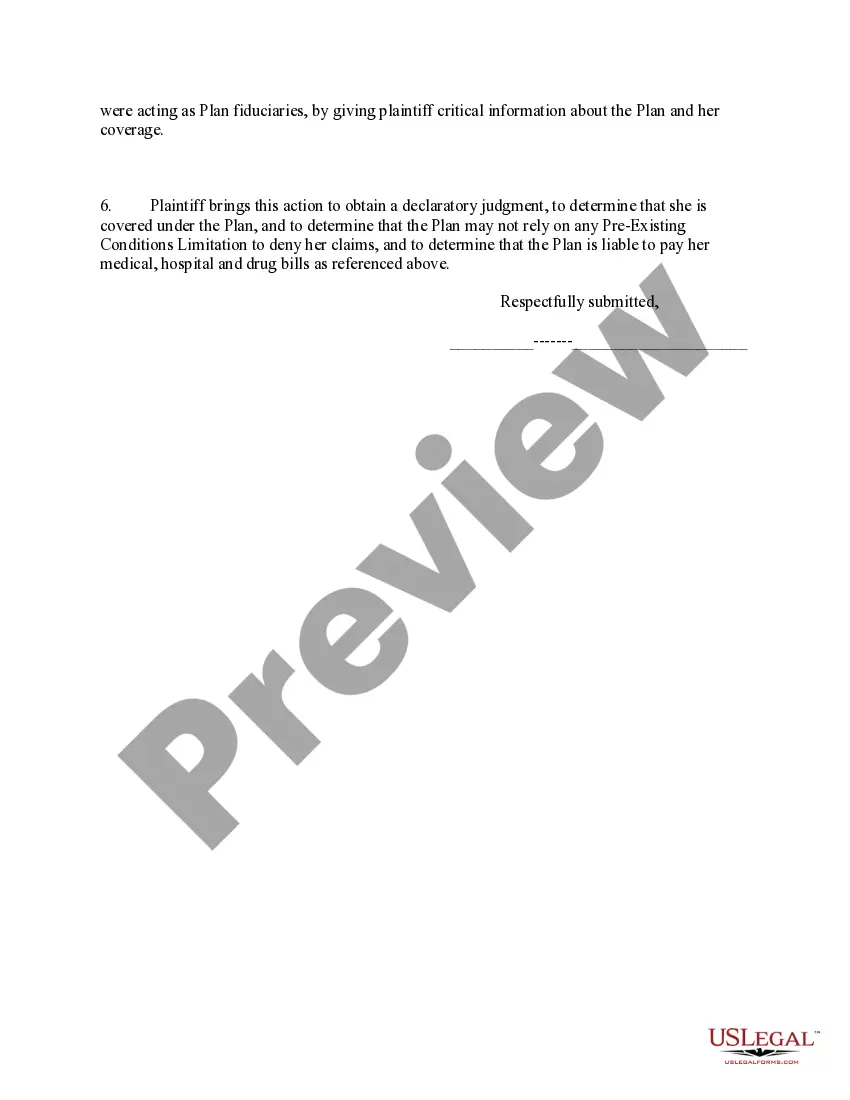
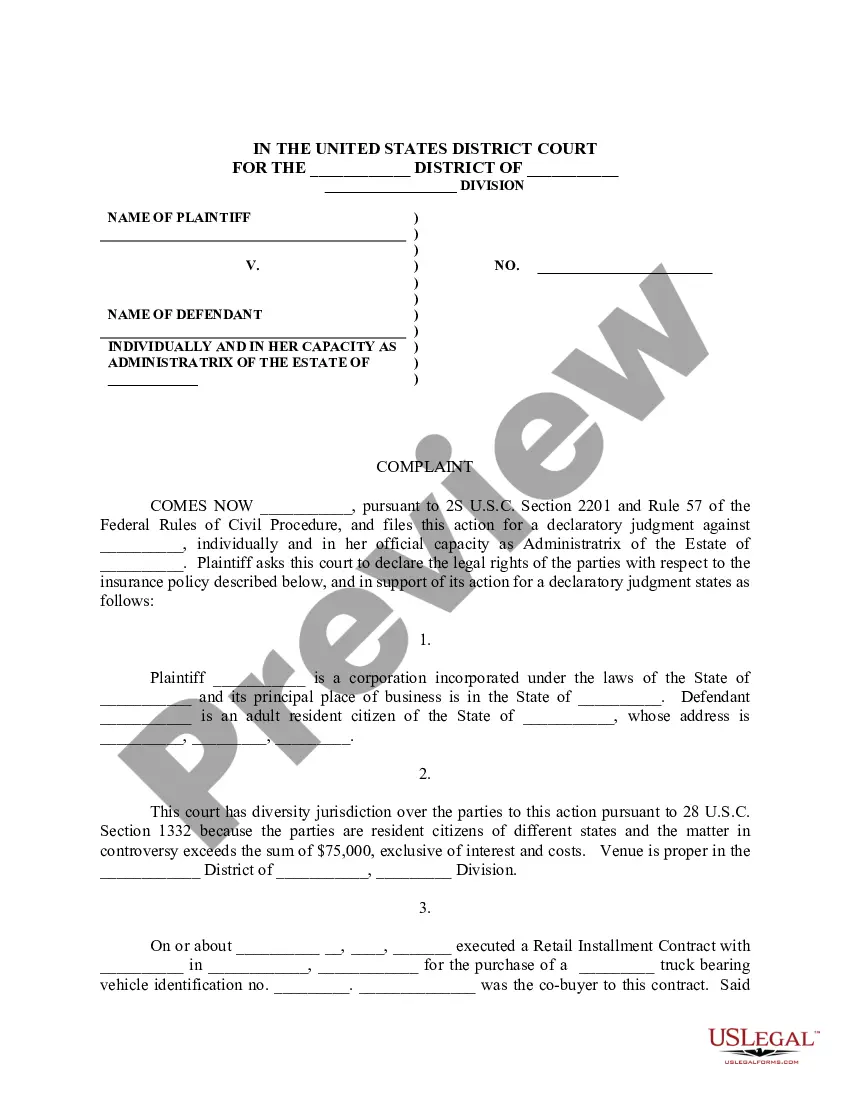
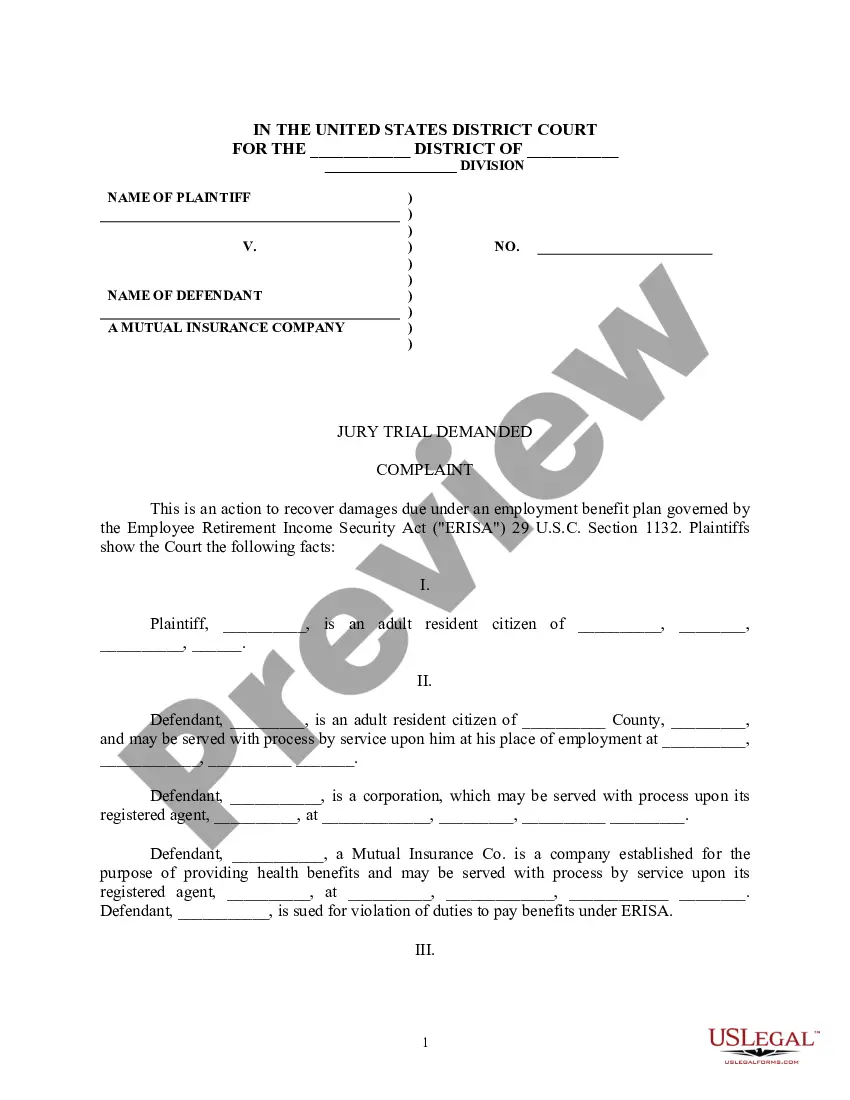
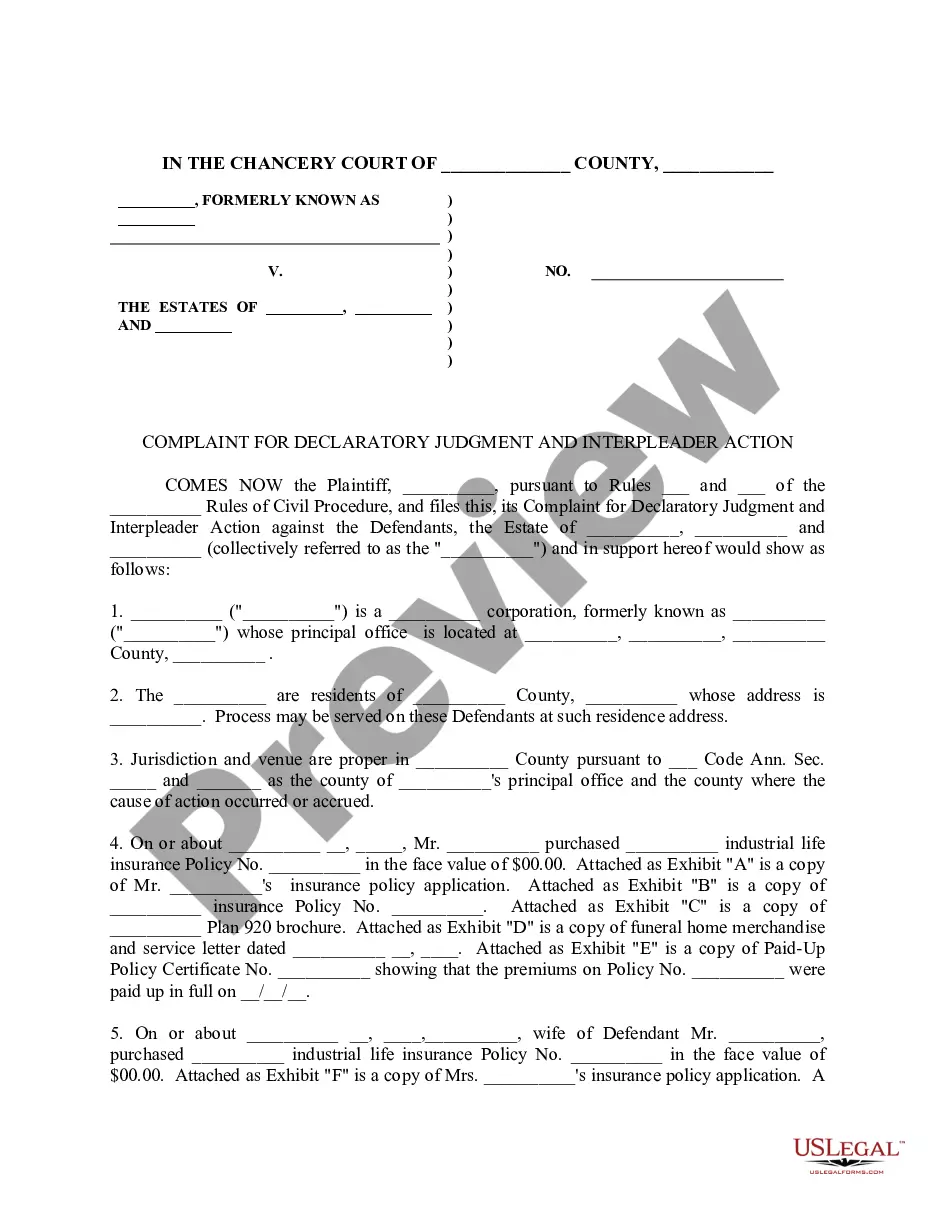
This form is a Complaint For Declaratory Judgment To Determine ERISA Coverage. Adapt to your specific circumstances. Don't reinvent the wheel, save time and money.
California Complaint For Declaratory Judgment To Determine ERISA Coverage
Instant download
Description
Free preview
Get your form ready online
Our built-in tools help you complete, sign, share, and store your documents in one place.
Built-in online Word editor
Make edits, fill in missing information, and update formatting in US Legal Forms—just like you would in MS Word.
Export easily
Download a copy, print it, send it by email, or mail it via USPS—whatever works best for your next step.
E-sign your document
Sign and collect signatures with our SignNow integration. Send to multiple recipients, set reminders, and more. Go Premium to unlock E-Sign.
Notarize online 24/7
If this form requires notarization, complete it online through a secure video call—no need to meet a notary in person or wait for an appointment.
Store your document securely
We protect your documents and personal data by following strict security and privacy standards.

Make edits, fill in missing information, and update formatting in US Legal Forms—just like you would in MS Word.

Download a copy, print it, send it by email, or mail it via USPS—whatever works best for your next step.

Sign and collect signatures with our SignNow integration. Send to multiple recipients, set reminders, and more. Go Premium to unlock E-Sign.

If this form requires notarization, complete it online through a secure video call—no need to meet a notary in person or wait for an appointment.

We protect your documents and personal data by following strict security and privacy standards.
Looking for another form?




How to fill out Complaint For Declaratory Judgment To Determine ERISA Coverage?
US Legal Forms - one of the largest collections of legal documents in the United States - offers a variety of legal document templates that you can download or print. By using the website, you can access thousands of forms for business and personal needs, organized by categories, states, or keywords. You can find the latest versions of forms such as the California Complaint For Declaratory Judgment To Determine ERISA Coverage in just a few moments.
If you already have a monthly subscription, Log In and download the California Complaint For Declaratory Judgment To Determine ERISA Coverage from your US Legal Forms library. The Download button will appear on every form you view. You can access all previously acquired forms from the My documents section of your account.
If you are using US Legal Forms for the first time, here are easy steps to help you get started: Ensure you have selected the correct form for your city/region. Click the Preview button to review the form’s content. Check the form summary to confirm that you have chosen the right form. If the form does not meet your requirements, use the Search field at the top of the screen to find one that does. If you are satisfied with the form, confirm your choice by clicking on the Purchase now button. Then, select the pricing plan you prefer and provide your information to register for an account. Complete the transaction. Use your credit card or PayPal account to finalize the purchase. Choose the format and download the form to your device. Make modifications. Fill out, edit, print, and sign the downloaded California Complaint For Declaratory Judgment To Determine ERISA Coverage. Every template you added to your account does not expire and is yours permanently. So, if you wish to download or print another copy, just go to the My documents section and click on the form you need.
- Access the California Complaint For Declaratory Judgment To Determine ERISA Coverage with US Legal Forms, the most extensive collection of legal document templates.
- Utilize a multitude of professional and state-specific templates that meet your business or personal requirements.
Form popularity
FAQ
While a declaratory judgment can provide clarity, it also has some disadvantages. The process can be time-consuming and may result in significant legal expenses. Furthermore, the court's decision may not resolve all underlying issues, and you might still face litigation. It’s crucial to weigh these factors and consider using platforms like uslegalforms for guidance on preparing a California Complaint For Declaratory Judgment To Determine ERISA Coverage effectively.
An insurance company might file a California Complaint For Declaratory Judgment To Determine ERISA Coverage to seek judicial clarification on its obligations under a policy. This typically occurs when there is a disagreement over whether a claim is covered. By obtaining a court's interpretation, the insurer can avoid paying claims that it believes are not valid. This action not only protects the insurer but also helps define the coverage scope for all parties involved.
You might consider filing a California Complaint For Declaratory Judgment To Determine ERISA Coverage when you face uncertainty about your rights under an insurance policy. This action helps clarify coverage issues before a dispute escalates. For example, if you believe your claim may not be honored, seeking a declaratory judgment can provide clarity on your entitlements. It allows you to resolve potential conflicts proactively.
Responding to a verified complaint in California involves drafting a formal answer that directly tackles the claims presented. Your response needs to be clear and concise, indicating your position on each point raised. For a California Complaint For Declaratory Judgment To Determine ERISA Coverage, consider using legal resources like USLegalForms to ensure your answer meets all necessary requirements.
To answer a verified complaint in California, you must provide a written response that addresses each allegation. Your answer should either admit, deny, or state insufficient knowledge regarding the claims made. When dealing with a California Complaint For Declaratory Judgment To Determine ERISA Coverage, ensure your response is thorough and precise to effectively present your defense.
The main difference lies in the verification process. A verified complaint is sworn to be true, while an unverified complaint lacks this confirmation. In a California Complaint For Declaratory Judgment To Determine ERISA Coverage, using a verified complaint can enhance the credibility of your claims and may be legally required in certain situations.
A declaratory judgment in insurance clarifies the rights and obligations of parties under an insurance policy. For instance, in a California Complaint For Declaratory Judgment To Determine ERISA Coverage, it can determine whether a policy provides coverage for specific claims. This type of judgment helps prevent disputes and provides a clear understanding of the policy's terms.
The burden of proof in declaratory relief often rests on the party seeking the judgment. In a California Complaint For Declaratory Judgment To Determine ERISA Coverage, the plaintiff must demonstrate their entitlement to the relief sought. This usually involves presenting sufficient evidence to persuade the court of their position.
A verified answer in California is a response to a complaint that is also sworn to be true. This means the person answering the complaint is affirming the accuracy of their statements. When responding to a California Complaint For Declaratory Judgment To Determine ERISA Coverage, a verified answer can bolster the respondent's position and provide clarity in legal proceedings.
A verified complaint is one that includes a declaration affirming the truth of the statements made within it. In the context of a California Complaint For Declaratory Judgment To Determine ERISA Coverage, this verification adds credibility and may be necessary to satisfy certain legal requirements. It ensures that the claims presented are not merely speculative.