California Condominium Quitclaim Deed for Individual to Individual
What this document covers
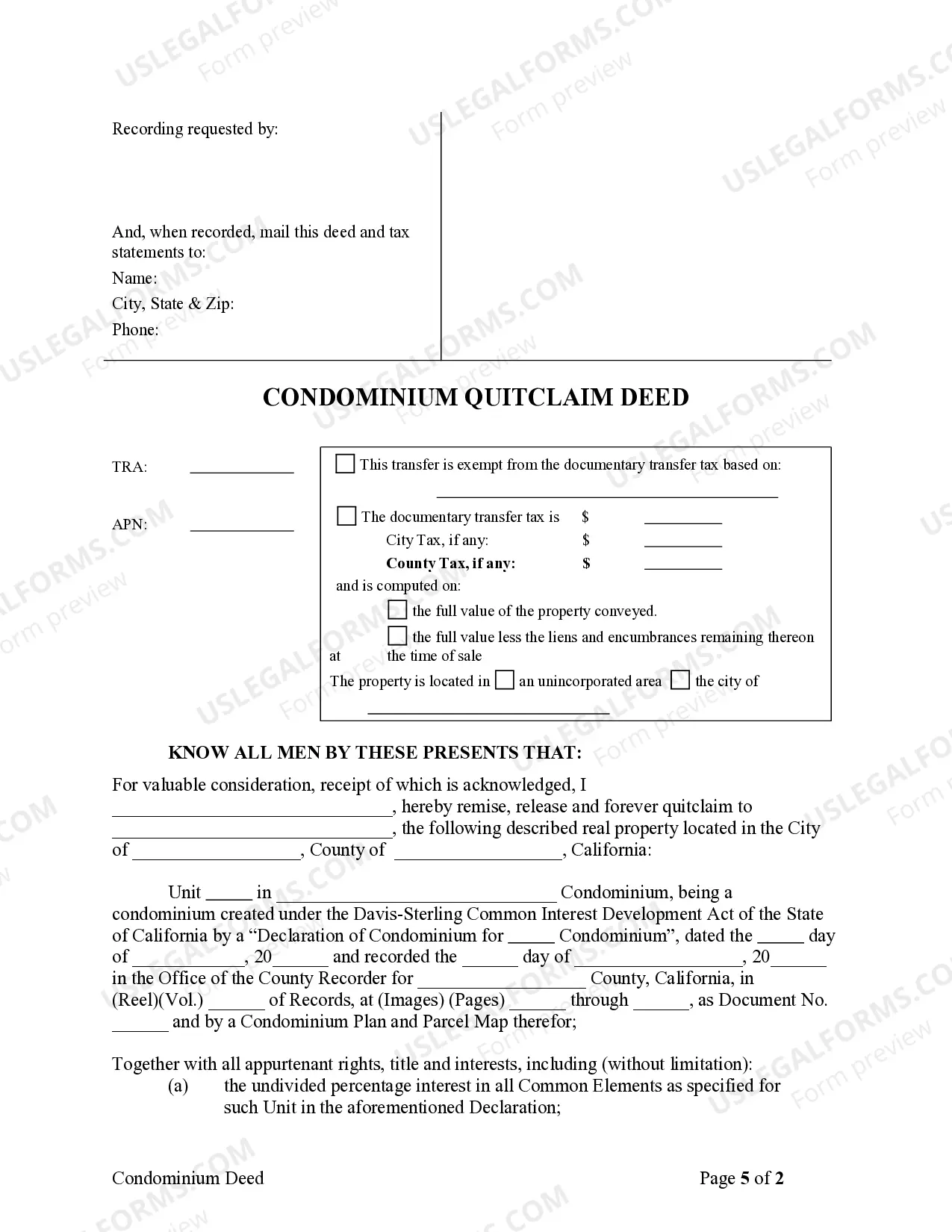
The Condominium Quitclaim Deed for Individual to Individual is a legal document used to transfer ownership of a condominium unit from one individual to another. Unlike a warranty deed, which guarantees that the grantor holds clear title, a quitclaim deed transfers any interest the grantor has in the property without making any guarantees. This form is particularly suited for informal transactions between individuals, such as family members or friends, without a sale taking place.
Key components of this form
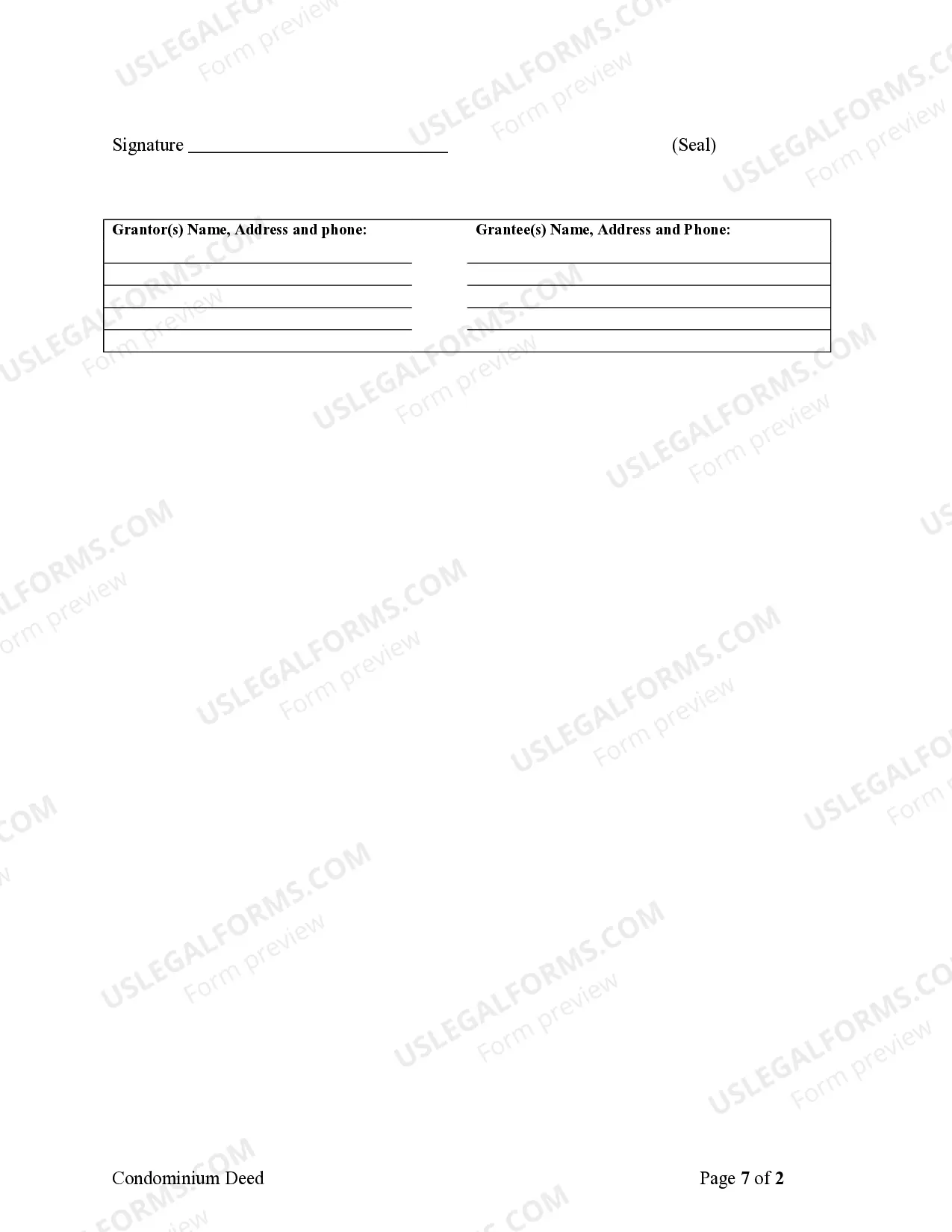
- Names and addresses of the grantor (seller) and grantee (buyer).
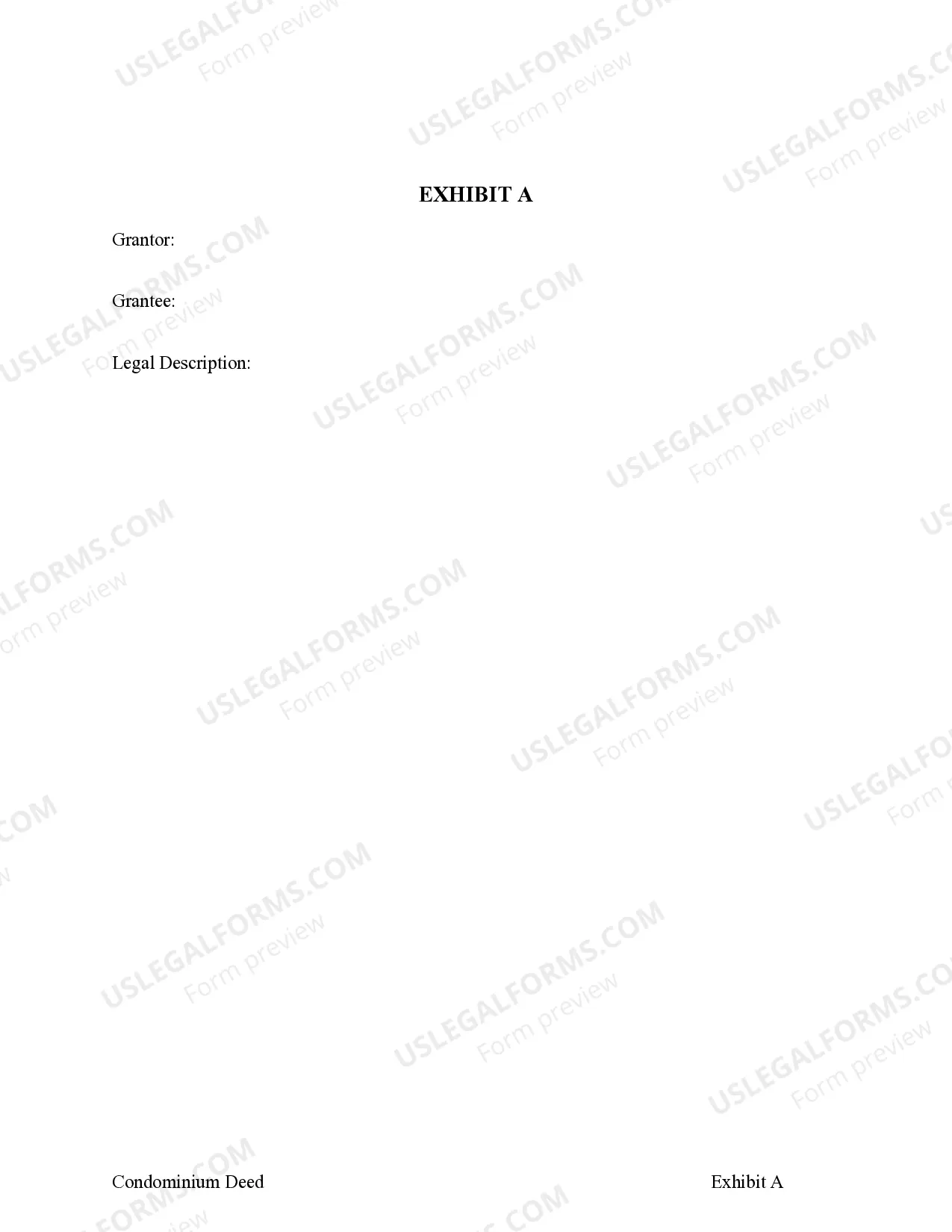
- Legal description of the condominium property being transferred.
- Statement of consideration (the amount being paid or if it is a gift).
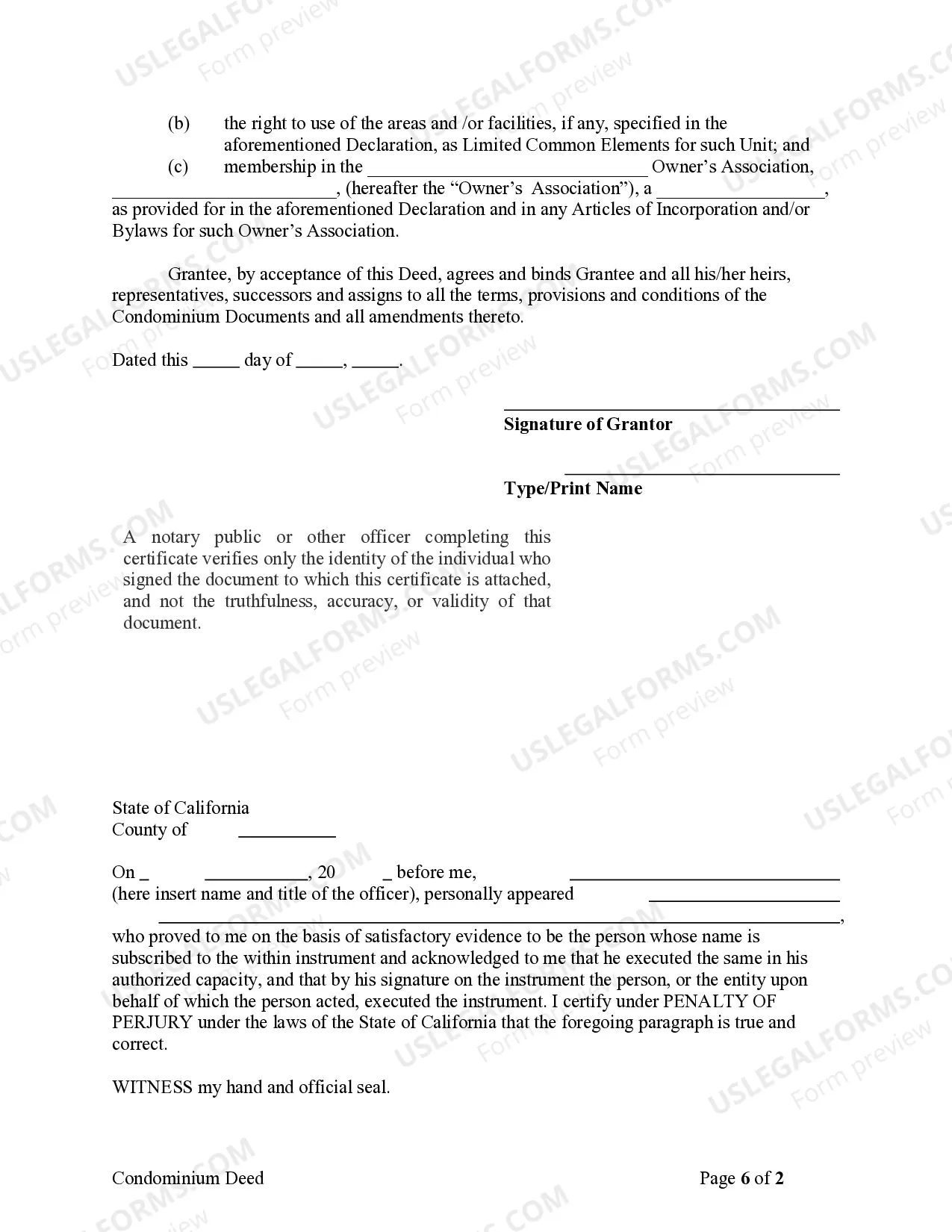
- Signatures of the grantor and a notary public.
- Space for recording information for the county clerk's office.


Situations where this form applies
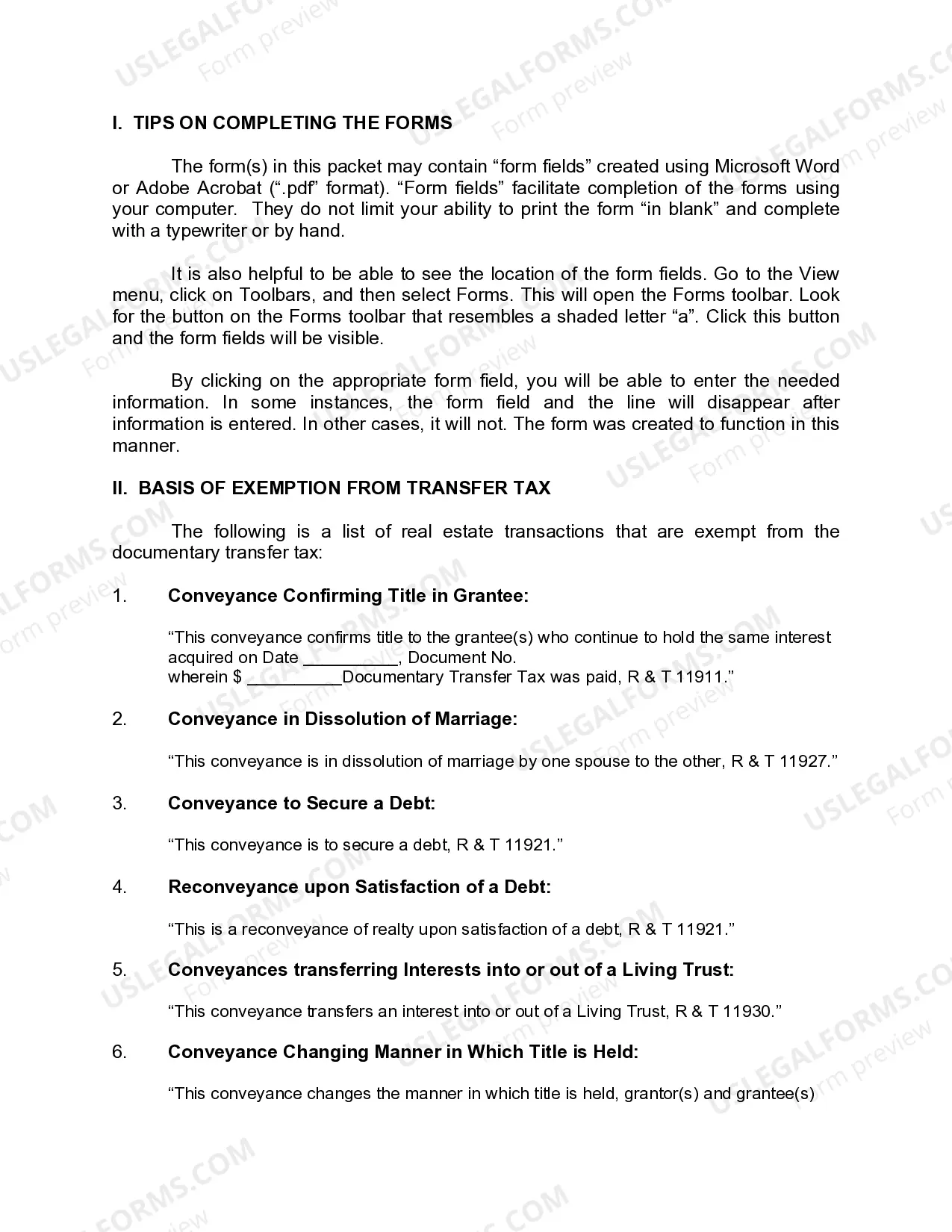
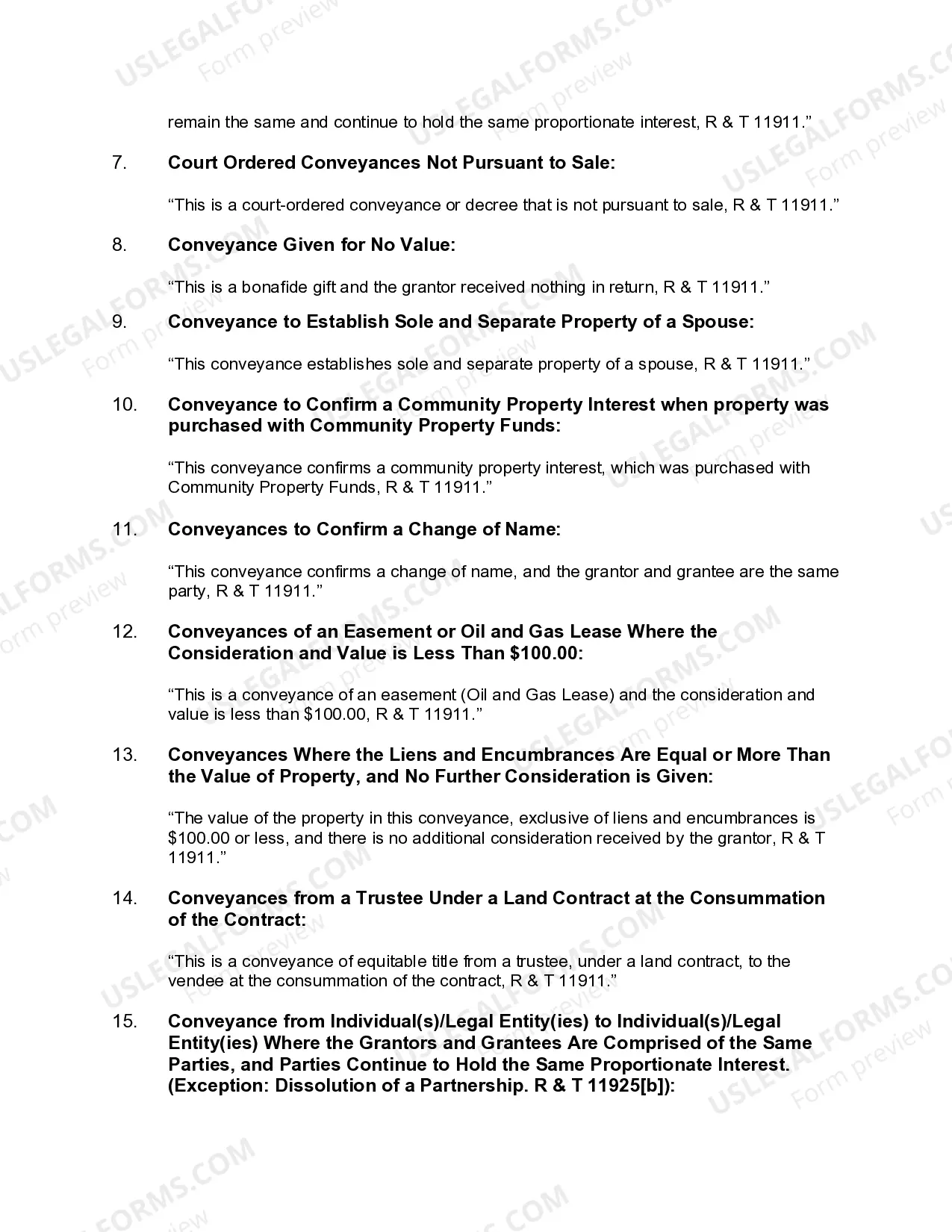
This quitclaim deed should be used when an individual wishes to transfer their interest in a condominium property to another individual. Common scenarios include gifting property to a family member, transferring ownership due to a divorce, or clarifying title after a marriage dissolution. It is also applicable if you are transferring property into a trust or for estate planning purposes.
Intended users of this form
- Individuals transferring ownership of a condominium to another individual.
- Family members involved in property gifts or inheritance.
- Divorced spouses needing to clarify ownership interests.
- Individuals wishing to simplify their estate planning.
Instructions for completing this form
- Identify the parties involved: list the full name and address of the grantor and grantee.
- Describe the property: include the legal description of the condominium as required.
- Specify the consideration: indicate any payment made or state if it is a gift.
- Sign the deed: have the grantor sign it in the presence of a notary public.
- File the deed: submit the completed deed to the appropriate county office for recording.
Notarization guidance
To make this form legally binding, it must be notarized. Our online notarization service, powered by Notarize, lets you verify and sign documents remotely through an encrypted video session.
Get your form ready online
Our built-in tools help you complete, sign, share, and store your documents in one place.
Make edits, fill in missing information, and update formatting in US Legal Forms—just like you would in MS Word.
Download a copy, print it, send it by email, or mail it via USPS—whatever works best for your next step.
Sign and collect signatures with our SignNow integration. Send to multiple recipients, set reminders, and more. Go Premium to unlock E-Sign.
If this form requires notarization, complete it online through a secure video call—no need to meet a notary in person or wait for an appointment.
We protect your documents and personal data by following strict security and privacy standards.

Make edits, fill in missing information, and update formatting in US Legal Forms—just like you would in MS Word.

Download a copy, print it, send it by email, or mail it via USPS—whatever works best for your next step.

Sign and collect signatures with our SignNow integration. Send to multiple recipients, set reminders, and more. Go Premium to unlock E-Sign.

If this form requires notarization, complete it online through a secure video call—no need to meet a notary in person or wait for an appointment.

We protect your documents and personal data by following strict security and privacy standards.
Common mistakes to avoid
- Inaccurate legal description of the property.
- Failure to have the signature notarized.
- Not including the consideration amount or marking it as a gift.
- Forgetting to file the deed with the county office.
Benefits of using this form online
- Convenience of downloading and filling the form at your own pace.
- Editable fields make it easy to customize according to your situation.
- Access to attorney-drafted templates ensuring legal compliance.
- Save time and reduce the need for legal consultation fees.
Looking for another form?
Form popularity
FAQ
To remove someone from a deed, you must create a quitclaim deed that releases that individual’s interest in the property. This new deed must identify the original owners and the individual being removed, followed by their signatures and notarization. Afterward, file this document with the county recorder's office to officially reflect the changes on the property title.
Definitely, you can prepare a quitclaim deed yourself if you feel confident in your understanding of the requirements. Simply gather the necessary information, fill out the form, and ensure that all signatures are notarized. For additional support, consider using services like US Legal Forms for templates and instructions tailored to a California Condominium Quitclaim Deed for Individual to Individual.
Yes, you can complete a quitclaim deed on your own; however, understanding the process is crucial. Make sure to gather all necessary information and fill out the deed form accurately. Utilizing resources from US Legal Forms can help you navigate the creation of a California Condominium Quitclaim Deed for Individual to Individual with ease.
Transferring property in California generally involves executing a deed, such as a quitclaim deed. The party transferring the property, the grantor, must fill out the deed with accurate property details and the recipient's information. Once notarized and recorded with the county, the transfer becomes effective, allowing for a smooth change of ownership.
One main disadvantage of a quitclaim deed is that it offers no guarantees regarding the property title. Without a title warranty, the grantee may face risks if any claims against the property arise. Understanding these potential drawbacks is essential, so it's wise to consider legal advice before executing a California Condominium Quitclaim Deed for Individual to Individual.
To complete a quitclaim deed in California, start by filling out the deed form with the names of the grantor and grantee, along with a detailed legal description of the property. After filling out the form, both parties must sign it in front of a notary public. Once signed, file the completed quitclaim deed with the county recorder's office to make it official.
In California, a quitclaim deed can be prepared by any person who understands the requirements of the document. It's often advisable to consult an attorney or a licensed professional to ensure all legal aspects are covered correctly. If you prefer a straightforward option, platforms like US Legal Forms can provide templates and guidance for creating a California Condominium Quitclaim Deed for Individual to Individual.
Yes, you can make a quitclaim deed yourself. In fact, creating a California Condominium Quitclaim Deed for Individual to Individual is quite straightforward when you have the right resources. By utilizing USLegalForms, you can find easy-to-follow templates and instructions that help you complete the deed accurately. This empowers you to manage your property transactions confidently.
Yes, you can transfer a deed without an attorney by using a tool like a California Condominium Quitclaim Deed for Individual to Individual. Many individuals choose to handle this themselves to save costs. However, it's wise to double-check that all details are correctly filled out and comply with California regulations. Platforms like USLegalForms provide templates that can guide you through this successful process.
You might consider executing a California Condominium Quitclaim Deed for Individual to Individual to clear up title issues or to correct property-related documents. This method can be beneficial if you want to simplify the transfer of property without incurring additional taxes. It also allows you to consolidate ownership, making future transactions easier. Keeping your property records clear is essential for effective management.