California Substitution of Trustee
About this form
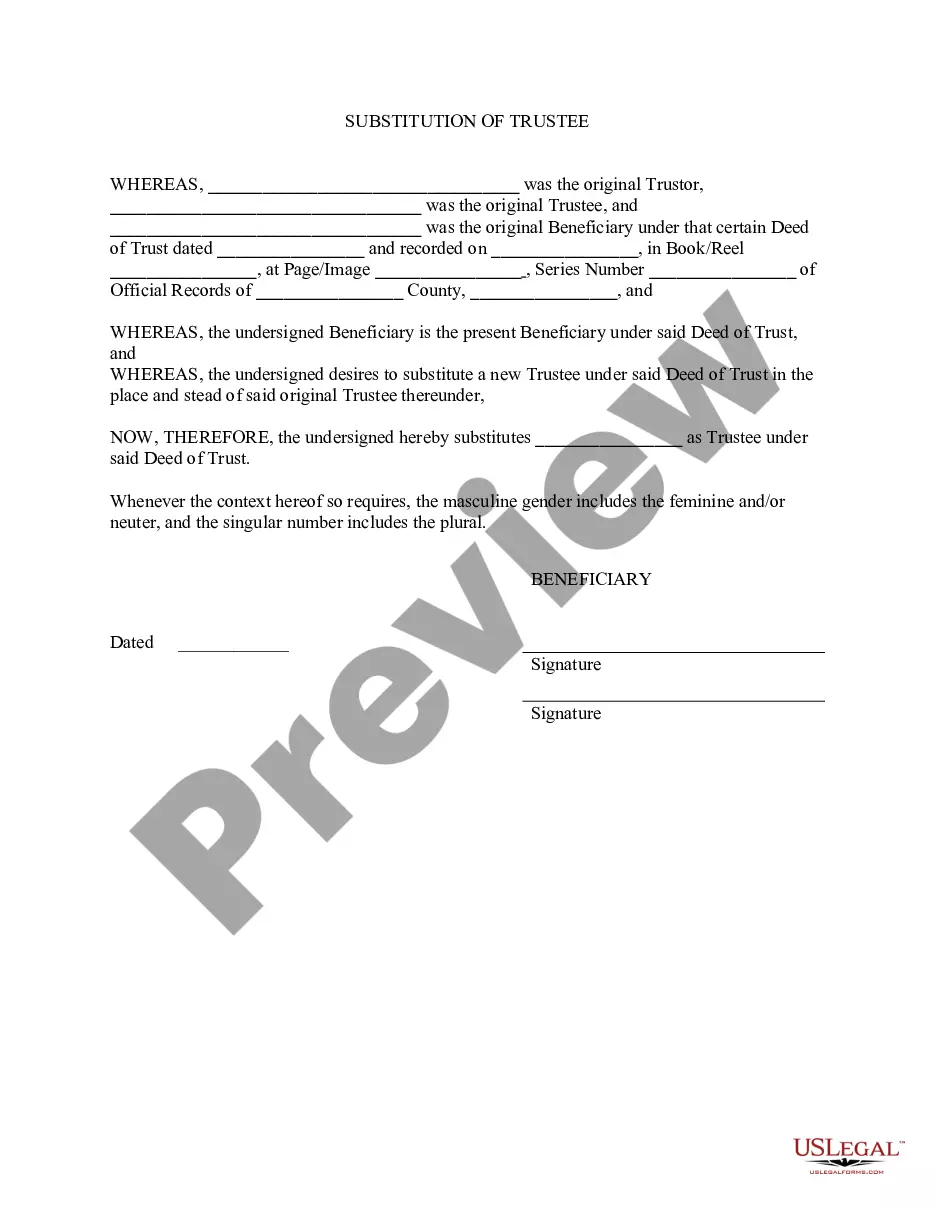
The Substitution of Trustee is a legal document that allows a beneficiary to replace the original trustee of a deed of trust with a new trustee. This form is crucial when the original trustee can no longer fulfill their duties, ensuring that the management of the trust remains uninterrupted. This form is distinct from other trust-related documents, as it focuses specifically on the designation of a new trustee while maintaining the existing terms of the deed of trust.
Key components of this form
- Original Trustor, Trustee, and Beneficiary details: These fields identify the original parties to the deed of trust.
- Deed of Trust details: Includes the date, recording information, and specifics about the official records.
- New Trustee information: Specifies the name of the new trustee being appointed.
- Beneficiary signature: Requires the signature of the current beneficiary to execute the substitution.
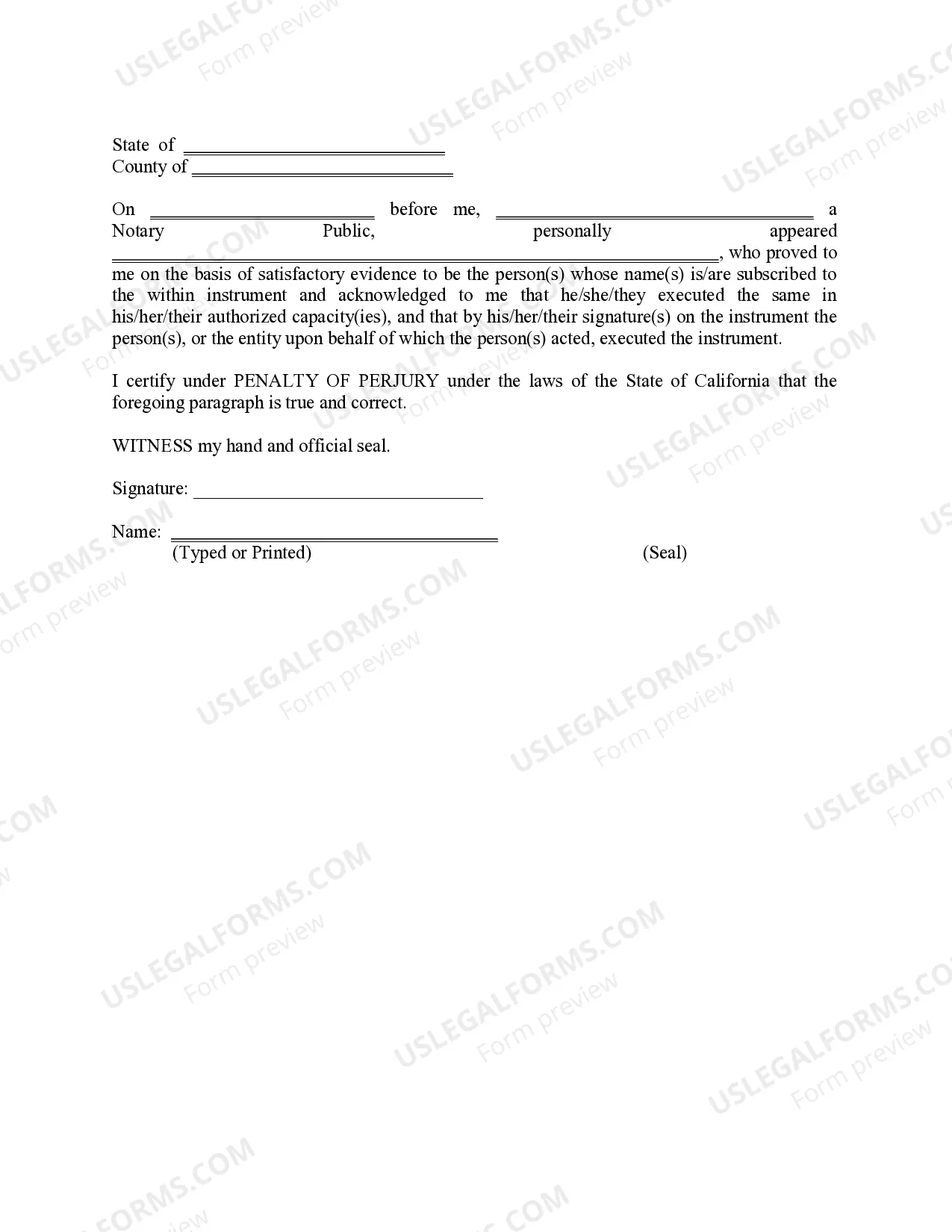
- Notary acknowledgment section: Provides a space for a notary public to verify the identities of the signers.


Situations where this form applies
This form should be used in situations where the original trustee of a deed of trust is unable or unwilling to continue in their role. Typical scenarios include trustee resignation, death, or incapacity. Additionally, if the beneficiary decides that a different trustee would be more suitable for managing the trust, they can use this form to officially appoint a new trustee.
Who should use this form
- Beneficiaries of a trust who need to replace an existing trustee.
- Individuals involved in real estate transactions requiring changes to the designated trustee.
- Attorneys handling trust matters on behalf of their clients.
Steps to complete this form
- Identify the original Trustor, Trustee, and Beneficiary by filling in their names in the designated sections.
- Provide the details of the Deed of Trust, including the recording date and relevant official records information.
- Enter the name of the new Trustee in the appropriate field.
- Sign and date the form where indicated to authorize the substitution.
- Seek notarization by a qualified notary public to validate the signatures.
Does this form need to be notarized?
Yes, this form must be notarized to be legally valid. The notarization verifies the identities of the signers, ensuring the authenticity of the document. US Legal Forms offers integrated online notarization, allowing you to complete this step securely via video call at any time without the need to travel.
Get your form ready online
Our built-in tools help you complete, sign, share, and store your documents in one place.
Make edits, fill in missing information, and update formatting in US Legal Forms—just like you would in MS Word.
Download a copy, print it, send it by email, or mail it via USPS—whatever works best for your next step.
Sign and collect signatures with our SignNow integration. Send to multiple recipients, set reminders, and more. Go Premium to unlock E-Sign.
If this form requires notarization, complete it online through a secure video call—no need to meet a notary in person or wait for an appointment.
We protect your documents and personal data by following strict security and privacy standards.

Make edits, fill in missing information, and update formatting in US Legal Forms—just like you would in MS Word.

Download a copy, print it, send it by email, or mail it via USPS—whatever works best for your next step.

Sign and collect signatures with our SignNow integration. Send to multiple recipients, set reminders, and more. Go Premium to unlock E-Sign.

If this form requires notarization, complete it online through a secure video call—no need to meet a notary in person or wait for an appointment.

We protect your documents and personal data by following strict security and privacy standards.
Common mistakes to avoid
- Failing to include complete details of the original deed of trust.
- Not obtaining a notarization if required by local law.
- Leaving sections incomplete or failing to update information related to the original trustee.
Benefits of using this form online
- Convenience of instant access to the form from any device at any time.
- Editable templates that can be customized to suit specific circumstances.
- Reliable legal resources available to assist during the completion process.
Looking for another form?
Form popularity
FAQ
Legal Definition: The Trustee or Substitute Trustee is the authorized individual, acting as an agent of the court, who oversees the sale process and makes certain the property is sold in a fair and equitable manner.
The Substitution of Trustee and Full Reconveyance is signed by the present beneficiary and present Trustee under Deed of Trust, whose signatures are notarized.
A ?swap power? is also called a ?power to substitute.? It is a special right reserved to you (or someone else) in a trust you create while you are alive. This right gives you the power to swap an asset of yours, say cash, for an asset held in the trust you created.
Legal Definition: The Trustee or Substitute Trustee is the authorized individual, acting as an agent of the court, who oversees the sale process and makes certain the property is sold in a fair and equitable manner.
In a nutshell, the Substitution of Trustee and Deed of Reconveyance is a legal document that evidences security interest is being release by a lender. In most cases, the document shows that a loan has been paid off. Property owners may even receive this document if they have refinanced a loan.
If a trustee is not designated in the deed of trust, or upon the resignation, incapacity, disability, absence or death of the trustee, or the election of the beneficiary or beneficiaries to replace the trustee, the beneficiary or beneficiaries or their authorized agents shall appoint a trustee or a successor trustee.
A document known as a substitution of trustee and full reconveyance identifies the person who has the authority to reconvey the property and remove the lien. Most importantly, a deed of full reconveyance, known as a satisfaction of mortgage in some states, transfers title back to the borrower.