California Affidavit - Change of Trustee
What this document covers
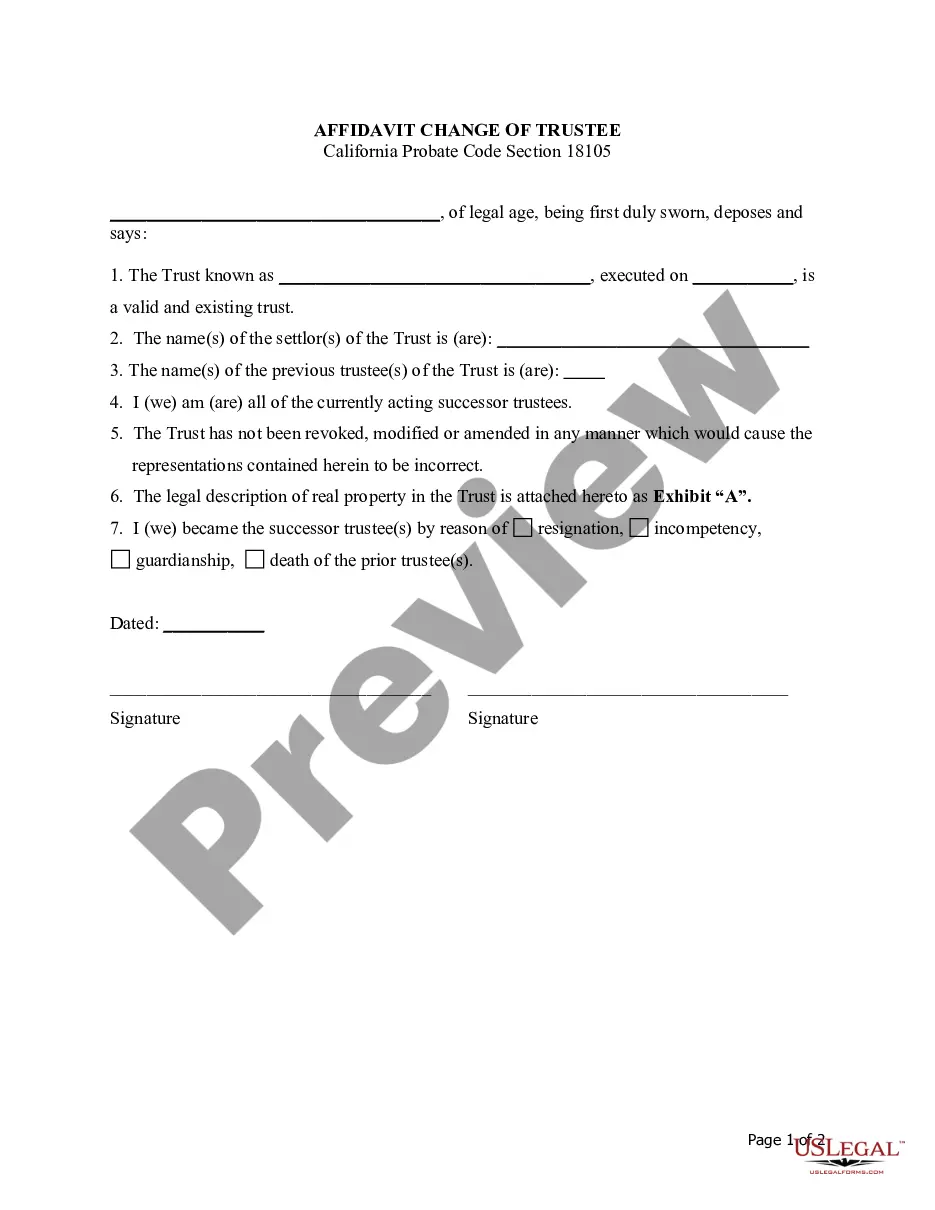
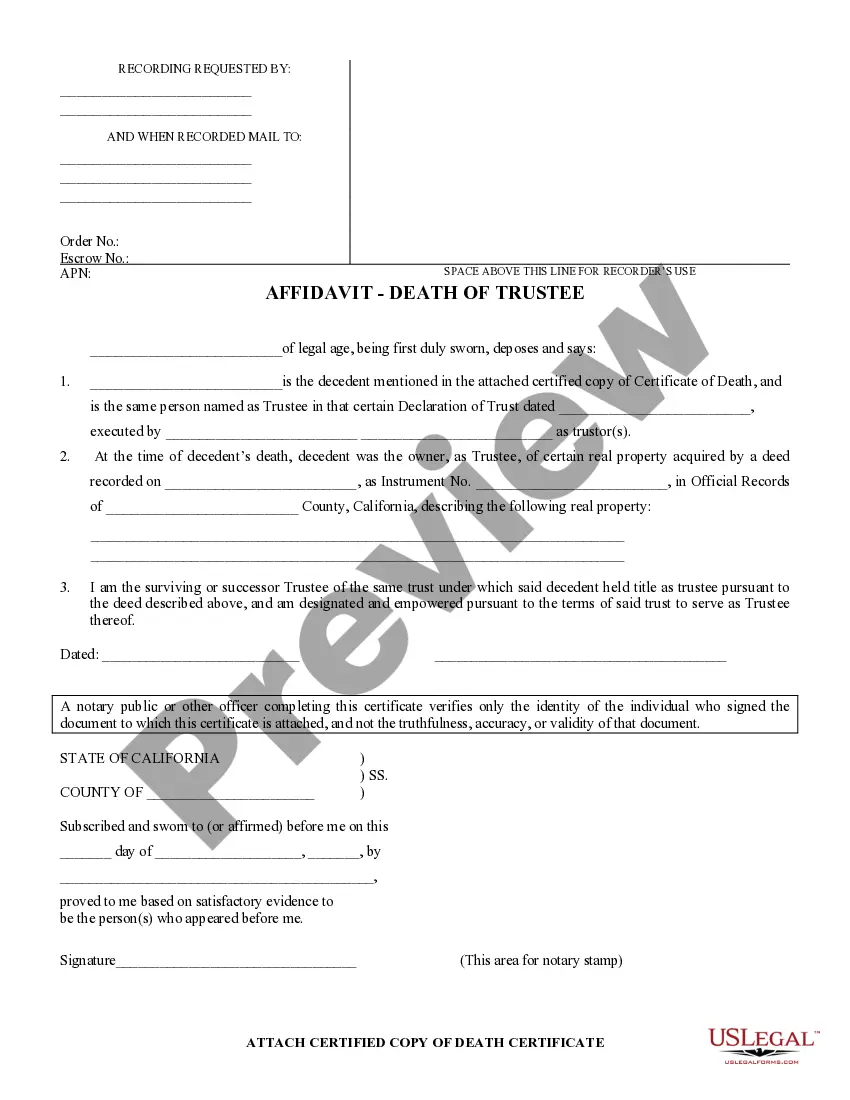
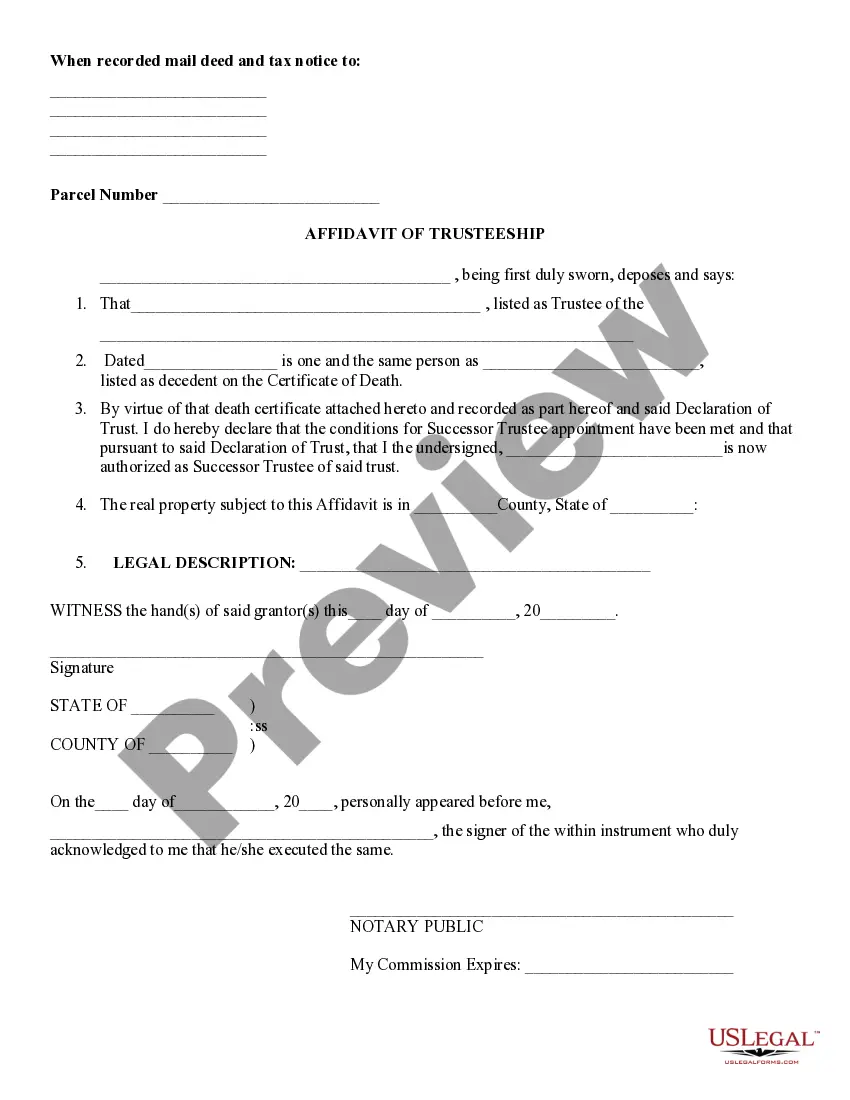
The Affidavit - Change of Trustee is a legal document that validates the transition of trustees in a trust. This form is specifically used when a trustee has been removed or has passed away, allowing a successor trustee to assume control. The affidavit serves to affirm the status of the trust and the qualifications of the new trustee, differing from other forms such as a trust amendment or a will, which may address different aspects of estate planning.
Key components of this form
- Identification of the trust name and date of execution
- Name(s) of the settlor(s) associated with the trust
- Name(s) of the previous trustee(s)
- Confirmation of the successor trustee(s) currently acting
- Statement regarding the validity of the trust and any changes made
- Legal description of property attached as an exhibit
- Reason for succession, such as resignation or death
Common use cases
This affidavit is required when there is a need to officially document the change of trustee in a trust. Typical situations include the retirement, incapacity, or death of an existing trustee. It is essential for maintaining the integrity and management of the trust, ensuring that assets are handled as per the trust's provisions in accordance with the law.
Intended users of this form
- Successor trustees who are assuming responsibilities from a previous trustee
- Trustees needing to confirm their legal authority over the trust's assets
- Settlor(s) of the trust wanting to formalize changes in management
- Legal representatives handling trust matters in cases of trustee incapacity or death
How to complete this form
- Enter the name of the trust and the date it was created at the top of the form.
- List the names of the settlor(s) and previous trustee(s) of the trust.
- Indicate the names of all currently acting successor trustees.
- Confirm that the trust has not been revoked, modified, or amended.
- Attach the legal description of any real estate included in the trust as Exhibit "A".
- Provide the reason for the succession and date, then sign the affidavit.
Is notarization required?
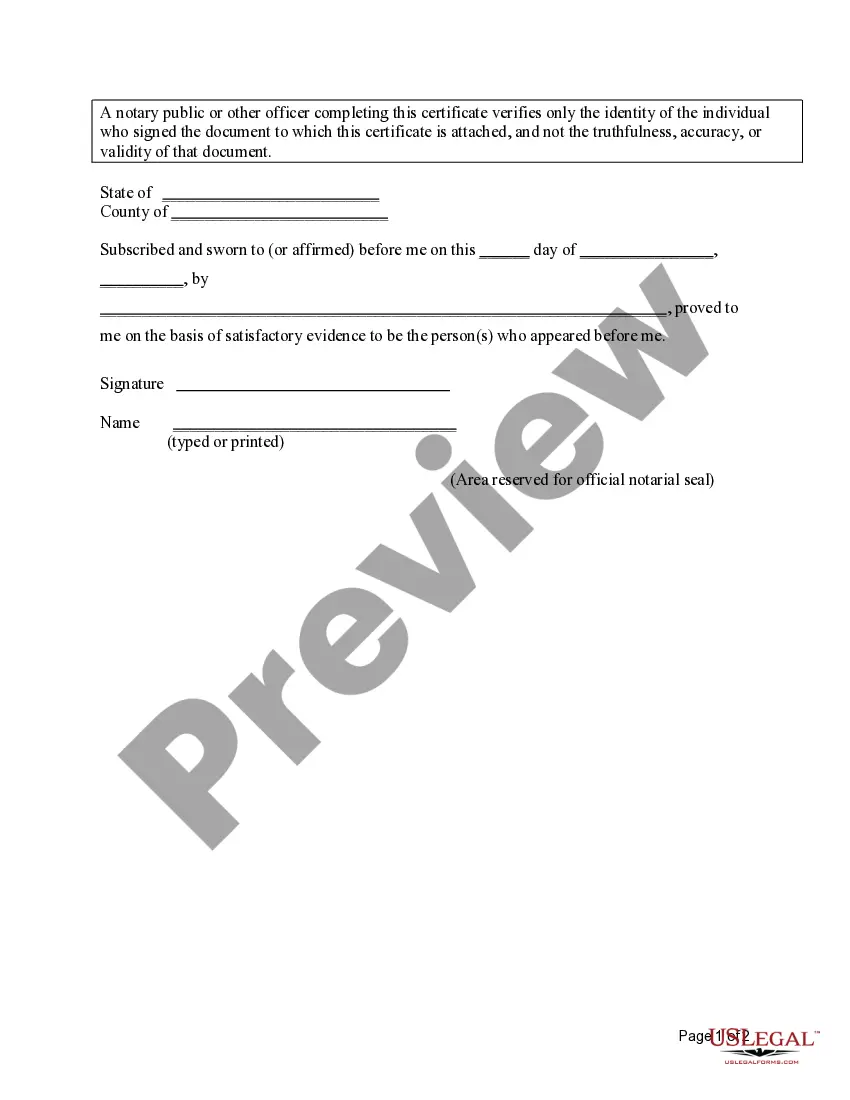
Yes, this form must be notarized to be legally valid. The notarization process adds a layer of authentication and credibility to the document. US Legal Forms offers integrated online notarization, allowing you to securely complete this step via an online video call at your convenience.
Get your form ready online
Our built-in tools help you complete, sign, share, and store your documents in one place.
Make edits, fill in missing information, and update formatting in US Legal Forms—just like you would in MS Word.
Download a copy, print it, send it by email, or mail it via USPS—whatever works best for your next step.
Sign and collect signatures with our SignNow integration. Send to multiple recipients, set reminders, and more. Go Premium to unlock E-Sign.
If this form requires notarization, complete it online through a secure video call—no need to meet a notary in person or wait for an appointment.
We protect your documents and personal data by following strict security and privacy standards.

Make edits, fill in missing information, and update formatting in US Legal Forms—just like you would in MS Word.

Download a copy, print it, send it by email, or mail it via USPS—whatever works best for your next step.

Sign and collect signatures with our SignNow integration. Send to multiple recipients, set reminders, and more. Go Premium to unlock E-Sign.

If this form requires notarization, complete it online through a secure video call—no need to meet a notary in person or wait for an appointment.

We protect your documents and personal data by following strict security and privacy standards.
Common mistakes to avoid
- Failing to list all previous and current trustees accurately.
- Not attaching the legal property description as required.
- Leaving out the reason for the change in trustees.
- Not having the affidavit notarized where required.
- Provision of incorrect dates or missing signatures.
Advantages of online completion
- Convenient access to forms without the need for physical copies.
- Edit and customize the form as needed to fit specific requirements.
- Reliable templates drafted by licensed legal professionals.
- Immediate downloads for quick and easy processing.
Looking for another form?
Form popularity
FAQ
Modifying an Irrevocable Trust under California Law Under Probate Code §15404(a) any trust may be modified or terminated by the written consent of the settlor and all beneficiaries without court approval of the modification or termination.
Just follow the Trust terms. The Trust may require you to send written notice to the Trustee to remove them. Once you follow that directive, the Trustee must step down and a successor Trustee can be appointed. If another person has the right to remove and replace the Trustee, then you would want to talk to that person.
A Petition is filed under PC 17200 to appoint a successor trustee. All trustees and beneficiaries sign a consent. At least one beneficiary or trustee signs a nomination of a new trustee. Always look to the trust to see if a successor is named.
Trustees will usually be appointed by the instrument that brings the trust into existence. The trust instrument should also make provision for any additional appointments that may be necessary during the continuance of the trust.
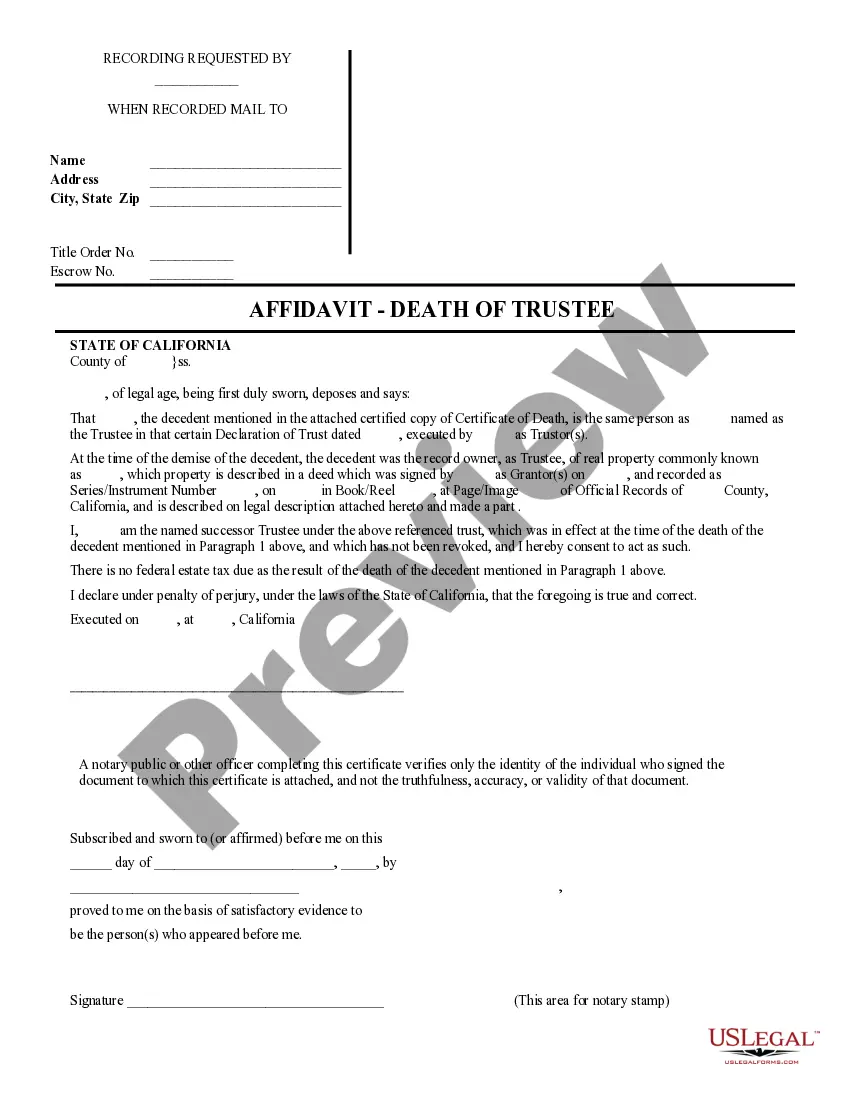
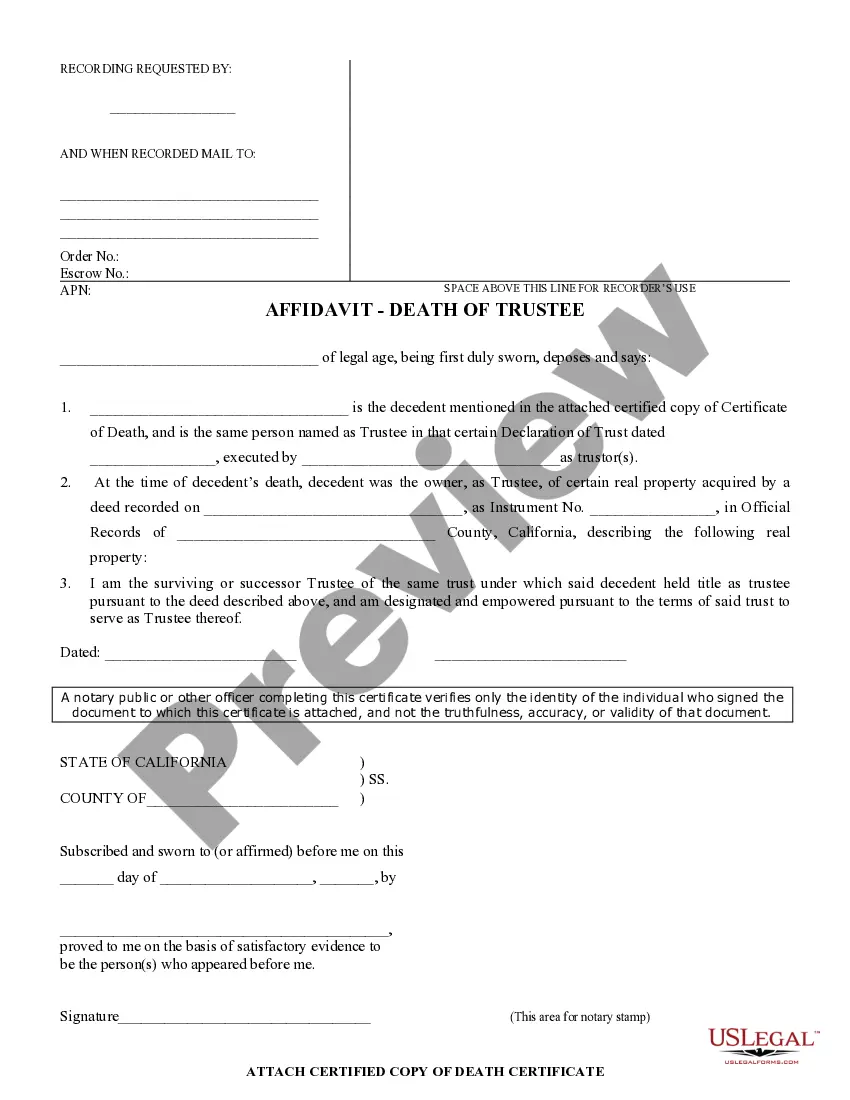
An affidavit of successor trustee is filed when a trustee is removed or has died and is being replaced with the successor trustee. This is common in trusts (or joint tenancy) when it's written that if anything should happen to the trustee, the successor trustee will take over ownership.
A petition for removal of a trustee can be filed by either a co-trustee or a beneficiary. The petition may also seek financial damages from the trustee. Sufficient evidence needs to be submitted to show the court that the trustee violated the terms of the trust agreement or their fiduciary duty.
To remove the trustee of an irrevocable trust, a court must get involved. To start the process, a party with an interest in the trust (like a beneficiary or a co-trustee) must file a petition with the appropriate court requesting that the court remove the trustee.
The affidavit of successor trustee for California specifically requires that you provide proof of incapacity (most commonly a death certificate) and evidence that you have the authority to act as successor trustee (the Trust with any amendments).