California Notice of State Tax Lien
About this form
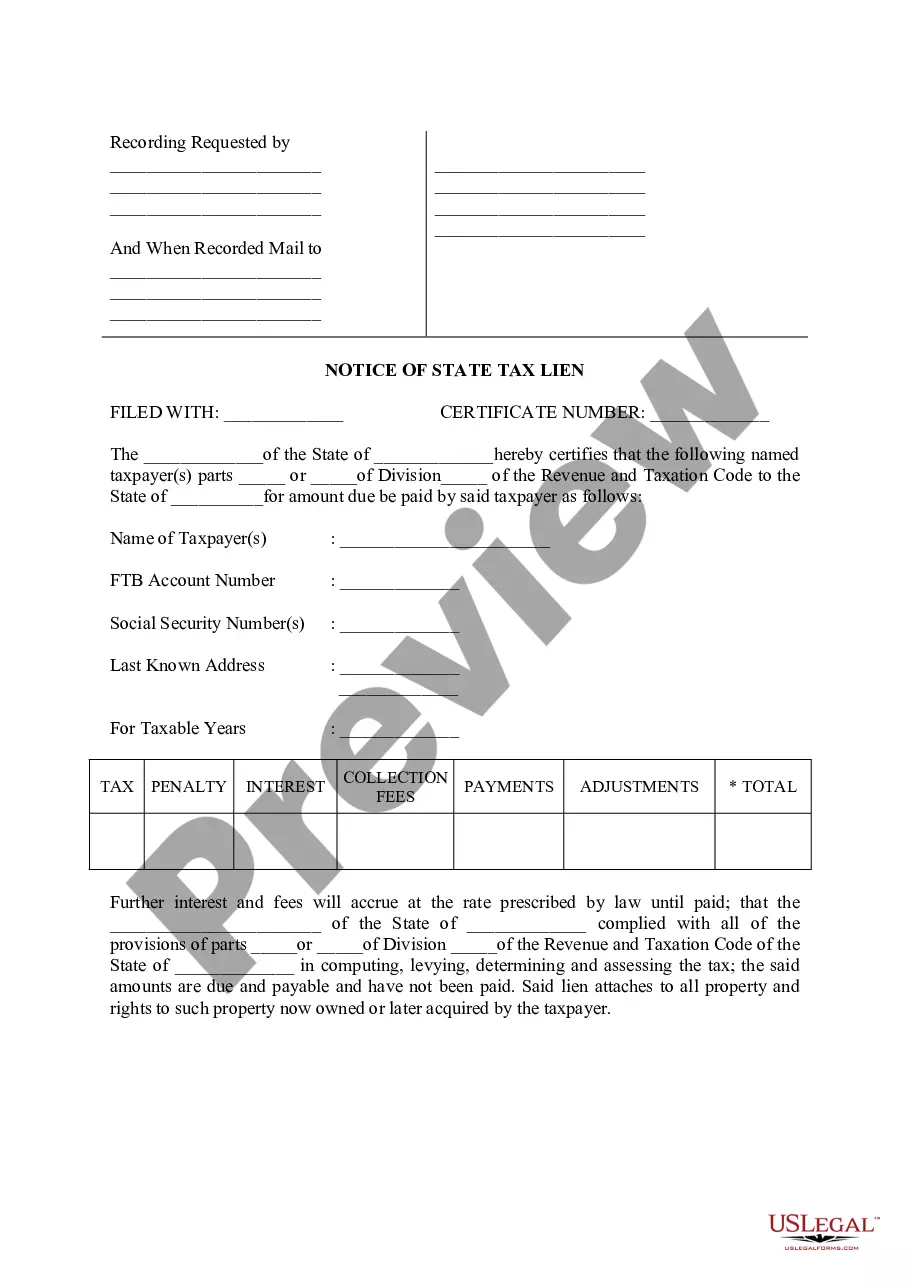
The Notice of State Tax Lien is a legal document that notifies individuals and entities of the State of California's claim against a taxpayer due to unpaid taxes, interest, penalties, and costs. This form serves as an official record, establishing a lien on the taxpayer's property and rights until the owed amounts are settled. It is crucial for informing the taxpayer and involved parties about the state's claim, distinguishing it from other legal notices regarding debts or obligations.
What’s included in this form
- Recording Requested By: Information on the party requesting the lien recording.
- Filed With: Details on where the notice is filed, including certificate numbers.
- Name of Taxpayer(s): Identification of the taxpayer subject to the lien.
- FTB Account Number: A unique identifier for the taxpayerâs account with the Franchise Tax Board.
- Social Security Number(s): For identification purposes, usually required for individual taxpayers.
- Last Known Address: The address where the taxpayer last resided.
- Details of Tax Obligation: A breakdown of the taxes owed, including penalties, interest, and total amount due.
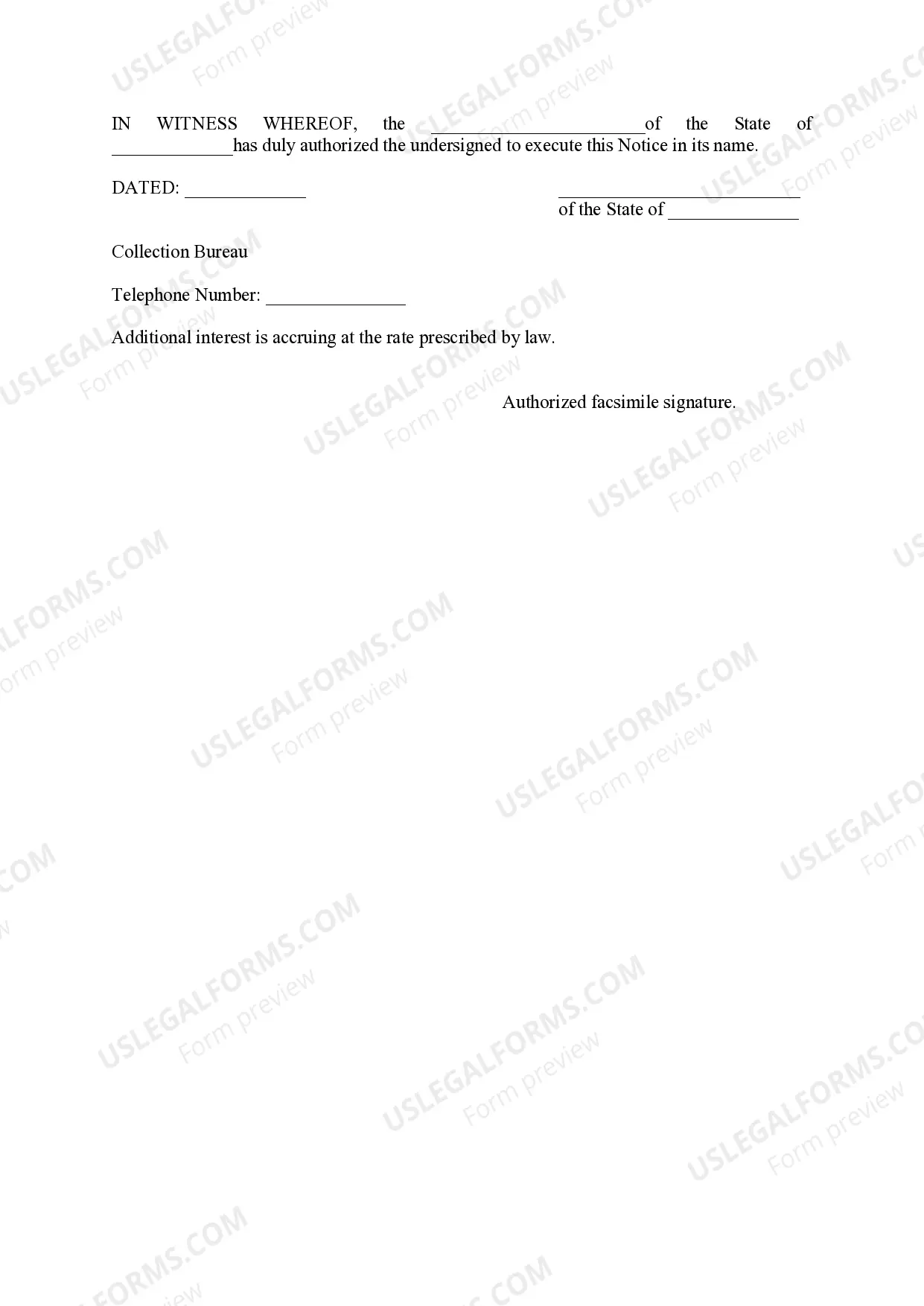
- Authorized Signatory: Signature of the state representative executing the notice.
Situations where this form applies
This form should be utilized when the State of California has assessed a taxpayer for unpaid taxes, and a formal lien needs to be recorded. It is particularly important in situations where the state aims to secure its interest in the taxpayer's property as a result of tax-related debts or liabilities. If the taxpayer fails to resolve their debt, this form signifies the state's legal claim to their assets.
Who can use this document
- State tax authorities seeking to enforce tax collection through a lien.
- Legal representatives acting on behalf of a state agency.
- Taxpayers and their legal advisors wanting to understand tax lien processes.
- Property owners and buyers needing to be aware of outstanding tax claims on a property.
Instructions for completing this form
- Identify the parties involved by filling in the names of the state officials and the taxpayer.
- Enter the details required in the âFiled Withâ section, including certificate number.
- Provide the taxpayerâs information, including their FTB account number and last known address.
- Fill in specifics regarding the tax obligation, including taxable years and total amounts due.
- Ensure that the authorized representative completes the form with their signature and date.
Does this document require notarization?
This form does not typically require notarization unless specified by local law. It is advisable to check local requirements or consult with a legal expert if uncertain about compliance.
Get your form ready online
Our built-in tools help you complete, sign, share, and store your documents in one place.
Make edits, fill in missing information, and update formatting in US Legal Forms—just like you would in MS Word.
Download a copy, print it, send it by email, or mail it via USPS—whatever works best for your next step.
Sign and collect signatures with our SignNow integration. Send to multiple recipients, set reminders, and more. Go Premium to unlock E-Sign.
If this form requires notarization, complete it online through a secure video call—no need to meet a notary in person or wait for an appointment.
We protect your documents and personal data by following strict security and privacy standards.

Make edits, fill in missing information, and update formatting in US Legal Forms—just like you would in MS Word.

Download a copy, print it, send it by email, or mail it via USPS—whatever works best for your next step.

Sign and collect signatures with our SignNow integration. Send to multiple recipients, set reminders, and more. Go Premium to unlock E-Sign.

If this form requires notarization, complete it online through a secure video call—no need to meet a notary in person or wait for an appointment.

We protect your documents and personal data by following strict security and privacy standards.
Common mistakes
- Failing to include all required taxpayer information, leading to processing delays.
- Missing the correct filing office or certificate number.
- Not providing accurate tax years or amounts owed.
- Using outdated forms or incorrect jurisdiction statements.
Advantages of online completion
- Convenience of downloading the form anytime, eliminating the need to visit a physical location.
- Access to legally compliant templates drafted by licensed attorneys, ensuring accuracy.
- Editability allows users to customize the document according to specific needs and details.
Legal use & context
- This form serves as a public declaration of tax liability and may impact the taxpayer's credit rating.
- Non-compliance with the tax lien may lead to further legal action, including asset seizure.
- The form's validity is contingent on adherence to California's Revenue and Taxation Code.
Looking for another form?
Form popularity
FAQ
You are typically notified of a tax lien through official documentation sent by the taxing authority, such as the California Franchise Tax Board. This notification often comes after the state has filed a California Notice of State Tax Lien against your property. Keeping your contact information updated with tax authorities can help ensure you receive timely notifications about any tax-related issues.
To find out if you have a tax lien in California, you can check with your county’s tax collector's office or search online public records. Furthermore, the state’s Franchise Tax Board maintains records of outstanding tax obligations that may lead to a lien. Services like USLegalForms can assist you in quickly obtaining the information you need about your financial standing.
To look up a tax lien in California, you can visit the local county assessor’s office or their website, where many jurisdictions post lien filings. Additionally, you can search online databases or contact a title company for comprehensive searches. Utilizing platforms like USLegalForms can simplify this process and ensure you obtain all relevant information quickly and efficiently.
Yes, in California, a lien can be placed on your home without your immediate knowledge. For example, when the state files a California Notice of State Tax Lien due to unpaid taxes, you may not be directly notified until the lien is officially recorded. It’s important to regularly check public records and stay informed about your financial obligations to avoid surprises.
Filing a California state tax amendment involves submitting Form 540X, which is specifically designed for this purpose. You will need to provide your original tax details, alongside the changes you wish to make. The California Notice of State Tax Lien might become relevant if your amended return reflects unpaid taxes. Consider utilizing platforms like uslegalforms to guide you through the amendment process smoothly.
In California, the statute of limitations for a state tax lien typically extends to 10 years. This means that the state has 10 years to collect the unpaid taxes starting from the date the California Notice of State Tax Lien is recorded. After this period, the lien may expire unless renewed, which can cause complications for both the state and taxpayers. Always stay informed about your rights concerning tax liens to avoid complications.
Investing in tax liens can be risky, including the potential for significant losses. Many investors overlook the complexities involved, such as the possibility of property redemption by the original owner. Additionally, managing tax liens often requires understanding local laws, including the California Notice of State Tax Lien. Ensure you conduct thorough research and consult with experts to navigate these challenges effectively.
To get a lien removed in California, you need to satisfy the tax obligation that caused the lien. After full payment, you can request a release by submitting the appropriate paperwork to the state tax agency. This process ensures your property isn’t encumbered by the lien any longer. Using services like US Legal Forms can simplify the documentation process and enhance your understanding of the requirements.
Removing a California state tax lien may involve paying the debt or establishing a payment arrangement with the state. Once the debt is settled, you can request a Certificate of Release of lien. It is essential to follow up properly to ensure the lien is removed from the property records. For effective strategies and templates, consider using US Legal Forms to streamline your actions.
Filling out a notice of lien requires specific details about the taxpayer and the tax liability. First, include the taxpayer's name, address, and social security number. Next, provide a brief description of the tax obligation and the date it became due. The US Legal Forms platform can assist you in obtaining the correct forms and offering detailed instructions for accurate completion.