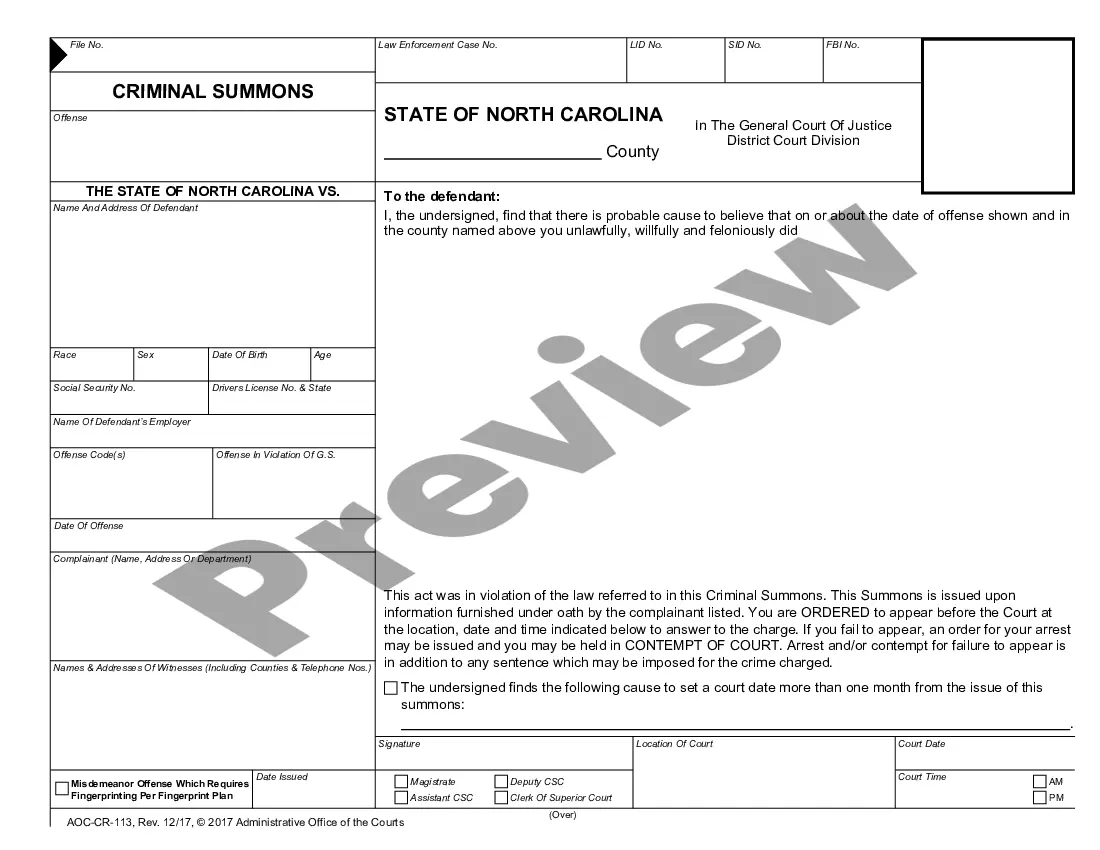
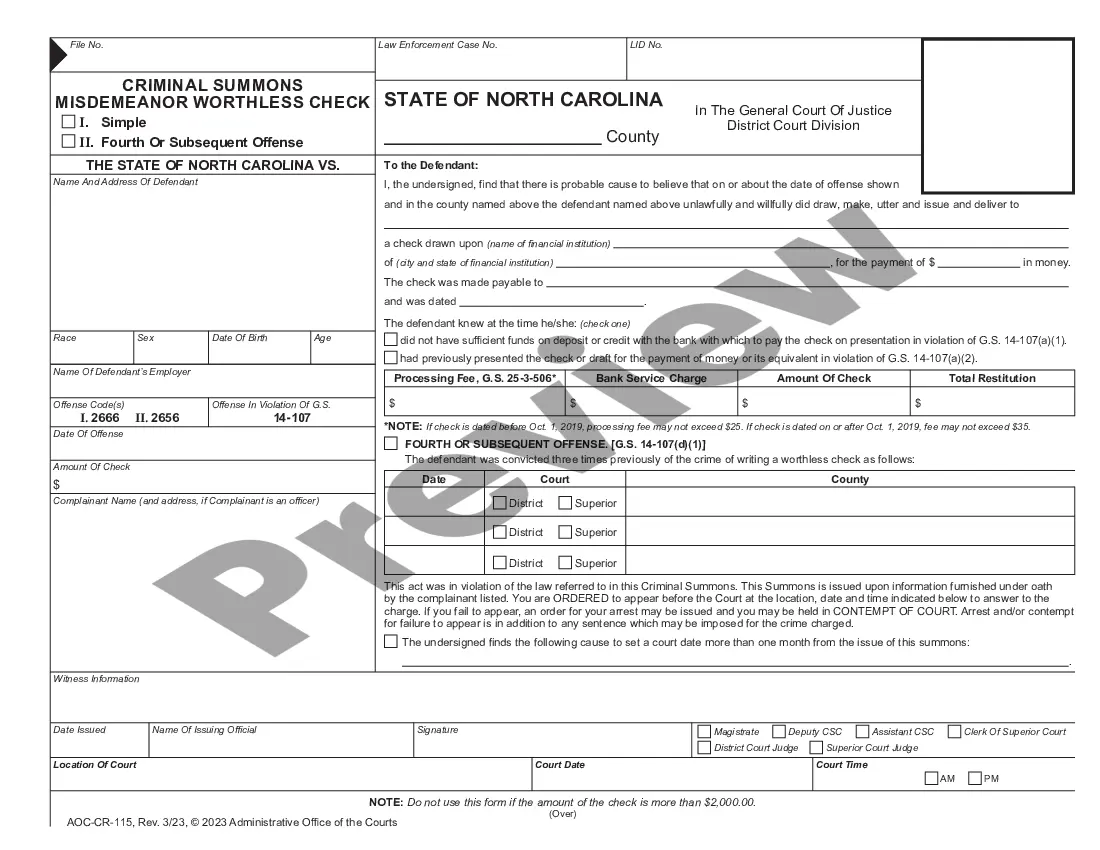
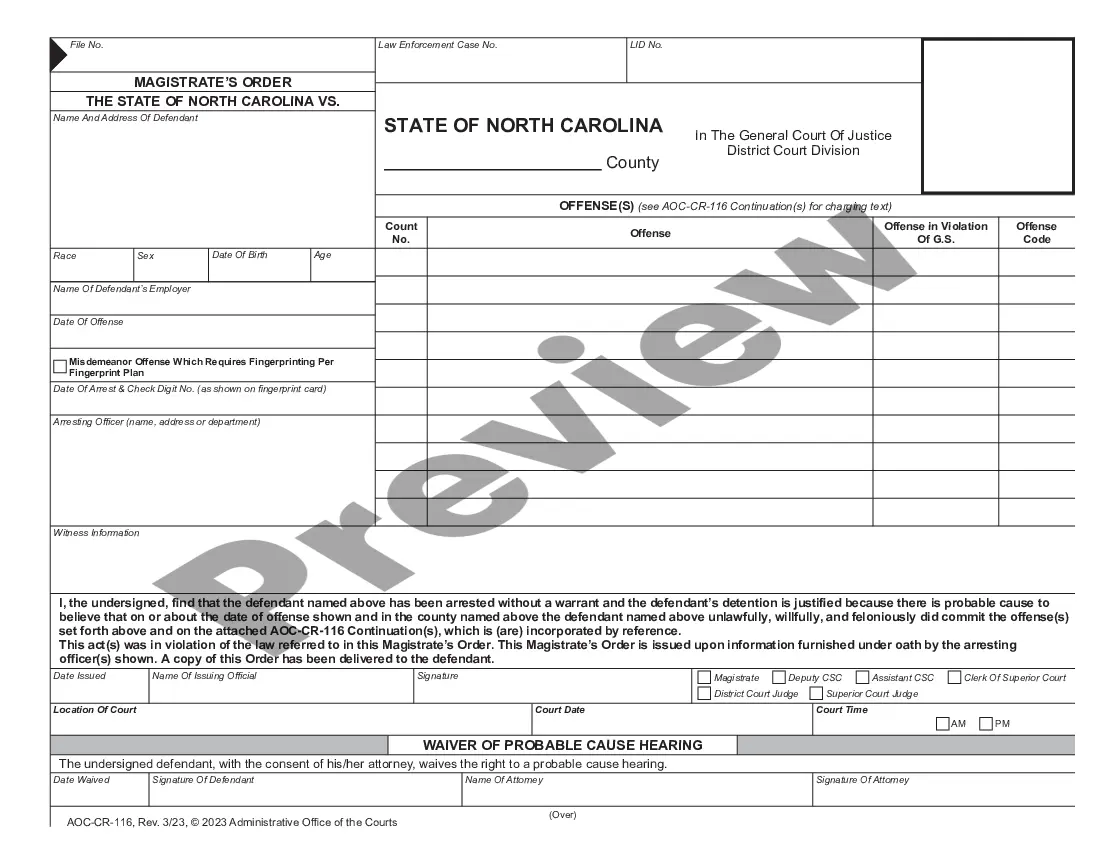
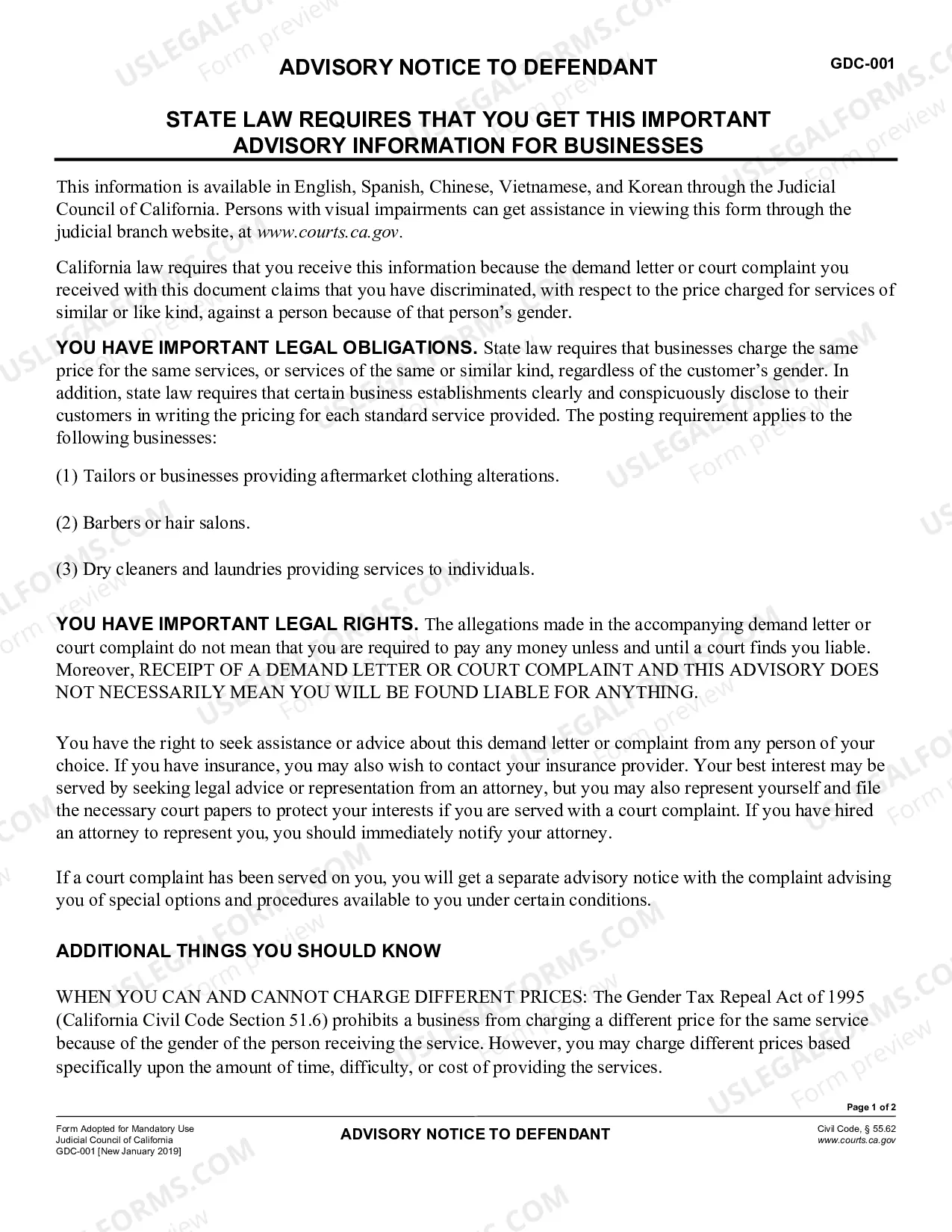
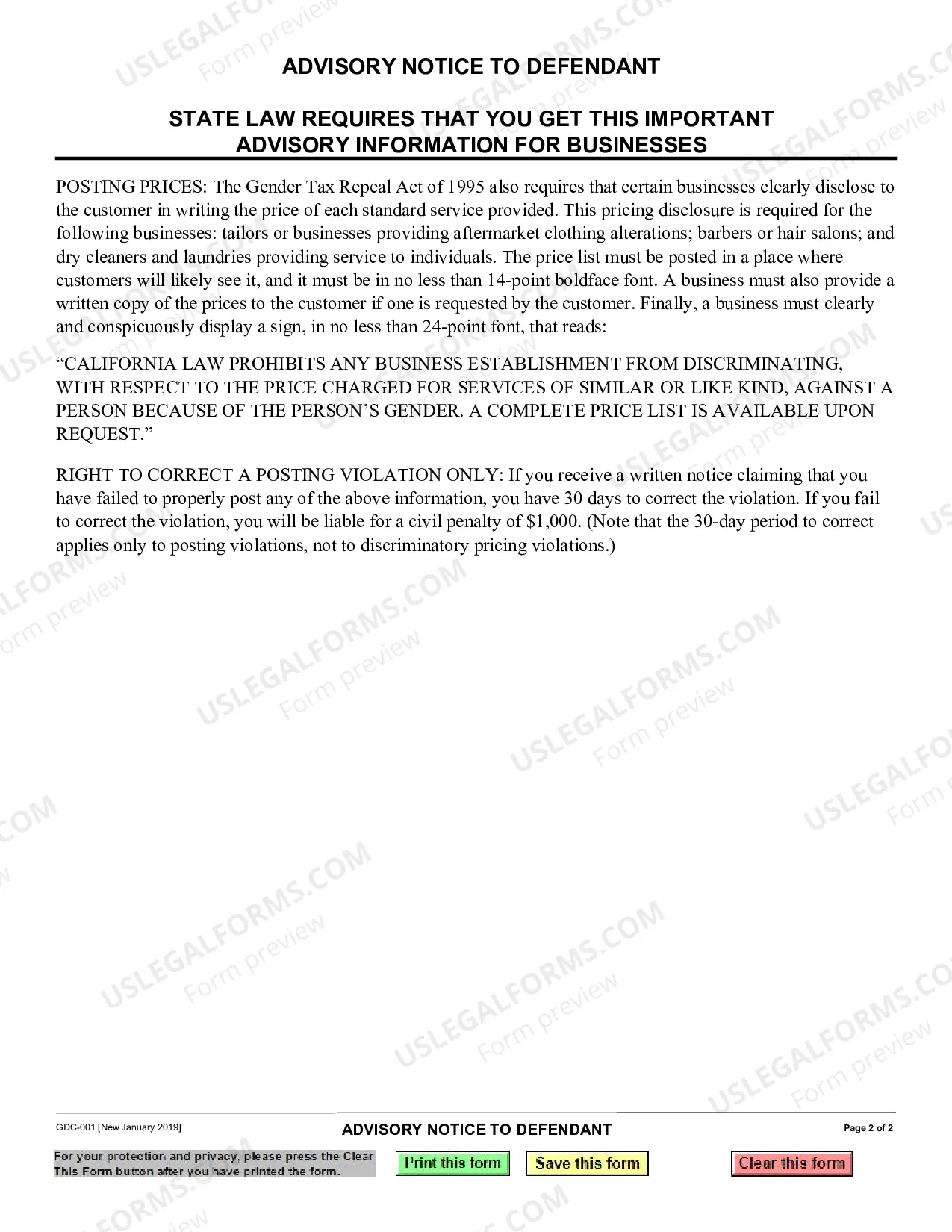
The California Advisory Notice to Defendant is a form used by the judiciary in the state of California to inform a defendant of their rights and obligations during the criminal trial process. This notice must be read and explained to the defendant by their attorney prior to the defendant's entering of a plea. It informs the defendant of the consequences of pleading guilty or no contest, as well as the rights they are afforded under the law. It also advises the defendant of the maximum and minimum sentences that can be imposed if found guilty, as well as any other applicable penalties. There are two main types of California Advisory Notice to Defendant: the felony advisory notice and the misdemeanor advisory notice. The felony advisory notice is used for cases involving felonies, while the misdemeanor advisory notice is used for cases involving misdemeanors. Both notices inform the defendant of the consequences of pleading guilty or no contest, and their rights and any applicable penalties.
California Advisory Notice to Defendant
Description
Get your form ready online
Our built-in tools help you complete, sign, share, and store your documents in one place.
Make edits, fill in missing information, and update formatting in US Legal Forms—just like you would in MS Word.
Download a copy, print it, send it by email, or mail it via USPS—whatever works best for your next step.
Sign and collect signatures with our SignNow integration. Send to multiple recipients, set reminders, and more. Go Premium to unlock E-Sign.
If this form requires notarization, complete it online through a secure video call—no need to meet a notary in person or wait for an appointment.
We protect your documents and personal data by following strict security and privacy standards.

Make edits, fill in missing information, and update formatting in US Legal Forms—just like you would in MS Word.

Download a copy, print it, send it by email, or mail it via USPS—whatever works best for your next step.

Sign and collect signatures with our SignNow integration. Send to multiple recipients, set reminders, and more. Go Premium to unlock E-Sign.

If this form requires notarization, complete it online through a secure video call—no need to meet a notary in person or wait for an appointment.

We protect your documents and personal data by following strict security and privacy standards.
Looking for another form?
How to fill out California Advisory Notice To Defendant?
If you’re seeking a method to accurately finalize the California Advisory Notice to Defendant without employing an attorney, then you’ve arrived at the correct destination.
US Legal Forms has established itself as the most comprehensive and trustworthy collection of official templates for every personal and business situation.
Another excellent feature of US Legal Forms is that you will never lose the documents you’ve purchased - you can access any of your downloaded templates in the My documents tab of your profile whenever you need them.
- Ensure that the document displayed on the page aligns with your legal circumstances and state regulations by reviewing its text description or checking the Preview mode.
- Enter the form title in the Search tab at the top of the page and choose your state from the list to find an alternative template if there are any discrepancies.
- Confirm the content and click Buy now when you are assured that the documents meet all the requirements.
- Sign in to your account and click Download. Create an account with the service and select a subscription plan if you do not yet have one.
- Utilize your credit card or the PayPal option to pay for your US Legal Forms subscription. The document will be available for download immediately afterward.
- Decide in which format you want to receive your California Advisory Notice to Defendant and download it by clicking the appropriate button.
- Upload your template to an online editor to complete and sign it swiftly or print it to prepare a hard copy manually.
Form popularity
FAQ
If the defendant does not receive service of the California Advisory Notice to Defendant, the court may dismiss the case or delay the hearing. Proper service is crucial for ensuring that the legal process is fair and transparent. Without this notice, the defendant might not be informed of their rights or the necessary steps to take. UsLegalForms can assist you in understanding service requirements and related legal documentation.
In California family court, the law requires that you must be served with a notice at least 16 court days before the scheduled hearing. This timing allows you sufficient time to prepare and respond. The California Advisory Notice to Defendant details your rights and responsibilities during this process. If you have questions, consider visiting the UsLegalForms platform for comprehensive resources.
Yes, in California, a defendant can request a 30-day extension to answer a complaint under certain circumstances. Typically, this request must be made before the initial 30-day deadline expires. It is essential to file this request promptly to avoid default judgments. The California Advisory Notice to Defendant will provide further insights into how to navigate this process.
In California, you generally have 60 days to serve a defendant after filing a complaint. However, this timeframe can vary based on the type of case or specific court rules. If you miss this deadline, you may need to file for an extension or risk delays in your case. Referencing the California Advisory Notice to Defendant can help you stay informed about these requirements.
In California, a defendant can respond to a complaint through several methods, including filing an Answer, a Demurrer, a motion to strike, a motion to transfer, or an objection. Each method serves a different purpose, such as formally addressing the claims or challenging the complaint's legal basis. Understanding these options can empower defendants during legal proceedings. The California Advisory Notice to Defendant explains these responses thoroughly.
A defendant must answer a complaint within 30 days of service in California. If the defendant fails to respond within this period, the plaintiff may seek a default judgment. Timeliness is vital, and knowing this timeframe can help defendants avoid complications. The California Advisory Notice to Defendant provides guidance on this matter.
In California, a defendant generally has 30 days to respond to a Complaint after being served. This response can be in the form of an Answer, a Demurrer, or other legal motions. It is important for defendants to meet this deadline to avoid a default judgment. The California Advisory Notice to Defendant outlines these critical timelines clearly.
The 3 year rule in California relates to the statute of limitations for certain types of civil cases. Specifically, it means that you typically have three years from the date of the incident to file a lawsuit. This applies to personal injury and fraud cases, among others. Ensuring you understand this time frame is crucial when dealing with a potential California Advisory Notice to Defendant.
To add a defendant to a lawsuit in California, you must first amend your complaint. This involves filing a formal request with the court and providing a copy of the amended complaint to the new defendant. Additionally, you should ensure that the California Advisory Notice to Defendant is included, as this will inform them about the lawsuit effectively. Utilizing resources like US Legal Forms can simplify this process and ensure that all necessary documents are correctly prepared.
In California, serving a defendant by publication is a process that begins when you cannot locate the defendant despite reasonable efforts. You will need to file a request with the court, providing evidence of your attempts to locate the defendant. If the court approves your request, they will issue an order allowing you to publish the California Advisory Notice to Defendant in a designated newspaper for several weeks. This method ensures that the defendant receives proper notice of the legal action, even if they are difficult to find.