California Form Interrogatories - General
What this document covers
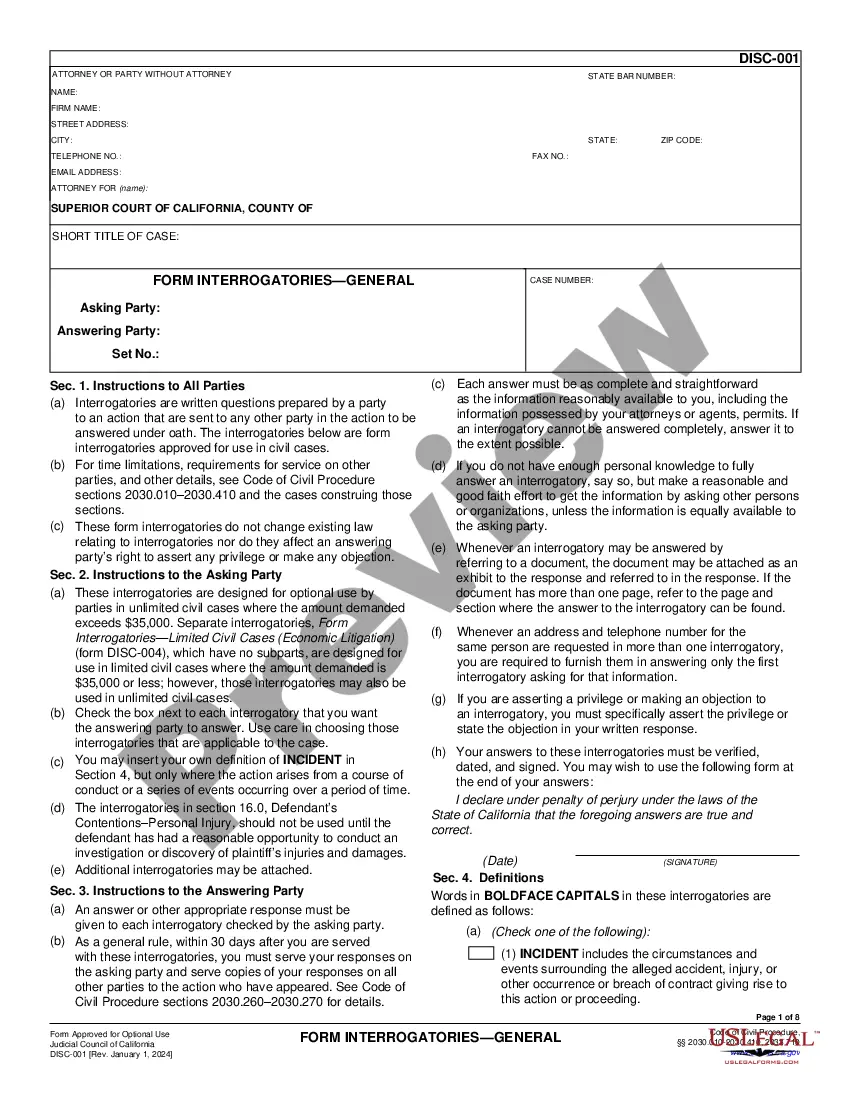
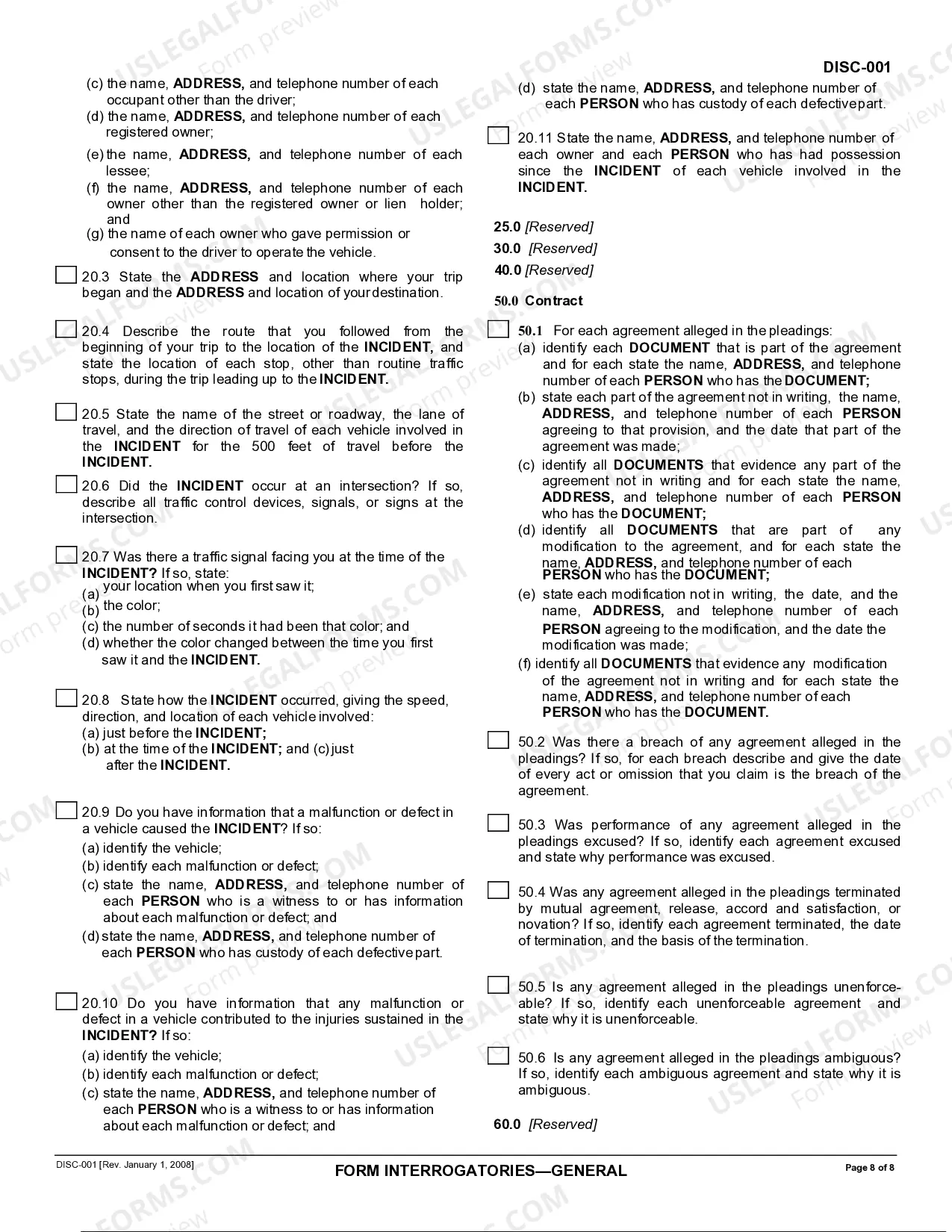
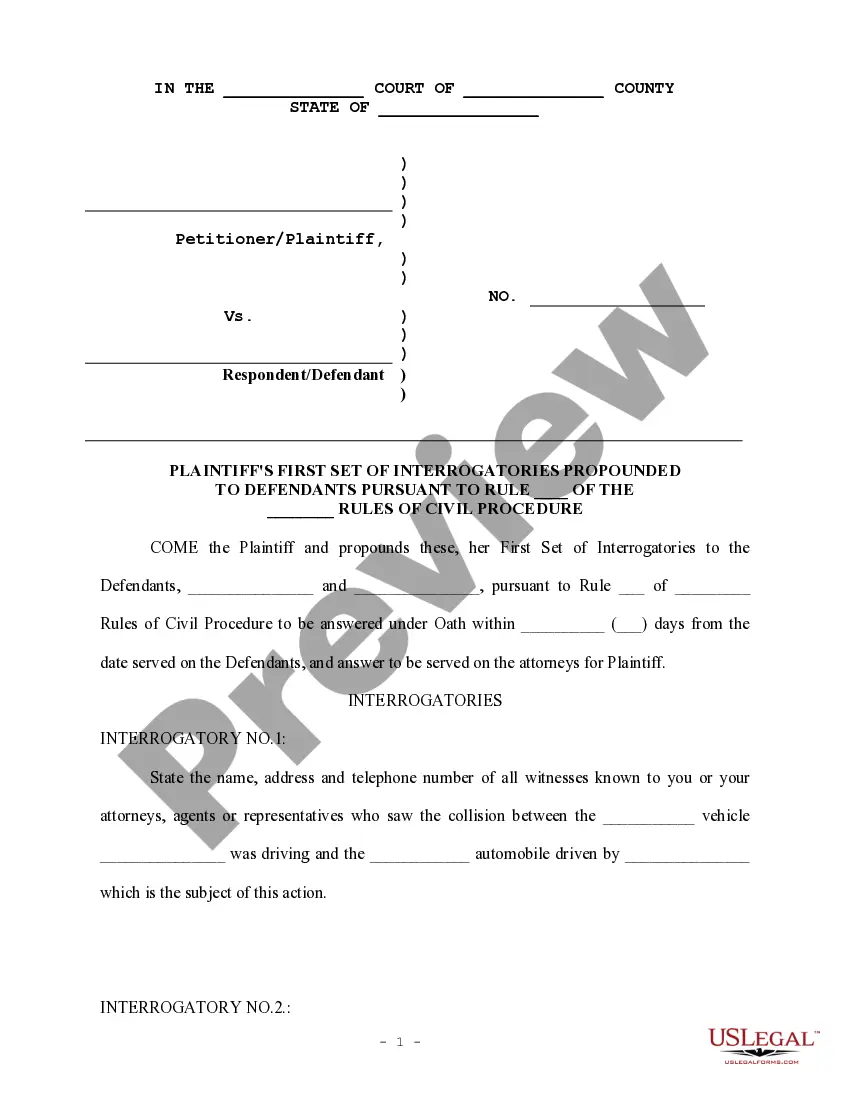
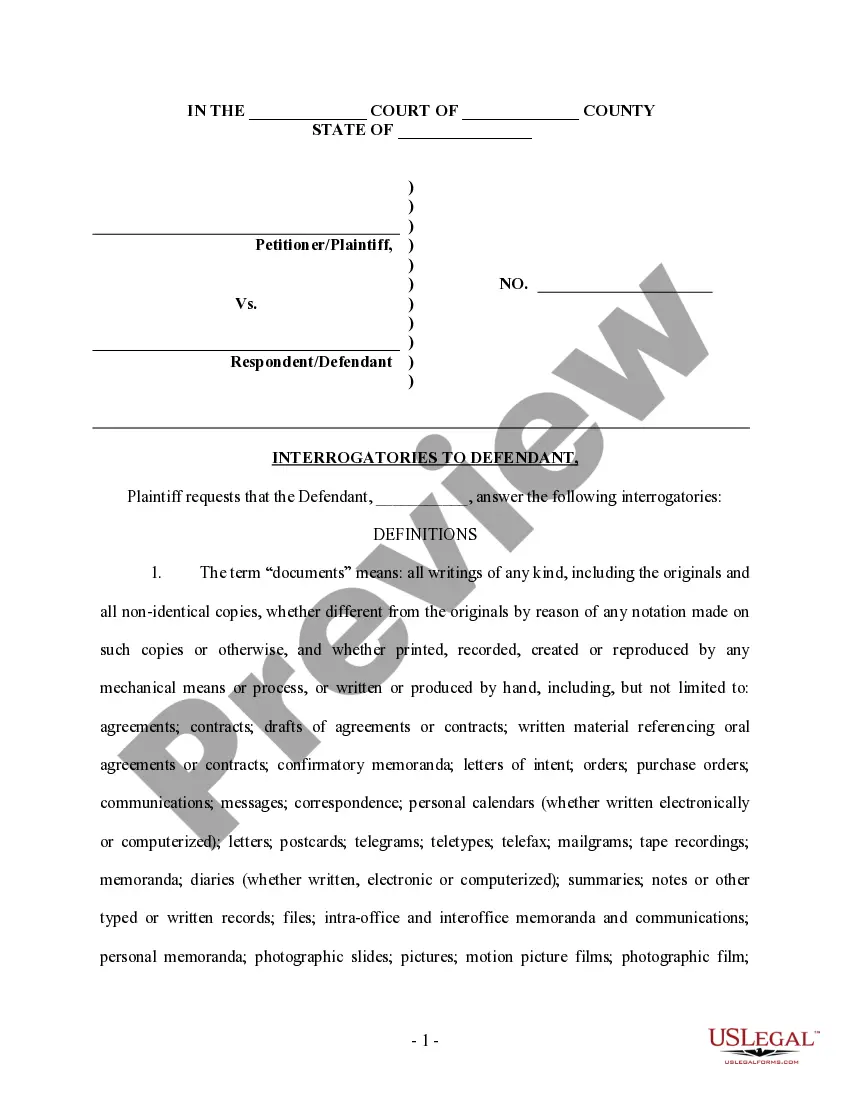
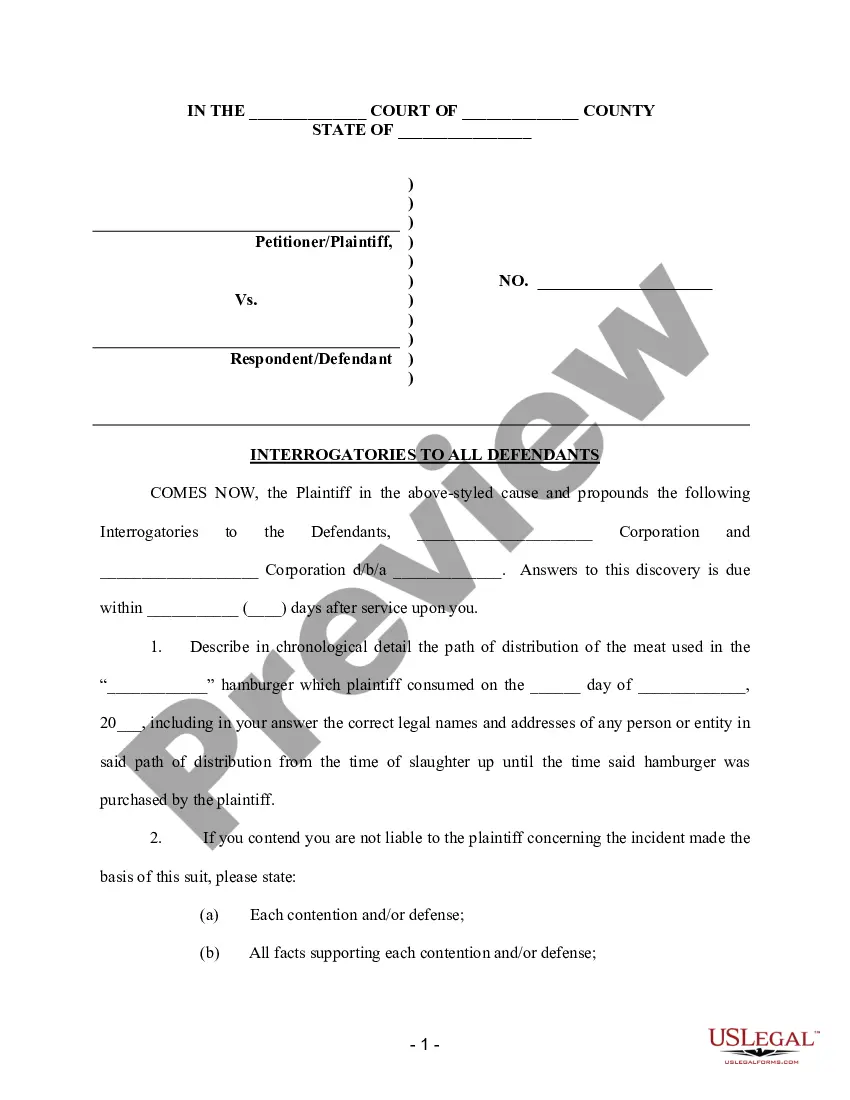
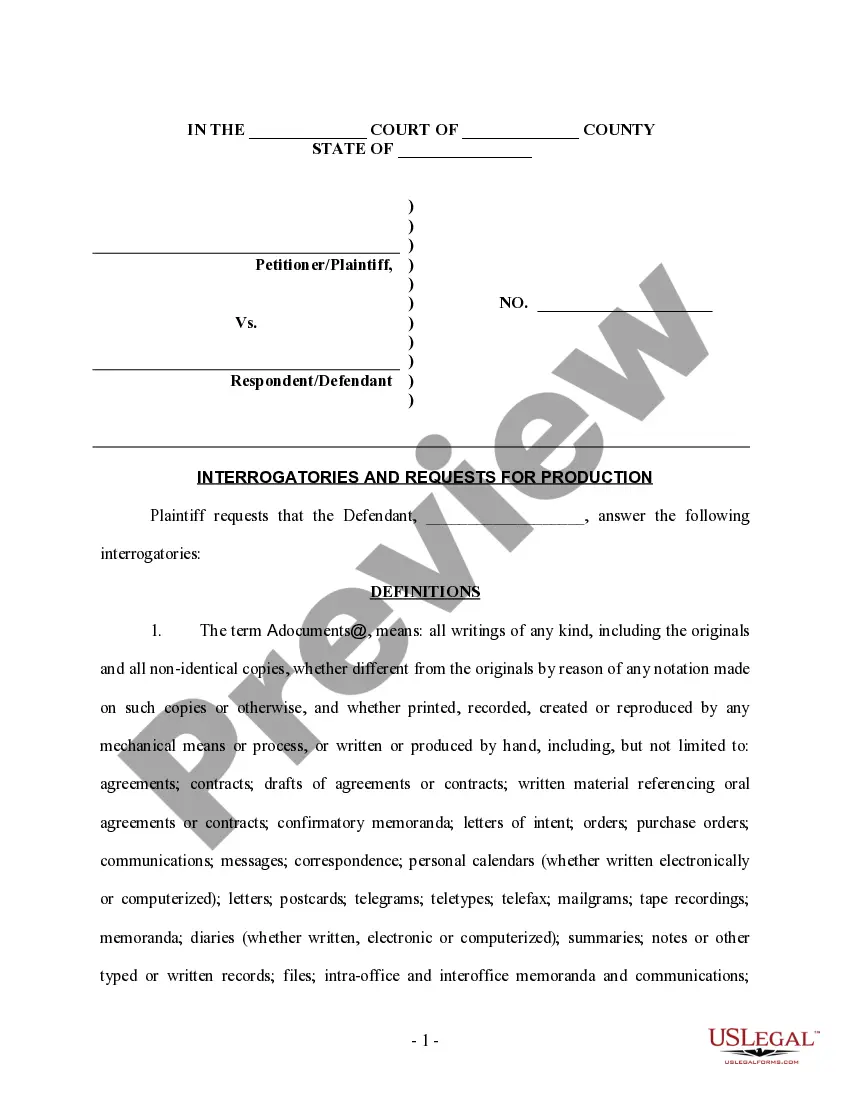
Form Interrogatories - General are standardized written questions submitted to a party in a lawsuit as part of the discovery process. This form is a crucial part of legal proceedings, allowing parties to obtain relevant information before trial. Unlike other discovery tools, interrogatories are specifically structured questions that require the responding party to provide detailed written answers, under oath, which can be used as evidence in court.
Key components of this form
- Identity of Persons Answering: Details about who prepared responses.
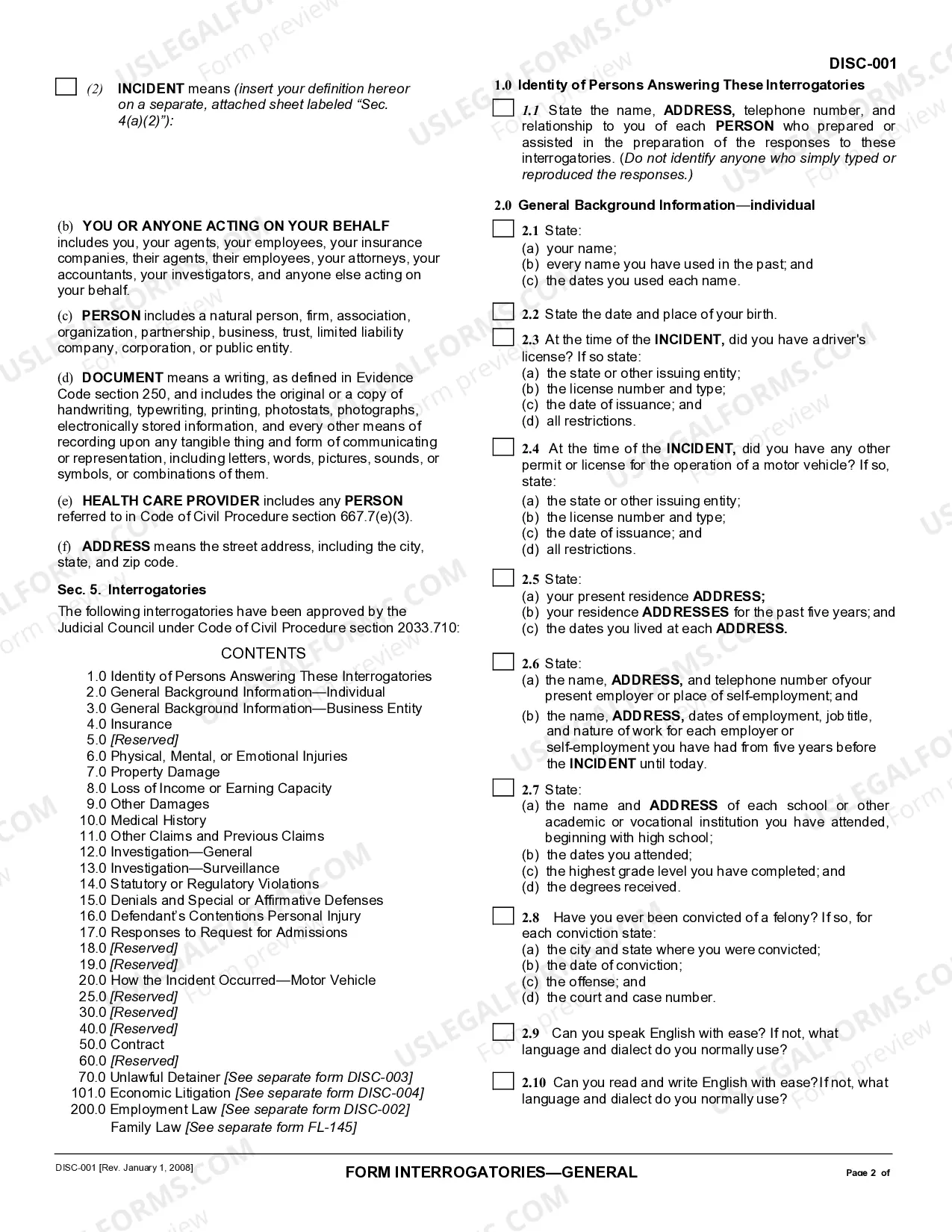
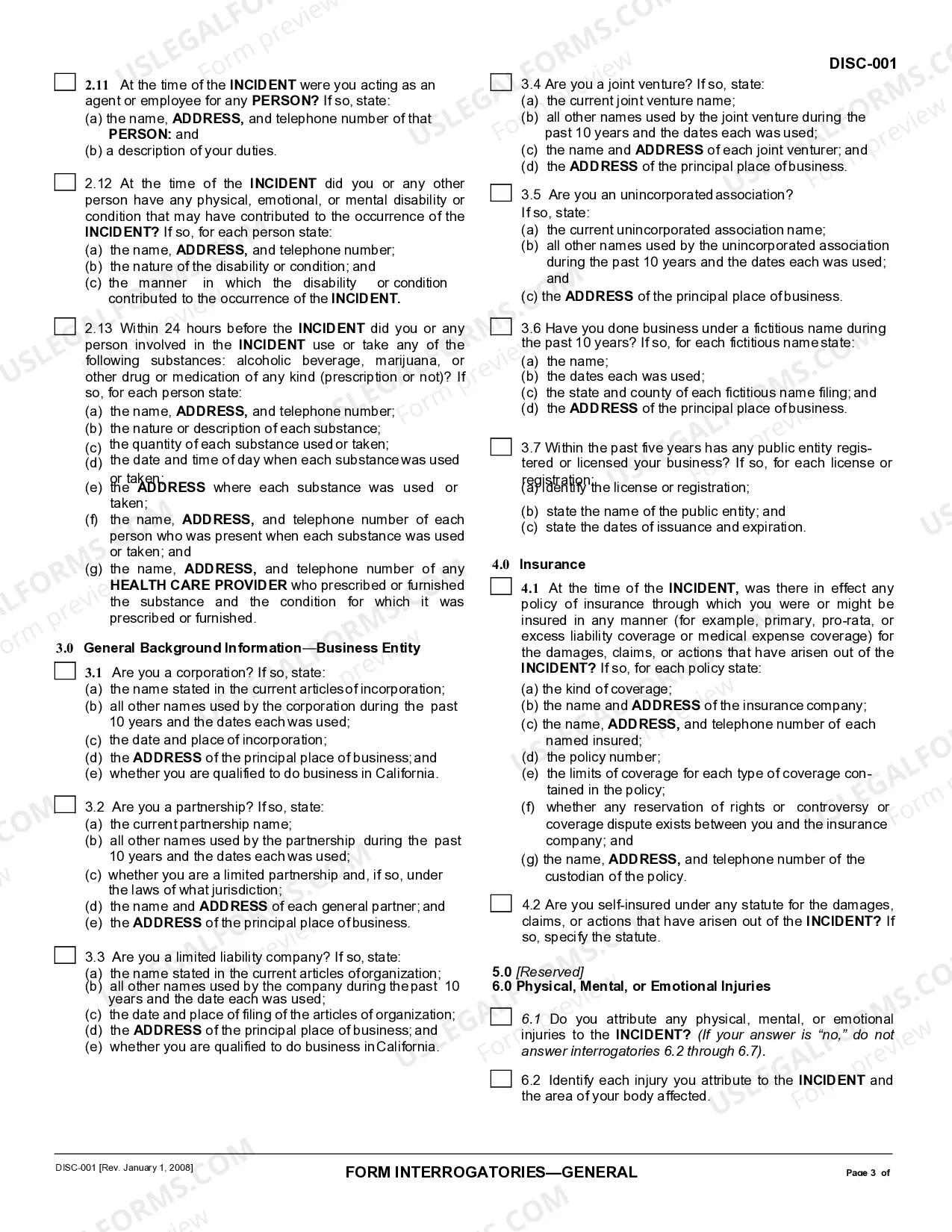
- General Background Information: Requests personal and employment history.
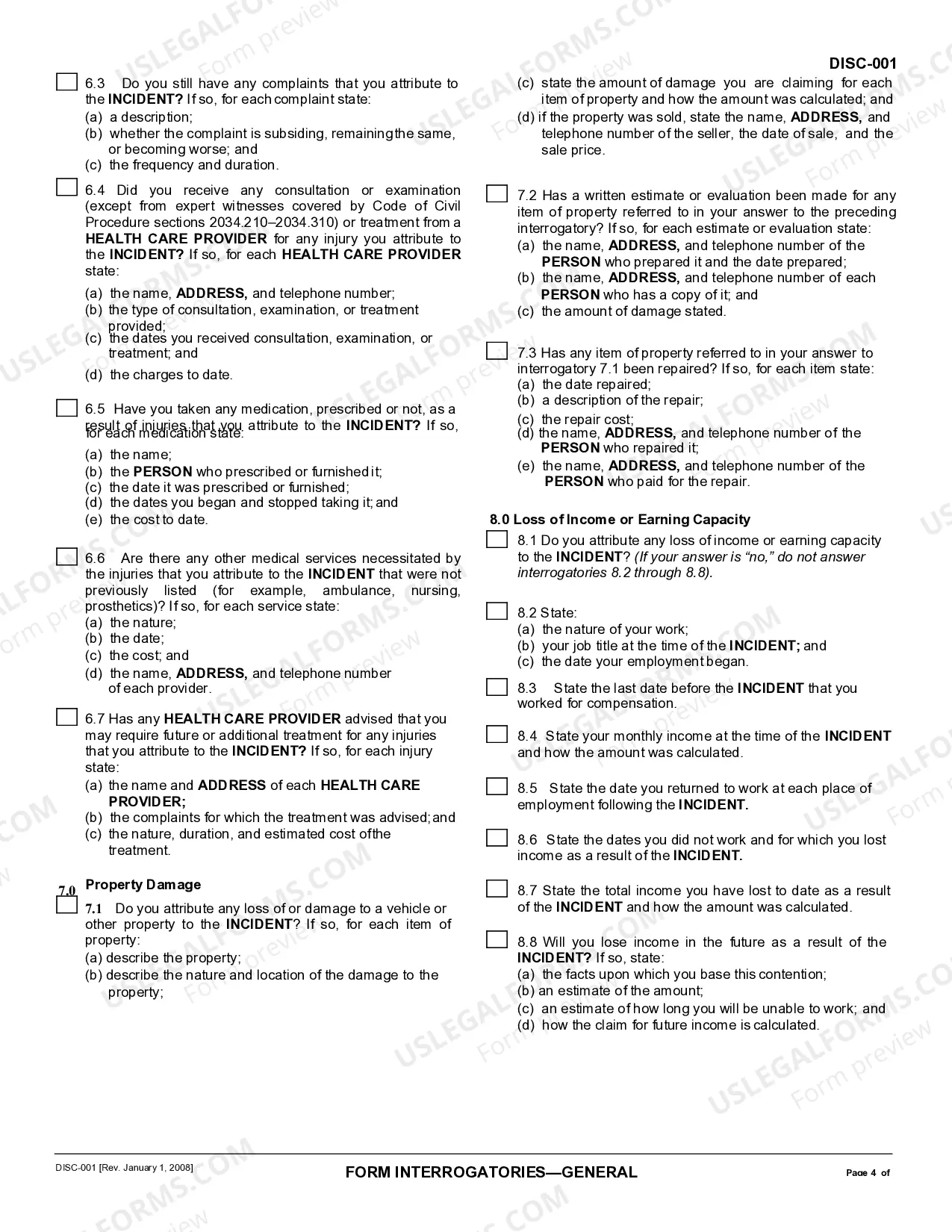
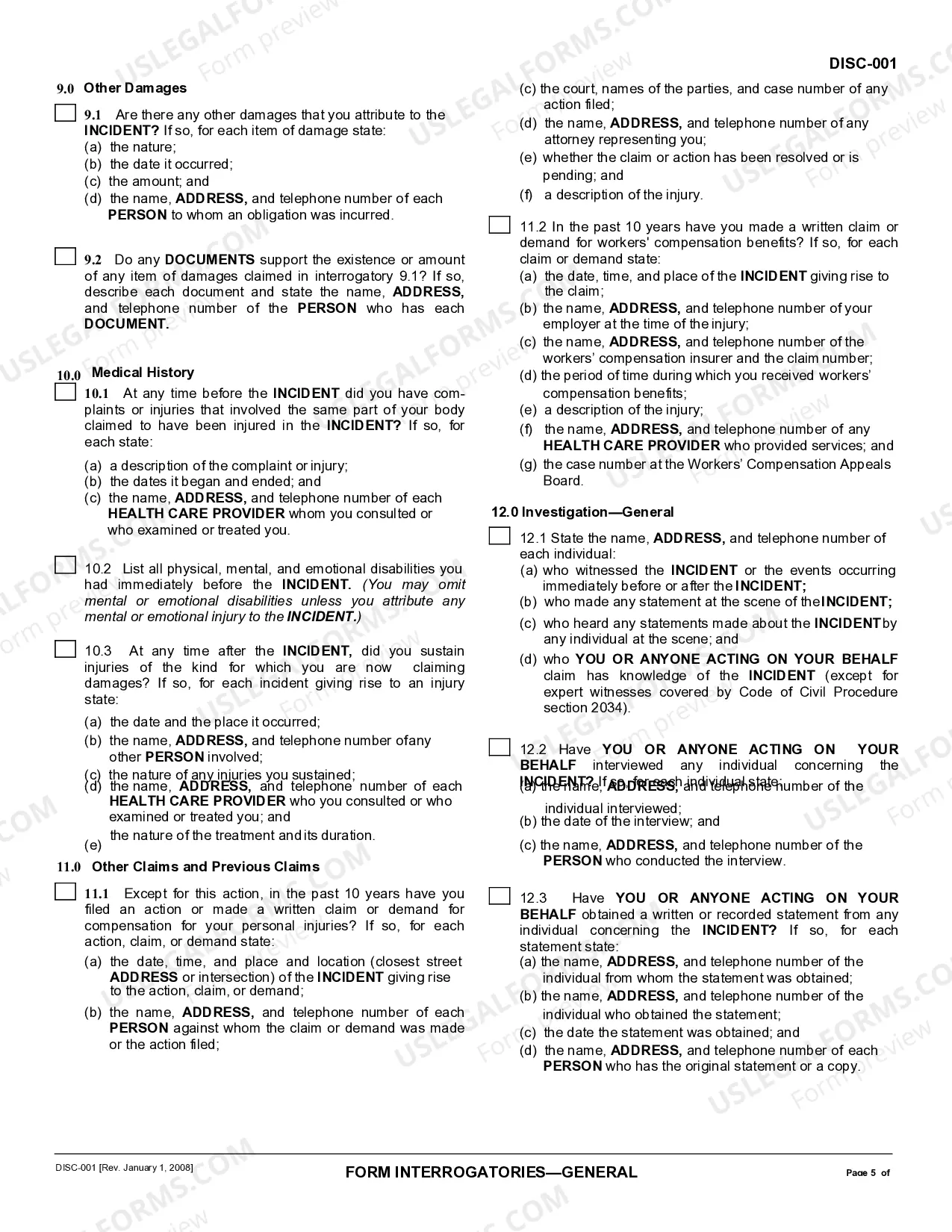
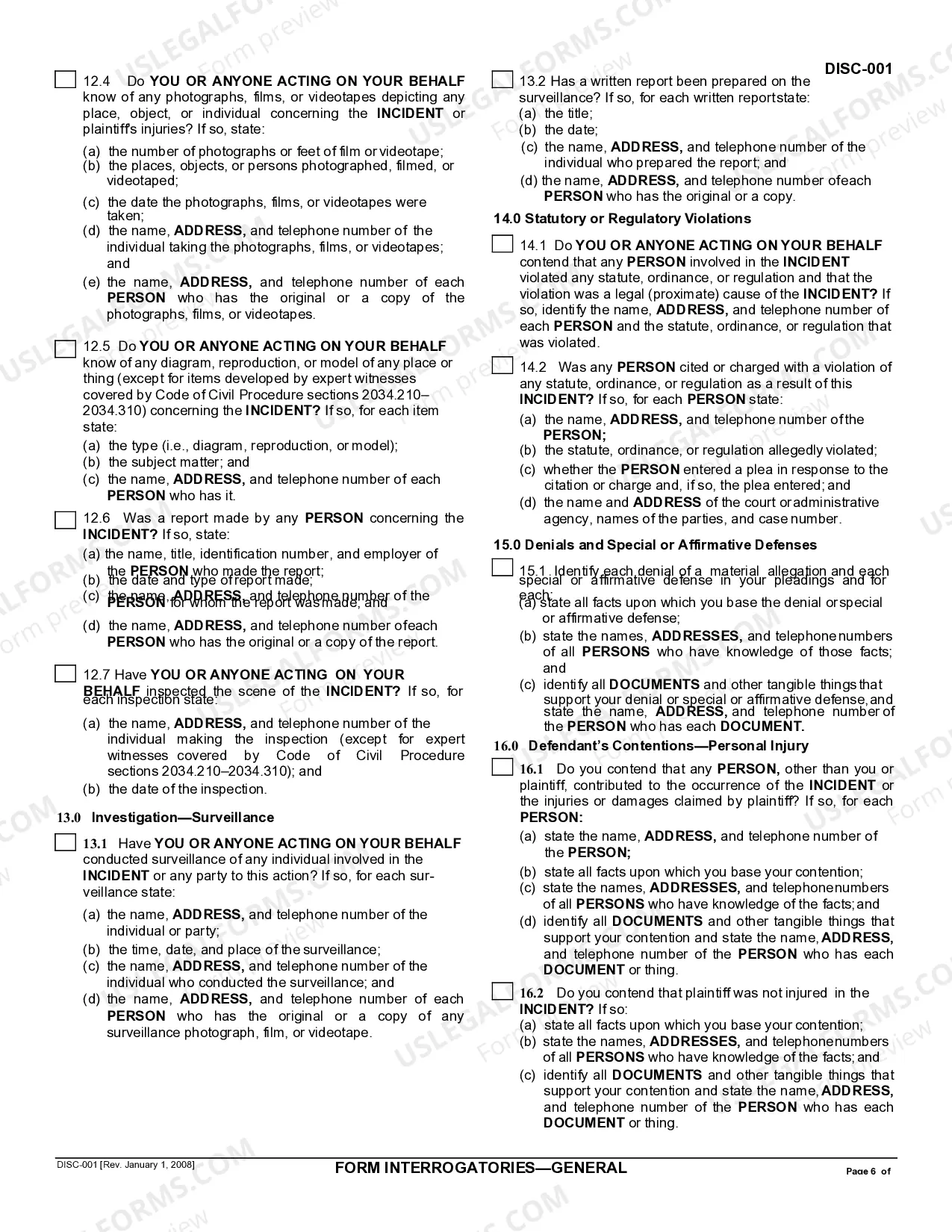
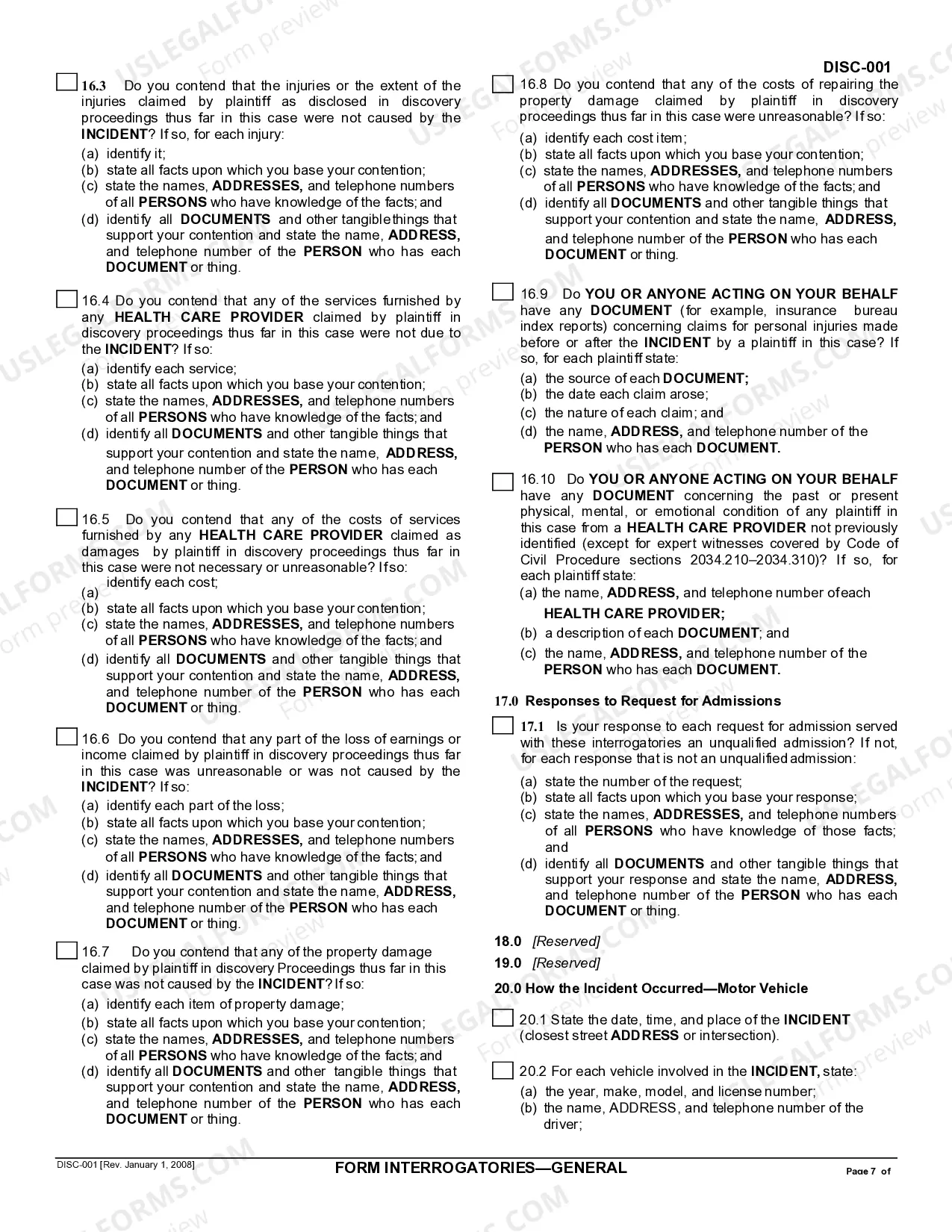
- Interrogatories Section: Contains specific questions regarding the incident, damages, and claims.
- Insurance Information: Inquires about any insurance policies relevant to the incident.
- Medical History: Addresses any physical or emotional injuries claimed as a result of the incident.

Situations where this form applies
This form should be used during the pre-trial discovery phase of a civil lawsuit. It is applicable when parties need to gather detailed facts about the opposing party's case, such as information regarding the incident, injuries, damages, and defenses. Use this form if you are seeking clarity on these issues to support your position in the lawsuit.
Who this form is for
- Parties involved in a civil lawsuit seeking discovery of interrogatories.
- Attorneys representing clients in personal injury, contract disputes, or any civil litigation.
- Individuals with little legal experience who need a basic understanding of legal procedures in their case.
Instructions for completing this form
- Identify the parties involved by entering their names and contact information at the top of the form.
- Complete the sections related to general background information, including personal and employment history.
- Review and select the specific interrogatories relevant to your case that you want the answering party to respond to.
- Ensure all answers provided are as complete and straightforward as possible, following legal principles regarding completeness.
- Sign and date the form at the end, declaring under penalty of perjury that your answers are truthful.
Does this document require notarization?
This form does not typically require notarization unless specified by local law. It is essential to check local requirements to ensure compliance in your jurisdiction.
Get your form ready online
Our built-in tools help you complete, sign, share, and store your documents in one place.
Make edits, fill in missing information, and update formatting in US Legal Forms—just like you would in MS Word.
Download a copy, print it, send it by email, or mail it via USPS—whatever works best for your next step.
Sign and collect signatures with our SignNow integration. Send to multiple recipients, set reminders, and more. Go Premium to unlock E-Sign.
If this form requires notarization, complete it online through a secure video call—no need to meet a notary in person or wait for an appointment.
We protect your documents and personal data by following strict security and privacy standards.

Make edits, fill in missing information, and update formatting in US Legal Forms—just like you would in MS Word.

Download a copy, print it, send it by email, or mail it via USPS—whatever works best for your next step.

Sign and collect signatures with our SignNow integration. Send to multiple recipients, set reminders, and more. Go Premium to unlock E-Sign.

If this form requires notarization, complete it online through a secure video call—no need to meet a notary in person or wait for an appointment.

We protect your documents and personal data by following strict security and privacy standards.
Common mistakes
- Failing to complete all applicable sections of the form.
- Not providing enough detail in the answers, which could lead to objections.
- Missing deadlines for submitting responses or serving them on the involved parties.
- Not verifying the answers, leading to inaccurate or incomplete responses.
Why use this form online
- Convenient access to a comprehensive form that is easy to download and fill out.
- Editable templates that allow users to adapt the form to their specific case needs.
- Drafted by licensed attorneys to ensure legal compliance and relevance.
Looking for another form?







Form popularity
FAQ
To fill out form interrogatories, start with a clear understanding of your objectives. Carefully read each question within the California Form Interrogatories - General and answer with relevant information. Take your time to produce thoughtful responses, as accurate information is crucial. Once completed, review the form to ensure it reflects your intentions clearly.
Filling out interrogatories requires thoughtful attention to detail. Begin by understanding the questions and provide clear, concise answers based on your knowledge. Using California Form Interrogatories - General can make this process more streamlined. Double-check your answers for completeness, as this can make a significant difference in your case.
To fill out a California interrogatories form, start by reading the provided instructions carefully. Input the relevant information required by the California Form Interrogatories - General, ensuring accuracy and appropriate context for each answer. It is essential to review the completed form for any errors before submission. This attention to detail can prevent unnecessary complications in your legal process.
Writing a good interrogatory involves clarity and specificity. Formulate questions that are direct and easy to understand, while involving the key facts of your case. California Form Interrogatories - General can assist you by providing a framework for your questions. This ensures you cover critical areas while maintaining compliance with legal standards.
When answering interrogatories, ensure that you respond clearly and completely to each question. Provide accurate and truthful information, as incomplete answers may lead to complications. Utilizing California Form Interrogatories - General can guide you in formulating precise responses. Additionally, consult legal counsel if needed to secure proper answers.
An interrogatory is a formal set of questions that one party sends to another during a legal case. For example, a question might ask the opposing party to describe their version of the events relevant to the lawsuit. California Form Interrogatories - General provide a structured way to gather this information. This helps clarify facts and can strengthen your position in the case.
Filling out the California Form Interrogatories - General involves several straightforward steps. First, gather all necessary information regarding the case, as this will help you provide accurate responses. Next, read each interrogatory carefully and answer based on the information you have; be honest and thorough in your responses. You can utilize the USLegalForms platform to access pre-formatted templates, ensuring that you complete the California Form Interrogatories - General correctly and efficiently.
The rule for interrogatories in California allows a party to send written questions to the opposing party to gather pertinent information before a trial. Under California law, a party can serve up to 35 specially prepared interrogatories, including those found in the California Form Interrogatories - General. This process assists in uncovering facts that may be essential to your case, providing strategic advantages as you prepare for trial.
In California, a general objection to discovery refers to a response where a party raises broad objections against a request without providing specific reasons. This means that the party is challenging the request's validity, relevance, or scope without detailing each point of contention. The California Form Interrogatories - General can help streamline the discovery process by providing clear guidelines and templates for responses, reducing confusion during litigation.
The rules for interrogatories in California require that interrogatories be relevant to the subject matter of the case and not burdensome to answer. Typically, parties can serve up to 35 standard form interrogatories without seeking court permission. Furthermore, respondents must provide complete and truthful answers within a specified timeframe. Familiarizing yourself with California Form Interrogatories - General can help you adhere to these rules effectively.