California Letters Testamentary or Administration
Understanding this form
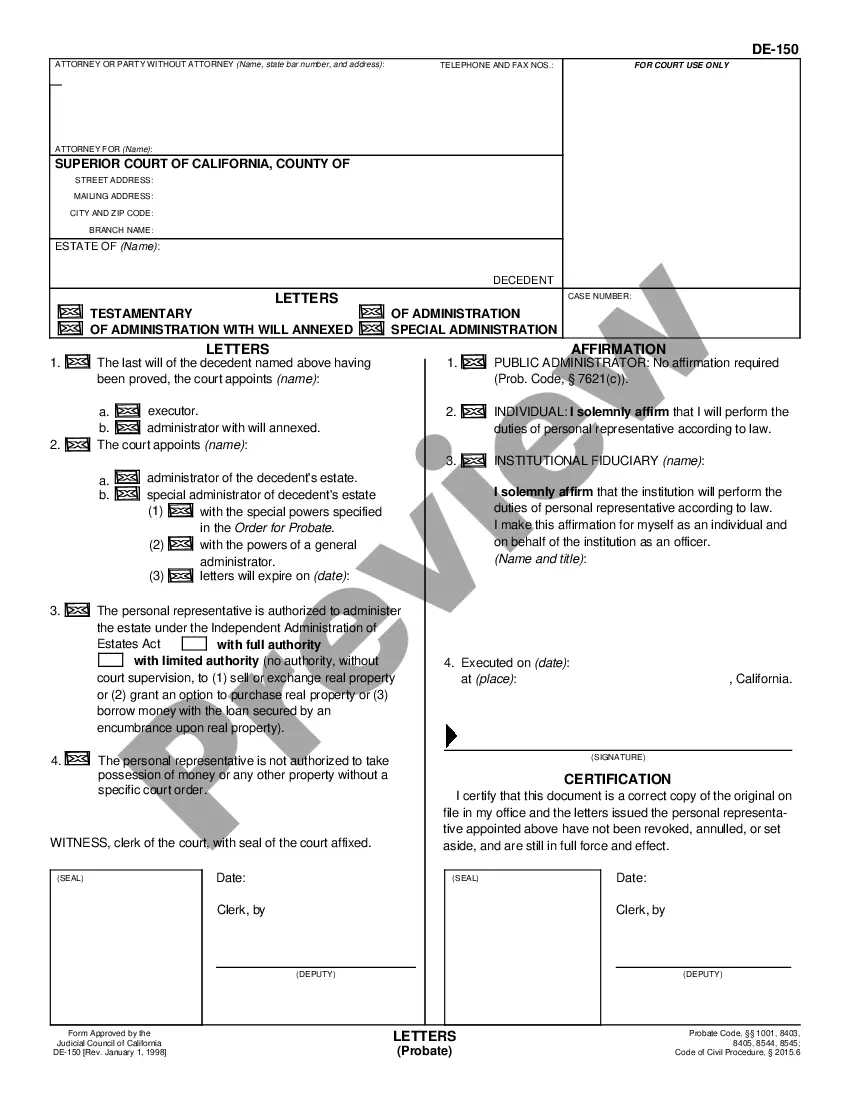
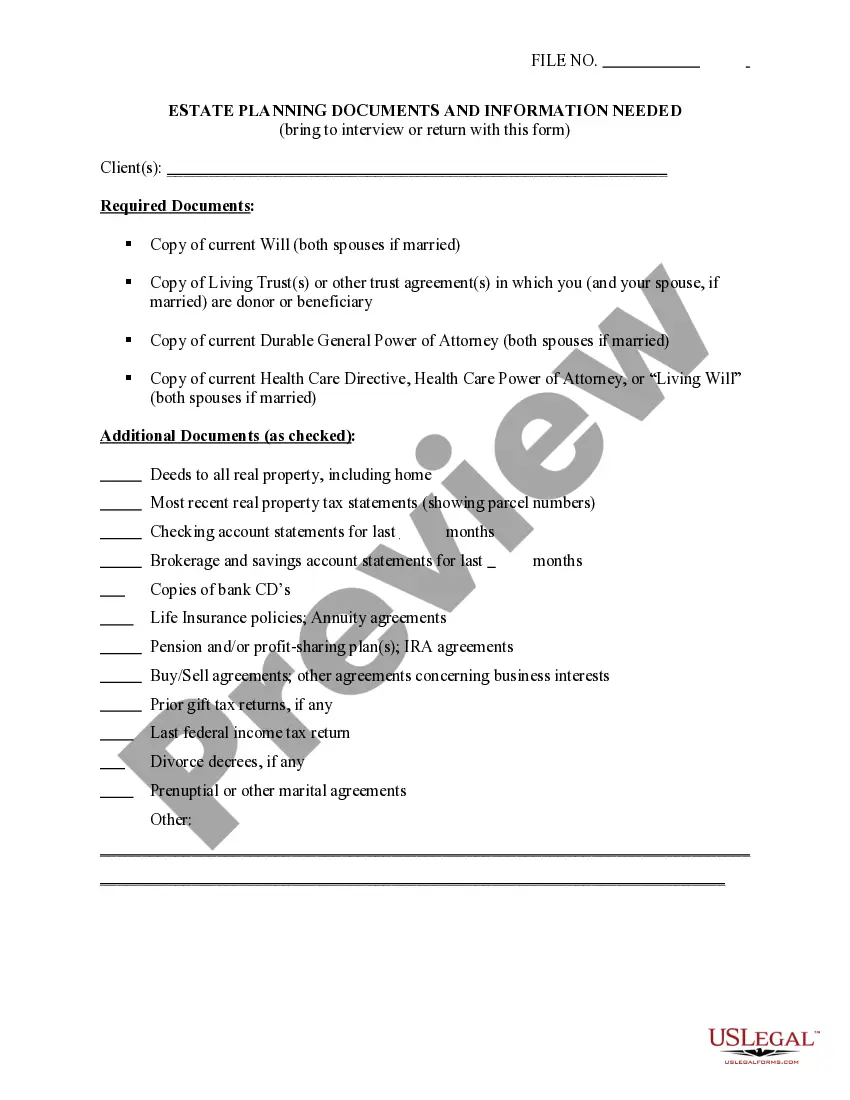
The Letters Testamentary or Administration form functions as an authorization document that appoints an executor or administrator to manage a deceased person's estate. The executor is designated by the deceased's will, while the administrator is appointed by the court when there is no will. This form establishes the authority needed to manage assets, pay debts, and distribute property according to legal requirements. It is crucial for settling estates following California law.
Key components of this form
- Identification of the decedent and the estate.
- Appointment of an executor or administrator, along with their powers.
- Details about the independent administration of the estate.
- Affirmation of the personal representative's duties.
- Clerk's certification and court seal for validation.
When to use this form
This form should be used when a person has passed away, and there is a need to manage their estate. It is applicable in cases where the deceased left a will (requiring an executor) or did not leave one (necessitating court appointment of an administrator). Utilizing this document is essential for legally authorizing an individual to handle the affairs of the deceased, including asset management and distribution responsibilities.
Who can use this document
- Executors designated in a will.
- Court-appointed administrators for estates without a will.
- Individuals or institutions acting as personal representatives of the deceased.
- Legal professionals involved in probate proceedings.
Instructions for completing this form
- Fill in the name and details of the decedent and their estate.
- Indicate the name of the appointed executor or administrator.
- Specify the powers granted to the personal representative.
- Complete the affirmation section regarding duties of the personal representative.
- Sign and date the form in the presence of the court clerk.
Notarization guidance
In most cases, this form does not require notarization. However, some jurisdictions or signing circumstances might. US Legal Forms offers online notarization powered by Notarize, accessible 24/7 for a quick, remote process.
Get your form ready online
Our built-in tools help you complete, sign, share, and store your documents in one place.
Make edits, fill in missing information, and update formatting in US Legal Forms—just like you would in MS Word.
Download a copy, print it, send it by email, or mail it via USPS—whatever works best for your next step.
Sign and collect signatures with our SignNow integration. Send to multiple recipients, set reminders, and more. Go Premium to unlock E-Sign.
If this form requires notarization, complete it online through a secure video call—no need to meet a notary in person or wait for an appointment.
We protect your documents and personal data by following strict security and privacy standards.

Make edits, fill in missing information, and update formatting in US Legal Forms—just like you would in MS Word.

Download a copy, print it, send it by email, or mail it via USPS—whatever works best for your next step.

Sign and collect signatures with our SignNow integration. Send to multiple recipients, set reminders, and more. Go Premium to unlock E-Sign.

If this form requires notarization, complete it online through a secure video call—no need to meet a notary in person or wait for an appointment.

We protect your documents and personal data by following strict security and privacy standards.
Mistakes to watch out for
- Failing to provide complete information about the decedent or estate.
- Not appropriately identifying the type of appointment (executor vs. administrator).
- Omitting signatures from both the personal representative and court clerk.
- Misunderstanding the powers granted, leading to future disputes.
Benefits of using this form online
- Convenience of accessing and filling out the form digitally.
- Editability allows for easy correction of errors before submission.
- Reliability in ensuring compliance with current legal standards.
Looking for another form?

Form popularity
FAQ
To obtain California Letters Testamentary, first file a petition with the appropriate probate court along with required documentation, such as the will and asset details. After the court reviews your petition, they will schedule a hearing to address any objections. If everything goes smoothly, the court will issue the letters, officially granting you the authority to manage the estate.
The time it takes to receive California Letters Testamentary can vary depending on the court's workload and specific circumstances of your case. Generally, you can expect the process to take several weeks to a few months after filing your petition. Utilizing services like USLegalForms can help speed things along by ensuring your application is thorough and accurately completed.
While it is not mandatory to hire an attorney to obtain California Letters Testamentary, doing so can simplify the process. An attorney can help navigate legal complexities and ensure all procedures are followed correctly. However, if you feel comfortable handling the paperwork and requirements, you can proceed without legal representation.
To order California Letters Testamentary, begin by submitting a petition to the probate court in your county. You will need to provide necessary documents, such as the deceased's will and information about the estate. It's beneficial to use platforms like USLegalForms to guide you through the form-filling process and ensure all paperwork is correctly completed.
To get California Letters Testamentary, start by filing a petition with the local probate court along with the deceased’s will and proof of your identity. After a judge reviews your application, they will issue the letters if everything is in order. Make your process easier by accessing forms and helpful information through US Legal Forms.
You can obtain California Letters Testamentary through the local probate court where the deceased lived. Begin the process by gathering essential documents, including the will and your identification. For convenience, consider using services like US Legal Forms to guide you through the required documentation.
To file for California Letters Testamentary, you need to prepare a petition and submit it to the appropriate probate court. Ensure you provide all necessary information, including the deceased's will, an inventory of assets, and your relationship to them. Utilizing legal forms from platforms like US Legal Forms can simplify this step significantly.
Writing a testamentary generally involves outlining your wishes regarding the distribution of your assets. You can draft a will or testamentary document that specifies beneficiaries and guardians for minors. Make certain to consult with a legal expert or use resources like US Legal Forms to ensure compliance with California laws.
An alternative to California Letters Testamentary is a Letter of Administration. This document serves a similar purpose, allowing an appointed administrator to manage the estate when there is no will. If you find yourself needing this option, understanding the differences can help you choose the right path for estate management.
The process of obtaining California Letters Testamentary typically varies depending on court workload and your case specifics. Generally, expect the process to take anywhere from a few weeks to a couple of months. To expedite the process, ensure you complete all necessary paperwork accurately and gather supporting documents promptly.