California Assignment and Assumption Agreement with the Regional Water Quality Control Board
What is this form?
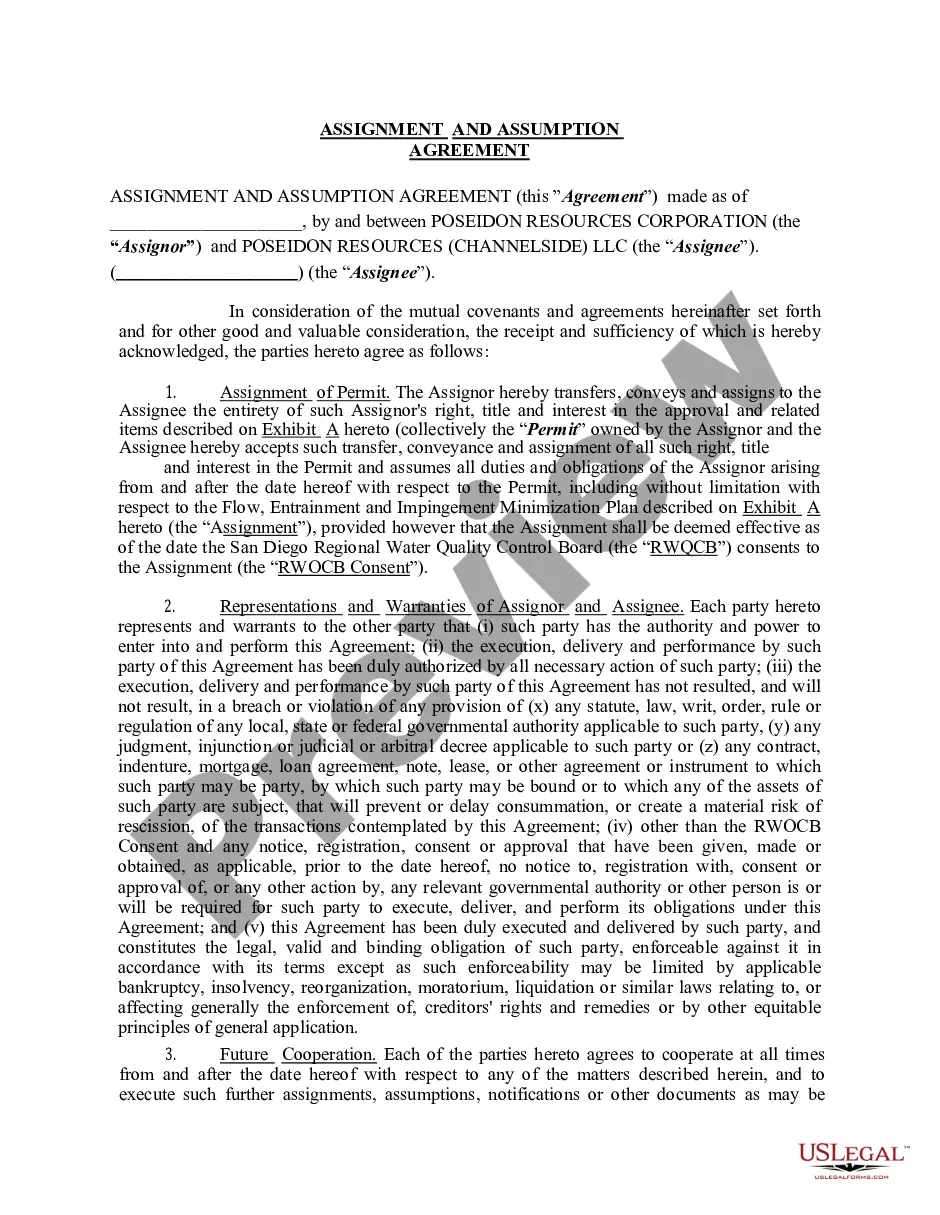
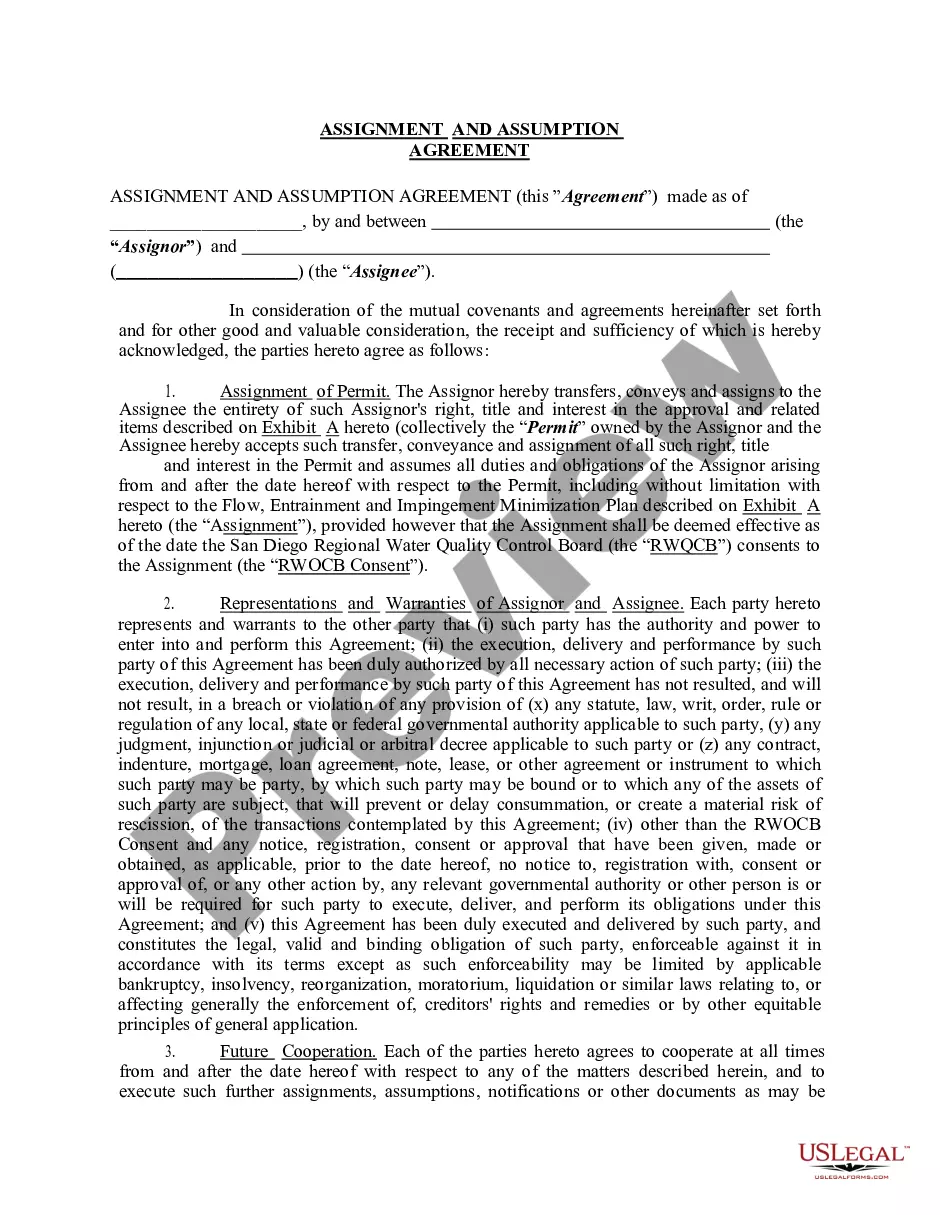
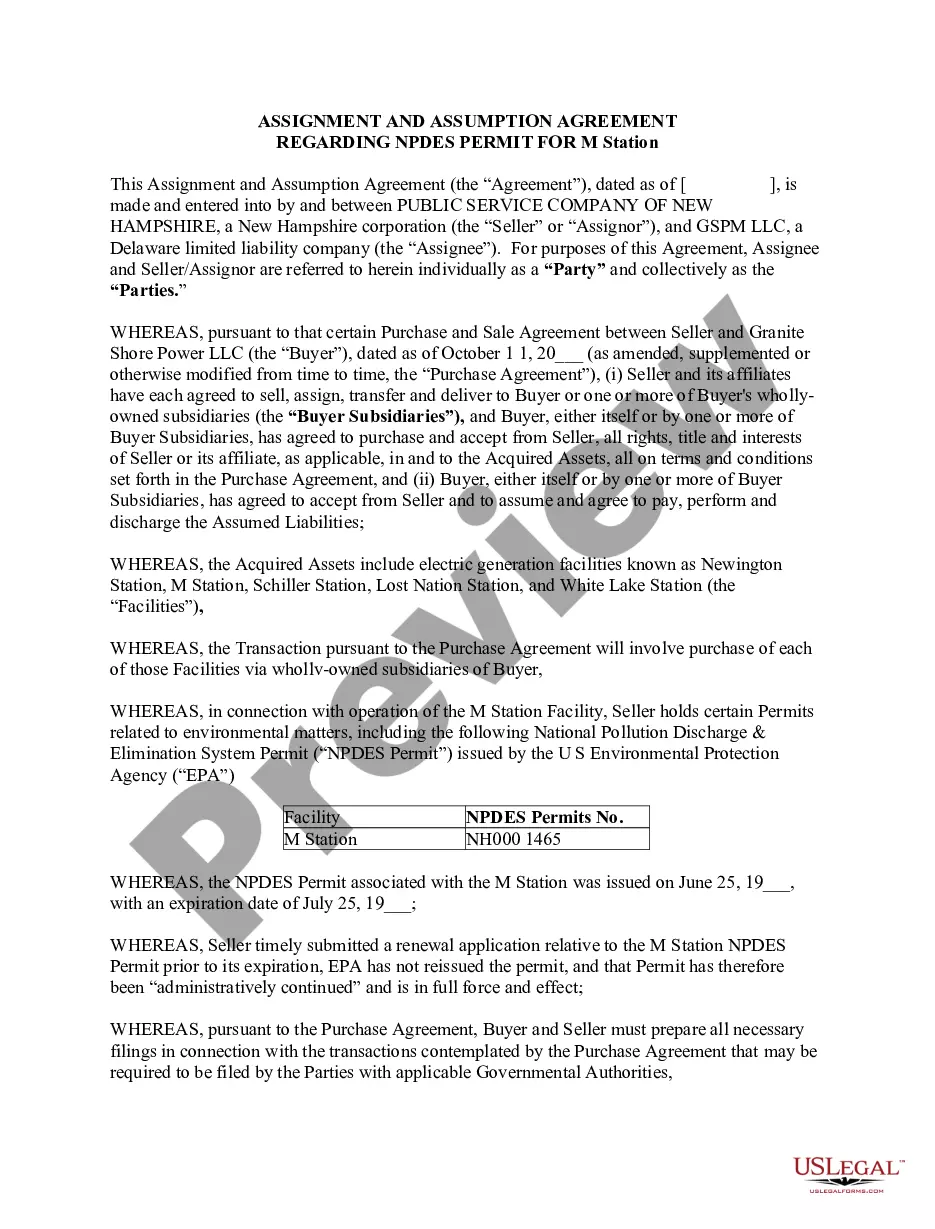
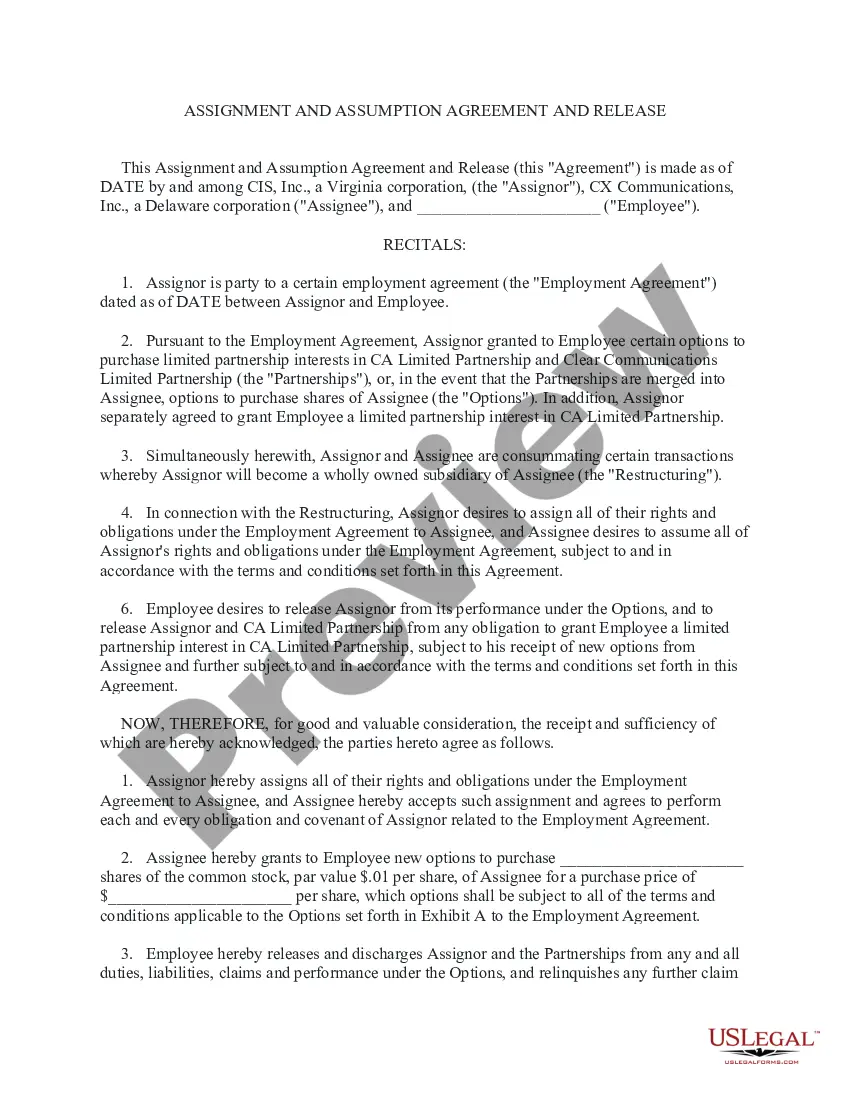
The Assignment and Assumption Agreement with the Regional Water Quality Control Board is a legal document that allows one party (the Assignor) to transfer their rights and obligations under a contract to another party (the Assignee). This form is specifically useful in situations involving contracts related to permits for environmental compliance, such as those issued by regional water quality control boards. Unlike similar agreements, this document ensures that the Assignee assumes all responsibilities tied to the permit as specified in the agreement.
Key components of this form
- Parties Involved: Identifies the Assignor and Assignee.
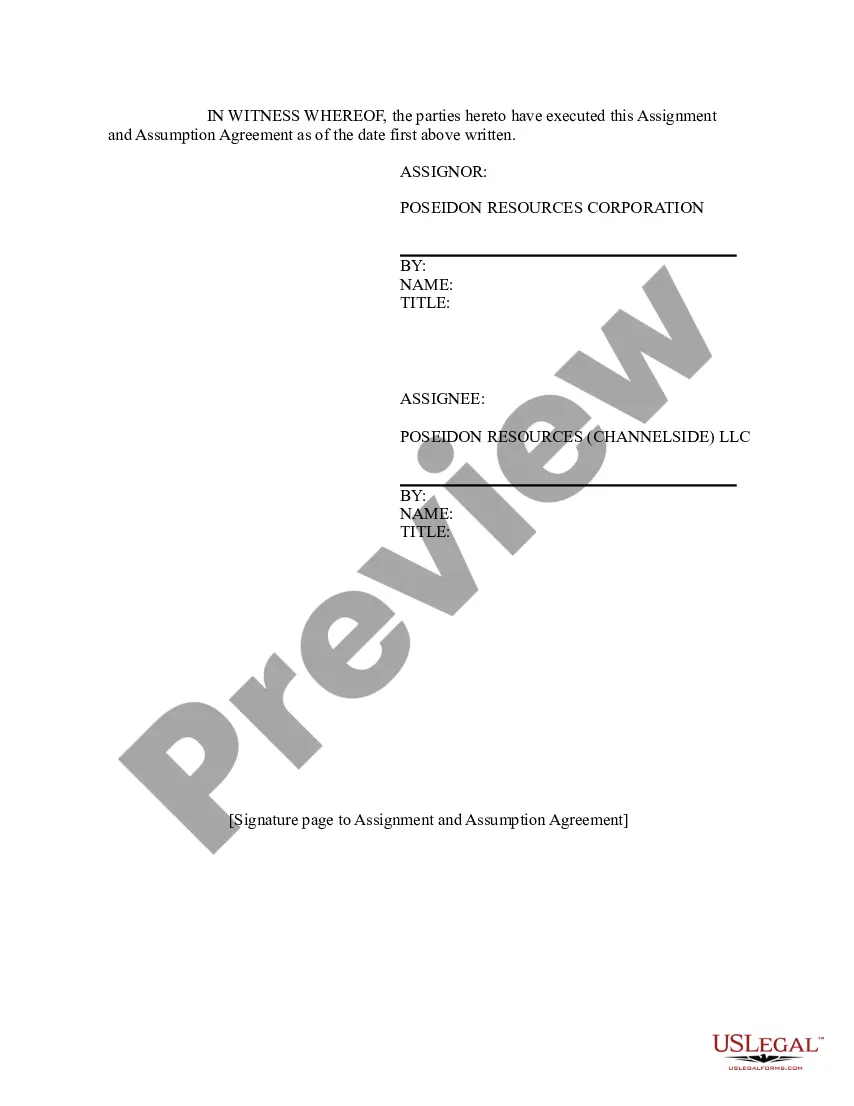
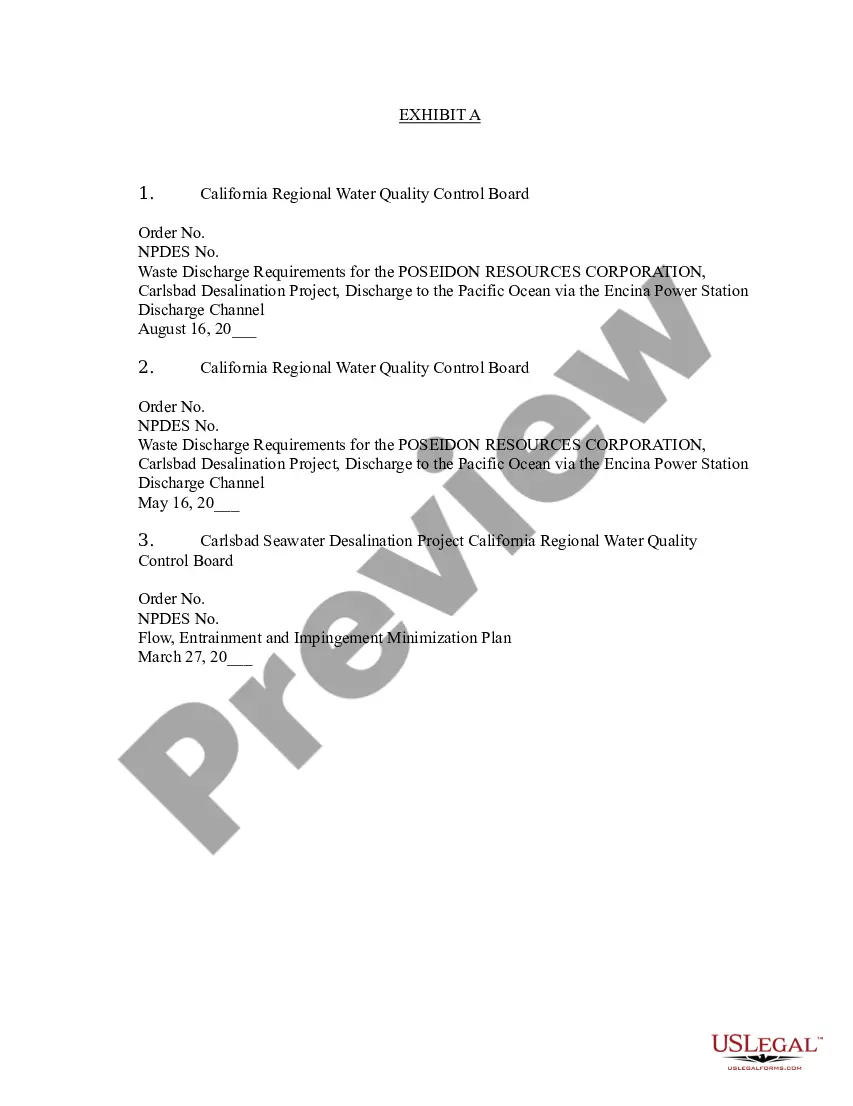
- Assignment of Permit: Details the transfer of rights and obligations concerning environmental permits.
- Representations and Warranties: Assurances from both parties about their authority and compliance with laws.
- Future Cooperation: Stipulates ongoing collaboration between the parties concerning the permit.
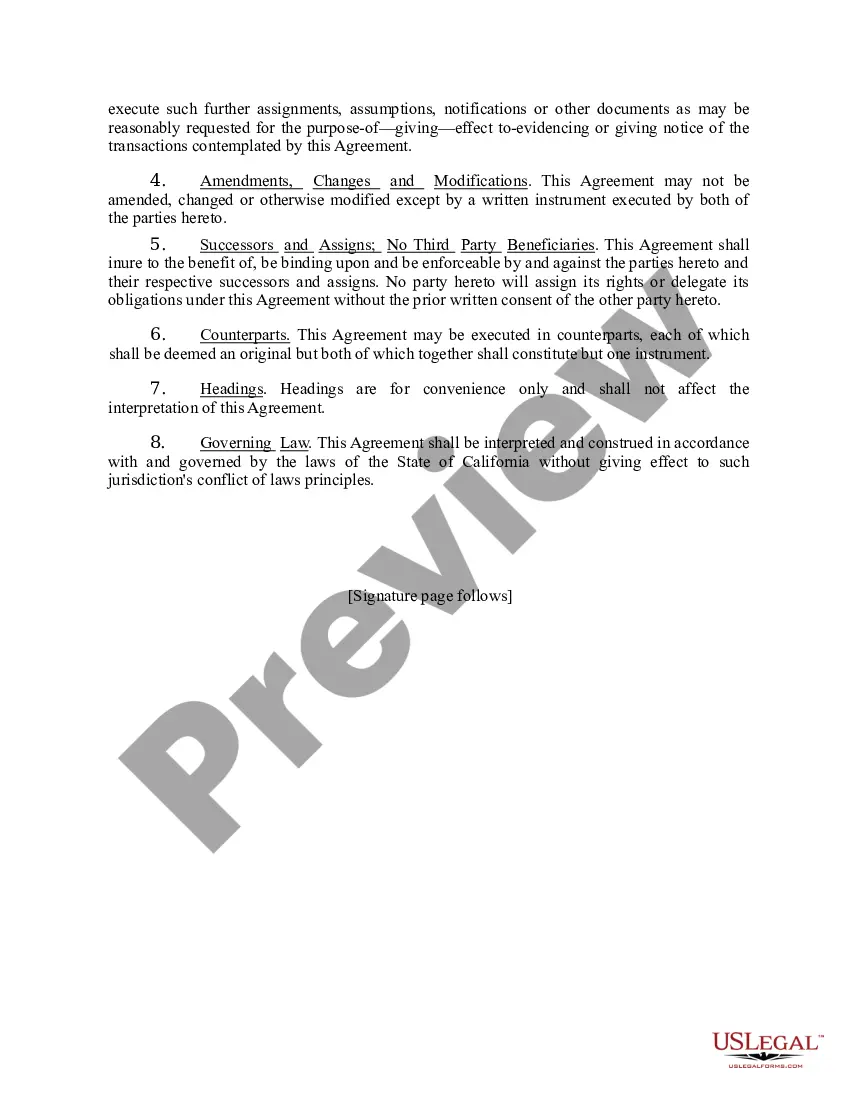
- Amendments: Conditions under which the agreement can be modified.
- Governing Law: Specifies the legal jurisdiction applicable to the agreement.
When to use this document
This form should be used when a contracting party wishes to transfer their rights and obligations under an existing contract to another party, especially in cases involving regulatory permits required for projects managed by the Regional Water Quality Control Board. Common scenarios include changes in project ownership or when an organization seeks to delegate its responsabilities due to restructuring or repositioning within the industry.
Who this form is for
- Businesses or entities involved in projects regulated by the Regional Water Quality Control Board.
- Contractors who need to transfer obligations regarding environmental permits.
- Legal representatives or attorneys facilitating transfers of contractual rights and obligations.
How to complete this form
- Identify the parties: Clearly state the names of the Assignor and Assignee, along with their details.
- Specify the permit details: Include the Exhibit A information that describes the permit being assigned.
- Include representations: Fill in the representations and warranties sections to affirm compliance with relevant laws.
- Obtain necessary consents: Ensure that any required approvals or consents are provided by the Regional Water Quality Control Board.
- Add signatures: Both parties should sign and date the agreement to make it legally binding.
Notarization requirements for this form
This form does not typically require notarization unless specified by local law. However, obtaining a notarization may provide an extra layer of authenticity and can be helpful during compliance checks.
Get your form ready online
Our built-in tools help you complete, sign, share, and store your documents in one place.
Make edits, fill in missing information, and update formatting in US Legal Forms—just like you would in MS Word.
Download a copy, print it, send it by email, or mail it via USPS—whatever works best for your next step.
Sign and collect signatures with our SignNow integration. Send to multiple recipients, set reminders, and more. Go Premium to unlock E-Sign.
If this form requires notarization, complete it online through a secure video call—no need to meet a notary in person or wait for an appointment.
We protect your documents and personal data by following strict security and privacy standards.

Make edits, fill in missing information, and update formatting in US Legal Forms—just like you would in MS Word.

Download a copy, print it, send it by email, or mail it via USPS—whatever works best for your next step.

Sign and collect signatures with our SignNow integration. Send to multiple recipients, set reminders, and more. Go Premium to unlock E-Sign.

If this form requires notarization, complete it online through a secure video call—no need to meet a notary in person or wait for an appointment.

We protect your documents and personal data by following strict security and privacy standards.
Avoid these common issues
- Failing to obtain the necessary consent from the Regional Water Quality Control Board before executing the agreement.
- Not accurately detailing the rights and obligations being assigned in Exhibit A, leading to confusion or disputes later.
- Missing signatures or dates on the completed agreement, which could render the document unenforceable.
Benefits of completing this form online
- Convenience: Download or complete the document anytime from your device.
- Editability: Customize the form to suit the specific needs of your transaction.
- Reliability: Access templates drafted by licensed attorneys to ensure legal compliance.
Looking for another form?
Form popularity
FAQ
The California State Water Resources Control Board implements policies and regulations governing the use and protection of water resources. They monitor water quality throughout the state and assess compliance with state and federal guidelines. Through frameworks like the California Assignment and Assumption Agreement with the Regional Water Quality Control Board, they ensure that water resources remain safe and accessible for all.
The California State Water Resources Control Board oversees statewide water resource management, including setting water quality standards. Their role is vital in granting permits and enforcing regulations that align with the California Assignment and Assumption Agreement with the Regional Water Quality Control Board. They work in collaboration with local boards to enhance water conservation and safety for Californians.
The Water Board plays a crucial role in regulating water quality and ensuring that water resources are used sustainably. They enforce laws that protect water bodies from pollution and support restoration projects. By crafting agreements such as the California Assignment and Assumption Agreement with the Regional Water Quality Control Board, they facilitate responsible water management practices that benefit the state.
Local water boards have the primary responsibility for managing water resources and regulatory permits within their specific jurisdictions. They oversee compliance with state water laws and implement policies in line with the California Assignment and Assumption Agreement with the Regional Water Quality Control Board. Their duties also include addressing water quality issues and responding to public concerns about water supply and use.
The California Department of Water Resources manages the state's water resources and focuses on ensuring a sustainable supply of water. They develop policies that support water conservation and quality, aligning with the principles outlined in the California Assignment and Assumption Agreement with the Regional Water Quality Control Board. Their work includes protecting the environment and supporting local water management agencies in their efforts.
To transfer water rights in California, you must provide documentation that follows the regulations set by the local water board and the California State Water Resources Control Board. Typically, this involves drafting a California Assignment and Assumption Agreement with the Regional Water Quality Control Board. It's essential to ensure that the transfer does not negatively impact existing water users. You can seek assistance from platforms like uslegalforms to guide you through the process.
CWA certification is an approval process that verifies projects comply with state water quality standards and regulations. This certification is essential for projects impacting water bodies, ensuring protection and compliance with environmental laws. For those engaged in a California Assignment and Assumption Agreement with the Regional Water Quality Control Board, CWA certification is a necessary step toward successfully executing your project.
CWA section 401 provides states the authority to certify that federal permit actions comply with state water quality standards. This certification plays a critical role in protecting water quality during projects. If you're dealing with the California Assignment and Assumption Agreement with the Regional Water Quality Control Board, section 401 certification is a key component to ensure state-level compliance.
CWA 401 relates to water quality certification, while CWA 404 pertains to the permitting of discharges of dredged or fill material into navigable waters. In practice, a project may require both certifications to ensure compliance. Understanding these differences is vital when navigating the California Assignment and Assumption Agreement with the Regional Water Quality Control Board.
A CWA permit, or Clean Water Act permit, is a legal authorization required for discharge into US waters. This permit ensures that any activities impacting water quality comply with environmental standards. In California, if you're involved with the California Assignment and Assumption Agreement with the Regional Water Quality Control Board, obtaining the right CWA permit is crucial for proper compliance and stewardship.