California Training Contract - Horse Equine Forms
What is this form?
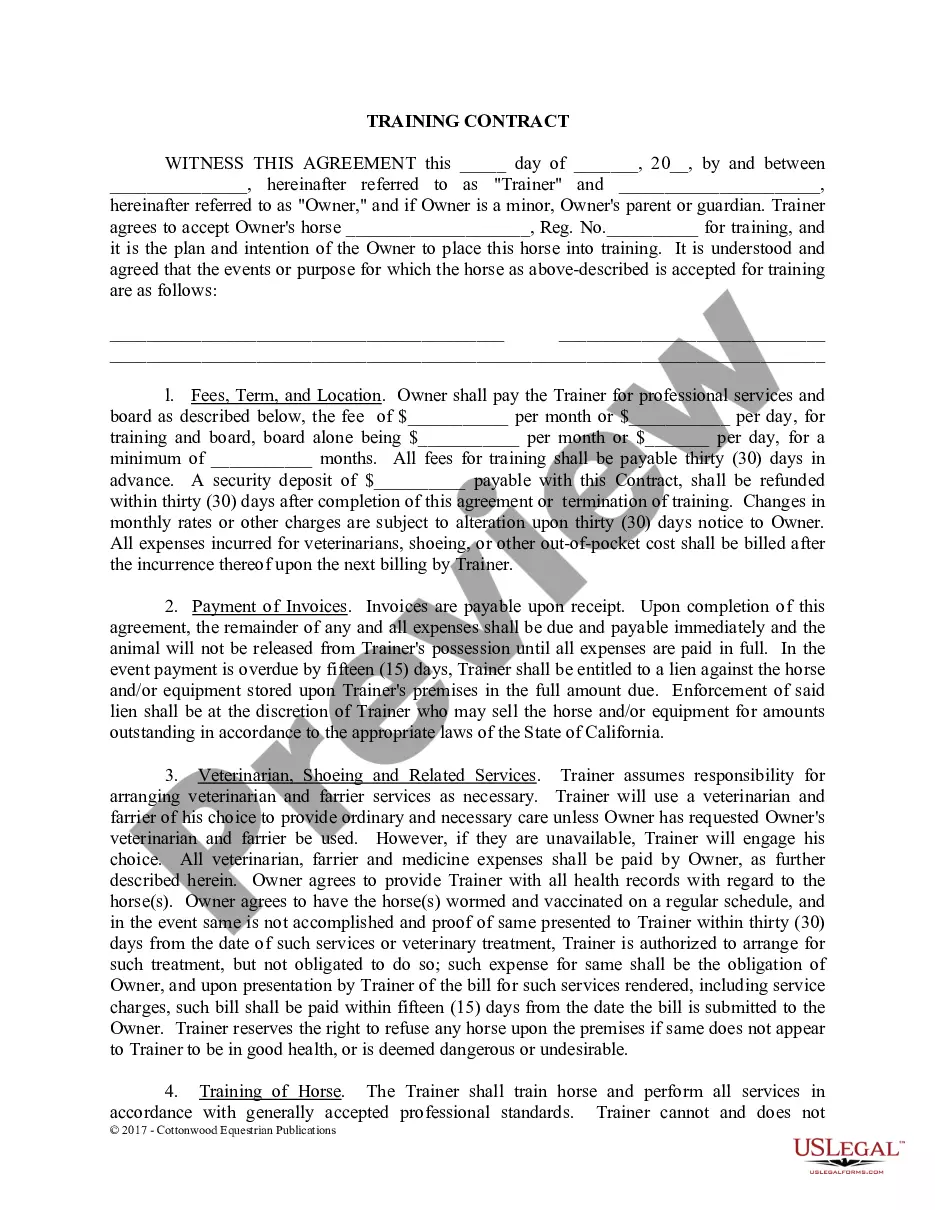
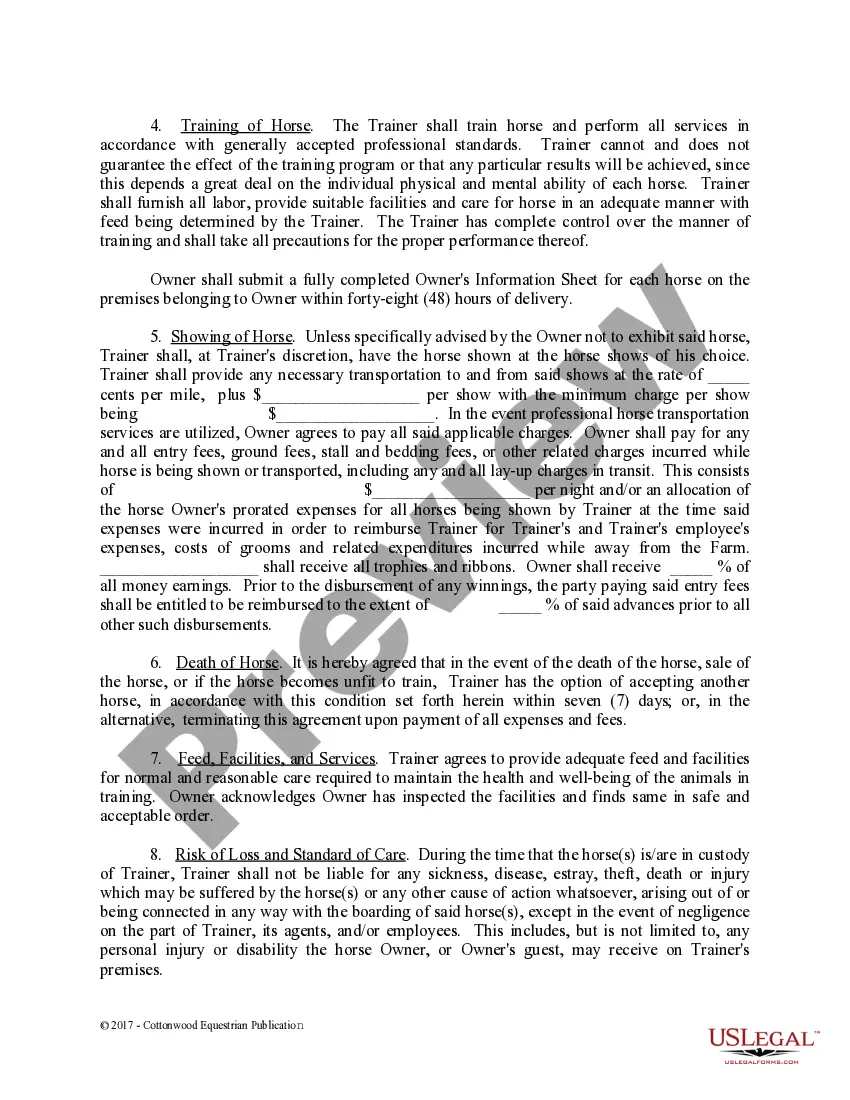
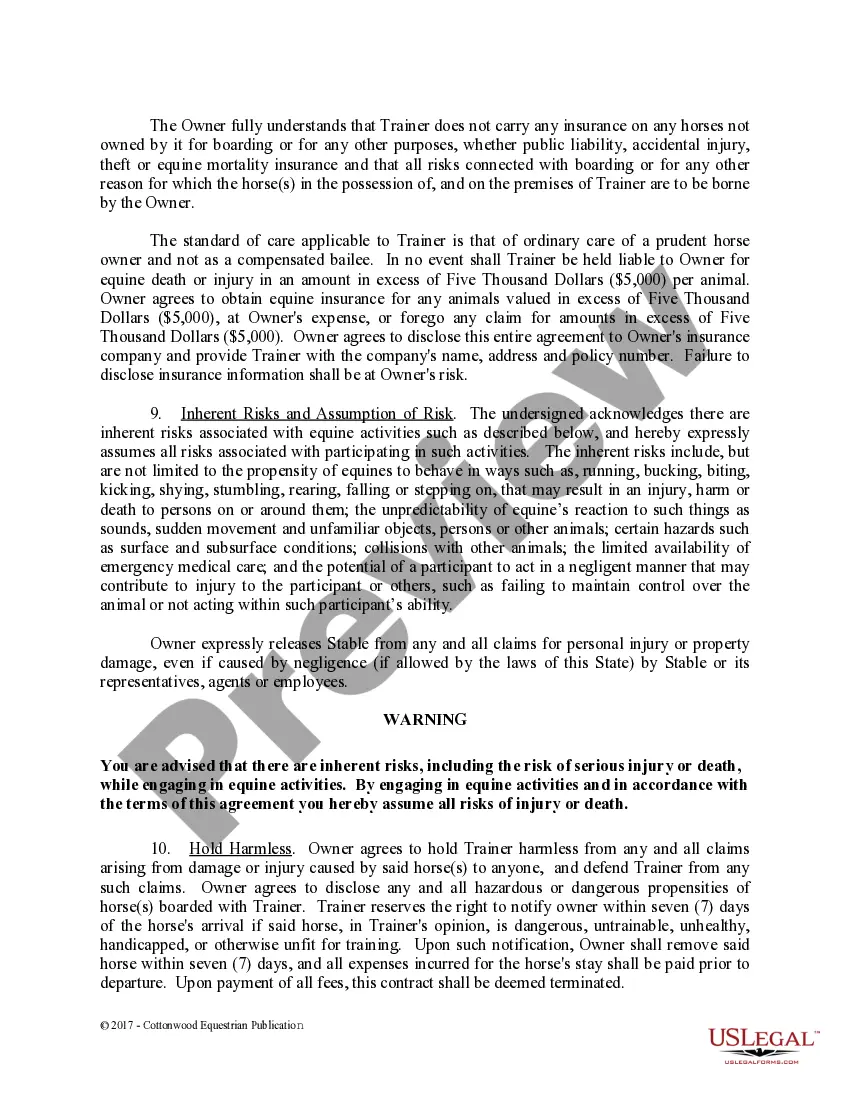
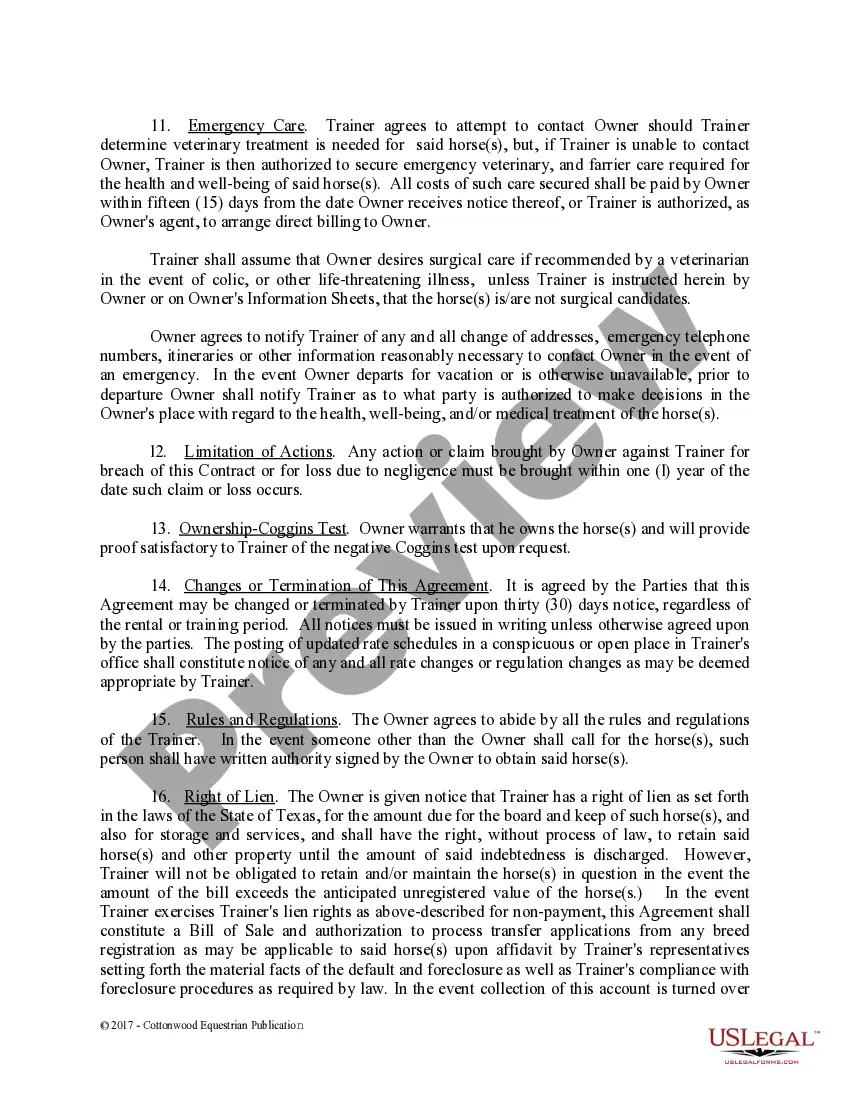
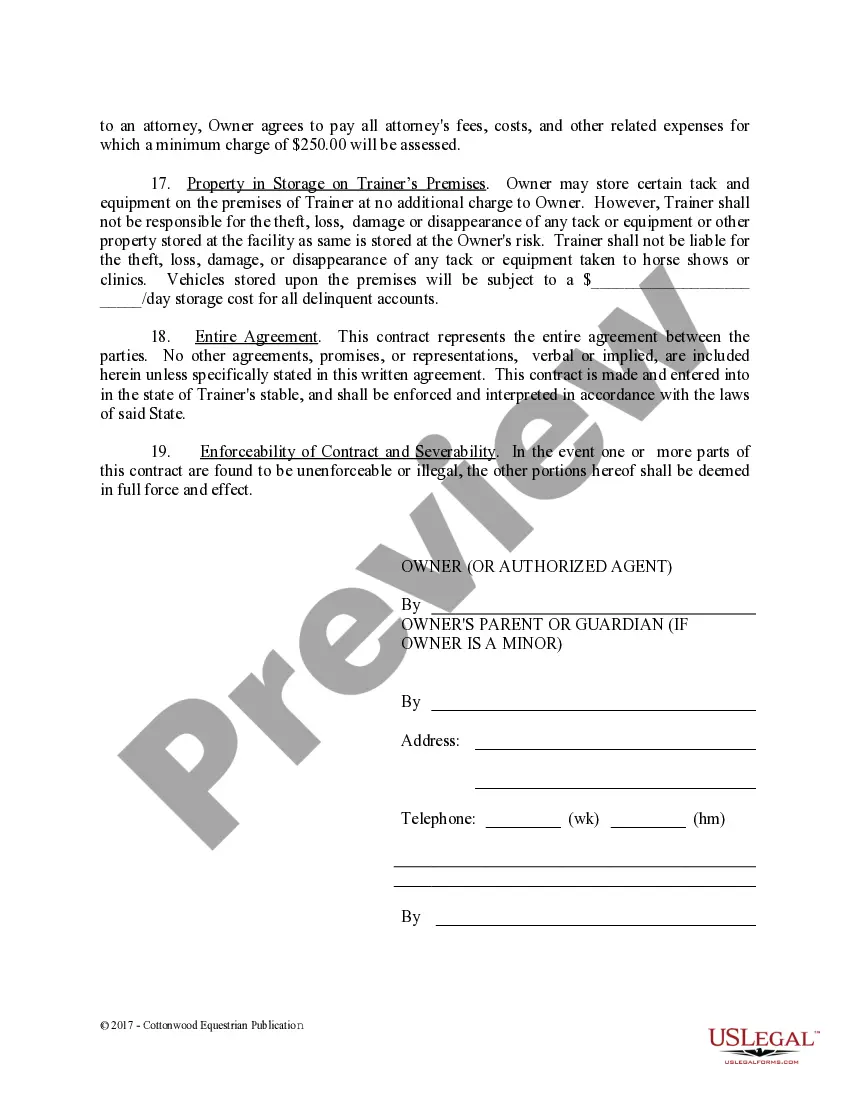
The Training Contract for horse training outlines the agreement between a trainer and a horse owner. This legally binding document specifies the terms for professional training services, including board, veterinary care, and conditions for showcasing the horse. Unlike general equine agreements, this form is tailored specifically for training scenarios, ensuring clarity and protection for both parties involved.
Main sections of this form
- Identification of the Trainer and Owner, including if the Owner is a minor.
- Fee structure for training and boarding services.
- Responsibilities regarding veterinary care and related expenses.
- Details regarding training methods and limitations on guarantees of results.
- Conditions for showing the horse, including payment of related fees.
- Liability and insurance provisions for risks associated with horse training.

Common use cases
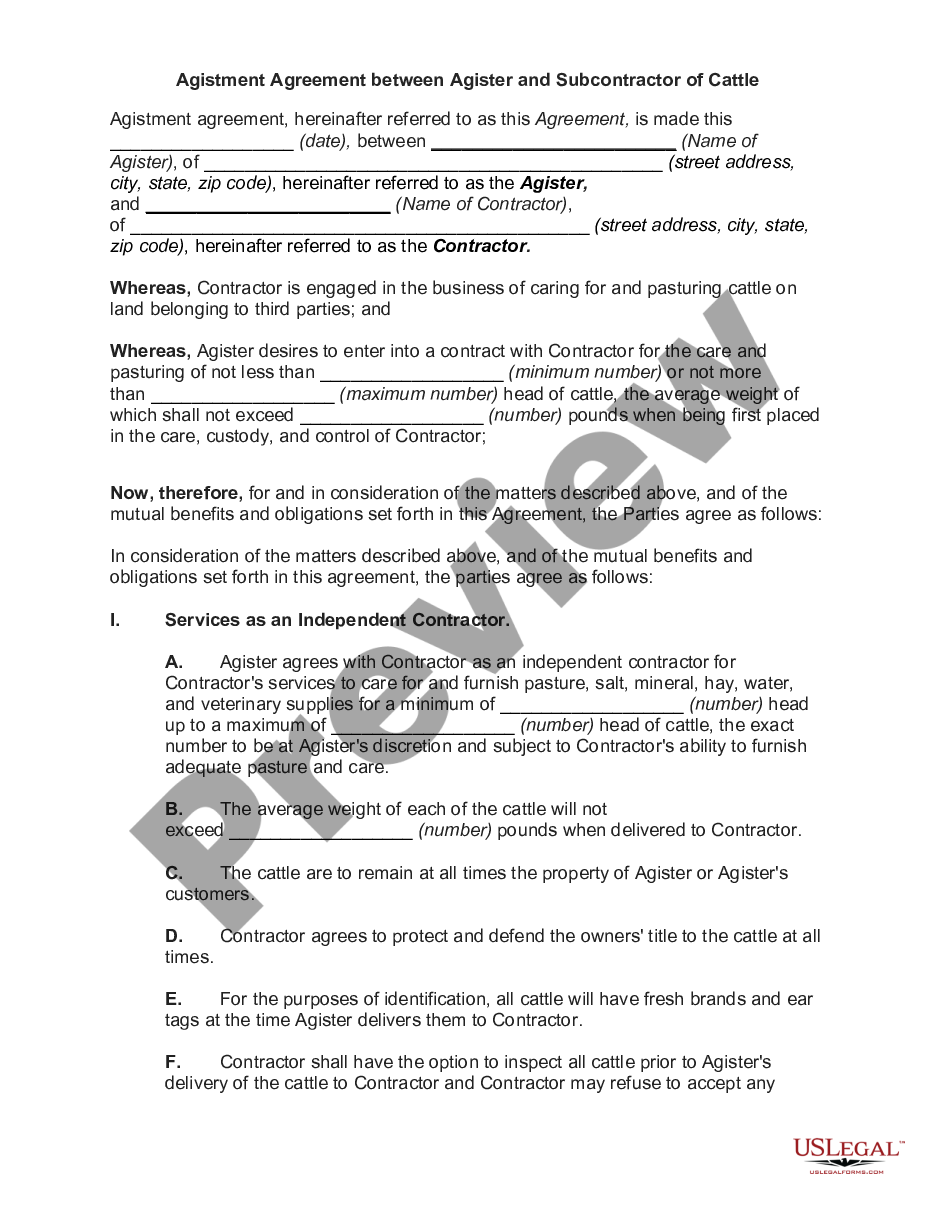
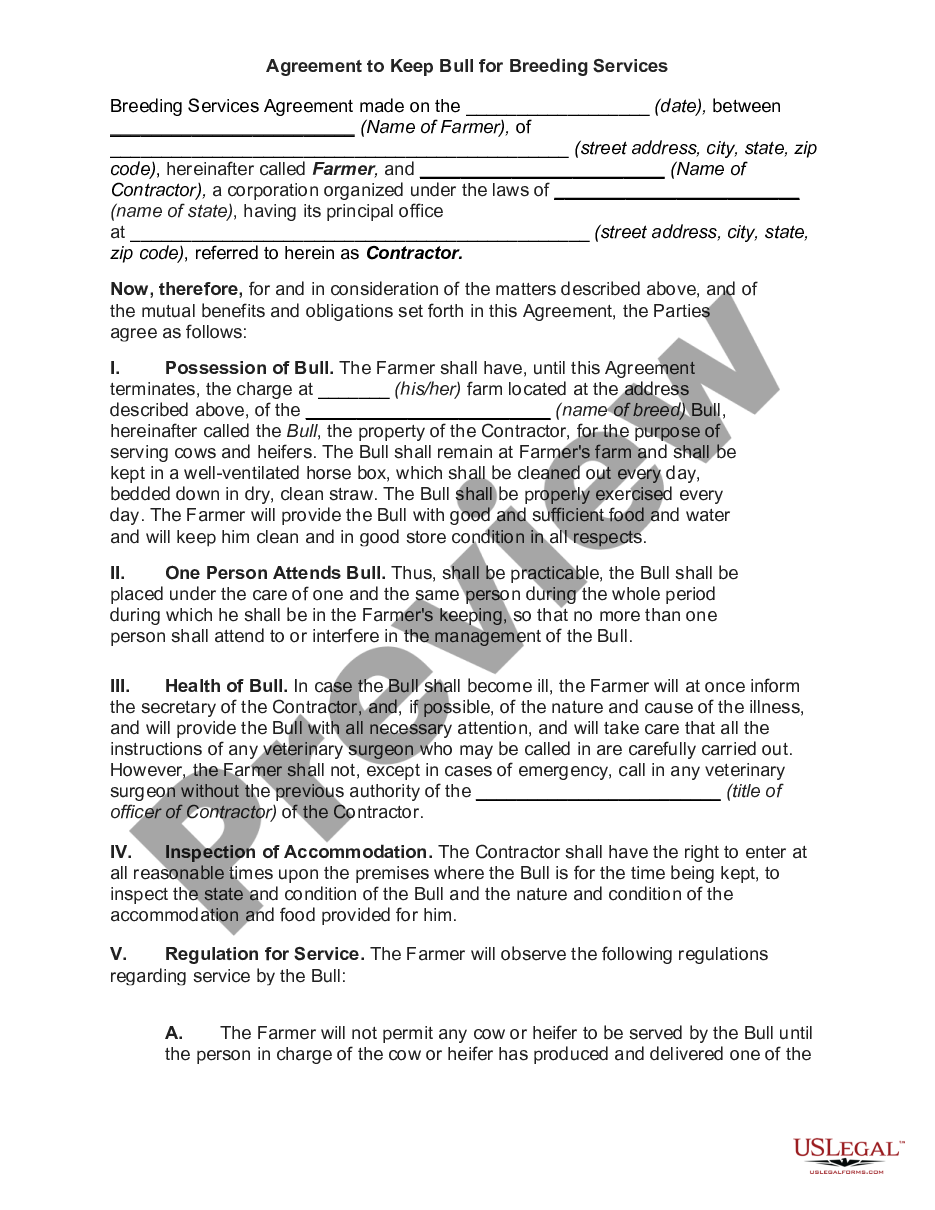
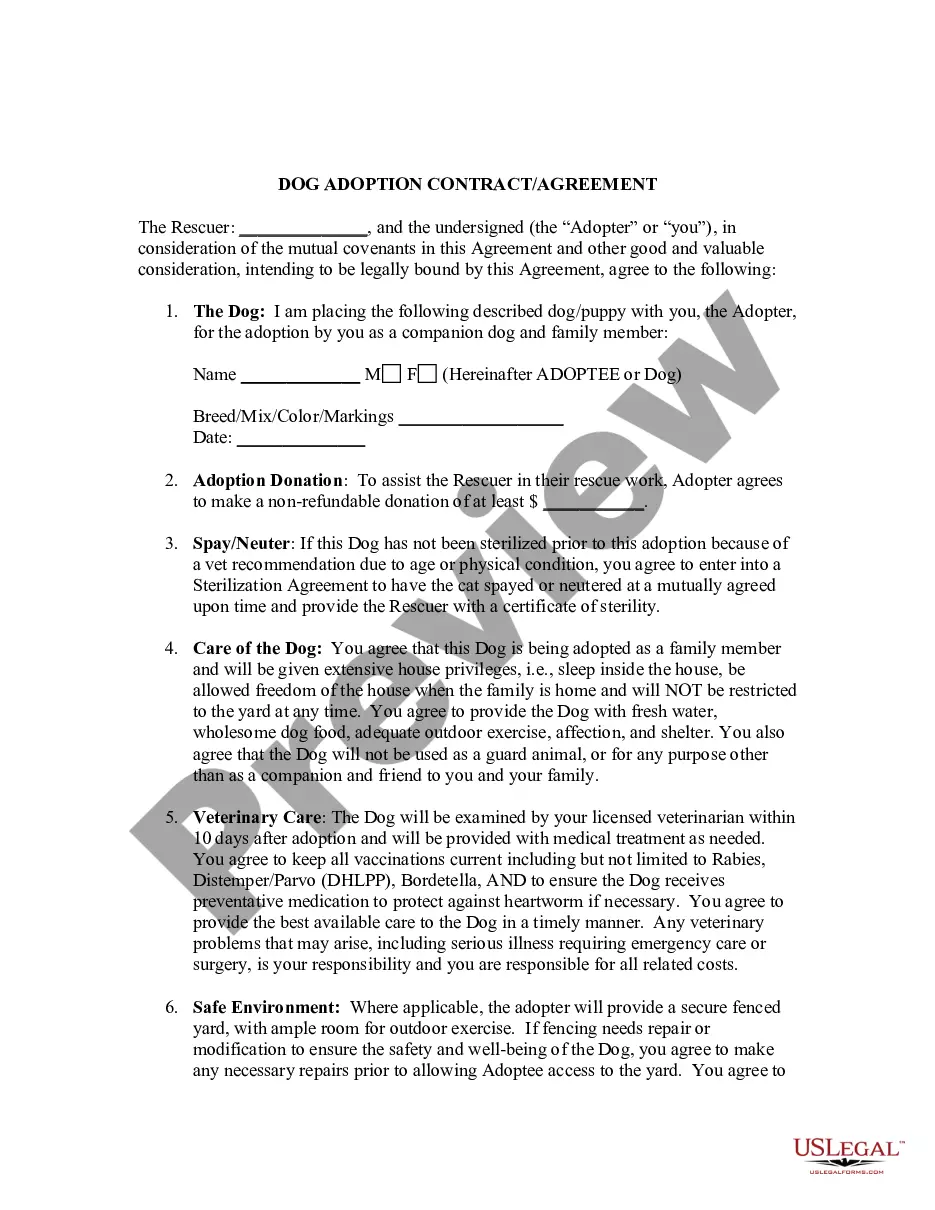
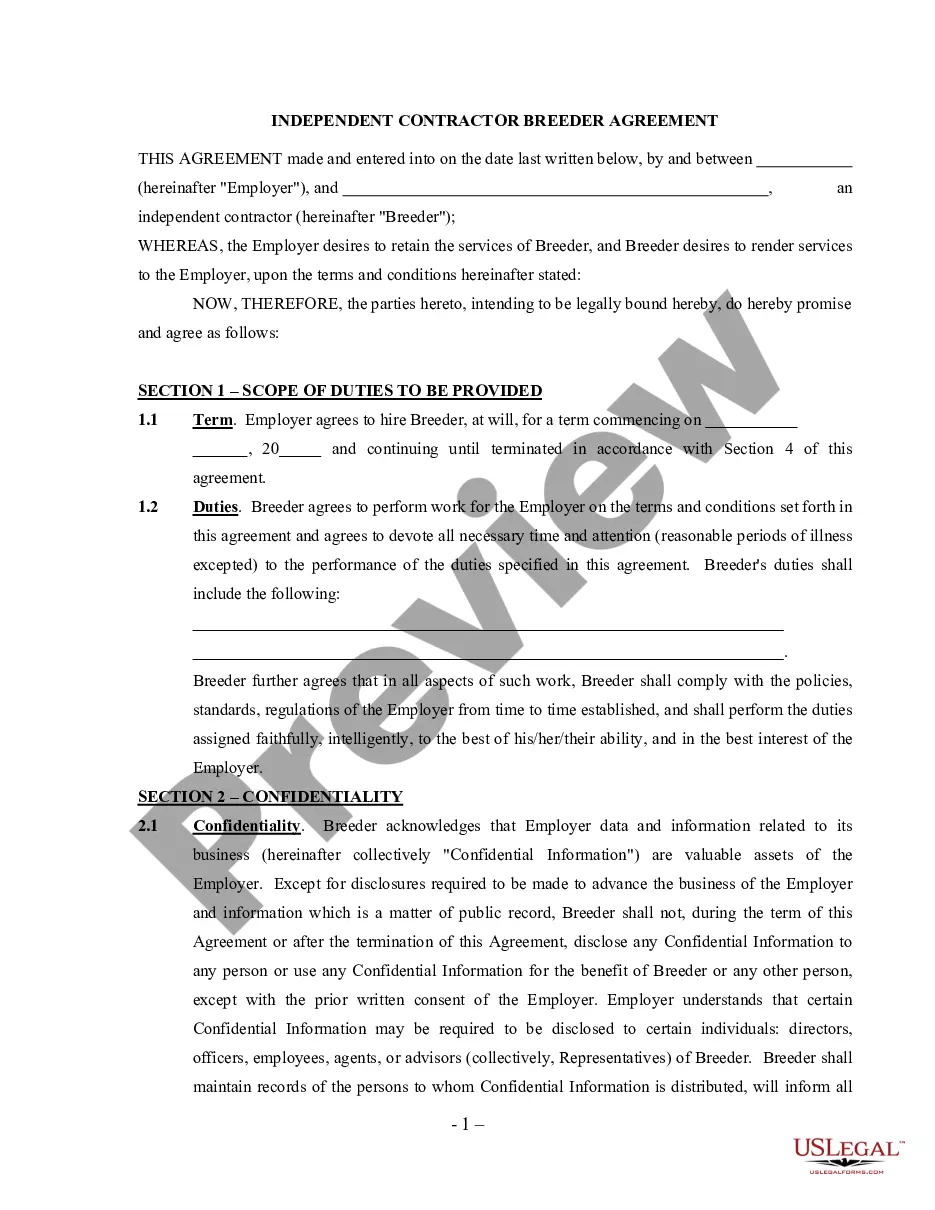
This Training Contract is essential when a horse owner wants to engage a trainer for specific training services. Use this form when you need to clearly define the responsibilities and expectations between the horse owner and the trainer, especially when professional services are involved, such as preparing a horse for shows or competitions. It ensures both parties understand the terms of care, costs, and inherent risks based on the training activities planned.
Who needs this form
- Horse owners looking to provide professional training for their horses.
- Approved trainers offering training services for various equestrian disciplines.
- Parents or guardians of minor horse owners entering into training agreements.
How to complete this form
- Identify and fill in the names and contact information of the Trainer and the Owner.
- Specify the horse's name and registration number to be trained.
- Enter the agreed training fees and terms for payment.
- Outline the intended training activities and any specific expectations related to showing the horse.
- Include any necessary provisions regarding veterinary care and health records.
- Both parties should sign and date the contract to finalize the agreement.
Does this document require notarization?
Notarization is generally not required for this form. However, certain states or situations might demand it. You can complete notarization online through US Legal Forms, powered by Notarize, using a verified video call available anytime.
Get your form ready online
Our built-in tools help you complete, sign, share, and store your documents in one place.
Make edits, fill in missing information, and update formatting in US Legal Forms—just like you would in MS Word.
Download a copy, print it, send it by email, or mail it via USPS—whatever works best for your next step.
Sign and collect signatures with our SignNow integration. Send to multiple recipients, set reminders, and more. Go Premium to unlock E-Sign.
If this form requires notarization, complete it online through a secure video call—no need to meet a notary in person or wait for an appointment.
We protect your documents and personal data by following strict security and privacy standards.

Make edits, fill in missing information, and update formatting in US Legal Forms—just like you would in MS Word.

Download a copy, print it, send it by email, or mail it via USPS—whatever works best for your next step.

Sign and collect signatures with our SignNow integration. Send to multiple recipients, set reminders, and more. Go Premium to unlock E-Sign.

If this form requires notarization, complete it online through a secure video call—no need to meet a notary in person or wait for an appointment.

We protect your documents and personal data by following strict security and privacy standards.
Avoid these common issues
- Not specifying all fees clearly, which can lead to confusion and disputes.
- Failing to provide complete health records for the horse.
- Not including specific details for care instructions or training goals.
- Overlooking to obtain signatures from both parties, making the contract unenforceable.
Why use this form online
- Convenience of accessing a professionally drafted contract that can be easily customized.
- Time-saving by allowing instant downloads for immediate use.
- Reliability of having terms reviewed by licensed attorneys for accuracy and legal compliance.
Legal use & context
- This contract outlines the terms of training and care for a horse to ensure protection for both the trainer and the owner.
- In the event of any breach of contract, there are legal avenues for resolution within the stipulated timeframes.
- Understanding the liabilities involved helps to mitigate risks associated with equine training activities.
Summary of main points
- The Training Contract is essential for formalizing the relationship between the horse owner and the trainer.
- Clear communication about fees and responsibilities can prevent disputes.
- It is crucial to keep accurate health records to protect the welfare of the horse.
- Legal understanding of the contract ensures protection from liability and clarifies responsibilities.
Looking for another form?
Form popularity
FAQ
Provides a written, mutual agreement between a horse owner and a trainer for professional training services. It outlines terms for training and boarding, responsibilities for veterinary care, rules for showing the horse, and risk allocation, helping both parties understand duties and protections before work begins.
This form collects essential details before work starts, including who the trainer and owner are (and if the owner is a minor) and the agreed fee structure for training and boarding. Completing these sections helps clearly define expectations and formalize the professional relationship.
The contract lists the Trainer and Owner as the parties and includes a provision for a minor owner. This ensures the agreement clearly identifies who is responsible for costs, decisions, and consent for veterinary care and training actions, reducing disputes.
The form sets showing terms, including who pays related fees and under what conditions showing is allowed. It helps define responsibilities for show participation and the associated costs within the training arrangement. These elements clarify whether the trainer, owner, or both cover entry fees, and when permission must be granted for a horse to appear in events.
The contract includes liability and insurance provisions to address risks inherent to horse training. It defines which party bears responsibility for incidents, equipment, and veterinary emergencies, helping minimize disputes and set expectations for risk management. By outlining these provisions, it supports prompt decision-making and budget planning during training.
Compared with a general horse training agreement, this form is tailored for training scenarios in California. It features explicit sections on board and veterinary care, training methods and limits on guarantees, showing terms, and minor-owner identification, aligning the terms with professional training arrangements.