California Estoppel Affidavit Regarding Deed in Lieu of Foreclosure
Overview of this form
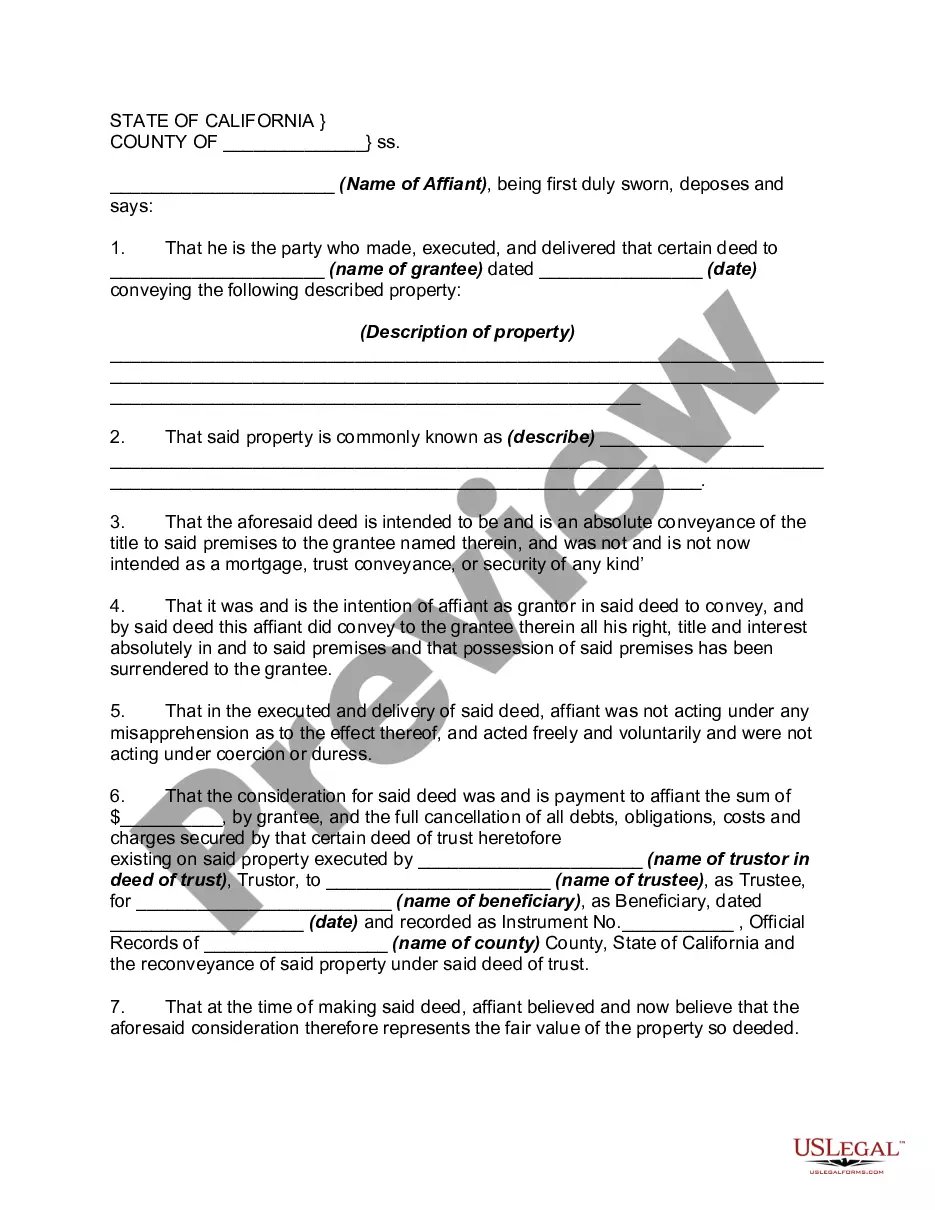
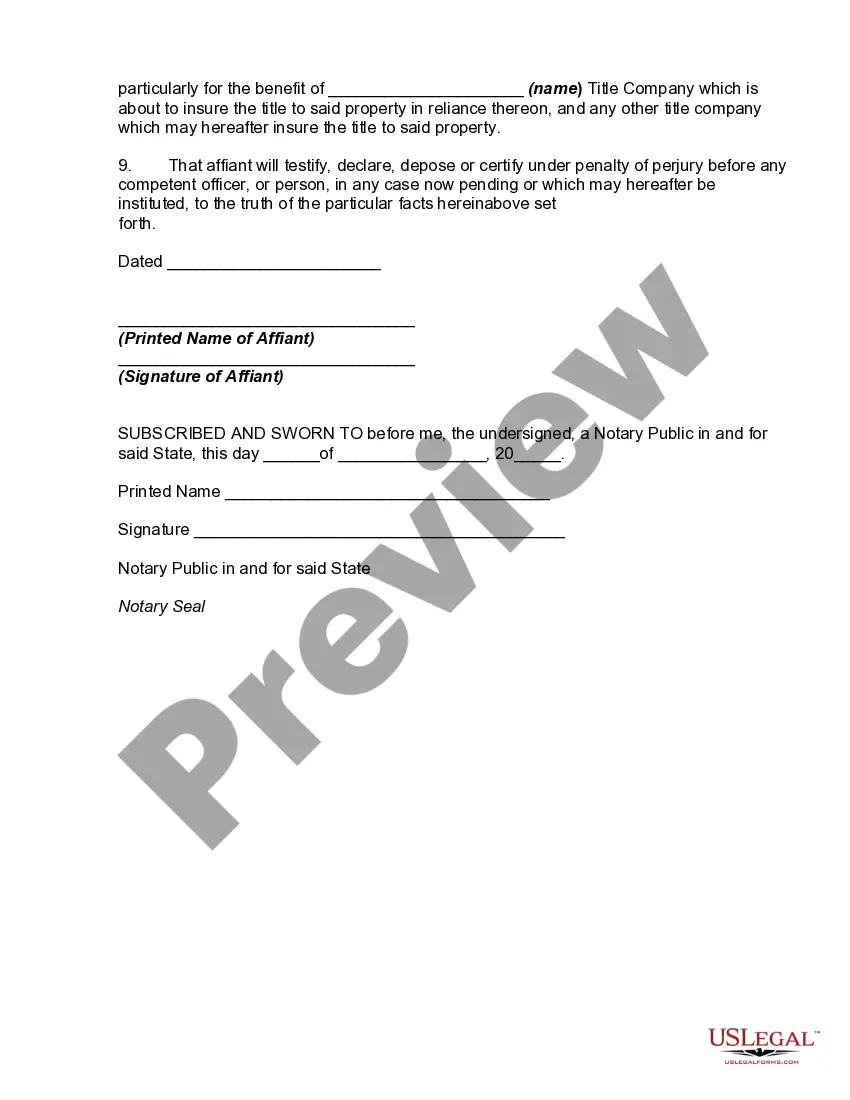
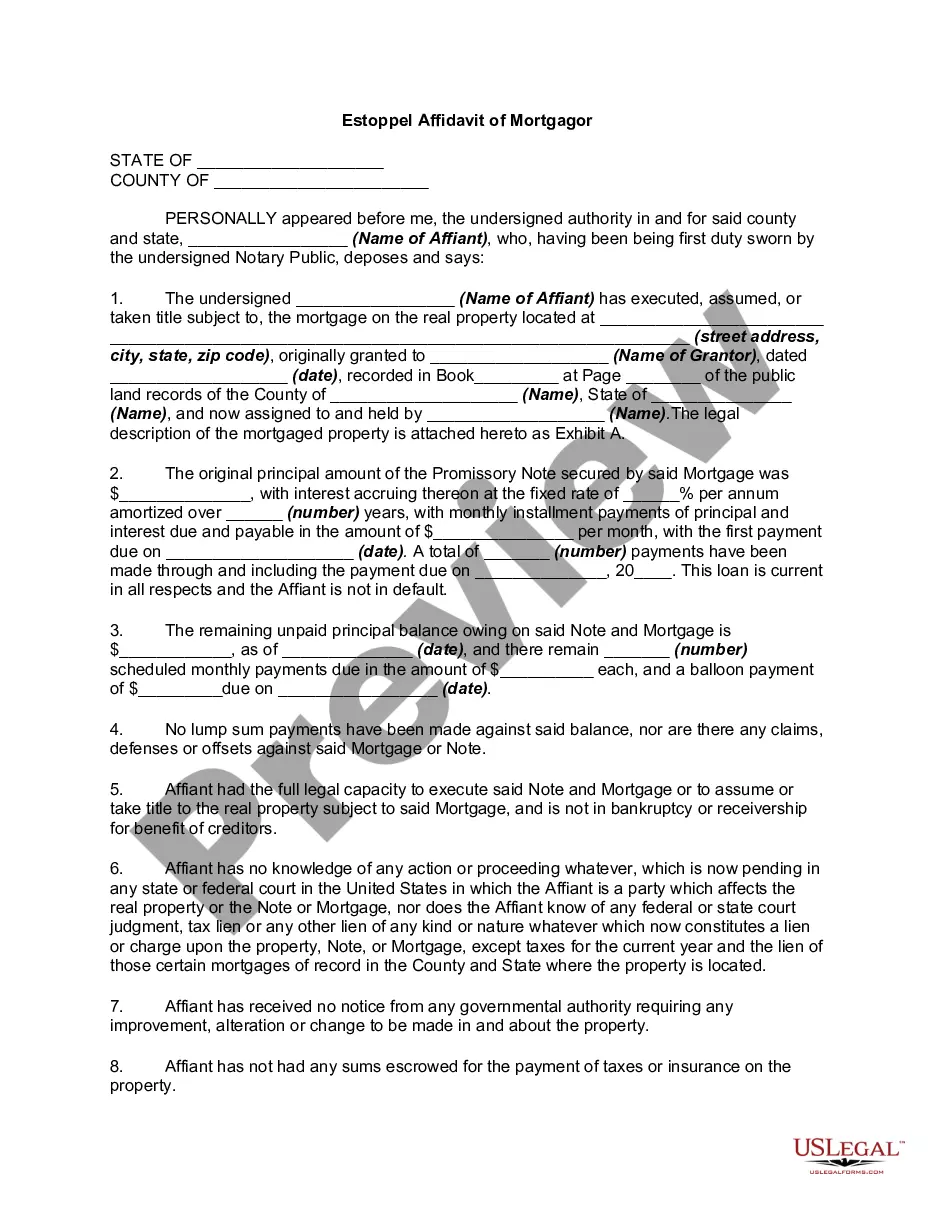
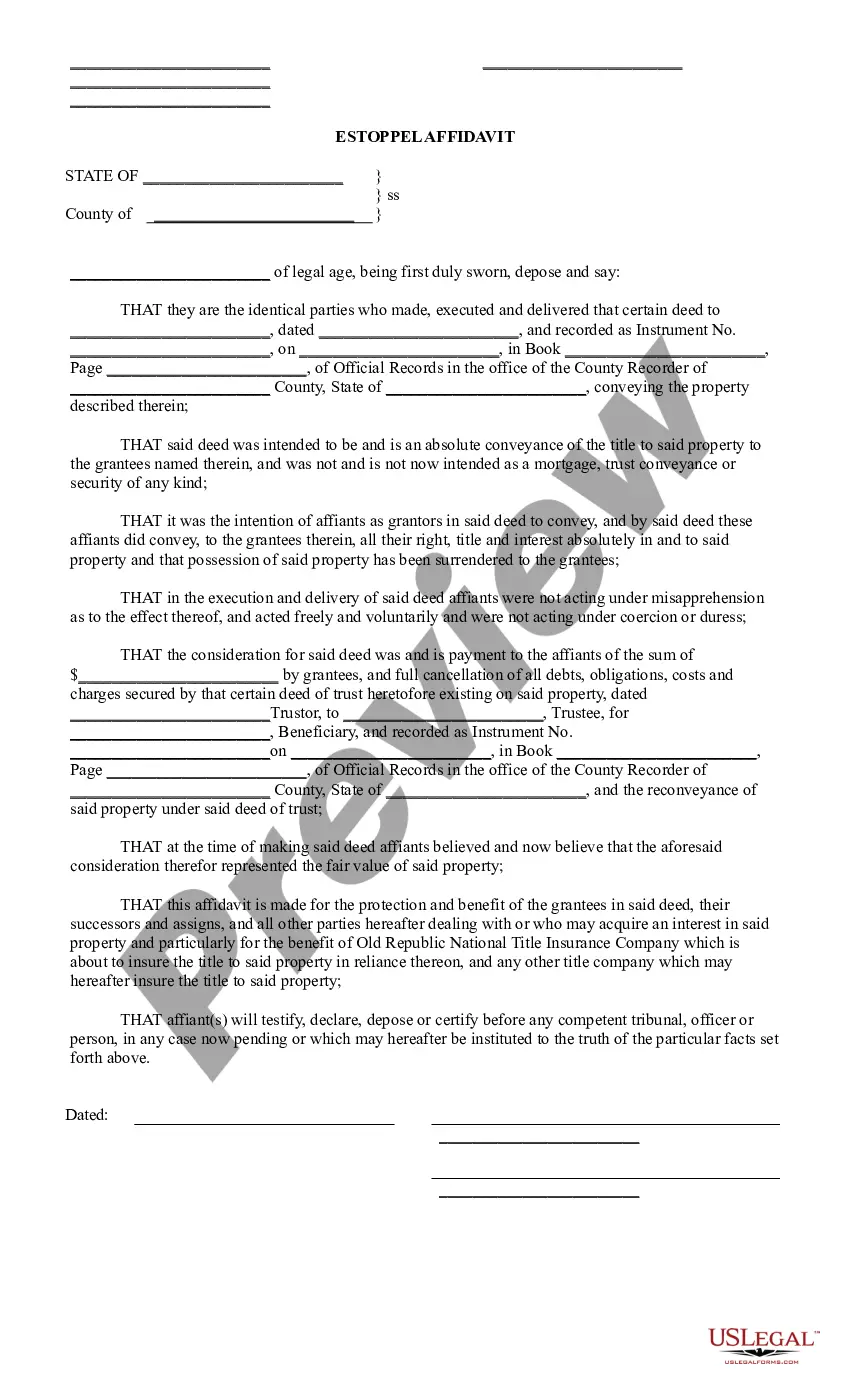
The Estoppel Affidavit Regarding Deed in Lieu of Foreclosure is a legal document that allows a property owner (the grantor) to affirm the transfer of property ownership to another party (the grantee). This affidavit certifies that the grantor has conveyed the full title of the property, relieves them of the mortgage obligations, and clarifies the financial interactions related to the transfer. Unlike a typical deed, this form serves to assure the grantee of the grantor's intent and verifies the absence of any liens or claims against the property.
Key components of this form
- Affiant's name and identification, confirming their authority to execute the deed.
- Details of the property being conveyed, including legal description and common name.
- Statement of intent by the affiant to transfer ownership without conditions.
- Confirmation of payment and settlement of prior debts associated with the property.
- Assertion that the affiant acted freely and not under duress or coercion.
- Affidavit prepared for the benefit of title companies and future property dealings.
When this form is needed
This form should be used when a property owner is executing a deed in lieu of foreclosure, transferring title to another party in conjunction with settling owed mortgage balances. It is particularly relevant in circumstances where the owner wishes to clarify that the transfer of property is an outright sale and not a loan or security agreement.
Who should use this form
- Property owners looking to transfer title to a grantee through a deed in lieu of foreclosure.
- Grantees who need assurance of clear title and lack of encumbrances.
- Title companies requiring documentation to insure the title being transferred.
- Legal representatives involved in real estate transactions on behalf of clients.
Instructions for completing this form
- Identify and enter the name of the affiant (property owner).
- Clearly describe the property being transferred, including any legal descriptors.
- Specify the date of the deed and details of the financial consideration agreed upon.
- Have the affiant affirm that the intention was to convey title without reservations.
- Sign the affidavit before a notary public to ensure legal validity.
Notarization requirements for this form
Yes, this form must be notarized to be legally valid. Notarization ensures the authenticity of the signatures and the intent of the parties involved. US Legal Forms offers integrated online notarization services available 24/7, enabling secure video calls to complete the notarization process without requiring in-person meetings.
Get your form ready online
Our built-in tools help you complete, sign, share, and store your documents in one place.
Make edits, fill in missing information, and update formatting in US Legal Forms—just like you would in MS Word.
Download a copy, print it, send it by email, or mail it via USPS—whatever works best for your next step.
Sign and collect signatures with our SignNow integration. Send to multiple recipients, set reminders, and more. Go Premium to unlock E-Sign.
If this form requires notarization, complete it online through a secure video call—no need to meet a notary in person or wait for an appointment.
We protect your documents and personal data by following strict security and privacy standards.

Make edits, fill in missing information, and update formatting in US Legal Forms—just like you would in MS Word.

Download a copy, print it, send it by email, or mail it via USPS—whatever works best for your next step.

Sign and collect signatures with our SignNow integration. Send to multiple recipients, set reminders, and more. Go Premium to unlock E-Sign.

If this form requires notarization, complete it online through a secure video call—no need to meet a notary in person or wait for an appointment.

We protect your documents and personal data by following strict security and privacy standards.
Mistakes to watch out for
- Failing to provide an accurate legal description of the property.
- Not having the affidavit notarized, leading to potential legal challenges.
- Omitting any names or signatures in the required places.
- Misstating the facts regarding the financial obligations or amounts owed.
Why complete this form online
- Convenient access to legal form templates from anywhere with an internet connection.
- Editable templates that can be tailored to specific needs without legal jargon.
- Reliability of forms drafted by licensed attorneys, ensuring legal compliance.
- Streamlined process for completing and downloading forms quickly.
Looking for another form?
Form popularity
FAQ
A lender is not required to accept a deed in lieu of foreclosure, although many do. They will consider various factors, including the property's value and the borrower's financial situation. If you are navigating this process, a California Estoppel Affidavit Regarding Deed in Lieu of Foreclosure can help clarify terms and protect your interests. To ensure a smooth process, consider utilizing resources from US Legal Forms, where you can access customized documents and guidance tailored to your needs.
When writing a foreclosure letter, clearly state your intention to transfer your property to the lender to avoid foreclosure. Begin by including your details, such as your name, property address, and mortgage account number. Then, outline your reasons for choosing this path and reference any discussions with the lender about a California Estoppel Affidavit Regarding Deed in Lieu of Foreclosure. Finally, request a written acknowledgment of the agreement to ensure transparency and protection for both parties.
To file a deed in lieu of foreclosure, start by contacting your lender to discuss your situation and express your interest in this option. Next, gather necessary documents, including the title deed and a California Estoppel Affidavit Regarding Deed in Lieu of Foreclosure, to outline the agreement between you and your lender. Once you have your documents in order, execute the deed transfer according to your state’s guidelines and ensure it is recorded with the appropriate county office.
A deed in lieu of foreclosure occurs when a homeowner transfers their property title to the lender to avoid the lengthy foreclosure process. For instance, if you owe $300,000 on your mortgage but can no longer make payments, you may negotiate with your lender to hand over the property in exchange for the cancellation of your debt. It's important to document this process, often through a California Estoppel Affidavit Regarding Deed in Lieu of Foreclosure, to clarify the terms and avoid future disputes.
The biggest disadvantage for lenders regarding a deed in lieu of foreclosure is the potential for accelerated losses. When they accept a deed, they may acquire a property that has decreased in value due to neglect or market conditions. Additionally, lenders might face legal and administrative costs during the transfer process. Employing a California Estoppel Affidavit Regarding Deed in Lieu of Foreclosure can mitigate some of these risks by providing clear terms and responsibilities for all parties involved.
One significant disadvantage of a deed in lieu of foreclosure is that it may not erase the borrower’s obligation to repay the remaining debt. In some cases, lenders still seek deficiency judgments after the deed transfer. This process can result in unexpected financial burdens for the borrower. For clarity and protection, incorporating a California Estoppel Affidavit Regarding Deed in Lieu of Foreclosure becomes essential, as it outlines the agreed terms and conditions clearly.
A major disadvantage to lenders when accepting a deed in lieu of foreclosure is the potential loss of collateral value. This process can lead to longer timelines for recovering owed amounts, depending on the condition of the property. Moreover, lenders may face difficulties in reselling the property, especially if it requires significant repairs. Utilizing a California Estoppel Affidavit Regarding Deed in Lieu of Foreclosure can help clarify the terms and responsibilities, reducing confusion during this transition.
To execute a deed in lieu of foreclosure effectively, start by discussing the process with your lender and ensuring they agree to this alternative. Prepare and present all required documents, particularly the California Estoppel Affidavit Regarding Deed in Lieu of Foreclosure, which clarifies your intentions. Finally, sign the deed and have it notarized, so it can be recorded in public records, finalizing the transfer.
To execute a deed in lieu of foreclosure, you must first reach an agreement with your lender. Gather all necessary documents, including the California Estoppel Affidavit Regarding Deed in Lieu of Foreclosure, and submit them for approval. Once your lender accepts the terms, sign the deed in front of a notary, ensuring all parties understand the transaction implications.
One disadvantage of a deed in lieu of foreclosure is that it may impact your credit score significantly. This can lead to difficulties in securing future loans or mortgages. Additionally, be aware that lenders will typically require a California Estoppel Affidavit Regarding Deed in Lieu of Foreclosure, which may require additional paperwork and consultation.