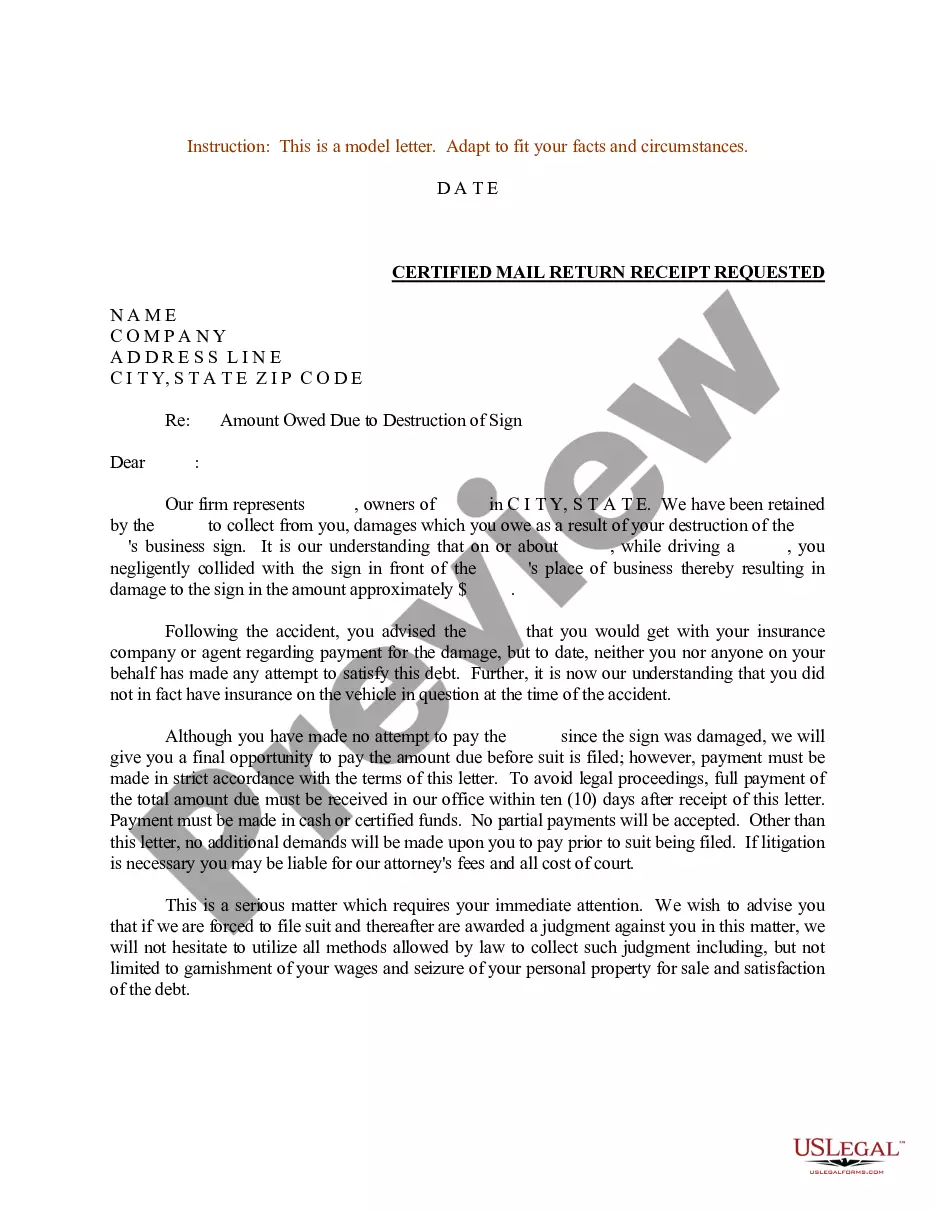
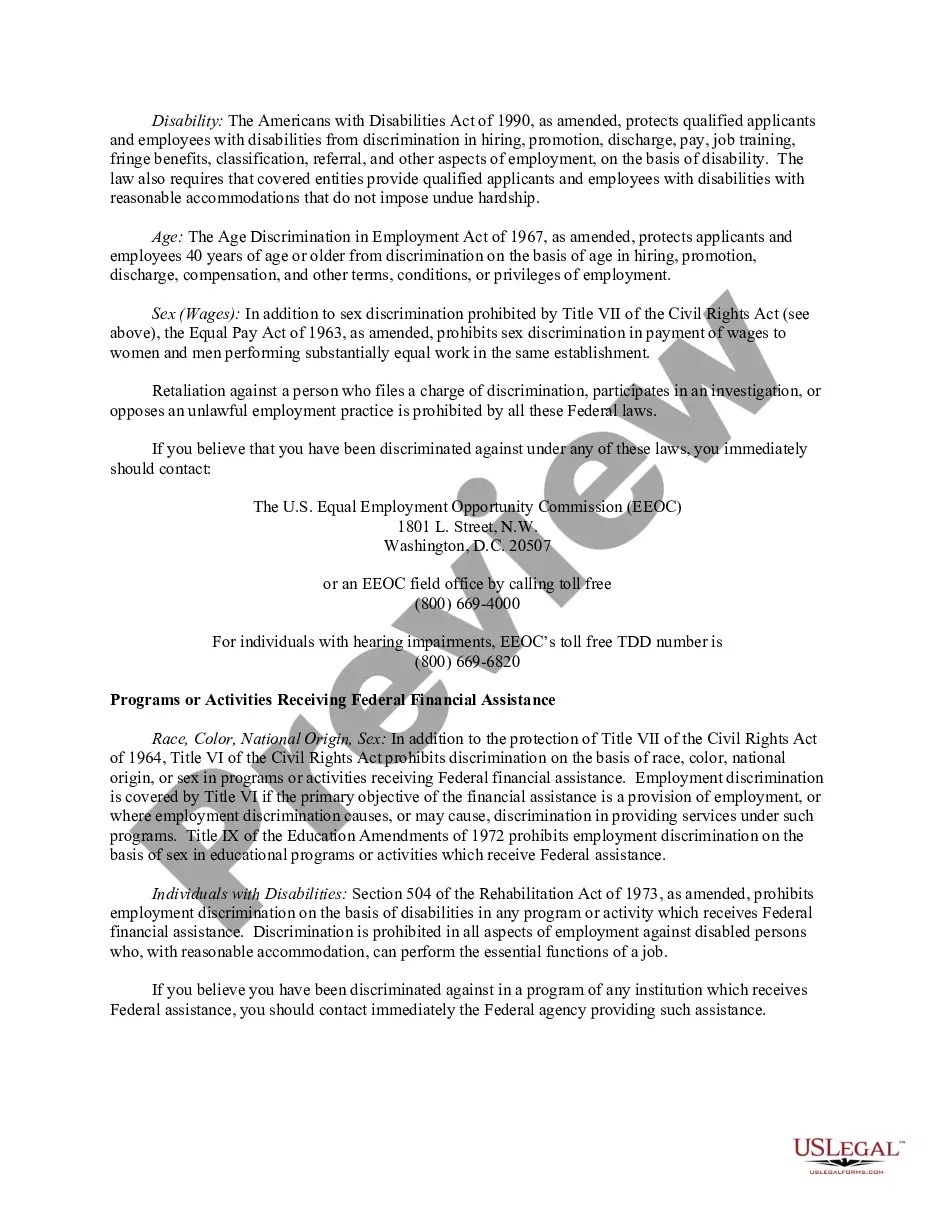
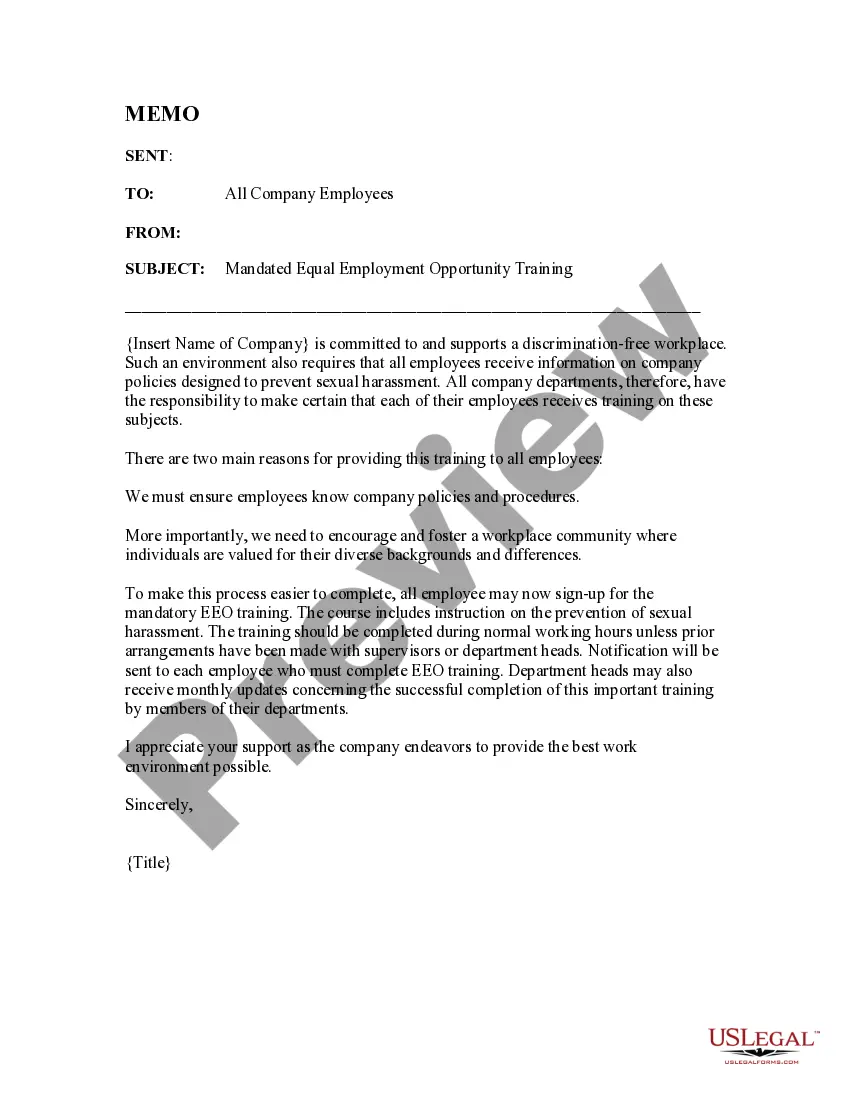
Arizona Employee Memo on EEO
Description
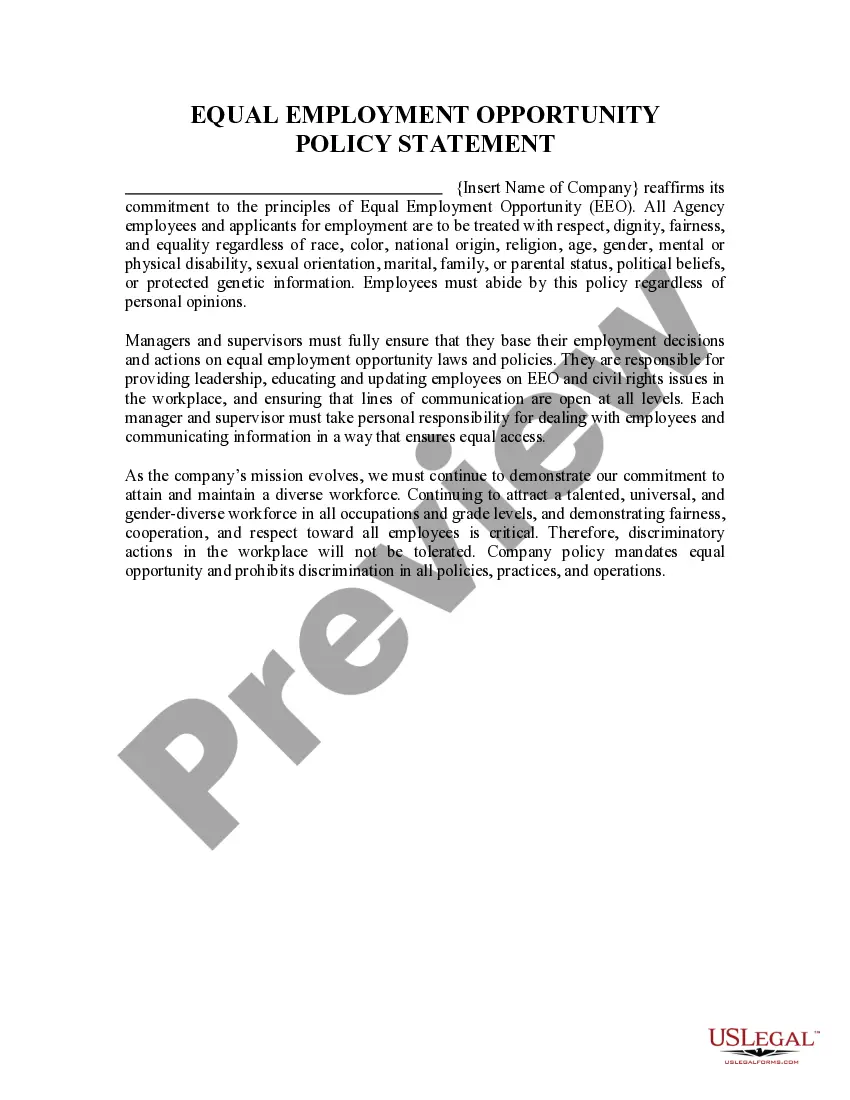
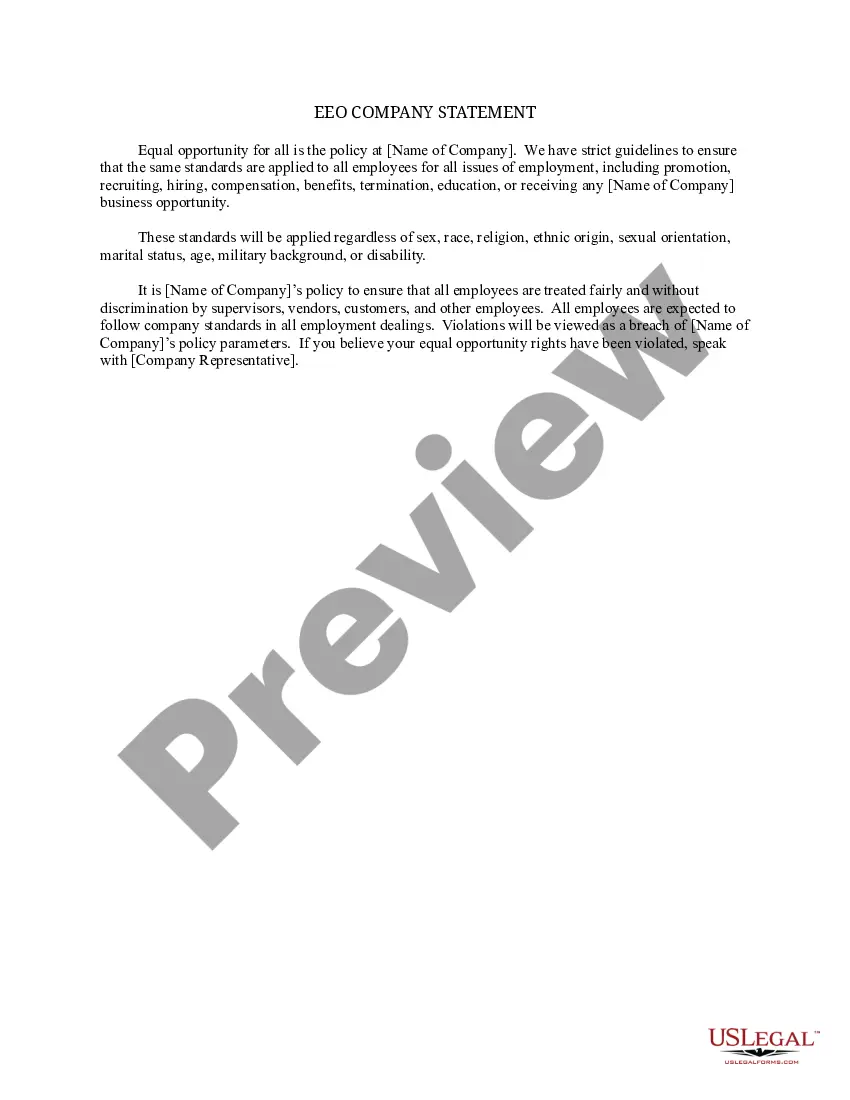
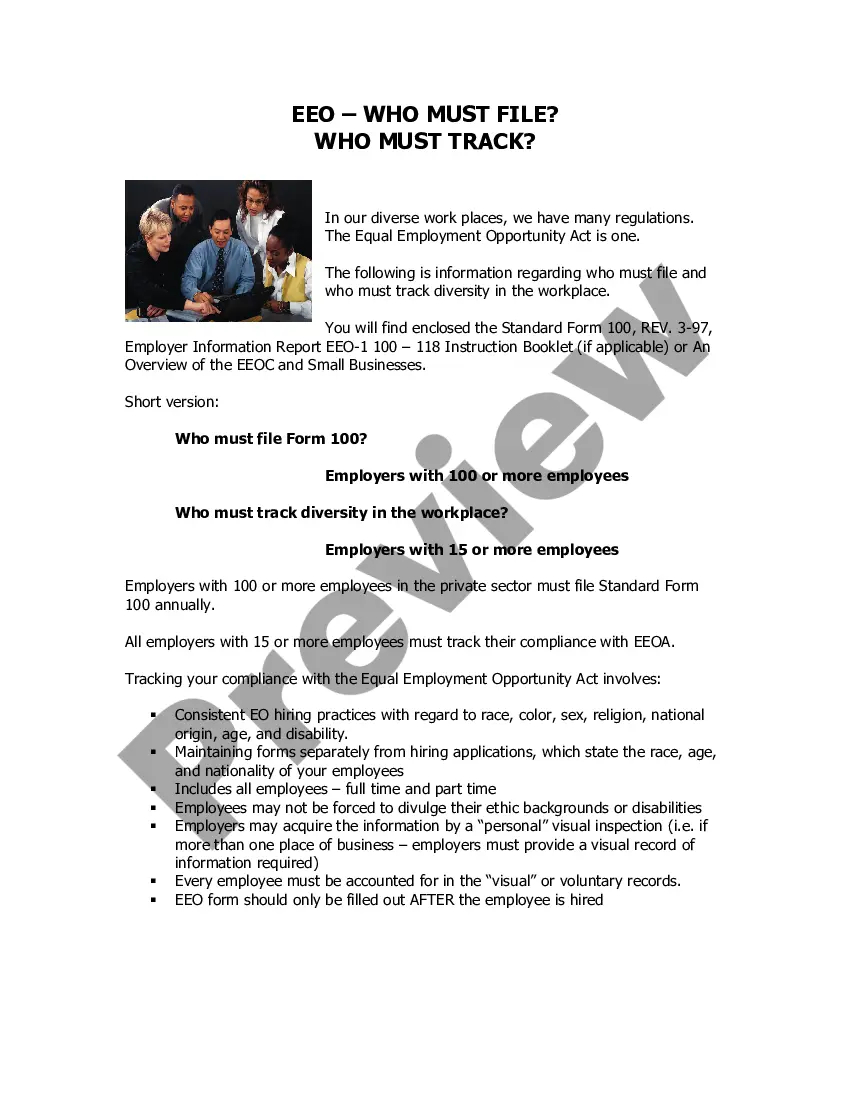

Get your form ready online
Our built-in tools help you complete, sign, share, and store your documents in one place.
Make edits, fill in missing information, and update formatting in US Legal Forms—just like you would in MS Word.
Download a copy, print it, send it by email, or mail it via USPS—whatever works best for your next step.
Sign and collect signatures with our SignNow integration. Send to multiple recipients, set reminders, and more. Go Premium to unlock E-Sign.
If this form requires notarization, complete it online through a secure video call—no need to meet a notary in person or wait for an appointment.
We protect your documents and personal data by following strict security and privacy standards.

Make edits, fill in missing information, and update formatting in US Legal Forms—just like you would in MS Word.

Download a copy, print it, send it by email, or mail it via USPS—whatever works best for your next step.

Sign and collect signatures with our SignNow integration. Send to multiple recipients, set reminders, and more. Go Premium to unlock E-Sign.

If this form requires notarization, complete it online through a secure video call—no need to meet a notary in person or wait for an appointment.

We protect your documents and personal data by following strict security and privacy standards.
Looking for another form?
How to fill out Employee Memo On EEO?
Are you presently in a scenario where you frequently require documents for both business or personal purposes every working day.
There are numerous legal document templates available online, but finding ones you can trust is not easy.
US Legal Forms provides a vast array of document templates, such as the Arizona Employee Memo on EEO, that are designed to meet both state and federal requirements.
Select a suitable file format and download your copy.
You can view all the document templates you have purchased in the My documents menu. You can obtain an additional copy of the Arizona Employee Memo on EEO at any time, if needed. Simply click on the desired form to download or print the document template.
- If you are already acquainted with the US Legal Forms website and possess an account, simply Log In.
- Then, you can download the Arizona Employee Memo on EEO template.
- If you do not have an account and wish to start using US Legal Forms, follow these steps.
- Locate the form you need and ensure it is for the correct state/area.
- Utilize the Preview button to review the form.
- Read the description to ensure you have selected the correct template.
- If the form does not meet your needs, use the Search field to find a form that suits you and your requirements.
- Once you find the appropriate form, click Acquire now.
- Choose the pricing plan you desire, complete the necessary information to create your account, and finalize the transaction using PayPal or credit card.
Form popularity
FAQ
Writing an EEO statement Besides the EEO-1 report, EEOC makes it mandatory for some companies to include an equal opportunity employer statement in their job ads. This can be as simple as one sentence where you declare that you're an equal opportunity employer and you follow non-discriminatory practices.
EEOC employees and applicants for employment are covered by federal laws and Presidential Executive Orders designed to safeguard federal employees and job applicants from discrimination on the basis of race, color, religion, sex (including pregnancy, gender identity, and sexual orientation), parental status, national
The EEO principles aim to: ensure that staff are selected for positions on merit; provide equitable access to employment, professional development and workplace participation for people who are under-represented in our workforce; and ensure that workplaces are free from all forms of unlawful discrimination and
State and local governments, public primary and secondary school systems, institutions of higher education, American Indian or Alaska Native tribes, and tax-exempt private membership clubs other than labor organizations are exempt from the EEO-1 component report.
These laws protect employees and job applicants against employment discrimination when it involves: Unfair treatment because of race, color, religion, sex (including pregnancy, gender identity, and sexual orientation), national origin, age (40 or older), disability or genetic information.
The Equal Employment Opportunity Commission requires that every American employer include an EEO in their job postings. You must include the words (Company X) is an Equal Opportunity Employer followed by a policy statement that details non-discriminatory practices.
To comply with EEO requirements, you must treat all people fairly regardless of national origin, race, religion, color, sex (including pregnancy and sexual orientation), disability or genetic information.
Employers are required to post notices describing the Federal laws prohibiting job discrimination based on race, color, religion, sex (including pregnancy), national origin, age (40 or older), disability or genetic information.
There are four kinds of unfair and unlawful behavior that are important for equal employment opportunity: Discrimination including both direct and indirect discrimination. Sexual harassment. Unlawful adverse action.
The law requires an employer to post a notice describing the Federal laws prohibiting job discrimination based on race, color, sex, national origin, religion, age, equal pay, disability or genetic information.